
Matching Screw Barrel Materials to Process Demands: A Supplier Capability Guide
Selecting a screw barrel is not a single-component decision; it is a process engineering decision. For plastic processors and machinery builders, matching the metallurgy, surface treatment, and geometry of a screw and barrel to the exact polymer, filler content, and operating conditions determines output quality, component life, and total cost of ownership. This guide examines how suppliers support that match through material selection, OEM and custom manufacturing capability, and measurable quality control.
A screw barrel pair is the core of any plastic extrusion, injection molding, or compounding system. It performs the central functions of melting, mixing, metering, and pressurizing polymer material. Because it operates under high temperature, high pressure, and often abrasive or corrosive conditions, its material and design must reflect the specific process demands. Understanding which screw barrel type fits which application, and what a manufacturer must be able to verify, is essential for successful procurement.
Why Screw Barrel Material and Process Matching Matters
Plastic processing environments are not uniform. A PVC pipe extrusion line, a WPC profile line, an SPC flooring line, and a high-speed film blowing line impose completely different wear, corrosion, and thermal load profiles on downstream equipment. Using a standard screw barrel in the wrong application can lead to premature wear, poor plasticizing, inconsistent output, and costly downtime.
Key process variables that influence screw barrel selection include:
- Polymer type: PVC and other halogen-containing polymers release corrosive byproducts such as hydrogen chloride; processing these compounds requires corrosion-resistant materials.
- Filler content: High levels of calcium carbonate, wood flour (WPC), or other fillers accelerate abrasive wear on screw flights and barrel walls.
- Operating speed: High-speed extrusion increases shear and thermal stress, requiring higher hardness and better heat treatment.
- Processing temperature: Engineering plastics and high-temperature polymers can exceed the capability limits of standard nitrided components.
- Output consistency: Dimensional accuracy, straightness, and surface finish directly affect melt uniformity and product tolerances.
The core question for buyers is therefore not simply “which screw barrel is available,” but “which manufacturer has the capability to build, verify, and deliver the right screw barrel for my specific process.”
Screw Barrel Types and Their Applications
Screw barrels are generally categorized by screw geometry and machine type. Each configuration is designed for particular extrusion or molding processes.
Single Screw Barrel
The single screw barrel is the most common configuration in plastic extrusion, used widely in pipe extrusion, sheet extrusion, profile extrusion, and film blowing. It consists of a single screw rotating inside a barrel sleeve. Single screw extruders are known for their simplicity, reliability, and cost-effectiveness. According to Fortune Business Insights, single-screw extrusion machinery accounted for approximately 62% of the global extrusion machinery market as of 2024, reflecting its dominance in the industry. In production, single screw barrels suit processing polymers such as PP, PE, PVC, ABS, and PS across a wide range of products, from pipes and sheets to packaging films.
Twin Screw Barrel
Twin screw barrels contain two screws rotating within a barrel. They are classified into two main types:
Conical Twin Screw Barrel: Conical twin screw barrels have converging flights, meaning screw diameter decreases from the feed zone to the discharge zone. This design provides a high compression ratio and is widely used in PVC pipe, profile, and WPC extrusion. The conical shape creates a larger feed volume and aggressive conveying under low shear, which is useful for heat-sensitive PVC compounds. Typical applications include PVC pipes, window profiles, sheets, and wood-plastic composites.
Parallel Twin Screw Barrel: Parallel twin screw barrels have two screws with the same diameter running parallel to each other. They are commonly used in compounding, pelletizing, plastic recycling, and masterbatch production. Parallel co-rotating twin screw machines are especially preferred for high-dispersion mixing and filler incorporation.
Injection Molding Screw Barrel
Injection molding machines use screw barrels to plasticize polymer pellets before the melt is injected into a mold. Injection molding machines, according to Grand View Research, accounted for 50.9% of the global plastic processing machinery market in 2025. Injection molding screw barrels must deliver precise temperature control and consistent melt quality. They are used to produce parts for automotive, electronics, toys, and other manufactured goods.
Rubber Machine Screw Barrel
Rubber extrusion requires specialized screw barrels designed to handle unvulcanized rubber compounds, which behave differently from thermoplastics. Rubber machine screw and barrel sets are used in tire manufacturing, rubber hose, profiles, and seals. They need high wear resistance because rubber compounds often contain carbon black and other abrasives.
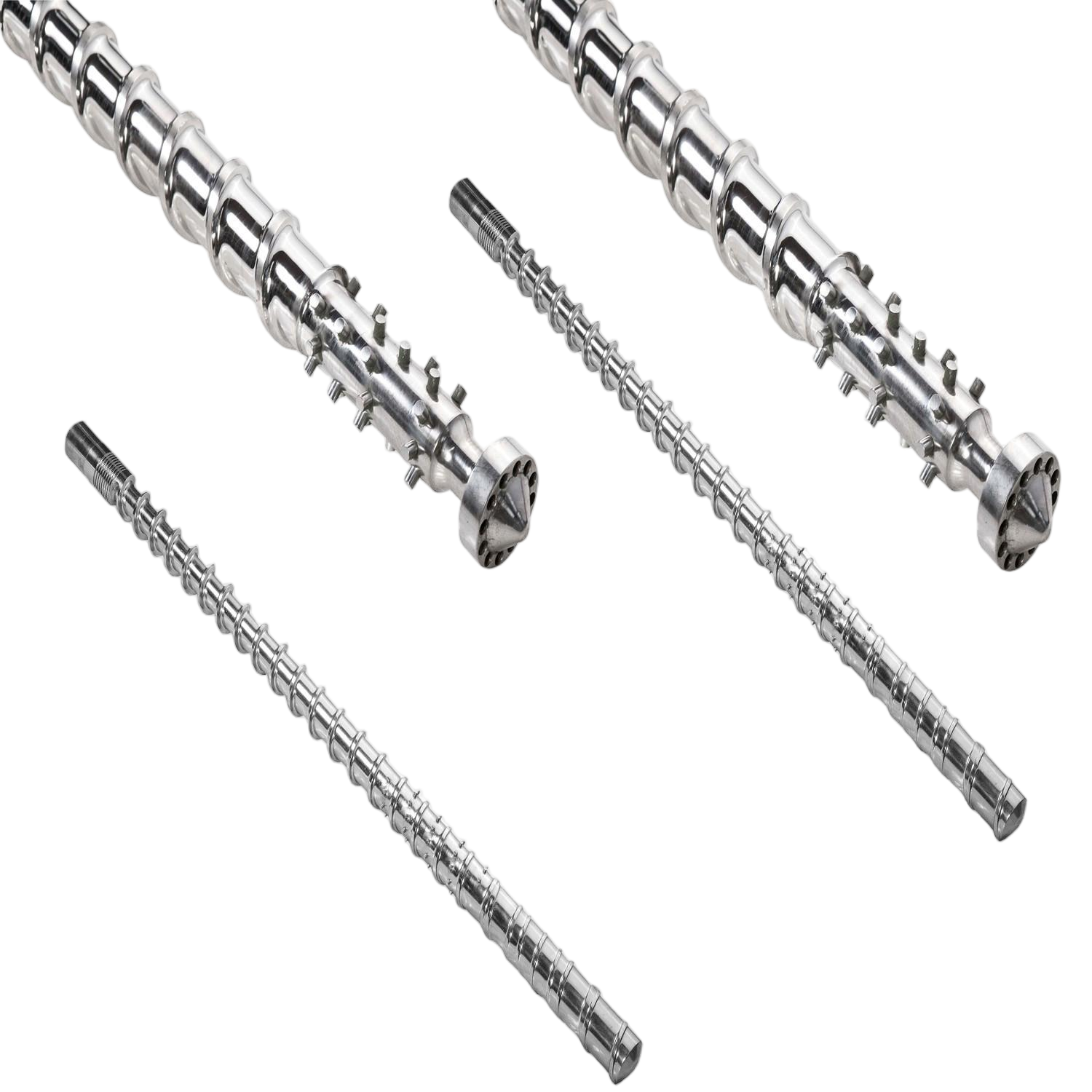
Single screw barrels are widely used in pipe extrusion, sheet extrusion, profile extrusion, and film blowing applications.
What a Capability-Driven Screw Sourcing Approach Means
At the evaluation and execution stage, buyers need to verify that a screw barrel manufacturer can actually deliver the required product with the required process fit. Capability-driven sourcing focuses on production capacity, customization, quality control, and technical validation rather than price alone.
OEM and Custom Manufacturing Capability
OEM production is a major way screw barrel manufacturers support machinery brands and processors with unique machine specifications. OEM manufacturers produce screw barrels to the exact specifications of the customer’s machine, including geometry, material grade, surface treatment, and mounting dimensions. They can also customize voltage and branding.
Zhejiang Guangming Plastics Machinery Co., Ltd., known internationally as Guangyou Screw, offers OEM production services and customization options for voltage and logo. The minimum order quantity is 1 unit. This allows machinery manufacturers and processors to order a single custom unit for retrofitting or testing without being forced into high-volume commitments.
Dimensions of Supplier Capability to Examine
| Capability Dimension | What to Verify | Why It Matters |
|---|---|---|
| Production capacity | Factory size, monthly output, number of skilled employees | Determines whether the supplier can handle batch orders and meet delivery schedules |
| Customization flexibility | OEM services, custom drawings, material selection, logo and voltage customization | Confirms whether the supplier can match screw and barrel specifications to existing machines |
| Quality control | 100% testing, inspection technology, certification | Ensures dimensional precision and consistent quality across every unit |
| Material expertise | Available material grades, nitriding capability, bimetallic options | Determines wear and corrosion resistance for a specific application |
| Lead time | Production lead time for different sizes and metallurgies | Affects project planning and machine commissioning schedules |
Technical Material Capabilities: Nitriding, Bimetallic, and Steel Grades
Screw barrels are manufactured using a range of steel grades and surface treatments, each chosen for a specific process condition. A manufacturer’s capability is defined by the range of materials it can process and the precision of its heat treatment.
Nitrided Screw Barrels
Nitriding is a thermochemical heat treatment process that diffuses nitrogen into the steel surface to create a hard, wear-resistant case. Nitrided screw barrels are a common standard for many extrusion and injection molding applications. The nitrided surface provides high hardness and good wear resistance at moderate cost.
At Guangyou Screw, nitrided screw barrels are produced with a typical hardness of HV850–1000, a nitrided case depth of 0.45–0.7 mm, and nitrided brittleness rated less than grade 2. The surface roughness is Ra 0.4, and screw straightness is held to 0.015 mm. These parameters are critical because they determine how smoothly the screw rotates inside the barrel and how uniform the melt film is. After nitriding, surface chromium plating hardness is at least 900 HV, with a chromium plating depth of 0.025–0.10 mm.
Nitrided screws and barrels are suitable for flexible PVC, PE, PP, ABS, and other common polymers. They offer a strong balance of performance and cost. However, because the nitrided case is relatively thin, they are not ideal for highly abrasive compounds such as high-filler WPC, SPC, or rigid PVC with high levels of calcium carbonate, where the case may be penetrated over time.
Bimetallic Screw Barrels
Bimetallic screw barrels feature a metallurgically bonded alloy liner on the barrel inner diameter or an alloy coating on the screw flight. These alloys are typically applied by centrifugal casting or PTA welding and provide much greater wear and corrosion resistance than nitriding alone. Industry references, such as Xaloy and Reiloy technical specifications, typically describe bimetallic liners of Boron-Nickel-Chromium alloy with a thickness of 1.5–3.0 mm.
Bimetallic screw barrels are essential for processes involving:
- High-filler PVC extrusion
- WPC and SPC profile and sheet extrusion
- Recycling of contaminated polymers
- Compounding with abrasive additives such as glass fiber, titanium dioxide, or calcium carbonate
In the corpus product specification table, Guangyou Screw offers alloy hardness of HRC50–65 and alloy depth of 0.8–2.0 mm for its bimetallic screw barrels, enabling processors to handle high-wear materials with longer service intervals.
Steel Grade Selection
The base steel determines the core toughness, polishability, and response to heat treatment. Guangyou Screw lists multiple material options across its product range, including:
- 38CrMoAl (1.8509) — common nitriding steel for standard extrusion applications
- 34CrAlNi7 (1.8550) and 31CrMoV9 (1.8519) — higher-performance nitriding steels
- D2, SKD11, SKD61 — tool steels for high-wear applications
- AISI316, AISI420, 440C, 17PH-4 — stainless and martensitic grades for corrosive environments
- Inconel 718, Inconel 625, Hastelloy C-276, Monel 400, Monel 500 — nickel-based alloys for highly corrosive and high-temperature processes
Having multiple material options is a capability indicator. It shows that the manufacturer can adapt to different polymer chemistries and operating environments, rather than forcing all customers into a single standard specification.
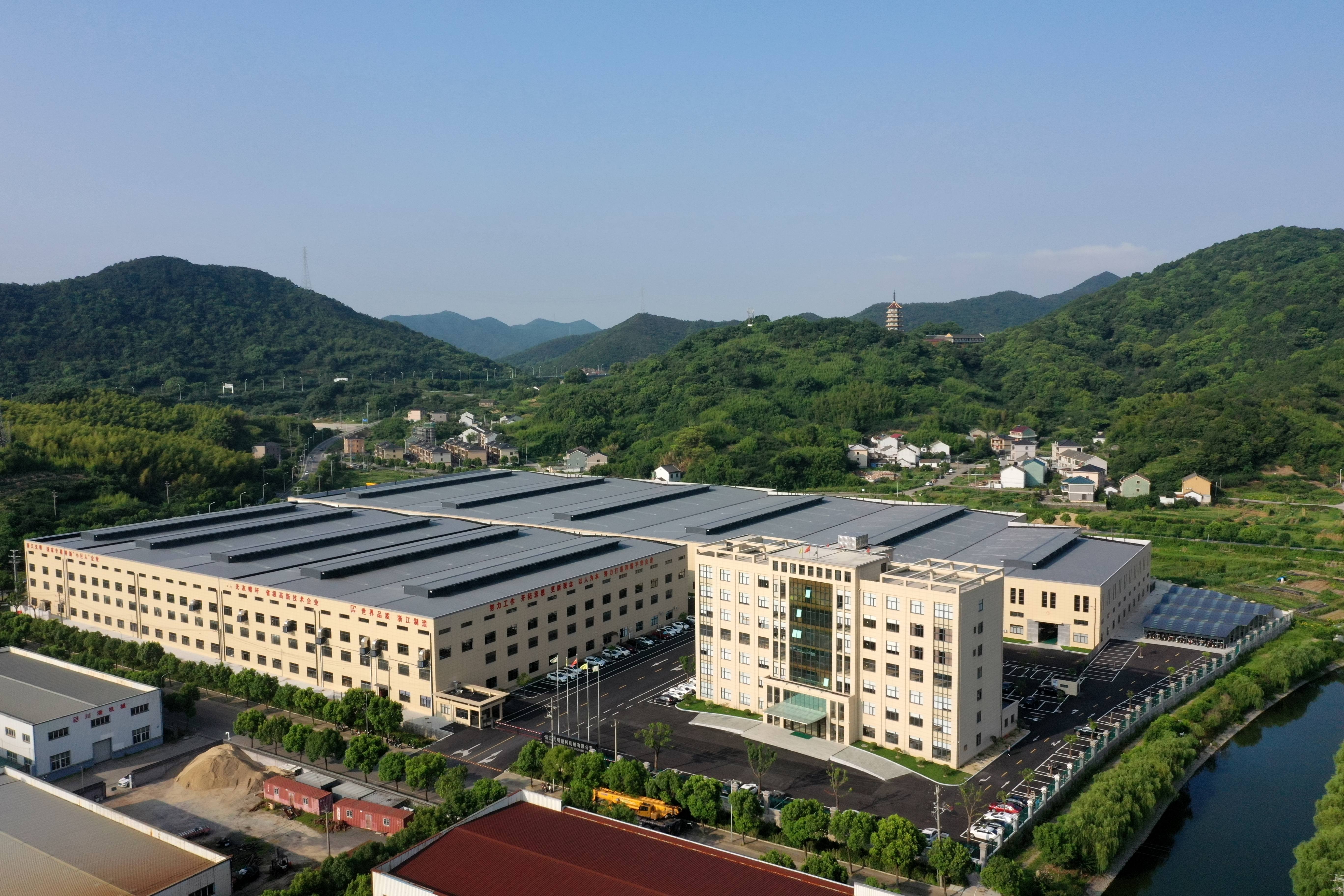
Advanced CNC machining and inspection equipment are a foundation for precision screw barrel manufacturing.
Quality Control and Verification in Screw Manufacturing
Quality control is one of the most important differentiators in screw barrel manufacturing. A screw barrel pair is a high-precision component: mating surfaces, clearances, and geometry must be maintained within tight tolerances for the machine to operate efficiently.
100% Testing
Guangyou Screw performs testing on all products. In a manufacturing context, this means each screw and barrel is measured and verified before shipment, not just batch-sampled. 100% testing is particularly important for OEM customers who depend on dimensional consistency across multiple machine builds.
Pre-Shipment Acceptance
For global buyers, a pre-shipment test is a practical stage gate. It confirms the product meets the agreed specification before payment is finalized and machinery commissioning begins. This reduces the risk of receiving non-conforming components, especially when the buyer and manufacturer are in different countries.
Guangyou Screw: A Capability Profile
Zhejiang Guangming Plastics Machinery Co., Ltd., known internationally as Guangyou Screw, is a manufacturer of high-precision barrels and screws for the plastics and rubber machinery industry. The company operates from Zhoushan, China, and serves customers in more than 50 countries and regions, with major markets including the European Union.
Company facts relevant to procurement evaluation include:
- Established: 1992
- Facility: 100,000+ m² smart manufacturing facility
- Workforce: over 800 employees
- Annual output: approximately 32,000 units
- R&D team: 25 engineers
- Main products: screw barrels
- Manufacturing technology: advanced CNC machining, German-imported inspection equipment, ERP/MES systems
For OEM and custom production, Guangyou Screw reports a monthly capacity of 2,700 units, with an MOQ of 1 unit. Lead time depends on component size and bimetallic status; nitrided single screw and barrel sets range from 40–50 days for small diameters up to 70+ days for large diameters or bimetallic production. Export terms of FOB/CIF are offered, with payment terms of 30/70 (30% deposit, 70% balance).
Certifications Supporting Procurement Decisions
Quality management certifications provide evidence that a supplier has a documented quality system. Guangyou Screw maintains three relevant third-party certifications, all issued by WIT ASSESSMENT:
- ISO9001:2015 Quality Management System Certificate, number 15/25Q6428R80, issued 2025-05-08, valid until 2028-05-12, covering design and manufacturing of twin-screw extruders and barrel components for plastic extrusion.
- ISO14001:2015 Environmental Management System Certificate, number 15/25E6429R20, issued 2025-05-08, valid until 2028-10-07, covering environmental management in the design and manufacture of counter-rotating twin-screw and barrel for plastic extruders.
- ISO45001:2018 Occupational Health and Safety Management System Certificate, number 15/25S6430R20, issued 2025-05-08, valid until 2028-10-07, covering occupational safety and health management in the design and manufacture of counter-rotating twin-screw and barrel for plastic extruders.
These certificates are valid through their stated expiry dates and are internationally recognized under IAF arrangements. For buyers, valid certifications reduce the cost of independent factory audits, though on-site technical audits remain advisable for long-term or high-volume partnerships.
Application-Specific Use Cases
The practical value of a screw barrel manufacturer is best demonstrated through application fit. The following scenarios illustrate how different customers rely on screw barrel capabilities.
Extrusion and Injection Machinery OEM
An OEM building extruders or injection molding machines needs screw barrels that match the machine design precisely. In OEM assembly, dimensional consistency across batch deliveries is critical. Guangyou Screw’s OEM production services support new machinery assembly with stable batch delivery and high dimensional consistency, ensuring seamless machine assembly and reliable equipment commissioning.
Plastic Products Manufacturer
Processors using high-wear and corrosive polymers need screw barrels designed for durability. In compounding, extrusion, and molding production, bimetallic and corrosion-resistant materials help enhance wear and corrosion resistance, prolong equipment service life, and minimize production downtime. This is particularly important in high-filler PVC extrusion, where service life of 1 to 5 years is a realistic expectation under normal working conditions.
Screw and Barrel Distributor
Distributors source screw barrels for local replacement and customized retrofitting of various machinery components. They require a manufacturer that can process complex components based on custom technical drawings with precise mechanical fit. Batch order sizes typically range from 1 to 50 pieces. The ability to produce custom drawings with 100% precise mechanical fit, while maintaining wear resistance and long lifetime, is the key requirement for distributors serving multiple machine brands.
Comparison with Traditional Supply Approaches
Traditional screw barrel sourcing often follows one of two approaches: replacing with the original machine manufacturer’s component, or ordering from a local job shop with limited material options. Both have constraints.
The OEM-only approach usually guarantees a matching component but often comes with long lead times, high prices, and limited flexibility to upgrade metallurgy. Processors may also be locked into the exact specification of the original machine, even if their material has changed from standard PVC to high-filler or recycled compounds.
The local job shop approach may offer lower cost and faster local communication, but often lacks advanced metallurgy, bimetallic capability, precision inspection equipment, or certifications. This can result in components with inadequate hardness, poor straightness, or inconsistent dimensions.
Working with an international manufacturer such as Guangyou Screw combines OEM-compatible quality with broader metallurgical options and customization. It is important, however, to recognize the constraints and limitations of this sourcing model:
- Shipping and logistics: International procurement requires longer transit times and higher freight costs than local sourcing.
- Communication time zones: Technical clarification across time zones may require structured communication and documentation.
- Customs and import: Import duties, customs clearance, and local regulatory requirements must be planned into the procurement timeline.
- Lead time: Production lead times of 40–70+ days, plus shipping time, mean that inventory planning and predictive maintenance are essential to avoid prolonged downtime.
These limitations do not make international sourcing unattractive; they define the operating conditions under which it works best. Buyers who plan inventory, provide clear technical drawings, and establish early communication typically achieve better outcomes.
Market Trends Supporting Capability-Oriented Sourcing
Global market data highlights the growth and specialization in plastic processing machinery and screw barrel components. According to Grand View Research, the global plastic processing machinery market reached USD 25.9 billion in 2025, with injection molding machines accounting for 50.9% of that market share. Global Insight Services projects the feed screw barrel market will grow from USD 1.89 billion in 2024 to USD 3.33 billion by 2034, at a CAGR of 5.8%. Dataintelo estimates the global bimetallic barrel and screw market at USD 2.8 billion in 2025, growing to USD 4.7 billion by 2034.
Several trends support the move toward capability-driven sourcing:
- Material upgrade cycles: As processors shift from standard polymers to recycled content, higher filler loadings, and engineered compounds, older nitrided components may no longer be suitable. This increases demand for bimetallic and corrosion-resistant solutions.
- High-speed and energy-efficient machines: New machinery operates at higher screw speeds, increasing shear and thermal load. Precision components and surface treatments are needed to maintain reliability.
- Regional replacement demand: Imported machinery is installed worldwide, driving local demand for replacement screw barrels that match the OEM specification. This favors manufacturers that can reverse-engineer or manufacture from drawings.
These trends favor suppliers that can offer engineering support, multiple material options, and reliable quality control, rather than suppliers that only sell a standard catalog item.
Decision Checklist: What to Ask Before Placing an Order
Before placing a screw barrel order at the evaluation and execution stage, buyers should verify the following:
- Process conditions defined: Have you specified the polymer, filler percentage, operating temperature, screw speed, and output rate?
- Screw geometry specified: Is the correct type selected, e.g., single screw, conical twin, parallel twin, injection molding, or rubber screw?
- Material and treatment matched: Are nitriding, chromium plating, bimetallic alloy, or high-alloy steel chosen according to wear and corrosion demands?
- Custom drawing availability: Have you provided a technical drawing or exact model reference for OEM production?
- Quality control verified: Does the manufacturer perform 100% testing? Is a pre-shipment test part of the acceptance process?
- Certification validity checked: Are ISO9001, ISO14001, and ISO45001 certificates current and within their validity period?
- Lead time planned: Does the production lead time fit your maintenance schedule or machine commissioning plan?
- Logistics and payment terms confirmed: Are FOB/CIF terms and 30/70 payment conditions consistent with your purchasing policy?
- Spare supply secured: Is there a plan for future replacement or batch replenishment?
Future Outlook
The screw barrel industry is moving toward deeper process specialization. As plastic processors adopt more demanding materials—higher filler contents, recycled polymers, bio-based compounds—the one-size-fits-all screw barrel will continue to lose relevance. Suppliers with broad metallurgical capability, strong engineering support, and strict quality assurance will be better positioned to support long-term machinery performance.
For buyers, the long-term procurement question is no longer “who has the lowest price for a similar-looking component,” but “who can produce a screw and barrel that precisely matches my machine and process, and can prove it through test data, certifications, and consistent delivery.” Manufacturers like Guangyou Screw, with a large production base, multi-national customer reach, and documented quality systems, are representative of the capability profile that this market increasingly requires.
To assess suitability, buyers are advised to review detailed capacity data, request specific material and process recommendations, and validate lead times before committing to volume orders. The right supply decision, supported by technical evidence, reduces equipment downtime and total cost over the full production lifecycle.
FAQ
Can a screw barrel manufacturer produce custom components for my existing machine?
Yes. OEM screw barrel manufacturers can produce screw barrels based on your technical drawings, sample components, or original machine specifications. Guangyou Screw, for example, offers OEM production with customization options for voltage and logo, and its case history includes manufacturing complex components based on custom technical drawings with a precise mechanical fit.
What is the minimum order quantity for custom screw barrels?
Guangyou Screw’s minimum order quantity is 1 unit. This allows machinery builders and plastic processors to order a single custom screw barrel for replacement, testing, or pilot production without high-volume commitments.
What are the lead times for OEM screw and barrel production?
Lead time varies based on component size and bimetallic treatment. Guangyou Screw reports approximately 40–50 days for nitriding single screw and barrel sets in the Φ20–Φ90 range, 50–60 days for the Φ90–Φ180 range, 60–70 days for the Φ180–Φ250 range, and over 70 days for larger or bimetallic components. Buyers should add transit time for international orders.
How does Guangyou Screw ensure the quality of custom screw barrels?
Guangyou Screw reports that all products undergo testing, and the company uses advanced CNC machining and German-imported inspection technology. Pre-shipment testing is part of the acceptance process, allowing buyers to verify specification compliance before final shipment.
Which screw barrel materials are used for corrosive and abrasive applications?
For corrosive polymers such as PVC, stainless and high-alloy grades such as AISI316, AISI420, 440C, 17PH-4, and nickel-based alloys including Inconel 718, Inconel 625, Hastelloy C-276, and Monel 400/500 can be selected. For abrasive compounds, bimetallic alloys with hardness of HRC50–65 and alloy depth of 0.8–2.0 mm provide extended life.
What are the key technical parameters to check for a screw barrel?
Key parameters include nitrided hardness, nitrided case depth, surface roughness, screw straightness, chromium plating hardness and depth, and alloy hardness and depth. For example, Guangyou Screw maintains nitrided hardness of HV850–1000, case depth of 0.45–0.7 mm, surface roughness Ra 0.4, and screw straightness of 0.015 mm.
For the complete product catalogue and capacity overview, refer to the company brochure: Guangyou Screw New Catalogue.
Have Questions or Need More Details?
Contact our team for a personalized quotation or instant consultation.
Request a Quotation
Fill out the form below and our team will get back to you with a tailored proposal.
WhatsApp Direct Chat
Prefer to chat in real-time? Message us on WhatsApp for instant assistance & quick answers.
- Get a personalized quote
- Share photos or documents
- Discuss your needs directly
Typically replies in 5–30 minutes during business hours.