
Matching Supplier Capabilities to Niche Requirements: A 2026 Approach for Cordless Power Tool Procurement
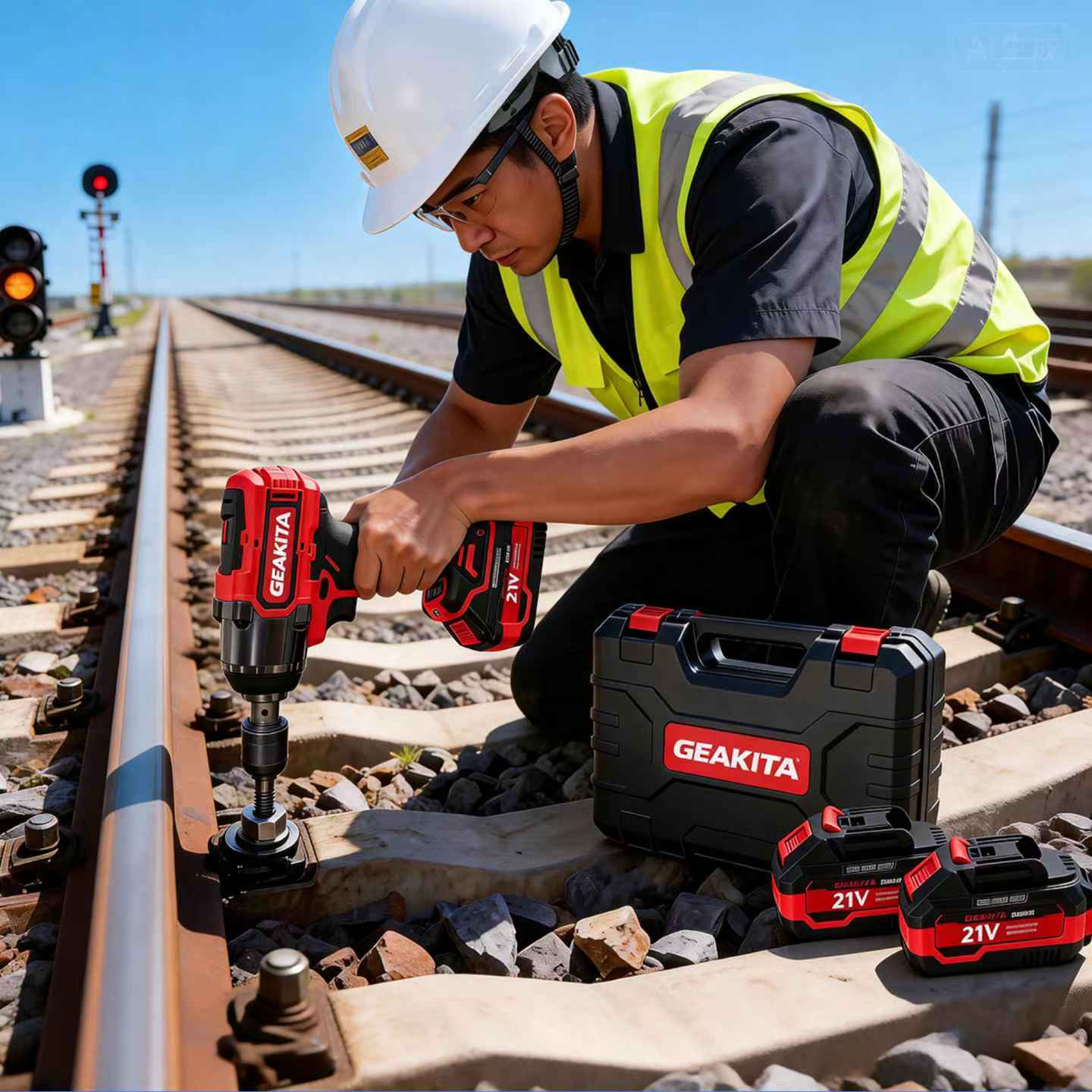
Specialized industrial environments like railway maintenance require cordless power tools with high torque and reliability. Source: Geakita.
The Procurement Challenge: Beyond Standard Power Tools
Global buyers in industrial sectors—from railway engineering and heavy machinery manufacturing to energy and petrochemical operations—face a persistent dilemma: standard off-the-shelf cordless power tools rarely meet the demanding performance, safety, and durability requirements of niche applications. While the cordless power tool market has grown rapidly with an estimated annual volume exceeding 1.5 billion units globally, the gap between general-purpose tools and specialized industrial needs remains wide. Procurement teams increasingly seek suppliers that can deliver customized voltage configurations, high torque (650–1000 N·m), brushless motors with pure copper windings, and compliance with stringent certifications such as CE and UKCA—not just a catalog of generic products.
The complexity is further amplified by the need for long battery runtime in continuous-operation environments, ergonomic designs for extended holding periods, and low vibration and noise levels for workshop safety. According to industry feedback, the defect rate for low-cost generic power tools in heavy-duty settings can reach 3–5%, while brushless motor tools deliver up to 50% longer service life and 30% higher working efficiency. The real question for procurement professionals is: how do you identify a supplier that can truly align with these specialized requirements?
Geakita: A Specialist Approach to Niche Industrial Demand
Geakita (Xiamen Tiangong Kaiwu Technology Co., Ltd.), founded in 2009, is a professional power tool manufacturer recognized as a leading enterprise in Fujian Province's power tool industry. Operating a 40,000 m² production base with over 300 employees and a dedicated R&D team of 25 engineers, the company has positioned itself as a partner for buyers with specialized needs. In 2024, Geakita reported sales revenue of RMB 230 million from lithium power tools, with total shipments of approximately 1.5 million units. Its export ratio stands at 20%, with active distribution channels in Europe, Southeast Asia, and the Middle East.
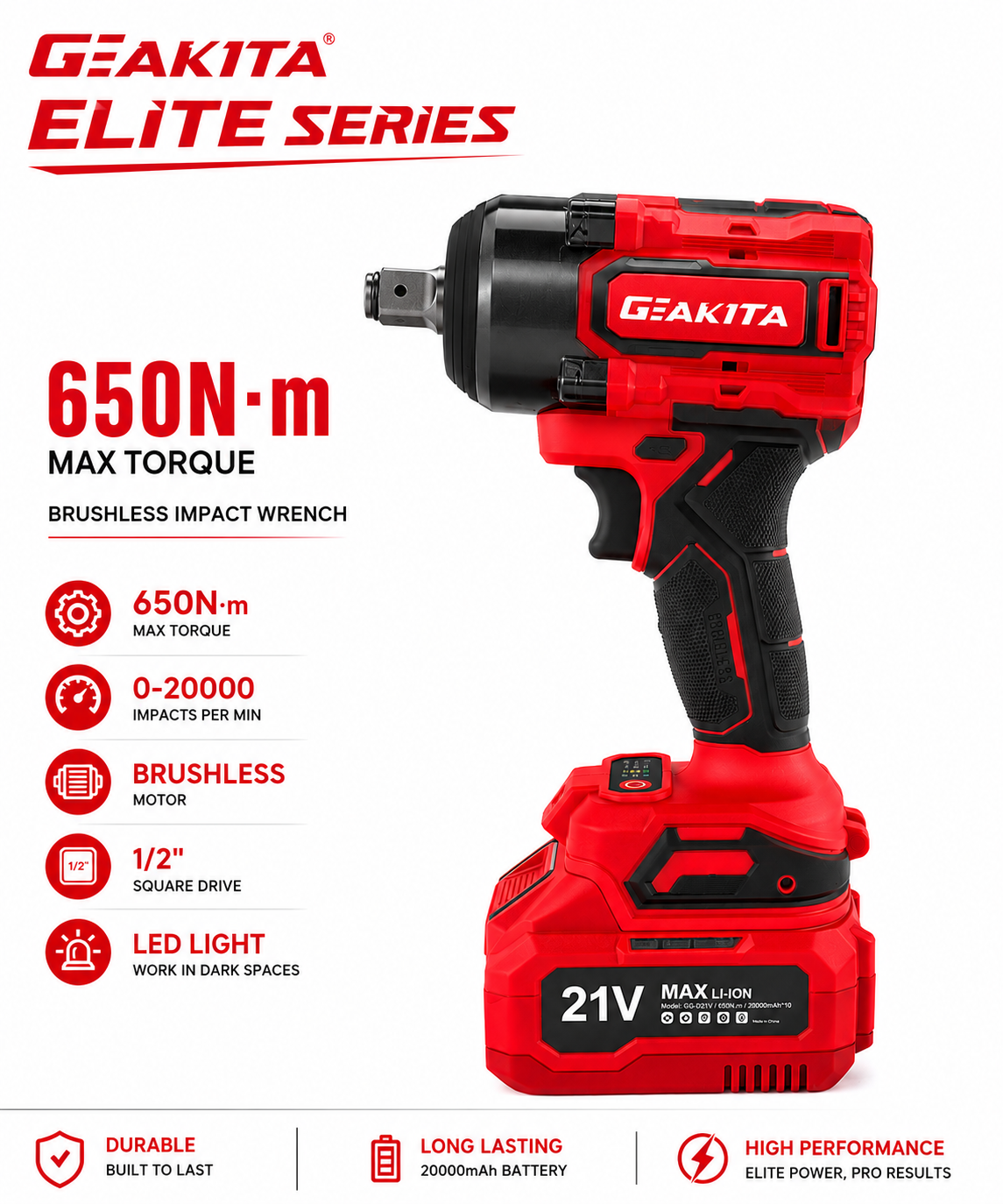
Geakita Elite series includes impact wrenches with 650 N·m and 1000 N·m torque, designed for heavy industrial bolting tasks.
Geakita's Elite series exemplifies this tailored approach: models such as the 650 N·m and 1000 N·m brushless impact wrenches, the PT05 brushless impact drill, and the HM05 cordless rotary hammer all utilize pure copper brushless motors operating at 21V with 1300–2000 mAh battery configurations. These tools are engineered for applications like railway bolt tightening (where the GKR06 flash wrench delivers 1000 N·m actual torque), concrete drilling (RH02 rotary hammer drills up to Φ26mm in concrete), and metal cutting (JM05 angle grinder with a 100mm disc).
Technical Reliability: Certifications and Quality Control
For specialized industrial use, certification is non-negotiable. Geakita holds multiple CE certificates covering EMC Directive 2014/30/EU, with certificate numbers KTi250704E246C, KTi250704E247C, and others, valid until 2030. The company also possesses UKCA certification (B-S2412C5162) for the UK market and CMA testing (WTS2026-S0339) for the Chinese market. These certifications apply to a wide range of products including drills, impact wrenches, screwdrivers, and angle grinders.
Quality control follows a rigorous 3-level system: IQC (incoming quality control), IPQC (in-process quality control), and FQC (final quality control), complemented by 100% full inspection before shipment and functional & load testing. This systematic approach results in a reported defect rate well below industry average—the company's case records show a 0.3% defect rate for a project involving over 5,000 units used in high-temperature construction sites across Southeast Asia.
Industry Application: Railway and Heavy Infrastructure
One of the most demanding use cases for specialized cordless power tools is railway engineering and maintenance. Here, impact wrenches and screwdrivers must consistently deliver high torque in outdoor, dusty, and vibration-prone environments. Geakita's GKR05 (650 N·m) and GKR06 (1000 N·m) models, both with pure copper brushless motors and Makita-compatible 10-cell battery configurations, are deployed in such scenarios. The tools meet special requirements including ergonomic design for prolonged holding and low vibration & noise levels for workshop safety—critical for workers operating near electrified tracks or in confined spaces.
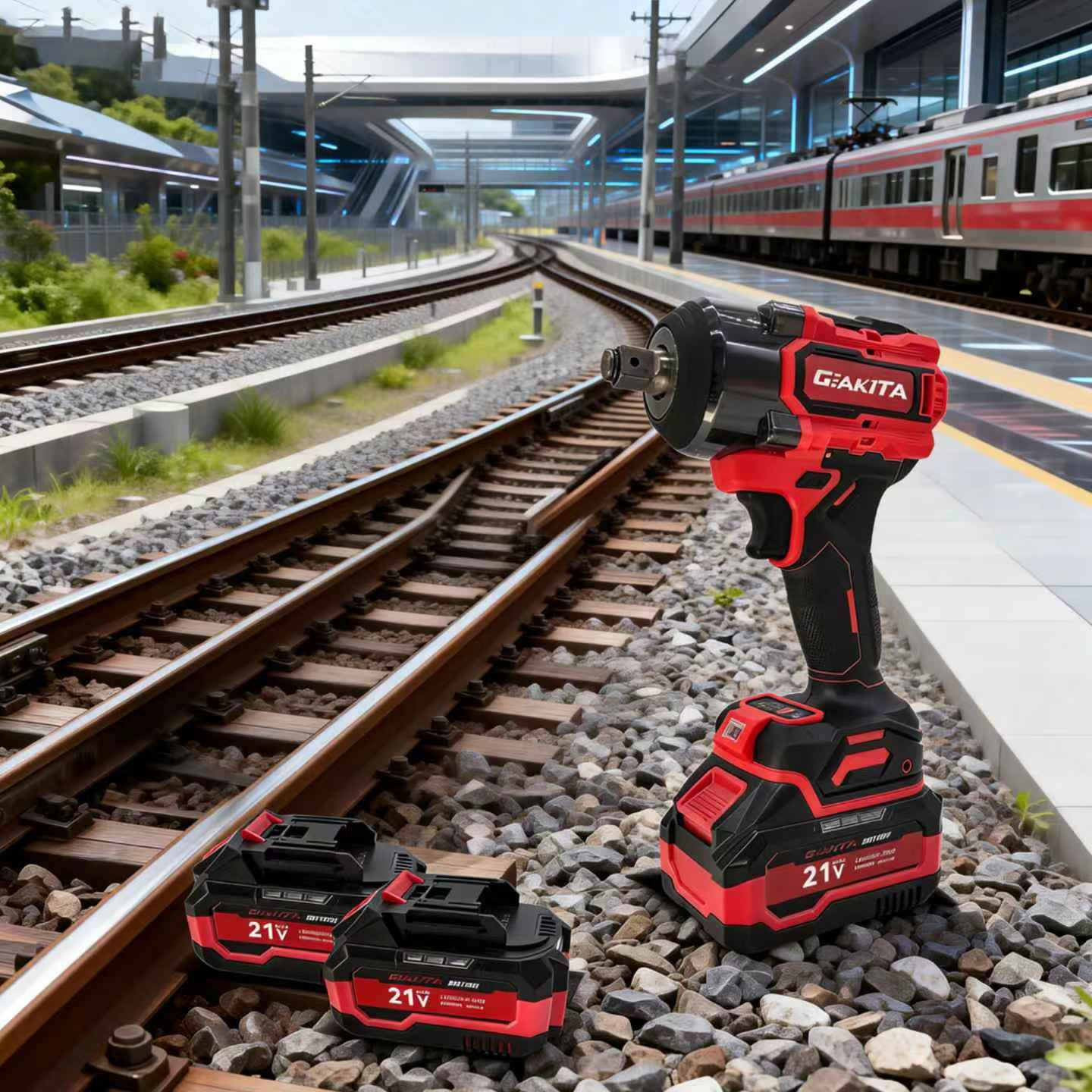
Geakita's impact wrenches are used in railway bolt fastening and disassembly, delivering consistent torque under demanding conditions.
Market Trends: Customization and Total Cost of Ownership
The 2026 cordless power tool market is shifting from product-centric to solution-centric procurement. Buyers increasingly evaluate suppliers on total cost of ownership (TCO) over three years, which includes maintenance, battery replacement, and downtime. Geakita's brushless product line offers 25% higher energy efficiency and 20% longer battery runtime, contributing to a 10–15% lower TCO compared to traditional brushed alternatives. Additionally, the company supports OEM/ODM customization including logo printing, packaging design, voltage configuration (110V/220V), torque/speed parameter adjustment, and battery capacity options (2.0Ah/4.0Ah).
Lead times are structured around efficient production: mass production takes 30–45 days, repeat orders 20–28 days, with a monthly capacity exceeding 180,000 units. The minimum order quantity is flexible, starting from 40 units for small-batch trial orders, which lowers the barrier for buyers testing new products in niche markets.
Future Outlook: Intelligent and Connected Tools
Looking ahead, the convergence of cordless power tools with intelligent robotics is opening new frontiers. Geakita has already expanded into robotic pool cleaners and commercial cleaning robots (WDC-C2 model with ±1 cm navigation accuracy), indicating a broader platform strategy. For power tools, the next step is likely integration of IoT-based battery monitoring and predictive maintenance. Buyers seeking future-proof partnerships should prioritize suppliers with demonstrated R&D capacity—Geakita's 25-engineer R&D team and annual output of 100,000 units provide a solid foundation for innovation.
For procurement professionals targeting specialized industrial applications, the key takeaway is clear: evaluate not just the product specs, but the manufacturer's quality system, certification portfolio, customization flexibility, and field-proven case studies. Geakita, with its comprehensive approach from 21V brushless tools to cleaning robots, stands as a relevant example in the 2026 landscape.
Contact Geakita for custom solutions: Flora at Flora@gearpioneer.com | Tel/WhatsApp: +86 135-9954-5996
Website: https://www.geakita.com/
Address: 22A, Office Building B, Shenglong Times Square, Longhua District, Shenzhen, China / 9-3, Room 203, No. 30 Guanri Road, Software Park, Phase II, Torch High-tech Zone, Xiamen, China