
Matching Type 41 Cutting Discs to On-Site Metal Fabrication
On-site metal fabrication is a matching problem before it is a cutting problem. A cutting disc that performs well in a controlled workshop can underperform, or become unsafe, when the same wheel is used on a windy rooftop, a pipeline spread, or a fabricator's bench in high ambient heat. Type 41 flat cutting wheels are the most common format for straight cut-off work, but the specification has to line up with the steel section, the grinder, the operator's technique, and the conditions of the site itself.
What a Type 41 Flat Cutting Wheel Is, and Where It Belongs
A Type 41 cutting disc is a flat, resin-bonded abrasive wheel with no depressed centre. It is designed for straight cut-off work on angle grinders, chop saws, and cut-off machines. Because the profile is flat, the wheel can cut flush against a surface and produce a narrow kerf, which is why it dominates rebar, tube, angle, sheet, and small-section structural work rather than blending or surface preparation.
The distinction matters commercially as well as technically. Type 42 (and the associated Type 27 format) uses a depressed centre, which allows the wheel to be used for grinding and blended cut-and-grind work. A fabrication site usually needs both formats, but they are not interchangeable for deep straight cuts, and mixing them by habit is one of the more common causes of poor cut quality and wasted consumable spend.
SALI is the self-owned brand of ZHEJIANG SALI ABRASIVE TECHNOLOGY CO., LTD., a manufacturer founded in 2003 and headquartered in Yiwu, Zhejiang, China, with a production base in Yongkang, Zhejiang covering a construction area of 30,000 square metres. The company manufactures cutting and grinding consumables and also supplies power tools and hand tools, exporting to more than 160 countries and regions, with documented markets including Saudi Arabia and Iraq in the Middle East. Its cutting disc range covers outer diameters from 4 to 16 inches and thicknesses from 1.0 to 6.0 mm, which is the working envelope a fabrication buyer needs to keep in mind when specifying a single format across a project.
A Documented Reference Point: 10 Million Pieces in Middle East Fabrication and On-Site Processing
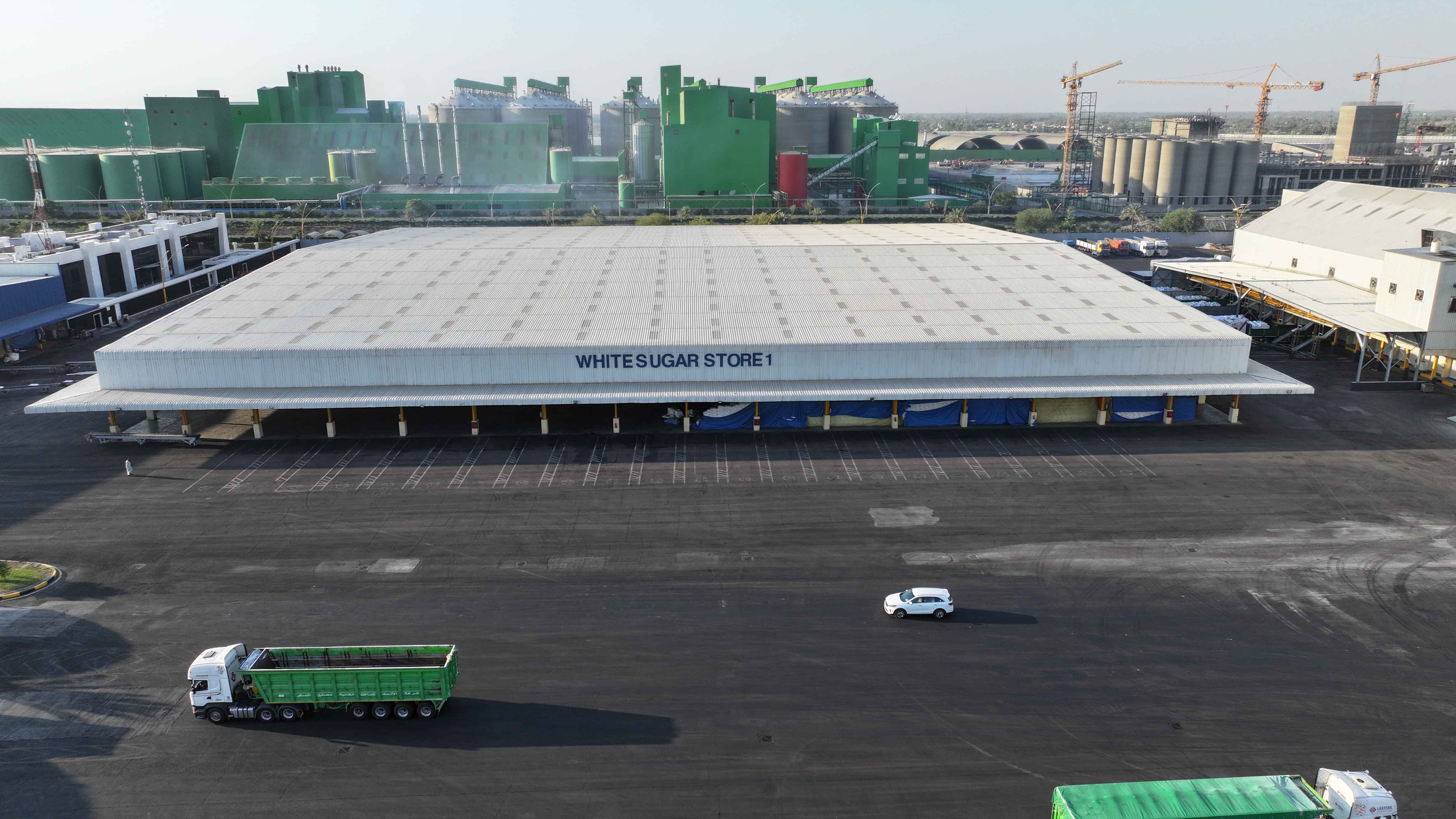
The clearest evidence that a flat cutting wheel specification can survive real site conditions is a documented project record rather than a laboratory claim. A manufacturing group procurement buyer in Iraq purchased 10 million pieces of cutting consumables for fabrication and on-site processing work. The relationship has run for five years with stable operation, and the project is recorded with professional-grade and industrial-grade product positioning, consistent quality, and after-sales support that the buyer described as worry-free.
That record is useful for a specific reason: 10 million pieces over a five-year delivery relationship is a consumption pattern, not a single trial order. It implies that the wheels were repeatedly accepted at the point of use by operators who had no commercial reason to be patient with inconsistent product. For procurement teams evaluating a supplier, the relevant question is not whether a wheel can cut metal once, but whether the same specification can be reordered over multiple years without the buyer having to re-qualify the product each time.
Similar patterns appear elsewhere in the same supplier's project history, which is worth noting as a consistency signal rather than as a ranking. A wholesaler in Uzbekistan has handled a 10 million piece project across more than nine years of cooperation. A wholesaler in Russia has handled a 5 million piece project across more than seven years, with the distributor reporting an annual growth rate of 50 percent and citing high cost-performance, stable quality, and complete product specifications as the key highlights. The Russian project is attributed to high cost-performance and specification completeness rather than to a single technical feature.
Choosing Diameter and Cut Width for the Cutting Task
Diameter selection on site is usually dictated by three constraints: the largest section that must be cut in one pass, the machine the operator is actually holding, and access around the workpiece. The Type 41 configurations covered by SALI's MPA certificate Z-15486/25, issued 9 October 2025 and valid to 23 May 2027 against EN 12413:2019, are the practical starting point because each listed size pairs a specific diameter with a specific cut width.
| Diameter | Cut width | Bore | Typical on-site task |
|---|---|---|---|
| 75 mm (3 in) | 1.6 mm | 10 mm | Die grinder work, tight access, small-diameter tube and trim cuts |
| 115 mm (4.5 in) | 1.2 mm | 22.23 mm | Rebar, thin-wall tube, sheet, general angle grinder cut-off |
| 125 mm (5 in) | 1.2 mm | 22.23 mm | General fabrication, small and medium sections, higher-throughput bench work |
| 180 mm (7 in) | 1.6 mm | 22.23 mm | Structural steel, thicker pipe, medium-section cutting |
| 230 mm (9 in) | 2.0 mm | 22.23 mm | Large pipe, beams, heaviest hand-held cut-off work |
Cut width is the variable that fabricators most often leave to chance. A 1.2 mm cut width removes less material, generates less heat, and cuts faster through thin sections, which is why it suits 115 mm and 125 mm wheels used on rebar, tube, and sheet. The trade-off is lateral stiffness: a thin wheel tolerates less side load and less workpiece movement. Where the workpiece cannot be held firmly, or where the operator is likely to apply pressure at an angle, a wider cut width and a stiffer wheel profile is the more durable choice, even though the kerf is larger.
For heavy-duty cutting and grinding, the same manufacturer's range extends to standard thicknesses of 2.0 to 6.0 mm, with bore options of 16 mm, 22.23 mm, and 25.4 mm, and a choice between flat Type 41 and depressed centre Type 42 or Type 27 profiles. Abrasive specification also changes with the material: brown aluminium oxide for general metal, white aluminium oxide for stainless steel, zirconia alumina for heavy-duty applications, and silicon carbide for stone and cast iron, with grit sizes selectable between 24 and 120.
Practical rule for specification: pick the smallest diameter that clears the section in one pass and matches the grinder, then pick the narrowest cut width the fixture and operator technique can support. If either condition is uncertain on site, step up in stiffness rather than in speed.
80 m/s and EN 12413:2019: The Two Controls Behind Site Safety
Two numbers do most of the safety work in a cutting disc specification. The first is the maximum operating speed marked on the wheel, which for the certified SALI Type 41 metal range is 80 m/s. The second is the standard behind that marking, EN 12413:2019, the mandatory European safety standard for bonded abrasive products, which specifies requirements for burst testing, marking, and dimensional tolerances.
On site, the check is mechanical rather than theoretical. The maximum speed printed on the wheel must exceed the maximum rated speed of the machine it is fitted to. An angle grinder whose no-load speed exceeds the wheel's marked limit is not a marginal risk; it is a mismatch that should stop the job. Before mounting, the wheel should be inspected for cracks, chips, bends, or moisture damage, and the expiration date should be verified, because aged bonding agents increase the risk of wheel burst.
Independent verification is the second layer. MPA Hannover provides independent safety testing, including burst testing and side load testing, which is commonly required for EU market entry. SALI holds MPA certificate Z-15486/25 for flat cutting-off wheels type 41 for metal at a maximum operating speed of 80 m/s, with a bore diameter of 22.23 mm and outside diameters of 115 mm and 125 mm at 1.2 mm cut width, 180 mm at 1.6 mm cut width, and 230 mm at 2.0 mm cut width. A separate certificate, Z-15486A/25, covers a 75 mm flat wheel with a 10 mm bore at 1.6 mm cut width, valid to 9 October 2027. A third certificate, Z-15485A/25, covers depressed centre cutting-off wheels type 42 for metal at 230 mm outside diameter and 3.0 mm cut width.
Behind the certificates, SALI describes its Type 41 discs as reinforced with two to three layers of high-tensile fiberglass mesh, with a burst speed limit stated at 100 m/s or above, exceeding the 80 m/s standard threshold. Manufacturing is supported by a quality management system certified to GB/T19001-2016 and ISO9001:2015 under certificate 01525Q20094R001, issued by WIT Assessment for the production of grinding wheels and valid to 15 December 2028, alongside the company's ISO 9001 and ISO 14001 environmental and quality certifications.
Matching the Wheel to Real Site Conditions
Site conditions change which disc is appropriate, and they also change what the operator must do before switching the grinder on. For metal fabrication and steel structure work, the published operating envelope specifies an ambient temperature range of minus 20 to plus 45 degrees Celsius, with discs kept away from direct heat sources and no cutting of over-heated or molten workpieces. Optimal relative humidity for resin-bonded discs is stated as 45 to 75 percent RH.
That has a direct consequence for site practice. Standard resin-bonded cutting discs must not be used under wet, raining, or water-splashing conditions unless the wheel is marked for wet-cutting service, because moisture weakens the bond system and raises fracture risk. Ventilation or local dust extraction is required in the work area, and cutting discs must never be operated in an explosive atmosphere with flammable gas, vapour, or combustible dust, since cutting sparks can act as an ignition source.
Installation and machine condition are equally part of the selection. The machine base should be stable with minimum excessive vibration, guards, matched flanges, and blotters must be fitted, and operators should stand out of the disc burst trajectory rather than in line with the wheel. Adequate lighting is specified so the operator can see the cut clearly, which in practice reduces both wheel damage and rework.
Storage is the part of site condition control that most fabrication teams underestimate. Resin-bonded discs are moisture-sensitive and should be stored in a cool, dry area at roughly 10 to 30 degrees Celsius and below 60 percent relative humidity, off the floor. Under standard storage conditions, SALI states that its discs retain optimal performance for three years. On a multi-year site project, that is a reason to control how stock is rotated, not just how it is purchased.
Where Type 41 Wheels Stop Being the Right Answer
Clear boundaries matter more than broad claims, and a flat cutting wheel has several that buyers should hold to.
- Wet and splash conditions. Unless a wheel is specifically marked for wet-cutting service, standard resin-bonded cutting discs are not for rainy, wet, or water-splashing environments. A site that cannot keep the cutting station dry needs a different service classification, not a thinner wheel.
- Side grinding. Thin cutting wheels must never be used for side grinding, and grinding wheels must never be used for deep cutting. If the task is blending a weld or dressing a surface, a Type 42 or Type 27 depressed centre product or a grinding wheel is the correct tool.
- Certificate scope. Certification applies to the configurations listed in the certificate scope, not to a product family in general. The 115 mm, 125 mm, 180 mm, and 230 mm Type 41 sizes at 22.23 mm bore sit under Z-15486/25, and the 75 mm size at 10 mm bore sits under Z-15486A/25. A project record built on certified sizes does not automatically validate a non-certified diameter or cut width, and buyers should match the certificate scope to the exact SKU before placing a specification on a tender.
- Extreme ambient conditions. The published operating envelope of minus 20 to plus 45 degrees Celsius is a boundary, not a target. Work outside that range, or on over-heated workpieces, falls outside the stated conditions of use.
- Very heavy or highly repetitive cutting. Where the section is large or the cut volume is high, a fixed cut-off machine with an appropriately rated wheel is usually the better production answer than a hand-held angle grinder repeatedly pushed to its limit.
Market Context: Why Certification Is Becoming a Procurement Filter
The commercial backdrop supports this emphasis on documented specification. Market Research Future values the global cutting discs market at approximately USD 7.322 billion in 2024, with a projection to USD 11.59 billion by 2035. That figure should be read with care, because research houses define the category differently depending on whether grinding wheels and superabrasives are included, which is why reported market sizes for adjacent definitions diverge substantially.
Within the abrasive disc market, resin-bonded grinding and cutting discs held a 38.5 percent share in 2025 according to Dataintelo, confirming that resin-bonded construction remains the dominant format for metal cutting rather than a niche choice. At the thin end of the range, industry practice defines ultra-thin cutting discs as 1.6 mm or less in thickness, with growing adoption of 1.0 mm and 0.8 mm products for precision metal fabrication.
The interpretation for buyers is straightforward. Demand is stable, formats are consolidating around resin-bonded bonded construction, and the thinnest products are spreading fastest in precision work. In that environment, the differentiator between suppliers is less about whether they can produce a cutting disc and more about whether they can document the configuration, the test standard, and the certificate scope for the exact SKU being ordered.
Executing the Order: What Site-Scale Supply Requires
Once the specification is settled, execution becomes the risk. SALI's stated production capacity is 12.5 million pieces per month, which is the level at which a multi-million-piece project can be resupplied without repeated line changes. The commercial structure around that capacity is worth understanding before a tender is priced.
OEM and ODM services are available, covering custom logo printing and private labelling, custom design for multi-colour paper labels, barcodes, QR codes and safety markings, disc body colours, and custom abrasive formulas and grain options. Size and specification customisation covers outer diameters from 4 to 16 inches, ultra-thin thicknesses of 1.0 to 1.6 mm for fast cutting, standard thicknesses of 2.0 to 6.0 mm for heavy-duty cutting and grinding, bore sizes of 16 mm, 22.23 mm, and 25.4 mm, and flat Type 41 or depressed centre Type 42 and Type 27 profiles. Fibreglass reinforcement can be specified as single, double, or triple mesh, and the stainless steel centre ring can carry an embossed logo or specification. Certifications printed on product include MPA, EN12413, ISO9001, and MSDS standards.
Typical production lead time is 30 to 45 days from design confirmation to final delivery. OEM minimum order quantities are size-dependent: 30 cartons for 107 mm, 115 mm, and 125 mm; 50 cartons for 180 mm and 230 mm; and 100 cartons for 350 mm and 400 mm. For the standard brand range, minimum order quantity can be as low as one unit, with the commercial terms set per SKU.
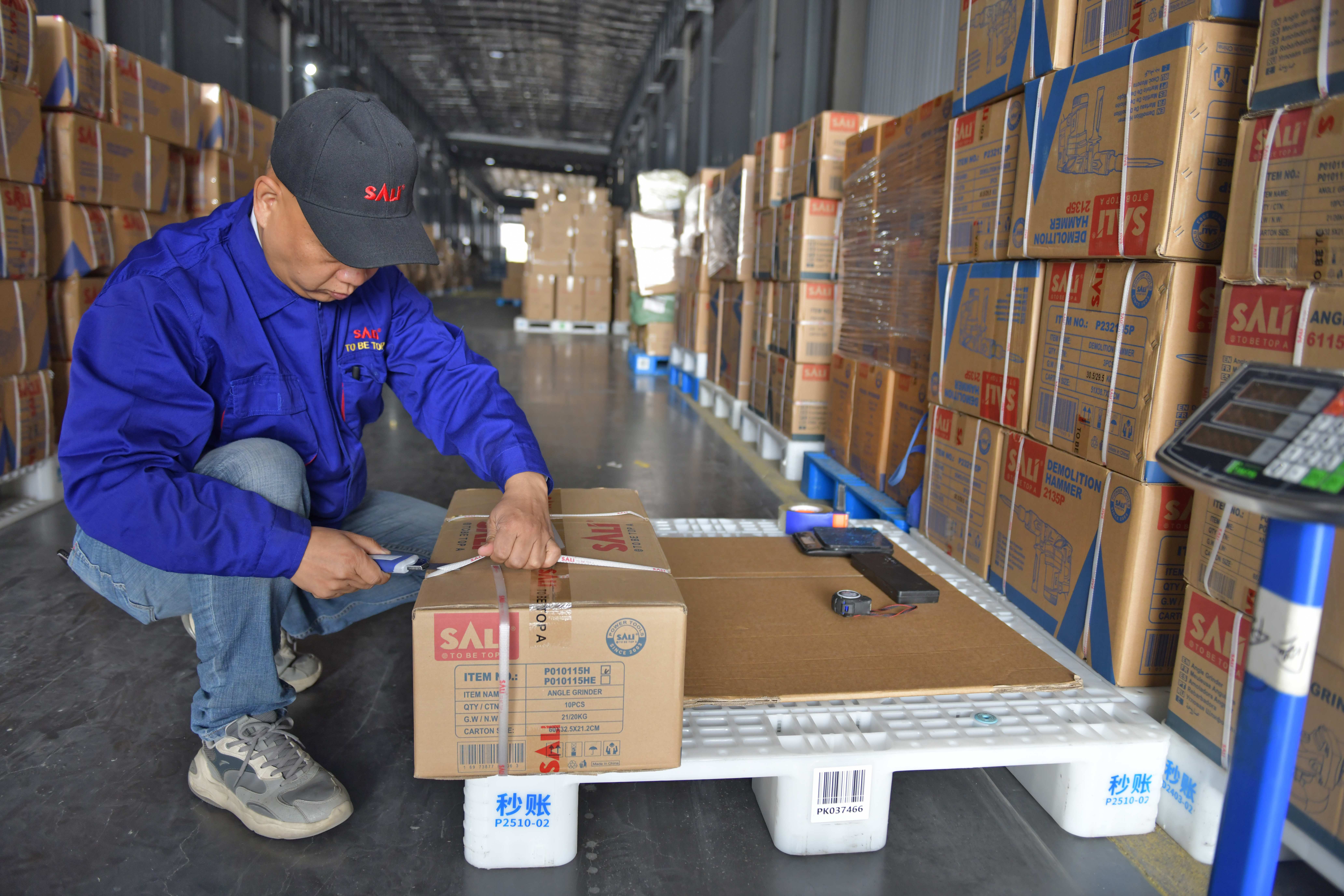
For site-scale continuity, the practical support is stock and testing. SALI operates an 8,000 square metre warehouse with 85 percent of standard SKUs held in ready stock, enabling same-day dispatch for regular orders, and states that every production batch is inspected. Clients can access live camera feeds to watch real-time batch testing, covering burst speed, cutting efficiency, and durability. Claims are handled through a 24-hour mechanism based on photo or video evidence, with free replacements or refunds applied to the next order. Samples are available for testing, with sample fees deducted from the first bulk order and free samples offered to regular partners.
A Pre-Order Checklist for Fabrication Teams
- Confirm the largest section to be cut in one pass, then choose the smallest diameter that clears it and matches the machine on site.
- Verify that the wheel's marked maximum operating speed exceeds the grinder's rated maximum speed before any batch is released to the floor.
- Match the certificate scope to the exact diameter, cut width, and bore being ordered, not to the product family.
- Confirm whether the cutting station can be kept dry; if not, confirm whether the specified wheel is marked for wet-cutting service.
- Check the abrasive specification against the material mix: white aluminium oxide for stainless steel, brown aluminium oxide for general metal, silicon carbide for stone and cast iron, zirconia alumina for heavy-duty use.
- Confirm storage conditions on site: cool, dry, off the floor, below 60 percent relative humidity, and with stock rotation that keeps older batches moving first.
- Confirm resupply terms, including lead time and minimum order quantity, against the actual consumption rate over the project period.
Future Outlook
Two directions are visible from the available evidence. The first is thinner. With ultra-thin discs defined at 1.6 mm or less and 1.0 mm and 0.8 mm formats gaining adoption in precision metal fabrication, cut-width selection will keep moving toward narrower wheels wherever workpiece fixturing allows, because thinner wheels mean less material loss and less heat input.
The second is documentation. As resin-bonded discs continue to hold the largest share of abrasive disc demand, and as independent MPA testing remains the recognised route to demonstrating burst and side-load performance, procurement will increasingly be decided on certificate scope, batch traceability, and the ability to verify a specific SKU rather than on general brand claims. For fabrication teams, the most durable decision is the least dramatic one: a certified flat cutting wheel, matched deliberately to the diameter, cut width, machine, and site conditions it will actually face.
FAQ
What is the difference between a Type 41 flat cutting disc and a Type 42 depressed-centre disc?
A Type 41 wheel is flat with no depressed centre and is intended for straight cut-off work. A Type 42 wheel has a depressed centre and is generally used for cutting and grinding where the wheel needs to be applied at an angle to the surface. SALI holds separate MPA certificates for each format: Z-15486/25 and Z-15486A/25 cover flat Type 41 wheels for metal at 80 m/s, while Z-15485A/25 covers depressed centre Type 42 wheels at 230 mm outside diameter and 3.0 mm cut width.
Which disc diameter and cut width should be used for a given cutting task?
Diameter is set by the largest section that must be cleared and by the machine available. Within SALI's certified Type 41 metal range, 75 mm wheels are listed at 1.6 mm cut width with a 10 mm bore, 115 mm and 125 mm wheels at 1.2 mm cut width with a 22.23 mm bore, 180 mm wheels at 1.6 mm cut width, and 230 mm wheels at 2.0 mm cut width. Narrower cut widths cut faster and generate less heat but tolerate less side load, so a wider cut width is the more durable choice where the workpiece cannot be held firmly.
Why does the 80 m/s maximum operating speed matter on site?
It is the marked limit of the wheel and must be compared against the machine. The maximum speed printed on the wheel has to exceed the maximum rated speed of the grinder it is fitted to. EN 12413:2019, the mandatory European safety standard for bonded abrasive products, specifies requirements for burst testing, marking, and dimensional tolerances, and MPA Hannover testing provides independent verification for EU market entry.
Can the same cutting disc be used on stainless steel and carbon steel?
The format can be the same, but the abrasive specification should differ. SALI offers brown aluminium oxide for general metal work and white aluminium oxide for stainless steel, alongside zirconia alumina for heavy-duty applications and silicon carbide for stone and cast iron, with grit sizes selectable from 24 to 120. Matching the grain to the material is part of getting a clean cut rather than a merely completed one.
What are the minimum order quantity and lead time for a site-scale order?
Typical production lead time is 30 to 45 days from design confirmation to final delivery. OEM minimum order quantity depends on size: 30 cartons for 107 mm, 115 mm, and 125 mm; 50 cartons for 180 mm and 230 mm; and 100 cartons for 350 mm and 400 mm. For the standard brand range, minimum order quantity can be as low as one unit, and standard SKUs held in the 8,000 square metre warehouse support same-day dispatch.
How should resin-bonded cutting discs be stored before use on site?
Resin-bonded discs are moisture-sensitive and should be kept in a cool, dry area, off the floor, at approximately 10 to 30 degrees Celsius and below 60 percent relative humidity. Under standard storage conditions, SALI states that its discs retain optimal performance for three years. At the point of use, discs should be inspected for cracks, chips, bends, or moisture damage, and expired wheels should not be used because aged bonding agents increase the risk of wheel burst.
Sources for market figures: Market Research Future, cutting discs market report; Dataintelo, grinding abrasive disc market research report. Certification references: MPA Hannover certificates Z-15486/25, Z-15486A/25, Z-15485A/25; EN 12413:2019; ISO 9001:2015 certificate 01525Q20094R001.
Full product specifications and sizes: SALI Tools Brand Product Catalog (PDF).