
Matching Vacuum Homogenizers to Mayonnaise and Cosmetic Lines
Specifying the right vacuum homogenizer emulsifier mixer for a food or cosmetics production line involves more than comparing horsepower. For project engineers and procurement professionals evaluating equipment for mayonnaise emulsions or skincare cream manufacturing, the choice directly impacts product consistency, throughput, and long-term operational costs. This article examines how YeKeey’s vacuum emulsifying mixers address the specific requirements of these industries, offering a transparent view of their technical capabilities and application fit.
The Processing Challenge in Mayonnaise and Cosmetics
Mayonnaise production demands a stable oil-in-water emulsion with consistent viscosity and mouthfeel, typically achieved through high-shear mixing under vacuum to prevent aeration. Similarly, cosmetic creams and lotions require fine particle dispersion and deaeration for smooth texture and extended shelf life. Traditional atmospheric mixers often introduce air bubbles, require longer processing times, or fail to achieve the required micron-level droplet sizes. These limitations push manufacturers toward vacuum homogenizer emulsifier mixers that combine high-shear rotors, vacuum deaeration, and temperature control in a single unit.
According to industry data, the global homogenizers market was valued at USD 2.10 billion in 2024, while the vacuum mixer homogenizer segment alone is projected at USD 1.02 billion in 2026, with cosmetics and personal care holding a 38% share. The mayonnaise market, worth approximately USD 12.58 billion in 2024, further drives demand for specialized emulsification equipment.
YeKeey’s Vacuum Emulsifying Mixer Series
YeKeey (Wuxi YK Automation Technology Co., Ltd), established in 1998, is a Chinese manufacturer specializing in vacuum homogenizer emulsifier mixers for cosmetics and food applications. The company’s product portfolio includes three main series — the SP Series Standard Vacuum Processing Unit, the ZJR Series Vacuum Emulsifying Mixer, and the MC Recirculation Homogenizing Mixer — each covering a range of capacities from lab-scale to industrial production.
All three series operate under vacuum conditions at -0.09 MPa and can handle temperatures up to 110°C. The SP and ZJR series offer output speeds up to 2800 r/min, while the ZJR-Lab and specific MC models can reach 6000 r/min. Power consumption ranges from 3.7 kW to 110 kW, depending on the model and series. Construction materials include SS304 and SS316, meeting hygiene and corrosion resistance standards for food and cosmetic processing.
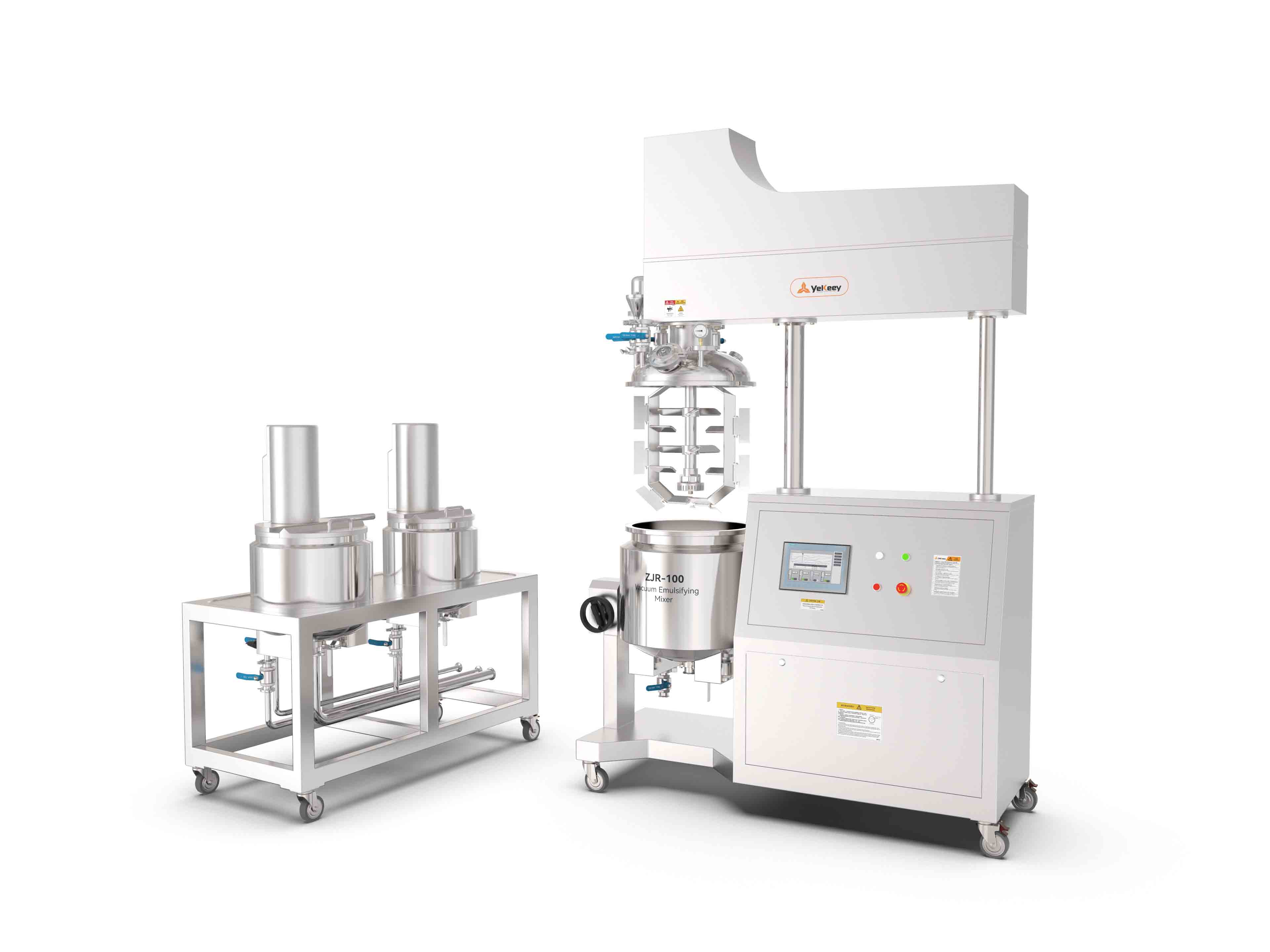
MC Recirculation Homogenizing Mixer – designed for continuous high-shear emulsification under vacuum.
Technical Specifications at a Glance
| Parameter | Value Range |
|---|---|
| Output speed | Up to 2800 r/min (up to 6000 r/min for ZJR-Lab and some MC models) |
| Operating temperature | Up to 110°C |
| Vacuum pressure | -0.09 MPa |
| Power range | 3.7–110 kW (SP series); 5–91.5 kW (ZJR & MC series) |
| Material options | SS304 / SS316 |
| Required supporting equipment | Ducting system |
Models range from small laboratory units (e.g., ZJR-5, 5L) to large industrial systems (SPA-10T, 10,000L).
Application Scenarios: Mayonnaise and Cosmetic Lines
YeKeey vacuum homogenizers are deployed in food sauce emulsification lines and cosmetic manufacturing lines. In mayonnaise production, the vacuum environment removes air during emulsification, yielding a denser, more stable product with reduced oxidation. The high-shear rotor-stator assembly breaks oil droplets to sub‑micron sizes, critical for creamy texture. For cosmetics, the same equipment processes creams, lotions, and gels, achieving uniform dispersion of active ingredients and eliminating micro‑bubbles that cause surface imperfections.
A documented case involves a Nigerian OBM customer that has operated YeKeey equipment for over 10 years, using three units for cosmetics production. The client reported stable operation and high production efficiency, confirming the reliability of the mixers under continuous duty.
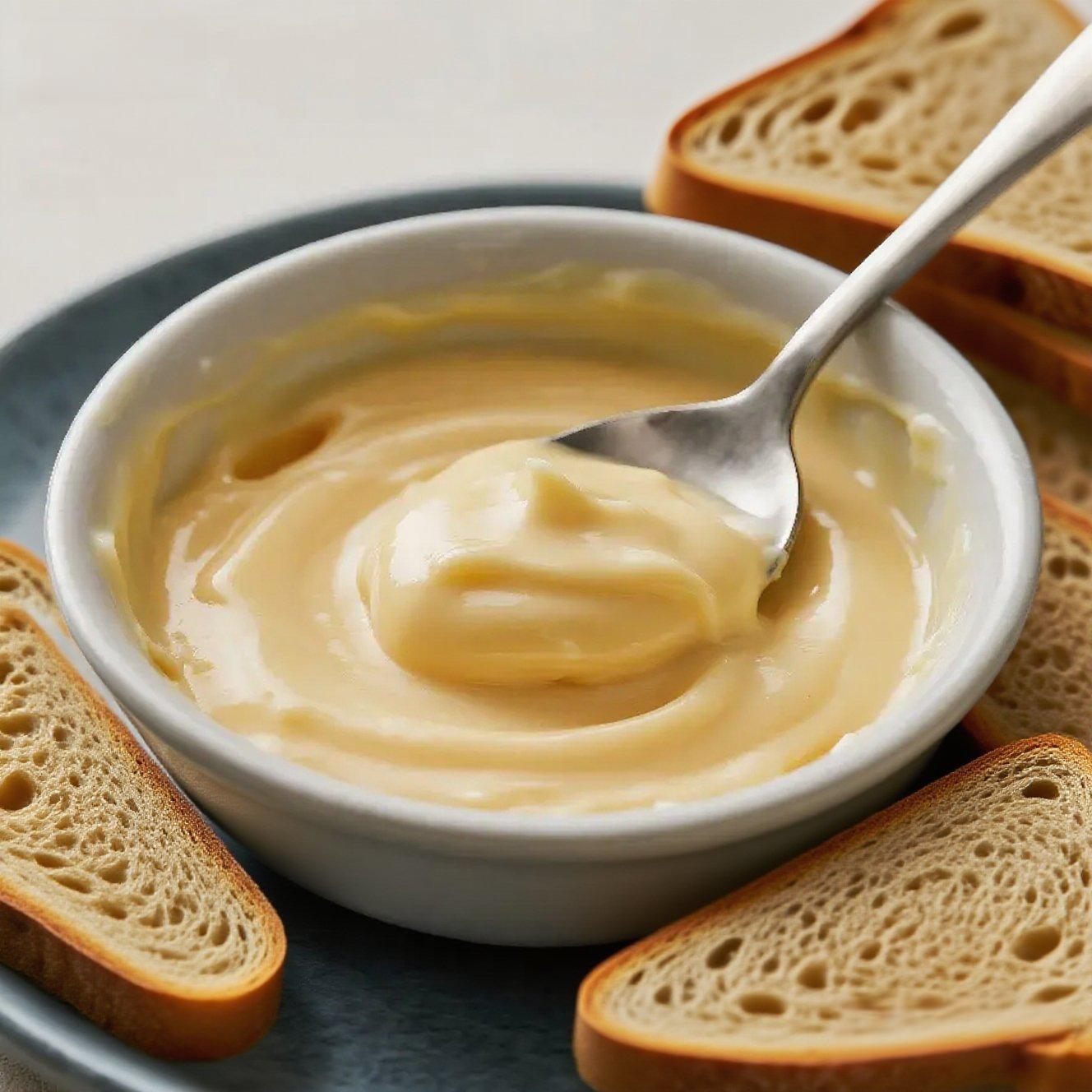
Food sauce application – vacuum emulsification ensures stable texture for baking-resistant sauces.
Market Trend and Comparison with Conventional Mixers
The shift toward vacuum emulsification is driven by quality demands and production efficiency. Compared to conventional atmospheric mixers, a vacuum homogenizer reduces batch times by incorporating deaeration and high shear in one step. It also produces finer emulsions, which is particularly beneficial for premium mayonnaise and cosmetic creams. However, these systems require additional supporting equipment — such as a ducting system — increasing initial setup complexity and investment. YeKeey’s mixers are no exception; the product requires supporting equipment like a ducting system to operate.
Asia-Pacific leads the homogenizing mixer market with a 36.2% revenue share in 2025, reflecting the region’s strong manufacturing base. YeKeey, as a Chinese manufacturer with a 20,000 m² factory and 80 employees, exports 35% of its annual output (600 units) to Europe, Central Asia, North Africa, Latin America, and Southeast Asia. The company holds CE certification (Certificate No. 0P210922.WYAQT12, valid until September 2026) and has been ISO9001 certified since 2003.
Future Outlook
As global emulsifier market projected to reach USD 12.13 billion by 2030, investment in capable processing equipment will remain a priority. Manufacturers are expected to seek vacuum homogenizers that offer flexibility across multiple product lines — shifting from mayonnaise to cosmetic creams with minimal changeover. YeKeey’s range of standard modules (SP, ZJR, MC) and OEM/ODM capabilities (custom voltage, logos, jar sizes) positions it to serve this evolving demand, though buyers should account for the required ducting system integration during plant design.
Frequently Asked Questions
Q: What are the key technical parameters of YeKeey vacuum homogenizers for mayonnaise production?
A: The vacuum homogenizer emulsifier mixers operate at an output speed up to 2800 r/min, a temperature up to 110°C, a vacuum pressure of -0.09 MPa, and a power range from 3.7 kW to 110 kW depending on the series. Material options are SS304 or SS316, and a ducting system is required as supporting equipment.
Q: Does YeKeey provide models suitable for both lab-scale and full production?
A: Yes. The ZJR-Lab series (e.g., ZJR-5) and MC Lab Recirculation Homogenizing mixer serve R&D and small-batch needs. Industrial models range up to SPA-10T (10,000L) and MC-2500. All series share the same vacuum and temperature range.
Q: What certifications do YeKeey vacuum emulsifying mixers hold?
A: YeKeey’s MC series vacuum homogenizer emulsifier mixers hold CE certification (Certificate No. 0P210922.WYAQT12) issued by ECM, valid until September 2026. The company has been ISO9001 certified since 2003 and was recognized as a high-tech enterprise in 2018.
Q: Can the same machine be used for both mayonnaise and cosmetic cream production?
A: Yes. YeKeey lists both cosmetics and food products (with mayonnaise as a key focus) as applicable industries for the SP, ZJR, and MC series. The vacuum and high-shear capabilities suit both emulsion types, though thorough cleaning between product changes is necessary.
For detailed specifications, model comparisons, and engineering consultation, download the YeKeey corporate brochure.
Download Brochure (PDF)Have Questions or Need More Details?
Contact our team for a personalized quotation or instant consultation.
Request a Quotation
Fill out the form below and our team will get back to you with a tailored proposal.
WhatsApp Direct Chat
Prefer to chat in real-time? Message us on WhatsApp for instant assistance & quick answers.
- Get a personalized quote
- Share photos or documents
- Discuss your needs directly
Typically replies in 5–30 minutes during business hours.