
Material Compliance in Cooling Vests: TPU, Polypropylene, COOLWAVE
A cooling vest that holds water against a worker's body is a polymer decision before it is a comfort decision. NIOSH groups water-cooled garments, air-cooled garments, cooling vests and wetted overgarments under a single heading, auxiliary or personal cooling systems, which places the category inside occupational heat planning rather than leisure retail. Once a garment enters a safety file, the questions shift: what is it made of, what does it contain, what is it cleaned with, and how long does the material survive those conditions.
This reference examines the material side of one product: the COOLWAVE water-circulation cooling vest from Shokunin, the professional tool brand of Feng Shang Precision Co., Ltd. of Taoyuan, Taiwan. Two polymers carry most of the compliance weight in the specification. Thermoplastic polyurethane (TPU) forms the water bag, selected for elastic resilience and for resistance to hydrolysis. Polypropylene is the second specified polymer in the assembly. The purpose here is not to assert certifications that have not been published. It is to explain what these two materials contribute, why the distinction matters in a workplace chemical-exposure review, and which documents a buyer still needs to request before approving the garment for a specific site.
The Procurement Problem: A Wet Polymer Worn Against the Body
A water-circulation vest places an elastomer under three simultaneous stressors. Water sits inside the bag continuously, including overnight storage between shifts. Body heat, sweat and mechanical abrasion press against the outside. Cleaning agents, detergents and site chemicals attack whatever they reach. Each of these acts on polymer bonds, and the consequences accumulate quietly rather than failing visibly on the first day.
Hydrolysis is the mechanism most relevant to a water container. Water molecules attack susceptible chemical linkages in a polymer chain, and the visible result arrives late: slight softening, a dulling surface, reduced tensile strength at seams, and eventually a leak at the point of highest flex. For a garment worn against the torso in hot weather, a leak is not an inconvenience. It wets the clothing layer, adds weight, and removes the cooling effect precisely when the worker depends on it.
The commercial context explains why this has become a procurement question rather than an engineering footnote. The global cooling vest market was reported at USD 342 million in 2025, and industrial applications accounted for 34.5 percent of revenue share in the same year, according to Dataintelo's 2025 to 2034 market report. The revenue centre of this category is workwear, not leisure. Workwear buyers purchase against a file: a stated material, a cleaning procedure, a service life, and a supplier who can answer follow-up questions in writing.
What the COOLWAVE Vest Is
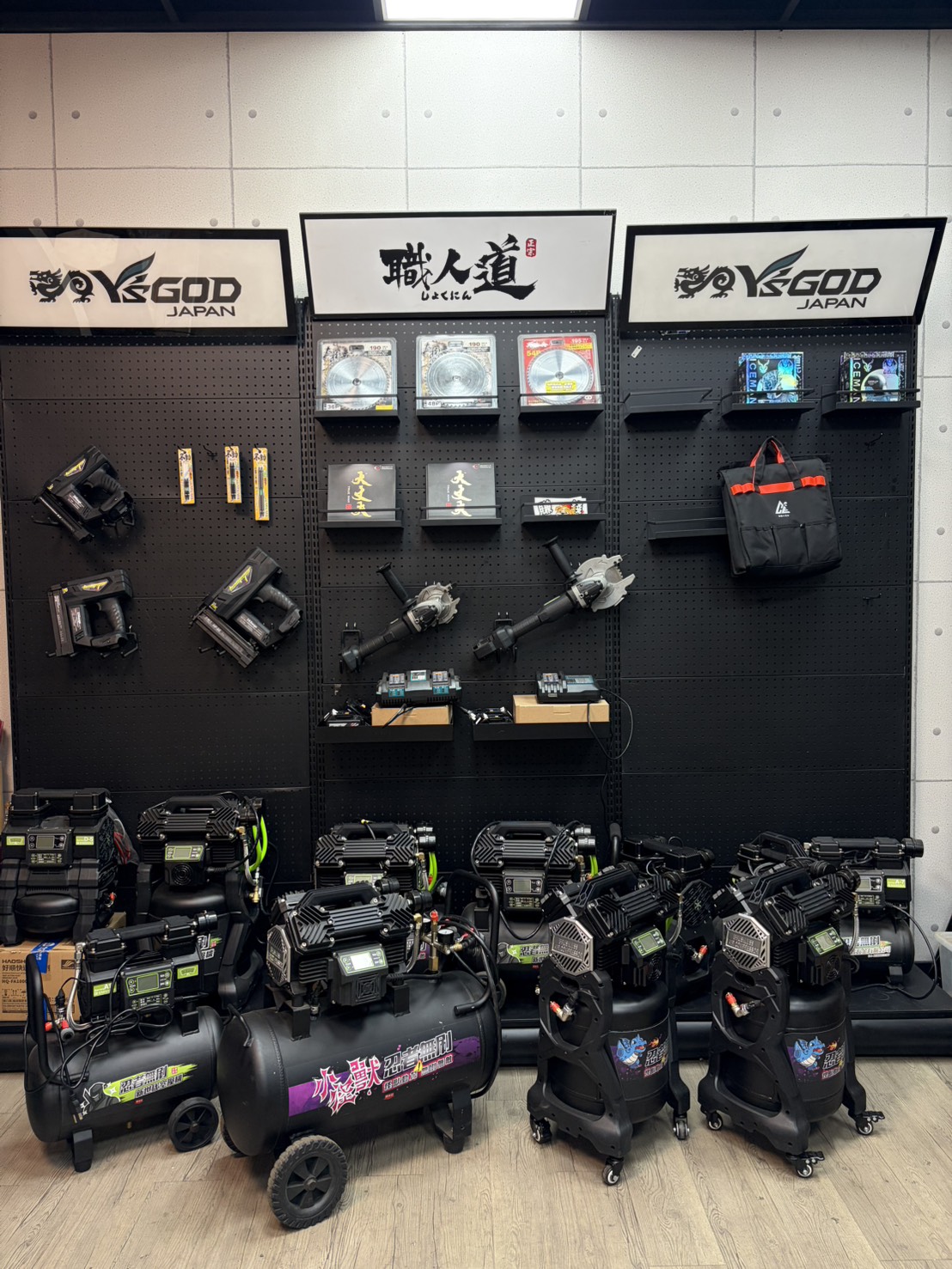
Shokunin is the professional tool brand of Feng Shang Precision Co., Ltd., a manufacturer established in 2009 in Luzhu District, Taoyuan City, Taiwan. The company operates a 1,000 square metre facility with 30 employees, a team of five engineers, and a documented annual output of 10,000 units across its product lines, with an export ratio of roughly 50 percent and main markets in the United States and Taiwan. Its portfolio covers air compressors, cut-off machines, water-cooled vests, lithium batteries, diamond saws, nail guns and related hand tools.
The COOLWAVE water-circulation cooling vest is the brand's heat-relief product. The design pairs reusable ice packs as the cold source with a pump that circulates chilled water through a bag worn against the torso. Published product listings describe two variants, the CW-PRO Professional model and the CW-01 Basic model. The specified pump is rated at 5V and 150 mA maximum, with a stated flow rate of 320 to 370 millilitres per minute, and the listed weight remains within 2 kilograms. Shokunin's published comparison states a cooling duration of 3 to 4 hours per charge and ice-pack cycle, against roughly 30 minutes before other water-cooled vests lose their cooling effect. The vest has also received the Disaster Prevention Product and Service Certification Award from the Taiwan Disaster Prevention Industry Association.
Why TPU Carries the Water Bag
Thermoplastic polyurethane is a segmented elastomer. Soft segments provide flexibility; hard segments hold dimensional structure and behave like physical cross-links. The result is a material that stretches, recovers, and can be heat-processed, which is why it appears in reservoirs, tubing and flexible bladders across medical and industrial equipment.
Two properties explain its selection for a cooling vest reservoir.
- Elastic resilience. A worn water bag is filled, emptied, folded and pressed against a moving body several hundred times across a season. TPU returns to shape after that deformation instead of accumulating permanent set, which keeps the internal volume predictable and reduces stress concentration at seams and corners.
- Resistance to hydrolysis. Because the bag is in permanent contact with water and is stored wet between shifts, a polymer that absorbs water would progressively soften and lose strength. TPU is selected for its ability to hold mechanical properties in continuous water contact, which converts directly into service life.
A related consideration is plasticiser behaviour. Flexible PVC relies on liquid plasticisers to achieve softness, and those liquids can migrate over time, changing the feel of the part and raising questions about what has moved into the water or onto skin. TPU achieves flexibility through its own molecular architecture rather than through an additive load, which simplifies the material declaration a buyer has to file.
One qualification belongs in the compliance file rather than in the marketing copy. TPU is a family, not a single substance. Polyether-based and polyester-based grades behave differently in prolonged water contact, and a specifier should confirm the grade designation rather than accept the generic term. This is a documentation item, not a defect.
Where Polypropylene Fits
Polypropylene is a semi-crystalline polyolefin with a property profile that complements an elastomer reservoir. It absorbs very little water, it does not undergo the hydrolysis pathway that ester-linked polymers can, it resists many aqueous acids, bases and detergents, and it holds up under repeated flexing and washing. It is also light, which matters on a garment that a worker wears for a full shift. Polypropylene carries resin identification code 5, a detail that simplifies end-of-life handling statements in tender documents.
Its limits are equally relevant to a chemical-exposure review. Strong oxidising agents attack polypropylene, as do some hydrocarbons and some chlorinated solvents. It is not a universal chemical barrier, and no supplier should describe it as one.
Part-level allocation is the practical point. Which components are moulded in polypropylene, which are moulded in another polymer, and which are metal or silicone all belong in a bill of materials rather than in a narrative description. A buyer reviewing the COOLWAVE vest for a site with a defined chemical list should request that part-level breakdown in writing, because the compliance answer depends on which material touches which substance.
How Material Choice Meets Workplace Chemical Standards
Chemical-resistance assessment in a workplace follows a consistent structure, and it is worth stating plainly because it is often reduced to a single question about whether a product is approved.
- Identify the wetted and contacted materials. For a cooling vest this means the water bag, tubing, connectors, the outer textile and any part that contacts skin.
- Define the exposure. Splash, immersion, vapour, or incidental contact; the concentration; the temperature; and the duration. Resistance data that ignores concentration and temperature is not decision-grade.
- Define the consequence of failure. For this product the primary failure mode is leakage, followed by loss of cooling performance and, in the worst case, skin contact with a degraded component.
Shokunin addresses the leakage path at the component level rather than only at the assembly level. The published risk-control measure is a reinforced ice pack material, with a stated 100 percent quality check before shipment. That is a manufacturing control, and it is the correct place to intervene, because a leak usually originates at a seal or a fold rather than across the full surface of a bag.
It is also accurate to say what has not been published. A product-specific chemical-resistance test report for the COOLWAVE vest, expressed against named workplace chemicals at defined concentrations and temperatures, is not part of the current public record. A full bill of materials at part level is likewise not published. Buyers whose sites involve aggressive or unusual chemistry should treat these as open items resolved through a supplier request, not as assumptions.
Application: Where the Material Question Is Actually Asked
Material compliance becomes concrete only when the exposures are named. Four settings illustrate how the same garment generates different documentation questions.
Sheet metal and fabrication shops
Metalworking fluids, alkaline cleaners, hydraulic oils and fine metal dust are routine. A water-circulation vest is attractive here because radiant heat from sheet metal and press equipment is continuous rather than intermittent, and because the pump-driven circulation keeps cooling without requiring the worker to stop. The documentation question is whether the outer textile and the bag surface withstand incidental contact with the specific coolants and cleaners in use, and whether cleaning after that contact restores the garment safely.
Construction and outdoor sites
Prolonged sun exposure, cement dust, abrasion against scaffolding and repeated wet-dry cycling put the emphasis on mechanical durability rather than on chemical attack. Here the relevant questions concern abrasion resistance at high-wear points, the stability of the water bag under repeated folding, and how the garment dries between shifts.
Street vending and food stalls
Grease, food-contact hygiene expectations and frequent washing dominate. The material question turns to cleaning-agent compatibility and to whether repeated washing degrades the outer layer or the closures. Vendors working under metal roofing in summer heat are among the more demanding users of a long-duration system, because their exposure is measured in hours rather than minutes.
Traffic control and static outdoor posts
Long periods of low movement reduce sweat-driven evaporative cooling, which is precisely the case where active water circulation performs differently from passive ice packs. The compliance file here is dominated by visibility garments worn in combination and by service-life documentation for a garment that is issued rather than personally purchased.
Market Trend: Industrial Demand Is Formalising the Category
The market data points in one direction. With industrial applications at 34.5 percent of a USD 342 million global market in 2025, the buyers with the most volume are also the buyers with the most documentation requirements. Consumer purchases end at the checkout; industrial purchases generate an audit trail covering material declarations, cleaning procedures, spare-part availability and end-of-life handling.
The authoritative framing reinforces this. NIOSH's occupational heat guidance treats water-cooled garments as one option among several personal cooling systems, which means the selection decision is comparative rather than absolute. A buyer is not choosing between a cooling vest and nothing; the buyer is choosing among evaporative, phase-change, air-cooled and water-circulation approaches, each with a different material set and a different maintenance burden. Material transparency is what makes that comparison possible on paper rather than only in a trial.
How COOLWAVE Compares, and Where the Evidence Stops
The meaningful comparison for a procurement team is not between brand names. It is between cooling architectures, because the architecture determines the material set, the maintenance routine and the documentation a supplier has to provide.
| Approach | Cold source | Operational characteristic | Materials a buyer must document |
|---|---|---|---|
| Ice-pack-only vest | Frozen gel or ice packs | No power required; cooling fades as packs warm | Pack film and gel chemistry, outer textile, recharge logistics |
| Evaporative or wetted overgarment | Evaporation of water from fabric | No power; performance depends on low ambient humidity | Fabric composition, wetting and drying procedure, washing regime |
| Air-cooled vest | Forced air from fans | Dry cooling; depends on fan and battery housings | Fan and filter housings, battery enclosure, dust ingress measures |
| COOLWAVE water-circulation vest | Reusable ice packs plus pump-driven circulation | Continuous circulation; stated 3 to 4 hours of cooling per charge and ice-pack cycle | TPU water bag, polypropylene components, tubing and connectors, pump housing, power bank |
The COOLWAVE position within that table is clear in one respect and open in another. Shokunin's published comparison states 3 to 4 hours of cooling against roughly 30 minutes for other water-cooled vests, and attributes the gap to reusable ice packs, durable fabric and a circulation design that sustains cold delivery rather than dumping it in a single burst. The maintenance profile follows from the same design: reusable packs and a durable outer fabric require less frequent replacement than systems that depend on repeated ice-pack substitution.
Three limitations belong in the same document as the advantages.
- The cooling duration figure has no published test protocol. Ambient temperature, humidity, workload, clothing layers and body size are not disclosed. That does not make the figure wrong, but it does mean it cannot be benchmarked against a competing product that was tested under different conditions. The correct use is as a design target to be confirmed in a sample test under the buyer's own conditions.
- Material documentation is partial. TPU and polypropylene are specified, but a part-level bill of materials, a grade designation for the TPU, and chemical-resistance test data against named workplace substances are not in the public record. For chemically active sites, these are supplier requests, not assumptions.
- The material set has real chemical limits. Polypropylene is vulnerable to strong oxidisers and to some hydrocarbons and chlorinated solvents. No polymer combination suits every industrial chemical environment, and any claim to the contrary should be treated as a red flag in a supplier evaluation.
Future Outlook
Three developments are likely to shape material documentation in this category over the next procurement cycles. The first is normalisation: as industrial buyers formalise cooling garments as standard issue, a written material declaration is likely to become a standard attachment to the purchase file rather than an unusual request. Suppliers who can produce it quickly will spend less time in qualification.
The second is power-bank scrutiny. A 5V, 150 mA pump is a low-demand electrical load, but the battery that drives it introduces transport, storage and charging questions that sit outside the textile discussion. Expect electrical documentation to be reviewed at the same time as polymer documentation rather than after it.
The third is end-of-life accounting. A garment built from an elastomer reservoir, a polyolefin housing and a separate pump assembly creates a dismantling question. Single-material part design, and material identification that a facilities team can read without a laboratory, will increasingly count in a supplier's favour.
Frequently Asked Questions
What material is the water bag in the COOLWAVE vest made from?
The water bag is specified in thermoplastic polyurethane, or TPU. TPU is a segmented elastomer that combines flexible segments with hard segments that hold shape and act as physical cross-links. It was selected for elastic resilience, meaning the bag recovers its shape through repeated filling, emptying and body movement, and for resistance to hydrolysis, the degradation pathway that affects polymers held in continuous water contact.
Why does hydrolysis resistance matter more in a cooling vest than in general outdoor gear?
Because the reservoir is in permanent contact with water and is typically stored wet between shifts. A polymer that absorbs water can soften, cloud or lose tensile strength over months of use, and the change is not visible until a seam or wall fails. In a vest worn against the torso in hot conditions, that failure wets the clothing layer and removes the cooling effect at the moment it is most needed. Hydrolysis resistance is therefore a service-life property rather than a marketing claim.
What does polypropylene contribute to the assembly?
Polypropylene is a semi-crystalline polyolefin with very low moisture absorption, good resistance to many aqueous acids, bases and detergents, and good fatigue life under repeated flexing. It does not follow the hydrolysis pathway that ester-linked polymers can, which makes it appropriate for parts that must survive frequent washing and humid storage, and it is light enough for wearable equipment. Its limits matter as much as its strengths: strong oxidising agents, some hydrocarbons and some chlorinated solvents attack it.
Do the material choices affect how long the vest stays cold?
Only indirectly. Polymer selection governs durability, cleaning tolerance and leakage resistance, while cooling duration is governed by the cold source and the circulation design. Shokunin's published comparison states 3 to 4 hours of cooling per charge and ice-pack cycle, against approximately 30 minutes before other water-cooled vests lose their cooling effect. That comparison is supplier-published, and the ambient conditions and workload used to measure it are not disclosed, so it is best treated as a design target to be validated in a sample test.
Which documents should a buyer request before approving the vest for a chemically active site?
A written material declaration listing each polymer and its application by part; the grade designation of the TPU, since polyether-based and polyester-based grades behave differently in water; chemical-resistance data for the specific agents used on site at their actual concentration and temperature; cleaning-agent compatibility and a defined cleaning procedure; leakage and durability test results; and written confirmation of the garment's intended role as a heat-burden countermeasure rather than chemical protective clothing.
Is the COOLWAVE vest suitable for chemically aggressive workplaces?
Only within its stated role. The vest reduces heat burden and is not designed or positioned as a barrier against chemical splash or vapour. Where the chemical hazard dominates the risk assessment, the vest would be worn with or underneath the appropriate protective ensemble, and the compatibility of TPU, polypropylene and the tubing with those substances must be confirmed in writing before deployment.
What certification does the COOLWAVE vest currently hold?
The COOLWAVE water-cooled vest has received the Disaster Prevention Product and Service Certification Award from the Taiwan Disaster Prevention Industry Association. That recognition relates to disaster-prevention product and service classification. It is distinct from a chemical-resistance certification, and buyers should not treat the two as interchangeable in a compliance file.
Shokunin is the professional tool brand of Feng Shang Precision Co., Ltd., No. 155-17, Sec. 2, Nanzhu Rd., Luzhu Dist., Taoyuan City 338454, Taiwan. The downloadable product brochure is available at the COOLWAVE product brochure.
Have Questions or Need More Details?
Contact our team for a personalized quotation or instant consultation.
Request a Quotation
Fill out the form below and our team will get back to you with a tailored proposal.
WhatsApp Direct Chat
Prefer to chat in real-time? Message us on WhatsApp for instant assistance & quick answers.
- Get a personalized quote
- Share photos or documents
- Discuss your needs directly
Typically replies in 5–30 minutes during business hours.