
Material Grade Qualification for QSK60 Parts: Specifying and Reading an MTC
Material Grade Qualification for QSK60 Parts: Specifying and Reading an MTC
Material grade qualification for QSK60 parts is a purchase-order control, not an assumption based on part family or supplier reputation. Material varies by part type and quality grade, so each line item should state the required grade, and a material test certificate should be requested for the specific part and checked against the ordered grade and OE reference.
Why QSK60 parts need a part-specific material specification
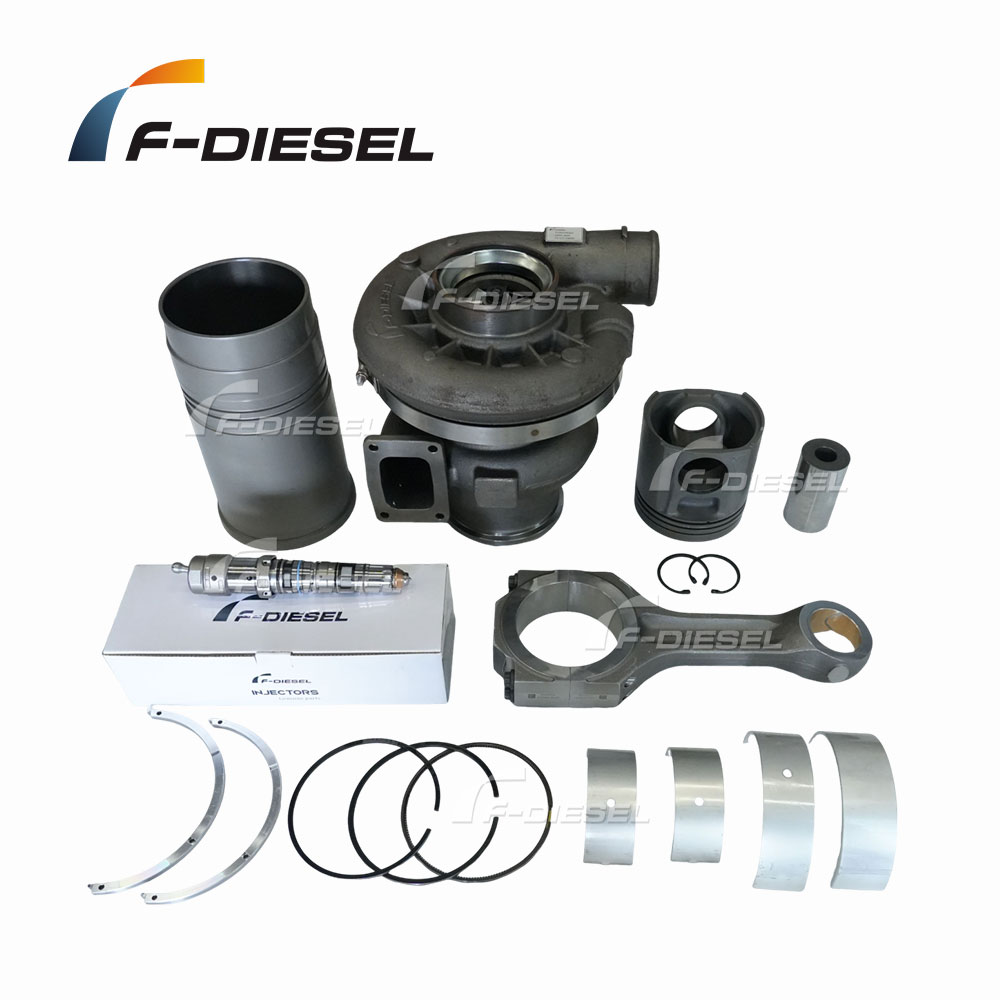
The QSK60 is a 4-stroke, V16, 60-degree heavy-duty diesel engine with a 159 mm × 190 mm bore and stroke and 60.2 L displacement. Its parts scope includes crankshafts, turbochargers, cylinder heads, cylinder blocks, pistons and piston rings, connecting rods, camshafts, injectors, injection pumps and fuel injection systems. F-DIESEL Power Co.,Ltd, a diesel engine spare parts group established in Shenzhen, China in 1999, lists this QSK60 range alongside its broader engine-parts business at www.f-diesel.com.
That breadth matters for material qualification. A QSK60 order can contain very different part types, and material varies by part type and quality grade. The same engine family does not justify one material assumption across every line. A buyer who specifies “QSK60 crankshaft” without stating the required version has not finished the specification. Crankshafts are available in ductile iron or forged steel versions, and are precision-machined and dynamically balanced.
The QSK60 is also available with HPI injection or MCRS common rail fuel system, and those parts are not interchangeable, especially injectors and fuel pumps. That version control sits alongside material grade control: the purchase order line needs the correct OE reference and the required material grade where that grade is specified.
The problem: material assumptions are hard to audit
A common purchasing problem is not a missing supplier, but an incomplete line item. A buyer may see a part described only as a QSK60 crankshaft and assume the quotation covers the intended material. The supplier may quote a valid part from its range, but the material grade has not been tied to the order. When the material test certificate arrives, there is no precise requirement to compare it with.
Material varies by part type and quality grade. This means a grade accepted for one part category is not automatically the grade for another, and a supplier’s general product range is not evidence that every part is made in the same grade. The auditable approach is simpler: write the grade, request the MTC for the specific part, and compare both the ordered grade and the OE reference before release.
What an MTC should be used to prove in a QSK60 purchase
In this purchasing context, a material test certificate is a material document for a specific part. F-DIESEL states that a material test certificate can be provided for a specific part on request. The buyer’s task is to make that request precise. The MTC should be read as material evidence, not as a substitute for every finished-part inspection.
The purchasing control has three matches: the certificate to the part, the certificate to the ordered material grade, and the part or OE reference to the purchase-order line. When these three do not align, the line item is not qualified, even if the certificate is authentic for some other part or grade. This is why an MTC review should happen before the part enters an overhaul or is accepted into stock.
Specify the grade per line item, not per engine family
Start with one purchase-order line per part requiring material qualification. For a QSK60 crankshaft, choose either the ductile iron version or the forged steel version; the product information lists both as available, precision-machined and dynamically balanced. Do not write “ductile iron or forged steel” as an open option unless the buyer genuinely accepts either for that application. If the technical requirement calls for one, make the line item state that one.
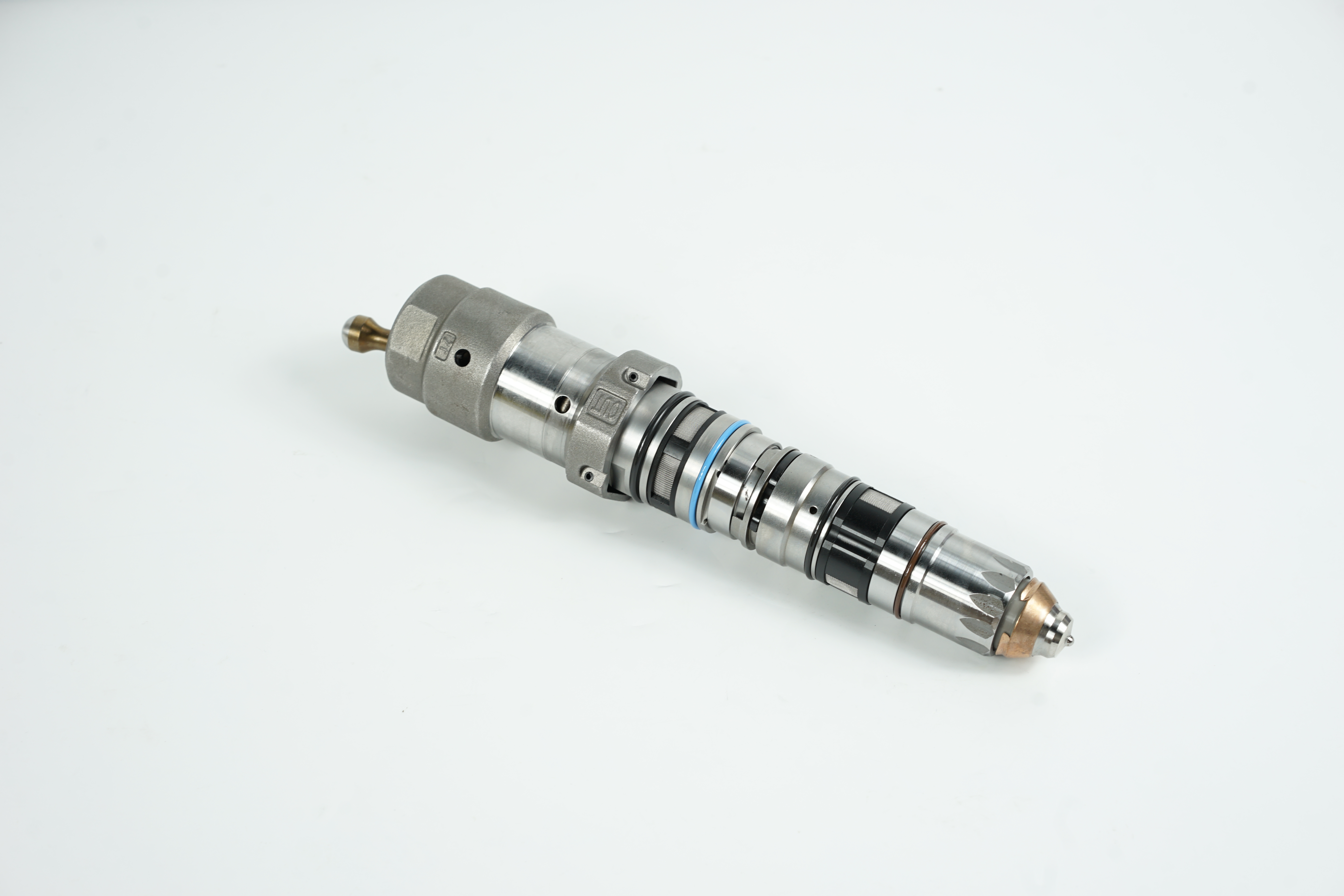
Other part categories need their own line-item descriptions. For cylinder heads and blocks, the purchase order should reference the ordered drawing or specification and require the MTC for the specific part where material grade is part of the purchase requirement. The hydrostatic leak test at the head or block level is separate process evidence. For turbocharger components, dynamic balancing and high-temperature housing treatment are process controls; they do not remove the need to specify material separately if material grade is a requirement. For fuel injection parts, the listed material is steel, and the HPI or MCRS version must be confirmed because those parts are not interchangeable.
| Purchase-order line element | Example entry | What the buyer checks |
|---|---|---|
| Part and model | QSK60 crankshaft | The description matches the intended part; no model substitution is accepted. |
| OE reference | Approved OE part number or drawing reference | The MTC and quotation refer to the same reference and part identity. |
| Material grade | Ductile iron or forged steel — select the required one | The certificate states the same grade, not a family or unspecified grade. |
| MTC requirement | MTC for the specific part or purchase-order line | The certificate identifies the requested part, not only a generic material batch. |
| Batch test report | Test report per batch where applicable | Inspection evidence is kept distinct from the material certificate. |
| Fuel-system version for injection parts | HPI or MCRS | The version is confirmed before order; injectors and fuel pumps are not interchanged. |
This table is not a universal certificate format; it is a purchasing logic. The exact data fields can follow the supplier document and the buyer’s quality procedure. The fixed point is that the grade and part identity must be stated before the certificate can be checked.
Requesting the MTC for a specific part
Request the MTC at the quotation or order stage, not after the goods are ready to ship. The request should name the part, the purchase-order line, the OE reference and the required material grade. F-DIESEL’s stated position is that a material test certificate can be provided for a specific part on request, while grouped incoming and outgoing quality inspection is performed and a test report is available per batch. That distinction is useful: the batch test report supports inspection history, while the MTC supports material traceability for the part.
For a mixed order, request MTCs line by line. A single order can include crankshafts, cylinder heads, turbochargers and injection parts, and the material requirements differ by part type and quality grade. A generic “MTC required” note at the order header may leave unclear which line item the certificate must cover. Put the requirement on the line item that needs it.
Reading an MTC: a four-check method
Check 1 — Part identity and OE reference. Read the certificate against the purchase-order line, not against the supplier’s family description. The part and OE reference should point to the same item that was ordered. For a crankshaft, that means the certificate is for the ordered crankshaft version, not simply a crankshaft material batch.
Check 2 — Ordered material grade. Compare the grade stated on the certificate with the grade on the purchase order. If the purchase order says ductile iron, the certificate should support ductile iron for the same part. If the purchase order says forged steel, it should support forged steel. An MTC for a different grade does not qualify the line simply because both grades are available in the product range.
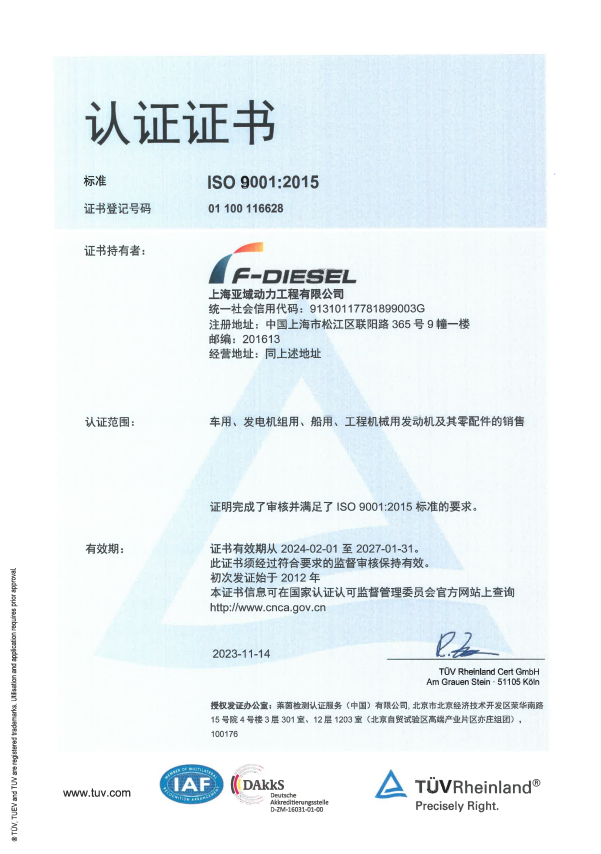
Check 3 — Scope and specificity. The MTC should be specific to the part or line item requested. A system-level quality certificate is not a material test certificate. F-DIESEL holds ISO 9001:2015 certificate 01 100 116628 issued by TÜV Rheinland Cert GmbH; it was issued on 2023-11-14 and expires on 2027-01-31. Its scope covers sales of engine and spare parts for automotive, generating set, marine and construction applications. That certificate supports the quality management system, but it does not replace the part-specific MTC required for a material grade check.
Check 4 — Consistency with the technical file. Keep the MTC, purchase order, drawing or OE reference and inspection records together. If the certificate and the purchase order disagree, resolve the difference before accepting the line. The presence of a test report per batch does not correct a material-grade mismatch. The documents answer different questions.
What the MTC does not establish
Material qualification is only one gate. A material certificate does not by itself prove that the finished part matches dimensional requirements, that a crankshaft has been dynamically balanced, that a cylinder head or block has passed hydrostatic leak testing, or that a turbocharger has been dynamically balanced with the required housing treatment. Those are separate process or inspection claims in the available product information. Buyers should keep material evidence and finished-part evidence in separate checkpoints.
Likewise, the fact that an MTC can be provided for a specific part on request does not mean every shipment includes the same certificate automatically. The request should be written into the purchase order. And an ISO 9001 certificate, however relevant to the supplier’s quality system, is not evidence that a particular crankshaft is ductile iron rather than forged steel, or that a particular cylinder head uses the grade on the drawing.
The fit boundary is therefore clear. Use the MTC to verify the ordered material grade for the identified part. Use drawings, OE references, batch test reports and process inspection records to verify the finished component. A buyer who treats one document as proof of the other widens the qualification gap rather than closing it.
Application cases: where line-item grade control matters
QSK60 parts are used in mining trucks, generator sets, construction machinery and marine applications, as well as other heavy-duty operating conditions. The material grade requirement follows the part and the purchase specification, not the end-use label alone.
In a mining-truck overhaul, a purchase order for a QSK60 crankshaft can state the required ductile iron or forged steel version on the line, attach the OE reference, and require the MTC for that specific part. The buyer then checks that the certificate matches the ordered version before the crankshaft is released to the rebuild. The same logic applies to a generator-set overhaul: the line item and OE reference are specific to the genset configuration, and the MTC is read against that line, not against a generic QSK60 family description.
For construction equipment and marine engines, the operating conditions may differ, but the purchasing control is the same: material varies by part type and quality grade; the order should specify the grade required for the line item; the MTC should be requested for the specific part; and the certificate should be compared with the ordered grade and OE reference. This prevents a purchasing team from treating a material claim as a finish-machining claim or from accepting a certificate for the wrong part.
A practical PO and MTC workflow for QSK60 buyers
- Build the line item: part name, QSK60 model, OE reference, required material grade, quantity and MTC requirement. For injection parts, add HPI or MCRS.
- Select one grade where the buyer has a requirement: for crankshafts, choose ductile iron or forged steel; do not leave the line open unless either is technically acceptable.
- Ask for the MTC for the specific part: identify the purchase-order line and the grade to be certified. Keep the batch test report and the MTC as separate documents.
- Check the certificate against the purchase order: part identity, OE reference, grade and specificity. A certificate for a different grade, or a system-level ISO certificate, does not pass the material check.
- Check the inspection evidence separately: hydrostatic leak test for heads and blocks, dynamic balancing for crankshafts and turbocharger components, and batch test reports where applicable.
- Release only after the two files agree: the material file and the finished-part inspection file. If they conflict, hold the line for correction.
The workflow is intentionally narrow. It does not ask the buyer to select a “best” material without application data, and it does not treat the supplier’s product range as proof that every part is made in the same grade. It simply makes the material requirement visible and auditable at the point of order.
Conclusion: qualify the material before the part enters the overhaul
For QSK60 parts, material grade qualification should begin in the purchase order. State the required grade per line item, using the crankshaft example as the clearest case: ductile iron or forged steel are both listed, so the buyer must choose the version that the order requires. Request the MTC for the specific part, then read it against the same part, OE reference and grade. Use the ISO 9001 system certificate and batch inspection reports as separate supporting evidence, not as substitutes for the material check. That is how a buyer moves from assuming material to verifying it.
FAQ: QSK60 material grade and MTC questions
Does material vary across QSK60 part types?
Yes. F-DIESEL states that material varies by part type and quality grade. A purchase order should therefore identify the required grade for each line item rather than applying one material assumption to every QSK60 part.
Can an MTC be provided for a specific QSK60 part?
Yes. A material test certificate can be provided for a specific part on request. The request should identify the part and the purchase-order line so the certificate can be checked against the ordered grade and OE reference.
What crankshaft material options are listed for QSK60 parts?
QSK60 crankshafts are available in ductile iron or forged steel versions, and are precision-machined and dynamically balanced. The buyer should specify which version the order requires.
How should a buyer read an MTC against the purchase order?
Check that the certificate refers to the same part and OE reference, states the ordered material grade, and is specific to the part requested. An MTC for a different grade or a different part does not qualify the line.
Is the ISO 9001:2015 certificate the same as an MTC?
No. The ISO 9001:2015 certificate 01 100 116628 is a quality management system certificate issued by TÜV Rheinland Cert GmbH, issued on 2023-11-14 and expiring on 2027-01-31; its scope covers sales of engine and spare parts for automotive, generating set, marine and construction applications. It does not replace a part-specific material test certificate.
What information helps when requesting a QSK60 part quotation?
Provide the part number or nameplate information for the product. For material qualification, add the required material grade and the specific part or purchase-order line that the MTC must cover.
Reference document: F-DIESEL Group Presentation 2026 (PDF).
Have Questions or Need More Details?
Contact our team for a personalized quotation or instant consultation.
Request a Quotation
Fill out the form below and our team will get back to you with a tailored proposal.
WhatsApp Direct Chat
Prefer to chat in real-time? Message us on WhatsApp for instant assistance & quick answers.
- Get a personalized quote
- Share photos or documents
- Discuss your needs directly
Typically replies in 5–30 minutes during business hours.