
Material Handling Forklift Compliance: What Acceptance Must Prove
Acceptance criteria are the written conditions a material handling forklift must satisfy before the buyer takes ownership of the risk. Most purchase disputes do not begin with a broken machine; they begin with a delivery note that recorded nothing. A fault found during acceptance is a rectification obligation, while the same fault found a week later becomes a warranty conversation.
The exercise has also become power-specific. Diesel counterbalance trucks, dual fuel LPG and gasoline units, and lithium battery forklifts fail in different ways, need different daily procedures, and are qualified by different evidence. One generic acceptance form cannot test all three.
Market context supports that split. The global forklift market was valued at USD 81.4 billion in 2025 (Grand View Research), while lithium-ion penetration in global counterbalanced forklifts reached 17.5% in 2024 (Interact Analysis). Lithium is growing but remains a minority share, which is why most acceptance conversations still involve more than one energy type.
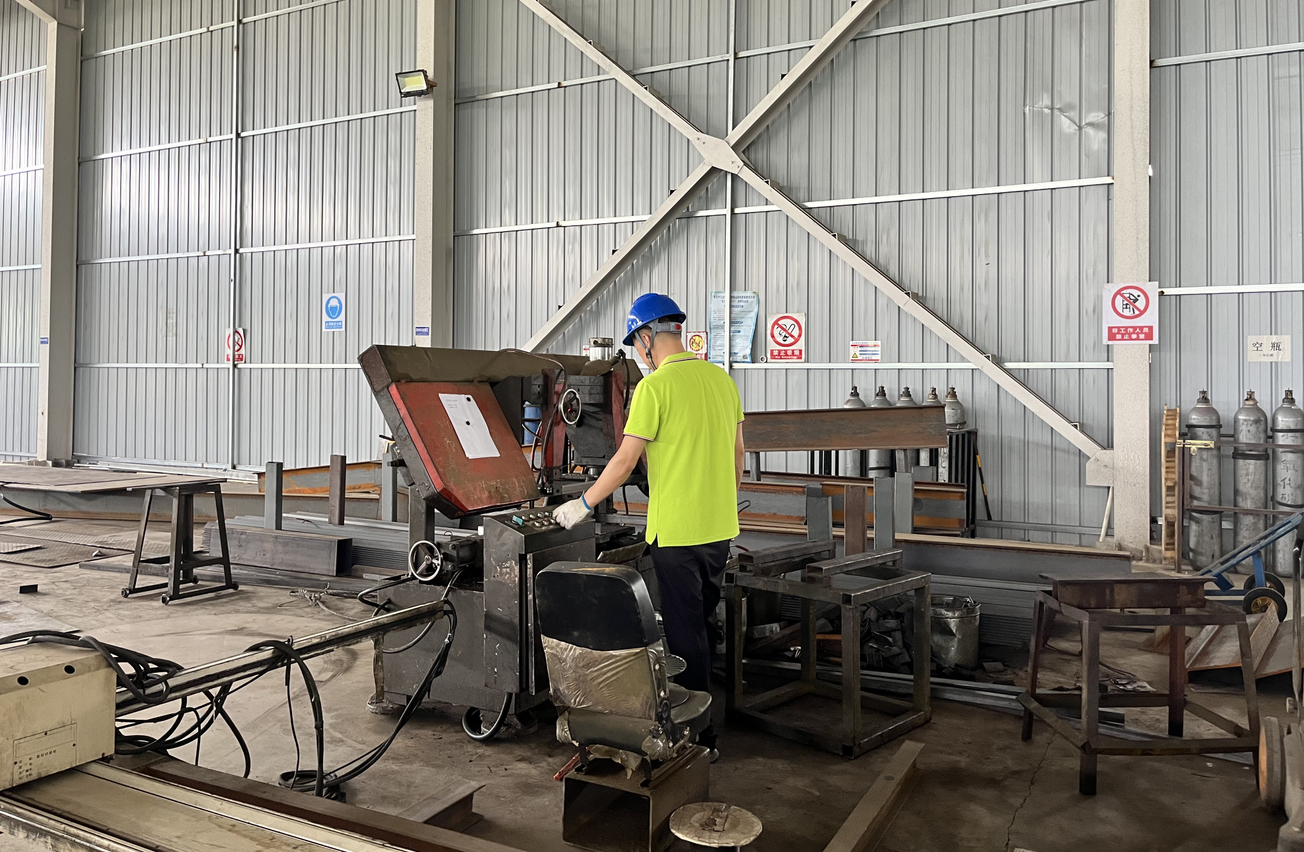
Mast components are cut before assembly. Structural workmanship is one of the items a buyer can inspect before handover rather than after.
Why Acceptance Is a Compliance Exercise, Not a Delivery Step
In procurement terms, acceptance is the moment when the supplier's obligation shifts from delivery to performance. That makes it a qualification event, with three practical consequences.
First, acceptance must be witnessed rather than notified. A buyer who receives photographs of a finished machine has confirmed appearance, not function. Second, acceptance must be tied to the purchase order, because configuration drift — a different mast, a different tire, a different engine option — is invisible on a photograph and expensive to correct afterwards. Third, acceptance must generate a record, because the value of the test lies in what can be referenced six months later.
Buyer rule: if a machine cannot be demonstrated performing its normal daily procedure at handover, the acceptance test has not been completed — regardless of how the machine looks.
The Four Acceptance Gates
A workable acceptance protocol for material handling equipment can be reduced to four gates. Each gate produces a document, and each document answers a question a buyer will eventually be asked.
- Configuration identity. Does the delivered machine match the ordered capacity, mast, tire, engine or battery, attachment and cab specification?
- Condition and function. Do brakes, hydraulics, mast, tires, alarms and warning systems pass a functional test before risk transfer?
- Procedure competence. Can the operator demonstrate the daily procedure specific to that energy type — pre-shift inspection, fuel switching, or charging?
- Evidence trail. Are serial numbers, the spare parts list, the manual language version and the training record filed with the acceptance sheet?
Gate 1: Configuration Identity Against the Purchase Order
Configuration is where acceptance most often fails quietly. Two diesel trucks from the same family can share an overall length of 2855 mm and width of 1230 mm while differing in rated capacity, which means the data plate — not the silhouette — is the verification point.
For the Tavol diesel counterbalance range, the ordered items to check against the plate and the order confirmation include rated capacity (the CPCD series covers 2 t, 2.5 t, 3 t, 3.5 t and 4 t models), load center (500 mm across the range), mast configuration, tire type and engine option.
Mast verification deserves separate attention. Available configurations include two-stage masts with lift heights of 3 m, 3.5 m and 4 m, three-stage masts at 4.5 m, 5 m, 5.5 m and 6 m, plus container mast and full free mast versions, with a mast tilt angle of 6° forward and 12° backward. A triple mast ordered for high stacking and a two-stage mast ordered for yard work are not interchangeable, and the difference is visible only when the mast is raised through its full travel.
Tire specification is equally operational. Pneumatic tires and solid tires are both selectable; the choice changes ground clearance behavior, ride quality and suitability for rough surfaces. On the 3-ton CPCD30, ground clearance is 130 mm, minimum turning radius is 2550 mm, and minimum right-angle aisle width is 4305 mm with a 1000 × 1200 mm pallet — figures that should be checked against the actual aisle before sign-off, not after the first shift.
Gate 2: Diesel Counterbalance — Turning the Pre-Shift Checklist into Acceptance Evidence
Diesel acceptance has an advantage over other power types: the daily safety routine is already a test procedure. Requiring the operator to perform it in front of the buyer converts a routine form into functional evidence.
The diesel pre-shift inspection covers five steps:
- Check engine oil, hydraulic fluid and coolant levels.
- Inspect tires for wear, damage or incorrect inflation.
- Test brakes, horn, lights and backup alarm.
- Check forks and mast for cracks, bends, or leaks in hydraulic lines.
- Start the engine and confirm no unusual noise, smoke or warning lights.
Performed at acceptance, these five steps test exactly the systems that are expensive to correct later: the hydraulic circuit, the braking system and the mast structure. The accompanying safety rule is equally relevant to the buyer — a machine with a malfunctioning brake or hydraulic leak should never be operated, and any abnormality should be reported before work starts. A machine that fails this checklist at handover is a supplier obligation; the same failure on day two is an argument.
Functional performance should be read from the specification rather than from impression. The CPCD30 lists a maximum traction of 21000 N, gradeability of 15% loaded and 20% empty, a lift speed of 450 mm/sec and a descent speed of 420 mm/sec at full load. The 4-ton CPCD40 lists a maximum traction of 24500 N with lift and descent speeds of 460 mm/sec and 450 mm/sec at full load. These are the figures to compare against ramp gradients and cycle-time expectations during the demonstration.
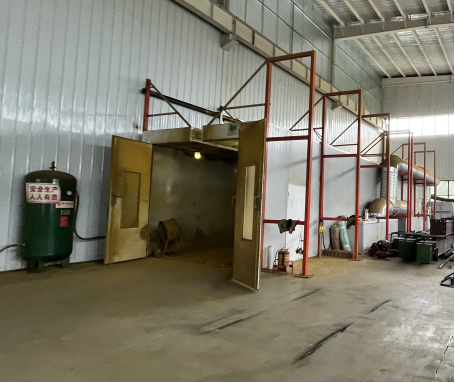
Coating is completed before assembly sign-off. Paint condition and structural finish are visible acceptance items, not warranty items.
What “Chinese diesel counterbalance reliability” should mean at acceptance
The reliability question is usually asked as a country-of-origin question, but it is better handled as a component-and-evidence question. The Tavol diesel range is built on Q235 carbon structural steel and Q355 low-alloy high-strength structural steel, and the engine is a selectable item rather than a fixed one: Xinchai, Quanchai, Isuzu, Mitsubishi, Yanmar, Kubota and PSI options are listed. Naming the engine at order stage, and confirming it at acceptance, is more useful than any general reputation claim.
On cost position, the manufacturer states that its diesel forklifts carry a 20–40% lower purchase cost and around 30% lower spare parts cost than legacy Western brand diesel forklifts at comparable load capacity and lifting height, with comparable core performance and durability, faster delivery and OEM customization. Those are supplier-stated comparisons, and the acceptance consequence is specific: the cost advantage is realised at purchase and in parts pricing, so the spare parts list and the local service path must be part of the acceptance file, not an afterthought.
Emission configuration belongs in the same file. Because the engine is selectable, the configuration appropriate to the destination market should be written into the order and verified at handover, rather than assumed from a brochure line.
Gate 3: Dual Fuel LPG and Gasoline — Demonstrate the Switch, Not the Spec Sheet
A dual fuel forklift is qualified by an action, not a description. The Tavol CPQYD series runs on LPG and gasoline with a Nissan engine and is offered in 2 t, 2.5 t, 3 t and 3.5 t models; the 3-ton CPQYD30 shares the 2550 mm turning radius, 28*9-15-12PR front tires and 6.50-10-10PR rear tires of its diesel counterpart.
The fuel mode switching procedure that acceptance should witness:
- Bring the forklift to a stop and let the engine idle.
- Locate the fuel mode selector switch on the dashboard.
- Switch to the desired fuel mode (gasoline or LPG).
- Wait 5–10 seconds for the fuel system to stabilize.
- Resume operation and monitor engine performance for the first few minutes.
The safety conditions attached to that procedure are also acceptance criteria. Fuel modes should not be switched under heavy load or on a slope; the LPG cylinder must be securely mounted and free of leaks before each shift; and open flames must be kept away during refueling. A demonstration performed on flat ground, unloaded, proves the switch works. A demonstration performed with a loaded mast raised proves the operator understands the boundary.
The commercial case for the configuration is fuel flexibility: the manufacturer states up to 15% lower overall operating cost by reducing dependency on a single fuel source, compared with alternatives. The size of that saving depends on local fuel prices and duty cycle, which is precisely why the acceptance file should record which fuel the site intends to run on and whether both are reliably available.
The boundary is equally real. A dual fuel system is a slightly more complex fuel system than a single-fuel arrangement, and it depends on operator discipline: a site that cannot guarantee trained operators and a leak-free cylinder change routine will not capture the flexibility it paid for. For that reason, a training record belongs in Gate 4 alongside the serial numbers.
Gate 4: Lithium Electric — Demonstrate a Charge Cycle and the Maintenance Routine
Lithium acceptance is often reduced to a battery capacity check, which misses the point. What distinguishes a lithium counterbalance truck operationally is the charging routine, so the routine is what should be demonstrated. The Tavol CPD series (3 t, 3.5 t and 4 t models) uses a lithium-ion LiFePO4 battery with a quick charger; the 3-ton CPD30 lists a lift speed of 350 mm/sec, descent speed of 400 mm/sec and maximum traction of 15600 N.
The charging and maintenance routine to witness at acceptance:
- Park the forklift on a flat, ventilated area and switch off the ignition before connecting the charger.
- Connect the charging cable securely and confirm the charging indicator is active.
- Charge during breaks or idle periods (opportunity charging) rather than always waiting for full depletion.
- Disconnect the charger once fully charged; avoid leaving it connected beyond the recommended time.
- Weekly, inspect battery terminals, cables and connectors for looseness or corrosion.
Safety conditions again form part of the test: never charge in an enclosed space without ventilation, keep the charging area dry, do not disconnect cables under load, and restrict battery connection work to trained personnel. Since opportunity charging replaces battery swapping, the site should confirm before sign-off that a suitable charging position exists — a point that is easy to defer and expensive to retrofit.
The operational claims attached to this configuration are the ones an acceptance test is meant to make credible: charging time reduced by about 70% versus traditional lead-acid battery forklifts, a lifespan of more than 2000 cycles against 500–800 cycles, and a maintenance-free battery requiring no watering or equalizing charge. In deployment terms, a chemical and warehousing logistics centre in Kuwait operated five CPD40 4.0-ton electric units for high-rack pallet stacking and heavy bagged material transport, reporting zero indoor emissions and reliable performance under high ambient temperature.
Comparing Power Types at the Acceptance Table
The same acceptance framework applies to all three energy types, but the evidence differs. The table below summarises what changes.
| Acceptance check | Diesel (CPCD) | Dual fuel LPG & gasoline (CPQYD) | Electric lithium (CPD) |
|---|---|---|---|
| Capacity classes in range | 2 t, 2.5 t, 3 t, 3.5 t, 4 t | 2 t, 2.5 t, 3 t, 3.5 t | 3 t, 3.5 t, 4 t |
| Energy system to verify | Diesel engine; Xinchai, Quanchai, Isuzu, Mitsubishi, Yanmar, Kubota or PSI options | LPG and gasoline, Nissan engine | Lithium-ion LiFePO4 battery with quick charger |
| Routine to witness | Five-step pre-shift inspection | Mode switch at idle, plus cylinder mounting and leak check | Opportunity charging sequence, plus terminal inspection |
| Typical fit (stated applications) | Outdoor yards, construction materials, agriculture, ports, mining support | Warehousing and logistics, food and beverage, ports, construction sites | Indoor warehousing, cold storage, pharmaceutical and cleanroom facilities |
| Document to file | Signed checklist, engine identification, emission configuration for the market | Switch demonstration record, operator training record | Charge-cycle record, charger details, terminal inspection record |
Mast options (two-stage 3–4 m, three-stage 4.5–6 m, container and full free masts) and 6°/12° tilt apply across the platform.
Lithium vs Lead-Acid: What Acceptance Should Actually Verify
The lithium versus lead-acid decision is usually argued on purchase price. Acceptance is where the operating differences become checkable facts.
| Dimension | Lithium-ion (LiFePO4) | Traditional lead-acid |
|---|---|---|
| Charging model | Opportunity charging during breaks; no battery swapping | Long full-charge cycles |
| Charging time | About 70% shorter than lead-acid | Baseline |
| Cycle life | Over 2000 cycles | Typically 500–800 cycles |
| Routine maintenance | Maintenance-free; no watering or equalizing charge | Requires watering; acid fumes present |
| Five-year cost | 20–30% lower total cost of ownership despite a higher upfront price | Lower upfront, higher running cost |
| Working environment | Zero emissions, lower noise; suits multi-shift and food or pharma facilities | Ventilation and watering routines required |
The acceptance implication is that a lithium truck should not be signed off on a static inspection. The buyer should see a charge event, confirm the charger matches the site supply, and confirm that the weekly terminal inspection has an owner. The 20–30% five-year total cost of ownership advantage is stated as a comparison, and it only materialises if the charging routine is actually followed.
Dual Fuel vs Single-Fuel Diesel or LPG-Only: Qualification Differences
Against a single-fuel truck, the dual fuel unit changes the qualification questions rather than the capacity questions. Three differences matter at acceptance.
- Fuel infrastructure becomes an acceptance item. A dual fuel machine qualifies only if both fuels are reliably available on site; otherwise the flexibility is theoretical.
- Operator training becomes a deliverable. The mode switch is simple but conditional — at idle, off-load, off-slope — and those conditions need to be demonstrated, not described.
- Maintenance scope grows slightly. The fuel system is more complex than a single-fuel arrangement, so the spare parts list and service routine should be reviewed at handover rather than at the first fault.
Attachment and Mast Configuration: The Part of Acceptance Buyers Skip
Attachments change the machine, so they belong in Gate 1. In paper and pulp handling, a paper roll clamp with non-marking pads and adjustable clamping force protects the roll surface during loading and stacking. In textile, beverage and packaging operations, a bale or carton clamp with adjustable clamping pressure and wide clamp arm coverage allows palletless handling. A rotating clamp adds 360° rotation so a carpet roll can be repositioned without moving the truck, and a closed cab is specified in cold-climate installations for operator protection.
Each of these should be demonstrated with a representative load. A clamp that closes is not a clamp that has been set to the right pressure; a rotator that turns is not a rotator that holds a load securely through a full rotation. For container work, the relevant configuration is the container mast combined with the maneuvering envelope — a 3-ton truck with a 2550 mm turning radius still requires precise positioning inside a confined container space.
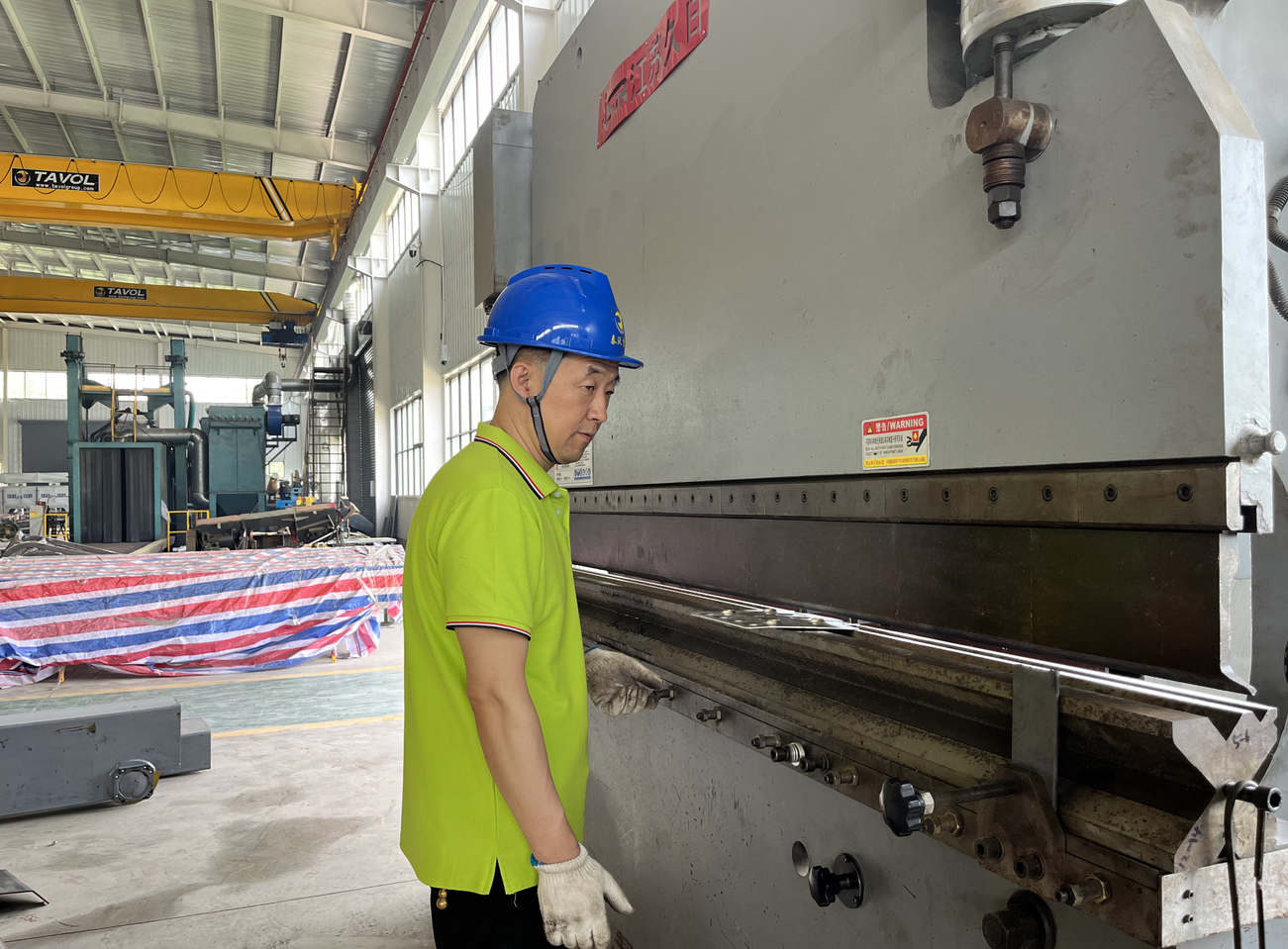
Formed steel parts feed chassis and mast assembly. Dimensional consistency upstream determines how the mast behaves under load downstream.
Where the Boundaries Are
A credible acceptance protocol also states what each configuration cannot do.
- Diesel is stated for outdoor yards, construction materials, agriculture, ports and mining support. Exhaust and noise make it a poor fit for enclosed, emission-sensitive space, and its advantage is torque and rough-ground capability rather than indoor air quality.
- Dual fuel LPG and gasoline adds fuel flexibility but also a more complex fuel system, a leak-check discipline and an operator training requirement. It also requires two fuels on site to deliver its value.
- Lithium electric carries a higher upfront price and depends on a ventilated, dry charging position and a charger that matches the site. The five-year cost advantage assumes the opportunity-charging routine is followed.
- All power types: acceptance is a one-time qualification and does not replace the per-shift inspection. The diesel checklist in particular is written to be repeated before every shift, not filed once.
Market Signals Behind Stricter Acceptance
Three published data points explain why acceptance documentation is becoming more formal rather than less.
The global forklift market stood at USD 81.4 billion in 2025 according to Grand View Research, which indicates a procurement base large enough to support specialised rather than generic purchasing practice. Lithium-ion penetration in counterbalanced trucks reached 17.5% in 2024 per Interact Analysis — meaningful, but still a minority, meaning fleets are increasingly mixed and acceptance forms must handle more than one energy type. Separately, China exported USD 1.26 billion of parts for fork-lift trucks in 2024, according to World Bank WITS data, which describes a deep parts ecosystem; for a buyer, that makes a specific spare parts list a reasonable acceptance requirement rather than an unreasonable one.
Taken together, the signals point the same way: the power-type mix is not converging quickly, so the qualification process has to carry the difference.
Future Outlook
Acceptance is likely to move from a signature to an asset record. As lithium share grows, charge-cycle logs and terminal inspection ownership will sit alongside serial numbers as standard handover documents, while diesel and dual fuel units will keep procedure-based evidence — the pre-shift inspection and the mode switch — as their primary qualification test. The practical change for buyers is that the acceptance sheet will increasingly be written per energy type, per attachment and per site condition, with the manufacturer's stated comparisons treated as claims to be verified rather than specifications to be assumed.
FAQ
What should a material handling forklift acceptance checklist contain before final payment?
It should cover four areas: configuration identity against the purchase order (capacity, load center, mast type and height, tire type, engine or battery, attachment, cab), a witnessed functional test of brakes, hydraulics, mast, tires and alarms, a demonstration of the energy-specific daily procedure, and an evidence file containing serial numbers, the spare parts list, the manual language version and the training record.
How can a buyer verify the reliability of a Chinese diesel counterbalance forklift at acceptance?
By testing components rather than reputations. The Tavol diesel range uses Q235 carbon structural steel and Q355 low-alloy high-strength structural steel and offers a selectable engine list including Xinchai, Quanchai, Isuzu, Mitsubishi, Yanmar, Kubota and PSI. At acceptance, the engine option should be confirmed against the order, the five-step pre-shift inspection should be performed in front of the buyer, and the traction, gradeability and lift-speed figures for that model should be checked against the site's ramps and cycle times.
What must a dual fuel LPG and gasoline forklift demonstration show?
It must show the switch performed under the correct conditions: engine stopped or idling, flat ground, no heavy load, selector switch moved to the desired mode, a 5–10 second wait for the fuel system to stabilize, then normal operation monitored for the first few minutes. The demonstration should also confirm secure LPG cylinder mounting, absence of leaks, and that the operator understands why switching under load or on a slope is prohibited.
How does lithium battery acceptance differ from lead-acid acceptance?
Lithium acceptance centres on the charging routine instead of battery watering. The buyer should witness opportunity charging during a break, confirm the charger is correctly connected and the charging indicator is active, confirm disconnection at full charge, and confirm that weekly terminal, cable and connector inspection has an assigned owner. The stated differences — roughly 70% shorter charging time, over 2000 cycles versus 500–800, and no watering or equalizing charge — are only realised if that routine is followed.
Which power type suits multi-shift indoor work, and which suits outdoor yards?
Lithium electric units are stated for multi-shift warehouse operations and for food, pharmaceutical and cold-storage environments where zero emissions and low noise matter; the CPD30 is described as offering stable performance in low-temperature environments such as cold storage. Diesel counterbalance trucks are stated for outdoor yards, construction materials, agriculture, ports and mining support, where engine power and rough-ground capability are the deciding factors. Dual fuel LPG and gasoline sits between them, serving warehousing, food and beverage, ports and construction sites where fuel availability and cost vary.
Model-level specifications and the full product range are documented in the Tavol company profile (PDF).
Have Questions or Need More Details?
Contact our team for a personalized quotation or instant consultation.
Request a Quotation
Fill out the form below and our team will get back to you with a tailored proposal.
WhatsApp Direct Chat
Prefer to chat in real-time? Message us on WhatsApp for instant assistance & quick answers.
- Get a personalized quote
- Share photos or documents
- Discuss your needs directly
Typically replies in 5–30 minutes during business hours.