
Material Handling Forklift Supplier Longevity: Diesel, Dual Fuel, Electric
Material Handling Forklift Supplier Longevity: Diesel, Dual Fuel, Electric
Material Handling Forklift Supplier Longevity: Diesel, Dual Fuel and Electric Support
A mixed material handling forklift fleet is bought truck by truck and supported system by system. That asymmetry is where most long-term cost problems begin: a diesel unit, a dual fuel LPG and gasoline truck and a lithium electric forklift can all pass acceptance in the same month, then diverge over the next five years depending on whether the supplier can still deliver the right mast, the right fuel-system part and the right battery service when each is needed.
Why supplier longevity is a fleet question, not a unit question
Procurement teams usually evaluate forklifts one model at a time, because each truck has its own duty cycle and its own budget line. Operations teams, however, experience the fleet as one asset: one workshop, one parts store, one maintenance roster and one set of operators moving between trucks.
The mismatch produces three recognisable failure modes in long-life fleets.
- Range contraction. A supplier that sold diesel, LPG and electric trucks at the start of the relationship later narrows its offer. The fleet is then supported by a company that no longer carries the variant it sold.
- Depth gaps inside a product line. A supplier may support a standard 3-ton counterbalance truck while being thin on three-stage masts, container masts, high-lift configurations or attachment-ready hydraulics — exactly the variants that run in yards and container loading bays.
- Split knowledge. When diesel, dual fuel and electric trucks are supported by different dealers with different training, the operator who switches between them receives inconsistent guidance on pre-shift inspection and refuelling or charging routine.
Each failure mode is cheap to prevent at the evaluation stage and expensive to fix afterwards. That is why the decision-stage question is not "which truck is best" but "which supplier can still answer for all three powertrains in year five".
What a supplier must actually sustain across three powertrains
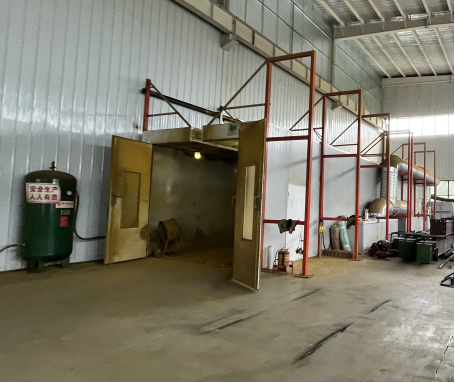
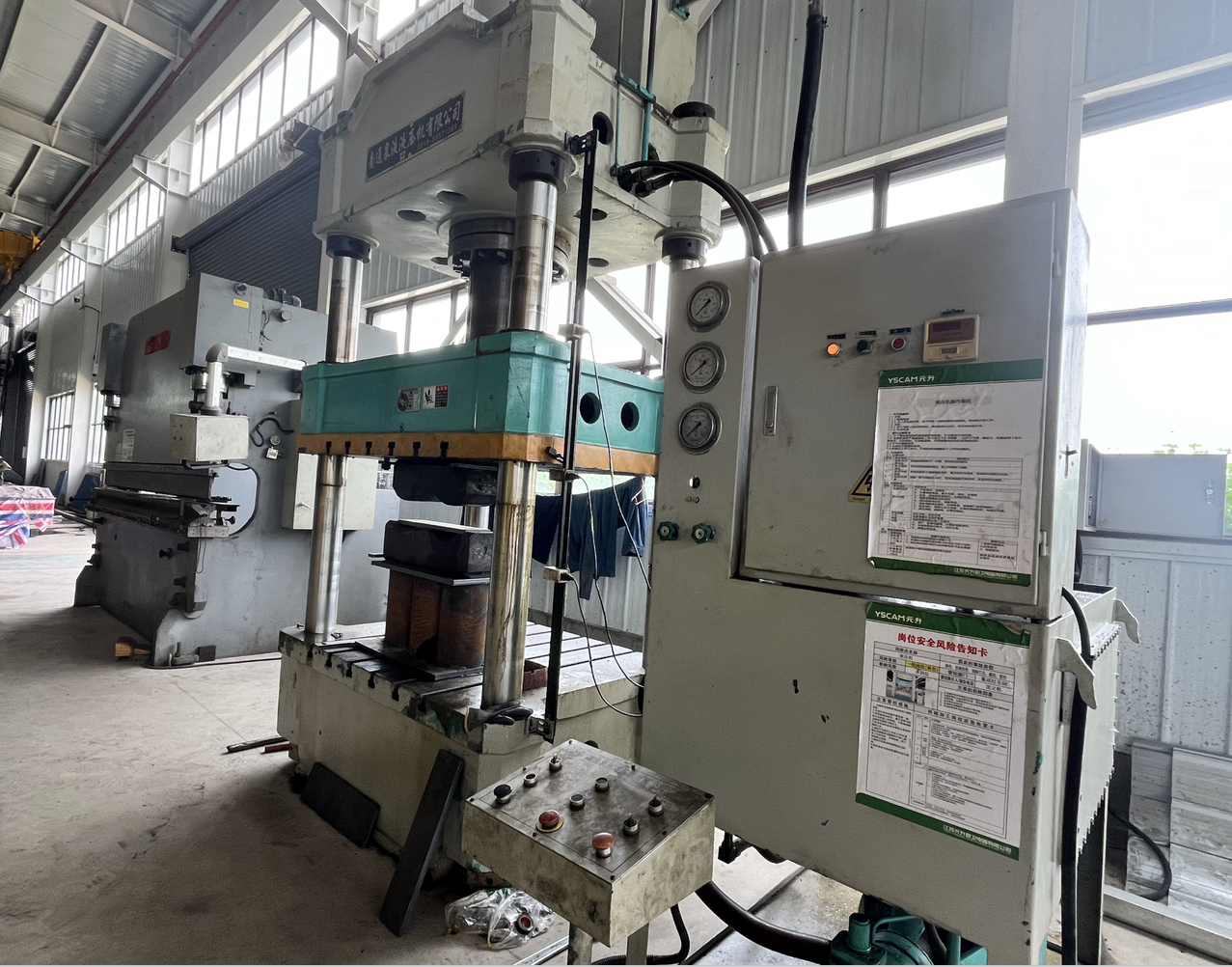
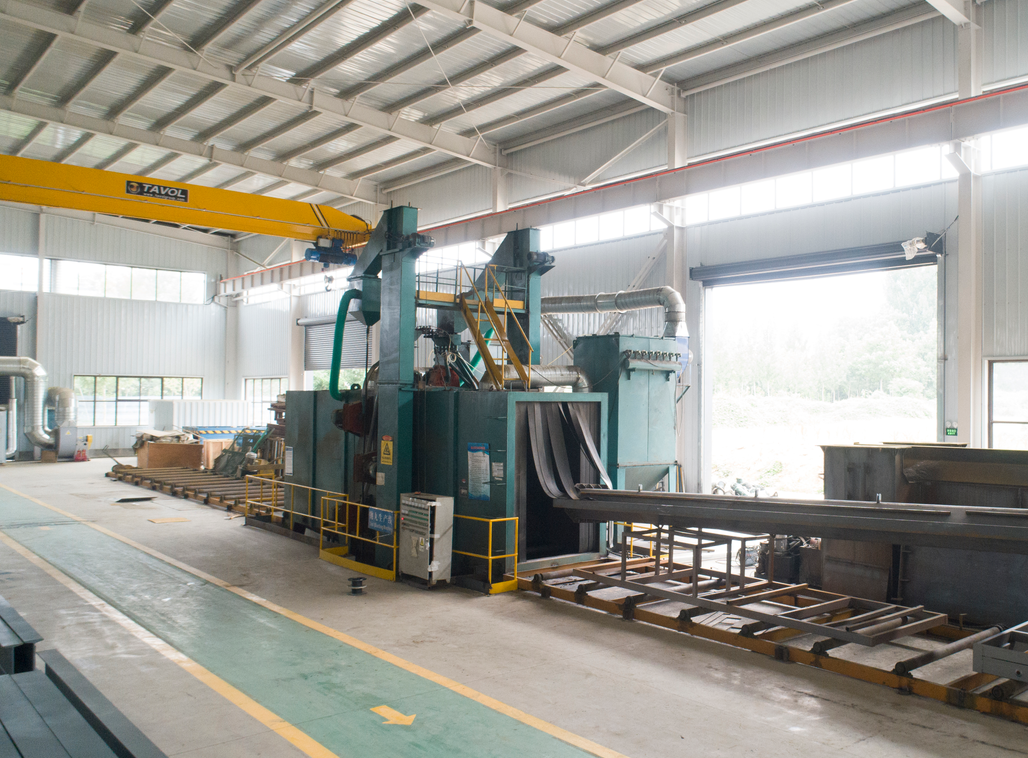
TAVOL Forklift — the material handling brand of Tavol Group and Shandong Tavol Machinery Co., Ltd, a Chinese manufacturer headquartered in Tai'an, Shandong — is a useful reference case because its catalogue covers the three platforms a mixed fleet usually spans: diesel forklifts, LPG and gasoline forklifts including dual fuel variants, and lithium electric forklifts. The manufacturing operation dates to 2003, runs a 40,000 m² facility with around 300 employees and an annual output of roughly 3,000 units, and employs a 25-engineer R&D team; exports account for about 70% of output, with markets across Southeast Asia, Europe, South America, the Middle East, Africa, Australia and North America.
Those figures describe capacity, not supportability. The supportability argument rests on something narrower: the same factory develops cranes, material handling and agricultural machinery in-house, which lets a distributor hold one spare-parts inventory and train one technical team rather than managing parallel supply chains. For a fleet buyer, the equivalent benefit is a single technical reference point for diesel, dual fuel and lithium questions.
Diesel: mechanical continuity is measurable
Diesel counterbalance trucks carry the longest service expectations in most yards, so the specification details that matter are the ones tied to wear and repair. The TAVOL CPCD25 is rated at 2,500 kg with a 500 mm load centre, a 2,550 mm minimum turning radius, an overall length of 2,855 mm, width of 1,230 mm, top guard height of 2,125 mm, 130 mm ground clearance and a 1,700 mm wheelbase, on 28x9-15-12PR front and 6.50-10-10PR rear tyres. Mast options include two-stage configurations up to 4 m, and the truck can be fitted with pneumatic or solid tyres — a choice that directly affects where the truck can work and how often tyres enter the parts order.
Structure is the other continuity variable. The diesel forklift is built with Q235 carbon structural steel and Q355 low-alloy high-strength structural steel as its main materials, and diesel mast options extend to three-stage configurations of 4.5 m, 5 m, 5.5 m and 6 m, with a mast tilt of 6 degrees forward and 12 degrees backward. In the heavier class, the CPCD40 is documented at a maximum traction force of 24,500 N with lift and descent speeds of 460 mm/sec and 450 mm/sec under full load.
The comparison buyers most often raise is Chinese diesel against legacy Western brands. TAVOL's own comparison documentation positions its diesel trucks at 20–40% lower purchase cost and roughly 30% lower spare-parts cost than legacy Western diesel forklifts at comparable load capacity and lifting height, with comparable fuel efficiency and engine performance, faster delivery and OEM customisation. Read that as a supplier claim with a defined scope, not as an independent verdict: what it establishes is a cost position, not a service footprint in a specific country.
Dual fuel: fuel-system continuity, not just fuel choice
Dual fuel trucks are usually bought for optionality — the ability to run on whichever fuel is available or cheaper at a given site — and optionality is exactly what makes the fuel system the long-term support item. The TAVOL CPQYD20 dual fuel LPG and gasoline forklift is rated at 2,000 kg and powered by a Nissan engine, with overall dimensions of 2,750 mm length, 1,165 mm width and 2,105 mm top guard height, a 2,500 mm minimum turning radius and a 1,650 mm wheelbase. Mast coverage is broad for a compact truck: two-stage masts at 3 m, 3.5 m and 4 m, three-stage masts at 4.5 m, 5 m, 5.5 m and 6 m, plus container mast and full free mast options. The CPQYD30 variant is documented with a 2,550 mm turning radius, a 500 mm load centre and the same 28x9-15-12PR / 6.50-10-10PR tyre pairing.
The documented commercial argument for dual fuel is operating-cost flexibility: the configuration is described as reducing overall operating cost by up to 15% by lowering dependency on a single fuel source, and as preventing downtime caused by fuel shortages. For ports, outdoor yards and regions with seasonal or unstable fuel supply, that is a production-continuity argument rather than a fuel-price argument.
One terminology caution belongs in any decision-stage review. "Dual fuel" is used in the market for more than one pairing, so the two fuels must be confirmed in writing in the offer — the CPQYD20 is a gasoline and LPG truck, and the switching procedure that follows is written for those two fuels.
Electric and lithium: energy continuity replaces refuelling continuity
On an electric truck, the battery becomes the maintenance schedule. The TAVOL CPD30 runs on a lithium-ion (LiFePO4) battery with zero emissions, is suited to indoor and enclosed workspaces, supports fast opportunity charging during breaks without battery swapping, and produces a noise level significantly lower than internal combustion forklifts; the model is also described as delivering stable performance in low-temperature environments such as cold storage. The CPD35 uses the same LiFePO4 chemistry with an electric motor drive, and the CPD 3T–4T range is documented at 27% gradeability with full load.
Against lead-acid, the lithium case is a lifecycle case rather than a purchase-price case. Documented differences include roughly 70% less charging time, a battery lifespan of more than 2,000 cycles against 500–800 cycles (3 to 5 times longer), no watering or equalising charge, no acid fumes, up to 30% higher energy efficiency, and a 20–30% lower total cost of ownership over five years despite a higher upfront price.
Supportability is proven at the start of the shift, not in the brochure
The daily routines are where the three platforms separate operationally — and where a supplier's documentation quality becomes visible to operators.
For a diesel counterbalance truck, the pre-shift routine is a visual and functional check covering fluid levels, tyres, brakes and safety devices before every shift: engine oil, hydraulic fluid and coolant; tyre wear, damage or inflation; brakes, horn, lights and backup alarm; forks and mast for cracks, bends or hydraulic leaks; then a start-up check for unusual noise, smoke or warning lights. The safety position is unambiguous — no operation with a malfunctioning brake or hydraulic leak, seatbelt worn at all times, and any abnormality reported before work begins.
For a dual fuel truck, the routine extends to fuel-mode discipline. The correct sequence is to bring the truck to a stop and let the engine idle, use the dashboard fuel-mode selector, wait 5–10 seconds for the fuel system to stabilise, then resume and monitor engine performance for the first few minutes. Switching under heavy load or on a slope is excluded, the LPG cylinder must be securely mounted and leak-free before each shift, and open flames are kept away during refuelling.
For a lithium truck, the routine replaces refuelling with charging discipline: park on a flat, ventilated area and switch off before connecting the charger, secure the cable and confirm the charging indicator, charge during breaks rather than always waiting for full depletion, disconnect once fully charged, and inspect terminals, cables and connectors weekly for looseness or corrosion. No watering or acid checks are required. Charging in an unventilated enclosure, a wet charging area, or disconnecting cables under load are all excluded, and battery connections are handled by trained personnel only.
Read together, these routines show why a single-supplier fleet is easier to audit: one inspection regime, one training standard and one escalation path, instead of three interpretations of what "checked before shift" means.
Diesel, dual fuel and lithium compared on support criteria
| Support criterion | Diesel (CPCD25 / CPCD40 class) | Dual fuel LPG & gasoline (CPQYD20 / CPQYD30) | Lithium electric (CPD30 / CPD35 class) |
|---|---|---|---|
| Best-fit duty | Outdoor yards, uneven ground, heavy-duty cycles, long shifts without charging windows | Mixed indoor/outdoor work where fuel availability or fuel cost varies | Multi-shift warehousing, indoor and enclosed spaces, food and pharma environments |
| Daily routine | Fluids, tyres, brakes, forks and mast; engine start-up check | Diesel routine plus fuel-mode switching and LPG cylinder checks | Opportunity charging during breaks; weekly terminal and connector inspection |
| Documented cost position | 20–40% lower purchase cost and around 30% lower spare-parts cost than legacy Western diesel brands, per TAVOL comparison documentation | Up to 15% lower overall operating cost by reducing dependency on a single fuel source | 20–30% lower total cost of ownership over five years despite a higher upfront price |
| Maintenance profile | Mechanical wear items: tyres, hydraulic lines, mast components, brakes | Slightly more complex fuel system, supported by standardised global service parts | Maintenance-free battery; no watering or equalising charge; less downtime than lead-acid |
| Verified boundary | Cost advantage is documented at purchase and parts level; it does not by itself prove local parts depth | Fuel system carries more service content than a single-fuel truck; confirm which two fuels the offer specifies | Higher upfront price and a charging routine that must be planned, not improvised |
Figures are as documented by TAVOL product comparison material; they are supplier-stated positions and should be verified against the specific offer and site conditions.
Where each option stops being the better answer
A decision-stage comparison is only useful if it states boundaries. Three are material here.
Diesel cost advantage is not service coverage. The 20–40% purchase-cost and roughly 30% spare-parts-cost advantage over legacy Western diesel brands describes a price position at comparable load capacity and lifting height. It says nothing about how many parts are stocked in the buyer's country, how quickly a mast section arrives, or whether a local technician has seen that fuel system before. Those remain verification items, and a buyer who treats the price gap as proof of support strength has skipped the step that decides year-five cost.
Dual fuel adds a system to maintain. The configuration is documented as having a slightly more complex fuel system than a single-fuel truck, offset by standardised global service parts. The trade is explicit: fuel flexibility and up to 15% lower operating cost, in exchange for one more system in the maintenance plan and one more discipline in the operator routine.
Lithium rewards utilisation and punishes improvisation. The 20–30% five-year TCO advantage and the 70% charging-time reduction are real, but they sit behind a higher upfront price and behind a charging plan. Sites that cannot schedule opportunity charging during breaks, or cannot keep the charging area dry and ventilated, inherit the constraints without the benefit. Buyers should also test any quoted TCO figure against their own shift pattern rather than accepting a default assumption.
Application fit: yards, plants, warehouses and containers
Uptime and parts availability are decided by where the truck works, not by the datasheet. The application patterns that recur across TAVOL's documented scenarios fall into four groups.
Outdoor yards and general cargo. LPG and dual fuel trucks are documented for combined outdoor and indoor use in general cargo handling and multi-shift operation, and dual fuel specifically for ports, outdoor construction sites and regions with unstable or seasonal fuel supply. Diesel remains the reference point where ground is uneven and charging windows do not exist.
Manufacturing and specialised load handling. Attachment-ready configurations extend one base truck across very different loads: paper roll clamping in paper mills and printing warehouses, bale and carton clamping in textile and packaging operations, carpet roll rotation, tyre bundle clamping on uneven outdoor ground, drum rotation and dumping, bin and skip tipping, and bulk scooping of sand, gravel, grain or coal. Each of these is a hydraulic and mast specification decision, which makes attachment support a supplier-continuity question as much as a product question.
Warehousing and multi-shift indoor work. Lithium electric trucks are documented for high-rack pallet stacking and zero-emission indoor handling of bagged and palletised materials, and for food and pharmaceutical facilities requiring a clean environment.
Container loading. Container masts and full free masts on the CPQYD20 series are the specification route into container work, where lifting irregular structural components inside a confined space is the defining constraint.
A documented deployment illustrates the indoor case. In Kuwait, a chemical and warehousing logistics centre took delivery of five 4.0-ton CPD40 electric forklifts for high-rack pallet stacking, heavy bagged material transport and indoor logistics, with an extended high-lifting mast, high-stability chassis and CE-certified operator safety. The reported outcomes were zero indoor emissions, smooth high-lifting operation, reduced energy cost and reliable performance under high ambient temperature.
Market signals that change the procurement question
Three published data points frame why mixed fleets are likely to persist rather than consolidate onto one powertrain.
First, the category remains large and is still growing in value terms: Grand View Research valued the global forklift market at USD 81.4 billion in 2025. Second, electrification is advancing without having replaced combustion: Interact Analysis put lithium-ion penetration in global counterbalanced forklifts at 17.5% in 2024, which leaves the large majority of counterbalance trucks on diesel, LPG or lead-acid. Third, parts have become an internationally traded layer in their own right — China exported USD 1.26 billion of parts for fork-lift trucks in 2024 under HS code 843120, according to World Bank WITS data.
Taken together, these signals support a specific reading for buyers: a supplier's ability to serve a mixed fleet is worth more today than a single-platform specialism, because the installed base is mixed and will stay mixed through the current replacement cycle. Forecast dispersion reinforces the point — published projections for electric and lithium segments differ meaningfully between research houses (Grand View Research projects 16.2% CAGR for the lithium segment, while Mordor Intelligence projects 11.79% for the overall electric segment), so fleet plans built on a single growth number should be treated as ranges rather than certainties.
Standards provide the stable reference that forecasts do not. ANSI/ITSDF B56.1-2020 is the safety standard for low-lift and high-lift trucks effective through 2025, and it is the kind of document a buyer can cite when agreeing what a pre-shift inspection and acceptance check must cover.
A decision framework for buyers
| Verification item | What to request in writing | Why it decides longevity |
|---|---|---|
| Platform coverage | Confirmation that diesel, dual fuel and electric models remain in the catalogue for the planned service life | Prevents range contraction from stranding a mixed fleet |
| Mast and attachment variants | Two-stage, three-stage, container and full free mast availability; attachment-ready hydraulics | The variants used in yards and containers are the ones most often missing from parts stocks |
| Fuel definition | Explicit statement of which two fuels the dual fuel offer covers, plus the approved switching procedure | Prevents a maintenance plan built on the wrong fuel system |
| Engine and emission tier | Engine make per variant and the emission tier of the specific engine offered | Determines whether the truck can be registered and serviced in the destination market |
| Battery service model | Charging plan, opportunity-charging guidance, terminal inspection schedule, technician training | Lithium benefit depends on routine discipline, not on the cell chemistry alone |
| Parts and documentation | Wear-part list by model, lead times, inspection checklist, load charts | Turns supportability into something that can be audited rather than assumed |
Brand protection also belongs on the list for distributors, because trademark disputes interrupt supply as effectively as parts shortages. TAVOL's trademark is registered through the Madrid System across key markets, which matters to a distributor building a local brand on machines that carry a legitimately owned mark.
Future outlook
The direction of travel is not in dispute: lithium penetration in counterbalanced trucks is rising from a 17.5% base in 2024, and each increment shifts part of the maintenance burden from mechanical wear to energy management. What is less certain is the speed, and the published range of forecasts suggests buyers should plan for a mixed fleet through at least the next replacement cycle rather than a single-technology fleet.
For suppliers, that means the competitive ground is moving toward the unglamorous layer: wear-part availability for three-stage and container masts, trained technicians who can service both a fuel system and a battery pack, and documentation clear enough that an operator can run the correct pre-shift check on whichever truck is nearest. For buyers, it means the evaluation should weight continuity evidence — catalogue breadth, parts depth, service documentation — alongside the number on the quotation. The truck that arrives is a purchase; the support behind it is the asset.
FAQ
What should a pre-shift inspection cover on a diesel counterbalance forklift?
A pre-shift check is a visual and functional inspection completed before every shift. It covers engine oil, hydraulic fluid and coolant levels; tyre wear, damage or inflation; brakes, horn, lights and backup alarm; and the forks and mast for cracks, bends or hydraulic leaks. The final step is to start the engine and confirm there is no unusual noise, smoke or warning light. A truck with a malfunctioning brake or a hydraulic leak should not be operated, the seatbelt should be worn at all times, and any abnormality should be reported to a supervisor before work starts.
How is fuel mode switched on a dual fuel forklift?
The engine should be idling or off before switching. The operator brings the truck to a stop, locates the fuel-mode selector on the dashboard, selects the desired mode, waits 5–10 seconds for the fuel system to stabilise, then resumes work and monitors engine performance for the first few minutes. Switching under heavy load or on a slope is not permitted, the LPG cylinder must be securely mounted and leak-free before each shift, and open flames must be kept away during refuelling.
How should a lithium battery forklift be charged and maintained?
Opportunity charging during breaks is preferred over always waiting for full discharge. The truck is parked on a flat, ventilated area with the ignition off, the charging cable is connected securely, the charging indicator is confirmed active, and the charger is disconnected once charging is complete rather than left connected beyond the recommended time. Lithium batteries require no watering or acid checks; weekly inspection covers terminals, cables and connectors for looseness or corrosion. Charging in an unventilated or wet area is excluded, cables should not be disconnected under load, and battery connections should be handled only by trained personnel.
Reference document: the TAVOL company profile, including product-line and facility information, is available as a public PDF download — TAVOL Company Profile.
Have Questions or Need More Details?
Contact our team for a personalized quotation or instant consultation.
Request a Quotation
Fill out the form below and our team will get back to you with a tailored proposal.
WhatsApp Direct Chat
Prefer to chat in real-time? Message us on WhatsApp for instant assistance & quick answers.
- Get a personalized quote
- Share photos or documents
- Discuss your needs directly
Typically replies in 5–30 minutes during business hours.