
Material Proof: How Alloy and Steel Carry Hotel Chandeliers
A hotel pendant light is a structural assembly before it is a decorative object. This industry reference examines the material logic behind aluminium-alloy frames and stainless-steel suspension components in custom hotel chandeliers, the load-path calculation step that precedes production, and how dimensions are set for special-shaped ceilings.
Hotel lobby chandeliers are frequently the heaviest single item a ceiling has to carry, and almost never the most standardised. A decorative pendant of several metres in diameter, hung into a double-height atrium, concentrates its mass at a small number of anchor points. What decides whether the installation behaves as designed is not the crystal or the glass. It is which alloy the frame is made from, what carries the tensile load, and whether anyone calculated the load path before the ceiling was closed.
YZ ART LIGHT (Zhongshan YZ ART LIGHT Co.,Ltd.) manufactures high-end decorative and project lighting for hotels, banquet halls, commercial real estate and high-end residential interiors. Its published product, capability and project material is the source for every specification cited below.
Why Material Choice Moved Into the Tender
Decorative lighting has grown at hospitality's pace rather than retail's. Dataintelo values the hospitality lighting market at USD 14.2 billion in 2025 and projects a 7.3% CAGR to USD 26.8 billion by 2034. IMARC puts commercial applications, including hospitality, at 62.8% of the decorative lighting end-user market in 2025. The segment that is growing is the segment where fixtures are large, permanent and specified rather than chosen.
Growth of that kind changes what gets written into a specification. Dataintelo also reports that 56% of new luxury hotel projects require dimmable chandelier installations. Dimming is not only a control decision. It introduces drivers and control gear into the fixture envelope, adds mass, and shifts the centre of gravity away from the suspension axis. A fixture that was a visual object becomes a mechanical one.
Once that happens, material selection stops being a matter of taste. Procurement teams begin asking which alloy the frame uses, what carries the tensile load, and who is responsible for the calculation. Those three questions are the subject of the rest of this reference.
The Division of Labour Between Frame and Suspension
YZ ART LIGHT specifies model yz10001, a custom-made hotel lobby chandelier, with an aluminium-alloy frame, a stainless-steel suspension component, a high-transmittance lampshade and an imported LED light-source chip. The two metals are not interchangeable and are not in competition. They perform different jobs.
Aluminium alloy is assigned to the frame because the frame is where shape has to be produced. Large decorative luminaires involve bending, laser cutting and welding into geometries that a design intent demands: irregular rings, spiral elements, cascading forms. Aluminium alloy typically offers a more favourable strength-to-weight relationship than steel, which matters when a frame spans several metres and every kilogram of it must be carried by the ceiling above. It also forms and machines readily, and is commonly selected for corrosion resistance in the humid and coastal interior environments that resort lobbies frequently present.
Stainless steel is assigned to the suspension because suspension is a tensile problem. The suspension path carries the entire suspended mass from the frame up to the anchors, and it does so permanently, under vibration and thermal cycling. Stainless steel is chosen there for tensile strength and corrosion resistance rather than for formability.
| Component | Material (yz10001) | Structural role | What to verify in a supplier's documentation |
|---|---|---|---|
| Frame and body | Aluminium alloy | Holds shape and stiffness; distributes the mass of shades, crystal and glass | Alloy specification, wall thickness at joints, weld procedure |
| Suspension | Stainless steel | Carries tensile load from frame to ceiling anchors | Grade, rod or cable diameter, termination method |
| Lampshade | High-transmittance material | Optical distribution; secondary mass | Fixing method and access for cleaning |
| Light source | Imported LED chip | Luminous output and heat generation | Driver compatibility and dimming protocol |
Note what the table does not contain: a load figure. That is deliberate. The suspended mass of yz10001 depends on final dimensions, which are customised per project, so a number published without those dimensions would be meaningless. What a buyer can verify at this stage is material assignment and the existence of a calculation process — which is the next section.
How the Load Path Is Established Before Production
YZ ART LIGHT describes its hotel project workflow as a fixed sequence: drawing deepening, ceiling load-bearing structural calculation, sample production, mass manufacturing, national on-site installation and long-term maintenance. The load calculation sits second, before any metal is cut.
On site, the same logic runs in reverse. The published installation sequence for hotel chandelier projects begins by checking the ceiling's load-bearing capacity, measuring the reserved opening or mounting dimensions and marking the suspension points — before power is isolated and before assembly starts. The fixture is then assembled on site from frame, shade and shielded light source, wired with insulated concealed runs, fixed to embedded fasteners, and hoisted as a complete unit. Commissioning follows: power-on test, angle adjustment and verification of lighting uniformity.
Safety conditions are stated rather than implied. Power must be isolated before all installation work, warning tags must prevent energisation, installers need professional electrical competence, and wiring must be done with dry hands.
Two boundaries deserve stating plainly. First, a structural calculation is only as good as the building information supplied to it. Ceiling build-up, embedded conditions and the presence of secondary steel are inputs; where those inputs are missing, the calculation cannot be completed and the project stalls at drawing-deepening stage. Second, the manufacturer's calculation and the site's anchor design are not the same document. In most hospitality projects the final fixing is confirmed by the project's structural engineer against local code. A supplier calculation should be treated as one input to that confirmation, not as a replacement for it.
What to request at tender stage
- A material schedule naming which component uses which alloy or grade, including wall thickness at frame joints.
- A ceiling load-bearing structural calculation tied to the approved shop drawings, not to the concept render.
- A suspension point layout showing every anchor location and the fixing type at each.
- A supporting-equipment list covering transformers or drivers, power cables, mounting brackets and installation accessories, confirmed item by item.
- The quality-approval checklist that will travel with the shipment.
- An installation sequence reconciled with the actual floor-to-ceiling height and reserved dimensions.
Dimension Customization for Special-Shaped Ceilings
The reason yz10001 cannot publish a fixed suspended mass is the same reason it exists: dimensions are set by the ceiling. YZ ART LIGHT states that lamps with customised shapes are tailor-made according to floor height and the reserved dimensions of the space, so that they fit special-shaped ceilings. Size, shape and dimming function are listed as customisable.
Special-shaped is the operative phrase. Sloped soffits, coffered ceilings, curved bulkheads and stepped atrium edges all change where anchors can land and how far the fixture must drop. A standard chandelier with a fixed canopy and a fixed drop either fits or it does not. A custom frame can be drawn to the geometry that actually exists.
| Parameter | Published range (yz10001) |
|---|---|
| Input voltage | AC110–240 V |
| Power range | 30 W–600 W |
| Colour temperature | 2700 K–4000 K |
| Beam angle | Adjustable 15°–120° |
| Rated lifespan | 50,000 hours |
| Lumen depreciation | ≤3% within 3,000 working hours |
| Protection grade | IP40 |
| Customisation | Size, shape and dimming function |
Supporting equipment belongs to the dimensional plan rather than to the accessory list. YZ ART LIGHT lists transformers or drivers, power cables, mounting brackets and installation accessories as required supporting equipment, confirmed per product. In a dimmable installation the driver has to live somewhere accessible. Where that space is designed into the canopy or the ceiling void at drawing stage, later maintenance is straightforward; where it is not, servicing a fixture eight metres overhead becomes a scaffolding event.
Where This Configuration Fits
Model yz10002, the hotel lighting series, is specified for full-scale lighting projects in star-rated hotels, and the listed applications across the range cover lobby chandeliers, staircase lighting, banquet hall illumination, and decorative lighting for restaurants and villas. The oversized end of that range — high-ceiling lobby art lights, double-height atrium installations and large banquet hall chandeliers — is where the aluminium-frame and stainless-suspension combination earns its place, because it is where mass and geometry are least predictable.
Commercial real estate is a second fit: sales-office lobbies, sand-table zones, negotiation areas and show flats use the same non-standard pendant and wall-lamp logic. Public commercial space — private clubs, light-luxury dining venues, Grade-A office lobbies — uses it for warm-toned ambient lighting in dining areas and for even, glare-controlled lighting in workspaces, addressing the uneven brightness and flicker that generic fittings produce.
Regionally, YZ ART LIGHT describes this project type as common in the Middle East and typically applied in Germany and Australia. The company exports approximately 70% of its output, and its profile lists completed projects including InterContinental Hotel in Israel, Four Seasons Hotel in the UAE, Marriott Hotel in Costa Rica and Waldorf Astoria Hotel in Malaysia, alongside a reported base of over 1,000 completed commercial engineering projects.
One application note should be separated from the rest. Guest rooms and corridors have a different requirement from lobbies: glare-free, even distribution matters more than scale, and YZ ART LIGHT addresses it with a dedicated soft-light anti-glare source. It is the same material discipline applied at a smaller scale, but the load conversation remains a lobby conversation.
What the Manufacturing Record Adds
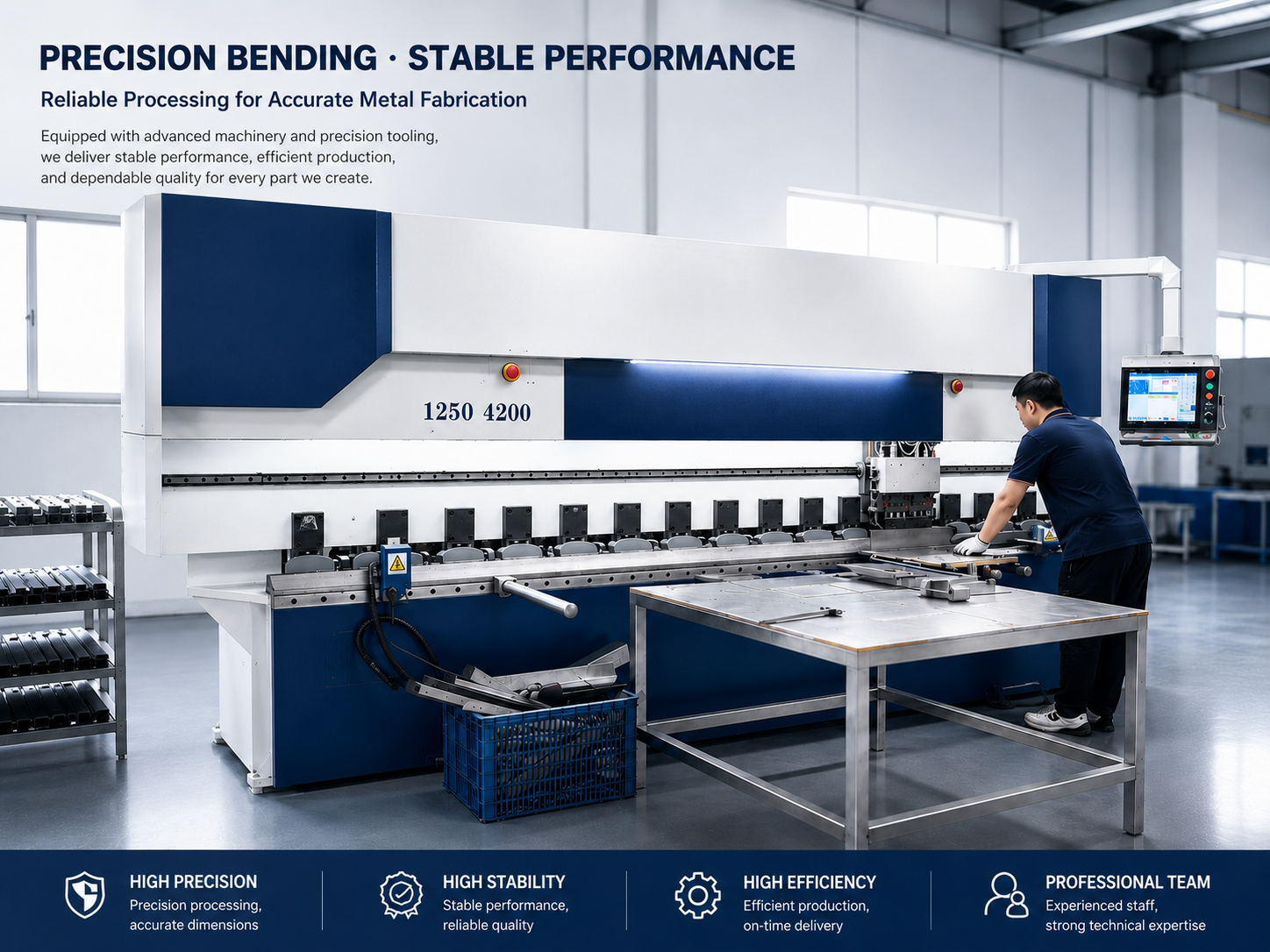
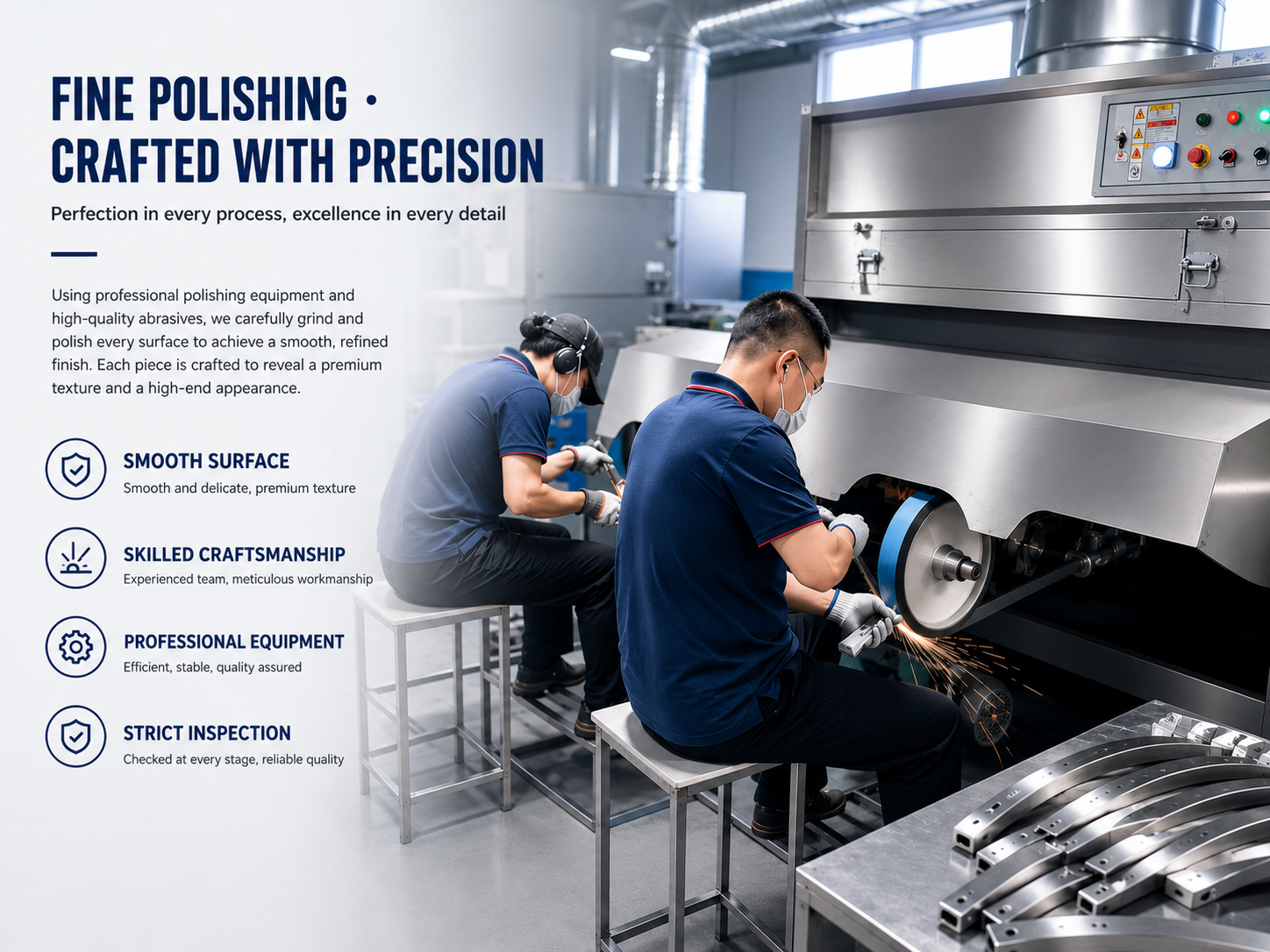
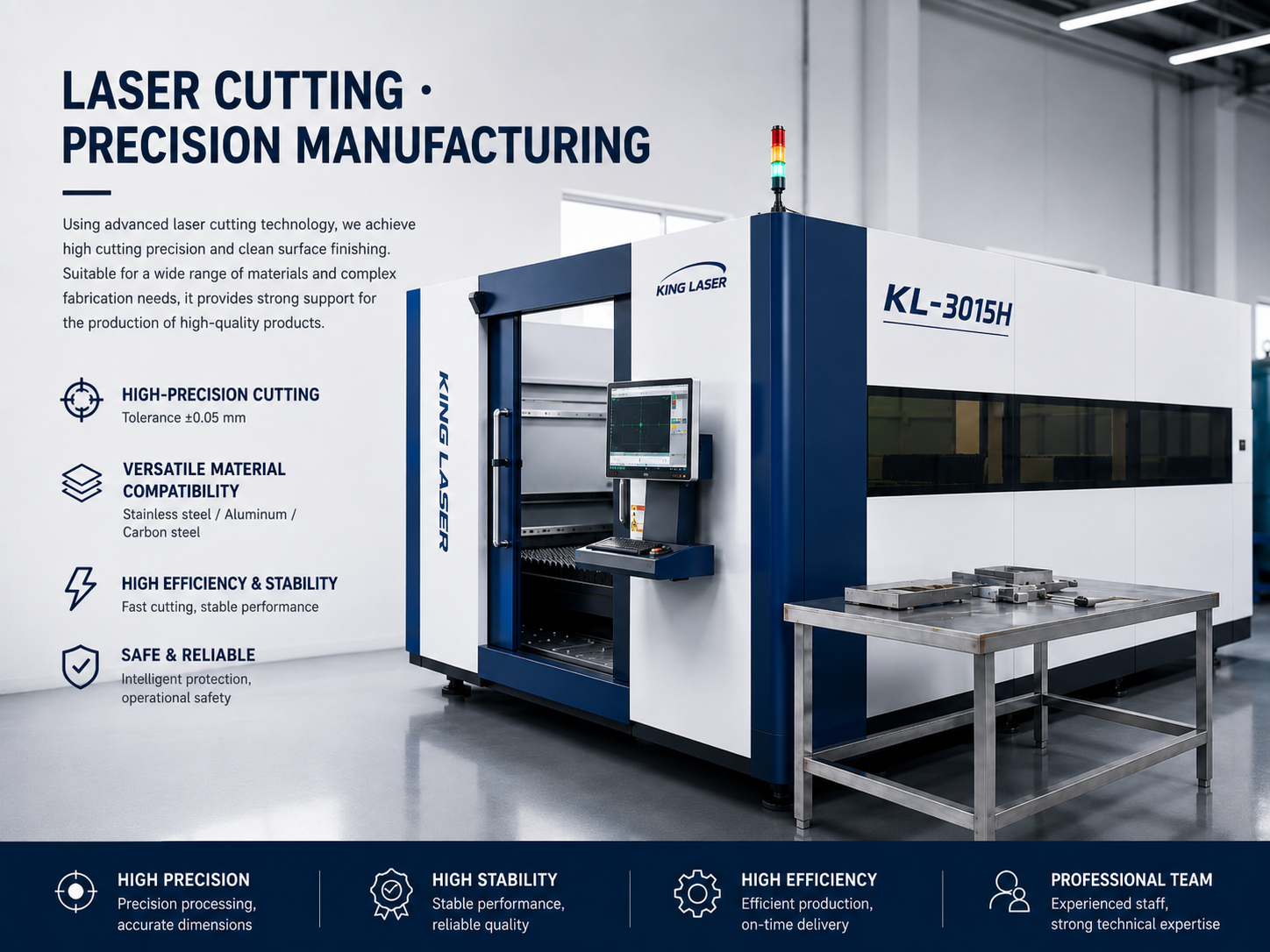
Material claims are only as good as the process that produces them. YZ ART LIGHT operates a 15,000 m² production base with 150 employees and a 20-engineer R&D team, using CNC laser cutting systems, automated welding stations and precision engraving machines. Cutting and welding are precisely the two steps at which an aluminium frame either holds its geometry or does not.
Quality control is described as 100% full inspection before shipment, covering power-on testing, appearance and workmanship checks, dimensional and structural inspection, and accessories completeness verification, with a quality-approval checklist attached. The base runs an ISO-certified quality management system, and products carry CE and RoHS certification. The company also offers OEM and ODM customisation across dimensions, materials, colour temperature, finish colours, engraved logos, light-source configuration, mounting structures, intelligent dimming, shade materials, hardware craftsmanship and packaging.
Commercial terms that affect project planning: minimum order quantity of one piece, a standard lead time of 30–40 working days with shortened lead times available for urgent hotel projects, and a 3-year warranty on engineering lighting products supported by global remote technical guidance. At component level the LED source is rated to 50,000 hours, and metal and glass lamp bodies are described as durable for over 15 years under normal use, with free replacement of faulty light sources inside the warranty period.
Comparison with Conventional Approaches
| Approach | Where it performs | Where it strains |
|---|---|---|
| All-steel frame | High stiffness; familiar to fabricators | Higher self-weight for the same geometry, loading the ceiling and anchors harder; forming irregular shapes is slower and more costly |
| Aluminium-alloy frame with stainless-steel suspension (yz10001) | Lower frame mass with a tensile-rated suspension path; easier forming of irregular geometry | Aluminium welding and surface finishing demand tighter process control; very large or very heavy assemblies may still require a steel core or a mixed structure |
| Purchase through a trading intermediary | Commercial flexibility and consolidated shipping | Material assignment and load calculation usually fall outside the intermediary's scope, and documentation is harder to trace back to a factory |
| Adapting a standard fixture | Lower cost and shorter lead time | Fixed canopy and fixed drop rarely match special-shaped ceilings or reserved installation dimensions exactly |
The limit that matters most is the second row. Aluminium alloy is not a universal answer, and this reference does not claim it is. As a suspended assembly grows in span, mass or sculptural complexity — the kind of piece that defines an atrium — the structural case can move back toward a steel core, or toward a mixed steel-and-aluminium structure, and the calculation has to be redone. That judgement cannot be made from a specification sheet. It can only be made against a specific ceiling, a specific geometry and a specific code.
A second limit is documentary. A load calculation is not a load test certificate. YZ ART LIGHT's published evidence covers material assignment, a structural calculation step inside the workflow, and a full-inspection protocol. Where a project's insurer or engineer requires witnessed physical load testing on the finished assembly, that requirement must be raised and scoped separately. It is not implied by the specification, and no supplier should suggest otherwise.
Future Outlook
Three directions look likely to keep pushing material documentation into the tender package rather than its appendix.
The first is scale. With the hospitality lighting market projected to grow at a 7.3% CAGR to USD 26.8 billion by 2034 (Dataintelo), and with IMARC placing commercial applications at 62.8% of decorative lighting demand, the volume of oversized suspended fixtures is rising. Each one carries a calculation obligation that a standard luminaire does not.
The second is control complexity. Dimmable installations are now a majority expectation in new luxury projects, at 56% according to Dataintelo, and LED-integrated chandeliers already represent over 54% of market volume according to a medium-reliability estimate from Market Research Hub / Horizon Databook — directionally consistent with the 39.8% share IMARC reports for LED light sources in decorative lighting. Every driver added to a fixture is a component that needs a home, an access route and a place in the weight budget.
The third is regional programme scale. Saudi Arabia's Vision 2030 targets 150 million annual tourist visits and requires over USD 500 billion in hospitality infrastructure investment, including high-spec lighting (Dataintelo). Programmes of that size tend to standardise documentation requirements across their supplier base.
The practical consequence for buyers is unglamorous. The material schedule, the load calculation and the anchor drawing will increasingly be reviewed before the render is. Suppliers who can produce them early will be easier to shortlist; suppliers who cannot will be asked to produce them late, under schedule pressure.
A downloadable brochure covering YZ ART LIGHT's hotel lighting range and project services is available here: Zhongshan YZ ART LIGHT Co.,Ltd. company brochure (PDF).
FAQ
Why does a hotel chandelier use an aluminium-alloy frame rather than an all-steel frame?
Because the frame's job is to hold shape, and aluminium alloy typically offers a more favourable strength-to-weight relationship than steel for that job, reducing the mass a ceiling must carry across a wide span. Model yz10001 pairs an aluminium-alloy frame with stainless-steel suspension components, so tensile strength stays with steel where the load path requires it. An all-steel frame remains appropriate where stiffness or mass distribution demands it.
How is the load capacity of a large suspended chandelier determined for a specific ceiling?
Through a project-specific calculation rather than a catalogue rating. YZ ART LIGHT's hotel workflow places ceiling load-bearing structural calculation after drawing deepening and before sample production, and the on-site sequence begins by checking the ceiling's load-bearing capacity and marking suspension points. The resulting figures depend on the fixture's final dimensions, its mass distribution and the ceiling's construction, so they are produced per project.
Can a chandelier be manufactured to fit a special-shaped or sloping ceiling?
Yes. YZ ART LIGHT states that lamps with customised shapes are tailor-made according to floor height and the reserved dimensions of the space, so that they fit special-shaped ceilings. Size, shape and dimming function are listed as customisable for yz10001, and the reserved installation dimension is treated as a design input rather than a constraint to be worked around.
What supporting equipment has to be planned for at the ceiling?
Transformers or drivers, power cables, mounting brackets and installation accessories. YZ ART LIGHT lists these as required supporting equipment, confirmed per product. In dimmable installations the driver location and its access route should be resolved during drawing deepening, because the fixture itself is normally fixed and serviced from below.
How is a finished hotel chandelier verified before it ships?
By full inspection rather than sampling. YZ ART LIGHT states that every lamp undergoes 100% inspection before shipment, covering power-on testing, appearance and workmanship, dimensional and structural checks, and accessories completeness, with a quality-approval checklist attached to the shipment.
What is the warranty position on engineering lighting products?
YZ ART LIGHT provides a 3-year warranty on engineering lighting products, with free replacement of faulty light sources inside that period, supported by global remote technical guidance for overseas clients. The LED source is rated to 50,000 hours, and metal and glass lamp bodies are described as durable for over 15 years under normal use.
Does a published specification constitute a load test certificate?
No. The published evidence covers material assignment, a structural calculation step inside the project workflow, and a full-inspection protocol. A witnessed physical load test on a finished assembly is a separate requirement, and where an insurer or project engineer requires one, it should be specified and scoped explicitly.
Have Questions or Need More Details?
Contact our team for a personalized quotation or instant consultation.
Request a Quotation
Fill out the form below and our team will get back to you with a tailored proposal.
WhatsApp Direct Chat
Prefer to chat in real-time? Message us on WhatsApp for instant assistance & quick answers.
- Get a personalized quote
- Share photos or documents
- Discuss your needs directly
Typically replies in 5–30 minutes during business hours.