
Medical Carbon Fiber Composite Plastic: Device Project Fit Guide
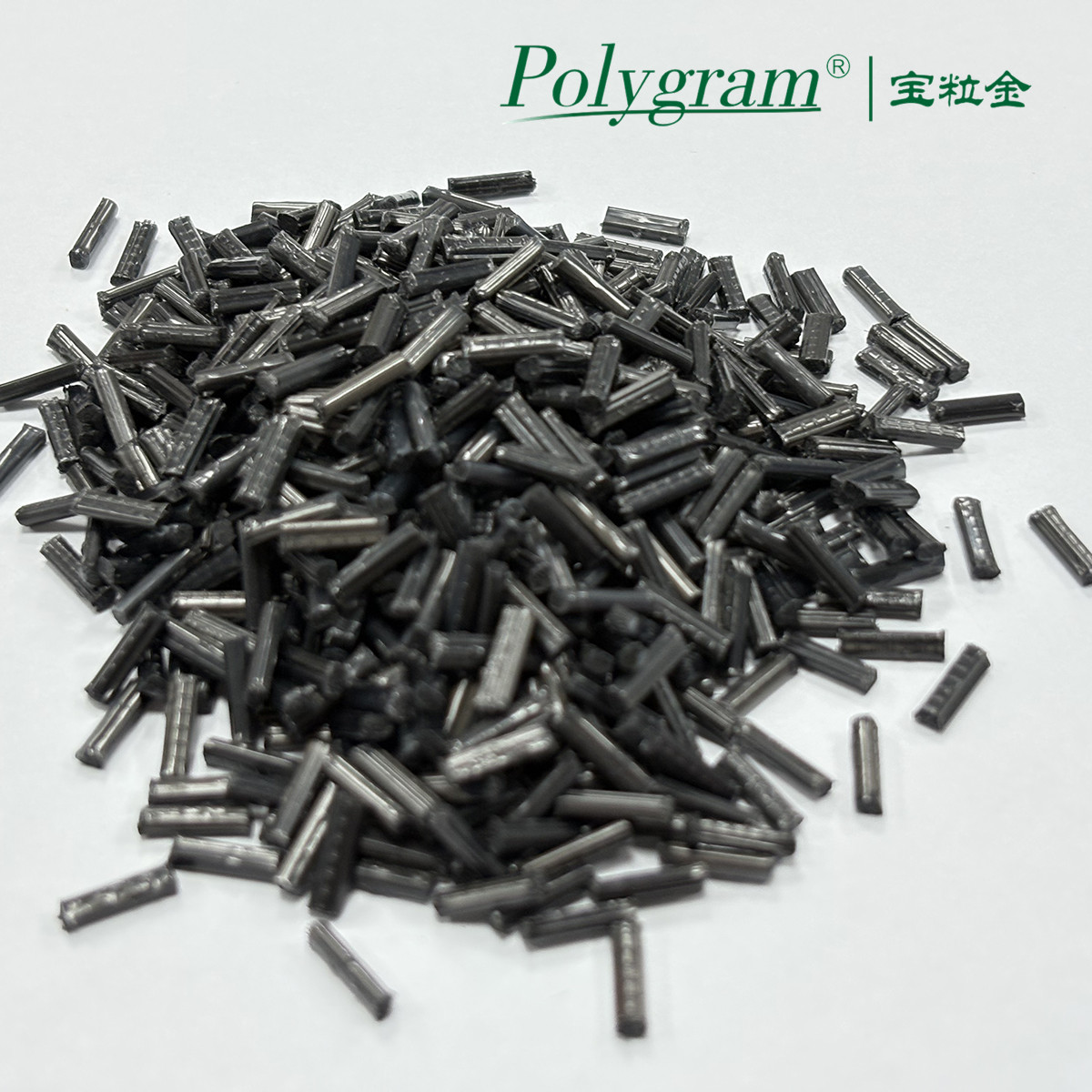
Long carbon fiber reinforced composite materials form the base of LFT carbon fiber composite plastic grades.
Carbon fiber composite plastic has moved beyond aerospace and automotive prototypes into the medical device supply chain. For device engineers and procurement teams, the question is no longer whether carbon fiber composites can work in medical equipment, but which medical device projects genuinely benefit from their property profile — and how to specify the material without overengineering the part.
This article reviews medical carbon fiber composite plastic from a project-fit perspective. It focuses on LFT (long fiber thermoplastic) carbon fiber composite plastic, a form of carbon fiber composite plastic that can be injection-molded at scale, and uses data from Polygram, the brand of Guangdong Baolijin New Material Technology Co., Ltd., a China-based manufacturer specializing in thermoplastic carbon fiber composites, conductive and antistatic plastics, and graphene thermally conductive plastics.
The Device-Fit Test: When Carbon Fiber Composite Plastic Makes Sense for Medical Projects
A direct answer first: medical carbon fiber composite plastic is not a universal material. The medical device projects that benefit most share three characteristics.
First, weight reduction is a measurable product requirement. Handheld surgical tools, portable monitors and wearable rehabilitation devices all place a premium on mass reduction. Second, the part carries structural or repeated-load responsibility. Frames, brackets and moving components in robotic systems experience bending, vibration and impact that standard unreinforced plastics handle poorly. Third, the production route benefits from injection molding economics. LFT carbon fiber composite plastic can be processed like a thermoplastic, which means high-volume consistency and design freedom that thermoset carbon fiber systems cannot easily match.
When all three conditions are present, carbon fiber composite plastic becomes a realistic candidate. When none are present — for example, a non-load-bearing cosmetic cover — conventional engineering plastics remain more cost-effective.
Device Categories Where Medical Carbon Fiber Composite Plastic Is Commonly Evaluated
Typical medical device categories evaluated for carbon fiber composite plastic include:
- Portable and point-of-care devices, where clinician handling fatigue makes mass reduction valuable.
- Robotic surgical and rehabilitation systems, where moving arms and joints require high stiffness with low inertia.
- Patient transport and mobile equipment, where structural frames face vibration and impact.
- Medical electronics enclosures, where dimensional stability and shielding-related design matter.
- Rehabilitation exoskeletons and assistive devices, where the user carries the weight of the system.
These are not the only possible applications, but they represent the project types where the property profile of LFT carbon fiber composite plastic is most likely to align with engineering requirements.
Operating Conditions That Shape Material Selection
One of the most practical ways to assess project fit is to compare the device's operating environment with the conditions the compound is designed to handle. For Polygram's LFT carbon fiber composite plastic, the documented operating profile includes weight reduction of 30–50%, high rigidity, impact resistance, a temperature range of −50°C to 120°C, chemical resistance, static load-bearing capacity plus dynamic jolting or vibration, long-term continuous operation, and tolerance for strong wind, sand and dust, damp heat, and high fatigue cycles.
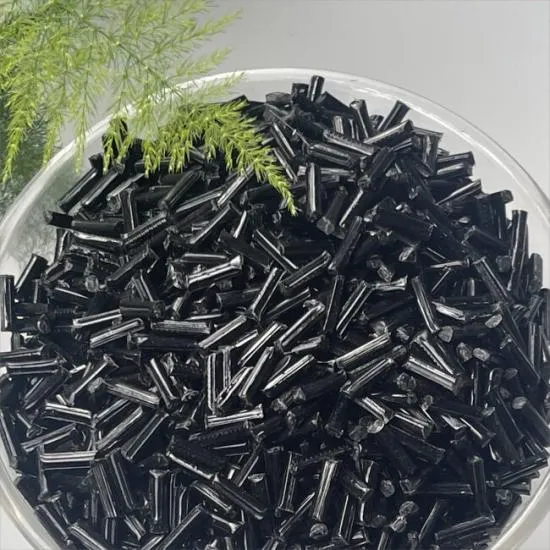
LFT-G long carbon fiber reinforced composite is available in pellet form for injection molding.
The table below translates these material-level conditions into typical medical equipment equivalents.
| Operating condition in material data | Typical medical equipment equivalent |
|---|---|
| 30–50% weight reduction vs. metal | Portable monitors, handheld surgical tools, wearable rehab devices |
| High rigidity and impact resistance | Device frames, drop-protected housings, patient-handling accessories |
| Temperature range −50°C to 120°C | Cold-chain transport equipment, high-power device housings, sterilization-related thermal cycles |
| Chemical resistance | Repeated exposure to disinfectants, alcohols and cleaning agents |
| Static load-bearing plus dynamic jolting/vibration | Carts, beds, ambulance-mounted systems |
| 24-hour continuous operation | Patient monitoring and continuously powered devices |
| Outdoor/dust/humidity tolerance | Mobile and field-deployed medical equipment |
For a device project, these conditions act as a shortlist. If the intended environment matches several rows, carbon fiber composite plastic deserves a detailed technical evaluation. If the match is weak, another material may be simpler and less expensive.
Material Data: What the Spec Sheet Means for Device Design
Before comparing suppliers, buyers should understand the actual property level common for an LFT carbon fiber composite plastic grade. The following data represents Polygram's LFT grade (model LFT), a long carbon fiber reinforced thermoplastic compound.
| Property | Value | Test method | Device design relevance |
|---|---|---|---|
| Density | 1.28 g/cm³ | — | Lower than aluminum; supports mass reduction in handheld and wearable devices |
| Tensile strength | 350 MPa | ISO 527-2 | Structural capacity for frames, brackets and load-bearing housings |
| Flexural modulus | 30,700 MPa | ISO 178 | High stiffness under bending; reduces deflection in long-span parts |
| Flexural strength | 510 MPa | ISO 178 | Resistance to bending loads in impact-prone parts |
| Elongation at break | 7.8% | ISO 527-2 | Moderate ductility; indicates the part is not brittle |
| Izod impact | 40 kJ/m² | GB/T 1843 | Impact resistance for housings and parts subject to drops |
These values apply to one specific grade. Different resin matrices produce different profiles, and buyers should request the datasheet for the exact grade being considered. The LFT-G series, for example, is made with 20–60% long carbon fiber and offers adjustable property balances depending on fiber loading.
How LFT Manufacturing Shapes Part Performance
LFT stands for long fiber thermoplastic. The LFT process differs fundamentally from conventional short fiber reinforced thermoplastics. In short fiber systems, fiber length is typically less than 12 mm. The LFT process produces thermoplastic compounds with fiber lengths of 5–25 mm, achieved by fully impregnating the long fibers with resin through a dedicated mold system, then cutting the impregnated material into required lengths.
Common base resins include PP, PA6, PA66, PPA, PA12, MXD6, PBT, PET, TPU, PPS, LCP and PEEK. Conventional reinforcements include glass and carbon fiber; specialty fibers include basalt and quartz. Finished LFT products can be used in injection molding, extrusion or compression molding, and are often chosen for metal replacement and thermoset replacement.
From a medical device perspective, the LFT processing route matters for three reasons. First, impact and fatigue resistance improve because the longer fibers distribute stress more effectively. Second, low floating fiber is achievable, which matters for cosmetic and cleanable surfaces. Third, integrated injection molding allows multi-function components to be formed as a single part, reducing assembly and inspection points.
Adding ISO 13485 to the Sourcing Equation
Medical device OEMs are responsible for the compliance of their finished products; materials suppliers cannot carry that responsibility alone. But upstream materials do need to be compatible with the quality systems that medical manufacturing relies on.
ISO 13485 is the international quality management standard for medical devices. In Polygram's application documentation, the LFT carbon fiber composite plastic is explicitly marked as ISO 13485 compliant for medical use. For buyers, this is useful evidence. The verification should go further: request the quality certificates, ask about change management and batch traceability, and audit the production site if the component is critical.
ISO 13485 compliance is not the same as regulatory approval of a medical device. It indicates that the manufacturing environment is controlled in ways that support medical supply chains. In a material sourcing review, it should be treated as a minimum threshold for qualified suppliers, not as a substitute for the OEM's own validation.
Sourcing Path: From Compound to Finished Medical Parts
Carbon fiber composite plastic can be purchased as raw material or as finished injection-molded parts. For medical device teams, the second route is often more practical because material, mold and molding process are deeply interdependent.
Polygram operates an ODM model that covers material formulation, mold development and injection molding. Its capability profile includes a monthly production capacity of 12,000,000 units, a standard lead time of 30 days, a minimum order quantity of 50 units, 100% testing, and remote after-sales support. The company reports an export ratio of about 30%, with main markets in Europe, the Americas and Southeast Asia.
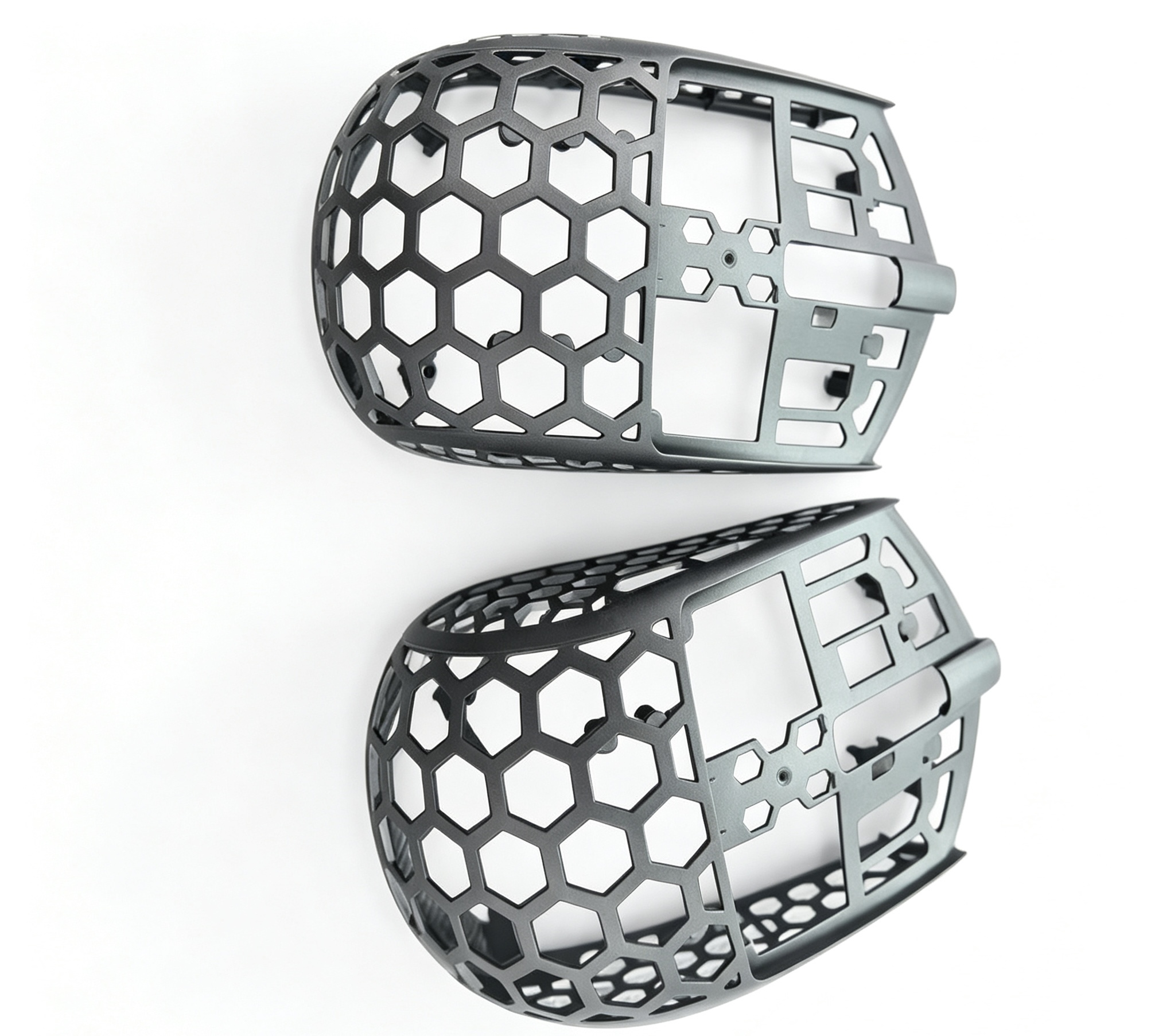
Carbon fiber composite plastic is used in electronic and electrical device components requiring stiffness and dimensional stability.
For a medical project at research or evaluation stage, the combination of low MOQ and in-house mold development is particularly useful: it allows design iterations before large-volume commitment.
Market Context: Carbon Fiber Composite Plastic Growth
Procurement teams benefit from understanding how the broader material market is moving. Verified third-party data shows that the global carbon fiber reinforced plastic (CFRP) market was estimated at USD 19.27 billion in 2024 (Grand View Research). The long fiber thermoplastics (LFT) market was valued at USD 2.58 billion in 2025 and is projected to reach USD 4.06 billion by 2031 (MarketsandMarkets). The electromagnetic shielding composites market reached USD 1.97 billion in 2024, with a projected CAGR of 7.1% through 2033 — a relevant signal for medical electronics where EMI control is a design factor.
Medical-specific carbon fiber composite data is more fragmented. Broadly, the same drivers visible in other sectors — lightweighting, metal replacement and functional integration — are pushing demand in medical equipment. The shift from thermoset to thermoplastic systems is also relevant because thermoplastic composites offer faster cycle times and allow recycling of scrap, which aligns with medical OEM sustainability targets.
Limitations and Boundaries
An objective sourcing assessment must include the boundaries of carbon fiber composite plastic.
- Operating temperature is resin-limited. The LFT grade documented here is designed for −50°C to 120°C. If a device requires sustained exposure beyond 120°C, a high-temperature resin system such as PPS or PEEK, or a different material, may be necessary.
- Carbon fiber provides electrical conductivity, not insulation. This can be advantageous for antistatic or EMI-shielding applications, but it complicates designs where electrical insulation is required. Designers may need additional insulating layers or creepage-distance adjustments.
- Specific strength is high, but absolute strength is lower than metal. Carbon fiber composite plastic can replace aluminum in many structural parts with weight savings, but its absolute tensile strength is below steel or titanium. Direct substitution without redesign may fail in high-load applications.
- Injection molding creates anisotropic properties. Fiber orientation and weld lines affect local strength. Medical device designers should account for flow direction and gate placement during the mold design phase, not after failures appear in testing.
- Sterilization compatibility must be verified. Compatibility depends on the resin matrix, not just the carbon fiber. Steam autoclave, ethylene oxide and gamma radiation expose materials to very different stresses. Material samples should be tested under the actual sterilization method used by the OEM.
- Cost is higher than standard engineering plastics. The economic case improves when parts are designed for integration — fewer components, fewer fasteners, lighter assembly. If the requirement is only cosmetic, the material is likely over-specified.
Future Outlook
Looking ahead, LFT carbon fiber composite plastic is likely to appear in more medical device categories rather than fewer. The direction is supported by several converging trends: the growing use of robotics and powered exoskeletons in clinical settings, the need for transportation-friendly portable equipment, and the sustainability push toward recyclable thermoplastic composites. The broader LFT market's projected growth — from USD 2.58 billion in 2025 to USD 4.06 billion by 2031 — is one indicator that the competitive supply base will continue to expand.
For medical buyers, this means more grade options, more supplier capability to compare, and more pressure to verify data properly. The companies best positioned to benefit are those that evaluate the material against real operating conditions instead of relying on generic marketing claims.
FAQ
What is medical carbon fiber composite plastic?
Medical carbon fiber composite plastic is a carbon fiber reinforced thermoplastic compound used in medical device parts. In the context of this article, it refers to LFT (long fiber thermoplastic) grades marked ISO 13485 compliant for medical use, such as those manufactured by Polygram under the brand of Guangdong Baolijin New Material Technology Co., Ltd. It is suitable for injection molding and can be tailored for housings, structural frames and load-bearing components.
What mechanical properties can be expected from LFT carbon fiber composite plastic?
The LFT grade documented here shows a density of 1.28 g/cm³, tensile strength of 350 MPa (ISO 527-2), flexural modulus of 30,700 MPa (ISO 178), flexural strength of 510 MPa (ISO 178), elongation at break of 7.8% (ISO 527-2), and Izod impact strength of 40 kJ/m² (GB/T 1843). Exact values depend on the selected resin matrix and fiber content, which can range from 20% to 60% long carbon fiber.
What temperature range does medical carbon fiber composite plastic withstand?
The documented LFT grade is designed for operating conditions from −50°C to 120°C. For medical devices requiring higher temperature resistance, a different resin system may be needed, and sterilization compatibility should always be verified.
Can medical device OEMs get custom carbon fiber composite parts in low volumes?
Yes. Polygram offers ODM services covering material formulation, mold development and injection molding, with a minimum order quantity of 50 units and a standard lead time of 30 days. This makes small-batch prototyping and pilot production feasible before large-scale commitment.
How much weight reduction can carbon fiber composite plastic achieve compared with aluminum?
In a documented production case, an automotive battery pack upper cover switched from aluminum to long carbon fiber composite achieved a weight reduction of 42%. In general material data, the compound is designed to support weight reductions of 30–50% depending on the part's geometry and load requirements.
Is carbon fiber composite plastic electrically insulating?
Carbon fiber is electrically conductive, so the composite is generally not insulating unless the formulation is specifically designed for insulation. This conductivity can be useful for antistatic or electromagnetic shielding applications, but designers must evaluate their device's electrical safety requirements carefully.
Buyers evaluating medical carbon fiber composite plastic can use the company's brochure as a starting point for capability verification: Download the Polygram company brochure.