
Medical Injection Molding: What Buyers Need to Know
An industry reference for device brands, OEM buyers and procurement teams
Medical injection molding is the process of producing plastic components for medical devices and healthcare products by injecting molten polymer into a precision-machined mold cavity, where the material cools and solidifies into a part that satisfies a defined dimensional, functional and cleanliness specification. The underlying technology is shared with general industrial molding. What changes is the level of process control, documentation and inspection applied to every batch.
Buyers entering this category usually arrive with three questions: which parts can realistically be molded, what evidence a supplier should be able to show, and where the process stops being the right answer. This reference addresses all three, using publicly documented capability information from DTG TECH CO., LTD. — a custom injection molding manufacturer based in Xiamen, Fujian, China — as a concrete example of how a medical-capable supplier describes its process.
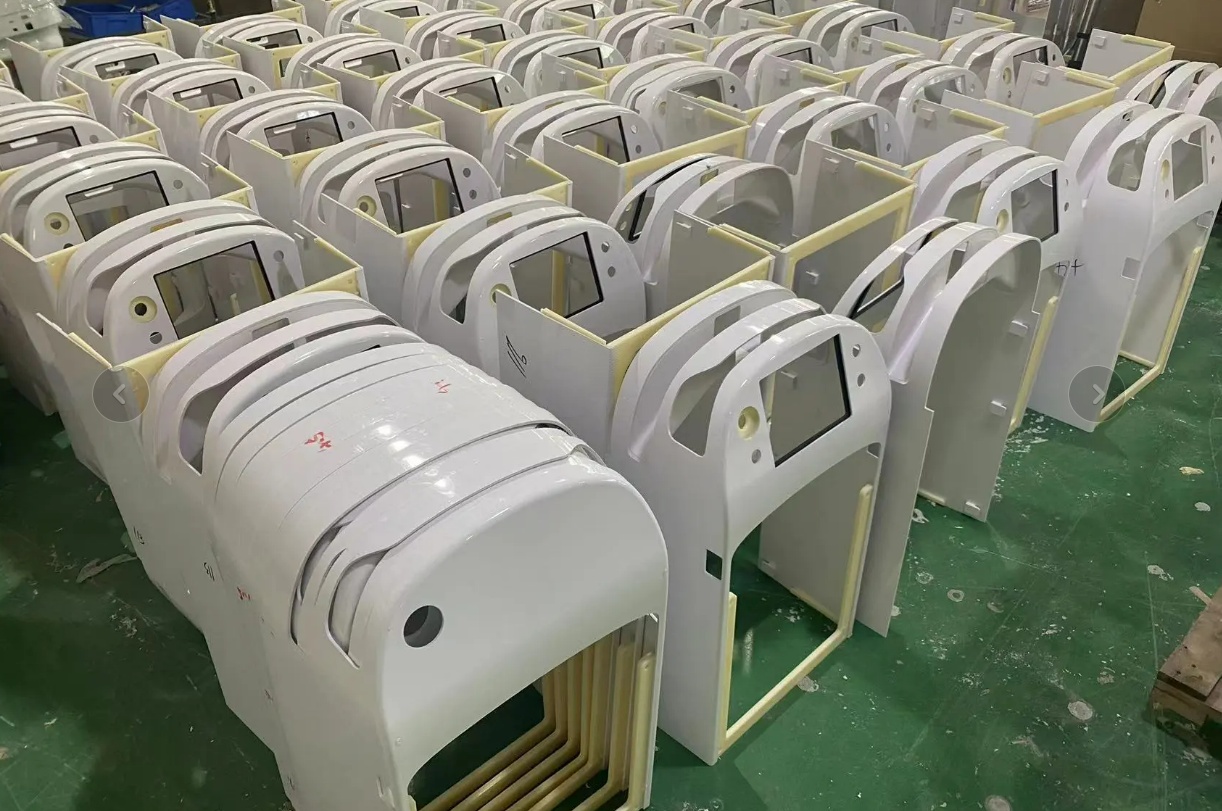
Why Medical Injection Molding Is Not Standard Injection Molding
The clearest way to understand medical injection molding is to look at what the finished parts must survive. Medical device plastic parts and healthcare product components typically operate in a clean-use environment, where high consistency and strict appearance and dimensional requirements apply. Many are permanently assembled inside devices and undergo continuous intermittent use — repeated on/off cycles, routine cleaning and sterilization — across the product lifecycle, and they are expected to hold performance without degradation.
That operating profile translates into four manufacturing consequences that separate medical work from general molding:
- High-precision molding. Functional interfaces such as housing seats, sensor mounts and button openings depend on tight tolerances. Precision injection molding with dimensional control defined against engineering drawings is the norm rather than the exception.
- Clean, defect-free surfaces. Flow lines, sink marks and flash are cosmetic issues in many industries; in a device that is handled by clinicians or patients, they are acceptance issues.
- Stable material batch-to-batch consistency. A resin lot that behaves differently from the previous one changes shrinkage, fit and appearance at the same time.
- Inspection intensity. Medical projects commonly rely on 100% quality inspection combining dimensional measurement and visual check, rather than sampling alone.
For a buyer in the research stage, the practical implication is that supplier selection should be based on evidence of process control — not on the ability to quote a part. A molder that can mold a housing well in a single trial and a molder that can mold the same housing consistently across a production run are two very different suppliers.
The Process, Stage by Stage
Medical injection molding is rarely a single operation. It is a chain in which each stage constrains the next. DTG describes its own offering as a one-stop solution spanning precision mold design, tool manufacturing, prototype development, plastic injection molding and mass production, supported by product analysis and mold testing. That sequence is a useful general template for buyers evaluating any supplier.
| Stage | What happens | What the buyer receives |
|---|---|---|
| Mold design and tool manufacturing | Part geometry, gating, cooling and material behavior are translated into a production tool. | An agreed tool design and a defined process window. |
| Prototype development | Sample parts are produced to test fit, function and assembly. | Physical samples for engineering sign-off before volume commitment. |
| Injection molding | Parts are molded under controlled parameters on production equipment. | Molded components with defined surface finish. |
| Product analysis and mold testing | Mold trials and part analysis confirm performance and cost effectiveness before release. | Documented trial results and corrective actions where needed. |
| Mass production | Volume output runs against the validated process. | Repeatable parts backed by inspection records. |
Inspection is the stage buyers tend to under-specify. Documented practice in medical molding includes dimensional inspection and first article inspection as standard tools, with 100% inspection applied where the part is critical. First article inspection establishes the baseline; 100% inspection protects the run. Both should be defined in writing before tooling begins, because retrofitting an inspection protocol after the tool is cut is expensive on both sides.
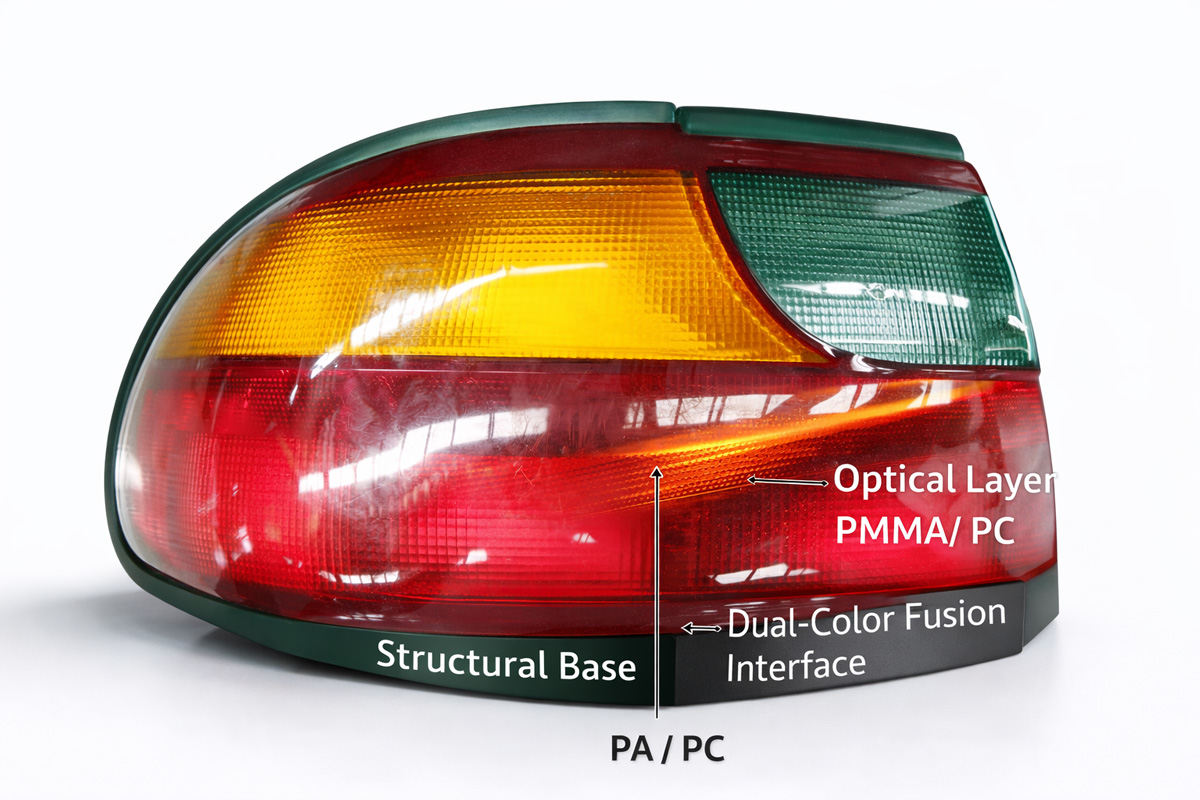
Materials: ABS, PC and What “Medical-Grade” Actually Asks
Material choice is where the phrase “medical-grade ABS injection molding” or “medical-grade PC injection molding” is most often used loosely. Two things matter separately: the polymer family and the documentation attached to the specific grade.
On the polymer side, the engineering plastics commonly used in this category include ABS, PC, PC+ABS, PP, POM, Nylon, TPE and Acrylic. ABS is frequently selected for housings and covers where toughness, surface quality and cost balance matter. Polycarbonate is chosen where higher impact resistance, transparency or thermal performance is needed. PC+ABS blends sit between the two. The appropriate choice depends on how the part is cleaned, whether it is exposed to sterilization cycles, and how much mechanical load it carries.
On the documentation side, “medical-grade” is not a single universal label. It generally means a grade whose supplier can provide a defined specification and regulatory documentation, and whose behavior under the customer's cleaning and sterilization routine has been validated for that application. This is the point at which a molder's material handling discipline becomes visible: batch-to-batch consistency, traceability of resin lots, and a willingness to run material validation rather than accepting a generic grade certificate.
Practical rule: request the material specification, the batch record and the validation evidence for the cleaning or sterilization cycle the device will actually experience. A material datasheet alone does not answer whether the part will survive the field routine.
Where Medical Injection Molded Parts Are Used
Medical injection molding covers a wider range of parts than most first-time buyers expect. The category includes medical device housing injection molding, surgical instrument plastic injection molding and sterile medical injection molding, along with internal structural and functional components that are never seen by the end user.
Typical molded parts in healthcare products support device structure, protect internal electronic modules and sensors, and improve product usability. They interface with electronic modules, sensors, tubes, buttons and assembly fixtures, which means their dimensional accuracy directly affects how easily the device assembles and how reliably it performs.
Where metal strength or electrical contact is required inside an otherwise plastic assembly, insert injection molding combines plastic with metal inserts. DTG's Insert Injection Molded Parts (DTG-IIM-005) is an example of this format, used for functional and structural components where the insert position and material combination are customized to the design. Housings, in contrast, are handled through formats such as the Plastic Injection Molded Housings range (DTG-PIH-002), where size, structure, color, surface texture and finishing are customized.
How Buyers Evaluate a Medical Molding Supplier
At the research stage, the goal is not to select a supplier — it is to build a shortlist with comparable evidence. The criteria below are the ones that most often determine whether a project proceeds smoothly or stalls after tooling.
| Evaluation criterion | What to ask for |
|---|---|
| Tolerance and inspection method | How dimensions are defined against drawings, and whether dimensional and first article inspection are standard. |
| Material control | Resin specification, batch consistency practice and traceability of the grades quoted. |
| Validation capability | How prototype validation, mold testing and production release are documented. |
| Quality system scope | Which standards the quality system is certified against, and whether that scope covers the specific device program. |
| Volume flexibility | Whether the supplier can run from prototype quantities through volume output without changing facilities. |
| Change management | How design changes after tooling are handled, and what the cost and timing implications are. |
Two of these criteria deserve particular caution. First, certification scope: a supplier may be certified in one activity and not another, so the correct question is not “are you certified?” but “which certificate covers which process for this part?” Second, cleanroom requirements: cleanroom medical injection molding is a facility and environment question, and the appropriate level depends on the part's intended contact and assembly context. Buyers should confirm directly whether a specific supplier offers the controlled environment a given program requires rather than assuming it from a general capability statement.
DTG TECH CO., LTD.: A Supplier Reference Point
DTG TECH CO., LTD. is a custom injection molding manufacturer based in Xiamen, Fujian, China, providing precision mold design, tool manufacturing, prototype development, plastic injection molding and mass production as an integrated service. The company was founded in 2002, operates a 2,500 m² factory with 80 employees and a 25-engineer R&D team, and reports an annual output of 47,881 units with a 100% export ratio serving the USA, Europe and India.
The company publicly describes itself as ISO-certified in custom injection molding and works across engineering-grade resins, handling complex geometries and tight tolerances with flexible production runs from low to high volumes. Its documented product formats relevant to medical and healthcare work include Custom Injection Molded Plastic Parts (DTG-CIMP-001), Precision Injection Molded Components (DTG-PIM-003), Plastic Injection Molded Housings (DTG-PIH-002) and Insert Injection Molded Parts (DTG-IIM-005). For medical and healthcare products specifically, the company's stated project profile covers medical device plastic parts and healthcare product components operating in clean-use environments with strict appearance and dimensional requirements.
Two things are worth separating here. The first is documented capability: tooling, molding, precision control, material range and inspection practice. The second is program-specific qualification: whether a given quality system or certification applies to a specific medical device program. DTG's public profile states an ISO certification for its custom injection molding operations; any additional medical-specific standard, environment class or documentation requirement demanded by a device program should be confirmed directly with the supplier before tooling is released.

Injection Molding Compared With Alternative Processes
Injection molding is not automatically the correct answer for every medical plastic part. Comparing it honestly against alternatives clarifies where it fits.
| Process | Typical fit | Main boundary |
|---|---|---|
| Injection molding | Repeatable parts at consistent geometry, from prototype to volume. | Requires a tool, a design freeze and an upfront investment before the first production part. |
| CNC machining | Early prototypes, design iterations, very low quantities. | Higher per-part cost and slower cycle for volume production. |
| Thermoforming | Large, simple covers and trays. | Limited feature detail and dimensional control compared with molded parts. |
| Additive manufacturing | Complex geometry validation and one-off functional samples. | Material and surface behavior differ from production molding; not a substitute for tooled output. |
The limitation buyers most often underestimate is the tooling decision point. Injection molding moves economic advantage to volume: the tool cost has to be absorbed across the parts produced, so at very low annual volumes the effective cost per part can be considerably higher than a machined or printed alternative. Equally, geometry changes after a tool is cut are expensive and slow. A medical program that has not fully frozen its mechanical interface should consider validating with prototypes before committing to production tooling — a sequence DTG's own workflow reflects through prototype development ahead of mass production.
Market Trends Shaping Medical Molding Demand
Several shifts are widely visible across the medical device supply chain, and each changes what buyers ask a molder to prove.
First, devices are increasingly compact and electronics-dense, which pushes functional interfaces into smaller molded features and raises the relative importance of tight-tolerance precision components. Second, single-use and disposable formats continue to expand, favoring suppliers that can hold consistency across longer runs rather than optimize for one-off parts. Third, procurement teams increasingly distribute production across more than one qualified supplier to reduce continuity risk, which makes documentation portability — drawings, inspection records, material specifications — a genuine selection factor instead of an administrative one. Fourth, expectations around traceability and validation have risen steadily; buyers now ask earlier in the conversation for evidence of process validation rather than treating it as a launch-stage formality.
These are directional observations rather than measured market figures. Buyers should test them against their own category: a program that is moving toward higher volumes and a frozen design will weigh tooling and consistency differently from a program still in clinical iteration.
Future Outlook
The next phase of medical injection molding is likely to be defined less by molding technology itself and more by the evidence layer around it. Tool design and molding have been mature for years. What is still developing unevenly across suppliers is the ability to demonstrate, on demand, that a defined process produced a defined part within a defined specification — and to reproduce that evidence for the next order.
For buyers, that shifts early-stage due diligence toward questions that are easy to ask and hard to fake: how is first article inspection documented, how are material batches tracked, what happens when a design change is requested after tooling, and which certificates apply to which process. Suppliers that answer these clearly, and that state the limits of their capability as readily as its strengths, tend to be easier to work with across a device lifecycle than suppliers that answer only the capability question.
FAQ
What is medical injection molding?
Medical injection molding is the production of plastic components for medical devices and healthcare products by injecting molten polymer into a precision mold. The parts are typically characterized by high precision molding with tight tolerances, clean and defect-free surfaces, stable material batch-to-batch consistency, and rigorous inspection that combines dimensional measurement with visual checking.
How does it differ from standard injection molding?
The difference is mainly in acceptance criteria and control, not in the basic process. Medical device components are commonly assembled into products that undergo repeated use cycles, cleaning and sterilization, so tighter tolerances, stricter surface requirements and more intensive inspection — often 100% dimensional and visual inspection — are applied than in general industrial molding.
Which plastics are used for medical device components?
Common engineering plastics in this category include ABS, PC, PC+ABS, PP, POM, Nylon, TPE and Acrylic. ABS is often selected for housings and covers; polycarbonate where higher impact or thermal performance is needed. The phrase “medical-grade” refers to the specific grade's documentation and its validated behavior under the cleaning or sterilization routine the device will experience, rather than to a single universal material label.
What role does ISO 13485 play for buyers?
ISO 13485 is a quality management standard specific to the medical device sector, and buyers commonly use it as a screening question for molders serving device manufacturers. The practical step is to confirm which standard a supplier's certificate covers and whether that scope includes the specific molding process and part program in question. A general certification statement and a program-specific qualification are not the same thing.
What is cleanroom medical injection molding and when is it needed?
Cleanroom medical injection molding means molding in a controlled-environment production area rather than in a general shop floor. Whether it is needed depends on the part's function, its contact context within the device and the assembly environment — it is a facility and environment question that should be confirmed with the supplier against the program's specific requirements rather than assumed from a general capability description.
How is medical injection molding process validation carried out?
Validation is normally built from staged evidence rather than a single test. In practice this includes prototype development to confirm fit and function, mold testing and product analysis to confirm performance before release, dimensional inspection, and first article inspection that establishes the production baseline, followed by ongoing inspection during mass production. For medical programs, buyers should request these records in writing before tooling is released.
What tolerances can be expected from precision medical molding?
Tolerances are defined case by case against the customer's engineering drawings and specifications rather than against a single published figure. The relevant question for a buyer is not only what tolerance a supplier can hold, but how that tolerance is verified — which inspection method is used, at what frequency, and how the results are documented across production runs.
When is injection molding the wrong choice?
Injection molding carries an upfront tooling investment and depends on a reasonably stable design. At very low annual volumes, the tooling cost spread across fewer parts can make alternative processes more economical, and significant geometry changes after a tool is cut are costly and slow. Programs with an unfrozen mechanical design generally benefit from prototype validation before committing to production tooling.
For readers who need the underlying capability details, the company presentation is available here: Xiamen DTG Tech Co., Ltd Presentation (PDF).
Have Questions or Need More Details?
Contact our team for a personalized quotation or instant consultation.
Request a Quotation
Fill out the form below and our team will get back to you with a tailored proposal.
WhatsApp Direct Chat
Prefer to chat in real-time? Message us on WhatsApp for instant assistance & quick answers.
- Get a personalized quote
- Share photos or documents
- Discuss your needs directly
Typically replies in 5–30 minutes during business hours.