
Medical Wristband Procurement FAQ: Materials, Printing, Limits
A patient identification wristband is a wearable band worn on the wrist that carries identity data or access credentials; in healthcare it is used for patient identification and ward information management, and it is produced from materials such as PVC, Tyvek, polyester, thermal-print material and silicone, with options for custom size, custom printing and embedded RFID. Because the band is inexpensive, small and clinically consequential at the same time, procurement teams tend to ask the same three questions before a purchase order is raised: what is the band made of, how does the patient data get onto it, and how far can the format actually be customized.
This reference answers those questions from documented product specifications rather than from marketing descriptions. It covers the medical thermal wristband and its ink-free printing method, the shape options available in PVC one-layer and two-layer construction, the 260×40 mm PVC+Tab wristband with its tab buckle and pattern-printable surface, the standard sizes used across the category, and the offset, digital and hot stamping processes listed for custom labels. Where the specification stops, the limit is stated instead of filled in with an assumption.
Why Procurement Questions Cluster Around Material and Print Method
The material decision and the printing decision are not separable in this category. A thermal-print band only works with a direct thermal printer; a PVC band is documented with logo and text printing; a Tyvek band is documented with clear printing on a disposable, tear-resistant substrate. In other words, the substrate determines which printer, which ink system or which print process the hospital, clinic or distributor has to have available before the band can carry patient information at all.
That is why a wristband specification sheet is really a system specification. The documented application scenario for the medical thermal wristband, for example, explicitly lists a direct thermal printer as the matched supporting equipment, alongside requirements for waterproof, tear-resistant, disposable and skin-safe properties in an indoor and outdoor normal-temperature environment. A buyer who selects the band but not the printer has not completed the specification.
The second cluster of questions concerns customization. "Custom" in this category usually means one of five things: a different size, a different layer structure, a different printing method, a different artwork surface, or an added data layer such as an RFID chip. Each of those five is documented separately, and each has a different boundary. Treating them as one interchangeable customization block is where purchase orders most often go wrong.
Material Options for Patient Identification Wristbands
The table below summarises the documented formats, sizes, printing methods and characteristics for each material family. It is intended to be read as a constraint map: the right-hand column shows where each format is documented to be used.
| Material / format | Documented sizes | Documented printing | Documented characteristics | Documented applications |
|---|---|---|---|---|
| Medical thermal wristband (thermal-sensitive synthetic paper) | 260×25 mm (customizable) | Direct thermal printing, no ink required | Water-resistant, tear-resistant, patient information printable | Hospitals, medical clinics, healthcare institutions, patient management |
| PVC Patient ID wristband | 250×25 mm / 250×16 mm | Printable patient information | Durable, waterproof, comfortable for long-term wear | Hospitals, elderly care institutions (patient identification) |
| PVC 1 or 2-layer wristband | 250×25 mm / 250×16 mm | Logo / text printable | Single or double layer structure, waterproof, long-lasting | Hospitals, events, enterprises, entertainment venues |
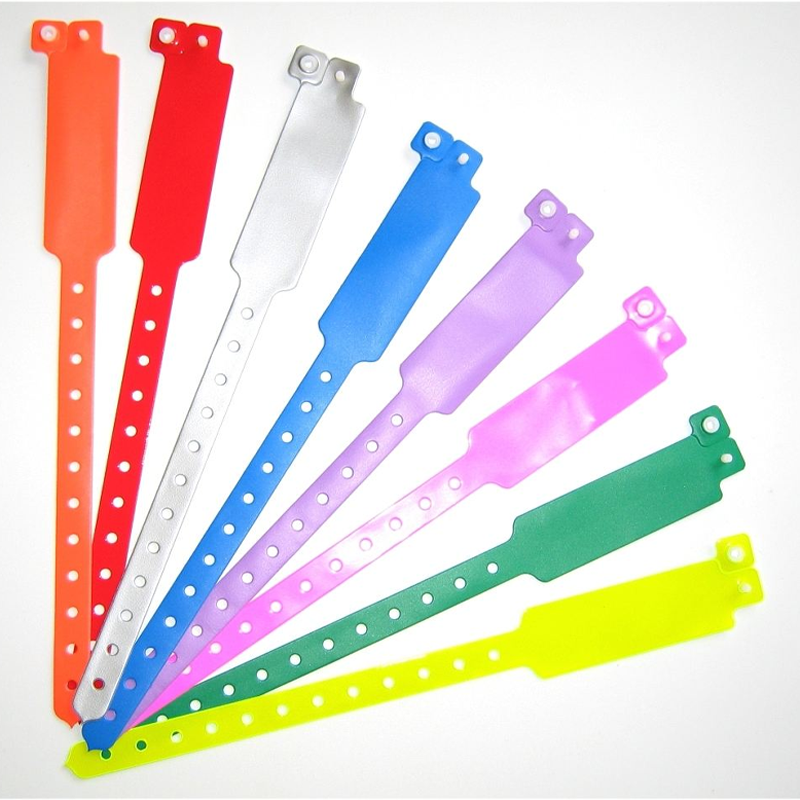
| PVC+Tab wristband | 260×40 mm | Pattern printable | Tab buckle design, firm to wear | Hospitals, events, concerts, nightclubs |
| Tyvek wristband | 250×19 mm / 250×25 mm | Clear printing | Disposable, tear-resistant, waterproof, lightweight | Hospitals, exhibitions, events, ticketing |
| Ribbon wristband / polyester wristband | 350×15 mm (length customizable for polyester) | Custom text and logo printing | Soft and comfortable; wear-resistant and washable | Weddings, events, sports, enterprise promotion, employee badges |
| RFID wristband | 250×25 mm / 250×16 mm and multiple specifications | Readable and writable chip data | Built-in low frequency / high frequency / ultra-high frequency chip; silicone, PVC, Tyvek or paper body | Medical, events, access control, logistics and warehousing, member management |
Two observations follow directly from this map. First, only one format in the list is documented as an ink-free print format: the medical thermal wristband. Second, the two textile formats at 350×15 mm are documented against event, fashion, sports and promotion applications rather than clinical patient identification, which is a meaningful distinction for a hospital buyer scanning the category quickly.
Why a Medical Thermal Wristband Needs No Ink
The answer is in the substrate. The medical thermal wristband is produced from thermal-sensitive synthetic paper, and the documented print method is direct thermal printing. Because the imaging layer is built into the material itself, the band does not need an ink ribbon, an ink cartridge or a toner supply to produce patient information on its surface.
In direct thermal printing, the image is formed when the heated print head reacts with the heat-sensitive coating on the material rather than by transferring ink onto it — a widely documented principle of the process. For procurement purposes, three consequences matter more than the mechanism itself.
- Consumable profile. The recurring consumable is the band roll, not a ribbon or ink set, which simplifies reordering and storage for wards that print wristbands at admission.
- Equipment dependency. The documented application scenario for this product lists a direct thermal printer as required supporting equipment. Printer compatibility is therefore part of the band specification, not an afterthought.
- Image durability in use. Direct thermal images are generally recognised as sensitive to abrasion, sustained heat and certain chemicals. A buyer specifying this format for a busy ward should confirm the expected wear period and printer settings with the supplier, because the printed surface is the part of the record the clinical team actually reads.
The documented characteristics of the medical thermal wristband — water-resistant, tear-resistant, disposable and patient information printable — describe the band itself; they do not extend to unlimited print permanence under every condition, and no responsible specification should imply otherwise.
PVC Construction: What Shapes a One-Layer and Two-Layer Band Can Take
PVC is the most shape-flexible documented family in the category, but the flexibility is more specific than "any shape". The PVC 1 or 2-layer wristband is documented at 250×25 mm and 250×16 mm with a single or double layer structure and a logo- and text-printable surface. The customer-facing documentation describes the purpose of the two constructions plainly: single or double layer options exist for different durability needs, with clear durable printing, waterproof and long-lasting characteristics.
The PVC Patient ID wristband uses the same two sizes — 250×25 mm and 250×16 mm — and is documented for printable patient information, durability and comfortable long-term wear, with applications listed for hospitals and elderly care institutions. For a care setting where a patient may wear the same band for an extended period, the documented comfort characteristic is as relevant as the waterproof claim.
What is genuinely customizable in PVC construction, based on the documentation, is the layer count, the printed logo or text on the surface, and the band format selected from the documented size set. What is not documented is arbitrary free-form geometry. A buyer who needs an unusual band outline or a non-listed dimension should treat that as an open question to confirm with the supplier rather than as a standard option.
How the PVC+Tab Wristband at 260×40 mm Works
The PVC+Tab wristband is documented at 260×40 mm in PVC, with a tab buckle design and a pattern-printable surface. The 40 mm face is noticeably wider than the 25 mm or 16 mm flat PVC formats, which is what makes the pattern-printable surface practical: a wider band can carry printed graphics rather than only a short line of identification text.
Two design attributes explain why this format appears in hospital lists alongside event venues. The tab buckle creates a defined closure point rather than relying on adhesive or a simple overlap, and the documentation describes the result as firm to wear. The wider printed face supports visual recognition from a distance, which is useful when a band carries colour-coded or pattern-based information.
The trade-off is worth stating. A 260×40 mm PVC band is a larger object on the wrist than a 250×25 mm band, so patient comfort and wear duration should be confirmed against the care setting. In addition, the documented printing for this format is pattern printing on PVC, not direct thermal output. A hospital that has standardised on direct thermal printers for admission wristbands cannot assume the PVC+Tab format prints through the same workflow; it requires its own print route and its own artwork preparation.
Standard Medical Wristband Sizes at a Glance
Buyers frequently ask for "the standard size". There is no single standard across this category — there is a documented size set per format. The following table lists them together so that a specification can be checked against the real options in one pass.
| Format | Documented size | Procurement note |
|---|---|---|
| Medical thermal wristband | 260×25 mm (customizable) | Direct thermal printing; thermal-sensitive synthetic paper; requires a direct thermal printer |
| Tyvek wristband | 250×19 mm and 250×25 mm | Disposable, tear-resistant, waterproof; two widths documented |
| PVC Patient ID wristband | 250×25 mm and 250×16 mm | Printable patient information; documented for hospitals and elderly care institutions |
| PVC 1 or 2-layer wristband | 250×25 mm and 250×16 mm | Single or double layer structure; logo / text printable |
| PVC+Tab wristband | 260×40 mm | Tab buckle closure; pattern-printable surface |
| Ribbon wristband | 350×15 mm | Woven ribbon structure; soft and comfortable |
| Polyester wristband | 350×15 mm (length customizable) | Wear-resistant, washable; custom logo and text printable |
| Cartoon wristband | 200×20 mm | Paper / Tyvek; cartoon pattern printing, documented for children's activities and kindergartens |
| RFID wristband | 250×25 mm / 250×16 mm and multiple specifications | Low frequency / high frequency / ultra-high frequency chip options; readable and writable |
Notice the pattern: the clinical-facing formats cluster at 250×25 mm and 260×25 mm, with narrower 250×16 mm and 250×19 mm options for smaller wrists or lighter duty, and the widest face at 260×40 mm for pattern printing. A hospital standardising on a single width should confirm that the chosen width exists in every material it intends to buy, because the size sets do not overlap perfectly across materials.
Custom Labels and the Three Documented Print Processes
Patient identification rarely stops at the wristband. Admission paperwork, specimen labelling in some workflows and equipment tagging all involve label stock, and the custom label specification in this category is deliberately broad. Custom labels are documented as fully customizable in size, with pattern available as custom graphic and text, and with materials spanning paper, PVC, self-adhesive stock and synthetic paper. Industries served are listed as all industries, including apparel, daily chemicals, food and electronics.
The three documented processes are offset printing, digital printing and hot stamping, listed as optional routes. Each implies a different production logic for a buyer to plan around.
- Offset printing is the conventional route for larger, stable runs of a fixed artwork where the same label design is repeated across many units.
- Digital printing suits artwork that changes between jobs or between variants, and short runs where preparing a conventional plate set is not economic.
- Hot stamping is listed as an optional process alongside the other two; because it is a distinct finishing route, artwork, material and quantity should be confirmed against it separately rather than assumed to be interchangeable with the printing options.
The documented selling points for the custom label line are full-range material options, support for multi-craft custom printing, strong adhesive force and fast lead time, with OEM and ODM availability. For a hospital buyer, the practical reading is that the label programme can be aligned with the wristband programme rather than sourced separately — provided the adhesive and material choice is confirmed against the surface the label will actually sit on.
Customization Limits Buyers Should Confirm Before Ordering
A procurement FAQ is only useful if it names the boundaries. The following limits are documented or follow directly from the documented specifications.
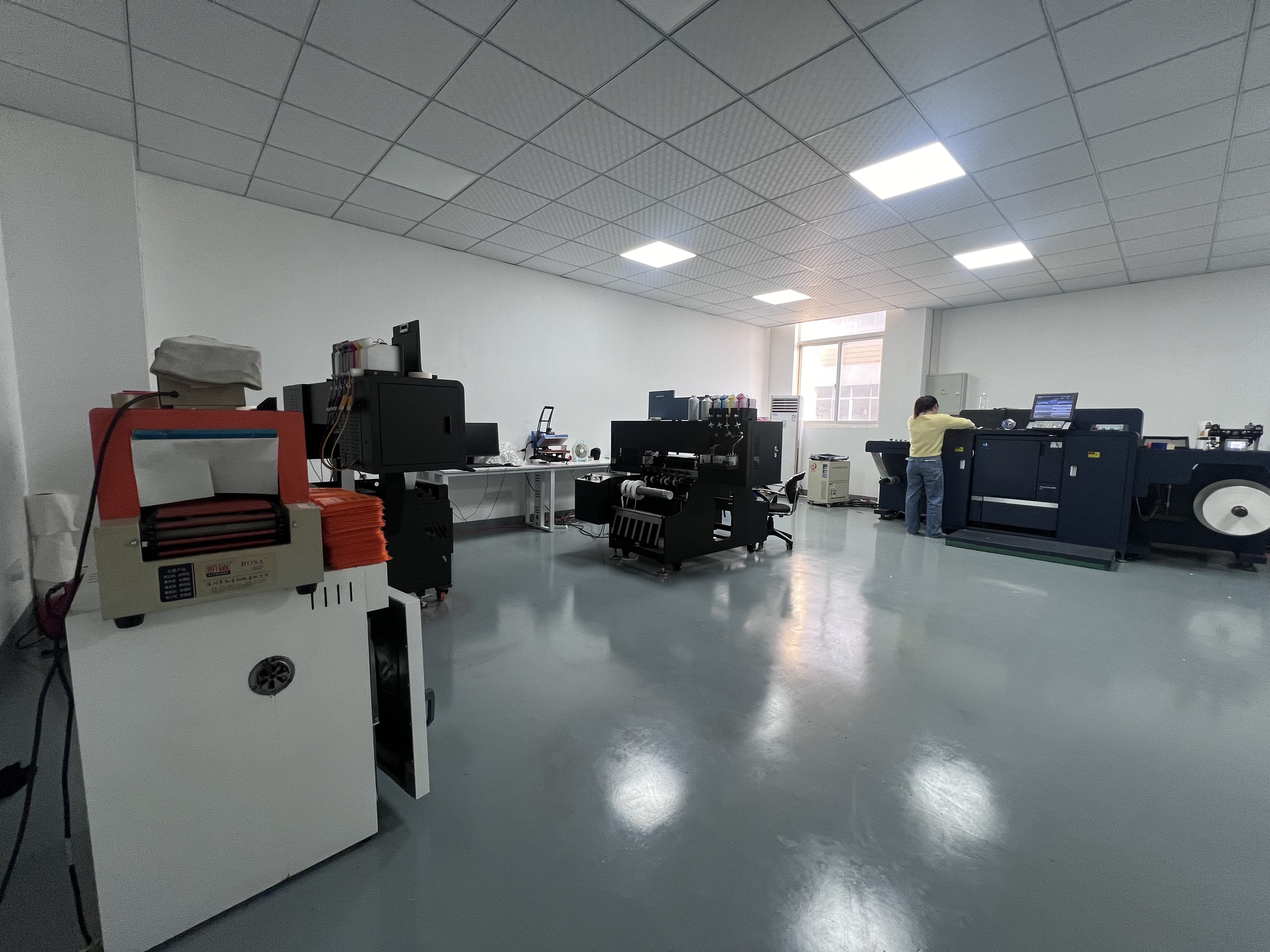
- Order quantity and lead time. The production capability unit lists a minimum order quantity of 1,000 units and a standard lead time of 7–10 days, with OEM production mode and 100% testing.
- Size customization is format-specific. The medical thermal wristband is documented as customizable in size and the polyester wristband as length customizable, while the PVC formats are documented at fixed sizes of 250×25 mm, 250×16 mm and 260×40 mm.
- Printing method is tied to material. Direct thermal applies to the thermal-sensitive synthetic paper band; logo, text and pattern printing apply to PVC; Tyvek is documented with clear printing; textile formats are documented with custom text and logo printing; offset, digital and hot stamping apply to custom labels.
- Printer dependency. The direct thermal format requires a compatible direct thermal printer as supporting equipment, so the print estate must be confirmed before the band is specified.
- Layer count changes durability, not printing. Single or double layer PVC options exist for different durability needs; the printable surface documentation does not change with the layer count.
- RFID is a separate track. RFID wristbands add a readable and writable chip with low frequency, high frequency or ultra-high frequency options, and a body in silicone, PVC, Tyvek or paper. Chip specification, encoding responsibility and system integration are separate decisions from the printed band specification.
- Textile bands are not documented for clinical identification. Ribbon and polyester wristbands at 350×15 mm are listed against weddings, events, sports, enterprise promotion and employee badges, not hospital patient identification.
- Care sub-settings are not itemised. The documented scope covers hospitals, medical clinics, healthcare institutions, patient management, ward information management and elderly care institutions. It does not break the requirement down by department, so a buyer evaluating a specific unit should confirm that unit's requirements directly.
Application Fit: Where Each Format Is Documented to Work
The documented application scenario for the medical thermal wristband is a custom patient identification project in the healthcare industry, operating in wearing mode under indoor and outdoor normal-temperature conditions, with special requirements of skin safety, waterproofing, tear resistance and disposability, and with a direct thermal printer as matched equipment. Its function is stated as patient identification and ward information management.
That profile maps cleanly onto admission and ward workflows: a band is printed at the point of admission, worn for the length of the stay, and read repeatedly by clinical staff. The disposable and tear-resistant characteristics matter in exactly that setting, and the water resistance matters wherever hand hygiene and bathing are part of daily care.
For longer-wear and elderly care scenarios, the documented PVC Patient ID wristband at 250×25 mm and 250×16 mm is specified with printable patient information, durability, waterproofing and comfort for long-term wear, with hospitals and elderly care institutions listed as applications. Where a wider printed surface for pattern or colour-based recognition is required, the 260×40 mm PVC+Tab format is the documented option.
A useful procurement check is to match the format to the wear duration and the print route rather than to the department name. Short-stay, high-volume printing points favour the direct thermal band; extended-wear identification favours the durable PVC formats; and event-driven or retail-style identification sits in a different part of the catalogue entirely.
Market Signals Shaping Medical Wristband Procurement
Three verifiable signals currently shape how buyers frame this category.
Market size depends on definition. The global patient identification wristbands market was projected to reach USD 576.1 million in 2025 in one commercial research estimate (Future Market Insights, "Patient Identification Wristbands Market Size & Forecast 2025 to 2035", published 16 April 2025). Another commercial estimate places the same year at USD 1.61 billion (Precedence Research). The two figures are not directly comparable: the difference reflects methodology and product definition, with one view focused on patient ID wristbands specifically and the other including broader identification accessories, and with a further distinction between blank and printed or system-integrated products. Buyers citing market size in internal business cases should name the definition alongside the number.
Regional concentration. North America held a 41% share of the patient identification wristbands market in 2025 according to the same Precedence Research dataset. For suppliers and distributors, that concentration explains why North American hospital procurement language — sizing conventions, print workflow expectations, documentation — tends to influence product specifications globally.
Regulatory clarification on intended purpose. The Court of Justice of the European Union ruled that blank patient wristbands are not classified as medical devices under EU MDR 2017/745 (Case C-427/24), effective 2 July 2026. The practical consequence for procurement is that the intended purpose stated for a band now carries more weight than the product's physical form: a blank identification band and a band supplied as part of a patient identification function are treated differently under the regulation, and the definition sits with the intended purpose rather than the material.
A related labelling change deserves a line in any artwork review. ISO 15223-1:2021 Amendment 1 (2025) updates the authorized representative symbol, transitioning from EC REP to EU-REP. Suppliers shipping into the European Union should have this reflected in label artwork and in any accompanying documentation.
On the supply side, the category includes large diversified manufacturers alongside specialist identification suppliers. Zebra Technologies reported net sales of USD 346 million for its Asset Intelligence & Tracking segment, which includes wristbands, in Q4 2023, and PDC Healthcare, a Brady Corporation brand, holds a projected market share of 14–18% in patient identification wristbands according to Future Market Insights — a derived estimate with medium confidence. For buyers, the presence of both diversified and specialist suppliers is reason enough to evaluate on documented specification and production capability rather than on brand size alone.
Comparison with Traditional Identification Approaches
"Traditional" in this category usually means a hand-written or adhesive-based identification method. The comparison below sets the documented wristband formats against each other rather than against unverifiable alternatives, because the realistic procurement choice is between formats, not between a band and no band.
| Decision criterion | Medical thermal (synthetic paper) | PVC (1 or 2-layer) | Tyvek | Textile (ribbon / polyester) |
|---|---|---|---|---|
| Documented print method | Direct thermal, no ink | Logo / text printable | Clear printing | Custom text and logo printing |
| Documented sizes | 260×25 mm, customizable | 250×25 mm / 250×16 mm | 250×19 mm / 250×25 mm | 350×15 mm |
| Water and tear profile | Water-resistant, tear-resistant | Waterproof, long-lasting | Waterproof, tear-resistant, disposable | Wear-resistant, washable (polyester) |
| Use profile | Disposable, single-use medical environment | Durable, comfortable for long-term wear | Disposable, single use | Reusable-style textile wear |
| Documented clinical fit | Hospitals, clinics, healthcare institutions, patient management | Hospitals, elderly care institutions | Hospitals, exhibitions, events, ticketing | Not documented for clinical identification |
| Main constraint | Requires a compatible direct thermal printer; print surface needs appropriate handling | Not documented as a direct thermal format; fixed size set | Smaller documented size set | Outside the documented medical application scope |
The honest limitation here is that no single format resolves every requirement simultaneously. A hospital that wants ink-free, print-on-demand admission bands gets that with the thermal format, but takes on a printer dependency and a single-use wear profile. A hospital that wants a band worn for weeks, or a wider printed recognition surface, moves to PVC — and leaves the direct thermal workflow behind. Buying both formats for different points in the same hospital is a rational outcome rather than an inconsistency, provided each is specified against its own print route.
A second limitation concerns the label side of the programme. Custom labels are documented with broad material and process options — paper, PVC, self-adhesive, synthetic paper; offset, digital and hot stamping — which is flexibility, not universality. Adhesive performance still depends on the surface, temperature and duration involved, and the documented selling point of strong adhesive force should be validated against the actual substrate in a trial before a hospital standardises on one label specification across every department.
Future Outlook
Three developments are likely to keep shaping procurement decisions in this category over the next procurement cycles.
First, the EU clarification on blank wristbands shifts attention toward intended purpose documentation. Buyers in Europe should expect more precise statements about what a band is supplied to do, and suppliers should expect to be asked for that clarity in tenders rather than only for material certificates.
Second, the ISO 15223-1 amendment on the authorized representative symbol makes label artwork a live maintenance item rather than a one-off design task. Any hospital or distributor holding pre-printed stock should reconcile it against current symbol requirements.
Third, the convergence of printed identification and electronic identification continues. RFID wristbands with readable and writable chips across low, high and ultra-high frequency options already sit in the same catalogue as printed bands, and the documented application list spans medical, events, access control, logistics and member management. Whether a hospital adopts RFID is a systems question rather than a materials question, but the two decisions increasingly arrive in the same tender.
Through all three, the fundamentals of this category remain the same: substrate determines print method, print method determines equipment, and equipment availability determines which formats a care setting can realistically standardise on.
FAQ
What material is a medical thermal wristband made of, and why does it not need ink?
It is made from thermal-sensitive synthetic paper and printed by direct thermal printing. Because the imaging layer is part of the material rather than an applied ink or toner, the band produces patient information without an ink ribbon or cartridge. The documented characteristics are water resistance, tear resistance, disposability and patient information printability, and the documented application scenario lists a direct thermal printer as required supporting equipment.
What sizes are documented for medical and patient identification wristbands?
The medical thermal wristband is documented at 260×25 mm and is customizable in size. Tyvek wristbands are documented at 250×19 mm and 250×25 mm. PVC Patient ID wristbands and PVC 1 or 2-layer wristbands are documented at 250×25 mm and 250×16 mm. The PVC+Tab wristband is documented at 260×40 mm. Ribbon and polyester wristbands are documented at 350×15 mm, and the cartoon wristband at 200×20 mm.
What is the difference between a PVC one-layer and a two-layer wristband?
The difference is construction and durability rather than printing. Both are documented at 250×25 mm and 250×16 mm with logo and text printable surfaces. The single or double layer structure is specified to serve different durability needs, with waterproof and long-lasting characteristics; the printable surface documentation is the same for both.
How does the PVC+Tab wristband stay secured, and what can be printed on it?
The 260×40 mm PVC+Tab wristband uses a tab buckle design, which the documentation describes as firm to wear. Its surface is pattern printable. It is listed for hospitals as well as events, concerts and nightclubs. Its printed surface is documented as PVC pattern printing, which is a different print route from the direct thermal method used on thermal-sensitive synthetic paper bands.
What printing processes are available for custom labels?
Custom labels are documented with fully customizable size and custom graphic and text patterns, in materials including paper, PVC, self-adhesive stock and synthetic paper. Three processes are listed as options: offset printing, digital printing and hot stamping. The same specification lists full-range material options, support for multi-craft custom printing, strong adhesive force and fast lead time, with OEM and ODM availability.
Is the medical thermal wristband waterproof and tear-resistant?
Yes. Water resistance and tear resistance are both documented characteristics of the medical thermal wristband, along with disposability, patient information printability and skin safety for patient use. The documented operating conditions are indoor and outdoor normal-temperature environments. These characteristics describe the band material; the printed image itself is generally recognised as sensitive to abrasion, sustained heat and certain chemicals, so handling conditions should be confirmed for the intended wear period.
What are the minimum order quantity and standard lead time?
The documented production capability specifies a minimum order quantity of 1,000 units and a standard lead time of 7–10 days, with OEM production mode, 100% testing and remote after-sales support. Export markets listed for that capability are the European Union, the United States and the Middle East.
Are blank patient wristbands classified as medical devices in the European Union?
The Court of Justice of the European Union ruled that blank patient wristbands are not classified as medical devices under EU MDR 2017/745, in Case C-427/24, effective 2 July 2026. The ruling turns on intended purpose: a blank band supplied as an identification tool is treated differently from a product supplied to fulfil a medical function, and the classification follows the stated intended purpose rather than the material alone.
Downloadable company and product reference (PDF): Shanghai Dingba Identification Co., Ltd. product brochure