
Medical Wristband Q&A: Technical Checks Before a Hospital Order
In patient identification, orders rarely stall on unit price. They stall on the technical questions that sit between a shortlisted format and a raised purchase order: which material belongs on which ward, whether the printer needs ink, what the word waterproof actually refers to, and who signs off on acceptance.
That gap is commercially material. Future Market Insights values the global patient identification wristbands market at USD 576.1 million in 2025, while Precedence Research places 2025 at USD 1.61 billion. The two publishers attribute much of the variance to definition, broadly whether blank bands alone are counted or whether printed, system-integrated identification products are included. The definitions differ; the direction does not. Demand is steady, and specification debate is where procurement time is actually spent.
This reference is organised as a straight Q&A for buyers in the evaluation-to-execution stage. Answers are grounded in the published range and documentation of DDJOY-Medical Wristbands, the medical wristband line of Shanghai Dingba Identification Co., Ltd., a Shanghai-based manufacturer of wristbands and RFID products founded in 2010, ISO 9001 certified, with on-site verification by Alibaba and SGS, and exports to more than 100 countries and regions.
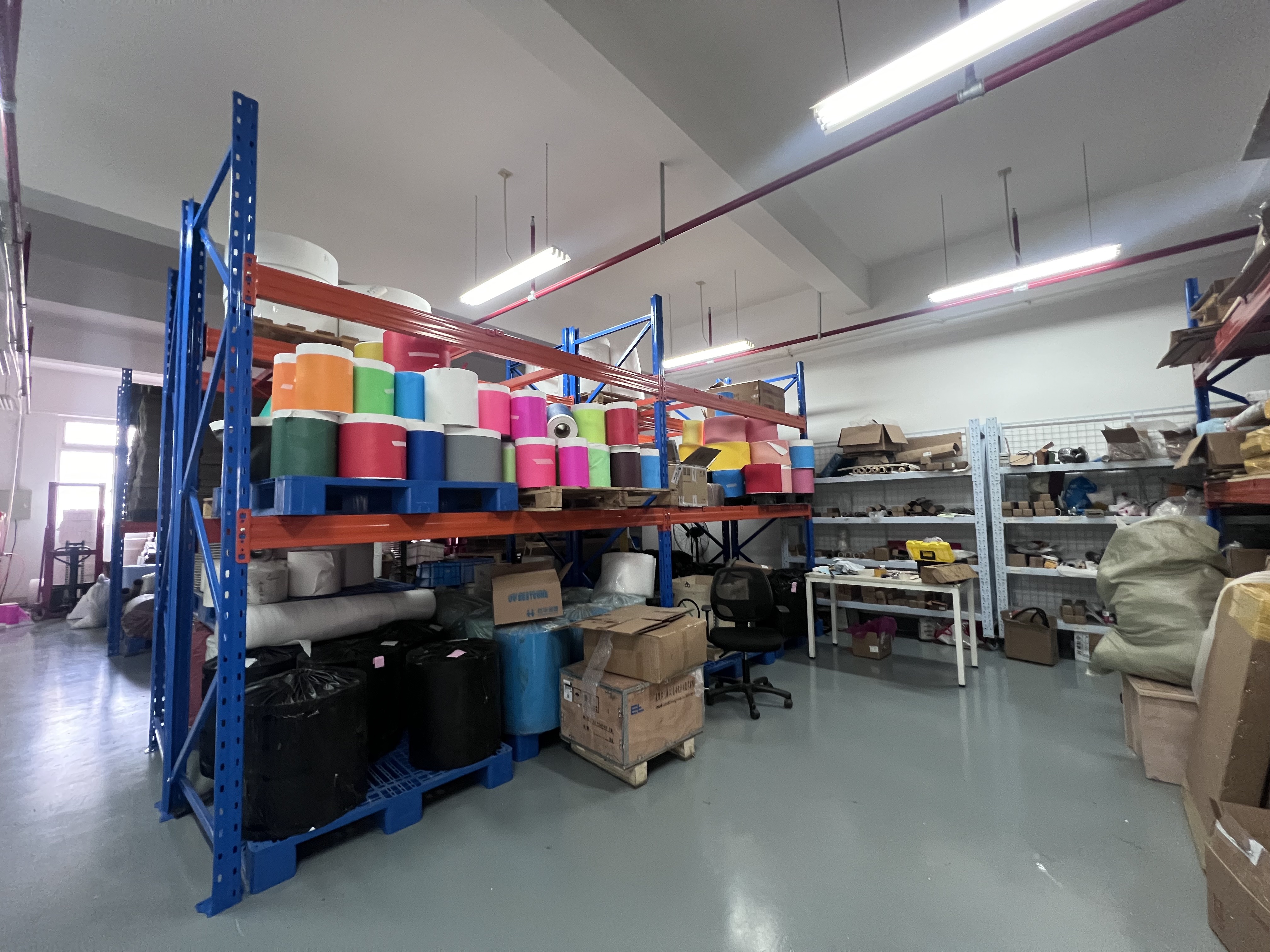
Material and ward-scenario questions
Q1. Which material suits which ward scenario?
Start from the setting, not from the material catalogue. In practice, five settings drive the choice.
- Emergency, admission and outpatient areas — high throughput, minutes per patient, variable data changing constantly. The medical thermal wristband, produced from thermal-sensitive synthetic paper, is printed on demand at the ward and used once.
- General inpatient wards and ICU — multi-day stays with repeated handling and cleaning. The PVC Patient ID Wristband at 250*25mm or 250*16mm is the standard fit; where a writing surface or an insert card is needed, the PVC 1 or 2-layer Wristband at 250*25mm or 250*16mm, and the PVC+Tab Wristband at 260*40mm, which adds a larger tab area.
- Paediatric and baby identification — a narrower band on a small wrist. The Cartoon Wristband at 200*20mm is the paediatric format in the range.
- Nursing homes, clinics, rehabilitation and longer-stay settings — re-usable, adjustable, comfortable over weeks. The Ribbon Wristband at 350*15mm and the Polyester Wristband at 350*15mm serve this pattern; the Polyester Lanyard at 900*15/20/25mm covers staff, visitor and ward-access identification and is not a substitute for a patient band.
- Short-stay, high-volume turnover — the Tyvek Wristband at 250*19mm or 250*25mm, a light single-use format that holds its shape through a busy shift.
The Holographic Wristband at 250*25mm or 250*16mm adds a visible authentication element where a glance-level check matters. This mapping is editorial guidance rather than a specification: the final test is a sample run on the ward's own printer, with the ward's own staff.
Q2. Thermal or PVC — what actually decides it?
Two variables decide it: whether the ward prints at the point of use, and how long the band stays on the patient.
Thermal stock exists to be printed at admission. Data is generated per patient, nothing is pre-printed except branding, and the band is discarded at discharge. PVC exists to be marked and then survive: pre-printed, hand-written, or carrying an insert, through days of handling, wiping and repositioning.
The practical boundary is blunt. If a site has no direct thermal printer, or cannot maintain one, thermal stock is the wrong purchase no matter how good the price is. Conversely, if the requirement is a band that can be wiped with a ward disinfectant several times a day for a week, PVC is the safer specification and thermal paper is not.
Q3. Why do formats repeat at 250*25mm and 250*16mm?
Those are two widths on a common 250mm length. The 16mm width suits smaller wrists or a shorter print field; the 25mm width provides more printable area for a barcode or QR code plus readable text. Both widths appear across the PVC Patient ID Wristband, the PVC 1 or 2-layer Wristband and the Holographic Wristband; Tyvek is offered at 250*19mm and 250*25mm.
When barcode scanning is part of the workflow, confirm printable area rather than band size. A band can be wide enough for the wrist and still leave too little clean surface for a code that scans on the first attempt.
Printing questions
Q4. Does direct thermal printing need ink or a ribbon?
No. Direct thermal stock — the thermal-sensitive synthetic paper used in the medical thermal wristband — carries a heat-sensitive coating. The printhead applies heat and the image forms in the coating. There is no ink, no toner and no ribbon, which is precisely why thermal bands can be produced one at a time at an admission desk.
The trade-off sits in that same coating. Because the image is heat-formed rather than fused or transferred, it is more exposed to sustained heat, abrasion and some solvents than a thermal-transfer or laser-printed label, and unprinted stock should be stored away from heat sources. For long stays or heavy chemical exposure, a PVC or polyester band with a printed or written insert is the more durable route.
One clarification prevents a common ordering error: thermal-transfer printing is a different process that does use a ribbon. If the hospital's device is a thermal-transfer printer, specify accordingly rather than ordering direct thermal stock.
Q5. Do hospitals print in-house, or does the factory print?
Both models are in use, and many buyers combine them. Blank thermal stock is supplied for ward-level printing on a direct thermal printer, the equipment named in the medical wristband application scenario. Alternatively, bands are printed at the factory with logo, colour and fixed layout.
The usual split is factory-printed branding plus ward-printed variable data: the supplier controls the visual identity, the ward controls the patient data. What should be settled in writing is who approves artwork, who holds stock, and who reorders when a ward runs low mid-quarter.
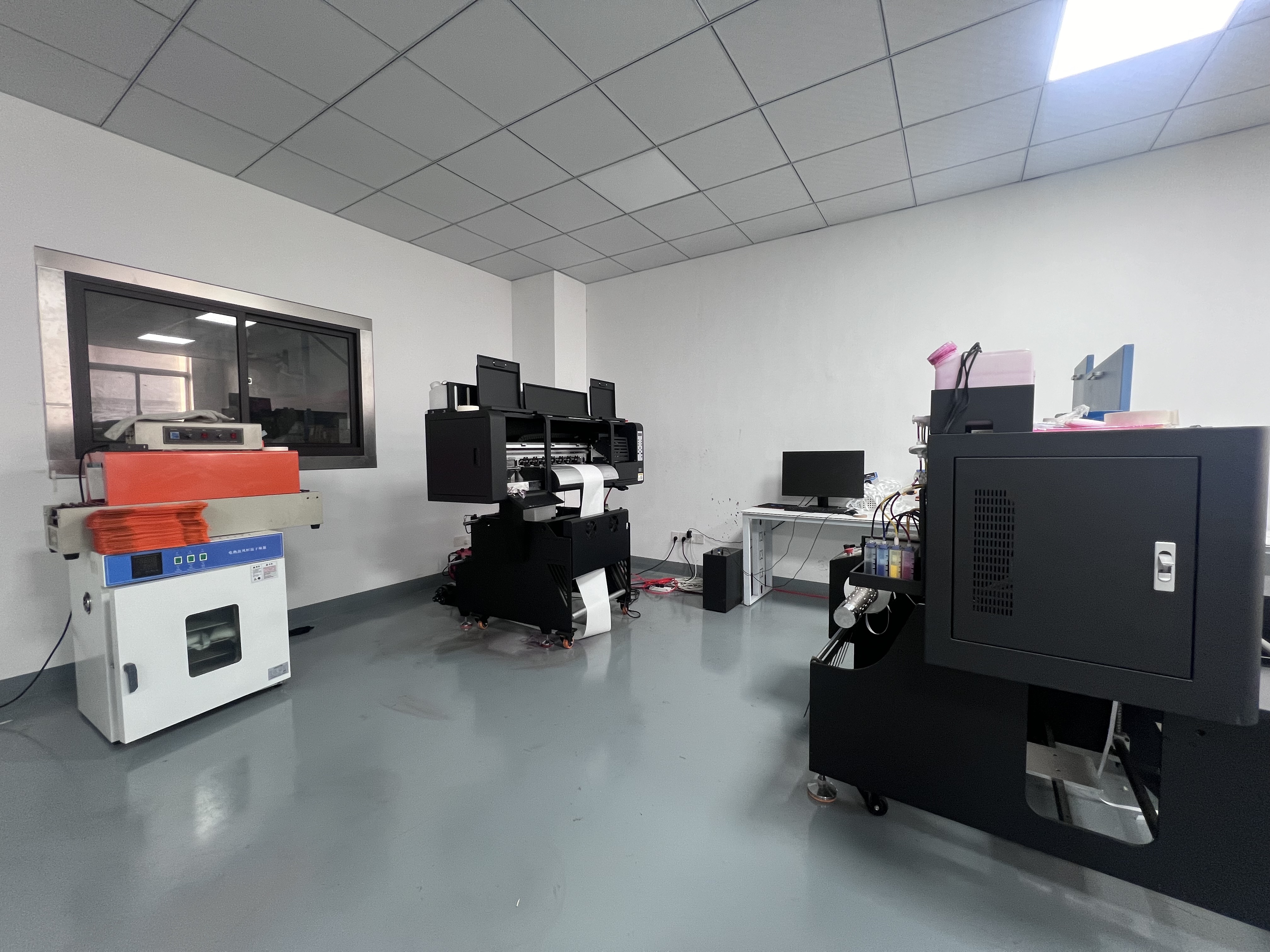
Q6. What printing options exist for matching identification labels?
Buyers who want bands and labels to read as one system can specify the Custom Label, produced to a custom personalised size, alongside the wristband programme. Three printing routes are offered: offset, digital and hot stamping.
- Offset — economic at volume, with consistent spot colour across a long run.
- Digital — suited to short runs, variable data and pre-production proofs before a large commitment.
- Hot stamping — where a foil or embossed brand mark is required and a flat printed mark is not enough.
Wristband production itself is supported by in-house digital, flexographic and die-cutting workshops, which is what allows a label and a band to be specified together rather than sourced separately. The one step worth insisting on is a physical proof: screen colour, offset spot colour and digital output do not match by default, and a colour dispute after printing is expensive for both sides.
Waterproofing, tear resistance and tamper evidence
Q7. How is waterproofing described per product line?
At material level, line by line — not as a single rating applied to the whole catalogue.
- Thermal-sensitive synthetic paper (medical thermal wristband) — a water-resistant surface for short exposure. It is not built for soaking, and prolonged moisture combined with abrasion degrades legibility.
- Tyvek (250*19mm, 250*25mm) — holds its shape when wet and dries quickly, which suits splash and short wet exposure in busy units.
- PVC (Patient ID, 1 or 2-layer, PVC+Tab) — a waterproof body that can be wiped, appropriate where cleaning between shifts is routine.
- Silicone (RFID) — waterproof and cleanable, and re-usable between patients after disinfection.
- Polyester and ribbon (350*15mm) — textile surfaces that dry quickly and are re-usable; they hold water briefly while wet.
- Holographic (250*25mm, 250*16mm) — a film surface that resists water on the face.
No ingress-protection rating is stated for these lines in the published product data. That matters for tenders. A specification that simply says waterproof is not testable; convert it into a test the hospital can run on a sample — immersion duration, wiping agent, number of wipe cycles, acceptable legibility afterwards. That is the honest answer to a question that is routinely answered too quickly.
Q8. How is tear resistance described per product line?
Again at material level, and again with the closure as the weak point rather than the strap.
- Tyvek — high tear resistance from its non-woven fibre structure; it resists tear propagation, so a snagged band tends to stay intact rather than split.
- PVC — resists stretching and normal ward handling; repeated flexing at the closure is where wear appears first.
- Thermal paper — the lowest tear resistance in the range; performance depends on correct closure and on not over-tightening at application.
- Polyester and ribbon — woven tensile strength, designed for repeated fastening and re-use.
- Silicone — elastic and shape-recovering, resistant to tearing in normal wear though still cuttable.
A pull test at the closure, plus an inspection after 24 to 72 hours of real wear on the intended ward, tells a buyer more than any adjective in a datasheet.
Q9. Is re-application allowed, or must removal be detectable?
Single-use and re-usable formats are mutually exclusive on this point, and the choice belongs in the specification rather than the purchase order.
Single-use formats — thermal, Tyvek — use one-time closures: removing the band destroys it, which is what makes removal detectable. Re-usable formats — PVC with an adjustable closure, polyester, ribbon, silicone RFID — can be taken off and re-applied, an advantage in long-stay or therapy settings and a disadvantage anywhere removal must be visible to staff.
Isolation and higher-risk wards usually need the irreversible option. Note that tamper evidence is a property of the closure, not of the material: the same PVC band can be supplied with either closure type, so it must be specified explicitly.
RFID and data-carrying formats
Q10. What changes when a chip is added?
The RFID wristband is offered across multiple materials for customisation, with paper, Tyvek, PVC and silicone among the formats referenced in the range. The material decision therefore stays as described above; what is added is a data layer.
Four things change at ordering. Chip type and memory. Read-range requirement, which is set by the physical environment rather than by the chip alone. Whether data is encoded at the factory or written on site at admission. And how the hospital's admission system writes to the band — a question that decides whether the project is a purchase or an integration.
The manufacturer holds in-house software and hardware development capability, which is relevant when a band must integrate with an existing admission system rather than be read as a standalone device. For barcode-first workflows, thermal and PVC formats printed with 1D or 2D codes remain the lower-complexity path. RFID is justified by hands-free reads at distance, not by novelty.
Programme, OEM and capacity questions
Q11. Can bands be produced under our own brand?
Yes. OEM production is available, meaning bands manufactured to the buyer's specification and sold under the buyer's brand, with logo customisation among the stated options. This is the model most distributors, group procurement arms and private-label suppliers use.
The discipline that protects both sides is simple: fix artwork, colour reference and band format in writing before the first mass run. First-article approval costs a few days; a reprint costs a production cycle.
Q12. What volumes and lead times should a contract plan around?
The stated commercial parameters are a minimum order quantity of 1,000 units and a standard lead time of 7 to 10 working days, with 100% testing as the quality-control approach. Production runs on a 10,000 m² site with 50+ staff and a five-engineer R&D team, at an annual output of 12,000,000 units. Main markets are the EU and USA, with roughly 70% of output exported and export markets listed as the EU, US and Middle East.
For a hospital or distributor running a twelve-month contract, the number worth interrogating is not peak output but reorder cadence: how quickly a repeat run can be scheduled when a ward consumes stock faster than forecast.
Commercial terms and acceptance — the closing question
Q13. What are the purchasing terms and acceptance criteria?
Minimum order quantity: 1,000 units. Delivery terms: EXW, FOB, CIF, DAP or DDP. Payment terms: 100% T/T in advance. Acceptance criteria: production video and photo verification.
Read the acceptance clause precisely. Video and photo verification is a documentary acceptance method: it confirms that the agreed product was produced and packed, and it is not the same as a third-party pre-shipment inspection or an incoming inspection performed at the hospital. If your quality system requires AQL sampling, retained samples per batch, or an accredited laboratory report against a named standard, that must be agreed as an addition, in writing, before the order is placed rather than discovered at goods-in.
Q14. Which compliance documents should accompany an order?
The company holds ISO 9001 certification for its quality management system and has undergone on-site verification by Alibaba and SGS.
For the paper wristband, an EU RoHS Certificate of Compliance is on file: certificate number TST20250302350EC, issued 14 March 2025 by Dongguan True Safety Testing Co., Ltd., covering compliance with RoHS 2.0 restricted-substance requirements under Directive (EU) 2015/863 amending Directive 2011/65/EU, tested to the IEC 62321 series — including IEC 62321-1:2013, 62321-2:2021, 62321-3-1:2013, 62321-4:2013/AMD1:2017, 62321-5:2013, 62321-6:2015, 62321-7-1:2015, 62321-7-2:2017 and 62321-8:2017.
The scope line is the part buyers skip. The certificate covers the paper wristband. If a tender requires RoHS evidence for PVC, silicone or RFID SKUs, request a scope extension or a separate report; do not assume one certificate covers an entire catalogue.
Where these answers stop: limits to write into the contract
A Q&A that only lists capabilities is a brochure. Five boundaries matter more than the answers above.
- Blank bands are not medical devices in the EU. The Court of Justice of the European Union ruled in Case C-427/24, effective 2 July 2026, that blank patient wristbands are not classified as medical devices under Regulation (EU) 2017/745. Tender language that implies MDR certification of a blank band is therefore misleading; where the intended purpose is genuinely medical, that is a separate classification conversation.
- RoHS scope is product-specific. One certificate covers one product family, as noted above.
- Waterproofing is a material property, not a rating. No IP rating is published for these lines, so the test method must come from the buyer.
- 100% T/T in advance is a working-capital constraint. Distributors balancing hospital payment cycles of 60 to 90 days will feel it; buyers who need open account or letter-of-credit terms should raise it at quotation stage, not at order confirmation.
- MOQ excludes small buyers. At 1,000 units, a small clinic with modest annual consumption is better served through a distributor than a direct factory order.
Compared with a generic consumables purchase, medical identification carries an extra layer: the band is a data carrier attached to a patient, so an error is a clinical error, not a stock error. That is why the boundary list above belongs in the contract annex rather than in a footnote.
What is changing in the category
Three shifts are visible in the published data, and each has a procurement consequence.
First, market sizing is contested but demand is not. North America held a 41% share of the patient identification wristbands market in 2025 according to Precedence Research, while the 2025 global value is reported at USD 576.1 million by Future Market Insights against USD 1.61 billion by Precedence Research — a methodology gap rather than a market event. Buyers citing market figures in internal business cases should name the publisher and the definition.
Second, the category sits inside larger identification portfolios. PDC Healthcare, a Brady Corporation brand, holds a projected 14–18% share, and Zebra Technologies reported net sales of USD 346 million in Q4 2023 for its Asset Intelligence & Tracking segment, which includes wristbands. For independent manufacturers, the competitive ground is format breadth, customisation and lead time rather than scale.
Third, regulatory clarity is improving at the edges. The CJEU ruling on blank wristbands removes a long-running ambiguity, and ISO 15223-1:2021 Amendment 1 (2025) changes the authorised-representative symbol used on labelling from EC REP to EU-REP — a small change that forces artwork revisions wherever that symbol appears on accompanying documents.
Reference table: format, size, printing and watch-out
| Format | Size | Typical setting | Marking route | Watch-out |
|---|---|---|---|---|
| Medical thermal wristband (thermal-sensitive synthetic paper) | Thermal material wristband | Admission, emergency, outpatient | Direct thermal, no ink or ribbon | Heat and abrasion sensitive; requires a working direct thermal printer |
| Tyvek Wristband | 250*19mm, 250*25mm | Short stay, high turnover | Pre-printed or hand-written | Single-use closure; not for long-stay re-use |
| PVC Patient ID Wristband | 250*25mm, 250*16mm | General wards, ICU | Pre-printed, written, insert | Confirm closure type — re-application vs detectable removal |
| PVC 1 or 2-layer Wristband | 250*25mm, 250*16mm | Wards needing a writing or insert surface | Insert card, written | Layer count changes handling, not waterproofing |
| PVC+Tab Wristband | 260*40mm | Larger label or note area | Written, pre-printed | Larger tab can catch on bedding and equipment |
| Cartoon Wristband | 200*20mm | Paediatric, baby identification | Pre-printed | Narrow print field limits barcode size |
| Ribbon Wristband / Polyester Wristband | 350*15mm | Nursing homes, clinics, long stay | Written, pre-printed | Textile holds water briefly; re-usable means re-application |
| Polyester Lanyard | 900*15/20/25mm | Staff, visitor, ward access | Pre-printed | Not a patient identification band |
| Holographic Wristband | 250*25mm, 250*16mm | Glance-level visual verification | Pre-printed | Adds visual authentication, not data capacity |
| RFID wristband | Multiple materials, customisable | Hands-free reading, integration projects | Factory or on-site encoding | Requires a system integration decision, not just a purchase |
| Custom Label | Custom personalised size | Matching identification labels | Offset, digital, hot stamping | Approve a physical proof before mass production |
Outlook
The next procurement cycle is likely to be defined less by new materials than by tighter evidence. Two developments point that way: the CJEU's clarification that blank wristbands fall outside the MDR, which pushes buyers to describe intended purpose precisely, and the symbol transition under ISO 15223-1:2021 Amendment 1 (2025), which will force labelling artwork reviews across the supply base.
Expect three practical consequences. Compliance requests will become SKU-specific rather than supplier-level. Waterproof and tear-resistant claims will increasingly be tested on sample rather than accepted from a datasheet. And RFID will grow alongside barcode rather than replacing it, because most hospitals run both for years during transition. Suppliers that can answer a ward-level question with a sample, a test and a documented scope will hold the accounts; suppliers that answer with adjectives will not.
Have Questions or Need More Details?
Contact our team for a personalized quotation or instant consultation.
Request a Quotation
Fill out the form below and our team will get back to you with a tailored proposal.
WhatsApp Direct Chat
Prefer to chat in real-time? Message us on WhatsApp for instant assistance & quick answers.
- Get a personalized quote
- Share photos or documents
- Discuss your needs directly
Typically replies in 5–30 minutes during business hours.