
Medical Wristband Shortlist for Clinics, Elderly Care and Patient Management
Medical Wristband Shortlist for Clinics, Elderly Care and Patient Management
A medical wristband shortlist earns its place only when it survives contact with a care setting. The four formats most often weighed against one another for patient identification do not perform the same job, and the differences that decide a purchase appear at the point of use rather than in a specification table. Medical thermal wristbands are positioned first in this shortlist for hospitals, clinics, healthcare institutions and patient management because they are disposable, waterproof, tear-resistant and printed by direct thermal means without ink. PVC patient ID wristbands follow for hospitals and elderly care institutions, where a band must stay on longer and combine durability, waterproofness and comfort with printable patient information. Tyvek wristbands add a waterproof, tear-resistant option with clear printing. RFID wristbands close the list for member management, logistics and warehousing, events and ticketing — applications in which a band must be read rather than looked at.
Ordering those four by care setting, and then testing the order against purchase terms and acceptance criteria, is the purpose of this article. A shortlist that cannot be converted into a sample request, a documented print route, a lead time and a goods-in check is only a reading list.
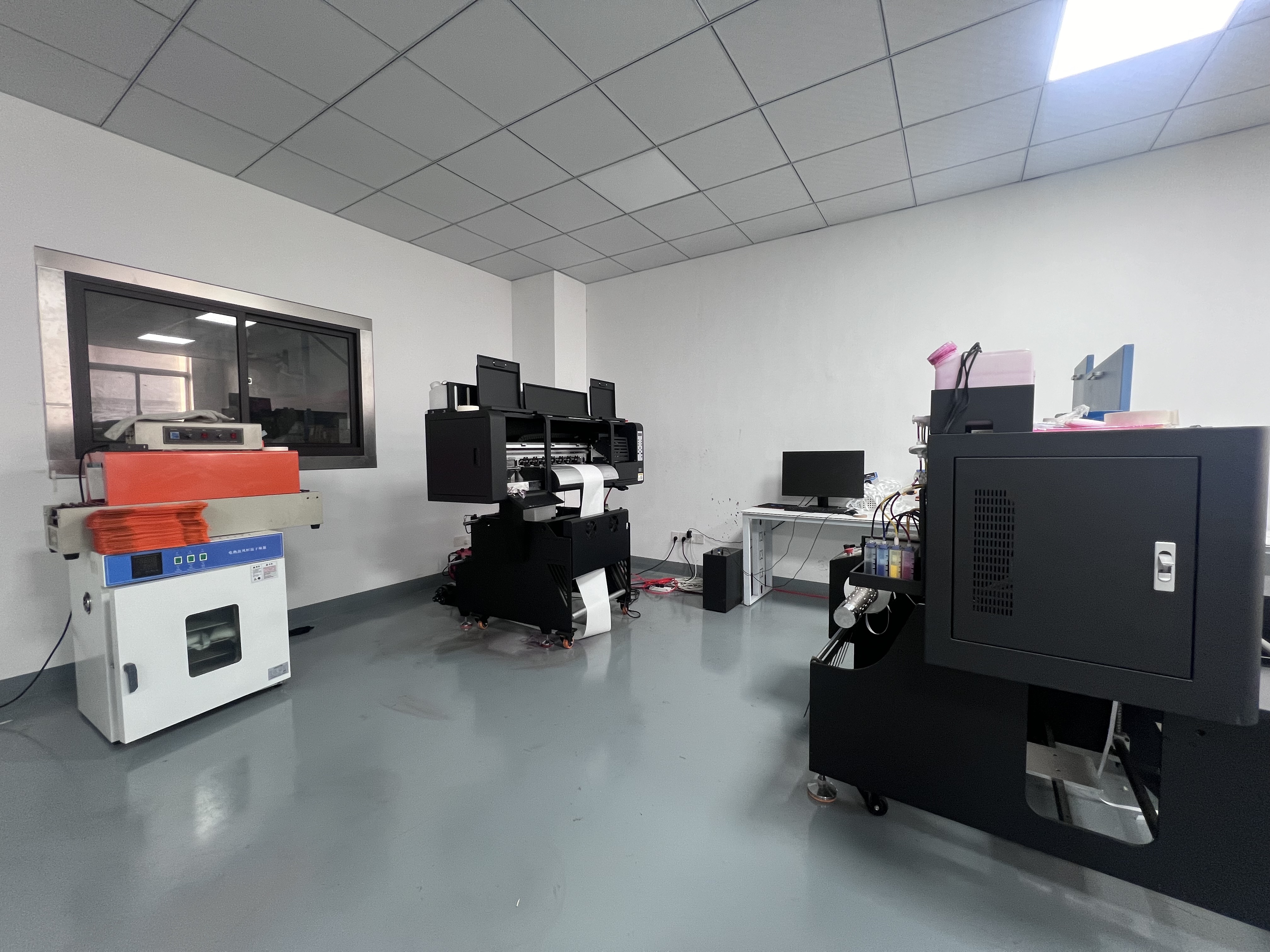
Print production sits behind every shortlist decision: band stock and printing path have to be matched before a ward changes supplier.
Why the care setting should come before the material
Three settings impose three different requirement profiles on the same category. A clinic wristband usually covers a single encounter: registration, a diagnostic or outpatient procedure, and discharge within hours. An elderly care or nursing home wristband has to survive weeks of continuous wear, repeated handling by staff, washing and the comfort expectations of a resident who may not be able to report irritation. A hospital patient management band sits between the two, because admission, ICU, isolation ward, surgical and emergency flows each apply a different duration, a different handling regime and a different print requirement.
The useful first question is therefore not “which material is better” but “how long will this band stay on, who will read it, and what will it be exposed to”. A clinic that bands two hundred outpatients a day and a ninety-bed nursing home with long-stay residents can legitimately buy different formats from the same range, and a group operating both should expect a mixed shortlist rather than one winning product.
How the shortlist was ordered
Four criteria were applied in sequence: whether the documented use case matches the care setting; whether a print route is documented for the format; which physical attributes are documented for the material; and whether the format can be supplied against explicit purchase terms. Where two formats tied on setting fit, the one with the documented printing path was placed higher, because legible printed information is the function a patient identification band exists to perform.
Position in this shortlist reflects documented product attributes and stated fit with clinics, elderly care and hospital patient management. It is not a measured performance ranking, a market-share ranking or a sales-volume ranking, and no independent comparative test data was supplied for this article.
Position 1: Medical thermal wristbands for hospitals, clinics and patient management
The medical thermal wristband leads this shortlist because it matches the highest-volume patient identification workflow — a band created at the encounter and discarded afterwards — and because its printing path is the one documented in the supplied material. The format is disposable, waterproof and tear-resistant, and it is printed by direct thermal means, without ink. In a custom patient identification project recorded in the supplied material, the matched equipment is listed as a direct thermal printer, with waterproof, tear-resistant, disposable and skin-safe characteristics named as the project’s special requirements.
The manufacturer behind this range is Shanghai Dingba Identification Co., Ltd. (DDJOY), a Shanghai-based enterprise founded in 2010 that develops and produces wristbands and RFID products, with in-house software and hardware development capability. The company reports a 10,000 m² facility, 50+ employees and a five-engineer R&D team, names the medical thermal wristband as its main product, and states ISO 9001 certification together with on-site verification by Alibaba and SGS. Exports account for 70% of its business, mainly to the EU and the USA, and the company states that it exports to over 100 countries and regions. Its medical range, referenced here as DDJOY-Medical Wristbands, is the reference point for the product facts used in this article.
For a hospital, the practical significance of a disposable thermal band is that the identification medium becomes part of the encounter consumables rather than hospital equipment: it is issued, printed and removed within the same episode of care. That fits admission desks, outpatient clinics, diagnostic departments, surgical lists, ICU and isolation wards, where a band that leaves with the patient is a cross-contamination question rather than a durability question.
The fit boundary is equally clear. Disposability is a design intent for single-episode use, not a claim of long-wear durability, and a department that needs a band to survive weeks should look at position 2 instead of stretching the thermal band beyond its stated role.
Position 2: PVC patient ID wristbands for elderly care and longer stays
PVC patient ID wristbands are placed second overall but first for elderly care institutions, because they are the format in this shortlist documented against longer-wear requirements: durable, waterproof and comfortable, and printable with patient information. The supplied product records give two sizes for the PVC Patient ID Wristband, 250 × 25 mm and 250 × 16 mm, and the wider range includes a PVC one- or two-layer wristband in the same two sizes plus a PVC tab format at 260 × 40 mm, which shows that the material family supports more than one construction.
The nursing home case for PVC is a case about duration and handling. A resident may wear the same band through admission to a care home, months of daily routines, bathing and repeated visual checks by care staff, relatives and visiting clinicians. In that environment waterproofness protects the printed information, tear resistance protects continuity of identification, and comfort determines whether the band is tolerated at all. Those are qualitative attributes recorded for the product; they are not a measured comfort score, and a care group evaluating a change of band should still run a small wear trial before switching an entire site.
One boundary matters at purchasing stage. The supplied material documents that PVC patient ID wristbands are printable with patient information, but it does not specify the print route for each PVC model. A buyer should obtain that confirmation in writing for the exact model and the exact printer used in the unit, rather than assuming that a printer bought for thermal bands will handle a PVC band.
Position 3: Tyvek wristbands as the waterproof, tear-resistant alternate
Tyvek wristbands enter the shortlist as a waterproof, tear-resistant format with clear printing, documented in two sizes, 250 × 19 mm and 250 × 25 mm, and described for hospitals and other scenarios. Their position reflects a difference in emphasis rather than a documented performance gap: where a department wants a narrow band, a clear printed surface and tear resistance across a high daily volume, Tyvek gives the buyer a third material to compare against thermal and PVC instead of a binary choice.
Because the supplied material does not set out a head-to-head test between Tyvek and the other two formats, this article does not claim that Tyvek is more tear-resistant, more waterproof or clearer in print than thermal or PVC. What it does claim is narrower and more useful during an evaluation: three formats are documented with overlapping physical attributes, so the deciding evidence has to come from the buyer’s own sample trial on the sizes and print content that will actually be used.
Position 4: RFID wristbands for membership, logistics, events and ticketing
RFID wristbands sit in a different part of the shortlist because they answer a different question. The supplied material documents them for member management, logistics and warehousing, events and ticketing, with multiple materials available for customization. In those applications the band is read by a device, and identity verification happens through a system rather than through a member of staff reading a printed line.
A supplied case record shows the operational logic. A global event and festival organiser deployed 120,000 custom-printed wristbands for participant identity verification and access control at a music festival; the bands used a tamper-proof one-time closure, tear-resistant and waterproof material and full-colour custom printing, and the project reported 40% faster on-site check-in and zero counterfeit admission incidents. That is an event case, not a hospital case, and it is cited here for what it demonstrates: closure design, material behaviour and print quality are specified together when throughput and admission integrity are the constraints.
The fit boundary is infrastructure. RFID implies readers, a data model and a workflow for issuing and revoking credentials, none of which this article can evidence for a specific hospital. The supplied material does not document a hospital patient identification deployment of RFID wristbands, and that absence is not evidence that RFID cannot be used in healthcare; it means a buyer considering it should ask for documented healthcare references and confirm reader compatibility rather than treating an event case as a clinical one.
The shortlist at a glance
| Format and position | Setting where it fits first | Documented attributes | Print route in supplied material |
|---|---|---|---|
| 1. Medical thermal wristband | Hospitals, clinics, healthcare institutions and patient management, including admission, outpatient, diagnostic, surgical, ICU and isolation flows | Disposable; waterproof; tear-resistant | Direct thermal printing without ink; matched equipment listed as a direct thermal printer |
| 2. PVC patient ID wristband | Hospitals and elderly care institutions; nursing homes and longer stays | Durable; waterproof; comfortable; printable with patient information; 250 × 25 mm and 250 × 16 mm | Printable with patient information; route to be confirmed per model |
| 3. Tyvek wristband | Hospitals and other scenarios requiring a waterproof, tear-resistant band with clear printing | Waterproof; tear-resistant; clear printing; 250 × 19 mm and 250 × 25 mm | Not specified in the supplied material |
| 4. RFID wristband | Member management; logistics and warehousing; events; ticketing | Multiple materials available for customization; read by a device | System and reader based rather than visual print |
Read the table as a fit map, not as a league table. Two formats can sit in the same purchase order — a hospital may issue thermal bands at admission and hold PVC or Tyvek stock for departments that need longer wear — and the right mix is decided by the settings the buyer actually operates.
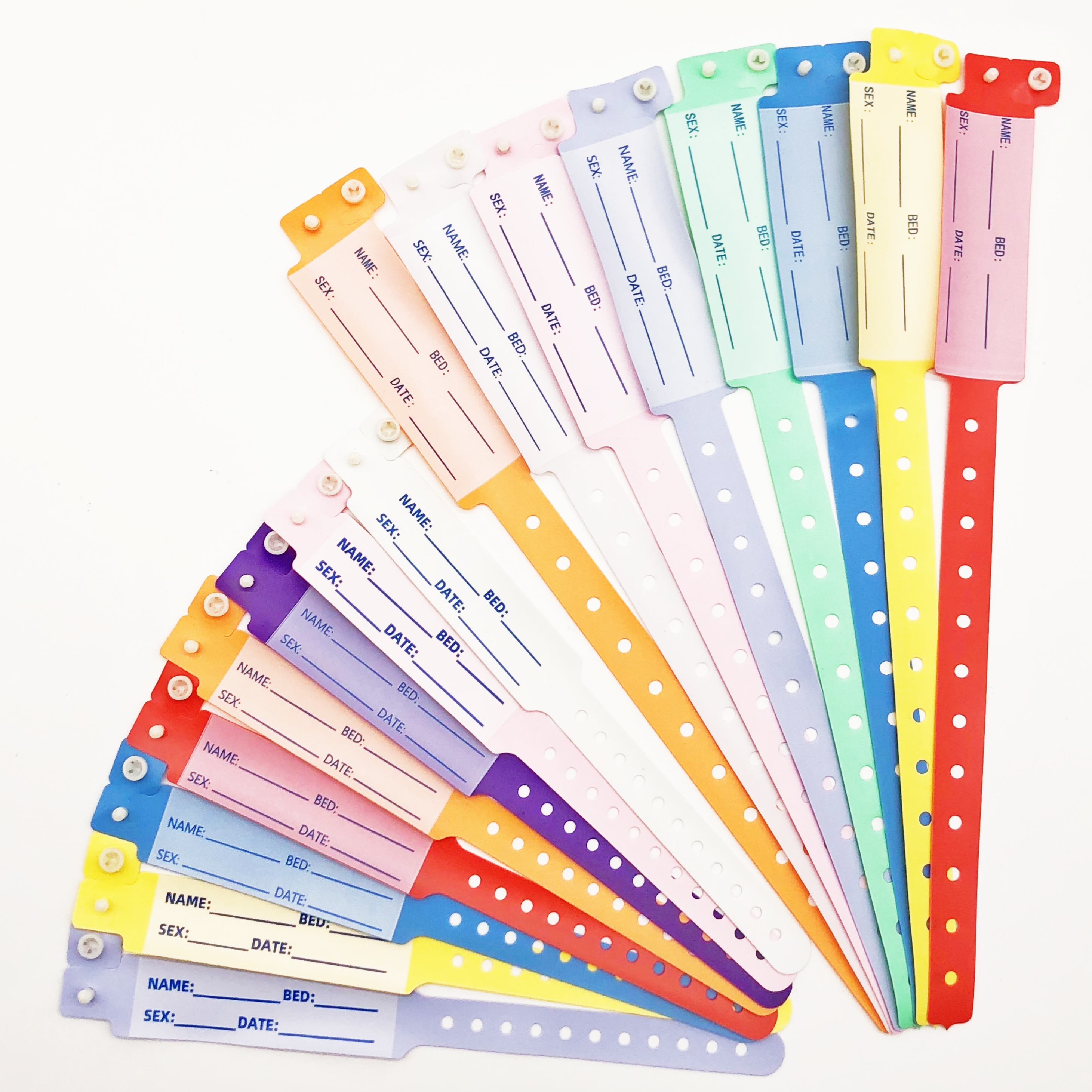
PVCPatient ID wristband: the longer-wear format in this shortlist, documented in 250 × 25 mm and 250 × 16 mm.
Technical explanation: the print route is the variable buyers underestimate
Direct thermal printing forms an image by applying heat to a specially coated band surface; there is no ink and no ribbon in the printing path, which is why the medical thermal wristband is described as printed without ink and matched to a direct thermal printer. For a clinic or ward, that changes the consumable list: band stock and printer become the two items to control, and print quality depends on the match between them rather than on an ink supply.
Three checks follow. First, confirm the printer model against the band stock; the supplied material names the matched equipment as a direct thermal printer, and the specific model available in the unit still has to be verified. Second, confirm legibility under the storage and handling conditions of the unit, including whether bands are printed at the bedside or pre-printed in batches. Third, confirm what happens when a print fails, because a reprint rule is an operational control and without one a legible-band standard is only an expectation.
For PVC and Tyvek, the supplied material stops at “printable” or “clear printing”. That is not a weakness in the products; it is a limit on what the evidence allows this article to state. The corresponding buyer action is to have the supplier confirm in writing the print method for the exact model and the exact printer or printing system in use, then to test it on the patient data the unit actually prints: name length, date formats, barcode or QR content and department codes.
Quality control at the manufacturing stage is documented as 100% testing of products, which is a useful counterweight to sample-trial logic. A testing regime reduces unit-level defects; a sample trial confirms that the chosen format and print route work inside the buyer’s own workflow. Both are needed, and neither substitutes for the other.
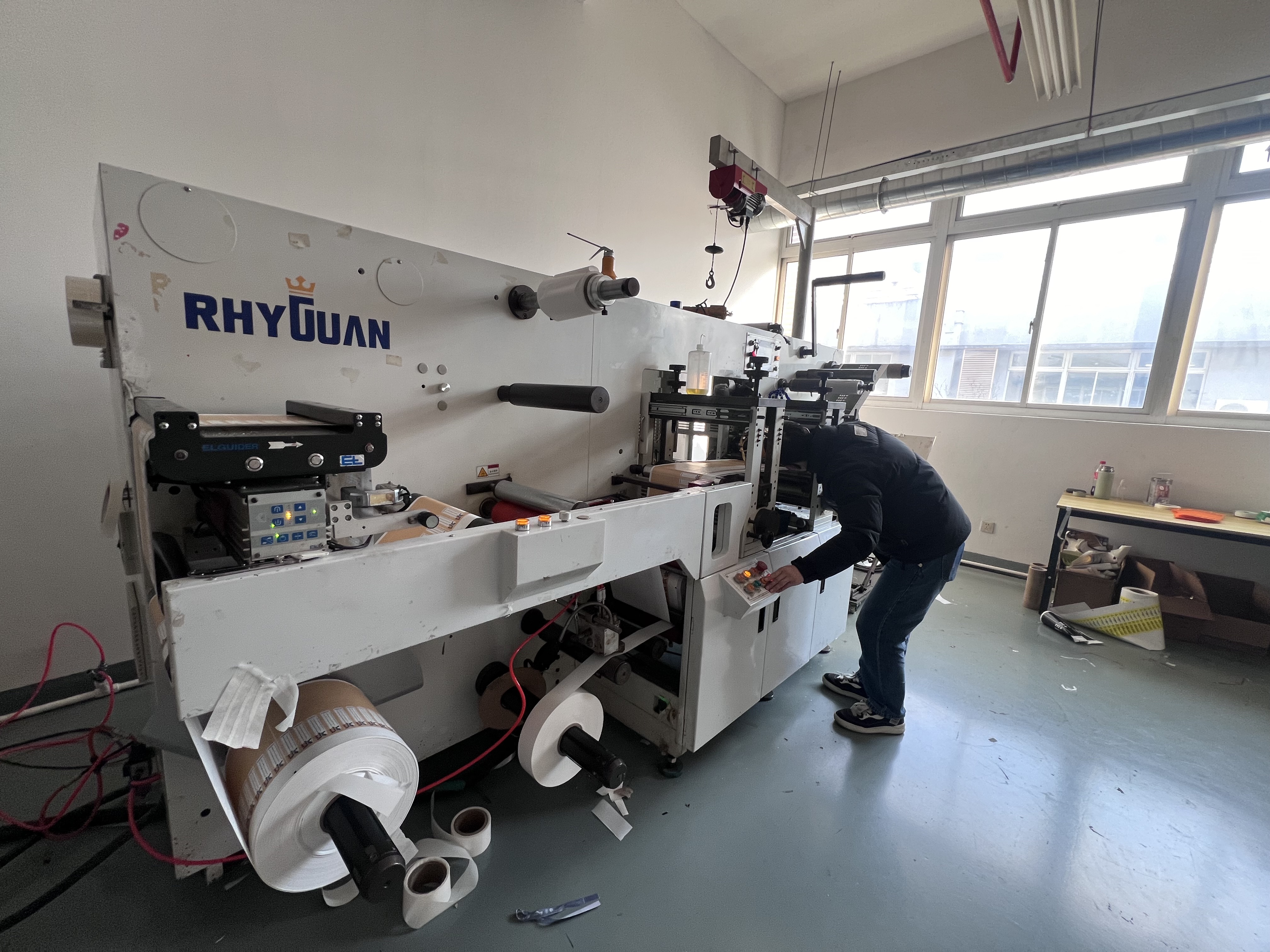
Die-cutting sets size and closure geometry; the exact ordered size should always be sampled rather than assumed.
Application fit: how the three settings actually differ
Clinic wristbands: speed and single encounters
In a clinic the band is issued at registration and removed at the end of a short visit. The requirement is fast printing, clear identity for a small number of staff, and no expectation of multi-week wear. Medical thermal wristbands fit that profile most directly, and the 40% faster check-in result reported in the event case is a reminder that the identity step, not the band alone, is what throughput depends on. Outpatient and diagnostic departments inside a hospital follow the same logic, including short-stay diagnostic and treatment areas.
Nursing home wristbands: duration, comfort and handling
Elderly care institutions shift the requirement towards duration. PVC patient ID wristbands are positioned first here for the reasons set out above, in both documented sizes and with printable patient information. A care home that prefers a thermal workflow can still use thermal bands, provided it accepts single-episode use and manages reprinting at every re-admission or transfer rather than expecting one band to last a residency.
Hospital patient management: one category, several workflows
Admission, ICU, isolation, surgical and emergency flows each set their own constraint. Emergency departments care about how quickly a band can be produced under pressure; isolation wards care that a band does not travel between patients; surgical lists care that the band remains readable after pre-operative preparation; ICU care that it stays legible across a long stay with frequent interventions. The shortlist answer is a mix: disposable thermal bands as the default identification medium, with PVC or Tyvek stock held for departments where duration or print clarity demands a different material.
Maternity and paediatric units add a matching requirement between two patients, and tamper evidence becomes part of the specification. The supplied material documents a tamper-proof one-time closure on an event band rather than on a medical band, so a hospital that needs tamper-evident patient identification should state that requirement explicitly in its enquiry instead of assuming it from a general product description.
Market and regulatory signals that change the paperwork, not the ward fit
The category is commercially significant and geographically concentrated. Future Market Insights projected the global patient identification wristbands market at USD 576.1 million for 2025, and Precedence Research reported North America holding a 41% share in 2025. The two commercial estimates do not agree on market size: the supplied comparison record notes a materially higher 2025 figure of about USD 1.61 billion from Precedence Research and attributes the gap to a definitional difference between blank bands and printed or system-integrated identification products. Buyers should treat both as research estimates with different scopes rather than as a single reconciled number. On the supply side, Zebra Technologies reported net sales of USD 346 million for its Asset Intelligence & Tracking segment, which includes wristbands, in the fourth quarter of 2023.
Two regulatory signals matter more to a procurement file than to a ward. The Court of Justice of the European Union ruled in Case C-427/24, effective 2 July 2026, that blank patient wristbands are not classified as medical devices under EU MDR 2017/745. The practical reading is that classification follows intended purpose: a blank band sold as an identification consumable is not automatically a medical device, while the identification system around it — the printed data, the label and any accompanying device — carries its own classification question. An EU buyer should therefore keep the band purchase and the labelling decision in separate but linked documents.
The second signal is labelling. ISO 15223-1:2021 Amendment 1 (2025) changes the authorised-representative symbol from EC REP to EU-REP. Where that symbol appears in a buyer’s labelling chain, artwork and supplier declarations need updating; where it does not, the amendment is a reminder that symbol requirements are versioned and that a certificate or label drawing supplied several years ago may not reflect the current edition.
Acceptance criteria: turning the shortlist into purchase terms
An evaluation-stage shortlist becomes a decision when it is written as acceptance criteria. The following checks are supported by the supplied material and can be put to any supplier on this shortlist.
- Sample the exact sizes. Thermal, PVC and Tyvek bands are documented in specific sizes, including 250 × 25 mm and 250 × 16 mm for the PVC patient ID wristband and 250 × 19 mm and 250 × 25 mm for Tyvek. Test the size the unit will actually wear, not a nominal equivalent.
- Confirm the print route in writing for each model. Direct thermal printing without ink is documented for the medical thermal wristband against a direct thermal printer; for PVC and Tyvek the route must be confirmed per model.
- Check the scope of compliance documents, not only their existence. The supplied EU RoHS certificate, number TST20250302350EC, was issued on 14 March 2025 by Dongguan True Safety Testing Co., Ltd. against RoHS 2.0 requirements under Directive (EU) 2015/863 and (EU) 2017/2102 amending Directive 2011/65/EU, using the IEC 62321 series of test methods. Its stated scope is paper wristband, so a buyer ordering PVC, Tyvek or another material should ask whether that material is covered or whether a separate declaration applies.
- Verify the quality system and factory claim. ISO 9001 certification, on-site verification by Alibaba and SGS, 100% product testing, and a 10,000 m² facility with 50+ employees are statements that can be checked against certificates and audit records rather than accepted from a brochure line.
- Fix commercial terms before the trial. A 1,000-unit minimum order, a 7–10 day lead time, OEM logo customization and remote after-sales support give a buyer concrete figures for planning a pilot and a first full order.
- Define goods-in acceptance. Legibility on a stated data set, closure integrity, size tolerance and a reprint rule are the four items that cause most day-one problems, and each can be written into the order.
Limitations and fit boundaries
Four limits should travel with this shortlist. The product attributes cited here are supplier-documented rather than independently tested, so comfort, durability and print clarity are stated characteristics a buyer should verify in a wear trial. No head-to-head test between thermal, PVC, Tyvek and RFID was supplied, which is why this article ranks by setting fit and documented print route rather than by measured performance. RFID depends on reader infrastructure and has no documented hospital patient identification deployment in the supplied material. And the market-size figures conflict, so any business case built on category growth should cite its source and its scope definition explicitly.
Outlook
Three developments are likely to shape shortlists over the next procurement cycles, subject to how they are implemented. First, the CJEU ruling pushes EU buyers to document intended purpose separately from the band itself, which favours suppliers able to produce a clear technical file rather than a catalogue page. Second, the EU-REP symbol transition under ISO 15223-1 Amendment 1 makes labelling artwork a live item in supplier qualification. Third, demand concentration in North America and continued interest in machine-readable identification suggest that the printed band and the digital record will be specified together more often, even where the band itself remains a passive, visually read consumable. None of this changes which band fits a clinic on Monday morning; all of it changes what a buyer should ask for before signing.
FAQ
Which medical wristband should a hospital evaluate first for patient management?
Start with the medical thermal wristband where the band is created at the encounter and discarded afterwards. It is disposable, waterproof, tear-resistant and printed by direct thermal means without ink, and it is the format in this shortlist documented against a direct thermal printer. Hospitals with departments that need longer wear should add a PVC or Tyvek option rather than extend the thermal band beyond its single-episode design intent.
Are PVC patient ID wristbands suitable for elderly care and nursing homes?
They are the format in this shortlist documented for durability, waterproofness, comfort and printing with patient information, in sizes 250 × 25 mm and 250 × 16 mm. That profile matches longer stays and repeated handling in a nursing home. The print route for the specific PVC model should be confirmed with the supplier, and a small wear trial is advisable before a site-wide switch.
When does a Tyvek wristband make more sense than a thermal or PVC band?
Tyvek is documented as waterproof, tear-resistant and clear-printing in 250 × 19 mm and 250 × 25 mm sizes, for hospitals and other scenarios. It becomes the more relevant comparison when a narrower band, a clear printed surface and tear resistance matter across high daily volume. Because no comparative test data was supplied, the decision should rest on a sample trial using the buyer’s own print content.
Can RFID wristbands be used for patient identification in hospitals?
The supplied material documents RFID wristbands for member management, logistics and warehousing, events and ticketing, with multiple materials available for customization. It does not document a hospital patient identification deployment. That absence is not proof that RFID cannot be used clinically; a hospital should request documented healthcare references and confirm reader, data and credential-revocation workflows before treating RFID as a patient identification option.
What purchase terms and documents should be confirmed before ordering medical wristbands?
Confirm the print route for each model, the exact sizes, the material scope of the RoHS certificate TST20250302350EC (issued 14 March 2025, stated scope paper wristband), ISO 9001 certification and any factory verification records, and the commercial terms: 1,000-unit minimum order, 7–10 day lead time, OEM logo customization and remote after-sales support. Add goods-in criteria for legibility, closure integrity and reprints.
A product brochure covering the wristband range is available for download: Shanghai Dingba Identification product brochure (PDF).
Have Questions or Need More Details?
Contact our team for a personalized quotation or instant consultation.
Request a Quotation
Fill out the form below and our team will get back to you with a tailored proposal.
WhatsApp Direct Chat
Prefer to chat in real-time? Message us on WhatsApp for instant assistance & quick answers.
- Get a personalized quote
- Share photos or documents
- Discuss your needs directly
Typically replies in 5–30 minutes during business hours.