
Medical Wristband Supplier Capability Evidence: Materials, Printing, Range
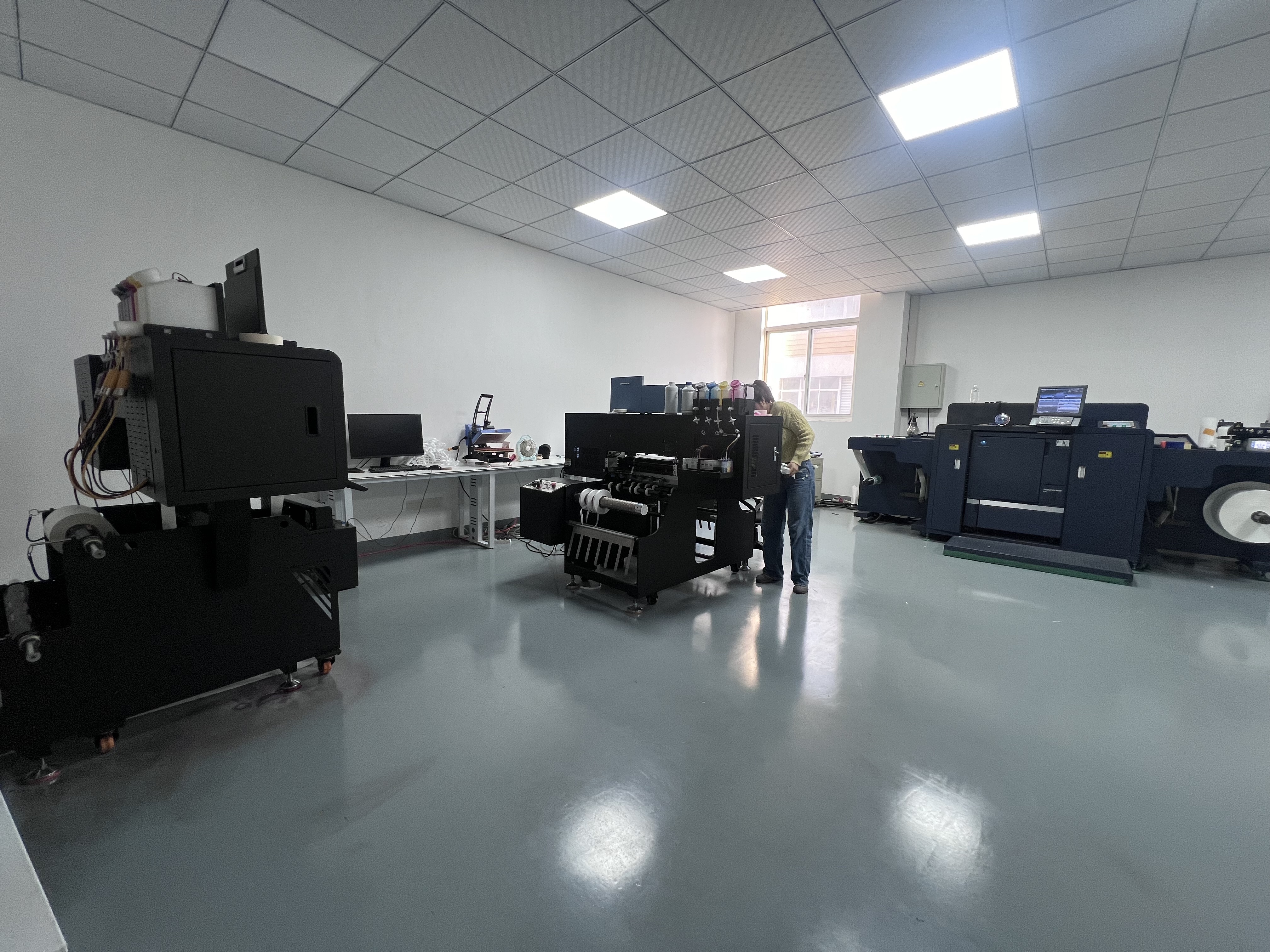
Figure 1 — Digital printing workshop handling rolled wristband stock. Pre-printed base designs and variable data are produced on the same converting floor, which is one of the capability signals discussed in this article.
Medical wristbands are an awkward procurement category. They cost very little per unit, are purchased in volumes, and are often treated as a commodity line item — yet they carry the patient identification data that clinicians read at the bedside, in the emergency bay, in the operating theatre and during transfers. When a band smears, tears, loosens or fails to print, the failure is not a stationery failure. It is an identification-control failure.
The practical consequence for hospital buyers is a specific evaluation problem. Every supplier describes itself as capable, and almost none of those claims can be tested before an order is placed. The workable answer is to treat the product portfolio itself as the evidence. Substrates, print methods, construction types and size ranges are observable facts. They are also difficult to assemble convincingly across a full catalogue without genuine production depth behind them.
Shanghai Dingba Identification Co., Ltd. is a wristband and RFID product manufacturer based in Shanghai, China, established in 2010, operating a 10,000 m² manufacturing facility with approximately 50+ staff, an R&D team of 5 engineers and an annual production capacity of 120,000,000 units. The company specialises in the R&D, production and sales of wristbands and RFID products, including medical thermal wristbands, and holds ISO 9001 certification plus on-site verification from Alibaba and SGS. Its DDJOY medical wristband range — spanning thermal, PVC, Tyvek, RFID, holographic, polyester, ribbon, cartoon and custom label constructions — is used here as a worked example of how product evidence can be read during supplier shortlisting, rather than as a promotional list.
Why Capability Claims Cannot Be Verified Before an Order
A wristband supplier's real capability sits in the process, not in the catalogue. It sits in substrate handling — how a coating is applied, how a roll is tensioned, how a narrow web is registered and die-cut, and how consistently a 250 mm band is punched at volume without drift. None of that is visible in a quotation, and only partially visible in a sample, because a supplier can hand-finish a sample in a way that a production line cannot repeat at scale.
Buyers are therefore left with weak proxies: price, which says nothing about consistency; certification documents, which confirm systems but not substrates; and verbal assurances about printing quality, which are the least testable claim of all.
Product evidence narrows this gap in a way that claims cannot. A catalogue that spans thermal-sensitive synthetic paper, PVC film, Tyvek, polyester webbing and RFID inlays — and that spans direct thermal, flexographic, digital and holographic printing — exposes decisions that a pure trading intermediary would struggle to make. Breadth is not proof of quality, and this article does not treat it as such. But breadth is a durable signal of production depth, and it converts a vague question — is this supplier capable? — into a set of specific, checkable questions about material, print method, construction and tooling.
What the Medical Thermal Wristband Reveals About Substrate Handling
The medical thermal wristband is the most diagnostic single item in a wristband catalogue, because its performance is governed by the substrate rather than by the print engine. The DDJOY medical thermal wristband is made of thermal-sensitive synthetic paper, uses direct thermal printing and requires no ink, is disposable, water-resistant and tear-resistant, and is intended for hospitals, medical clinics, healthcare institutions and patient management. Its cited standard size is 260×25 mm, and custom sizes are supported.
That specification implies a chain of process control that buyers can question directly:
- Coating control. Thermal-sensitive synthetic paper only produces a stable image if the thermal coating is applied evenly. Uneven coating shows up as patchy contrast or background darkening, not as a clean failure.
- No hidden consumable. Direct thermal has no ribbon to compensate for a poor substrate. In thermal-transfer printing, a heavy ribbon can mask substrate defects; in inkless direct thermal, there is nothing to hide behind.
- Moisture and handling. The band is specified as water-resistant and tear-resistant, which matters because wristbands are exposed to hand hygiene, spills, bed linen friction and repeated repositioning during a stay.
- Printable patient information. The product is designed so that patient data can be printed directly onto the band, which is what allows a hospital to move away from handwritten bands at admission.
Buyer takeaway: when a supplier offers a direct-thermal medical wristband, the questions worth asking are about contrast stability across a full roll, print-head compatibility of the specified substrate, and how the material behaves after moisture exposure — not about price per thousand.
Reading the Material Range as Evidence of Converting Breadth
Materials in a wristband catalogue are not interchangeable options on a price list. Each substrate exists because a different wear scenario, hygiene protocol or data requirement produced a demand for it. A portfolio that spans several substrate families is evidence that the supplier has built handling routines for each of them.
PVC family
- PVC Patient ID Wristband — made of PVC in 250×25 mm and 250×16 mm, with printable patient information, durable construction and comfort for long-term wear, intended for hospitals and elderly care institutions for patient identification.
- PVC 1 or 2-layer Wristband — available in single- or double-layer structure with logo or text printing, in 250×25 mm and 250×16 mm, for hospitals, events, enterprises and entertainment venues. The layer choice is effectively a durability dial: single layer for shorter episodes, double layer where the band has to survive longer handling.
- PVC+Tab Wristband — 260×40 mm, durable PVC with a tab buckle for secure closure and a pattern-printable surface, used in hospitals as well as events, concerts and nightclubs. The wider 40 mm face supports a larger printed information or pattern area.
Tyvek, thermal paper and RFID
- Tyvek Wristband — 250×19 mm and 250×25 mm, disposable, tear-resistant and waterproof with clear printing, intended for hospitals, exhibitions, events and ticketing. Tyvek is the natural fit for short, high-turnover episodes where bands are applied and removed within hours.
- RFID wristband — built-in RFID chip with low-frequency, high-frequency or ultra-high-frequency options, readable and writable, available in silicone, PVC, Tyvek and paper, in 250×25 mm, 250×16 mm and multiple further specifications, for medical use as well as member management, logistics and warehousing, events, and access control with payment functions.
Non-medical constructions in the same portfolio
Not every item in a wristband catalogue is a medical product, and buyers should be sceptical of suppliers that blur the line. The holographic wristband in 250×25 mm and 250×16 mm (PVC/paper with holographic film, holographic anti-counterfeiting printing, one-time lock closure, waterproof and tear-resistant) is built for concerts, exhibitions and access control. The polyester wristband (350×15 mm, wear-resistant and washable, for sports events and employee badges), the ribbon wristband (350×15 mm, soft and skin-friendly, for weddings and events), the cartoon wristband (200×20 mm, paper or Tyvek, for children's activities and theme parks) and the custom label — fully customisable in any size across paper, PVC, self-adhesive and synthetic paper with offset, digital and hot-stamping processes — are not clinical devices.
Their value in an evaluation is indirect but real: they demonstrate that the same converting operation handles narrow webs, multiple film and paper families, adhesive layers and multiple print technologies. That is exactly the equipment base a medical wristband line depends on.
Printing Methods as the Hardest Capability Signal to Fake
Printing is where portfolio claims are most easily overstated and most easily verified. Four distinct print paths are visible across the DDJOY range, and each one implies different tooling.
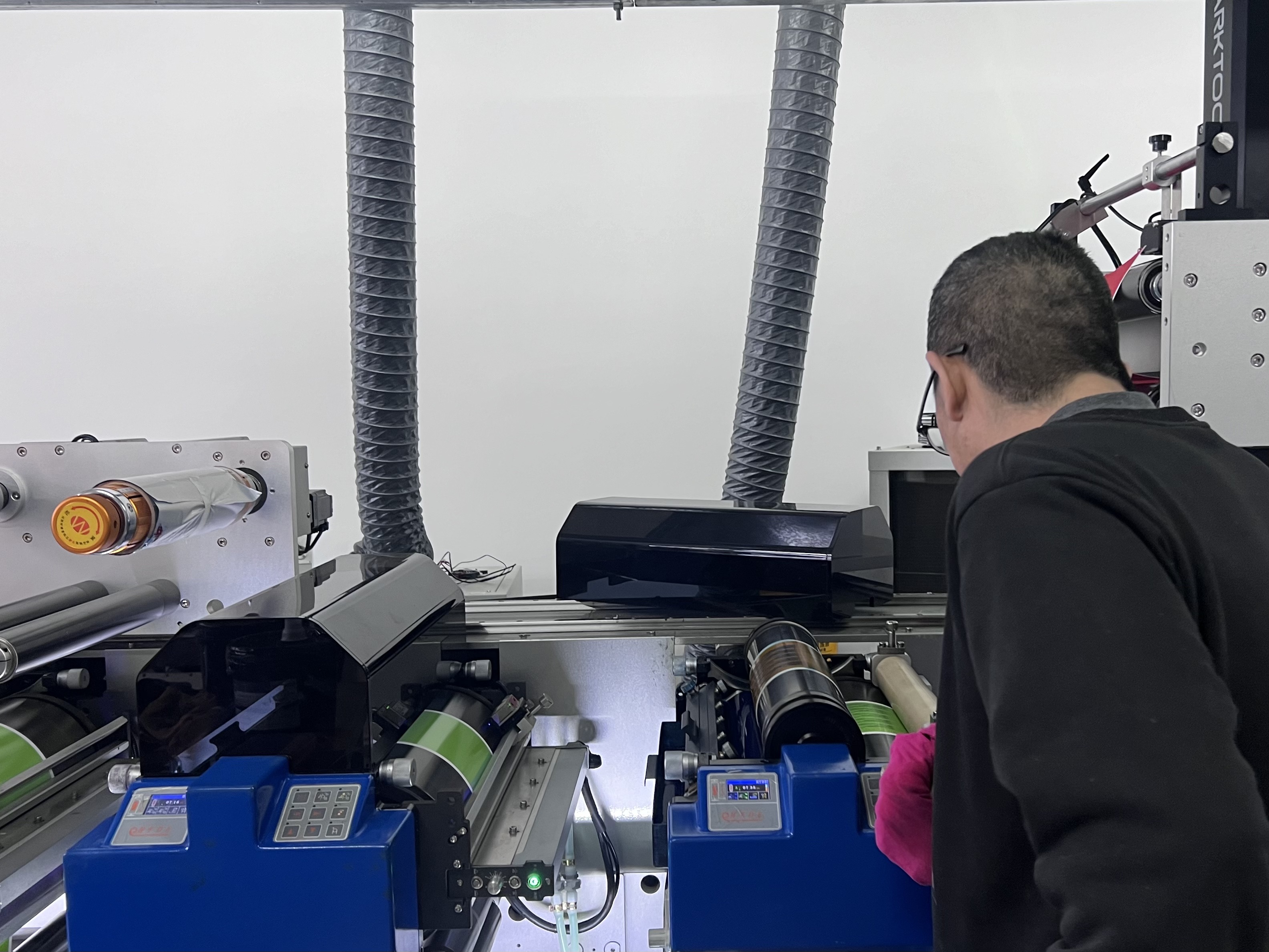
Figure 2 — Flexographic printing workshop. Long-run pre-printed base designs and short-run variable data require different presses, which is why a portfolio spanning both is a useful capability signal.
- Direct thermal (inkless). Used on the medical thermal wristband. No ink or ribbon is consumed; the image is formed by the substrate's thermal coating. This constrains the supplier to substrates that are genuinely compatible with direct thermal printing.
- Flexographic printing. Suited to long runs of a fixed design with consistent colour, typically used for pre-printed band bases and brand or hospital-system artwork.
- Digital printing. Suited to short runs, custom graphics and variable content — the practical route for a hospital that needs its own layout, colour coding or department scheme without paying for plates.
- Holographic anti-counterfeiting printing. Used on the holographic wristband, combining film lamination with registration control — a different competence from flat colour printing.
The combination matters more than any single method. A hospital usually needs two things at once: a pre-printed base design produced at volume, and variable patient data applied at admission on a standard direct thermal printer. A supplier that only prints cannot support the second step; a supplier that only converts cannot support the first. The DDJOY range documents both, and additionally documents label-specific processes — offset printing, digital printing and hot stamping on custom labels.
Reading the Size Range as a Manufacturing Signal
Size ranges are where many wristband catalogues quietly fall apart, because every distinct length, width and closure type requires its own die or plate. A catalogue that lists many sizes but produces few is usually buying from a third party. The cited sizes across the DDJOY range are set out below.
| Product | Material | Cited sizes | Typical setting |
|---|---|---|---|
| medical thermal wristband | Thermal-sensitive synthetic paper | 260×25 mm standard; custom sizes supported | Hospitals, medical clinics, healthcare institutions, patient management |
| PVC Patient ID Wristband | PVC | 250×25 mm / 250×16 mm | Hospitals, elderly care institutions |
| PVC 1 or 2-layer Wristband | PVC | 250×25 mm / 250×16 mm | Hospitals, events, enterprises, entertainment venues |
| PVC+Tab Wristband | PVC | 260×40 mm | Hospitals, events, concerts, nightclubs |
| Tyvek Wristband | Tyvek | 250×19 mm / 250×25 mm | Hospitals, exhibitions, events, ticketing |
| RFID wristband | Silicone, PVC, Tyvek, paper | 250×25 mm / 250×16 mm and multiple specifications | Medical, member management, access control, logistics |
| Holographic Wristband | PVC/paper with holographic film | 250×25 mm / 250×16 mm | Concerts, exhibitions, access control, anti-counterfeiting |
| Cartoon Wristband | Paper / Tyvek | 200×20 mm | Children's activities, theme parks, kindergartens |
| Polyester Wristband | Polyester webbing | 350×15 mm, length customizable | Sports events, enterprise promotion, employee badges |
| Ribbon Wristband | Ribbon / polyester webbing | 350×15 mm | Weddings, fashion accessories, events |
| Polyester Lanyard | Polyester | 900×15 / 20 / 25 mm | Exhibitions, enterprises, schools, ID badge lanyards |
| Custom Label | Paper, PVC, self-adhesive, synthetic paper | Any customizable size | All industries |
Read as evidence, this table says three things. First, the medical-relevant widths cluster between 16 mm and 40 mm, which is the practical band-width band for adult patient identification. Second, the lengths at 250 mm for wristbands and 900 mm for lanyards reflect two different tooling sets rather than one. Third, the lengths and widths are not identical across products — 250×19 mm for Tyvek, 260×40 mm for PVC+Tab, 260×25 mm for thermal — which indicates separate dies rather than a single cut reused everywhere. For a hospital buyer, the honest interpretation is that custom sizing is a real capability only where the supplier can point to existing non-standard tooling, not merely promise it.
Matching Portfolio Evidence to Care Settings
Once the evidence is on the table, the mapping question becomes practical: which cited construction fits which hospital workflow? The following is a comparison of documented product characteristics against typical ward requirements, not a clinical recommendation.
- Emergency and admission areas. High volume, fast application and short dwell times favour disposable constructions: the Tyvek wristband (250×19 mm and 250×25 mm, disposable, tear-resistant, waterproof, clear printing) and the medical thermal wristband, where patient information is printed directly onto the band at the point of admission.
- ICU and longer-stay wards. Repeated handling, moisture and repositioning place more demand on the band itself, which is where PVC constructions sit: the PVC Patient ID wristband is specified as durable, comfortable for long-term wear and printable with patient information, and the PVC 1 or 2-layer wristband gives a deliberate choice between single-layer and heavier double-layer builds.
- Elderly care institutions. Comfort over weeks matters more than single-shift convenience, and the PVC Patient ID wristband is the item in this range explicitly associated with elderly care patient identification, in 250×25 mm and 250×16 mm.
- Isolation and infection-control wards. Disposable, waterproof and tear-resistant characteristics matter most, which points to the Tyvek and thermal constructions rather than reusable fabric-style bands.
- Access-controlled or higher-security areas. The RFID wristband supports contactless identification with low-, high- or ultra-high-frequency chips and readable/writable data, and the holographic wristband provides tamper-evident one-time lock closure — though both bring system dependencies discussed below.
One honest gap is worth stating. The keyword space around medical wristbands includes neonatal and baby identification, and smaller bands are commonly requested for those settings. Within the cited range here, the narrowest medical widths are 16 mm and 19 mm. A dedicated neonatal construction is not documented in the provided product data, so a buyer with that requirement should treat it as a custom development question rather than an off-the-shelf item.
Direct Thermal Wristbands Versus Traditional Patient-Band Practice
Most hospitals have operated with some combination of handwritten paper bands, adhesive labels printed on a thermal-transfer (ribbon) printer, and pre-printed bands completed by hand. Comparing these approaches against an engineered direct thermal wristband clarifies where the gain actually comes from — and where it does not.
| Approach | Consumables | Data legibility | Durability profile | Where it still fits |
|---|---|---|---|---|
| Handwritten paper band | Band only | Depends on handwriting; degrades with moisture | Low | Very short episodes, contingency stock |
| Adhesive label with thermal-transfer (ribbon) printing | Label + ribbon | High, with a permanent ribbon image | Moderate; adhesion varies with skin and moisture | Labelling workflows already built on ribbon printers |
| Pre-printed PVC band completed by hand | Band only, plus pen | Depends on handwriting | Durable band, variable text | Low-volume or backup identification |
| Direct thermal medical wristband | Band only — no ink or ribbon | Machine-printed, consistent character quality | Water-resistant and tear-resistant band | Admission and ward workflows with thermal printers |
The genuine advantages of the direct thermal route are consumable reduction, machine-consistent data, and fewer handling steps between admission and application. The genuine limitation is also straightforward, and buyers should not have to discover it after a pilot: direct thermal images are widely understood in the labelling industry to be more sensitive to heat, abrasion, plasticisers and certain solvents than ribbon-printed or laminated images. Inkless printing removes the ribbon, but it also removes the protective layer a ribbon image leaves behind. For a band that is expected to survive a two-week stay with frequent cleaning, that difference is a real design constraint, and it is one reason a supplier's PVC and PVC double-layer options exist alongside the thermal product rather than instead of it.
A second limitation sits in the material ladder itself. Single-layer PVC is lighter and more economical; double-layer PVC is more resistant to repeated handling. Choosing the heavier construction everywhere is not automatically correct, because it adds material cost and bulk to bands that will be removed within a shift. The right answer depends on dwell time, not on which product is described most favourably.
Where This Portfolio Reaches Its Limits
Capability evidence is only useful if its boundaries are stated as clearly as its strengths. On the documented material, five limits are worth noting.
- Tooling-bound sizing. The cited sizes cluster around a limited set of widths (15, 16, 19, 20, 25 and 40 mm) and lengths (200, 250, 260, 350 and 900 mm). Requirements outside that envelope are custom-development questions, not catalogue selections.
- Thermal print durability. As above, an inkless image is more exposed to heat, abrasion and solvents than a ribbon-printed or laminated image.
- RFID system dependency. An RFID wristband with low-, high- or ultra-high-frequency chip options and readable/writable data only delivers value if the hospital has readers, encoding workflows and data handling in place. The band itself is a component, not a solution.
- Single-layer versus double-layer trade-offs. More durability comes with more material, which buyers should price against actual dwell time rather than assume.
- Claim verification beyond the documented range. Categories such as antimicrobial wristbands and dedicated neonatal bands are not documented within this product range. Where a hospital requires them, the correct approach is to request substrate-level and test-level evidence rather than accept a label on a catalogue page.
Market and Regulatory Signals Raising the Evidence Bar
Portfolio evidence is becoming more, not less, important, because the definition of what a wristband is — and who is responsible for it — has shifted.
On market scale, Future Market Insights projects the global patient identification wristbands market to reach USD 576.1 million in 2025, while Precedence Research attributes a 41% share of that market to North America in 2025. The two houses do not agree on total value: Precedence Research estimates a materially higher 2025 figure (USD 1.61 billion), and the difference appears to stem from product definition — blank identification accessories versus printed, system-integrated products. That conflict is itself a useful lesson for buyers: market-size headlines are only meaningful once the scope behind the number is stated, and they should not drive a hospital's budget line.
On classification, the Court of Justice of the European Union ruled in Case C-427/24 that blank patient wristbands are not classified as medical devices under EU MDR 2017/745, with an effective date recorded at 2 July 2026. The practical effect is that intended purpose becomes the dividing line: a blank band supplied without a medical intended purpose falls outside the medical device framework, while a band supplied for a clinical identification purpose is assessed on the claims attached to it. For buyers, this makes the written specification more important, not less — the intended purpose stated in the tender is what determines the compliance route.
On labelling, ISO 15223-1:2021 Amendment 1 (2025) introduces changes to the authorised representative symbol, transitioning from EC REP to EU-REP. Hospitals that accept pre-printed artwork, cartons or labels on wristband products should expect this symbol change to appear in supplier documentation, and should treat willingness to update artwork as a small but informative marker of regulatory attention.
On supplier concentration, PDC Healthcare (a Brady Corporation brand) holds a projected 14–18% share of the patient identification wristbands market, and Zebra Technologies reported net sales of USD 346 million for its Asset Intelligence & Tracking segment in Q4 2023 — a segment that includes wristbands but is not limited to them. Concentration at the top of the market makes the difference between large-format vendors and specialist manufacturers clearer, and it makes portfolio evidence the main discriminator available to buyers comparing outside the largest few names.
Future Outlook
Three directions look likely to shape how hospital buyers evaluate wristband suppliers over the next procurement cycles.
First, data capture is moving onto the band itself. The range already shows this in the form of readable/writable RFID chips across low, high and ultra-high frequency, and printable patient information areas on thermal, PVC and Tyvek constructions. Where wristbands were once passive labels, they are increasingly the physical endpoint of an identification record.
Second, regulatory clarity is likely to push documentation requirements down the supply chain. If intended purpose determines classification under EU MDR, then material declarations, print method descriptions and labelling symbol versions become part of the commercial conversation rather than an afterthought in the quality file.
Third, customisation is shifting from artwork to construction. Requests for non-standard widths, single- versus double-layer builds, and unusual closure designs are really questions about tooling depth — and that is a capability that shows up in a size range long before it shows up in a quotation.
FAQ
What product evidence should a hospital buyer request when shortlisting a medical wristband supplier?
Ask for the substrate of each offering, the printing method used, the construction type (for example, single- versus double-layer PVC), and the cited size range for each item. A documented range that includes thermal-sensitive synthetic paper, PVC, Tyvek and RFID inlays, with sizes such as 250×19 mm, 250×25 mm, 250×16 mm, 260×40 mm and 260×25 mm, gives the buyer something concrete to verify against samples and production runs.
How does direct thermal printing work on a medical wristband, and why does the substrate matter more than the printer?
The DDJOY medical thermal wristband is made of thermal-sensitive synthetic paper and uses direct thermal printing, which requires no ink. The image is formed in the substrate's thermal coating, so contrast quality, water resistance and tear resistance all depend on the material rather than on a ribbon. Because there is no ribbon to compensate for an uneven coating, a consistent direct thermal band is stronger evidence of substrate handling capability than a band printed through a ribbon layer.
How do the material options in the range differ in practice?
PVC constructions are oriented towards durability and longer wear: the PVC Patient ID wristband is specified with printable patient information, durable construction and comfort for long-term wear in hospitals and elderly care institutions, available in a single- or double-layer structure at 250×25 mm and 250×16 mm. Tyvek wristbands at 250×19 mm and 250×25 mm are disposable, tear-resistant and waterproof, suited to hospitals, exhibitions, events and ticketing. RFID wristbands add a readable and writable chip in low, high or ultra-high frequency, in silicone, PVC, Tyvek or paper.
Does the size range of a supplier tell a buyer anything about customisation capability?
It does, provided the sizes are read as tooling evidence. Distinct dimensions — 250×19 mm for Tyvek, 260×40 mm for the PVC+Tab wristband, 260×25 mm for the thermal band, 350×15 mm for polyester and ribbon, and 900×15/20/25 mm for the polyester lanyard — indicate separate dies rather than one cut reused across the catalogue. Since the medical thermal wristband is documented as supporting custom sizes, a buyer can reasonably ask which non-standard sizes already exist as tooling, as opposed to being quoted as a development project.
Under EU rules, is a patient wristband a medical device?
According to the Court of Justice of the European Union ruling in Case C-427/24, blank patient wristbands are not classified as medical devices under EU MDR 2017/745, with an effective date recorded at 2 July 2026. Classification therefore turns on intended purpose: a band supplied without a medical intended purpose falls outside the medical device framework, while a band supplied for clinical patient identification is treated according to the claims made for it. Buyers should state the intended purpose explicitly in the specification so that the compliance route is unambiguous on both sides.
Read together, the materials, printing methods, constructions and sizes in a wristband range form a verifiable picture of what a supplier actually makes. For hospital buyers in the awareness and research stages, that picture is more useful than any capability statement, because it can be tested item by item before an order is placed.
A downloadable overview of the wristband and RFID range, including the medical thermal, PVC, Tyvek and RFID constructions discussed here, is available in the Shanghai Dingba product brochure (PDF). Product information for the manufacturer, Shanghai Dingba Identification Co., Ltd., is published at ddlf.com.
Have Questions or Need More Details?
Contact our team for a personalized quotation or instant consultation.
Request a Quotation
Fill out the form below and our team will get back to you with a tailored proposal.
WhatsApp Direct Chat
Prefer to chat in real-time? Message us on WhatsApp for instant assistance & quick answers.
- Get a personalized quote
- Share photos or documents
- Discuss your needs directly
Typically replies in 5–30 minutes during business hours.