
Medical Wristbands by Care Setting: Intake, Elderly, Clinic
Medical Wristbands by Care Setting: Intake, Elderly, Clinic
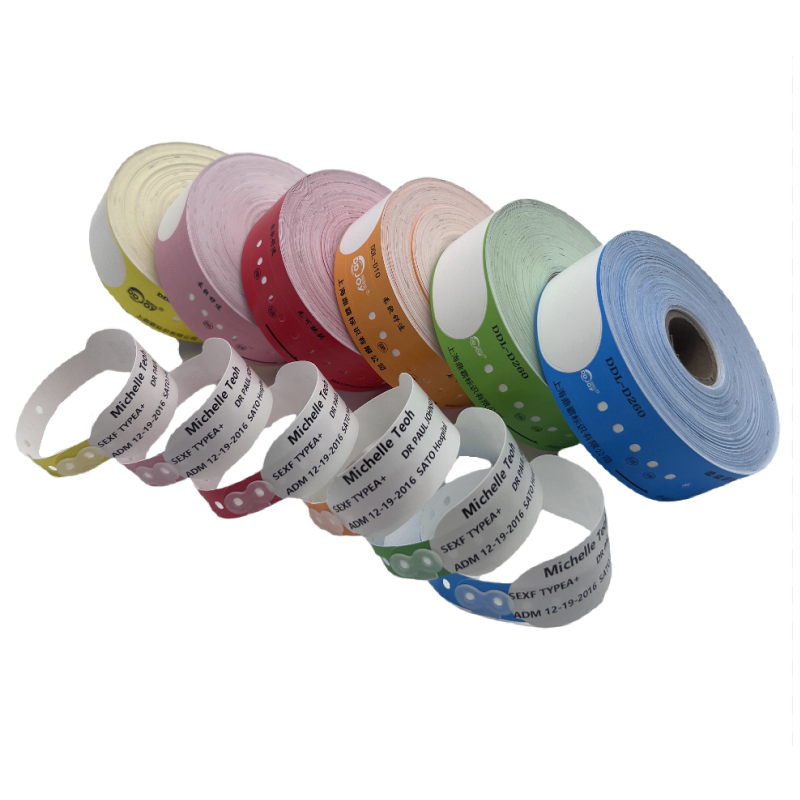
The care setting should decide the medical wristband format before a buyer compares materials. A hospital admission desk usually needs on-demand patient information printing and a clear link to the admitting record. An elderly care institution usually needs durable, waterproof identification that stays comfortable during longer wear. A clinic usually needs a simple stock format that matches its printer, its single-use policy and its patient flow. DDJOY-Medical Wristbands covers these settings through several documented formats: a disposable thermal-sensitive synthetic paper wristband for direct thermal printing without ink, a PVC patient ID wristband for durable and waterproof identification, a PVC+Tab format with a tab buckle, a Tyvek option described for single-use medical environments, and an RFID wristband available for customization. The right choice is not the most complex format; it is the format whose printing, durability and closure match the care setting.
Why the care setting comes before the material
Material labels answer only part of a procurement question. The operational question is where the wristband will be worn, how the patient information will be applied, how long the band must remain readable, and what kind of closure the workflow can support. Those answers change between hospital intake, elderly care and clinic use.
In a hospital intake area, the band is often part of the admission or patient identification step. The supplied medical content describes custom patient identification projects in hospitals and clinics, with the product worn on the patient and used for patient identification and ward information management. That makes print method and information clarity central. In elderly care, the supplied PVC patient ID wristband is described as durable, waterproof and comfortable for long-term wear, which maps to a different replacement and comfort logic. In a clinic, the buyer may value a compact range and simple staff routine more than a long-stay durability profile.
A second decision is closure. The PVC+Tab wristband is documented with a tab buckle design and a firm fit. Other formats in the supplied material do not carry a closure specification in the medical content units. That gap matters: a buyer should not read 'tab' as tamper-evident, and should not read a generic wristband as secure for restricted access unless the specific construction has been verified.
Hospital intake: on-demand printing and a clear patient record
Hospital wristbands used at intake need to carry patient information that staff can read and check against the record. The medical thermal wristband in the DDJOY range is made from thermal-sensitive synthetic paper and is designed for direct thermal printing. The supplied product description states that no ink is required for thermal printing, that the format is water-resistant and tear-resistant, and that it is disposable and skin-safe for patient use. The documented size is 260×25 mm, customizable, and the product is intended for hospitals, medical clinics, healthcare institutions and patient management.
For a hospital admission workflow, that combination is relevant because the band can be printed through a direct thermal printer rather than through an ink-based process. The supplied application data names a direct thermal printer as supporting equipment. This is a real operational dependency: the hospital should confirm printer availability, media compatibility and staff routine before standardizing on the thermal format. The article does not claim a printing speed, a cost saving or a clinical outcome that is not in the supplied data.
The PVC Patient ID Wristband serves a different intake need. It is documented in 250×25 mm and 250×16 mm sizes, made of PVC, and described as printable with patient information, durable, waterproof and comfortable for long-term wear. For a hospital that wants a PVC identification band with clear patient information printing and reliable use in patient identification, the PVC format is the documented fit. The supplied data does not state the print method for the PVC patient ID wristband, so a hospital should confirm whether its existing printing process is compatible before it treats PVC and thermal as interchangeable.
PVC+Tab adds a closure variable. The 260×40 mm PVC+Tab wristband is documented with a tab buckle design, a firm fit and printable patterns, and it is listed for hospitals as well as events, concerts and nightclubs. In hospital-adjacent secure use, the tab buckle is the relevant documented feature because it gives the buyer a closure option to evaluate. It is not described as tamper-evident in the supplied material. A procurement team that needs tamper evidence should verify the specific product construction rather than infer it from the tab design.
Emergency wristbands and isolation ward wristbands can sit close to hospital intake, but the supplied medical content units do not provide separate emergency or isolation product specifications. A buyer can still use the same decision logic: single-use handling, print method, readability and closure must be checked against the actual ward protocol. The absence of a separate specification is a fit boundary, not evidence that a format is unsuitable.
Elderly care: durable, waterproof and comfortable identification
Elderly care institutions place more weight on wear duration, skin comfort and resistance to water than on a high-turnaround admission print step. The supplied PVC Patient ID Wristband is explicitly listed for hospitals and elderly care institutions and is described as durable, waterproof and comfortable for long-term wear. Its printable patient information and clear printing are directly relevant to resident identification checks, medication rounds and internal record matching.
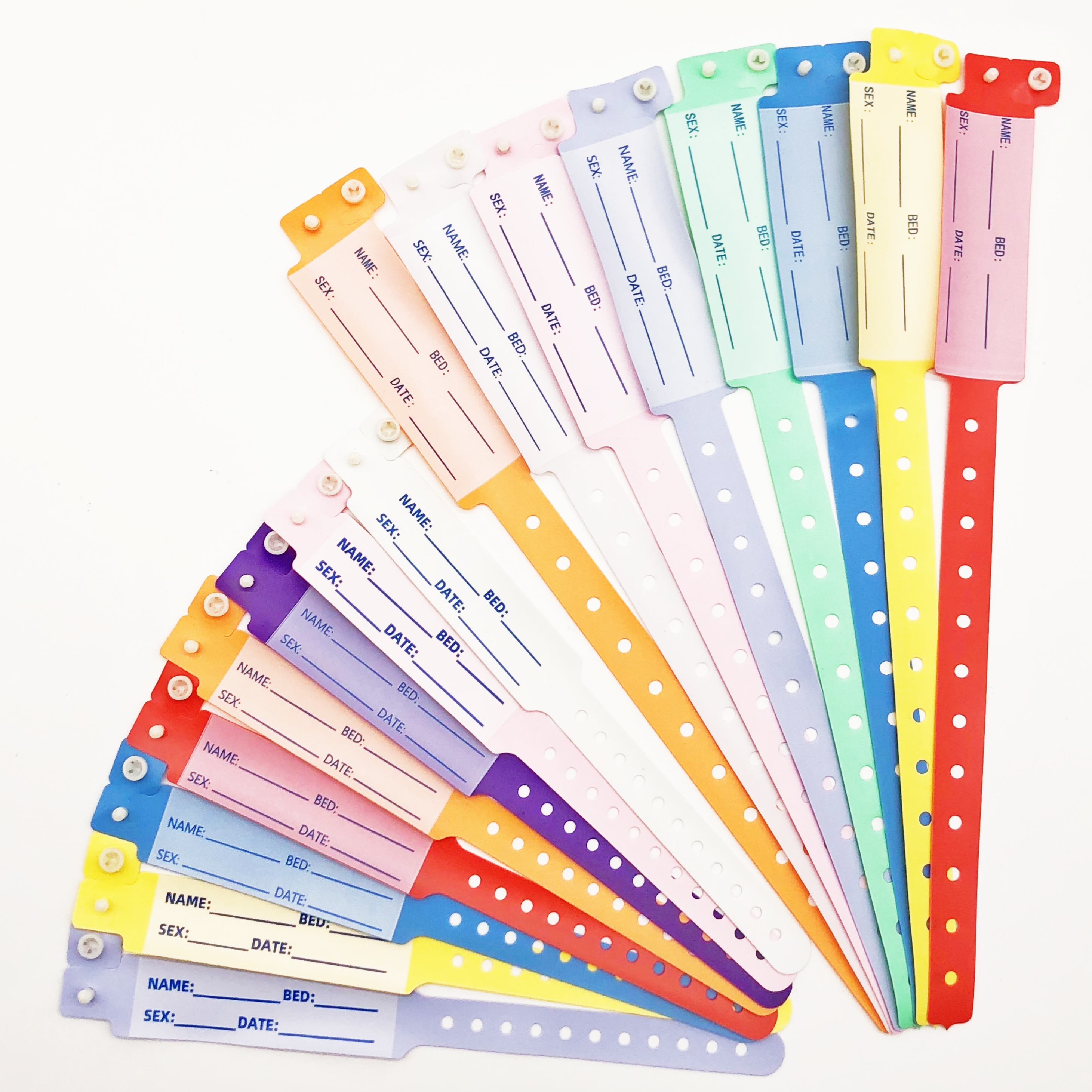
This does not mean every elderly care resident should wear PVC. The thermal wristband is disposable and single-use, and it can be appropriate where the care setting prefers a disposable band and has a direct thermal printer. The boundary is the replacement model: a disposable thermal band and a durable PVC band answer different wear-cycle questions. The buyer should decide whether the institution is buying a single-use admission band, a longer-wear identification band, or both for different points in the care pathway.
Comfort is another documented differentiator. The PVC patient ID wristband is described as comfortable for long-term wear, while the thermal format is described as skin-safe and disposable. Both statements matter for elderly care, but they are not the same claim. Skin-safe describes suitability for direct skin contact in the supplied medical content; comfortable long-term wear describes the PVC product's intended use. A care home should still verify fit, edge finish and closure comfort with the actual product sample before ward-wide adoption.
PVC+Tab may be relevant where a firmer tab closure is preferred. Its tab buckle design and firm fit are documented, and the product is listed for hospital use. However, the supplied material does not describe it as a dedicated elderly care patient ID format, and it does not state a tamper-evident property. The practical fit is therefore conditional: use it when the documented tab closure matches the resident's needs and when the care team has verified the band's fit and identification printing.
Clinic use: match the printer, the stock and the visit type
Clinic wristbands cover a wide operational range, from outpatient identification to diagnostic and surgical patient checks. The supplied content does not separate every clinic subtype, but it does give a clear starting point: the medical thermal wristband is intended for hospitals, medical clinics, healthcare institutions and patient management, and it requires a direct thermal printer. A clinic that already uses direct thermal printing can evaluate the thermal band without an ink-based printing step. A clinic that does not have that printer should not assume the format will drop into its current workflow.
For clinic use, the PVC Patient ID Wristband offers a durable and waterproof option with printable patient information. The same limitation applies as in hospital intake: the supplied data does not specify the PVC printing method. A clinic should confirm the print process, the label or band format, and the staff routine before switching from a thermal band to PVC. This is a verification point, not a defect in either format.
The Tyvek option is also relevant to single-use clinic settings. The supplied product range lists a Tyvek wristband (product 8996), and the related medical application text describes product 8996 as disposable, tear-resistant and water-resistant for single-use medical environments in hospitals and clinics. That description aligns with a clinic that wants a single-use band rather than a long-wear PVC identification product. The supplied medical content does not state a closure type or a printing method for the Tyvek format, so a clinic should confirm both before ordering.
Outpatient wristbands, diagnostic wristbands and surgical patient wristbands may all pass through a clinic, but the article does not claim that one format fits every clinic protocol. The safer procurement approach is to map the clinic's actual steps: who prints the band, where the printer sits, whether the band is removed at discharge, whether water or tearing is a realistic exposure, and whether the clinic needs a tab closure or a simple adhesive or strap format. Those answers narrow the range more reliably than a generic material preference.
Comparison: thermal, PVC, PVC+Tab, Tyvek and RFID
The table below compares only the characteristics documented in the supplied product and application content. It is not a ranking, and it does not convert a documented feature into a certification or a guaranteed clinical outcome.
| Format | Documented facts | Printing | Durability and water | Closure | Setting fit | Boundary |
|---|---|---|---|---|---|---|
| Medical thermal wristband | Thermal-sensitive synthetic paper; 260×25 mm, customizable; disposable; skin-safe | Direct thermal printing, no ink required; direct thermal printer needed | Water-resistant; tear-resistant | Not specified in medical content | Hospitals, clinics, healthcare patient management | Needs direct thermal printer; disposable wear cycle |
| PVC Patient ID Wristband | PVC; 250×25 mm and 250×16 mm; printable patient information | Printable; print method not specified | Durable; waterproof; comfortable long-term wear | Not specified in medical content | Hospitals and elderly care institutions | Confirm print method and closure for the order |
| PVC+Tab Wristband | PVC; 260×40 mm; tab buckle; firm fit; pattern printable | Pattern printable; medical print method not specified | Durable PVC documented; water not stated in supplied data | Tab buckle | Hospitals; events, concerts and nightclubs | Not described as tamper-evident; verify security need |
| Tyvek Wristband (product 8996) | Listed as Tyvek; disposable; tear-resistant; water-resistant | Not specified in medical content | Tear-resistant; water-resistant; single-use | Not specified in medical content | Hospitals and clinics; single-use medical environments | Confirm closure and printing before order |
| RFID Wristband (product 8995) | Multiple materials available for customization | Not specified in medical content | Not specified in medical content | Not specified in medical content | Electronic identification track; medical patient-ID configuration not supplied | Separate workflow review required; not documented as printed patient ID |
Read the table by setting. Hospital intake often starts with the thermal format because direct thermal printing without ink is documented and the product is designed for patient information. Elderly care often starts with PVC because durable, waterproof and long-term comfort are documented. Clinic use can start with thermal, PVC or Tyvek depending on printer availability, single-use policy and wear duration. PVC+Tab enters when a tab buckle and firm fit are required. RFID is a separate electronic-identification track in the supplied range; the medical content units do not describe an RFID patient-ID configuration, so a hospital should not treat RFID as a drop-in replacement for a printed identification band without a separate workflow and product review.
Technical explanation: how printing and material behavior change the choice
Direct thermal printing is a material-and-printer system. The supplied medical thermal wristband uses thermal-sensitive synthetic paper and is designed for direct thermal printing, with no ink required. That means the consumable and the printer have to match. A hospital or clinic that already uses a direct thermal printer can evaluate the format on its existing equipment; a site without that printer should treat the printer dependency as part of the total implementation, not as an accessory.
PVC behaves differently as an identification material in the supplied data. The PVC Patient ID Wristband is described as printable, durable, waterproof and comfortable for long-term wear. Those are product-level statements, not a statement that every PVC wristband uses the same printing method. The buyer should ask for the exact print method, the expected handling conditions and the closure specification for the ordered SKU. This is especially important when a hospital wants to standardize one band across admission, wards and elderly care.
Tyvek enters the comparison as a single-use option. The related medical application text describes product 8996 as disposable, tear-resistant and water-resistant for single-use medical environments. The product name in the range is Tyvek Wristband, but the supplied medical content does not give a printing method or closure. A clinic or hospital should therefore confirm both before treating the Tyvek format as a direct substitute for a thermal or PVC patient ID band.
RFID is not a printing variant of the same decision. The supplied range lists an RFID wristband with multiple materials available for customization, but the medical content units do not describe its patient-ID configuration, printing, durability or closure. For a hospital-adjacent secure access scenario, RFID could be evaluated as an electronic identification layer only after the hospital has verified the reader infrastructure, data workflow and privacy controls. The article does not claim that the RFID product is certified for a clinical use or that it replaces a printed wristband.
Procurement checks that apply across all three settings
- Define the setting and wear cycle. Separate hospital admission, elderly care long-stay identification and clinic single-visit use. The same wristband material can have a different fit in each setting.
- Match the print method. For the medical thermal wristband, confirm a direct thermal printer. For PVC patient ID, confirm the print process because the supplied data does not name it. For Tyvek, confirm printing and closure before order.
- Check water and tear exposure. The thermal format is documented as water-resistant and tear-resistant; the PVC patient ID is documented as waterproof and durable; the Tyvek option is documented as water-resistant and tear-resistant for single-use medical environments. Match the claim to the actual care routine.
- Do not infer security from a closure name. PVC+Tab has a documented tab buckle and firm fit, but it is not described as tamper-evident. If the hospital-adjacent use requires tamper evidence, verify the specific construction.
- Separate blank and printed intended purpose. In the EU, the Court of Justice ruled on 2 July 2026 in Case C-427/24 that blank patient wristbands are not classified as medical devices under EU MDR 2017/745, according to a Heuking analysis. The ruling concerns blank wristbands; a buyer should define the intended purpose of the printed or software-linked identification product with its regulatory advisor.
- Check label symbols. ISO 15223-1:2021 Amendment 1 (2025) changes the authorized representative symbol from EC REP to EU-REP, according to a 2026 Global MedTech guide. If the wristband or packaging uses medical symbols, verify the current symbol set.
- Confirm commercial terms. The supplier capability data lists OEM support, a MOQ of 1000 units and a lead time of 7-10 days. Those are planning inputs, not a promise for every configuration.
How DDJOY-Medical Wristbands maps to the three care settings
DDJOY-Medical Wristbands is the medical wristband range associated with Shanghai Dingba Identification Co., Ltd., a Shanghai-based company whose profile describes R&D, production and sales of wristbands and RFID products, including software and hardware development capability. The company profile states that it was founded in 2010, operates a 10,000 m² factory, has 50+ employees and a 5-engineer R&D team, exports about 70% of its output to the EU and USA, and holds ISO9001 certification plus Alibaba and SGS on-site verification. These company facts describe the supplier; they are not a certification of every wristband SKU or of a clinical outcome.
For hospital intake, the range offers the medical thermal wristband for direct thermal printing without ink and the PVC Patient ID Wristband for durable, waterproof patient information. For elderly care, the PVC Patient ID Wristband is the direct fit because it is documented for elderly care institutions and long-term comfort. For clinic use, the thermal band, PVC patient ID band and Tyvek single-use option create a documented choice set, while the PVC+Tab format adds a tab buckle for buyers who need that closure. The RFID wristband remains available for customization, but the supplied medical content does not position it as a printed patient-ID substitute.
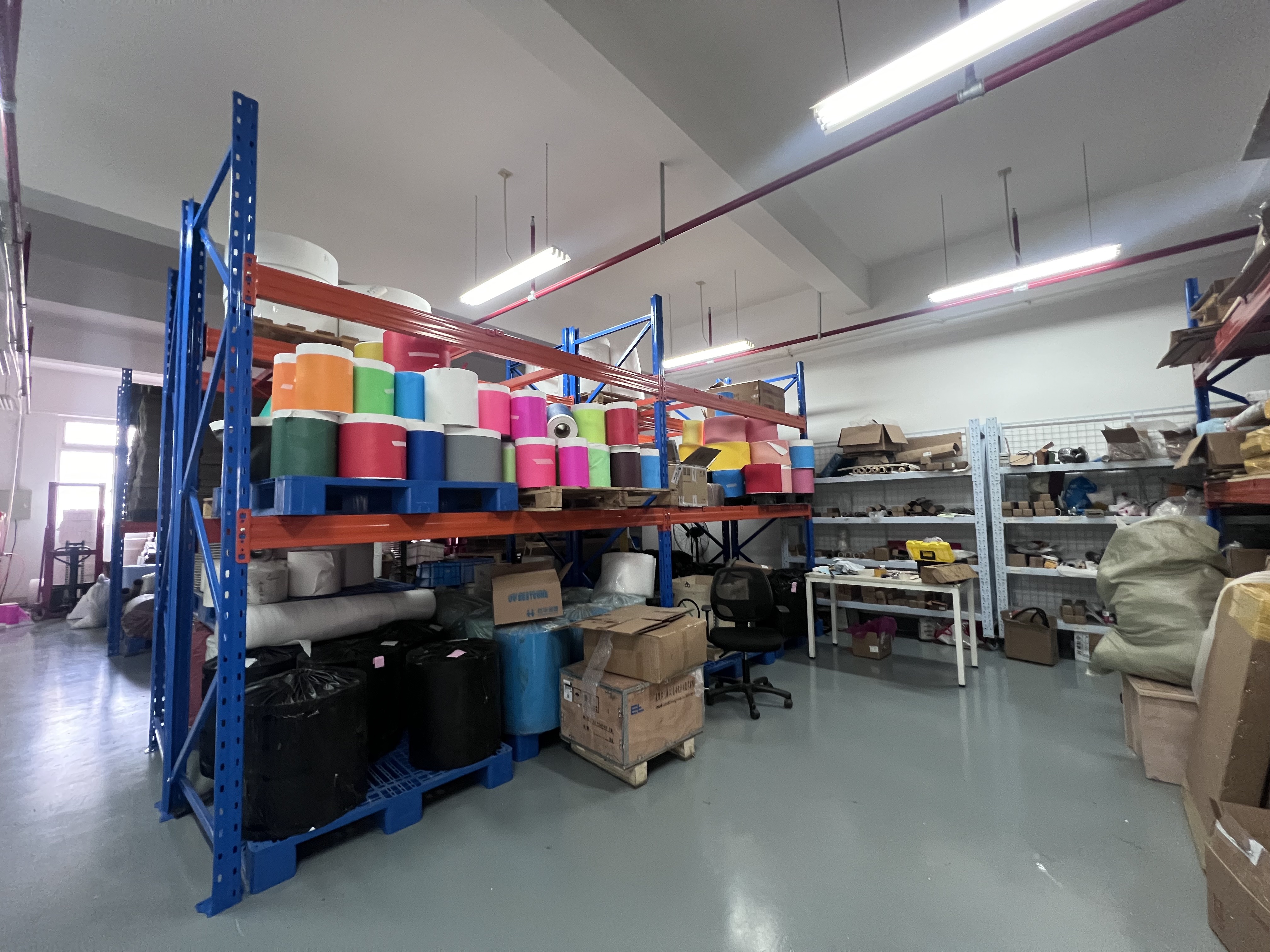
Buyers who need the exact product list, sizes and company details can refer to the official website: Shanghai Dingba Identification Co., Ltd.. The company brochure is also publicly available for range reference at the end of this article.
Market and regulatory context without overreading the numbers
Commercial market estimates for patient identification wristbands are not interchangeable. Future Market Insights projected the global patient identification wristbands market at USD 576.1 million in 2025, while Precedence Research reported a different 2025 estimate of USD 1.61 billion in the supplied comparison data. The difference is associated with scope and methodology differences, including whether the definition focuses on patient ID wristbands or a broader identification accessory category. A hospital buyer should not use either figure as a local price or demand forecast; the useful point is that market definitions vary, so supplier comparisons should use the same product scope.
Regional concentration is also a context signal rather than a procurement rule. The supplied data reports that North America held a 41% share of the market in 2025, based on Precedence Research. That does not tell an individual hospital which wristband to buy. It does suggest that buyers in different regions may see different product availability, documentation expectations and supplier support models. The care-setting decision remains local: printer, ward protocol, wear duration and closure requirement come first.
The regulatory layer is more directly relevant. The CJEU ruling on blank patient wristbands under EU MDR 2017/745 clarifies a classification question for blank products; it does not remove the need to define intended purpose for a printed, barcoded or RFID-linked identification product. The ISO 15223-1 symbol amendment is a reminder that label artwork and packaging symbols need version control. These are compliance checks, not marketing claims, and they should be confirmed with the buyer's regulatory team.
FAQ: medical wristbands by care setting
Which medical wristband format fits hospital admission intake?
For hospital admission intake, the medical thermal wristband is a documented fit when the site has a direct thermal printer. It uses thermal-sensitive synthetic paper, requires no ink for direct thermal printing, and is described as water-resistant, tear-resistant, disposable and skin-safe for patient use. The PVC Patient ID Wristband is an alternative when durable, waterproof and long-term comfortable identification is preferred, but the buyer should confirm the PVC print method because the supplied data does not name it.
Are disposable thermal wristbands suitable for elderly care?
They can be suitable where the elderly care setting wants a disposable, single-use band and has a direct thermal printer. The thermal format is documented as disposable, water-resistant, tear-resistant and skin-safe. For longer-wear resident identification, the PVC Patient ID Wristband is the more direct documented fit because it is described as durable, waterproof and comfortable for long-term wear and is listed for elderly care institutions.
What should a clinic check before choosing printable wristbands?
A clinic should first confirm its printing equipment. The medical thermal wristband requires a direct thermal printer. For the PVC Patient ID Wristband, the supplied data says it is printable but does not state the print method, so the clinic should verify the process before ordering. The clinic should also confirm whether it needs a single-use band, a durable band, or both, and whether a tab buckle or another closure is required.
How do PVC, PVC+Tab, Tyvek and RFID options differ for patient identification?
The PVC Patient ID Wristband is documented as durable, waterproof, comfortable for long-term wear and suitable for hospitals and elderly care. PVC+Tab adds a documented tab buckle and firm fit, but it is not described as tamper-evident. The Tyvek option is described for single-use medical environments in hospitals and clinics, with tear-resistant and water-resistant properties. RFID is listed as a customizable format, but the supplied medical content does not provide a patient-ID configuration, printing method or clinical durability claim, so it requires a separate workflow review.
Does the EU MDR ruling mean all medical wristbands are unregulated?
No. The CJEU ruling in Case C-427/24, issued on 2 July 2026, addressed blank patient wristbands and held that they are not classified as medical devices under EU MDR 2017/745, according to a Heuking analysis. That does not automatically classify every printed, barcoded or software-linked wristband. The intended purpose and product configuration still need to be assessed with the applicable regulatory framework.
What commercial facts should a buyer verify before a hospital order?
The supplier capability data lists OEM support, a MOQ of 1000 units and a lead time of 7-10 days. Buyers should confirm those terms for the exact format, size, printing and closure, and should verify the quality-control scope for the order. These planning facts do not replace product samples, printer trials or the hospital's own acceptance checks.
Bottom line: Medical wristbands should be selected by care setting, not by a generic material preference. Hospital intake starts with print method and admission workflow; elderly care starts with durable, waterproof, comfortable long-term identification; clinic use starts with printer compatibility and single-use policy. DDJOY-Medical Wristbands offers documented formats for each path, with clear boundaries around printer dependency, closure security and RFID use.
Company brochure (PDF, public download): Shanghai Dingba Identification Co., Ltd. brochure.
Have Questions or Need More Details?
Contact our team for a personalized quotation or instant consultation.
Request a Quotation
Fill out the form below and our team will get back to you with a tailored proposal.
WhatsApp Direct Chat
Prefer to chat in real-time? Message us on WhatsApp for instant assistance & quick answers.
- Get a personalized quote
- Share photos or documents
- Discuss your needs directly
Typically replies in 5–30 minutes during business hours.