
Medical Wristbands: Certification and Specification Limits
Medical wristband procurement in 2026 is no longer a question of finding an approved band. It is a question of writing a specification that can survive an audit. On 2 July 2026, the Court of Justice of the European Union ruled in Case C-427/24 that blank patient wristbands are not classified as medical devices under EU MDR 2017/745. That ruling removed a layer of classification ambiguity, but it moved the compliance burden toward the purchasing organisation: chemical compliance, labelling symbols, print durability, closure type and data carrier must now be defined, evidenced and documented by the buyer rather than assumed from a device label.
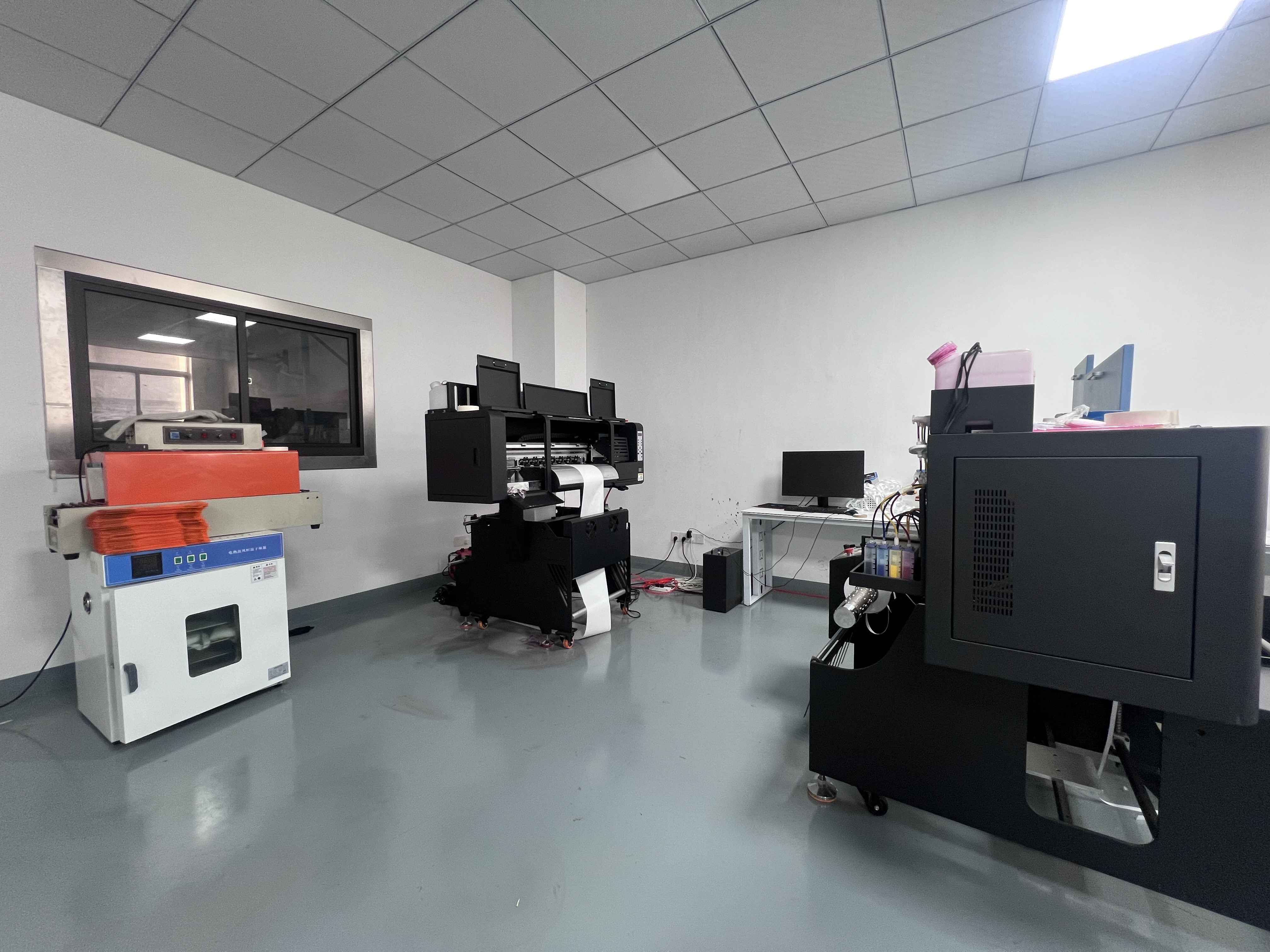
Digital printing workshop. Printable medical wristbands are a specification-driven production item: material grade, print method and closure type are locked before a single roll is printed.
Why the Buyer's Question Changed from Approval to Constraint
The patient identification wristband market is a small but structurally important segment of hospital consumables. Future Market Insights projects the global patient identification wristbands market to reach USD 576.1 million in 2025, while North America held a 41% share of that market in the same year according to Precedence Research. These are not high-value items individually, but they sit at the point where clinical workflow, patient safety procedure and IT systems intersect, which is why specification errors are expensive to correct after a tender is awarded.
The practical difficulty is that published market figures disagree with each other. Future Market Insights estimates the 2025 market at USD 576.1 million, whereas Precedence Research estimates USD 1.61 billion for the same year. The likely reason is definitional: one figure appears to count blank identification bands, the other appears to include printed, system-integrated and encoded identification products. For a buyer, the takeaway is not which number is correct but that the category has no single accepted boundary. A purchase specification has to define its own boundary explicitly, or suppliers will quote against different product definitions.
What the CJEU Ruling Actually Changes
The Court of Justice of the European Union ruled in Case C-427/24 that blank patient wristbands are not classified as medical devices under EU MDR 2017/745. The reasoning rests on intended purpose: a blank band that performs no diagnostic, therapeutic or measuring function does not, by itself, meet the definition of a medical device. The ruling became effective on 2 July 2026 and was analysed publicly by the law firm Heuking in July 2026.
Three consequences matter for buyers in the research and evaluation stage.
- Intended purpose still controls. The ruling addresses blank bands. If a supplier markets a wristband as part of a patient identification system with a stated medical purpose, or bundles it with software that generates clinical identification data, the assessment can change. Buyers should record how the supplier describes the product in writing, not how it is described verbally in a quotation.
- Chemical and labelling obligations do not disappear. Not being a medical device under MDR does not exempt a band from restricted-substance rules, general product safety expectations or hospital-level chemical policies. RoHS-style compliance evidence therefore becomes more, not less, relevant.
- Labelling standards continue to evolve. ISO 15223-1:2021 Amendment 1 (2025) changes the authorised representative symbol, transitioning from the EC REP marking to EU-REP. Buyers reviewing artwork or packaging for EU-bound products should confirm which symbol version a supplier currently applies.
What the ruling does not do is remove the hospital's own duty of care. A wristband that is outside MDR remains inside infection control policy, patient safety procedure and internal procurement standards. The regulation changed the classification; it did not change the clinical risk of a misidentified patient.
The Six-Point Constraint Stack for Medical Wristband Specifications
Most medical wristband disputes trace back to a specification that defined the product by name rather than by constraint. The following table converts the common failure points into a checklist that can be written directly into a tender or an OEM brief. Every column is limited to attributes that suppliers can document rather than assert.
| Constraint | What the buyer must specify | Typical documented range |
|---|---|---|
| Material and print method | Substrate chemistry and whether printing is direct thermal, pre-printed or encoded | Thermal-sensitive synthetic paper for direct thermal printing; Tyvek; PVC; silicone for RFID formats |
| Format and size | Band length and width, plus whether size is fixed or customisable | 260×25mm for thermal patient bands; 250×25mm and 250×16mm for PVC formats; 250×19mm and 250×25mm for Tyvek |
| Closure and tamper evidence | Whether re-application is permitted after removal | Tab buckle closure for firm wear; one-time lock closure for tamper-proof, disposable use |
| Durability requirements | Wash resistance, tear resistance, single-use versus reusable, skin contact | Water-resistant and tear-resistant bands; disposable, skin-safe designs for patient contact |
| Printer compatibility | Which printer the ward or clinic will actually use at admission | Direct thermal printers for thermal-printable patient bands |
| Data carrier | Visual only, barcode, or wireless read/write | RFID chips in low frequency, high frequency or ultra-high frequency, readable and writable |
Material and print method
A direct thermal medical wristband uses thermal-sensitive synthetic paper and requires no ink or ribbon: the print head darkens the coating to produce text and barcodes. This is the format most commonly paired with admission workflows, because the band can be printed at the point of patient registration. Pre-printed and encoded formats follow a different logic and a different cost structure, and mixing them across a single hospital without a documented rule is a common source of inconsistent ward practice.
Format, closure and durability
Closure design determines the operational use case more than any other single attribute. A tab buckle closure, as used on a 260×40mm PVC band, is designed to be firm to wear and is listed for hospital, event, concert and nightclub applications. A one-time lock closure is different: it cannot be reapplied after removal, which makes it tamper-proof and disposable. Buyers evaluating paediatric, isolation or high-turnover wards should treat closure type as a safety decision rather than a price decision, because a re-applicable band and a single-use band carry different assumptions about transfer and reuse.
Certification Evidence: Scope Matters More Than Presence
A certificate on a supplier's website proves that a document exists. It does not prove that the document covers the product being purchased. This distinction is the single most useful discipline a buyer can apply during evaluation.
DDJOY, the medical wristband line of Shanghai Dingba Identification Co., Ltd., holds an EU RoHS Certificate of Compliance issued by Dongguan True Safety Testing Co., Ltd. under certificate number TST20250302350EC. The certificate was issued on 14 March 2025 with an expiry date of 14 March 2099, and it applies to the EU market. Its stated scope is a paper wristband, specifically the Tyvek Wristband (product ID 8996), verified against RoHS 2.0 restricted-substance requirements under Directive (EU) 2015/863 and (EU) 2017/2102 amending Directive 2011/65/EU. The test methods cited are IEC 62321-1:2013, IEC 62321-2:2021, IEC 62321-3-1:2013, IEC 62321-4:2013/AMD1:2017, IEC 62321-5:2013, IEC 62321-6:2015, IEC 62321-7-1:2015, IEC 62321-7-2:2017 and IEC 62321-8:2017.
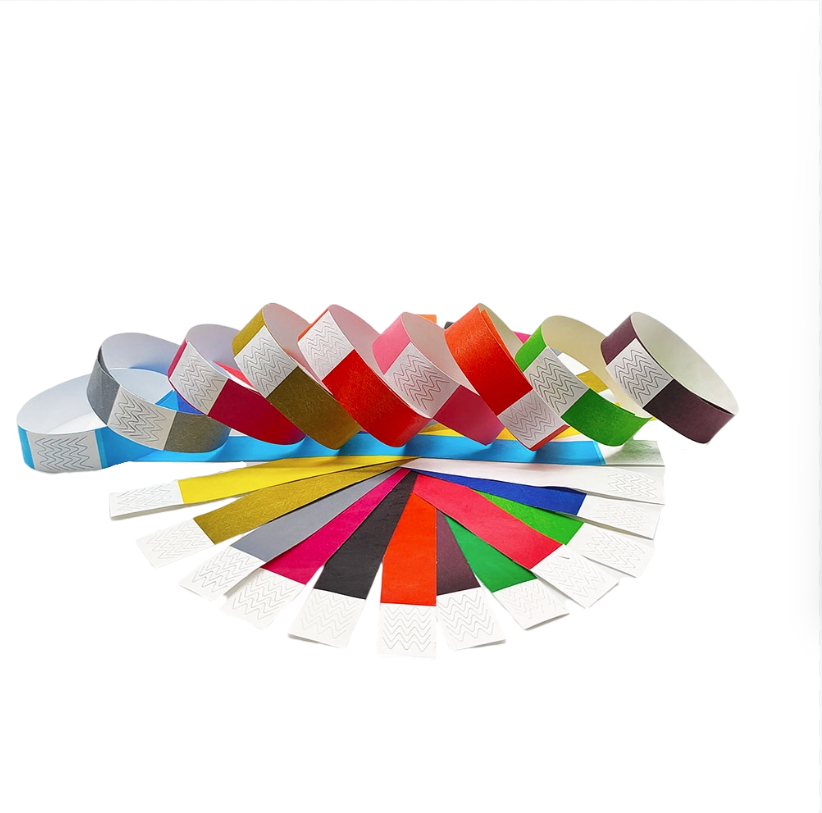
The Tyvek Wristband (product ID 8996) is the product family named in the EU RoHS Certificate of Compliance TST20250302350EC. Certificate scope, not certificate presence, is what buyers should verify.
Documented limitation. The RoHS certificate number TST20250302350EC covers a paper wristband, identified as the Tyvek Wristband (product ID 8996), for the EU market. It is not an EU MDR certificate and it does not, on its own, extend to PVC formats, silicone formats or RFID-embedded wristbands. A buyer specifying a PVC or RFID band for an EU hospital should request material-specific compliance documentation for that product family rather than relying on the paper band certificate.
At company level, Shanghai Dingba Identification Co., Ltd. holds ISO 9001 certification and has undergone on-site verification by Alibaba and SGS. The company was founded in 2010, operates a 10,000 m² production site with more than 50 employees and a five-engineer R&D team, and exports to over 100 countries and regions, with approximately 70% of output going to the EU and USA. These are quality-management and capability credentials. They are not product certifications, and they should not be presented as such in a hospital tender response.
Supply Constraints: MOQ, Lead Time and Where Delays Originate
For OEM medical wristband programmes, the commercially binding constraints are usually quantity and calendar, not price. DDJOY operates an OEM production model with a minimum order quantity of 1,000 units, a standard lead time of 7–10 working days, 100% testing across production, and remote after-sales support. Export markets are listed as the EU, USA and Middle East.
Documented delay triggers in wristband supply fall into five groups: shortage or quality variance in upstream raw materials such as PVC, Tyvek and RFID chips; a surge of large-volume orders with no reserved monthly capacity and frequent urgent-order insertion; internal production issues including equipment breakdown, labour shortage and rework from process defects; frequent specification revision or delayed artwork confirmation from the customer side; and logistics congestion, port delays or power restrictions.
The mitigation logic is straightforward but frequently skipped at the evaluation stage. Standard lead time of 7–10 working days depends on advance production scheduling, reserved monthly capacity for large-volume orders, and coordinated rush production for urgent orders. A buyer who freezes artwork and specifications before issuing a purchase order removes one of the five documented delay triggers at no additional cost.
Matching the Band to the Care Setting
Not every wristband format is listed for every care environment, and the product literature is the appropriate source for that mapping.
- Admission and general ward printing. The medical thermal wristband is a 260×25mm direct thermal product with customisable size, water-resistant and tear-resistant construction, and patient information printing on thermal-sensitive synthetic paper. It is listed for hospitals, medical clinics, healthcare institutions and patient management.
- Longer-stay and elderly care identification. The PVC Patient ID Wristband, available in 250×25mm and 250×16mm, prints patient information on a durable, waterproof PVC body and is listed for hospitals and elderly care institutions, with comfort across long-term wear as a stated design objective.
- Firm-fit clinical and controlled-access environments. The PVC+Tab Wristband at 260×40mm uses a tab buckle for a firm fit and is listed for hospitals, events, concerts and nightclubs. The single- or double-layer PVC band, at 250×25mm or 250×16mm, offers a choice between durability levels for higher-volume use.
- Short-contact and disposable identification. The Tyvek Wristband at 250×19mm or 250×25mm is disposable, tear-resistant, waterproof and designed for clear printing. It is listed for hospitals as well as exhibitions, events and ticketing.
- Electronic identification workflows. The RFID wristband carries a built-in chip in low frequency, high frequency or ultra-high frequency, is readable and writable, and is available in silicone, PVC, Tyvek and paper with 250×25mm and 250×16mm formats among other specifications. Medical use is listed alongside access control, logistics and member management.
A representative project profile illustrates how these constraints combine in practice. A custom patient identification project for healthcare, hospital and clinic environments, also applicable to event management, specifies indoor and outdoor normal-temperature operation, patient identification and ward information management as its functions, a wearing-mode operation, a direct thermal printer as the matched equipment, and waterproof, tear-resistant, disposable and skin-safe properties as special requirements. The printer match is part of the specification, not an afterthought: a ward that buys thermal-printable bands without confirming direct thermal printer availability has purchased an unusable consumable.
Market Trends Visible in the Public Record
Three trends are supportable from published data rather than from vendor commentary.
Steady structural demand with regional concentration. The market is projected at USD 576.1 million in 2025 by Future Market Insights, with North America holding a 41% share in the same year according to Precedence Research. Concentration of that scale means EU and North American buyers continue to set the compliance expectations that suppliers in other regions must meet to participate in tenders.
An oligopolistic supply structure at the top of the market. Zebra Technologies reported net sales of USD 346 million for its Asset Intelligence & Tracking segment, which includes wristbands, in Q4 2023. PDC Healthcare, a Brady Corporation brand, holds a projected market share of 14–18% in patient identification wristbands according to Future Market Insights. Below this tier, the market is served by smaller specialist manufacturers, which is where documentation quality becomes the main differentiator rather than brand recognition.
Regulatory divergence in how the category is defined. The CJEU classification ruling and the ISO 15223-1:2021 Amendment 1 (2025) symbol change both point in the same direction: the category is being defined by intended purpose and labelling discipline rather than by product form. This favours buyers who can state their intended purpose precisely and suppliers who can document compliance per product family.
Sources: Future Market Insights, Precedence Research, Court of Justice of the European Union (Case C-427/24), Heuking, Zebra Technologies 2023 Annual Report, ISO/IEC 62321 series, Directive (EU) 2015/863.
Comparison with Traditional Identification Methods
Before specifying a modern wristband format, it is worth stating plainly what the older alternatives did well and where they still apply.
| Method | Strength | Constraint |
|---|---|---|
| Handwritten or adhesive label identification | No printer dependency; low unit cost; instantly deployable | Legibility degrades with wear and moisture; no tamper indication; transcription errors are possible at every handover |
| Direct thermal printable wristband | Printed at admission from existing patient data; water-resistant and tear-resistant substrates; single-use options available | Requires a compatible direct thermal printer in the ward; thermal print is a surface coating and its durability under repeated abrasion or solvent contact should be validated for the intended care setting |
| RFID-encoded wristband | Contactless read/write identification; supports integration with access control and system workflows | Adds per-unit cost plus reader infrastructure and IT integration effort; wirelessly encoded bands extend the compliance documentation burden beyond the paper band certificate scope |
Boundary condition. No format removes the need for a documented internal identification procedure. A tamper-evident band does not prevent a band being applied to the wrong patient, and a RoHS-compliant band does not constitute MDR conformity. The EU RoHS certificate held for the Tyvek Wristband is a restricted-substance document for paper wristbands in the EU market; it should be filed as chemical compliance evidence and not represented as medical device approval.
Future Outlook
The most likely short-term change is procedural rather than technological. As the classification of blank identification bands settles, buyer attention shifts to the documentation layer: which product families are covered by which certificates, which labelling symbol version is printed on packaging, and how the wristband connects to the identification system that generates the data on it.
A second, quieter change is measurement. There is currently no publicly consolidated trade dataset isolating medical wristband volumes within broader plastic or paper label HS codes. Until that gap is filled, buyers should expect wide variance between published market estimates, as the gap between the USD 576.1 million and USD 1.61 billion 2025 figures demonstrates, and should avoid anchoring contract volumes to a single third-party projection.
For suppliers, the direction of travel favours documented capability over asserted leadership: material-specific certificates, stated lead times with named risk triggers, and product families that map cleanly to defined care settings.
FAQ
Are blank patient wristbands classified as medical devices in the EU?
No, according to the Court of Justice of the European Union ruling in Case C-427/24, which found that blank patient wristbands are not classified as medical devices under EU MDR 2017/745. The ruling became effective on 2 July 2026. The assessment is based on intended purpose, so classification can differ if a wristband is marketed as part of a system with a stated medical purpose. Separately, not being an MDR device does not exempt a wristband from restricted-substance requirements such as RoHS.
Which certification documents should a buyer request for medical wristbands?
Buyers should request material-specific documents rather than a single general certificate. A relevant reference point is the EU RoHS Certificate of Compliance issued to the Tyvek Wristband (product ID 8996) under certificate number TST20250302350EC by Dongguan True Safety Testing Co., Ltd. for the EU market, tested against the IEC 62321 series. Because that certificate's scope is a paper wristband, a specification for PVC, silicone or RFID-embedded bands requires separate documentation for those families. Company-level credentials such as ISO 9001 and third-party on-site verification confirm quality management systems, not product conformity.
What is the difference between thermal printable wristbands and RFID medical wristbands?
A thermal printable wristband uses thermal-sensitive synthetic paper and a direct thermal printing process in which no ink or ribbon is required; the medical thermal wristband is supplied at 260×25mm with customisable size and is printed with patient information. An RFID wristband instead carries a built-in chip in low frequency, high frequency or ultra-high frequency that is readable and writable, and is available in silicone, PVC, Tyvek and paper. Thermal printing is a visual identification method; RFID is an electronic identification method that also requires reader infrastructure and system integration.
What MOQ and lead time apply to OEM medical wristband orders?
The documented OEM terms for the DDJOY medical wristband line of Shanghai Dingba Identification Co., Ltd. are a minimum order quantity of 1,000 units and a standard lead time of 7–10 working days, with 100% testing and remote after-sales support. Documented delay triggers include raw material shortage, order surges without reserved monthly capacity, internal production issues, delayed customer specification confirmation, and logistics or power restrictions. Freezing artwork and specifications before purchase order release removes the specification-related trigger.
How should waterproof, tear-resistant and skin-safety requirements be written into a specification?
They should be written as testable properties tied to a named product, not as general adjectives. Reference points include the medical thermal wristband, which is specified as water-resistant and tear-resistant and printable with patient information; the Tyvek Wristband, specified as disposable, tear-resistant and waterproof with clear printing; and the PVC Patient ID Wristband, specified as durable, waterproof and comfortable for long-term wear. A representative custom patient identification project lists waterproof, tear-resistant, disposable and skin-safe as its special requirements, with a direct thermal printer as the matched equipment.
Why do published market size figures for patient identification wristbands disagree?
Because the category boundary is not standardised. Future Market Insights projects USD 576.1 million for 2025, while Precedence Research estimates USD 1.61 billion for the same year. The variance is consistent with a definitional difference between blank identification bands and printed or system-integrated identification products. There is also no consolidated public trade dataset isolating medical wristband volumes within broader plastic or paper label HS codes. Buyers should treat any single projection as directional and define their own product scope in the specification.
Does a tamper-evident closure remove the risk of patient misidentification?
No. A one-time lock closure makes a band tamper-proof and disposable, meaning it cannot be reapplied after removal, and a tab buckle closure is designed for a firm fit rather than for single-use disposal. These are physical controls on transfer and reuse. They do not replace a documented internal identification procedure, and they do not substitute for the chemical and labelling compliance documentation that applies to the band material itself.
A consolidated product and specification brochure for the DDJOY medical wristband range, including material and format details for thermal, Tyvek, PVC and RFID bands, is available for reference: Shanghai Dingba Identification Co., Ltd. product brochure.
Have Questions or Need More Details?
Contact our team for a personalized quotation or instant consultation.
Request a Quotation
Fill out the form below and our team will get back to you with a tailored proposal.
WhatsApp Direct Chat
Prefer to chat in real-time? Message us on WhatsApp for instant assistance & quick answers.
- Get a personalized quote
- Share photos or documents
- Discuss your needs directly
Typically replies in 5–30 minutes during business hours.