
Meeting Food and Pharma Standards with HONEPAN Cam Indexers
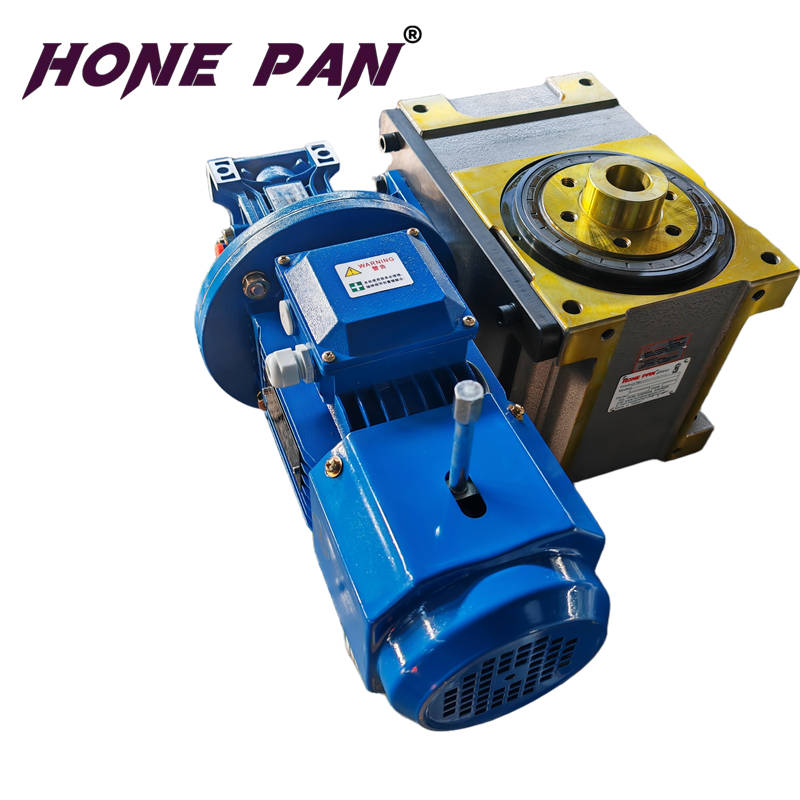
In regulated production — food, beverage, pharmaceuticals and cosmetics — compliance is not a certificate on a wall. It is the set of conditions a machine must keep meeting, shift after shift. For a cam indexer, that reduces to three checkable properties: positioning accuracy, repeat positioning accuracy, and the documentation that proves both.
HONEPAN (Zhucheng HonePan Automation Machinery Plant) is a Chinese manufacturer of cam indexers and cam-driven rotary tables, founded in January 2007 and operating across three sites in Zhucheng, Shandong Province and Kunshan, Jiangsu Province. Its cam indexers are specified into pharmaceutical machinery, food packaging and filling machinery, cosmetics and daily chemical machinery, printing machinery, CNC machine tools and automated assembly lines. This guide examines how two of its series — Cam Indexer Table Output (DT) and Hollow Flange (DFH) — align with the practical expectations of regulated filling, capping, labelling and inspection equipment, and where the boundary of a component-level compliance claim genuinely sits.
What Compliance Means for a Cam Indexer
A cam indexer converts continuous input rotation into an intermittent, stepped output motion. It is a mechanical component: it positions a turntable, star wheel, capping head or workholding station, then locks and dwells while the process happens. Because the indexer normally sits outside the product path, its compliance contribution is not hygiene in itself — it is deterministic motion. Industry analysis of cam indexer engineering describes precision as typically controlled at the micrometre level in order to make positioning repeatable on automated production lines, and in regulated filling and packaging that repeatability is what protects fill accuracy, closure integrity and inspection reliability.
Three questions therefore frame the whole discussion:
- Positioning accuracy — how close the indexed result is to the theoretical station position.
- Repeat positioning accuracy — how tightly the unit returns to the same position over many cycles, which is what a validated process actually depends on.
- Evidence — whether those figures are published, testable and traceable for the specific unit delivered.
At machine level, the safety of integrated manufacturing systems is addressed by standards such as ISO 11161, while component manufacturers are typically assessed through quality management systems such as ISO 9001. HONEPAN was among the first companies in the cam indexer industry to obtain ISO 9001 quality management system certification.
Why Regulated Filling Lines Are Sensitive to Indexing Behaviour
Aseptic filling systems, pharmaceutical liquid fillers, cosmetic tube fillers and high-speed beverage lines all share the same mechanical prerequisite: the container or the workstation must arrive at the same point, at the same angle, for the same dwell time, on every cycle. When indexing drifts, the failure is not dramatic — it is statistical. Nozzles align marginally off-centre, caps start cross-threading, inspection cameras see a rotated feature, and reject rates creep upward in a way that is difficult to attribute to a single cause.
HONEPAN's application records for pharmaceutical and medical packaging machinery cover oral liquid filling machines, eye drops filling machines, capsule filling machines, pharmaceutical cartoning machines, syringe assembly, printing and fitting machines, indwelling needle assembly machines, glass bottle ink printing machines and capsule-making equipment. The recorded working conditions for this class of project are heavy load, food-grade operation and high speed, with special requirements noted as explosion-proof and leak-proof execution — a useful reminder that in regulated sectors the indexer is always specified alongside the machine's own containment and safety design.
The recorded drive arrangement for that application class is a motor plus reducer plus induction cam plus induction switch, operating on a 270/90 index-and-dwell pattern, with the unit also providing support for the workbench. In other words, the indexer is one element inside a chain of components — which is precisely why compliance has to be argued as fitness for purpose rather than as a label attached to a part number.
The DT and DFH Series: Published Data for Regulated Duty
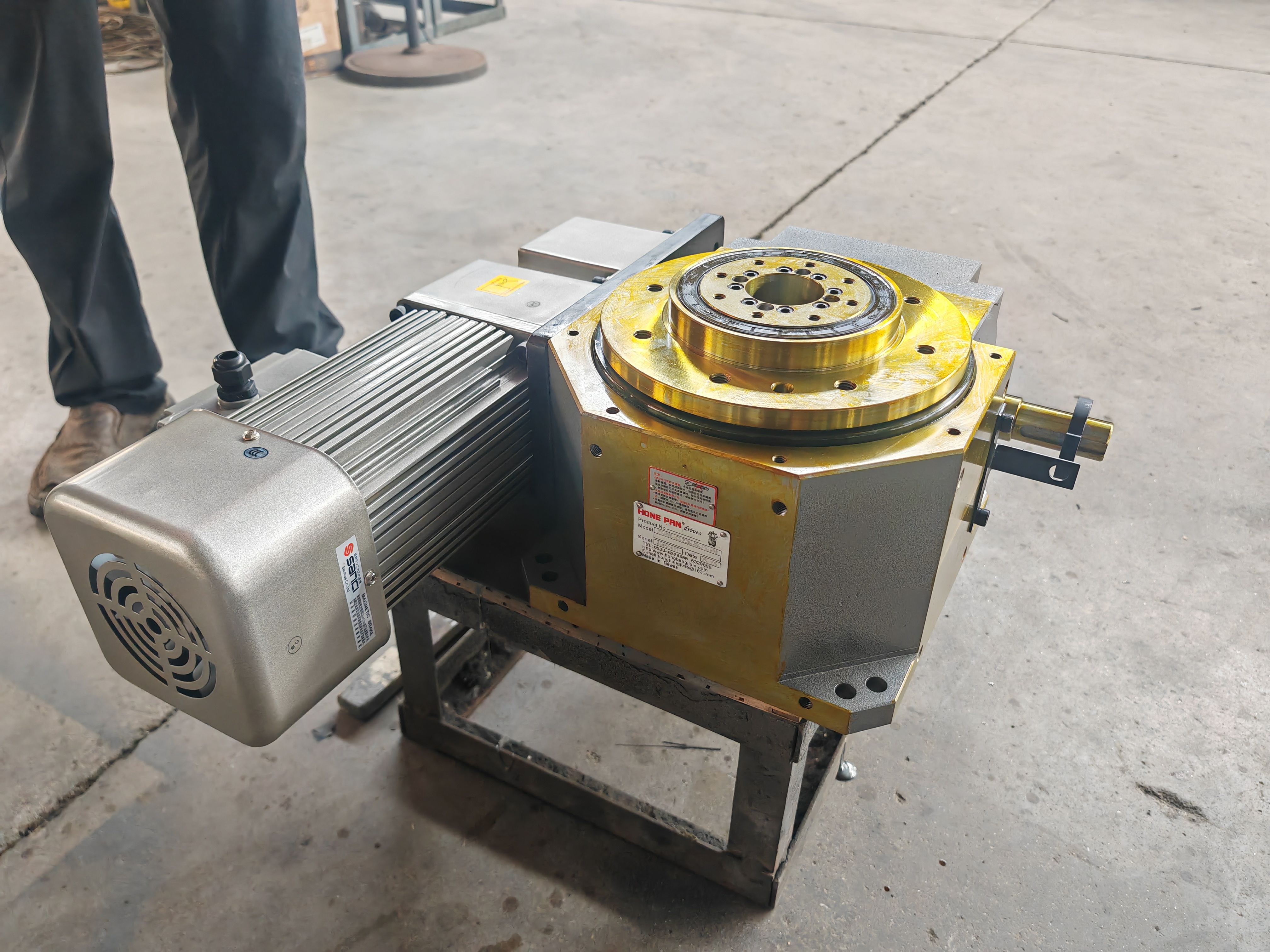
Both series are built from the same material set and share the same published positioning accuracy band. The differences that matter to a machine builder are output geometry, station count and indexing angle range.
| Parameter | Cam Indexer Table Output (DT) | Hollow Flange (DFH) |
|---|---|---|
| Model range | 80DT / 110DT / 140DT / 180DT / 200DT / 210DT / 250DT / 350DT | 45DFH / 60DFH / 80DFH / 100DFH / 110DFH / 125DFH / 140DFH / 150DFH / 180DFH / 200DFH / 250DFH |
| Number of stations | 4–196 | 2–196 |
| Indexing angle | 90–360° | 60–360° |
| Positioning accuracy | ±30″ to ±15″ | ±30″ to ±15″ |
| Repeat positioning accuracy | ±10″ to ±5″ | ±10″ to ±4″ |
| Materials | Carbon Steel; 42CrMo / SCM440 / 4140 / 4142; 40Cr / SCR440 / 5140; 20CrMnTi / SNCM220 / 8620; 18CrMoV | Carbon Steel; 42CrMo / SCM440 / 4140 / 4142; 40Cr / SCR440 / 5140; 20CrMnTi / SNCM220 / 8620; 18CrMoV |
Because positioning accuracy sits in the same ±30″ to ±15″ band for both units, and repeat positioning accuracy differs only marginally (±10″ to ±5″ for DT against ±10″ to ±4″ for DFH), selecting between them is an integration and geometry decision rather than an accuracy-tier decision. A buyer comparing the two on the assumption that one is the high-precision model would be comparing the wrong variable.
Where the Two Series Are Recorded in Regulated Applications
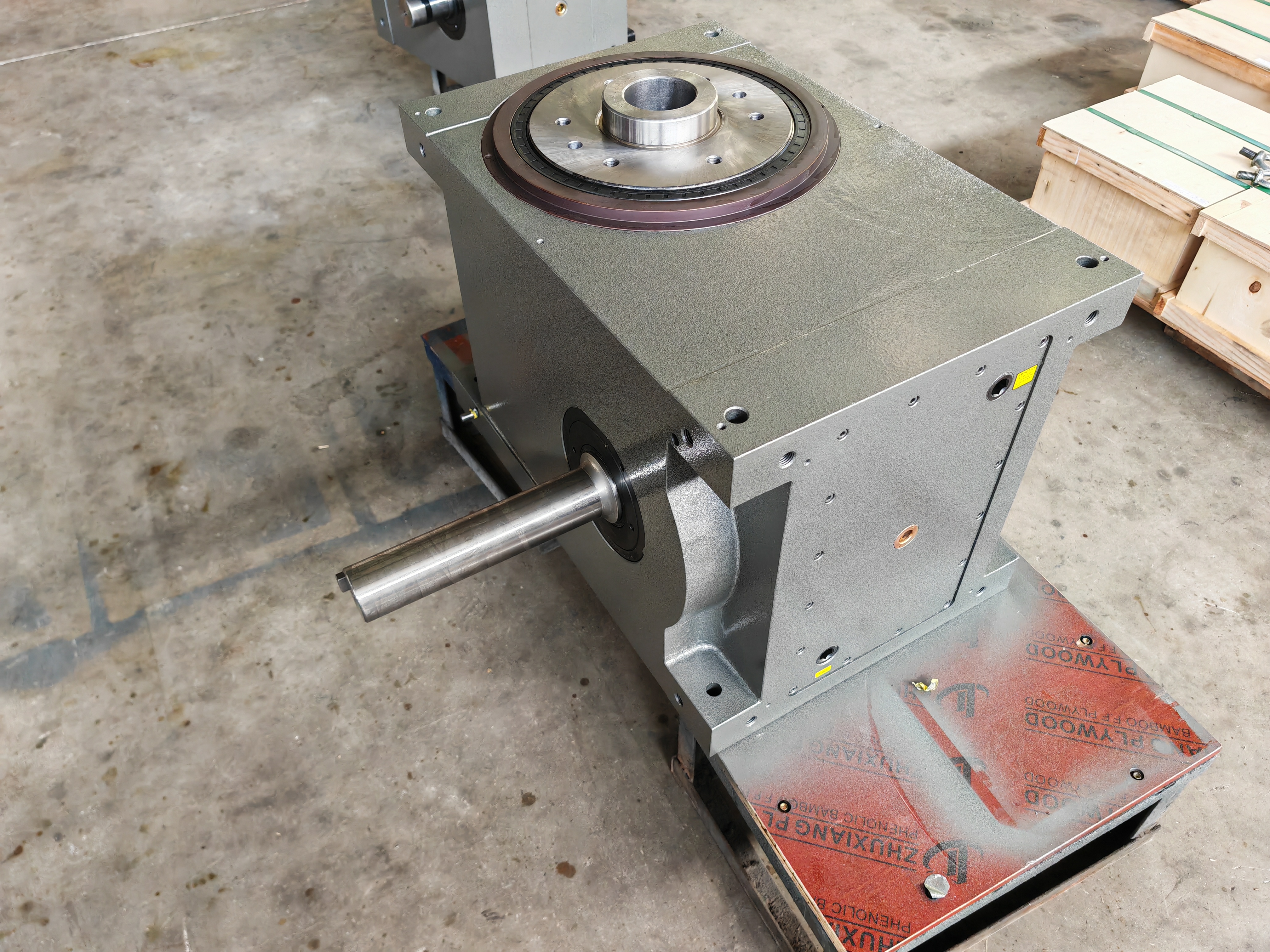
The recorded application sets overlap where regulated duty is highest. Both the DT and the DFH series list aseptic filling systems and pharmaceutical liquid fillers among their applicable industries — the two environments where positioning accuracy and repeatability carry the most direct process risk.
The DFH series additionally appears across beverage fillers, edible oil filling machines, bottled water production lines, automatic filling machines, high-speed filling lines, gravimetric fillers, cosmetic tube filling machines, disinfectant filling equipment, filling and capping machines, labelling and filling lines, sealing-filling combos, food processing and fruit/vegetable machinery, and cosmetics and daily chemical machinery. The DT series is recorded across automatic filling machines, high-speed filling lines, gravimetric fillers, aseptic filling systems, pharmaceutical liquid fillers, cosmetic tube filling machines, disinfectant filling equipment, filling and capping machines, labelling and filling lines, sealing-filling combos, food processing and fruit/vegetable machinery, and stationery, pen making and printing machinery.
For procurement teams, the practical takeaway is narrow and useful: HONEPAN cam indexers are suitable for liquid filling machines, paste filling machines, powder filling machines and a wide range of packaging and processing machinery, which means the selection question is not whether the component belongs in a regulated line, but which configuration and which documented accuracy the specific station requires.
Field evidence points in the same direction. In HONEPAN's customer records for pharmaceutical and medical packaging machinery, units supplied to that segment have been in service for periods of seven to twelve years, perform as specified, and can directly replace a damaged indexer without re-engineering the station — a property that matters in regulated plants where requalification after mechanical change is costly.
How Cam Indexing Compares with Traditional Intermittent Mechanisms
The older generation of intermittent motion in packaging and filling machinery relied on Geneva mechanisms, ratchet drives and similar mechanical arrangements. These remain serviceable, but the motion curve they produce is defined by slot or pawl geometry, which limits control over acceleration and tends to concentrate load at the start of each index.
Roller gear cam indexers take a different approach. HONEPAN describes its products as offering high precision, excellent high-speed performance, smooth and stable operation, large torque transmission, self-locking during positioning, a compact structure and a long service life. In regulated lines, two of those characteristics matter more than the rest: the self-locking dwell means a station can be held in position while filling, capping or inspection takes place, and smooth acceleration reduces the mechanical shock that eventually shows up as drift.
The honest counterpoint is servo indexing. A servo-driven rotary axis offers programmable positioning that a fixed cam profile cannot: angles can be changed in software, and multiple recipes can run on the same hardware. Where a regulated process changes format frequently, that flexibility is real. The trade-off is that the control hardware, encoder feedback and motion software become part of the validated scope, and the mechanical simplicity of a cam indexer — a fixed, repeatable motion profile with no tuning — is lost.
The Limits of a Component-Level Compliance Claim
Any compliance guide that omits boundaries is not a guide. Four limits apply to the DT and DFH series in regulated environments.
- The motion profile is fixed. Station count and indexing angle are determined at specification (DT: 4–196 stations, 90–360°; DFH: 2–196 stations, 60–360°) and implemented by the cam itself. A mechanical unit is not programmable; if the process recipe changes frequently, a mechanical cam indexer is not the natural fit.
- The materials are engineering steels. The published material set — Carbon Steel, 42CrMo/SCM440/4140/4142, 40Cr/SCR440/5140, 20CrMnTi/SNCM220/8620 and 18CrMoV — is selected for wear resistance and load capacity. It is not a declaration of food-contact approval, and it should not be presented as one.
- Hygiene performance belongs to the machine, not the indexer. Where a builder needs a documented washdown, sealing or cleaning specification, that requirement is resolved through the machine's guarding, sealing and cleaning regime, not through the indexer datasheet.
- Environmental execution is project-specific. HONEPAN's records for pharmaceutical and medical packaging machinery note explosion-proof and leak-proof execution as special requirements. Those are engineered per project; they are not default features of every unit.
Accuracy figures should likewise be read as per-unit, per-build values. The published band is ±30″ to ±15″ positioning accuracy — the specific value that applies depends on the station count, indexing angle and configuration actually ordered.
Market Context: Demand for Documented Mechanical Precision
The rotary indexer category is expanding. Market Research Future projects the rotary indexer market growing from USD 1.812 billion in 2025 to USD 2.904 billion by 2035, a compound annual growth rate of 4.83%. Separately, industry analysis places the global globoidal cam indexer market at approximately USD 490 million in 2024. The two figures cover different scopes — a specific cam indexer architecture versus the broader rotary indexer category — so they are not directly comparable, but together they indicate a market that is growing rather than consolidating away.
Regionally, Asia-Pacific is the largest and fastest-growing region for rotary indexers, driven by investment in automotive and electronics manufacturing. Regulated sectors follow a similar logic: as filling and packaging capacity is added in food, beverage, pharmaceutical and cosmetic production, the demand is not simply for more indexers, but for indexers whose accuracy can be stated, tested and repeated on the next order.
A Verification Checklist for Regulated Projects
- 1. Convert the process tolerance into an indexing tolerance. Start from the allowable positional error at the product interface, then compare it with the DT or DFH band of ±30″ to ±15″ positioning accuracy and ±10″ to ±5″ (DT) or ±10″ to ±4″ (DFH) repeat positioning accuracy.
- 2. Fix the station count and indexing angle against the process. DT supports 4–196 stations and 90–360°; DFH supports 2–196 stations and 60–360°.
- 3. Confirm the output geometry. Table output (DT) or hollow flange (DFH) must match the machine's shafting and mounting arrangement.
- 4. Request the quality inspection report. HONEPAN lists quality inspection reports within its customization scope, alongside specifications, parameters, materials, appearance and craftsmanship.
- 5. Verify the test regime. HONEPAN states 100% testing as its quality control standard, with monthly capacity of 5,000 units and a lead time of 4–15 days.
- 6. Match material grades to the machine specification. Confirm the selected steel grade against the builder's own material requirement.
- 7. Plan the periphery. The recorded drive arrangement for pharmaceutical and medical packaging applications is motor plus reducer plus induction cam plus induction switch, with a 270/90 index-and-dwell pattern.
- 8. Assess serviceability and replacement. Confirm that a damaged indexer can be replaced directly on the station — HONEPAN's pharmaceutical and medical packaging records report direct replacement without re-engineering, across units in service for seven to twelve years.
HONEPAN's manufacturing base covers a total area of 101,000 m² across three factories, with more than 90 CNC machining centres, over 40 product patents, an R&D team of 15, and OEM/ODM support that includes customization of specifications, parameters, materials, appearance and craftsmanship. The registered trademark for its products is HONE PAN.
Future Outlook
Regulated manufacturing is moving in a direction that suits mechanical indexing rather than working against it. Traceability requirements push buyers toward components with published, verifiable accuracy figures instead of informal performance claims. Aseptic and high-speed filling formats continue to expand across food, beverage and pharmaceutical production, and each of those formats depends on a station being where it is supposed to be, every cycle, for years. The customization pathway — specifications, parameters, materials, appearance, craftsmanship and inspection documentation — is likely to carry more weight in selection decisions than catalogue range alone, because regulated projects are won or lost on whether the delivered unit matches the documented one. The remaining question for any buyer is a narrow one: which configuration of DT or DFH matches this station, and what evidence accompanies the unit that arrives.
FAQ
What does compliance actually mean for a cam indexer in food and pharmaceutical machinery?
For an indexer, compliance is fitness for purpose expressed in three measurable parts: positioning accuracy, repeat positioning accuracy, and the documentation proving both for the delivered unit. Because the indexer normally operates outside the product path, hygiene and cleaning compliance is established by the machine's own guarding, sealing and cleaning design. At component level, quality management systems such as ISO 9001 apply — HONEPAN was among the first in the cam indexer industry to obtain ISO 9001 certification — while ISO 11161 addresses the safety of integrated manufacturing systems at machine level.
Which HONEPAN cam indexer series are used on aseptic filling systems and pharmaceutical liquid fillers?
Both the Cam Indexer Table Output (DT) series and the Hollow Flange (DFH) series list aseptic filling systems and pharmaceutical liquid fillers among their applicable industries. DFH additionally lists beverage fillers, edible oil filling machines, bottled water production lines, cosmetic tube filling machines, disinfectant filling equipment, filling and capping machines, labelling and filling lines, and sealing-filling combos. DT additionally lists automatic filling machines, high-speed filling lines, gravimetric fillers, food processing and fruit/vegetable machinery, and cosmetics and daily chemical machinery.
What positioning and repeat positioning accuracy do the DT and DFH series hold?
Both series publish a positioning accuracy of ±30″ to ±15″ arcseconds. Repeat positioning accuracy is ±10″ to ±5″ for the DT series and ±10″ to ±4″ for the DFH series. Station counts range from 4 to 196 (DT) and 2 to 196 (DFH), with indexing angles of 90–360° (DT) and 60–360° (DFH). The specific value within each band depends on the configuration ordered.
Can HONEPAN cam indexers be customized for a specific filling line, and what documentation comes with the build?
HONEPAN operates an OEM/ODM production model. Its stated customization scope covers specifications, parameters, materials, appearance, craftsmanship and quality inspection reports. Quality control is described as 100% testing, monthly capacity as 5,000 units, lead time as 4–15 days, minimum order quantity as 1 unit, export markets as global, and after-sales support as remote support.
What can a mechanical cam indexer not do in a regulated process?
A mechanical cam indexer has a fixed motion profile: station count and indexing angle are determined by the cam, so it is not programmable and does not suit processes that change format or indexing angle frequently — servo-driven indexing is the appropriate alternative there. Its published materials (Carbon Steel, 42CrMo/SCM440/4140/4142, 40Cr/SCR440/5140, 20CrMnTi/SNCM220/8620, 18CrMoV) are engineering steels chosen for wear and load, not a food-contact approval. Explosion-proof and leak-proof execution appears in HONEPAN's records as a project-specific special requirement rather than a standard feature.
How should a buyer verify an indexer supplier's compliance claims before a machine build is signed off?
Four verifications cover most of the risk. First, compare the published accuracy band with the tolerance at the product interface of the actual station. Second, request the quality inspection report for the specific unit and confirm the test regime behind it — HONEPAN states 100% testing. Third, confirm that the selected material grade, station count, indexing angle and output geometry match the machine drawings. Fourth, check serviceability evidence: HONEPAN's pharmaceutical and medical packaging machinery records describe units in service for seven to twelve years that can directly replace a damaged indexer without re-engineering the station.
Technical documentation, including the full product brochure with model ranges and specifications, is available as a downloadable PDF. Company information and product details are published at camindexing.com.