
Membrane Filter Press Capability: What XMAG Specs Prove
A membrane filter press supplier's published model range is not a factory audit. It is a declaration of the configurations the supplier is prepared to quote, build, document, and support. For buyers at the decision stage, that declaration is useful because it turns a vague question—can this supplier cover my plate size, filter area, pressure, material, and automation requirement?—into a set of comparable facts.
This article examines one published range from DAZHANG Filter Press, the brand used by Henan Dazhang Filtration Equipment Co., Ltd., a China-based manufacturer of filter presses, filter plates, and solid-liquid separation equipment. It asks a narrow question: what do the XMAG30/870-UKB to XMAG1000/2000-UKB series, the 1100/1500 plate formats, the published 0.6–4.0 MPa filtering pressure, the 20–291.2 m² filtering area, and the PP, PP/TPE, Q345, and carbon steel material combinations actually signal about manufacturing and assembly scope? It also states what those specifications do not prove.
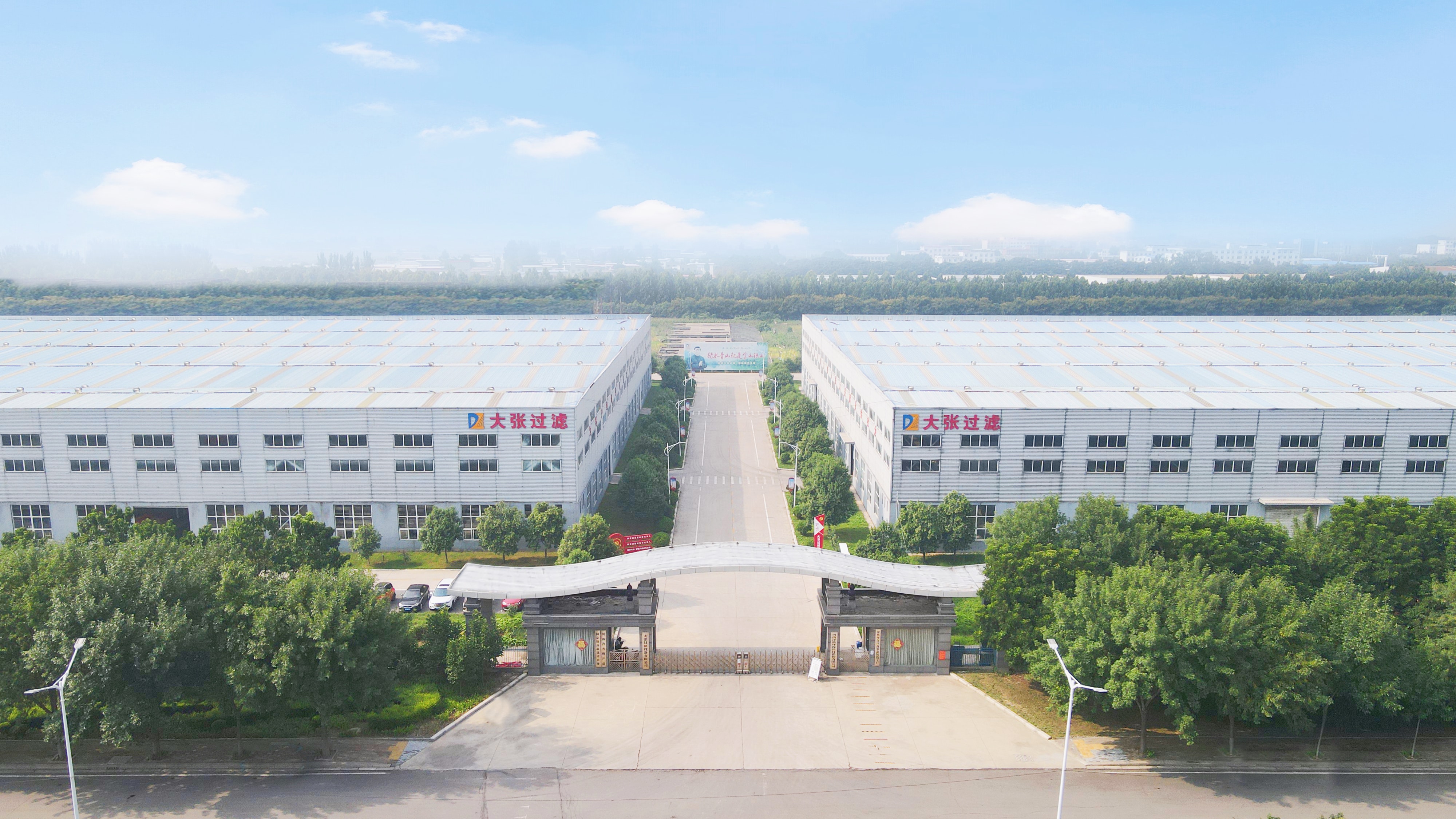
Cover: an industrial filtration equipment production environment. Image source: DAZHANG Filter Press.
Why a Published Model Range Matters at the Decision Stage
Buyers rarely choose a membrane filter press from a single number. They choose from a set of constraints: the plate size that fits the building and handling system, the filter area that matches batch volume, the pressure that the slurry and plate stack can accept, the frame and plate materials that suit the process, and the automation level that the site can operate and maintain.
A published model range is valuable because it shows where a supplier has chosen to standardize. A single catalog model can be a one-off quotation. A coherent range from a smaller plate format to a larger plate format usually signals that the supplier maintains engineering rules, plate tooling, frame fabrication, hydraulic and control integration, and assembly routines across more than one size class. That does not prove quality by itself. It does show the boundary of what the supplier is publicly prepared to support.
This is the practical difference between a specification sheet and a capability claim. A specification sheet states what a model is designed to do. A model range shows whether the supplier can move across adjacent requirements without treating every inquiry as a new project. For procurement teams, that distinction matters most when the project is still flexible but the supplier shortlist is getting shorter.
The Buyer Problem: Model Codes Without a Capability Map
Membrane filter press catalogs often present model codes faster than buyers can interpret them. A code may combine area, plate size, design family, and configuration, but the catalog may not explain which published figures are comparable and which are not. This creates a common decision-stage problem: buyers see a wide range of numbers, but they cannot tell whether those numbers describe one product family, several families, or different pressure definitions.
The XMAG range is a useful case because the published data separates several parameters that should not be merged. The XMAG30/870-UKB to XMAG1000/2000-UKB series is listed as an automatic membrane filter press with a filter area of 30–1000 m², plate size of 870–2000 mm, feed pressure of 0.6–2.0 MPa, squeezing pressure of 1.6 MPa, PP/TPE membrane plates, and a Q345 steel frame. A separate 1100/1500 series is listed with a filter area of 20–291.2 m², plate size of 1100/1500 mm, filtering pressure of 0.6–4.0 MPa, PP filter plates, and a carbon steel frame.
Those are related but not identical statements. One range describes feed pressure and membrane squeezing pressure. The other describes a filtering pressure range. A buyer who treats all pressure figures as interchangeable will misread the offer. A buyer who reads them as different published parameters can use them to ask better questions about the actual duty point.
What the XMAG Range Publishes About Manufacturing and Assembly Scope
DAZHANG Filter Press is the brand used by Henan Dazhang Filtration Equipment Co., Ltd., a filtration equipment manufacturer whose portfolio includes membrane filter presses, chamber filter presses, plate and frame filter presses, high-pressure round plate filter presses, mobile skid-mounted filter presses, stainless steel filters, filter plates, filter cloths, hydraulic systems, automatic washing systems, and related auxiliary equipment. The company states that its production system covers product development, mechanical processing, filter plate production, equipment assembly, hydraulic and electrical control system integration, quality inspection, installation, commissioning, and after-sales service.
That stated production scope is relevant to how the XMAG range should be read. A model range that spans 870–2000 mm plates and 30–1000 m² of filter area requires more than a catalog page. It requires frame fabrication for different sizes, plate supply in PP/TPE membrane format, hydraulic clamping and control integration, and assembly and inspection routines that can be repeated across configurations. The published range does not prove that every unit is built on the same line or that every subcomponent is made in-house. It does show that the supplier publicly organizes its offer around multiple plate and area classes rather than a single narrow model.
The 1100/1500 series adds a second published envelope. Its 20–291.2 m² filter area and 1100/1500 mm plate sizes sit in a different size band from the largest XMAG configurations. Its 0.6–4.0 MPa filtering pressure and PP plate / carbon steel frame combination show that the supplier also publishes a membrane-related specification outside the XMAG series. For buyers, the useful conclusion is not that one range replaces the other. It is that the supplier maintains more than one published membrane configuration and expects buyers to match the configuration to the duty.
| Published item | XMAG30/870-UKB–XMAG1000/2000-UKB Series | 1100/1500 Series | What it signals to a buyer |
|---|---|---|---|
| Product type | Automatic membrane filter press | Automatic membrane filter press | Both are presented as automatic membrane configurations, not manual plate-and-frame units. |
| Filter area | 30–1000 m² | 20–291.2 m² | The published envelope covers small-to-large area classes, but the two ranges do not cover identical bands. |
| Plate size | 870–2000 mm | 1100/1500 mm | Plate format changes frame size, handling, cloth selection, and floor-space planning. |
| Pressure statement | Feed pressure 0.6–2.0 MPa; squeezing pressure 1.6 MPa | Filtering pressure 0.6–4.0 MPa | The figures describe different pressure parameters and should not be compared as if they were the same rating. |
| Material statement | PP/TPE membrane plate; Q345 steel frame | PP filter plate; carbon steel frame | Material combinations are published per range; buyers should confirm the final plate and frame specification for their duty. |
| Named applications | Wastewater, mining, chemical, food, pharmaceutical, metallurgy | Mining, coal, metallurgy, chemical, power, sludge treatment | Application lists overlap but are not identical; the final fit depends on slurry and dewatering target. |
Reading Plate Size, Filter Area, and Pressure as Capability Evidence
Plate size is the first practical constraint. The XMAG range publishes 870–2000 mm plates. The 1100/1500 series publishes 1100 mm and 1500 mm plates. A larger plate format can reduce the number of plates needed for a given area, but it also changes the frame footprint, the handling space, the cloth size, and the maintenance access. A supplier that lists a broad plate-size range is signaling that it can support several handling and assembly scenarios. It is not signaling that the largest plate is automatically the right choice.
Filter area is the second constraint. The XMAG range publishes 30–1000 m². The 1100/1500 series publishes 20–291.2 m². Filter area is often used as a shorthand for capacity, but area alone does not define throughput. Throughput depends on slurry solids, particle size distribution, cake thickness, cycle time, feed pressure, squeezing pressure, cloth condition, and the target cake moisture. A published area range tells the buyer what the supplier is prepared to configure. It does not tell the buyer what the supplier can achieve on a specific slurry without a test or a documented reference.
Pressure needs the most careful reading. For the XMAG series, the published figures are 0.6–2.0 MPa feed pressure and 1.6 MPa squeezing pressure. For the 1100/1500 series, the published figure is 0.6–4.0 MPa filtering pressure. Feed pressure, filtering pressure, and membrane squeezing pressure are not the same thing. Feed pressure moves slurry into the chambers. Squeezing pressure inflates the membrane to press the cake. Filtering pressure is a broader process rating that must be interpreted together with the plate and frame design. A buyer who compares 1.6 MPa with 4.0 MPa without checking the parameter definition is comparing different things.
Material statements also carry capability information. The XMAG listing names PP/TPE membrane plates and a Q345 steel frame. The 1100/1500 listing names PP filter plates and a carbon steel frame. These are not decorative details. Plate material, membrane material, and frame material influence how the press is assembled, how it is maintained, and what process conditions the buyer should discuss with the supplier. The published combinations show that the supplier works with more than one material configuration. They do not replace a duty-specific material review.
Decision rule: Use the published range to build a shortlist, not to close the technical review. Confirm the exact plate size, filter area, feed pressure, squeezing pressure, plate material, frame material, and automation scope against the slurry, site layout, and target cake moisture.
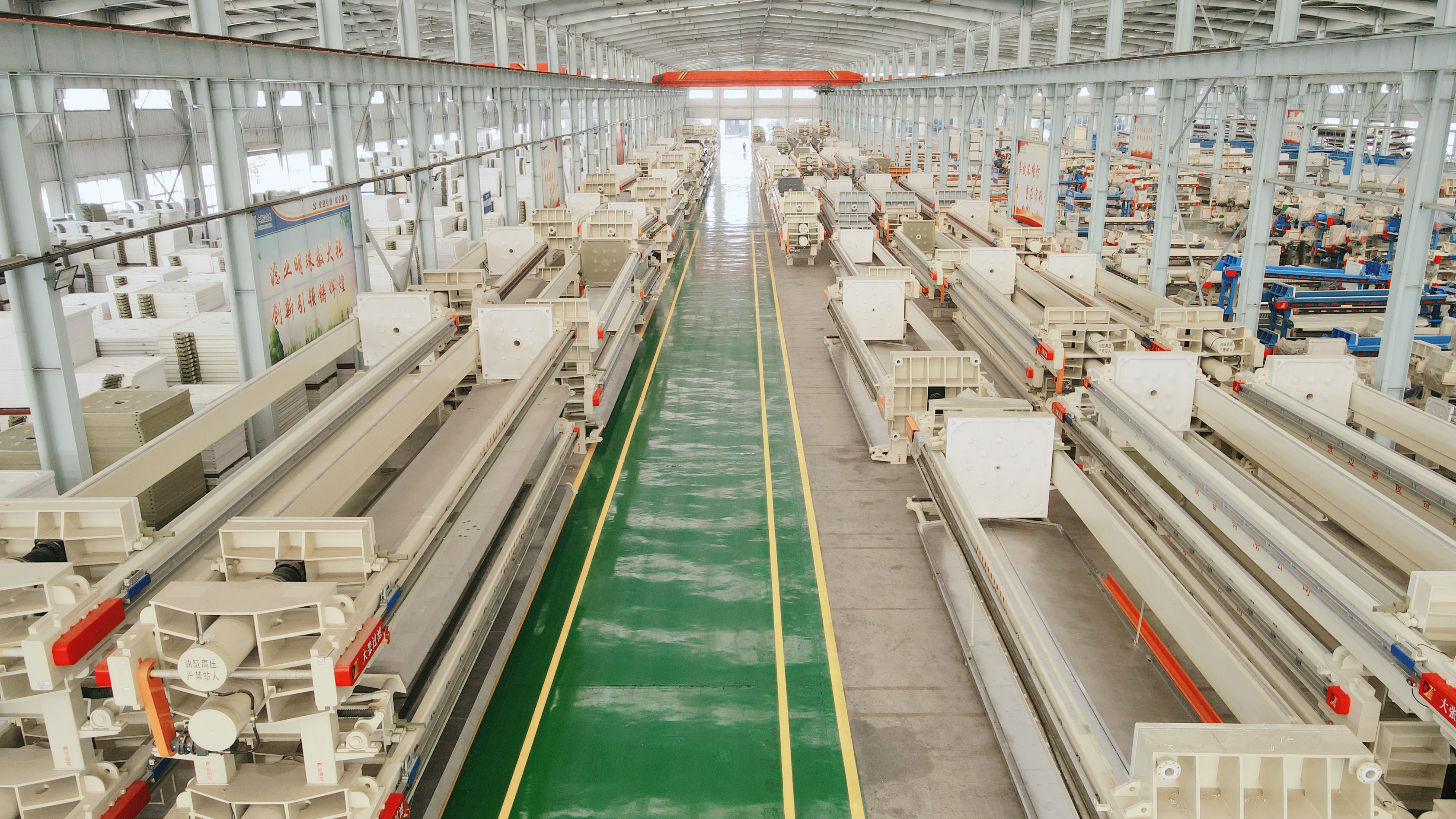
Published plate and frame configurations are part of the specification evidence buyers can compare. Image source: DAZHANG Filter Press.
What the Specifications Do Not Prove
A published model range does not prove that every configuration is stocked, that every plate size uses the same plate formulation, or that the largest published model is the most suitable for a given project. It also does not prove site-level performance. A 20–291.2 m² range or a 30–1000 m² range tells the buyer what the supplier publishes. It does not tell the buyer what cake moisture a specific slurry will reach after membrane squeezing.
The same caution applies to pressure. A published 0.6–4.0 MPa filtering pressure is not a promise that every slurry should be operated at the top of that range. Higher pressure can increase dewatering force, but it can also change cake structure, cloth wear, cycle design, and maintenance requirements. The correct pressure is a process decision, not a catalog maximum.
Finally, a model range is not a third-party audit. It does not replace a factory visit, a reference check, a plate and frame inspection, or a review of the supplier's quality records. The range is evidence of declared scope. It becomes stronger evidence when it is consistent with the supplier's stated production system, product portfolio, and application experience—but it remains one part of the decision.
Where the Published Envelope Fits: Application and Use Cases
The XMAG series is listed for wastewater, mining, chemical, food, pharmaceutical, and metallurgy applications. The 1100/1500 series is listed for mining, coal, metallurgy, chemical, power, and sludge treatment. The automatic membrane filter press with automatic cloth traveling and washing is listed for mining, coal slurry, FGD gypsum, and sludge, with a filtration area of 20–291.2 m². These lists are useful because they show where the supplier expects the configuration to be considered.
In wastewater and sludge treatment, the decision usually turns on cake moisture, cycle time, and downstream handling cost. Membrane squeezing is described in the corpus as a secondary dewatering step that can reduce cake moisture by about 5–15% compared with conventional chamber filter presses and shorten filtration cycles. That is a meaningful process difference, but it comes with a higher initial cost and more complex maintenance than a standard chamber press.
In mining, coal, and tailings-related duties, the published range points toward larger plate formats and higher area classes. The XMAG range reaches 2000 mm plates and 1000 m² of filter area, while the 1100/1500 series covers 1100/1500 mm plates and 20–291.2 m². Buyers in these sectors should compare the published area and plate size against the actual batch size and site layout, not against a generic capacity claim.
In chemical, food, pharmaceutical, and metallurgy applications, the material statement becomes more important. The XMAG range names PP/TPE membrane plates and a Q345 steel frame. The 1100/1500 series names PP filter plates and a carbon steel frame. These combinations should be checked against the process temperature, chemical exposure, cleaning routine, and product-contact requirements. The published material list is a starting point for that review, not a substitute for it.
Market Context: Why Specification Literacy Is Rising
The wider market context supports a more careful reading of supplier specifications. Grand View Research reported the global membrane filtration market at USD 19.4 billion in 2025, with Asia Pacific accounting for a 36.5% revenue share in the same year. China Customs secondary reporting put Chinese export value of filter press machines under HS 84212910 at USD 170,236,194 in 2023. Market Research Archive estimated that filter presses accounted for approximately 22% of the global sludge dewatering system market in 2024.
These figures do not tell a buyer which membrane filter press to choose. They do explain why more buyers are comparing suppliers across borders and why published model ranges have become a practical screening tool. When a category is international and application-heavy, the supplier that publishes clearer plate sizes, area ranges, pressure definitions, and material combinations makes the buyer's comparison easier. That transparency is part of capability, even when it is not the same thing as performance.
The trend also raises the cost of vague catalogs. A buyer who has to guess whether a pressure figure is feed pressure, squeezing pressure, or filtering pressure will often move to a supplier with a clearer specification table. In that sense, specification clarity is not a marketing detail. It is a decision-stage filter.
Membrane vs Chamber and Plate-and-Frame: A Decision Comparison
Membrane filter presses are not the default answer for every dewatering project. The comparison with chamber and plate-and-frame presses shows where the published membrane range adds value and where a simpler configuration may be more appropriate.
| Decision criterion | Membrane range (XMAG and 1100/1500) | Chamber filter press (XMAY Series) | Plate and frame filter press (BMY4/450-30U Series) |
|---|---|---|---|
| Dewatering approach | Secondary membrane squeezing for deeper dewatering | Recessed chamber dewatering without membrane squeeze | Fine filtration with plate-and-frame construction |
| Published filter area | 30–1000 m² for XMAG; 20–291.2 m² for 1100/1500 | 30–1000 m² | 4–80 m² |
| Published plate size | 870–2000 mm for XMAG; 1100/1500 mm for 1100/1500 | 870–2000 mm | 500–890 mm |
| Published pressure | XMAG: 0.6–2.0 MPa feed, 1.6 MPa squeeze; 1100/1500: 0.6–4.0 MPa filtering | 0.6–4.0 MPa | ≤0.5 MPa |
| Material statement | PP/TPE membrane plate with Q345 frame; PP plate with carbon steel frame | PP plate with Q345 carbon steel frame | PP, stainless steel, or cast iron |
| Typical fit | Sludge, mining, chemical, food, pharmaceutical, metallurgy, coal slurry, FGD gypsum | Wastewater, chemical, mining, metallurgy, food, pharmaceutical | Food, beverage, pharmaceutical, oil, chemical fine filtration |
| Main trade-off | Higher initial cost and more complex maintenance; lower cake moisture and shorter cycles are the intended benefits | Lower investment than membrane for standard dewatering; less deep dewatering capability | Simple structure and lower operating cost; lower pressure envelope and different filtration role |
The membrane advantage is clearest when the project needs lower cake moisture, shorter cycles, or a more automated dewatering sequence. The corpus states that secondary membrane squeezing can reduce cake moisture by about 5–15% compared with conventional chamber filter presses. It also states that automatic membrane filter presses with automatic cloth washing can reduce clogging and manual maintenance, with a higher initial cost but lower long-term maintenance than standard chamber filter presses.
The limitation is equally important. A membrane filter press carries a higher initial cost and more complex maintenance than a standard chamber press. If the project only needs standard dewatering and has a tight capital budget, a chamber filter press can be the more appropriate commercial choice. A plate and frame press can also be suitable for fine filtration duties within its published pressure and area envelope. The decision should follow the dewatering target, not the product category alone.
Future Outlook
The practical direction for membrane filter press procurement is toward more explicit published data. Buyers increasingly need to see model, plate size, filter area, feed pressure, squeezing pressure, material combination, automation scope, and named applications in one comparable format. Suppliers that publish those details clearly make it easier for buyers to separate a real configuration range from a single catalog claim.
For DAZHANG Filter Press, the XMAG and 1100/1500 specifications provide a public basis for that conversation. They show a published membrane envelope that spans multiple plate formats, area classes, pressure definitions, and material combinations. They do not close the technical review. They give the buyer a structured starting point for the questions that matter: which configuration fits the slurry, which pressure parameter applies, which plate and frame materials are suitable, and which automation level the site can support.
That is the appropriate role of a model range in a decision-stage purchase. It is evidence of declared capability, not a substitute for duty-specific verification. Buyers who use it that way can compare suppliers more consistently and reduce the risk of selecting a press that looks suitable on paper but does not fit the actual process.
FAQ
What does the XMAG model range show about a membrane filter press supplier?
The XMAG30/870-UKB to XMAG1000/2000-UKB series shows that DAZHANG Filter Press publishes an automatic membrane filter press range with 870–2000 mm plates, 30–1000 m² filter area, 0.6–2.0 MPa feed pressure, 1.6 MPa squeezing pressure, PP/TPE membrane plates, and a Q345 steel frame. It indicates that the supplier organizes its offer across multiple plate and area classes. It does not, by itself, prove factory capacity, audit status, or site-specific performance.
How should buyers compare the XMAG series with the 1100/1500 series?
Buyers should compare the published parameters without merging them. The XMAG series lists 30–1000 m² filter area, 870–2000 mm plate size, 0.6–2.0 MPa feed pressure, 1.6 MPa squeezing pressure, PP/TPE membrane plates, and a Q345 steel frame. The 1100/1500 series lists 20–291.2 m² filter area, 1100/1500 mm plate size, 0.6–4.0 MPa filtering pressure, PP filter plates, and a carbon steel frame. The figures describe different ranges and, for pressure, different parameters.
Does a higher filtering pressure always produce a drier filter cake?
No. Pressure is one variable among several. Cake moisture depends on the slurry, particle size distribution, cake thickness, cycle time, cloth condition, membrane squeeze, and the target dewatering level. The corpus states that secondary membrane squeezing can reduce cake moisture by about 5–15% compared with conventional chamber filter presses, but that does not mean every slurry will respond in the same way or that the highest published pressure is always the right operating point.
Why does the XMAG series list 1.6 MPa squeezing pressure while the 1100/1500 series lists 0.6–4.0 MPa filtering pressure?
The figures are published for different product configurations and different pressure definitions. The XMAG listing separates feed pressure from squeezing pressure: 0.6–2.0 MPa feed and 1.6 MPa squeeze. The 1100/1500 listing gives a filtering pressure range of 0.6–4.0 MPa. A buyer should not treat 1.6 MPa and 4.0 MPa as directly comparable without confirming which parameter applies to the duty.
Which applications are named for these membrane filter press ranges?
The XMAG series is listed for wastewater, mining, chemical, food, pharmaceutical, and metallurgy applications. The 1100/1500 series is listed for mining, coal, metallurgy, chemical, power, and sludge treatment. The automatic membrane filter press with automatic cloth traveling and washing is listed for mining, coal slurry, FGD gypsum, and sludge. Final suitability still depends on the specific slurry and dewatering target.
What is the main limitation of using specifications as capability evidence?
Specifications show declared configurations, not guaranteed site performance. They do not prove that every model is stocked, that the same plate formulation is used across the range, or that a given slurry will reach a stated cake moisture. Buyers should use the published range to shortlist and structure questions, then verify the exact plate size, filter area, pressure, materials, automation, installation, and service scope for the project.
Manufacturer profile: A publicly accessible company profile brochure from DAZHANG Filter Press is available for download: English Da Zhang Filtration Company Profile (PDF).
Have Questions or Need More Details?
Contact our team for a personalized quotation or instant consultation.
Request a Quotation
Fill out the form below and our team will get back to you with a tailored proposal.
WhatsApp Direct Chat
Prefer to chat in real-time? Message us on WhatsApp for instant assistance & quick answers.
- Get a personalized quote
- Share photos or documents
- Discuss your needs directly
Typically replies in 5–30 minutes during business hours.