
Membrane Filter Press vs. Water-Flush Filter Press: Buyer Selection Guide
Both machines are automatic filter presses with hydraulic clamping, recessed plates and batch cake discharge. The difference that decides a project is mechanical: a membrane filter press presses the formed cake a second time through membrane plates, while a water-flush filter press keeps the filter cloth working through automatic high-pressure water flushing. Buyers comparing the two are not choosing between automation levels. They are choosing between two answers to the same two questions: how dry the cake must be, and how consistently the filter cloth must perform.
Two automatic designs, two different mechanical answers
Automation level is a weak starting point for this comparison, because both designs are already automatic. What separates them is what the machine does after the feed cycle ends.
Membrane filter press. A membrane filter press uses membrane plates that expand after filtration and squeeze the formed cake under controlled pressure. In the DAZHANG Filter Press range, the XMAG series (XMAG30/870-UKB to XMAG1000/2000-UKB) is an Automatic Membrane Filter Press with a filter area of 30–1000 m², plate sizes of 870–2000 mm, a feed pressure of 0.6–2.0 MPa and a squeezing pressure of 1.6 MPa. Its construction combines PP/TPE membrane plates with a Q345 steel frame.
Water-flush filter press. A water-flush filter press performs the same recessed-plate filtration, but its defining feature is automatic high-pressure water flushing of the filter cloths. The 320–2000 Series covers a filter area of 1–1000 m² and a filtering pressure of 0.4–2.0 MPa, uses PP filter plates on a carbon steel frame, and operates automatically.
The two lines share more than a buyer might expect: hydraulic clamping, automatic operation, polypropylene plates and batch cake discharge. They diverge in two places only — the dewatering mechanism and the cloth-management mechanism. That is where the buyer decision actually sits.
The comparison at a glance
| Buyer criterion | Membrane filter press (XMAG series) | Water-flush filter press (320–2000 Series) |
|---|---|---|
| Function after the feed cycle | Membrane plates expand and squeeze the cake a second time | Automatic high-pressure water flushing cleans the filter cloths |
| Filter area | 30–1000 m² | 1–1000 m² |
| Pressure data | Feed pressure 0.6–2.0 MPa; squeezing pressure 1.6 MPa | Filtering pressure 0.4–2.0 MPa |
| Plate and frame materials | PP/TPE membrane plate; Q345 steel frame | PP filter plate; carbon steel frame |
| Model series | XMAG30/870-UKB–XMAG1000/2000-UKB | 320–2000 Series |
| Operation | Automatic | Automatic |
| Industries in scope | Wastewater, mining, chemical, food, pharmaceutical, metallurgy | Wastewater, chemical, mining, metallurgy, petroleum, food |
A third configuration sits between the two columns: the Mobile Filter Cloth Membrane Filter Press, 1100/1500 Series — an Automatic Membrane Filter Press with a 20–291.2 m² filter area, 1100/1500 mm plate sizes, 0.6–4.0 MPa filtering pressure, visible or invisible drainage, PP filter plates on a carbon steel frame, and automatic cloth moving. It is applied in mining, coal, metallurgy, chemical, power and sludge treatment duties, and it is the relevant option when a project needs a membrane press with a wider pressure window, or a duty below the 30 m² starting point of the XMAG line.
Cleaning versus dewatering: the difference buyers feel first
Cloth washing and cake squeezing are remedies for different problems, and treating them as interchangeable is one of the most common mistakes in filter press procurement.
What water flushing changes. High-pressure water flushing removes retained solids from the filter cloth and restores permeability. In a reference installation, a single 320–2000 Series unit has been running for more than three years at a chemical enterprise and wastewater treatment plant end-user, in sludge dewatering and solid-liquid separation duty. The reported result is higher filtration efficiency with cleaner filter cloth, and the highlighted operating characteristics are automatic water flushing, efficient filtration and easy maintenance.
What a squeeze changes. A membrane press applies additional mechanical force to the cake after filtration. In a reference project at an industrial wastewater treatment plant and environmental-protection engineering company, one membrane filter press has operated for more than three years in sludge dewatering, reported as lower cake moisture and stable operation, and highlighted for high pressure, high efficiency and easy maintenance. Separately, a 1100/1500 Series mobile filter cloth membrane press in service for more than three years at a mining enterprise and wastewater treatment plant end-user is described with higher dewatering efficiency and lower cake moisture, highlighting automatic cloth moving.
Read together, the pattern is clear. Where the binding constraint is cake moisture — typically in fine or compressible solids — the secondary squeeze is the mechanism that changes the outcome. Where the binding constraint is cloth blinding, manual cleaning labour and unstable filtration rates between cycles, automatic flushing is the mechanism that changes the outcome. Projects facing both constraints can specify both capabilities, because washing systems are listed among the customization options available for these machines.
Filter area, plate size and pressure: how to read the ranges
Specification ranges are where most comparison mistakes happen, because three numbers are frequently confused: filter area, filtering or feed pressure, and squeezing pressure.
- Water-flush filter press, 320–2000 Series: filter area 1–1000 m²; filtering pressure 0.4–2.0 MPa; automatic operation.
- Automatic membrane filter press, XMAG series: filter area 30–1000 m²; plate size 870–2000 mm; feed pressure 0.6–2.0 MPa; squeezing pressure 1.6 MPa.
- Mobile filter cloth membrane filter press, 1100/1500 Series: filter area 20–291.2 m²; plate size 1100/1500 mm; filtering pressure 0.6–4.0 MPa; visible or invisible drainage.
On filter area, the water-flush line has the widest turndown: it starts as low as 1 m² and still reaches 1000 m² at the top of the range, so one model family can serve both pilot and full-scale duties. The XMAG membrane range starts at 30 m² and also reaches 1000 m², which means the two designs overlap across most of the mid-to-large band. Below 30 m², a membrane requirement points to the 1100/1500 Series rather than the XMAG series.
On pressure, the labels matter. The 0.6–2.0 MPa window in the XMAG series describes the feed circuit, while the 1.6 MPa figure describes the squeeze applied to the cake itself; the 0.4–2.0 MPa range of the water-flush series and the 0.6–4.0 MPa range of the 1100/1500 Series are filtering pressures. Comparing a filtering pressure with a squeezing pressure as if they were the same variable leads buyers to over-estimate how much cake-moisture improvement a pure pressure increase will deliver. Where a higher working pressure window is genuinely required, the 0.6–4.0 MPa specification in the 1100/1500 Series is the applicable membrane reference point.
Materials and construction: where long-term cost is decided
Frame material is not the differentiator in this comparison. The 320–2000 Series water-flush press uses PP filter plates on a carbon steel frame, and the 1100/1500 Series membrane press uses PP filter plates on a carbon steel frame as well. The XMAG membrane range pairs PP/TPE membrane plates with a Q345 steel frame. Two practical conclusions follow.
- The plate carries the differentiating duty. In a membrane press the plate has to deform and return across a large number of cycles, which is why membrane plate material and structure are specified separately from ordinary recessed plates.
- Frame specification should be checked per model, not per brand. A Q345 frame appears in the XMAG membrane range, while carbon steel frames appear in both the water-flush line and the 1100/1500 Series membrane line.
Plate technology is one area where manufacturers can differentiate credibly. Henan Dazhang Filtration Equipment Co., Ltd. (DAZHANG Filter Press), a filtration and solid-liquid separation equipment manufacturer founded in 2004 and based in Yuzhou, Henan Province, China, has developed a processing-free sealed square polypropylene filter plate under invention patent protection — Chinese invention patent ZL 2021 1 0708980.0, granted 2024-04-26 — along with high-temperature-resistant and toughened PP polymer filter plates. The same patent covers a reinforced and toughened modified polypropylene composite for filter plates and its preparation method. For buyers, the practical translation is that plate material, reinforcement and temperature resistance should be confirmed for the specific model being quoted, not at brand level.
Industry applicability: overlap is the norm
| Industry | Membrane filter press in scope | Water-flush filter press in scope |
|---|---|---|
| Wastewater and sludge treatment | XMAG series; 1100/1500 Series | 320–2000 Series |
| Mining and coal | XMAG series; 1100/1500 Series | 320–2000 Series |
| Chemical | XMAG series; 1100/1500 Series | 320–2000 Series |
| Metallurgy | XMAG series; 1100/1500 Series | 320–2000 Series |
| Food processing | XMAG series | 320–2000 Series |
| Pharmaceutical | XMAG series | Not included in the listed series scope |
| Petroleum | Not included in the listed series scope | 320–2000 Series |
| Power generation | 1100/1500 Series | Not included in the listed series scope |
The overlap is extensive, which makes industry name a weak selection criterion on its own. Two questions separate the designs far better: does the process require a lower cake moisture than feed pressure alone can reach, and does the filter cloth need routine cleaning because of blinding and retained solids?
A buyer's decision framework
DAZHANG's published selection guidance states that model selection depends on feed properties, required cake moisture, processing capacity, degree of automation and budget, and that working conditions should be shared before a recommendation is made. That logic converts into a short internal checklist for buyers comparing a membrane press with a water-flush press.
- Define the cake target first. Required cake moisture and the downstream handling route determine whether a secondary squeeze is necessary at all.
- Convert throughput into filter area. Both lines reach 1000 m², but only the water-flush line is available from 1 m², while the XMAG membrane range starts at 30 m² and the 1100/1500 Series at 20 m².
- Check the utilities. Water flushing requires a high-pressure water supply and a route for wash water; a membrane squeeze requires a working hydraulic or air circuit for the squeeze stage.
- Compare like-for-like pressure values. Filtering pressure and squeezing pressure are different variables and should not be ranked as one number.
- Confirm plate and frame materials for the quoted model, including membrane plate material where applicable.
- Confirm the automation scope and the ancillary package: feed pump, air compressor, conveyor, hydraulic system and cloth-washing system.
- Verify the supplier's documents and references before commercial commitment.
Where each design has real limits
Water-flush filter press. Flushing restores cloth condition, but it does not add a secondary pressing stage, and the 0.4–2.0 MPa filtering pressure range is the mechanical ceiling for that line. Where the target is minimum cake moisture in fine or compressible solids, cloth cleaning alone will not deliver the same result as a squeeze. Flushing also depends on a high-pressure water supply and on suitable handling of wash water — a utility question best resolved at design stage rather than after commissioning.
Membrane filter press. A squeeze introduces a pressure circuit and a moving plate element that must be matched to the feed and to cycle time, and it is not automatically the better answer for coarse, fast-draining material where cake quality is already acceptable and the extra stage only lengthens the cycle. Within the XMAG range the squeezing pressure is 1.6 MPa; buyers who need a higher working pressure window should look at the 1100/1500 Series specification rather than assuming it applies to every membrane model.
Both designs. Neither compensates for incorrect plate size selection, unsuitable filter cloth, or an under-sized feed pump and ancillary equipment. Neither removes the value of testing. DAZHANG supplies a laboratory filter press with a 0.32 m² filter area and 0.6 MPa feed pressure for filtration and dewatering evaluation, which is the appropriate way to confirm a squeeze-versus-flush decision on a specific material before ordering full-scale equipment.
What to verify before you commit
In a category where specification language is similar across suppliers, verifiable documents are the most useful differentiator. The following evidence is available for DAZHANG filter presses and can be requested on a project basis:
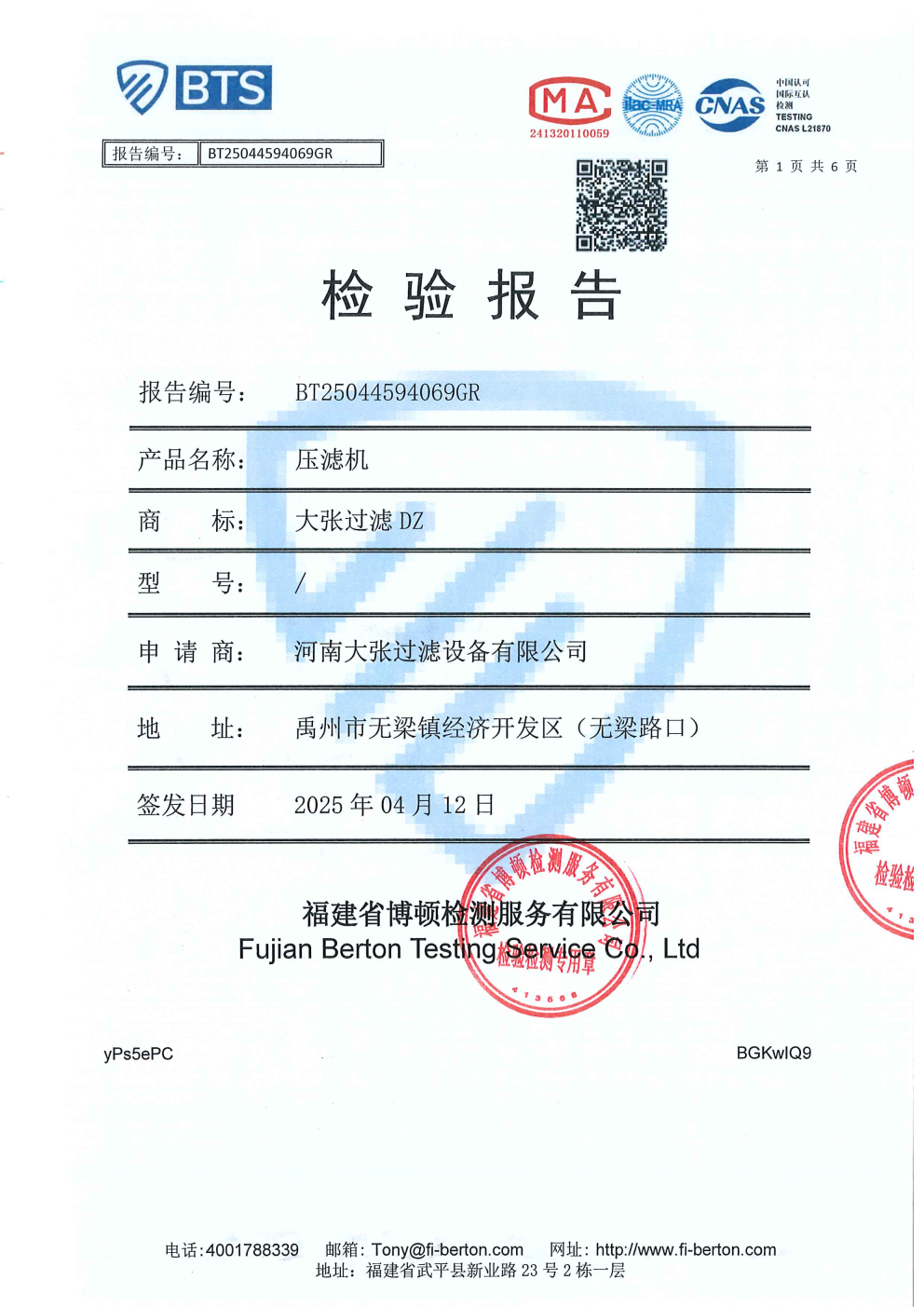
- Filter press test report BT25044594069GR, issued 2025-04-12 by Fujian Berton Testing Service Co., Ltd., against JB/T 4333.2-2013.
- EAC Declaration of Conformity ЕАЭС N RU Д-CN.PA08.B.88796/23, issued 2023-10-19 and valid to 2028-10-18 for the EAEU market, under TR TS 010/2011 and TR TS 020/2011.
- Intellectual property management system certificate 404IPJ240986R0M to GB/T 29490-2023, issued 2024-10-15.
- High-tech Enterprise certificate GR202341002931, issued 2023-11-22.
- Invention patents covering plate materials and machine structures, including ZL 2021 1 0708980.0 (reinforced and toughened modified polypropylene filter plate composite), ZL 2019 1 0275647.8 (center-alignment clamping device), ZL 2022 1 0459734.0 (fully automatic filter with forced discharge) and ZL 2022 1 0761239.5 (composite material preparation).
- Quality control and commercial terms: ISO 9001 with complete machine operation testing; minimum order quantity of 1 unit; production lead time of 15–30 working days; 1-year warranty with installation guidance and remote technical support.
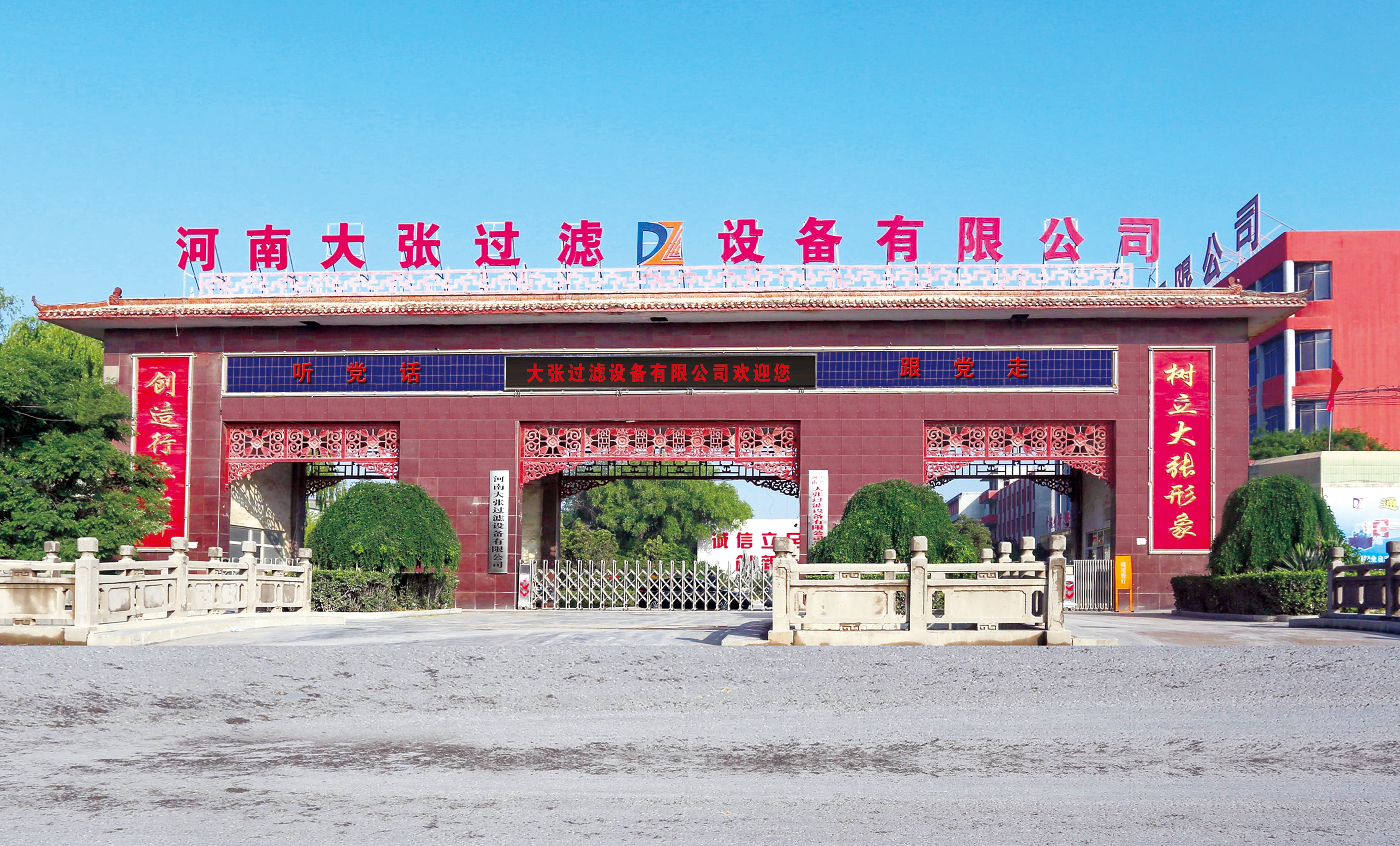
Manufacturing capacity belongs in the same verification step. The production facility has a monthly capacity of approximately 250 sets, and products are exported to more than 100 countries and regions across Asia, Europe, North America, South America, Africa and the Middle East.
Market context: why this comparison is becoming more consequential
Third-party data explains why buyers are paying more attention to mechanism rather than category:
- The global membrane filtration market was valued at USD 19.4 billion in 2025, according to Grand View Research.
- Asia Pacific accounted for a 36.5% revenue share of that market in 2025, also reported by Grand View Research.
- China's filter press exports under HS 84212910 reached USD 170,236,194 in 2023, based on China Customs figures reported in secondary trade analysis.
- Filter presses account for approximately 22% of the global sludge dewatering system market, according to a 2024 market research estimate.
The directional reading is straightforward. Dewatering demand is concentrated in the region where most filter press manufacturing capacity is located, and the mechanical filter press remains the dominant technology within sludge dewatering. In a market of that shape, differentiation between competing offers is less likely to come from the category label and more likely to come from mechanism selection — whether a project buys a squeeze, a washing system, or both — and from the evidence a supplier can present for the specific model.
Outlook
Two directions look durable for automatic filter press design. The first is deeper integration of cloth management and automation, from automatic high-pressure water flushing to automatic cloth moving, because these functions directly reduce manual maintenance load in continuous plants. The second is continued plate-material development: membrane plate structures, high-temperature-resistant materials, impact-resistant materials and toughened polymer plate technologies all affect how a press performs under demanding conditions.
DAZHANG's stated research scope covers filtration equipment, polymer filter plate materials, membrane filter plate structures, intelligent control systems, high-temperature-resistant materials and impact-resistant materials, supported by the Henan Provincial Enterprise Technology Center and the Henan Provincial Engineering Technology Research Center for New Solid-Liquid Separation Equipment. For buyers, the implication is that the next round of membrane-versus-water-flush comparisons will turn less on headline pressure numbers and more on plate material, control level and the completeness of the auxiliary package.
FAQ
What is the fundamental difference between a membrane filter press and a water-flush filter press?
Both are automatic filter presses for batch solid-liquid separation. A membrane filter press adds a secondary pressing stage: membrane plates expand after filtration and squeeze the cake, as in the XMAG series, which operates at 0.6–2.0 MPa feed pressure with a 1.6 MPa squeezing pressure. A water-flush filter press, such as the 320–2000 Series, instead uses automatic high-pressure water flushing to clean the filter cloths, and operates at 0.4–2.0 MPa filtering pressure. One design targets cake moisture; the other targets cloth condition and maintenance load.
Which design is more suitable when lower cake moisture is the primary requirement?
Where the target is lower cake moisture in fine or compressible solids, the secondary squeeze is the mechanism that changes the result, because cloth cleaning alone does not apply additional pressure to the cake. In reference installations, a membrane filter press running for more than three years in sludge dewatering at an industrial wastewater treatment plant and environmental-protection engineering company is reported with lower cake moisture and stable operation, and a 1100/1500 Series mobile filter cloth membrane press in mining and wastewater duty with higher dewatering efficiency and lower cake moisture. Final confirmation should be based on a filtration test with the actual material, using a laboratory filter press with a 0.32 m² filter area and 0.6 MPa feed pressure.
When is an automatic water-flush filter press the more suitable choice?
It is the more suitable choice when cloth blinding, retained solids and manual cleaning labour dominate operating cost, rather than cake dryness. The 320–2000 Series is an automatic filter press with automatic high-pressure water flushing, a 1–1000 m² filter area, 0.4–2.0 MPa filtering pressure and PP filter plates on a carbon steel frame, applied in wastewater, chemical, mining, metallurgy, petroleum and food duties. In a reference installation at a chemical enterprise and wastewater treatment plant end-user, a single unit in service for more than three years is reported with higher filtration efficiency and cleaner filter cloth.
How do the two designs differ in filter area, plate size and pressure ranges?
The water-flush 320–2000 Series covers 1–1000 m² at 0.4–2.0 MPa filtering pressure. The XMAG membrane series covers 30–1000 m² with plate sizes of 870–2000 mm, 0.6–2.0 MPa feed pressure and 1.6 MPa squeezing pressure. The 1100/1500 Series mobile filter cloth membrane press covers 20–291.2 m² with plate sizes of 1100/1500 mm and 0.6–4.0 MPa filtering pressure. The ranges overlap between roughly 30 m² and 1000 m², so area alone rarely decides the choice; pressure type and mechanism do.
Can both press types be customized or supplied under OEM and ODM arrangements?
DAZHANG provides OEM, ODM and custom manufacturing services for membrane filter presses, with production services covering OEM, ODM and custom manufacturing modes. Customization options include filtration area, plate size, plate material, frame material, washing system, pressure, filter cloth, voltage and automation level. Production capacity is approximately 250 sets per month, lead time is 15–30 working days, and the minimum order quantity is 1 unit. Delivery includes installation and commissioning according to contract, with acceptance based on factory testing plus on-site acceptance.
What documentation should a buyer request before confirming an order?
Request model-specific plate and frame specifications, the relevant test evidence and applicable market documents. For DAZHANG filter presses this includes test report BT25044594069GR issued 2025-04-12 by Fujian Berton Testing Service Co., Ltd. against JB/T 4333.2-2013, EAC Declaration ЕАЭС N RU Д-CN.PA08.B.88796/23 valid to 2028-10-18, IPMS certificate 404IPJ240986R0M to GB/T 29490-2023, and invention patents covering filter plate materials and machine structures. Buyers should also confirm ISO 9001 quality control with complete machine operation testing, the 1-year warranty, installation guidance and remote technical support scope.
Background information on the manufacturing base, product range and quality system referenced in this comparison is available in the DAZHANG Filtration company profile. Product and capability details can also be reviewed at dazhangfilterpress.com.
Have Questions or Need More Details?
Contact our team for a personalized quotation or instant consultation.
Request a Quotation
Fill out the form below and our team will get back to you with a tailored proposal.
WhatsApp Direct Chat
Prefer to chat in real-time? Message us on WhatsApp for instant assistance & quick answers.
- Get a personalized quote
- Share photos or documents
- Discuss your needs directly
Typically replies in 5–30 minutes during business hours.