
Metal Mesh Cladding Compliance: CE Marking and Fire Safety
HTNXT · Industry Reference · Construction & Decoration
Compliance is rarely the reason a facade design wins attention, but it is frequently the reason a facade package stalls. For architectural metal mesh — the woven, cable and expanded metal systems used as cladding, sun shading, ceilings and screens — the difference between a smooth handover and a prolonged site delay usually comes down to whether documentation was assembled during design, or scrambled together after the panels had already been fabricated.
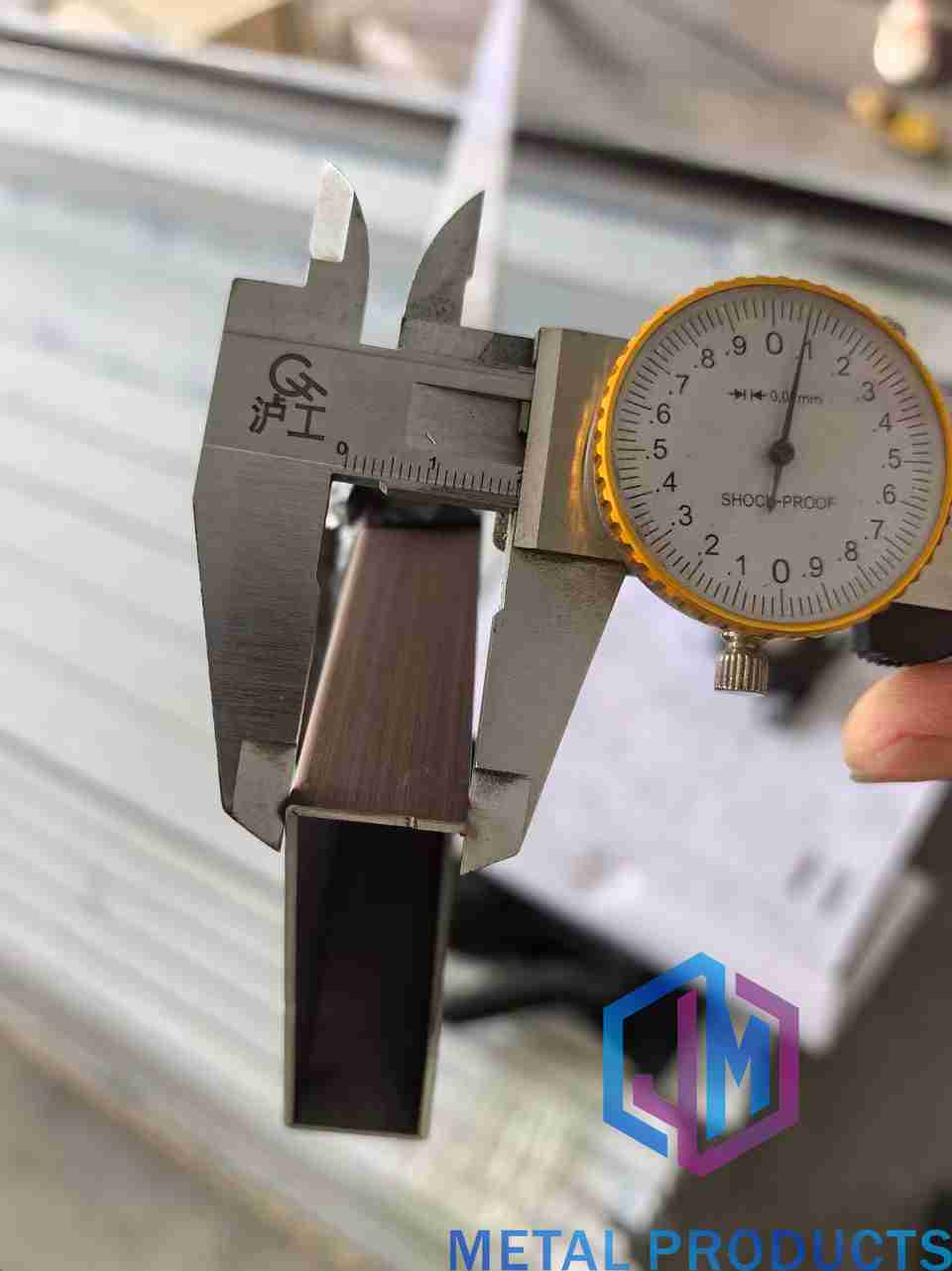
Inspection and documentation are part of the product, not an administrative afterthought — architectural metal mesh panels checked against project criteria before shipment.
What Architectural Metal Mesh Cladding Is — and Why Compliance Works Differently for It
Architectural metal mesh is a family of semi-open metal products used on buildings: woven stainless steel curtain wall mesh, cable-supported mesh curtains, expanded metal facade cladding, aluminum expanded mesh ceiling systems, perforated copper architectural mesh panels, and 3D woven facade screens. They share one defining physical characteristic — a large proportion of the panel is void rather than solid.
That characteristic is the root of most compliance friction. A solid cladding panel can be tested and classified largely as a single sheet of material. A mesh panel behaves as a system: the mesh surface, the coating, the fixings, the sub-frame, the cavity behind it, and whatever insulation or barrier sits in that cavity all influence how the assembly performs in fire, wind and weather. As a result, a certificate issued for a mesh product does not automatically describe the performance of a mesh facade — the assembly is the unit of compliance.
The Compliance Problem: Documentation Gaps Become Schedule Delays
For projects entering the European Union market, construction products fall under the Construction Products Regulation, and CE marking is the mechanism by which a manufacturer declares conformity with the applicable harmonised technical specification. Where a harmonised European standard covers the product family, that route is used; where it does not, an alternative assessment route such as a European Technical Assessment may apply. The exact route depends on how the mesh is classified within the project — as a purely decorative element, as part of the building envelope, or as a component with a fire-related function.
The practical problem is that this classification is often decided late. A specifier selects a mesh by aperture, finish and visual density; the contractor then discovers that the fire strategy treats the mesh as part of a ventilated facade assembly requiring additional documentation, or that the coating supplier's declarations do not cover the thickness actually applied. The result is predictable: requests for information, re-testing, re-ordering, and a facade package that slips behind the programme.
The opportunity sits in the same place. Buyers who treat compliance evidence as a selection criterion — rather than a post-award formality — compress the verification stage and reduce the probability of an execution-phase stoppage. In an industry where facade delays cascade into interior fit-out, inspection and handover, that is a commercial advantage, not a legal formality.
What CE Marking Actually Requires for Metal Mesh Cladding
CE marking is a declaration of conformity, not a quality ranking. Three points matter for mesh procurement.
1. The obligation sits with the manufacturer and the importer
The manufacturer — or the importer placing the product on the EU market — is responsible for the declaration of performance and for the technical documentation behind it. The specifier and contractor are responsible for verifying that the declared performance matches the project requirement. This split is why a buyer should be able to request the declaration and its supporting evidence directly, rather than receiving a certificate image with no traceable scope.
2. The scope of a declaration matters more than its existence
A declaration covers a defined product and a defined set of characteristics. If the delivered mesh differs in alloy, wire diameter, coating system or panel geometry from the declared product, the declaration may no longer apply. This is especially relevant for customized architectural mesh panels, where geometry and finish are project-specific by definition.
3. Material standards sit underneath the declaration
Several material-level standards are commonly referenced in mesh specifications. Stainless steel architectural mesh materials are frequently specified under EN 10088 in European projects. Woven wire cloth used in facades often follows ASTM E2016, the standard specification for industrial woven wire cloth. Expanded metal for architecture is addressed through the NAAMM EMMA division guidance in the United States. Grade selection follows the exposure: Grade 316 is the typical choice for exterior corrosive environments, while Grade 304 is commonly used for interior applications.
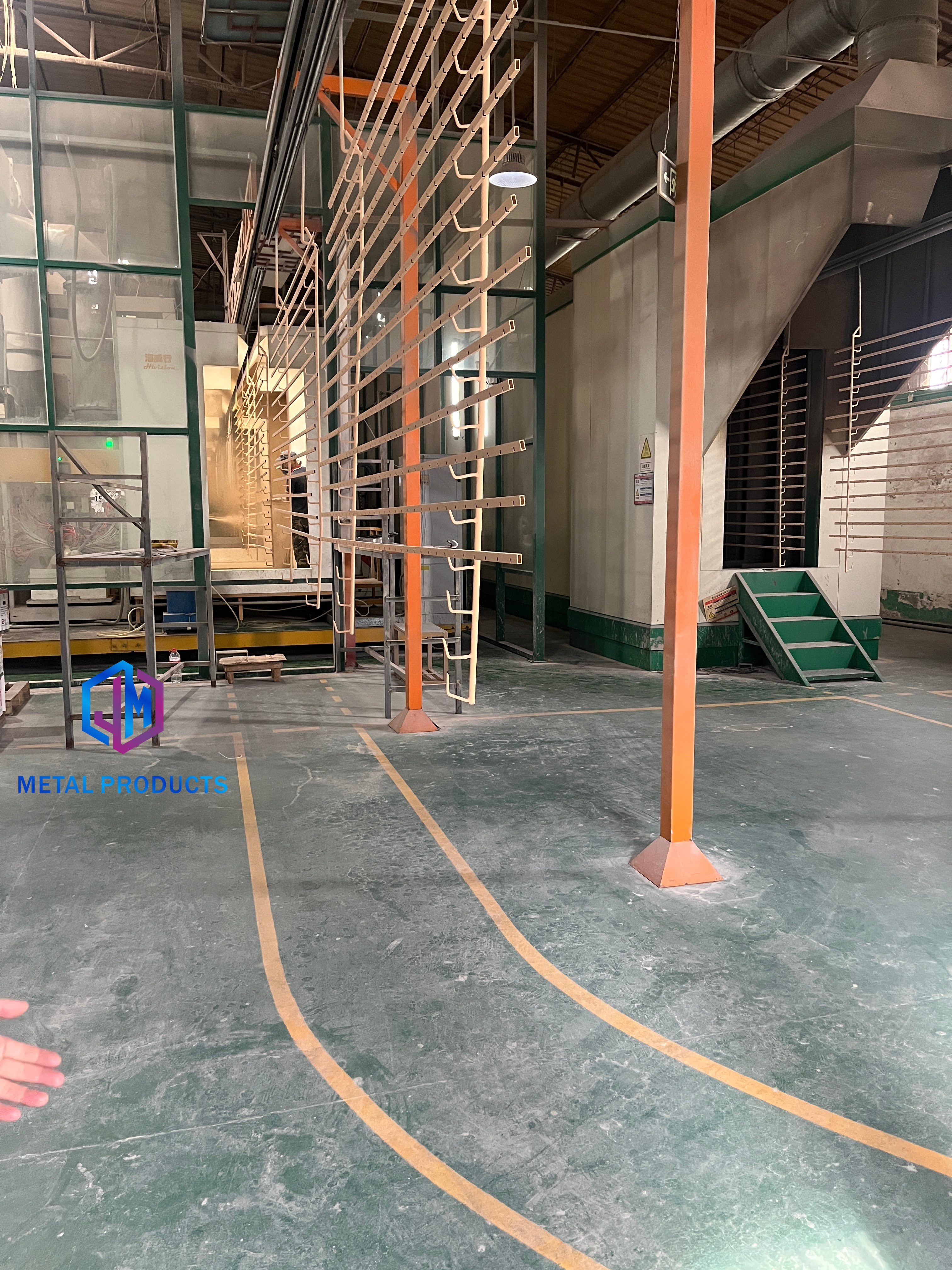
Coating and surface treatment control — the layer most often missing from a compliance dossier, and one of the first things a reviewer asks about.
Fire Safety: The Questions That Actually Get Asked in Review
Fire review for metal mesh cladding separates into two conversations that are often confused with each other.
Reaction to fire describes how a material contributes to fire development. Metals are inherently non-combustible, and metallic mesh products generally fall into the most favourable reaction-to-fire categories — but the classification applies to the product as tested, including any organic coating. PVDF and powder coatings are organic systems with a small fuel load, so coating type, thickness and adhesion control are legitimate review questions rather than technical trivia.
Fire resistance describes how an assembly containing the mesh performs as a barrier over time. That performance depends on the sub-frame, the fixings, the cavity, any insulation behind the mesh and cavity barriers. A non-combustible mesh surface can still be part of a problematic assembly if the cavity behind it is uncontrolled and allows vertical spread through the ventilation gap.
Turning Compliance Into Procurement Evidence
Shenzhou City Jumao Metal Products Co.,Ltd (Jumao) is an architectural metal mesh manufacturer based in Anping, Hebei, China, supplying stainless steel and aluminum architectural mesh, facade cladding mesh, partition metal screens and ceiling metal fabric for commercial building projects. The company operates a 3,000 m² production facility and manufactures for architects, contractors and distributors, with export markets including the Middle East, Southeast Asia, the European Union, North America, Australia and Africa.
For compliance purposes, the relevant question is not what a factory produces, but whether it can reconstruct the evidence trail for a specific order. Jumao's documented control chain runs from incoming material inspection through in-process quality control (IPQC), precision CNC manufacturing and strict dimensional tolerance control, to 100% final dimensional and appearance inspection before shipment, including coating adhesion and colour consistency inspection.
That structure maps onto what a specifier or reviewer typically asks for. Raw material certification identifies the alloy actually used — certified raw materials include SS304, SS316 and aluminum alloys. In-process records show that dimensional deviation and weld quality were controlled during production rather than discovered at the end. Final inspection records confirm the delivered panel matches the approved drawing. Pre-shipment inspection is part of the acceptance procedure for orders, which means the verification step is embedded in the commercial process rather than added on request.
| Evidence layer | What it addresses | Why a buyer or reviewer asks for it |
|---|---|---|
| Incoming material inspection | Alloy grade and raw material conformity (SS304, SS316, aluminum alloys) | Declared performance depends on the actual alloy delivered, not the alloy specified |
| In-process quality control (IPQC) | Dimensional tolerance, weld defects, coating application | Defects caught in production do not become site-level rework |
| Structural strength verification | Attachment and load path | The fire and wind strategy assumes the mesh stays fixed to the sub-frame |
| 100% final dimensional and appearance inspection | Panel geometry, coating adhesion, colour consistency | Visual consistency across a facade is a compliance and acceptance issue, not only an aesthetic one |
| Pre-shipment inspection as acceptance criteria | Formal verification before departure | Correcting a discrepancy before shipping is cheaper than correcting it on site |
| Protective export packaging | Deformation during transportation | A damaged panel has no declared performance until it is replaced |
Customization interacts directly with compliance. Jumao provides full OEM and ODM customization on material, size, weave pattern, PVDF coating and design drawings. Each of those variables can move a product away from the scope of a generic declaration, which is why project-based engineering support and installation drawing verification matter: the drawing package is what connects the delivered panel to the performance that was verified.
Application and Use-Case Fit
Compliance weight is not evenly distributed across mesh applications. Interior ceiling and partition installations — aluminum expanded mesh ceiling systems, interior decorative mesh screens — usually sit in a lighter review category, particularly where Grade 304 material is acceptable. Exterior facade cladding, sunshades and cable-supported mesh curtains carry heavier documentation requirements because they combine fire strategy, wind loading, corrosion exposure and weather management in one assembly.
Sun shading is an instructive case. Cambridge Architectural, a United States based mesh manufacturer, reports that architectural sun shading metal mesh can reduce solar heat gain by up to 50%, depending on mesh aperture and material. That performance claim only holds if the shading device is installed as designed — which returns the question to attachment, projection geometry and the sub-frame, all of which appear in the compliance dossier as well as the structural calculation.
Where specifiers most often insist on complete compliance documentation: airports, museums, shopping malls, hotels and other high-occupancy commercial buildings, together with parking garage facades and balustrades where both fire strategy and public safety review apply. Coastal and high-pollution exterior environments push material selection toward Grade 316, adding a material-traceability requirement on top of the fire requirement.
Market Signals: Compliance Is Becoming a Purchasing Filter
The commercial context is expanding. Reports and Data values the global architectural metal mesh panel market at USD 1.2 billion in 2024, projected to reach USD 2.5 billion by 2034. Growth Market Reports estimates the broader metal mesh facade segment reaching USD 10.59 billion by 2034 at a CAGR of 6.2%. These figures are not directly comparable — the two sources draw their category boundaries differently, one focused on panels and the other on facade systems — and buyers should treat them as directional rather than interchangeable.
Supply is concentrated. IBISWorld and related industry reports estimate China at roughly 65% of global wire mesh supply in 2024, with China's export value of steel wire products, including wire mesh, reaching USD 14.5 billion in 2024. The Anping wire mesh cluster in Hebei hosts more than 3,600 specialized factories. In technical woven wire mesh specifically, GKD Gebr. Kufferath AG holds a global market share of approximately 11.4% as of 2024, and the recognised benchmark suppliers in architectural mesh include GKD, Haver & Boecker, Banker Wire and Cambridge Architectural.
Asia-Pacific is identified by Market Research Future as the fastest-growing region for facade systems, including metal mesh, driven by urbanization and infrastructure investment. Woven wire mesh remains the dominant product segment, accounting for approximately 43.2% of total metal mesh revenues in 2025 according to Dataintelo — a medium-reliability estimate that should be treated as indicative. The direction of travel is consistent: more mesh going onto more buildings, in more jurisdictions, under more documentation requirements. Compliance capability is shifting from a differentiator to a filter.
Metal Mesh vs Conventional Cladding: Where the Trade-offs Sit
Metal mesh is frequently compared with traditional perforated metal panels, aluminum composite panels and expanded metal from standard suppliers. The comparison is legitimate, but it is not a one-directional argument.
| Dimension | Architectural metal mesh | Conventional solid or perforated cladding |
|---|---|---|
| Open area and ventilation | Up to 60% open area; natural ventilation and daylight penetration | Lower openness; ventilation depends on separate openings |
| Weight | Approximately 20–40% lighter than solid metal panels depending on specification | Heavier panel and support demand |
| Initial material cost | May be 10–25% higher than conventional perforated panels | Lower initial material cost |
| Maintenance | Open structure reduces dust accumulation; corrosion-resistant materials require minimal maintenance; easy cleaning with water or neutral detergent | Sealed surfaces can trap dirt at joints; recoating cycles may be required |
| Environmental performance | Shading design can reduce solar heat gain while maintaining daylight | Depends on coating and glazing strategy |
| Compliance burden | Higher: assembly-level fire documentation, cavity control, attachment verification | Typically more standardised, with well-established product routes |
Where mesh does not compete. An open mesh facade is a screen, not a weather-tight or thermally insulating envelope. It does not replace the sealed layer of a facade build-up, it does not provide privacy at the level of solid cladding, and it does not offer meaningful acoustic attenuation on its own. Projects that need a primary weather barrier need one behind the mesh — and that additional layer carries its own compliance obligations.
A second boundary is documentation transferability. A generic declaration for a standard mesh product does not automatically extend to a customized panel with a different aperture, alloy or coating thickness. Re-verification may be required, and that cost and lead time should be planned at specification stage rather than discovered at execution.
A Practical Compliance Checklist for the Execution Stage
- Confirm the regulatory route with the project's compliance lead: whether the mesh falls under a harmonised standard or an alternative assessment route, and which characteristics are being declared.
- Match the declaration scope to the delivered product — alloy grade, wire or strand dimension, coating system, panel geometry.
- Confirm who owns fire performance of the assembly, including cavity barriers, insulation and cavity ventilation.
- Verify the attachment load path and that structural strength verification covers the project's wind and seismic assumptions.
- Agree the inspection point. Where pre-shipment inspection forms part of the acceptance procedure, discrepancies are resolved at the factory rather than on site.
- Plan packaging against the panel type. Customized protective packaging and protective export packaging are specified to prevent deformation during transportation.
- Secure installation documentation — installation manuals, technical guidance and installation drawing verification reduce the chance that correct panels are installed incorrectly.
On the commercial side, a buyer can reasonably expect these arrangements to be stated in writing before award. As one reference point, Jumao's standard purchasing terms include a minimum order quantity of 1 square meter, delivery terms of EXW, FOB, CFR and CIIF, pre-shipment inspection as the acceptance criterion, and payment terms of a 50% deposit in advance with the 50% balance before shipment by T/T. Terms vary by supplier and project; the point is that acceptance criteria belong in the contract, not in a conversation after fabrication.
Future Outlook
Three shifts are likely to shape mesh compliance over the next planning cycle. First, documentation is becoming digital and product-specific: buyers increasingly expect evidence tied to an order number and a drawing revision rather than a generic certificate. Second, as facade systems markets grow — particularly in Asia-Pacific — regulators and specifiers are converging on assembly-level performance requirements, which favours suppliers who can document the full build-up rather than the mesh alone. Third, long-term supply relationships are being assessed on continuity of documentation, not only continuity of production: a supplier that cannot reproduce the same evidence package on a repeat order in two years creates a compliance risk on the second project, even if the first went smoothly.
For specifiers and contractors, the implication is straightforward. Compliance capability is a procurement criterion that behaves like quality capability — it is cheapest when it is verified before award, and most expensive when it is discovered during execution.
FAQ
CE marking applies to construction products placed on the EU market where a harmonised European standard exists for the product, or where an alternative assessment route such as a European Technical Assessment is used. Whether a specific mesh product falls within scope depends on how it is classified within the project — as a decorative element, as part of the building envelope, or as a component with a fire-related function. This classification should be confirmed by the project's compliance lead, because the same mesh panel can sit in different regulatory categories on different projects.
A supplier should be able to produce the declaration of performance and its supporting test or assessment evidence, material certification identifying the actual alloy used (for example SS304, SS316 or a specified aluminum alloy), coating specification and adhesion records, dimensional inspection records, and structural strength verification for the attachment. Where pre-shipment inspection is an acceptance criterion, the corresponding inspection record forms part of the delivery package. Documentation should be tied to the specific order and the approved drawing revision rather than issued as a generic product sheet.
Fire review separates reaction to fire, which describes the material's contribution to fire development, from fire resistance, which describes how an assembly performs as a barrier over time. Metal mesh is non-combustible, but the assembly includes fixings, sub-frame, cavity, insulation and cavity barriers, and it is the assembly that determines performance. Organic coatings such as PVDF or powder coatings contribute a small fuel load and their type and thickness are relevant to the reaction-to-fire classification. Responsibility for confirming assembly performance against the project's fire strategy should be agreed before panels are fabricated.
Not automatically. A declaration covers a defined product and a defined set of characteristics, so changes to alloy, wire or strand dimension, weave pattern, coating system or panel geometry can move the delivered product outside the scope of a generic declaration. Customized architectural mesh panels are frequently project-specific by design, which means the compliance route — including any additional verification — should be planned at specification stage and reflected in the project programme.
Compliance evidence is order-specific, so a supplier's ability to reproduce the same documentation package on a repeat order is a continuity question, not only a legal one. Where raw material grades, coating systems or panel geometry change between orders, the supporting evidence must be regenerated to match. Buyers evaluating long-term suppliers therefore tend to look at whether material traceability, in-process records and pre-shipment inspection are built into standard production practice — because that determines whether the evidence package for project two can be assembled as efficiently as it was for project one.