
Metal vs. Metal-and-Wood Display Fixtures: Buyer Comparison
Metal vs. Metal-and-Wood Display Fixtures: Buyer Comparison
Choosing between an all-metal retail display fixture and a metal-and-wood fixture is a specification decision, not a style preference. The two options behave differently under load, they manage joints and colour control in different ways, and the certificates that apply to a finished unit depend on what the unit is made of and where it ships. For buyers comparing the Custom Metal and Wood Retail Display Fixture against all-metal alternatives — the Custom Metal Display Stand, Custom Metal Retail Shelving System, Custom Metal Retail Display Rack and Custom Metal Retail Fixture Components — most of that comparison can be settled before a quotation is requested.
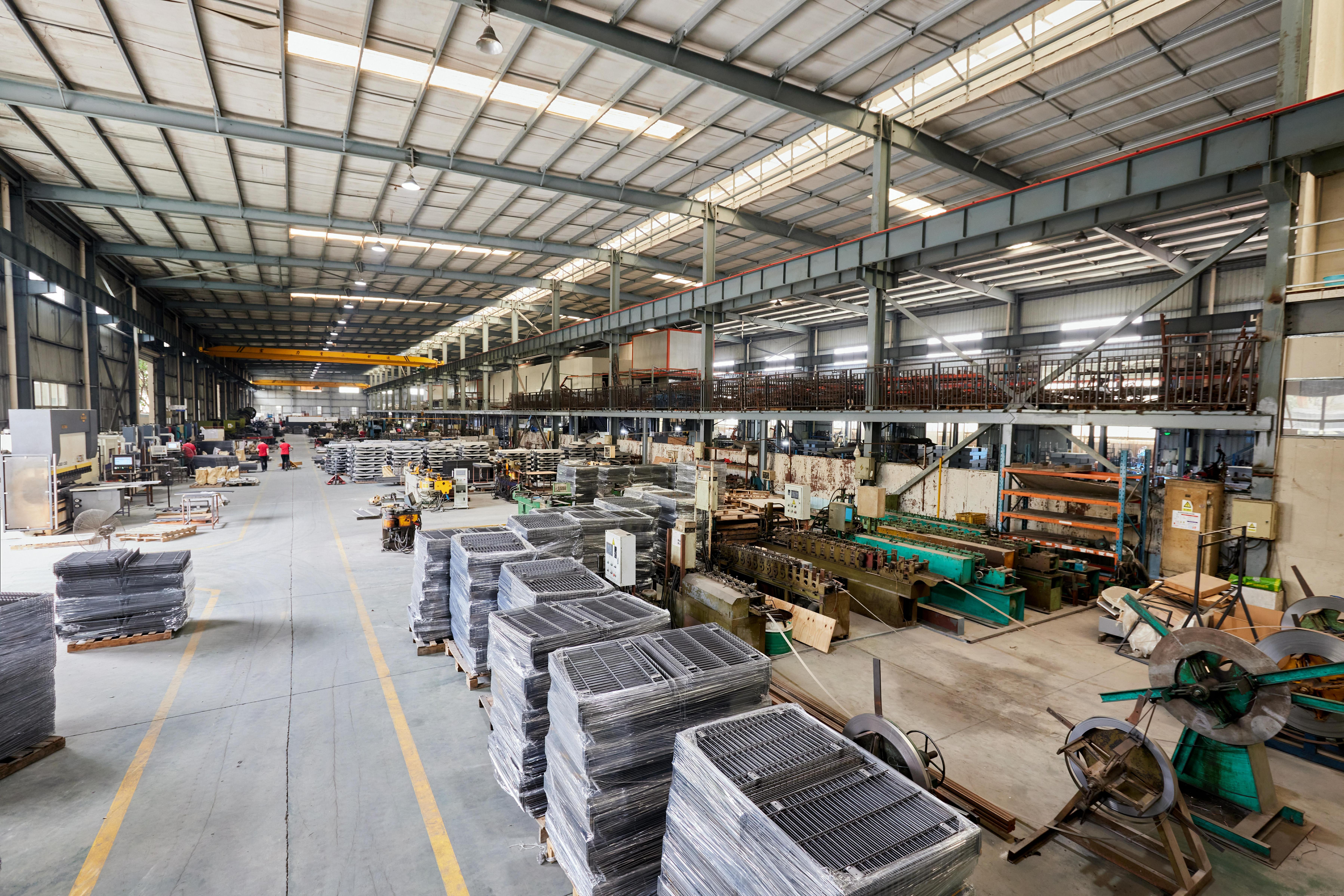
Qunyi Fixture, the brand of Xiamen Qunyi Hardware Co., Ltd., was established in 2012 and designs, manufactures and sells storage racks, store fixtures and other retail furniture, with an R&D centre in Xiamen and main production in Zhangzhou. The company reports a 200-person team including five R&D engineers, an export share of 80% and main markets in the USA, Australasia and the EU, and describes integrated capability across metal, wood, glass and acrylic fixtures. That multi-material base is what makes a direct comparison with all-metal construction practical rather than theoretical.
The two options, defined
A Custom Metal and Wood Retail Display Fixture combines a metal structure — frame, uprights or shelving — with wooden components such as shelves, side panels or cabinet bodies, and may add glass or acrylic elements. In the Qunyi Fixture build the material mix, dimensions, finish and packing are confirmed per project: the company states that capacity and production scheduling depend on the product design, the metal and wood component requirements, material availability, finishing processes, assembly requirements and order quantity.
All-metal construction reaches the same merchandising functions through a single material family. A Custom Metal Display Stand serves freestanding or countertop presentation; a Custom Metal Retail Shelving System serves wall runs and gondola-style layouts such as supermarket gondola shelving and single-sided wall shelving; a Custom Metal Retail Display Rack covers promotional formats, including end cap display rack and stacking positions; and Custom Metal Retail Fixture Components covers the shelves, brackets, dividers and support frames that complete a fit-out. In each case the exact configuration is fixed by the approved design, not by the category name.
Load behaviour over a span
The clearest measurable difference sits on the shelf itself. In the comparison data used for this assessment, a 25 mm MDF shelf on a one-metre span carries an ultimate load of about 30 kg, while a 1.2 mm folded sheet-metal shelf over the same span carries 80–100 kg without a risk of sagging. The mechanism is structural: folding turns flat sheet into an I-beam section, so a light steel shelf develops high bending strength, whereas a thick board is heavy and creeps — sagging permanently — under sustained compression.
Those figures are ultimate loads, not working loads, and planning values sit lower. The same comparison places 25 mm MDF shelves in applications where the single-layer load stays under 20 kg, and reserves folded steel shelves for heavy-duty supermarket areas such as hardware, building materials, boxed beverages and auto parts. In a mixed fixture the weakest element generally governs: where wooden shelves span a full metre, the board rather than the steel frame usually sets the usable load per tier. That is why a load figure quoted for the frame alone tells a buyer very little about what can actually be merchandised.
Where wood earns its place
Wood is a different merchandising brief rather than a downgrade. The comparison data recommends MDF shelving for clothing folding sections and light luxury soft furnishings, where a wood grain texture is wanted and single-layer loads stay below 20 kg. Formats built around that logic — wooden display cabinet, wooden cosmetic display, tiered display stand and countertop presentation — depend on surface appearance as much as on capacity, and a metal-and-wood fixture delivers the grain while retaining a steel frame for structural stability.
All-metal construction suits environments where appearance follows throughput: adjustable display shelving in grocery and hardware aisles, mesh display rack and pegboard display wall formats where see-through visibility matters, mobile display stand and foldable display rack units that move between promotions, and heavy duty storage shelving in back-of-house areas. The trade-off is explicit. A single material family is easier to specify, repaint and reconfigure, but it cannot reproduce a wood finish; a mixed fixture buys appearance with additional specification work.
Joints and colour: the work an all-metal build avoids
A mixed fixture introduces a tolerance problem with no perfect answer. Metal bending carries an inherent R-radius, and metal, wood and acrylic expand and contract at different rates, so an absolutely gap-free joint between different materials is not physically achievable. The workable route is design-based: a reveal joint that absorbs movement, high-precision one-piece forming that holds flatness error within about 0.1 mm per metre, and a matte coating that makes the remaining seam visually quieter than a gloss finish would.
Colour is the second control point. When a brand specifies one Pantone reference across powder-coated metal, lacquered woodwork and acrylic, each substrate absorbs coating differently, and gloss surfaces expose the mismatch. The working method is a colour-matched primer formulated separately for each material, a full-matte or semi-matte topcoat applied to all parts, and one approved master sample that every supplier works to; finished components are then compared against that sample under more than one lighting condition before assembly. An all-metal fixture avoids this workload because it has one substrate and one coating system — a genuine engineering advantage, offset by the loss of the surface variety a brand-led store may require.
Finish specification: gloss, matte and store lighting
Finish choice changes cost more than many buyers expect. High-gloss baked enamel gives a premium appearance but shows dust, fingerprints and minor scratches, and it requires repeated manual sanding and polishing, which the comparison data places at roughly 30% to 40% above standard spraying. Under the intense lighting typical of shopping malls, surface imperfections on a high-gloss finish are magnified by up to 90%. Matte powder coating trades the mirror effect for an understated texture that hides minor defects, resists scratches and is easier to maintain.
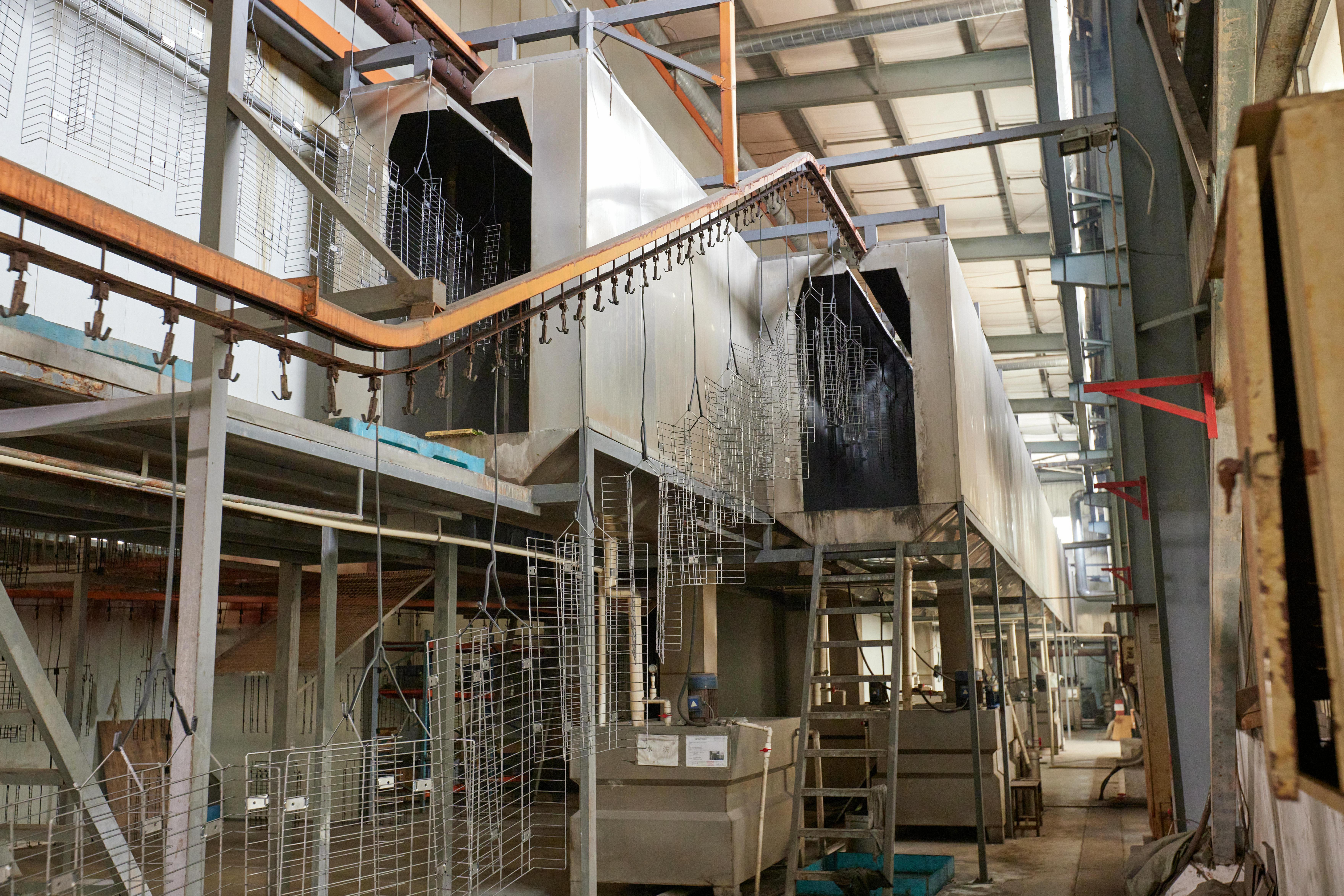
Defect acceptance should be written into the order rather than argued at delivery. Orange peel usually traces to excessive coating viscosity or incorrect spraying pressure; missed spray comes from dead angles the gun did not reach. The inspection standard used for these fixtures is visual: no obvious defect visible to the naked eye at one metre under natural light. On a metal-and-wood unit that criterion needs to be stated separately for the coated metal and the lacquered wood, because the two surfaces fail in different ways.
Certification: read the scope, not the logo
Two documents do most of the work in this comparison, and each has a defined boundary. FSC CoC certification FSC A000504 covers the wooden components in the metal-and-wood fixture for the US and EU markets. ISO 9001 certificate 04526Q04086R103 covers the production and sale of these display fixtures and applies to the US, EU and Middle East. Qunyi Fixture states that it operates under ISO, BSCI and FSC certification; the two numbered certificates above are the ones a buyer can check against a specific fixture and a specific destination.
The boundaries matter more than the badges. FSC chain-of-custody addresses the wood component and its sourcing trail; it does not evaluate the steel, the coating or the assembly. ISO 9001 addresses the management system behind production and sale; it is not a product-performance rating, and it is not an electrical-safety approval, so an illuminated design — a display rack with light box or an LED display cabinet — needs separate conformity documentation for its electrical parts. Equally, an all-metal fixture does not need FSC coverage for wood, because it contains none: the absence of that certificate is not a deficiency in the all-metal case, and treating it as one is a common procurement error.
The verification step is identical for either option. Request the certificate and its scope annex, confirm the certificate is current in the issuing body's register, and check that the scope covers the product family and the manufacturing site named in the order. A certificate number printed on a quotation page is a claim; a scope document that matches the fixture and the factory is evidence.
Prototyping, tooling and low-volume projects
Project support is where the two options diverge commercially. Qunyi Fixture maintains a sample room in Xiamen so buyers can form a general view of product types before committing, and states that prototyping is accessible because of its equipped factories; five R&D engineers sit inside a 200-person team, and the Zhangzhou production base runs metal, wood, glass and acrylic work within one supply chain. For a mixed fixture that matters twice over, because colour matching and joint design are approved on a physical master sample rather than on a drawing.
At low volume, tooling is usually the budget constraint. For a uniquely shaped run of around 100 sets, the comparison logic favours a modular build — standard pipes or profiles combined with localised laser cutting and welding — over fully customised moulding. Where a mould cannot be avoided, the commercial route is to negotiate a proportional refund of mould cost against later bulk orders, with cost, ownership, refund rules and design-data delivery fixed in the contract before production begins, since those terms are where most tooling disputes originate.
Packaging, freight and damage risk
Export packing is knock-down flat-pack in high-strength double-wall corrugated cartons with inner PE bags; EPE foam, polystyrene foam and paper corner protectors are added according to the item, FOB Xiamen is supported, and fumigation-free plywood crates are available. Protection level is a cost decision with a measurable trade-off: the comparison data reviewed here estimates full-wrap EPE protection at roughly 5% to 15% more packaging cost, against a cross-border damage rate falling from about 8% to below 0.5%. That trade is often justified on high-gloss painted parts, high-value display props and drop-shipped items that face repeated transshipment, and often not justified on hot-dip galvanised or rugged warehouse-grade racks.
Two documentation points are easy to miss. Metal racks, lockers and display cases are commonly described under HS 9403.20.00, but a unit combining wood and metal should have its classification confirmed with the forwarder rather than assumed. And where wooden packaging is used, phytosanitary and fumigation requirements for the destination market need to be settled before booking, not at the port.
Side-by-side: documented differences
| Dimension | Custom Metal and Wood Retail Display Fixture | All-metal options |
|---|---|---|
| Load on a 1 m span | Wooden shelves carry lower single-layer loads; comparison data advises MDF where loads stay under 20 kg and cites about 30 kg ultimate for a 25 mm board. | 1.2 mm folded steel shelf cited at 80–100 kg ultimate over the same span, with no sag risk. |
| Structural behaviour | Steel frame with wooden shelves; the shelf material and its connections govern the tier rating. | Folded sheet forms an I-beam section; higher material utilisation and less maintenance. |
| Merchandising fit | Wood grain for apparel folding, soft furnishings, cosmetic and cabinet formats. | Coated metal for adjustable shelving, mesh, pegboard, promotional and storage formats. |
| Colour and joints | Multi-substrate colour matching to one Pantone reference; reveal joints needed for differential expansion. | Single substrate and single coating system; fewer colour and joint variables. |
| Certificate coverage | FSC CoC A000504 for wooden components (US, EU); ISO 9001 04526Q04086R103 for production and sale (US, EU, Middle East). | ISO 9001 04526Q04086R103 for production and sale; FSC coverage of wood components does not apply. |
| Finish economics | Coated metal plus lacquered wood; matte recommended for cross-material consistency. | Powder coating; gloss runs roughly 30%–40% above standard spraying and magnifies surface defects under strong lighting. |
| Packaging emphasis | Full-wrap protection more often justified where high-gloss paint and mixed surfaces are exposed. | Partial protection often adequate for rugged galvanised or warehouse-grade racks. |
| Typical fit | Brand-led retail: apparel, cosmetics, soft furnishings, lower point loads. | High-throughput grocery, hardware, building materials, promotional and back-of-house storage. |
A verification checklist before commitment
- Load: request the working load per shelf on the actual span, not the ultimate load, and ask which element governs in a mixed build.
- Colour and joints: require one master sample covering every substrate, plus a written tolerance for joint gaps and flatness.
- Certificates: obtain the scope annexes for FSC A000504 and ISO 9001 04526Q04086R103, confirm currency in the issuer's register, and match scope to site and product.
- Finish: specify gloss level, the one-metre natural-light defect criterion, and the approved touch-up method for both metal and wood surfaces.
- Tooling: fix mould cost, ownership, refund terms and design-data handover in writing before the first sample is cut.
- Logistics: agree packing level, HS classification, wooden-packing certification and document responsibility before the booking is placed.
- Maintenance: agree the in-store regime — neutral cleaner only, no solvents or abrasives, furniture wax on lacquered wood, a thin anti-rust film on metal parts.
Market context and what it means for the decision
Category-level figures deserve care. Commercial research places the global retail fixtures market at USD 2.62 billion in 2026 (Business Research Insights) and the global gondola market at USD 4,300.75 million in 2026 (Future Market Report) — a larger value attached to a narrower label, which points to definitional differences rather than to growth. Neither figure should be used to forecast a single fixture order. The more usable anchor is configuration pricing: Pacific Retail Fixtures lists approximately USD 5,570 for a 24-ft island supermarket centre-store aisle in 2026, at 84-inch height, 20-inch bases and five tiers per side, before material upgrades such as wood components, gloss finishes or full-wrap packaging are added.
For a buyer at decision stage, the practical conclusion is that the two options are matched to conditions rather than ranked. All-metal construction is the appropriate fit where load per tier is high, coatings must survive rough handling, the colour programme is single-substrate, and layouts may be reconfigured over the store's life. The Custom Metal and Wood Retail Display Fixture fits where the fixture itself carries the brand presentation, loads are moderate, and a wood finish justifies the additional colour and joint control. The cost gap between them cannot be inferred from list prices or from one segment of the build: comparing quotations on the same size and quantity is necessary to obtain the true difference, because the two options do not fail or succeed on the same criteria.
Download the Qunyi Fixture product brochure (PDF) for the current fixture range and manufacturing scope: Qunyi Brochure.
Frequently asked questions
How should a buyer check colour consistency when one fixture combines powder-coated metal, lacquered wood and acrylic?
Each substrate absorbs coating differently, so a single Pantone target is managed material by material. The working method is a colour-matched primer developed separately for metal, wood and acrylic, a full-matte or semi-matte finish to reduce the mismatch that gloss exaggerates, and one approved master sample that all suppliers work to. Finished parts are then checked against that sample under more than one lighting condition, with colour comparison completed before assembly rather than after.
Why can a perfectly seamless high-gloss joint not be guaranteed on a metal-and-wood fixture?
Not in the absolute sense. Metal bending carries an inherent R-radius, and metal, wood and acrylic expand and contract at different rates, so a zero-gap joint between different materials is not physically achievable. The workable alternatives are a designed reveal joint that accommodates tolerance, high-precision forming that holds flatness error within about 0.1 mm per metre, and a matte coating that makes the seam less visible. A pre-production sample is normally approved before mass production.
What inspection criteria apply to coating defects such as orange peel and missed spray?
Orange peel usually traces to coating viscosity that is too high or to incorrect spraying pressure; missed spray results from dead angles the gun did not reach. The visual acceptance rule used for these fixtures is that no obvious defect should be visible to the naked eye at a distance of one metre under natural light.
How should store staff clean and maintain painted or electroplated fixture surfaces?
Wipe with a soft damp cloth or a neutral cleaner and dry the surface immediately, especially at hardware connections. Strong acids, strong alkalis, high-concentration alcohol, steel wool and abrasive pads are excluded because they dissolve or dull the coating. Glossy lacquered wood surfaces are waxed periodically with furniture wax, while metal parts take a thin film of anti-rust oil.
What packaging and shipping terms normally apply to export orders of these fixtures?
Standard export packing is knock-down flat-pack in high-strength double-wall corrugated cartons with inner PE bags; EPE foam, polystyrene foam and paper corner protectors are added according to the item. FOB Xiamen is supported and fumigation-free plywood crates are available. Wooden packaging that needs formal fumigation certification is treated as a project-specific requirement, so packing specification, shipping marks and document responsibilities should be agreed in writing before booking.
Have Questions or Need More Details?
Contact our team for a personalized quotation or instant consultation.
Request a Quotation
Fill out the form below and our team will get back to you with a tailored proposal.
WhatsApp Direct Chat
Prefer to chat in real-time? Message us on WhatsApp for instant assistance & quick answers.
- Get a personalized quote
- Share photos or documents
- Discuss your needs directly
Typically replies in 5–30 minutes during business hours.