
Metalized Paper Laminating Machines: Project Fit and Integration
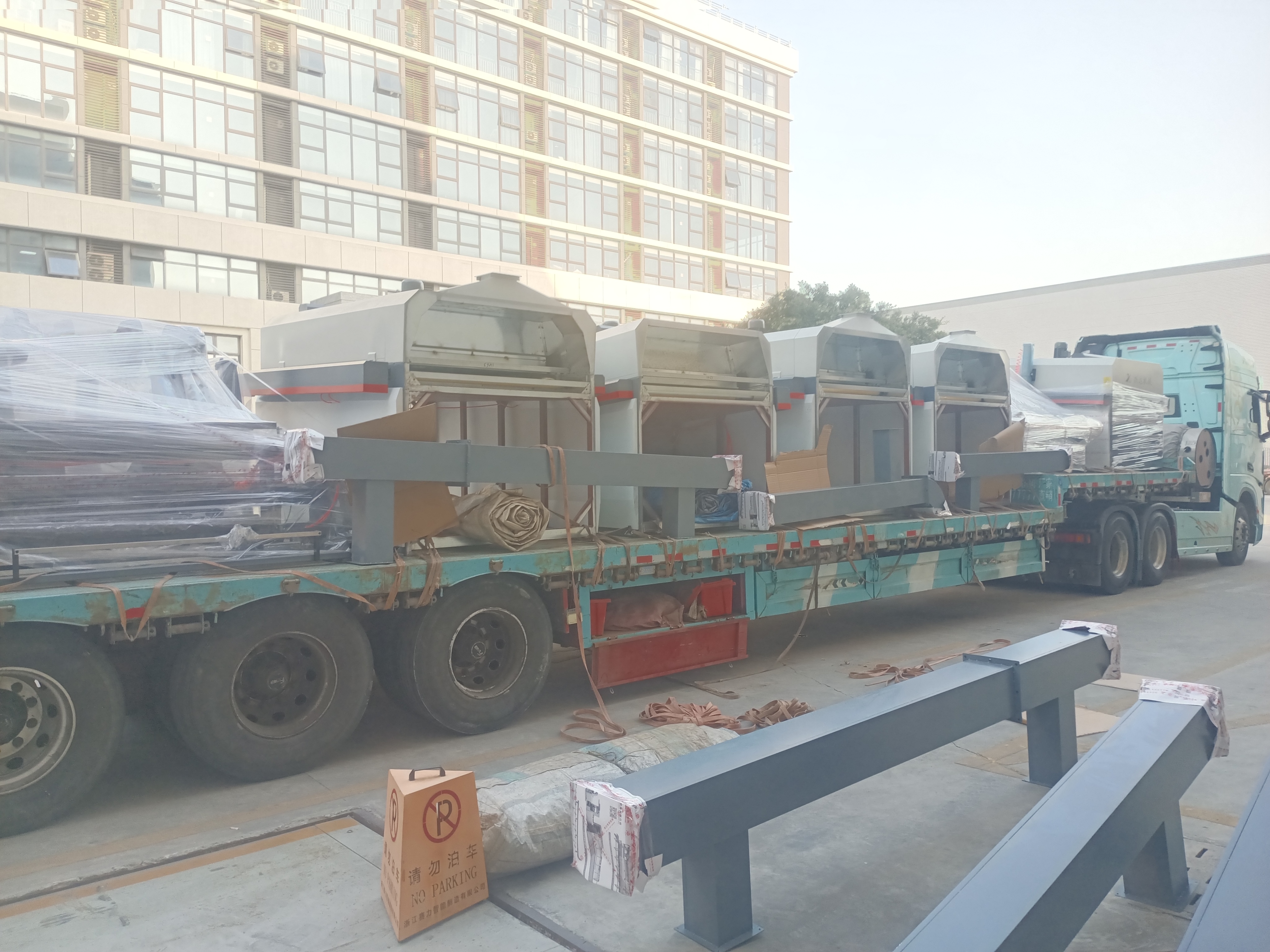
A gantry-type laminating machine being transported for international delivery — matching equipment to site logistics is part of project planning.
The global metallized paper market was valued at USD 4.85 billion in 2025, with the lamination segment accounting for 57.4% of revenue in 2024. For packaging converters, the practical question is not only which laminating machine can produce a bright metallized finish, but which configuration will operate reliably under the specific conditions of a given production site — humidity, dust, temperature, and shift patterns. This article examines how project-level requirements shape the selection of a metalized paper laminating machine, using technical specifications and deployed performance data sourced from a Chinese manufacturer, Wenzhou Yueda Packaging Machinery Co., Ltd. (YUEDA).
The Challenge: Generic Machines vs. Site-Specific Conditions
Metalized paper is widely used in cigarette boxes, wine packaging, cosmetics containers, and tea packaging. The Asia-Pacific region accounts for nearly 40% of the global market, driven by expanding tobacco and beverage industries. Yet production environments vary considerably between plants. A facility in Southeast Asia may operate two or three shifts under 60–70% relative humidity, while a cosmetic packaging line in a dust-controlled workshop runs at 30–35°C. A machine built for a temperate, dry factory may struggle with adhesive curing or tension control in humid coastal conditions.
The opportunity lies in matching machine architecture, control systems, and auxiliary equipment to the actual project environment. Converters that make the right match typically report higher uptime, lower material waste, and more predictable quality.
How YUEDA Approaches Project-Specific Machine Configuration
Wenzhou Yueda Packaging Machinery Co., Ltd. designs and manufactures metallized board processing equipment in Longgang, Wenzhou, China. The company was established in 1998 and produces gantry-type laminating (coating) machines, automatic positioning cutters, and high-precision sheeting systems. More than 70% of its mechanical equipment output is exported to Southeast Asia, the Middle East, South America, and Africa.
For project-based buyers, YUEDA offers two relevant machine families:
- Gantry Multifunctional Aluminum Metallized Cardboard Laminating (Coating) Machine — Model YDLM1300B: a gantry-type integrated laminator and coater with a working width of 600–1200 mm, machine speed up to 180 m/min, and working speed of 15–150 m/min. It handles PET film (0.012–0.014 mm), OPP film (0.02–0.06 mm), paper (100–350 g/m²), and aluminum foil (0.006–0.007 mm).
- Automatic Aluminum Metallized Cardboard Laminating & Coating Machine — Model ZNFH1300-1400-1500: a no-shaft rewind integrated machine with roller face widths from 1300 mm to 1500 mm, suitable paper weight of 40–450 g, and running speed of 5–150 m/min. The drying path is 12.5 m, which supports water-based laminating.
Both machines can be integrated with feeding, stacking, waste edge trimming, and PLC-based control. The YDLM1300B uses photoelectric positioning and automatic operation, while ZNFH uses PLC control with touch-screen monitoring.
Technical Parameters That Matter in Project Matching
A project-specific approach means comparing environmental and operational requirements against machine capabilities. The following parameters are particularly relevant.
1. Humidity and Temperature Range
In high-humidity factories (60–70% RH), water-based adhesives and film tension behavior change. YUEDA machines have been used in such environments with continuous 24/7 operation, as indicated by application records from Vietnam and Thailand. The YDLM1300B’s heating tunnel can run up to 130°C, with a tunnel length of 15 m and a heated length of 8.6 m, allowing sufficient drying even when ambient humidity is high.
2. Continuous Operation and Duty Cycle
For cigarette and wine packaging, production lines often run around the clock. The ZNFH series is designed for 24/7 continuous operation environments. The electrical control system uses PLC and real-time monitoring to maintain stability over long shifts.
3. Precision and Registration
Cosmetic gift boxes require clean edges and consistent cut length. The associated YUEDA cutters, such as model DWLX1300L-1400L, deliver blank cutting accuracy of ±0.1 mm and longitudinal/transverse tracking accuracy of ±0.1 mm. The positioning sheeter YD1300-1400 also achieves ±0.1 mm sheeting accuracy. In a cosmetic packaging project in Vietnam, a YUEDA installation maintained ±0.1 mm cutting precision with zero rework rate.
4. Dust and Static Control
Dust-free workshops (30–35°C) demand anti-static design and sealed machine covers. Application data for cosmetic packaging lines specify special requirements of dust-proof design, high-precision calibration, and anti-static design. This is a scenario where machine auxiliary systems—not just the main frame—must be considered.
5. Power Supply and Voltage
YUEDA machines are nominally built for AC380V±10%, 50Hz. For export projects, voltage and frequency can be customized (110V/220V/380V). This is a basic but often overlooked project-matching requirement.
| Feature | YDLM1300B | ZNFH1300-1400-1500 |
|---|---|---|
| Machine type | Gantry-type laminating & coating integrated | Automatic aluminum metallized paper laminating & coating |
| Working width / roller width | 600–1200 mm | 1300 / 1400 / 1500 mm |
| Max machine speed | 180 m/min | 150 m/min (running speed) |
| Substrates | PET film, OPP film, paper, aluminum foil | Paper 40–450 g, aluminum foil 0.006–0.01 mm, film 0.01–0.1 mm |
| Drying path | 15 m heating tunnel | 12.5 m |
| Control | Automatic with photoelectric positioning | PLC control, touch screen monitoring |

PLC-based electrical control cabinet — a key component for stable 24/7 operation.
Real Project Applications and Evidence
The most direct evidence for project fit comes from installations with documented operational history.
Cigarette Packaging Plant in Thailand
A cigarette packaging factory in Thailand operates two YUEDA units for high-speed laminating of cigarette boxes. The equipment has been in service for more than five years. Reported results include a 30% efficiency increase and a 15% reduction in material waste. The installation is rated for humidity-resistant, 24/7 continuous operation and is supported by automatic PLC control with temperature management.
Cosmetic Packaging Plant in Vietnam
A packaging factory in Vietnam uses one YUEDA system for precision cutting of cosmetic packaging. The project requires ±0.1 mm accuracy and a dust-proof design with fast size changeover. Over five years, the reported results are ±0.1 mm cutting precision, zero rework rate, and 20% labor cost savings.
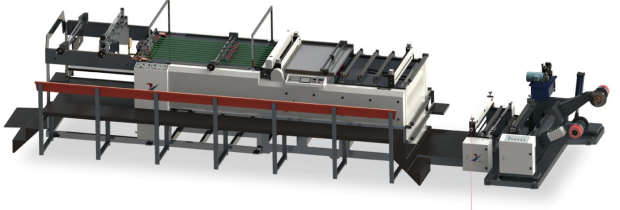
High-precision cutting equipment complements the laminating line in multi-step packaging projects.
These two cases illustrate how the same manufacturer supports different environmental and operational benchmarks through different machine families and auxiliary configurations.
Market Trends Supporting Project-Specific Investment
The demand for metalized paper is expected to remain robust. The global market reached USD 4.85 billion in 2025, and wet laminating machines still hold about 70% of the industrial laminating market share in 2025. Meanwhile, China’s machinery exports rose 15.7% year-on-year in early 2026, with a shift toward higher-value-added equipment such as servo-controlled and CNC machines. For buyers, this means that the available technology base is expanding, and configuration options like servo drives, PLC control, and integrated coating are becoming more common even in mid-range Chinese manufacturing.
The Asia-Pacific region, with nearly 40% of world demand, is a major destination for this equipment. Project-specific selection becomes a competitive advantage in these markets because environmental conditions often differ from the temperate factory settings assumed in generic specifications.
Comparison with Traditional Laminating Approaches
Traditional solvent-based laminating lines or non-integrated machines require separate coating and laminating steps, with more manual intervention and longer setup times. Integrated gantry-type machines combine lamination and back-coating in a single line, using four-roller transfer coating and anilox roller direct coating. This reduces material handling and improves consistency.
However, integrated machines have a limitation: they are larger and more expensive than a basic semi-automatic laminator, and they require more floor space, higher power capacity (for example, YDLM1300B has a heating power of 216 kW and working power of 80 kW), and more skilled maintenance. For a small workshop with low humidity, low output, and simple product specifications, a high-speed integrated machine may be over-engineered. In such cases, a simpler machine with lower capacity could be financially more rational. This is a real boundary that project evaluators should consider.
Future Outlook: Intelligence, Modularity, and Service Networks
As packaging quality standards rise, metalized paper laminating machines are moving toward more intelligent control. Servo drives, real-time tension monitoring, and automatic fault diagnostics are becoming standard on new models. The next phase will likely involve modular designs that allow converters to reconfigure machines as product portfolios change.
For manufacturers like YUEDA, project support is also an after-sales question. YUEDA reports 24-hour online response, 48-hour domestic on-site service, and 72-hour overseas remote debugging. Its lead times are 30–45 days for standard models and 45–60 days for customized models, with a 100% pre-shipment two-hour continuous run test. These operational commitments are part of project planning for importers and converters.
FAQ: Project-Specific Questions Buyers Ask
Q1: What are the standard environmental requirements for YUEDA metalized paper laminating machines?
YUEDA machines have been applied in dust-free workshops with temperatures between 30–35°C, as well as in environments with 60–70% humidity and 24/7 continuous operation. Special requirements for these applications include humidity-resistant, dust-proof, and constant temperature design.
Q2: Which YUEDA machine is suitable for high-speed laminating of cigarette packaging in a 24/7 line?
The ZNFH1300-1400-1500 automatic aluminum metallized cardboard laminating & coating machine is designed for 24/7 continuous operation and performs high-speed laminating and coating for cigarette packaging. It supports paper from 40–450 g and running speeds of 5–150 m/min.
Q3: What machine features are needed for a cosmetic packaging production line?
Cosmetic packaging lines typically require automatic operation with photoelectric positioning or PLC control, plus dust-proof design, high-precision calibration, and anti-static design. YUEDA’s positioning sheeter (YD1300-1400) and high-precision double rotary sheet cutter (DWLX1300L-1400L) provide ±0.1 mm accuracy, which supports the zero-rework target reported in a Vietnamese cosmetic packaging project.
Q4: Can the gantry-type laminating machine (YDLM1300B) handle high humidity?
Yes. Application data for the printing and packaging industry in Asian markets shows the YDLM1300B operating under 24/7 continuous operation with 60–70% humidity conditions. It uses a water-based laminating process and a 15 m heating tunnel to manage drying under humid ambient conditions.
Q5: What documented production results are available from real installations?
A cigarette packaging factory in Thailand reported a 30% efficiency increase and 15% material waste reduction over a 5+ year period using two YUEDA units. A cosmetic packaging factory in Vietnam reported ±0.1 mm cutting precision, zero rework rate, and 20% labor cost savings over 5+ years.
For detailed technical specifications and factory capabilities, download YUEDA’s company brochure: YUEDA Packaging Machinery Brochure (PDF).