
Mica Insulation Q&A: Paper Origin, Plants and Acceptance
Mica Insulation Q&A: Paper Origin, Plants and Acceptance
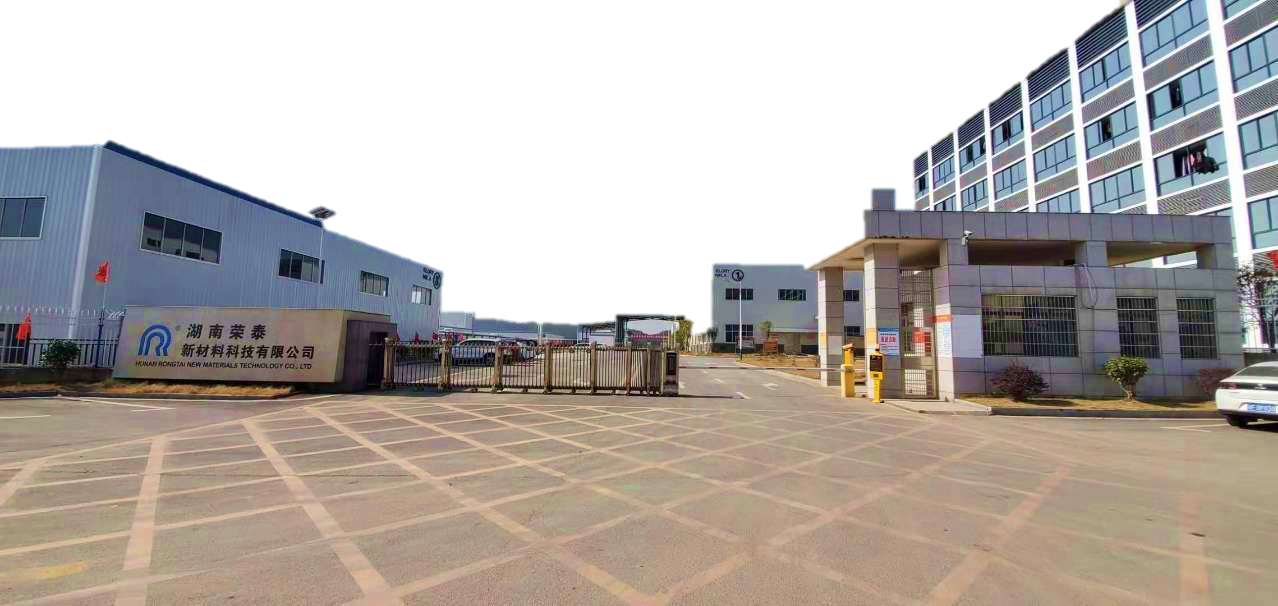
Mica paper is where mica content and thickness consistency are set, before any roll, tape or plate is converted.
Mica insulation projects rarely stall on the technical specification. They stall on the four questions the specification never asks: where the mica paper was made, which plant will run the order, whether the certificates cover the grade being quoted, and what "accepted" means at the receiving dock. For a buyer moving from evaluation into execution, those answers are what turn a quotation into a purchase order.
This Q&A follows the order in which engineering and procurement teams usually close the gap — technical selection first, then origin, plant, credentials, and finally commercial and acceptance terms. The supplier positions below are the ones Glory Mica has published; where a claim needs a document rather than a statement, the article says so.
Glory Mica is a mica insulation manufacturer founded in 1998 whose portfolio covers mica paper, mica roll, mica tape, mica plate and mica sheet, mica tube, mica parts, mica insulator and etched foil mica heaters, produced at plants in Zhejiang and Hunan, with a stated export share of 50% concentrated on the EU and USA.
What has to be verified before a mica insulation quote is orderable?
Four verification layers sit between a technically acceptable quote and an order that can be received, inspected and paid. Each one has a document behind it, and a quote that is silent on all four is not necessarily weak — it is simply unverified, which is usually discovered at incoming inspection or during a customer audit.
- Material origin. Which mica paper was used, whether its origin can be traced per lot, and whether the grade matches the temperature class assumed in the design.
- Manufacturing location. Which plant runs the order, and what that implies for country of origin, audit logistics and lead time.
- Credential scope. Whether management-system certificates and enterprise honors cover the specific product family and remain valid on the order date.
- Acceptance mechanics. Test methods, sampling, third-party inspection rights, delivery terms and payment structure.
Is the mica paper produced in-house?
Yes. Glory Mica states that it produces the mica paper and that it maintains full traceability on the particular purchased mica material, with the ability to guarantee the origin of the mica.
That answer carries more weight than it appears to. Paper making is the stage that fixes mica content, pulp cleanliness and thickness consistency before any roll, tape or sheet is converted, so a supplier controlling paper has a shorter chain between raw mica and the finished insulation — and a clearer explanation when two lots behave differently on the same line.
Read the claim precisely, though. It is a statement about provenance and traceability of the mica material, not a certification of dielectric performance. Three follow-ups convert it into procurement evidence:
- Ask for the origin record that would accompany a specific lot, not a general statement about the mica source.
- Ask which paper grade the quoted item uses — white, gold and synthetic mica are not interchangeable at the same temperature.
- Ask how the paper lot is linked to the finished roll, tape or plate lot, because that link is what makes a complaint traceable rather than arguable.
Where is mica insulation manufactured, and is there an overseas plant?
Glory Mica's manufacturing base is in China across three listed sites. There is no overseas manufacturing plant today: the company states that its main manufacturing base is in China, that it has local overseas sales representatives supporting European customers, and that an overseas factory setup can be evaluated according to long-term project requirements.
| Site | Listed site area | Listed annual output |
|---|---|---|
| Pingjiang Plant | 136,000 m² | 52,000 t/year |
| Xinhuang Plant I | 68,000 m² | 16,000 t/year |
| Xinhuang Plant II | 200,000 m² | 20,000 t/year |
Company-level figures add context for capacity screening: 617 employees, 90+ R&D staff, a stated monthly capacity of 8,000 tons of mica, a 50% export ratio and main markets in the EU and the USA. The mica paper plant is located in Hunan; the Xinhuang and Pingjiang sites account for the plant-area and output figures above.
For buyers, the honest reading of the overseas-plant answer is a planning constraint, not a defect. A European customer gets local sales contact and on-site communication, which shortens response cycles on technical questions, visits and audits. What a European customer does not get is a local production site. Any sourcing plan built on local-content rules, duty engineering or dual-continent supply should assume China origin today and treat an overseas layout as a long-term commercial discussion. Teams that write "local plant" into an assumption sheet without that distinction tend to discover the gap at contract stage.
How should enterprise honors and management-system certificates be checked?
Verify by matching certificate number, issuing body, scope and validity date to the product actually being bought. Counting logos on a brochure verifies nothing. Glory Mica's certificate record lists the following.
| Certificate | Number | Issuing body | Listed scope | Validity |
|---|---|---|---|---|
| ISO 9001:2015 quality management | 03125Q20088R5M | Beijing Sanxing9000 Certification Body Co., Ltd. | Fabrication of mica products | 2025-03-26 to 2028-07-19 |
| ISO 14001:2015 environment management | 03124E20096R5M | Beijing Sanxing9000 Certification Body Co., Ltd. | Fabrication of mica products | 2024-04-25 to 2027-05-15 |
| ISO 45001:2018 occupational health and safety | 03125S1068R2M | Beijing Sanxing9000 Certification Body Co., Ltd. | Fabrication of mica products | 2025-03-26 to 2028-12-15 |
| ISO 50001:2018 energy management (GB/T 23331-2020) | 03126En00019R100 | Beijing Sanxing9000 Certification Body Co., Ltd. | Fabrication of mica products | 2025-03-26 to 2028-03-27 |
| IATF 16949:2016 automotive quality | T-11367/0 | Quality Austria – Trainings, Zertifizierungs und Begutachtungs GmbH | Design and manufacturing of mica products and their assembly parts | 2023-12-04 to 2026-12-03 |
| ISO/IEC 17025:2017 laboratory accreditation (CNAS) | CNAS L18348 | China National Accreditation Service for Conformity Assessment | Testing and calibration services for mica products | 2023-05-18 to 2029-05-17 |
Two practical points follow. First, the scope line matters as much as the standard. The four management-system certificates are scoped to the fabrication of mica products, and the IATF 16949 certificate to the design and manufacturing of mica products and their assembly parts — neither scope should be read as a product-specific performance approval for a particular roll, tube or heater. Second, the IATF 16949 certificate carries a validity date of 3 December 2026. If an automotive audit is scheduled near or after that date, confirm renewal status before the audit rather than during it.
Enterprise honors are a different category of evidence. The company's honor record lists National High-tech Enterprise status, a Zhejiang Provincial Enterprise Research Institute, and recognition as an innovation-leading high-quality development enterprise in Nanhu District in 2021, together with collaboration with Zhejiang University, Zhejiang University of Technology and Zhejiang University of Science and Technology. The company profile additionally describes it as a "Small-sized Giant" enterprise and an "Invisible Champion" enterprise in Zhejiang Province.
Those honors speak to research organization and regional standing. They do not replace a test report, so a technical evaluator should treat them as background credibility while still demanding the document that covers the ordered grade. The same discipline applies to the compliance claims in the company profile — UL and FDA certification of products, and conformity with EU RoHS and REACH requirements. The audit question is rarely "are you compliant" but "which file covers which model, and will it be issued with the shipment".
How does temperature rating narrow the choice before price is compared?
Match the mica type to the continuous operating temperature first, then compare quotations. Glory Mica's published selection guidance uses roughly 700 °C for white mica and mica paper, 750–850 °C for gold mica, and up to about 1000 °C for synthetic mica, with the qualification that exact figures should be confirmed against product data and sample tests. Phlogopite mica products are described in the product literature in the 800–1000 °C continuous range, and the mica roll data lists a maximum temperature of 1000 °C.
The accompanying logic is construction-led rather than rating-led. Where high temperature or fire exposure dominates, synthetic or calcined mica with laminated or stacked structures is the preferred route. Where mechanical support and dielectric spacing dominate, rigid plate formats carry the load. Defaulting to the highest available rating is a common and expensive habit: a higher ceiling usually arrives with a different construction, a different bond and a different price, and buys nothing if the application never approaches it.
Which specification fields decide acceptance on roll, tube, plate and tape?
Lock the fields that a test can measure, at the format level. The table below maps the portfolio families to the parameters that most often produce a rejected lot.
| Format | Portfolio reference | Published points | Lock in the RFQ |
|---|---|---|---|
| Mica roll | R-5461-PG, R-5461-GPG, R-5461-PGP, R-5461-SG, R-5461-SGS, R-5461-GSG, R-5461-COMBI G, R-5461-COMBI GC | Maximum temperature 1000 °C; thicknesses 0.2 / 0.3 / 0.4 / 0.5 mm | Length, mica content and breakdown voltage at the ordered thickness |
| Phlogopite mica tube | Phlogopite mica tube (Muscovite mica tube also listed) | Construction approximately 85% mica and 15% silicone bond | Inner and outer diameter, wall, length, temperature class |
| Mica tape | R-5461-P-GS, R-5461-P-GD, R-5461-P-GFD, R-5461-P-FS; R-5461-S-GS, R-5461-S-GD, R-5461-S-GFD; Calcined Mica Tape R-5461-CM-GS | Portfolio covers phlogopite, standard and calcined tape families | Thickness, width, roll length, core size, adhesion |
| Mica plate / mica sheet | R-5660-H1, R-5660-H3, R-5660-S1, R-5660-S3, R-5660-G1, R-5660-G3, R-5660-T1, R-5660-T3 | Rigid, flexible and glossy formats | Thickness tolerance, size, flexural strength, density |
| Etched foil mica heater | R-5660-E; Mica Heating Elements | Power and voltage customized per application | Wattage, voltage, geometry, dielectric strength |
| Mica insulator / mica parts | R-M259, R-M52; mica parts | Custom shapes and processing | Drawing, material grade, tolerance, surface treatment |
The mica roll row is where most quoting errors happen. Thickness is published as 0.2, 0.3, 0.4 and 0.5 mm, but breakdown voltage only means something next to the thickness it was measured at — comparing a value taken at 0.2 mm with one taken at 0.5 mm tells a buyer nothing about relative quality. Request the tested dielectric value at the ordered thickness, together with mica content, roll length and core data, and the comparison becomes real rather than decorative.
Tube buyers face a related trap. The roughly 85% mica and 15% silicone bond figure describes construction, not a temperature class, and muscovite mica tube is listed alongside phlogopite mica tube. Confirm which mica the quotation uses before assuming the higher ceiling applies.
What can be customized, and what does that change downstream?
Customization is where most capability questions resolve. The documented scope covers material type (white, gold or synthetic mica), thickness and dimensions, power and voltage for heaters, shapes and processing such as die-cutting, stacking and lamination, and surface treatment and bonding methods. MOQ starts at 1 unit, and lead time is quoted at 7 to 30 days.
Four case records show how that scope has been applied in practice:
- A punch-press setup that bends separate mica and stiffeners in one operation and punches aluminium mica sheet, so the part arrives usable without additional processing for industrial heating applications.
- A household appliance line where the objective was mica flexibility, so plates would not break or turn brittle during assembly — addressed through the R-5660 plate series.
- More than five large presses producing large-size mica insulation sheets for electrical and thermal insulation in electric equipment, motors, furnaces and arc furnaces, extending beyond the standard-size limitation of conventional mica tube production.
- Two production lines capable of running mica tape and mica roll widths beyond 1320 mm rather than the normal 1000 mm, for household appliance, fire-resistant cable and new-energy-vehicle customers.
These are the supplier's case records rather than independently audited outcomes. They should be read as capability signals — evidence of the direction in which the process has been pushed — not as a guarantee that an identical result transfers automatically to a different drawing.

Verification and validation equipment: the difference between a datasheet value and an accepted lot is usually the test method behind it.
What are the purchasing terms, and how is acceptance actually run?
The commercial frame is stated plainly: MOQ of 1 unit, delivery under EXW, FOB, CIF and other international trade terms with the specific terms confirmed during commercial negotiation, payment at 30/70, lead time of 7 to 30 days, and 100% testing as the quality-control position. Acceptance runs against the contract and product technical inspection standards, with common tests covering appearance, dimensions, dielectric strength, power and lifetime, and with sample acceptance and third-party inspection arrangeable by agreement.
Because several of those points are negotiated rather than fixed, the useful work happens in the specification annex. A practical acceptance annex carries: the sampling plan and acceptable quality level; the thickness measurement method and tolerance; the dielectric test method, electrode arrangement and conditioning; how mica content is verified; roll length and core tolerance; packaging and marking; who bears third-party inspection cost; and the remedy and replacement window for a non-conforming lot.
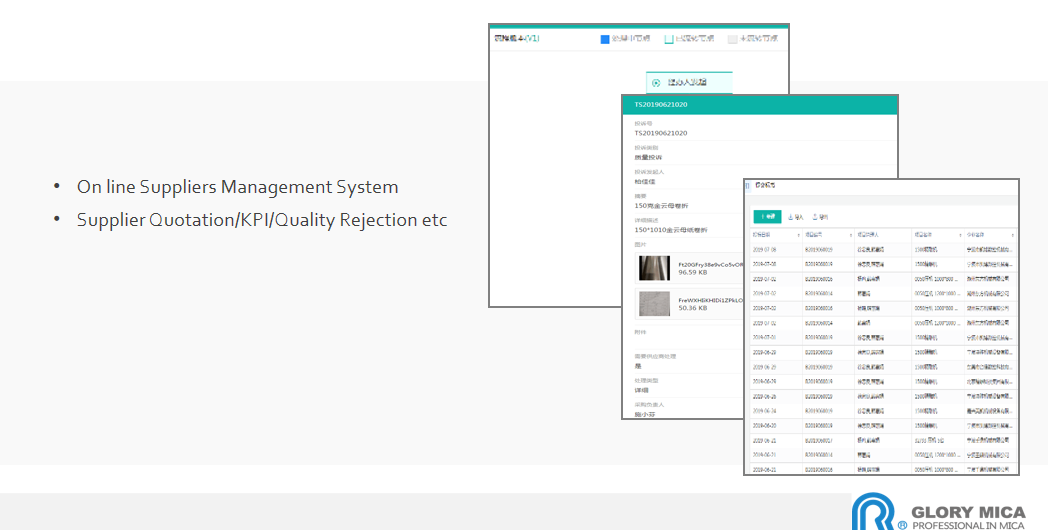
MOQ, delivery terms and acceptance tests are negotiated positions, not fixed catalogue values.
Where are the fit boundaries buyers should price in?
- No overseas manufacturing plant today. Local sales support exists for Europe; local production does not, and an overseas layout is subject to long-term project evaluation.
- Traceability is not performance certification. The origin guarantee refers to the mica material, not to measured dielectric results on the finished part.
- Certificates are scoped to fabrication. ISO, IATF and CNAS records support system and laboratory discipline; product-specific approvals need their own files.
- Validity dates expire. The IATF 16949 certificate runs to 3 December 2026 and must be re-confirmed for audits scheduled around that boundary.
- Published specifications are supplier-reported. For regulated applications, independent test reports should be requested rather than assumed from catalogue values.
- Capacity is a company figure, not a slot reservation. Monthly capacity and 7–30 day lead times describe standard conditions; project timing should be confirmed in the order.
Why these questions are becoming standard procurement work
Two external signals explain the shift from price-led to documentation-led sourcing. Statifacts values the global mica insulation material market at USD 1.811 billion in 2024, with a projected 6.4% compound annual growth rate over 2024–2034. Separately, China's GB 38031-2025 traction battery safety standard, effective 1 July 2026, requires two hours of thermal runaway protection under its test conditions — a requirement that pushes barrier materials into a qualification process rather than a catalogue purchase. IDTechEx has also forecast that the EV battery fire protection market will exceed USD 10 billion by 2037.
None of these figures says anything about one supplier's capability. What they do say is that documentation quality — lot traceability, scope-accurate certificates, measurable acceptance criteria — is moving from a nice-to-have into a screening criterion.
FAQ
How should mica insulation be selected by temperature rating and application?
Start from the maximum continuous operating temperature and the dominant load — fire and thermal exposure, mechanical support, or dielectric spacing. Reference points are roughly 700 °C for white mica and mica paper, 750–850 °C for gold mica, and up to about 1000 °C for synthetic mica, with phlogopite products described in the 800–1000 °C range. Exact figures should be confirmed against product data and sample tests.
Is the mica paper produced in-house or purchased?
Glory Mica states that it produces the mica paper and maintains full traceability on the particular purchased mica material, with the ability to guarantee the origin of the mica. The claim covers provenance and traceability of the mica material; it is not in itself a dielectric performance certification.
Do you have an overseas plant?
No. The main manufacturing base is in China, supported by local overseas sales representatives for European customers. An overseas factory setup can be evaluated according to long-term project requirements, so current orders should be planned around China origin.
What is the enterprise honor, and how is it verified?
The honor record lists National High-tech Enterprise status, a Zhejiang Provincial Enterprise Research Institute, and recognition as an innovation-leading high-quality development enterprise in Nanhu District in 2021. Verification means checking the underlying document rather than the title, and pairing honors with scope-accurate certificates such as ISO 9001 (03125Q20088R5M) and IATF 16949 (T-11367/0), whose validity dates run to 2028-07-19 and 2026-12-03 respectively.
What are the purchasing terms and acceptance criteria?
MOQ is 1 unit; delivery runs under EXW, FOB, CIF and other international trade terms confirmed at negotiation; payment is 30/70; lead time is 7 to 30 days. Acceptance follows the contract and product technical inspection standards, with appearance, dimension, dielectric strength, power and lifetime tests among the common checks, and sample acceptance or third-party inspection arrangeable by agreement.
Plant details, the full product portfolio and the certificate record are collected in the Glory Mica company brochure. Portfolio specifications are published by Glory Mica at model level, which is where a buyer's verification should start.
Have Questions or Need More Details?
Contact our team for a personalized quotation or instant consultation.
Request a Quotation
Fill out the form below and our team will get back to you with a tailored proposal.
WhatsApp Direct Chat
Prefer to chat in real-time? Message us on WhatsApp for instant assistance & quick answers.
- Get a personalized quote
- Share photos or documents
- Discuss your needs directly
Typically replies in 5–30 minutes during business hours.