
Micro Coriolis vs Thermal Mass: A Low Flow Meter Comparison
Independent technology reference · Low flow measurement · Decision stage
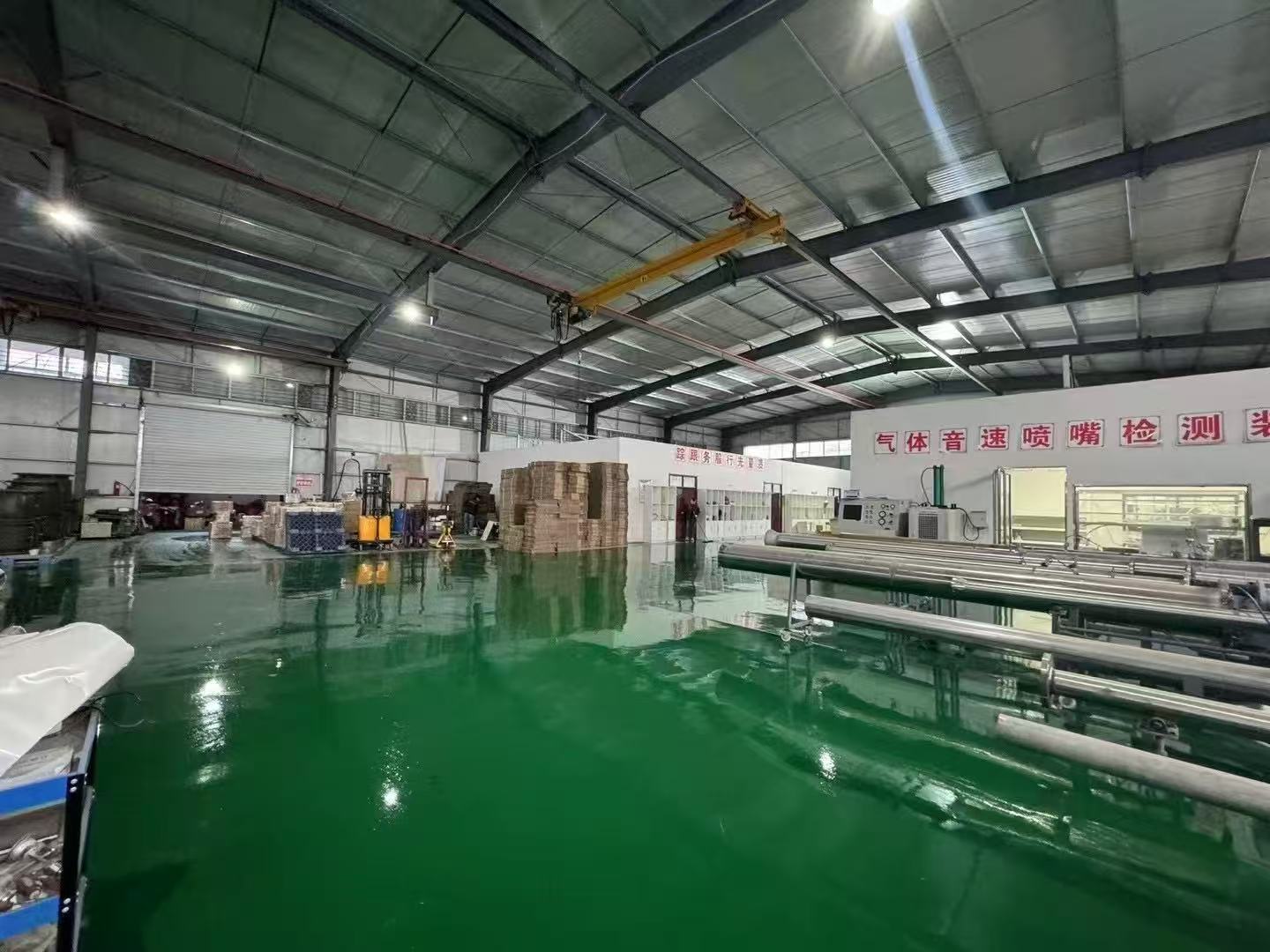
Gas flow calibration bench. Thermal mass meters are verified against the gas they will actually measure, which is one reason medium definition precedes meter selection.
For liquid duty at low flow, a Micro Coriolis meter measures mass directly and is quoted at ±0.2% to ±0.5% accuracy with a low-end capability of 40 g/h. For gas duty at sccm-level flow, thermal mass meters remain the more established route, with micro thermal instruments reaching 2 sccm. Neither technology displaces the other. The decision is set by medium, flow floor, and what the reading is used for.
Why Low Flow Has Become a Specification Problem
Low flow metering is no longer a matter of finding a small meter and bolting it into a small line. The measurement points that matter most in modern process work sit below a few kilograms per hour, where pipe bore, medium behaviour and installation geometry all change the achievable result.
Demand data reflects that shift. Grand View Research reports that the global flow meter market was valued at USD 10.64 billion in 2024, and that the 2-inch and smaller pipe size segment is expected to see the fastest growth through 2030, driven by demand in the pharmaceutical and food and beverage sectors. Those are precisely the line sizes where a Coriolis-versus-thermal decision is actually made.
The same pressure appears in continuous processing. Coherent Market Insights expects the flow chemistry market to reach USD 4.6 billion by 2032 at an 8.1% CAGR, a segment built on precise reagent dosing at low volumetric rates. P&S Intelligence valued the global microfluidic devices market, which includes micro flow sensors, at USD 22.1 billion in 2024, growing at a 12.2% CAGR.
Each of those applications rewards a different measurement principle. That is the practical reason a technology comparison is worth doing before a purchase order, rather than after a commissioning problem.
How the Two Meters Actually Measure
Micro Coriolis. A Coriolis meter oscillates a small-bore tube and reads the phase shift caused by fluid passing through it. Because the shift is produced by mass in motion, the instrument reports mass flow directly rather than inferring it from volume and density. That is why the principle holds for conductive and non-conductive liquids, and for fluids whose density shifts with temperature. In the low flow range, the tube is miniature, and the wetted path in Silver Automation Instruments’ micro Coriolis meter is stainless steel 316L.
Thermal mass. A thermal mass meter introduces heat into the flow and measures the temperature differential, which is a function of how much mass is carrying that heat away. It is inherently a mass-based technique for gases, and it scales down unusually well: Silver Automation Instruments’ micro thermal mass flow meters can measure gas flow as low as 2 sccm.
One standards point is worth clarifying, because it is frequently misapplied in tender documents. ISO 5167:2022, the primary international standard for differential pressure flow measurement devices, governs orifice plates, nozzles and Venturi tubes. It does not qualify Coriolis or thermal instruments. A meter’s compliance case therefore has to be built on the standard relevant to its own principle, plus the application’s safety and material requirements.
Side-by-Side: Micro Coriolis and Thermal Mass
The table below compares the two technologies on attributes that decide low flow projects. Figures shown are those stated for Silver Automation Instruments’ micro Coriolis and micro thermal mass ranges.
| Decision attribute | Micro Coriolis | Thermal mass |
|---|---|---|
| Measurement basis | Direct mass, from Coriolis tube oscillation | Mass, from heat carried away by the flowing gas |
| Media where it is strongest | Liquids and dense fluids; reading does not depend on electrical conductivity | Gases, particularly at very low flow rates |
| Quoted low-end flow | 40 g/h | 2 sccm (gas) |
| Quoted accuracy | ±0.2% to ±0.5% for liquid measurement | Model- and gas-dependent; not directly comparable to the Coriolis liquid figure |
| Wetted construction | Stainless steel 316L | Specified per model; confirm against the process medium |
| Typical duty | Chemical dosing, pharmaceutical liquids, food and beverage mass dosing, fuel and energy measurement | Gas dosing, blanketing and aeration lines, semiconductor gas delivery, laboratory gas flows |
| Main watch-out | Miniature tubes are installation-sensitive; quoted accuracy holds only when the installation guidance is followed | The reading follows gas properties, so a change of composition changes what the calibration means |
Comparison of stated attributes only. Thermal mass accuracy is not presented alongside the Coriolis liquid figure because the two are specified on different bases.
Where Silver Automation Instruments Sits in This Comparison
Silver Automation Instruments is a flow and process instrumentation manufacturer based on Jiang dong Middle Road in Nanjing, Jiangsu, China, founded in 2010. The company builds Coriolis, thermal mass, electromagnetic, vortex, turbine and oval gear flow meters, together with pressure instruments, level measurement and data logging and control equipment. It operates a 10,000 m² facility with 80 employees, an R&D team of 20, and an annual output of 60,000 units, with 95% of production exported, primarily to Southeast Asia, South America and Africa. Products are stated to meet CE, ATEX and ISO 9001 requirements.
Both technologies in this comparison sit inside one product portfolio, which is relevant to the reader: the specification argument is not settled by which meter the supplier prefers, because the supplier offers both. The micro Coriolis range carries the 316L wetted path, the ±0.2% to ±0.5% liquid accuracy band and the 40 g/h low-end figure. The micro thermal mass range covers gas down to 2 sccm.
Third-party trade data offers a separate view of scale. Volza records approximately 91 shipments from Silver Automation Instruments to 36 international buyers in 2024, mainly in the mechanical appliances category, which is consistent with an export-led instrument business rather than a purely domestic supplier.
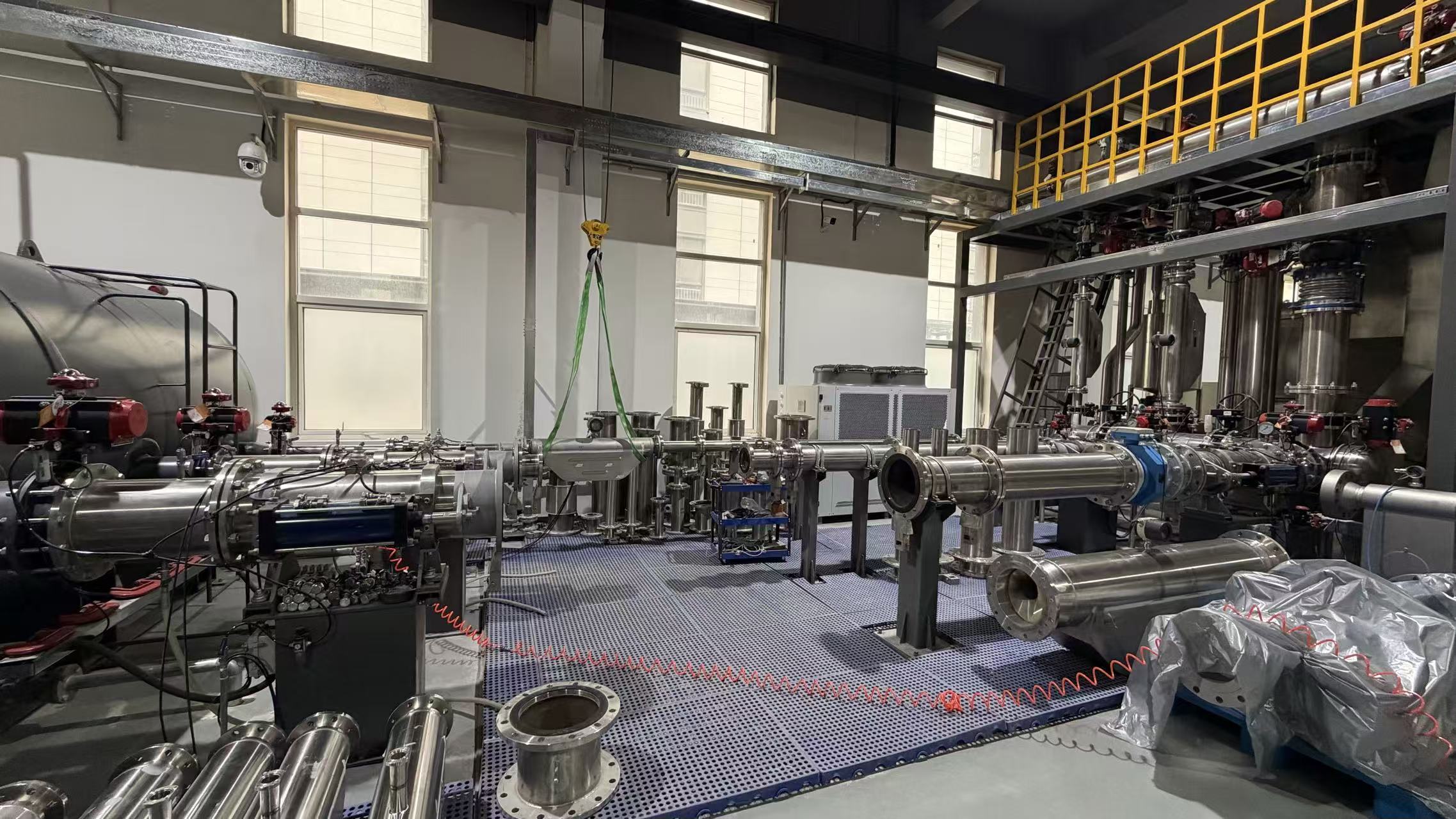
Coriolis calibration bench. At low flow, quoted accuracy is a statement about a tested assembly, not about the tube alone.
Application Fit: Pharmaceutical, Chemical and Food
Pharmaceutical
Pharmaceutical low flow duty usually combines small line size, clean liquids and a documentation trail. A direct mass reading removes the density correction step that volumetric devices require, and the 316L wetted path supports cleaning and material review. The ±0.2% to ±0.5% band is the relevant reference when the measurement feeds a batch record or a dosing calculation. Where the same skid also needs gas flow at sccm level, a thermal mass meter covers that loop, and the two instruments can coexist on one process train.
Chemical and Flow Chemistry
Chemical dosing rewards mass measurement, because reagent density shifts with temperature and concentration while the reaction stoichiometry does not. The 40 g/h floor is the practical dividing line: above it, a micro Coriolis meter is a coherent choice for liquid reagents; below it, the case has to be re-examined on flow range rather than on principle. 316L is a starting point, not a universal answer, and aggressive media require an explicit compatibility check before the meter is ordered.
Food and Beverage
Food and beverage lines combine hygiene requirements with mass-based recipe control, and conductivity-independent measurement matters for products that range from syrups to cleaning fluids. Grand View Research links the fastest growth in sub-2-inch flow measurement to pharmaceutical and food and beverage demand, which places this segment at the centre of the low flow decision rather than at its edge.
Where Each Technology Stops
A comparison that only lists strengths is a brochure. The boundaries matter more at the decision stage.
The Coriolis flow floor. A 40 g/h minimum flow is a real limit. Applications running below that point need a different principle, not a different vendor. Below the floor, the honest answer is that the meter is out of range.
The thermal composition dependency. Thermal mass meters infer mass from heat transfer, and heat transfer depends on the gas. A calibration performed on one gas mixture does not automatically transfer to another. Processes that change gas composition, or that use a carrier gas blend, need that dependency managed at specification stage.
Material limits on 316L. Stainless steel 316L covers a wide range of process fluids and is not resistant to everything. Where a medium attacks 316L, the wetted-material question overrides the measurement-principle question.
Installation discipline. Silver Automation Instruments documents two risk controls that apply to both technologies: installation precautions in the instruction manual address accuracy that falls short of expectation, and clearly labelled wiring terminals address incorrect wiring during commissioning. Both are ordinary failure modes, and both are avoided by reading the manual rather than by changing the meter.
Where older principles still win. Positive displacement meters hold an 18% market share for low to moderate flow rates of viscous fluids such as oils and fuels, per Fortune Business Insights. Silver Automation Instruments’ oval gear meters reach oil flow as low as 0.5 ccm with viscosity tolerance up to 2000 mPa·s. For a heavily viscous liquid at extremely low volumetric flow, that remains a legitimate option alongside the two technologies discussed here. Differential pressure devices governed by ISO 5167:2022 occupy a separate scope again.
Procurement Economics: Price, Lead Time and Total Cost
Technical fit decides whether a meter can do the job. Commercial terms decide whether the project schedule survives.
Silver Automation Instruments publishes a comparison against Micro Motion Coriolis flow meters, stating that the Micro Motion product is priced approximately four to five times higher, that Micro Motion lead time extends to several months, that Silver’s typical delivery is within one month, and that total cost of ownership is claimed to be 75% lower, with lower maintenance cost. The company positions that comparison around industrial process control and energy management duties.
Two cautions belong in a neutral reading of those claims. First, they are the manufacturer’s own published comparison, not an independent benchmark. Second, they compare two Coriolis suppliers, not Coriolis against thermal mass. A buyer should not carry a supplier price differential across into a technology argument, because the two questions are separate: which principle suits the medium, and which supplier suits the schedule and budget.
Market Direction Behind the Comparison
Both technology families are growing, which is why the choice keeps recurring rather than resolving.
Market Research Future values thermal flow meters, described as essential for low gas flow rates, at USD 1.73 billion in 2024, projected to reach USD 2.9 billion by 2035. On the Coriolis side, Fortune Business Insights reports that Coriolis flow meters held a 26.77% share of the intelligent flow meter market in 2026, and Market Research Future places Coriolis revenue above USD 1.55 billion annually as of 2025, driven primarily by custody transfer applications.
Regional weighting matters for sourcing decisions. Market Research Future values the Asia-Pacific flow meter market at USD 3.27 billion in 2025, with China contributing over 50% of regional demand — the context in which a Chinese instrument manufacturer competes on delivery and cost rather than on category exclusivity.
Future Outlook
Semiconductor gas delivery is one of the clearer signals. SNS Insider projects thermal mass flow controllers for semiconductor applications to grow at a 4.5% CAGR between 2026 and 2035, a segment where sccm-level control is the operating norm rather than an edge case.
At the ultra-low end of Coriolis, Mordor Intelligence identifies Bronkhorst High-Tech as a dominant player in the ultra-low flow Coriolis meter market, focused on laboratory and OEM applications. That is a useful market marker: the smallest Coriolis instruments are consolidating around specialist suppliers, while mainstream Coriolis supply broadens on price and lead time.
The likely direction is not convergence into a single winner. It is tighter segmentation by flow floor and medium, with buyers expected to justify a technology choice in writing. That expectation favours suppliers who can document both principles rather than only one.
Frequently Asked Questions
Which meter should be used for very low gas flow — thermal mass or Micro Coriolis?
Thermal mass meters are the more established route for gas at sccm-level flow, with Silver Automation Instruments’ micro thermal mass range reaching 2 sccm. Coriolis instruments also measure mass, but the comparison data available here positions them primarily on liquid accuracy, quoted at ±0.2% to ±0.5%. Gas duty at the extreme low end therefore defaults to thermal unless another requirement overrides it.
What is the lowest flow a Micro Coriolis meter can handle?
Silver Automation Instruments states a low-end capability of 40 g/h for its micro Coriolis meter. Below that figure, the instrument is outside its stated range and a different measurement principle should be evaluated.
Does gas composition affect a thermal mass meter reading?
Yes. Thermal mass meters derive mass flow from heat transfer, and heat transfer depends on the properties of the gas being measured. A calibration established on one gas or mixture does not automatically carry over to a different one, so composition changes need to be handled at specification and recalibration stage.
Why specify 316L wetted parts for low flow liquid duty?
Stainless steel 316L is the stated wetted construction of Silver Automation Instruments’ micro Coriolis meter. It provides a defined material baseline for pharmaceutical, chemical and food applications, but it is not resistant to every process fluid, so a compatibility check against the actual medium remains part of the specification.
How should price and lead time be weighed against accuracy in this decision?
They answer different questions. Accuracy and flow range determine whether a technology can perform the measurement; price and lead time determine whether the project can be delivered. Silver Automation Instruments publishes a supplier comparison against Micro Motion Coriolis meters citing a four-to-five-times price difference, delivery within one month against several months, and a claimed 75% lower total cost of ownership. That comparison addresses supplier selection within Coriolis, and does not by itself settle a Coriolis-versus-thermal technology choice.
A full product and specification overview is available in the Silver Automation Instruments catalogue (PDF).
Have Questions or Need More Details?
Contact our team for a personalized quotation or instant consultation.
Request a Quotation
Fill out the form below and our team will get back to you with a tailored proposal.
WhatsApp Direct Chat
Prefer to chat in real-time? Message us on WhatsApp for instant assistance & quick answers.
- Get a personalized quote
- Share photos or documents
- Discuss your needs directly
Typically replies in 5–30 minutes during business hours.