
Micro SD Card Connector: Design, Tooling and Sourcing
A Micro SD card connector is the electromechanical interface that holds a microSD or TF card and connects its contact pads to a printed circuit board. In supplier catalogs, the same part family may appear as a Micro SD card socket, TF card socket, MicroSD card holder or memory card connector. The choice affects stack height, card retention, contact reliability and the ease of field replacement.
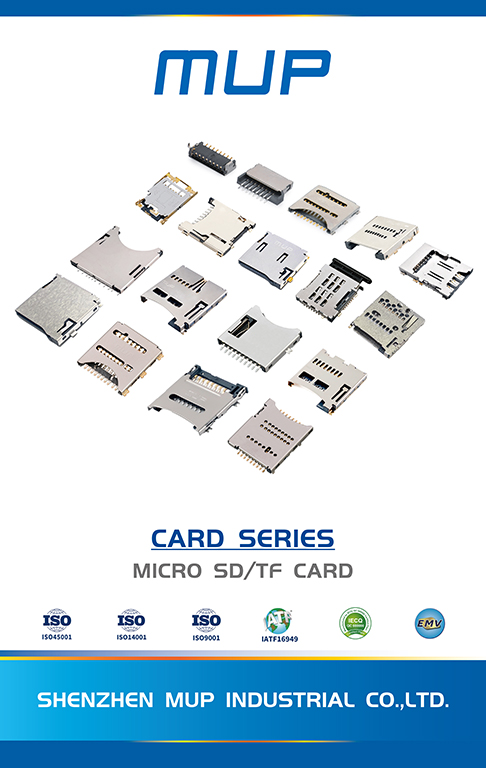
The Design Problem: A Micro SD Socket Is a System Decision
Micro SD connectors are often specified late in a project, after the enclosure, main PCB and card-access strategy are already fixed. At that point the buyer may ask for a card connector by card type alone. That is too narrow for a reliable RFQ. The connector is a mechanical and electrical interface, and its fit depends on the card format, PCB space, insertion direction, mounting style, contact configuration and expected life.
MUP’s published card-connector selection guidance separates the decision into five groups: card specification, mechanical requirement, electrical performance, compliance and commercial terms. The card side covers card type, card dimension and insertion direction. The mechanical side covers mounting type, available PCB space and mating cycles. The electrical side covers contact resistance and operating current. Compliance includes ISO 7816, EMV, NDS, RoHS and REACH where relevant. Commercial terms include lead time, MOQ and sample availability.
That structure is useful because it prevents a common procurement error: treating a Micro SD card connector as a commodity only because the card is small. A microSD socket may sit in a payment terminal, a smart meter, a portable consumer device or an industrial control panel. Each application changes the priority order. A sealed handheld device may care most about stack height and retention. A payment terminal may care about card-reader durability and documentation. A monitoring device may care about long-term contact stability and supply continuity.
Market Signals: Why Card Connectors Still Matter
Card connectors are a mature category, but they are not a static one. Premier Market Insights estimates the global card connector market at USD 3.96 billion in 2024 and projects USD 5.89 billion by 2030. Those figures cover SIM, SD and smart-card connector types, not a single microSD socket, and they are market-value estimates rather than supplier price quotations.
A separate estimate in the same verification file places the 2024 market at USD 1.24 billion, which indicates a difference in scope and product inclusion. The two figures should not be combined or treated as a price benchmark. For procurement teams, the useful signal is not the absolute number; it is that card-connector demand remains broad across payment, identity, memory and embedded applications.
Product-mix data adds another signal. Data Insights Reports places SD and microSD socket types at 60 percent of unit shipments in 2024. The same verification file reports Asia Pacific at 44.8 percent of the card-connector market in 2025. These figures support a simple reading: memory-card sockets remain a high-volume category, while regional supply and design support are concentrated in Asia Pacific. Buyers should still validate any market estimate against their own demand forecast, because public research scopes differ.
MUP’s Position in the Micro SD Card Connector Supply Chain
Shenzhen MUP Industrial Co., Ltd. (MUP) is a Shenzhen-based manufacturer of precision connectors and cable assemblies, founded in 2003. Its published product range includes smart (IC) card holders and sockets, SIM card holders and sockets, and memory (SD/TF) card holders and sockets, alongside USB Type-C, HDMI, Display Port, BTB, FPC, RF, battery connectors and other precision connector families.
For the memory-card family, MUP lists SD card connector, MicroSD card holder and TF card socket models including M6005, M6014, M6015, M6016, M6027, M6110, M6102, M6106 and M6109. The company also lists SIM and smart-card models under a separate model range, including C7006, C7013, C7017, C7020, C7034, C7050, C7060, C7801, C7802, C7081, C7082, C7083, C7090, C7091, C7092, C7093, C7803, C7808, C7810, C7825, C7905, C8001, C8037, C8042, C8043, C8057, C8067, C8068, C8610, C8611, C8618, C8621, C8622, C8629 and C8633.
The manufacturing footprint is relevant to buyers evaluating execution risk. MUP reports a total plant area of 50,000 square meters, more than 600 employees and more than 150 R&D and technical staff. Its published capability includes more than 300 fully automated production lines, daily output exceeding 5KK pieces, 50 precision mold processing machines, 70 high-speed precision stamping machines and 95 automated injection molding machines. MUP also reports 137 patents, including 16 invention patents, 116 utility model patents, 5 design patents and 1 overseas patent.
Management-system certifications listed by MUP include ISO 9001, ISO 14001, ISO 45001, IATF 16949, IECQ QC 080000 and RBA. These certifications support a supplier-qualification discussion, but they do not replace model-level drawings, test reports or sample validation for a specific Micro SD card connector.
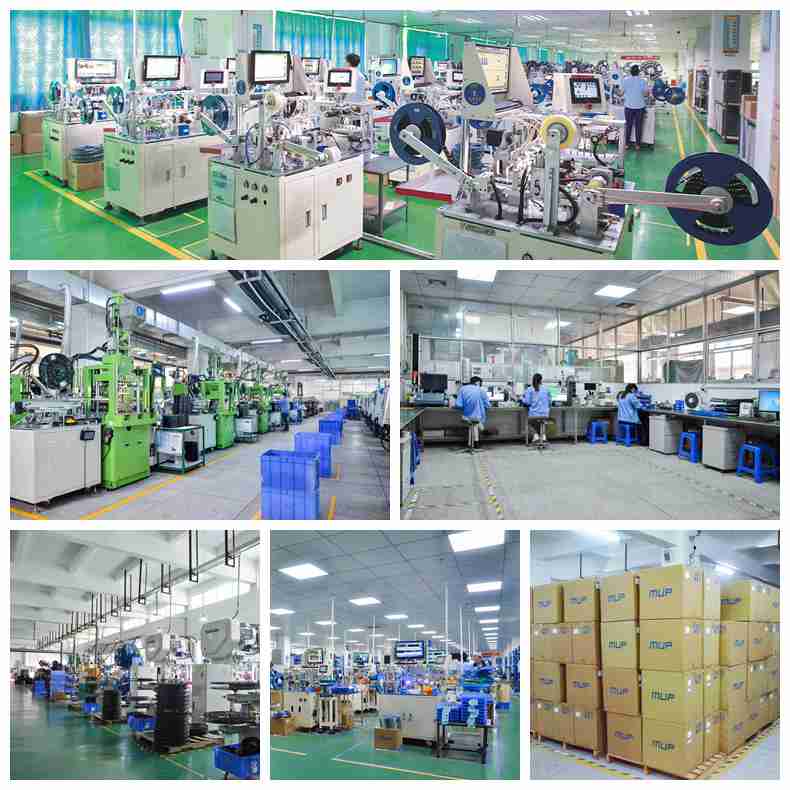
Technical Explanation: The Material and Mechanical Stack
The published material set for MUP’s card connectors is specific enough to support an engineering review. The housing is made of LCP or PA9T high-temperature plastic. The contact terminals use copper alloy, either phosphor bronze or beryllium copper. Contacts are plated with gold or nickel, and the shell is made of SUS304 stainless steel.
Those four elements should be read as a checklist, not a performance guarantee. The housing resin, contact alloy, plating and shell each belong in the drawing review. The public range-level data does not state plating thickness, contact force or model-level dimensional tolerances, so those details should be requested for the exact Micro SD card connector model under evaluation.
MUP’s published range-level parameters for the SD card connector, MicroSD card holder and TF card socket family include a rated current range of 1A maximum and 10 microamp minimum, a rated voltage of 50V maximum, an operating temperature range of -40°C to 85°C, an operating humidity range of 10 to 95 percent relative humidity, and durability of 3,000 or 5,000 cycles. These are range-level figures. A buyer should confirm the exact model’s durability, plating, dimensions and packaging before release to production.
For smart-card connectors in the same broader card-connector category, ISO/IEC 7816-2 defines 8-pin, 6-pin and 4-pin configurations. That standard is relevant to smart-card and IC card interfaces, not to a microSD memory-card socket. The distinction matters when a device needs both memory storage and secure card functions: the two functions may require different connector families and different compliance evidence.
Micro SD vs SIM and Smart Card Connectors: Different Jobs
A Micro SD card connector is not a universal card interface. It is a memory-card socket. A SIM card connector manages subscriber identity in communication devices. A smart-card or IC card connector supports secure-card applications such as payment, identity and access. They may look similar at a glance, but they serve different electrical and mechanical roles.
| Selection point | Micro SD / TF card connector | SIM / smart-card connector |
|---|---|---|
| Primary function | Removable memory storage and data transfer | Subscriber identity or secure-card interface |
| MUP listed examples | M6005, M6014, M6015, M6016, M6027, M6110, M6102, M6106, M6109 | C7006, C7013, C7017, C7020, C7034, C7050, C7060, C7801, C7802, C7081, C7082, C7083, C7090, C7091, C7092, C7093, C7803, C7808, C7810, C7825, C7905; C8001, C8037, C8042, C8043, C8057, C8067, C8068, C8610, C8611, C8618, C8621, C8622, C8629, C8633 |
| MUP published range-level durability | 3,000 or 5,000 cycles | 5,000, 50,000 or 100,000 cycles |
| Standards note | Card-interface drawing, RoHS and REACH documentation to be confirmed for the exact model | Smart-card interfaces may reference ISO/IEC 7816-2 pin configurations; payment projects may also require EMV or NDS review |
The limitation is important. A microSD socket should not be selected for a secure payment-card interface simply because it is smaller. Conversely, a smart-card connector should not be selected for removable memory unless the application actually uses a smart-card format. The correct decision starts with the card function, then moves to dimensions, mounting and compliance.
Public product pages from other manufacturers show how broad the mechanical choices can be. Molex lists SD, SIM and combo sockets with 6 to 9 circuits, and describes push-push, push-pull, hinge, tray and pin-ejector configurations; it also states that some compact memory-card products have a height of no more than 1.28 mm. TE Connectivity lists standard, micro and micro/SIM SD card connectors with top- and bottom-mounting options and push-push or push-pull mating designs. These are design-option references, not a ranking of suppliers.
Application and Use Cases
MUP’s published application data places card connectors in financial payment, smart meters, TV displays, notebook computers, IoT, security surveillance, aerospace, drones, communication networks, data center and logger equipment, power equipment, industrial equipment, rail transit, medical devices, new-energy vehicles and 3C consumer electronics. For a Micro SD card connector, the relevant use case is usually removable memory in a compact device, a data logger or a terminal that needs field-replaceable storage.
The payment-terminal case record is a useful reference for execution discipline. MUP lists a case record of 500,000 units or pieces across card-reader and payment-terminal applications, with customer or segment names including Ingenico, PAX and Verifone, and a duration of 3 to 15 years. That record does not prove performance for every microSD project, but it shows that card-reader connectors are evaluated in volume production and long-field-life contexts.
For smart-meter and IoT projects, the connector decision often turns on environmental and mechanical requirements. MUP’s published application notes list waterproof IPX7 or IPX8, dustproof, high-temperature resistance and anti-vibration as special requirements that can be designed in. They also list custom designs with detection switches and mid-mount, vertical or horizontal mounting. These are requirement options, not default features. A buyer should state them explicitly in the RFQ and confirm them in the drawing.
OEM, ODM and Customization: What Can Be Specified
MUP provides OEM and ODM production services. OEM services include deep customization from mold development to final assembly. ODM services are available with in-house mold design and 50 precision mold processing machines supporting non-standard mold development. The published customization scope includes custom specifications, dimensions, pin counts and interface types for precision connectors and cable assemblies.
Performance customization can cover high-frequency, high-current, waterproof and high-temperature parameters. Appearance and packaging customization can include logo laser engraving or silkscreen, color matching to Pantone and custom packaging. Standard products ship on carrier tape reels, with MOQ per reel varying by model and packaging, typically 1K to 5K pieces per reel. Small-batch R&D sampling is supported, and MOQ for custom work depends on customization complexity.

The boundary is practical. Customization is not a substitute for a complete specification. A microSD connector project should still define the card format, PCB height, mounting orientation, expected mating cycles, contact plating requirement, packaging method and compliance documents. Without those inputs, a custom mold may solve one mechanical issue while creating another.
Quality, Compliance and Procurement Checks
Quality control at MUP includes 100 percent full inspection or AQL sampling before shipment. The company offers a 1-year warranty and after-sales support including return, replacement or replenishment for non-human-caused defects. Lead time is listed as 3 to 7 days for in-stock items and 15 to 25 days for mass production, depending on order and process.
Compliance should be handled as a document trail. MUP states that its USB-C and SIM card connectors comply with RoHS and REACH regulations for EU market access, and that official test reports and compliance certificates can be provided on request for project audit and customs clearance. The same source notes that certificates are product-type specific and reports for different types cannot be used interchangeably.
For a Micro SD card connector, that means the buyer should request the matching report for the exact model, not rely on a report for a USB-C or SIM part. The same discipline applies to management-system certificates. ISO 9001, ISO 14001, ISO 45001, IATF 16949, IECQ QC 080000 and RBA support a supplier audit, but the product drawing, material declaration and model-level test report remain the release documents.
Future Outlook
The card-connector market is expected to grow from USD 3.96 billion in 2024 to USD 5.89 billion by 2030, according to Premier Market Insights. That forecast should be read with care because public estimates differ in scope. The practical implication for buyers is not a price prediction; it is that card-connector supply will continue to be contested on documentation, customization and delivery discipline.
Design pressure is moving in two directions at once. Compact devices continue to push stack height and PCB area, while payment, industrial and automotive-adjacent applications continue to demand durability and traceable compliance. Public product pages already show compact memory-card products with a stated height of no more than 1.28 mm, and multiple mounting and mating options across supplier portfolios. The supplier that can match a model drawing to a validated sample, then repeat it in mass production, is more useful than one that offers only a catalog photo.
For Micro SD card connector projects, the next buying cycle will likely reward three capabilities: model-level documentation, controlled customization and stable quality inspection. MUP’s published position covers those areas through its card-connector family, OEM and ODM services, in-house mold design, automated production and management-system certifications. The remaining verification steps belong to the buyer: drawing approval, sample validation and production-lot inspection.
FAQ
What is a Micro SD card connector?
A Micro SD card connector is the socket or holder that accepts a microSD or TF memory card and connects the card contacts to a PCB. MUP lists SD card connector, MicroSD card holder and TF card socket models including M6005, M6014, M6015, M6016, M6027, M6110, M6102, M6106 and M6109. Buyers should confirm the exact model drawing, mounting style and card insertion direction before design release.
Which specifications should be fixed before an RFQ?
The RFQ should define card type, card dimension, insertion direction, PCB space, mounting type, mating cycles, contact resistance, operating current, required compliance documents, lead time, MOQ and sample availability. MUP’s published selection guidance groups these into card specification, mechanical requirement, electrical performance, compliance and commercial terms. For a microSD project, the applicable card-interface drawing and RoHS or REACH report should be requested for the exact model.
What durability figures are published for MUP card connectors?
MUP’s published range-level durability is 3,000 or 5,000 cycles for the SD card connector, MicroSD card holder and TF card socket family. Its SIM and smart-card families are listed at 5,000, 50,000 or 100,000 cycles. A mating cycle is the maximum number of complete plug and unplug operations before electrical failure. Buyers should confirm the figure for the exact model because the published data is range-level.
Are MUP card connectors RoHS and REACH compliant?
MUP states that its USB-C and SIM card connectors comply with RoHS and REACH regulations for EU market access, and that official test reports and compliance certificates can be provided on request. The source also states that certificates are product-type specific. For a Micro SD card connector, the buyer should request the matching report for the exact model rather than using a report for a different product type.
How does MUP control quality and support after-sales?
MUP states that quality control includes 100 percent full inspection or AQL sampling before shipment. The company offers a 1-year warranty and after-sales support including return, replacement or replenishment for non-human-caused defects. Lead time is listed as 3 to 7 days for in-stock items and 15 to 25 days for mass production, depending on order and process.
Procurement Summary
- Define the card function first: memory, SIM, or smart-card secure interface.
- Specify the mechanical envelope: PCB space, stack height, mounting direction and insertion method.
- Request model-level drawings and test reports, not only family-level catalog data.
- Confirm durability, plating, packaging and compliance for the exact part number.
- Use sample validation and incoming inspection to close the gap between published data and production reality.
Reference document: MUP Profile E 261009 (PDF).
Have Questions or Need More Details?
Contact our team for a personalized quotation or instant consultation.
Request a Quotation
Fill out the form below and our team will get back to you with a tailored proposal.
WhatsApp Direct Chat
Prefer to chat in real-time? Message us on WhatsApp for instant assistance & quick answers.
- Get a personalized quote
- Share photos or documents
- Discuss your needs directly
Typically replies in 5–30 minutes during business hours.