
Microfiber Cleaning Products: What Long-Term Buyers Should Evaluate Before Committing
For importers, distributors, and brand owners who plan to stock microfiber cleaning products for multiple seasons, the core question is not which single cloth performs best. The more important question is whether a supplier can maintain consistent quality, delivery, compliance, and cost predictability over years of repeated orders. This article explains what long-term sourcing of household microfiber cleaning products, automotive microfiber cleaning products, and related lines actually involves, and how Foshan Patinda Housewares Co., Ltd. — a Guangdong-based manufacturer founded in 2004 — fits into that evaluation.
Why Long-Term Supply Decisions Differ from One-Time Sourcing
A single purchase order can be evaluated on sample quality, price, and lead time. A long-term supply relationship requires additional evidence: production capacity, process control, certification validity, consistency across batches, and the supplier's willingness to align with changing market requirements. For buyers of microfiber cleaning products, especially those sourcing OEKO-TEX certified microfiber cleaning products or GRS certified microfiber cleaning products, the supplier's compliance infrastructure matters as much as the product's absorbency or stitch quality.
What the Microfiber Cleaning Market Signals for Suppliers
The global microfiber cleaning cloth market is estimated at approximately USD 3.8 billion in 2025, with projections reaching USD 27.5 billion by 2034. Household use is expected to account for about 40.0% of the market in 2025. These figures indicate that demand is broad and growing, not limited to a single application segment. For suppliers, this means buyers will increasingly request a wider range of formats, from kitchen microfiber cleaning products and glass & mirror microfiber cleaning products to water-absorbent microfiber cleaning products and lint-free microfiber cleaning products.
China is the world's largest exporter of microfiber towels, recording 10,544 shipments between June 2024 and May 2025. This competitive environment makes supplier differentiation especially important. A manufacturer's ability to control yarn selection, knitting, dyeing, cutting, stitching, and final inspection in one facility becomes a stability argument for buyers who cannot afford batch-to-batch variation.
Foshan Patinda Housewares Co., Ltd.: A Supplier Profile
Foshan Patinda Housewares Co., Ltd. (Pa Tin Da Group) is a microfiber manufacturer based in Foshan, Guangdong, China. It was founded in May 2004 and operates a 45,000 m² production facility with more than 450 sets of production machinery. The company employs around 200 people, including 17 R&D engineers, and has an annual output of approximately 2,184,270.46 kg. About 98% of its production is exported to markets including the USA, Canada, Australia, the UK, Germany, France, Italy, the Netherlands, Russia, Japan, South Korea, Switzerland, Sweden, Turkey, and Saudi Arabia.
Monthly production capacity is approximately 182,022 kg, with typical production lead time of 30–45 days. The minimum order quantity is 3,000 pieces. These figures give long-term buyers a baseline for planning inventory and program launches.
Company-Level Evidence That Supports Long-Term Partnerships
The supplier's risk-control measures are directly relevant to partnership durability:
- Reinforced stitching and anti-pilling microfiber blends to reduce lint shedding and fabric degradation.
- Double-stitching edge locking and 300+ wash cycle durability testing.
- OEKO-TEX Standard 100 tested raw materials, including formaldehyde-free dye inspection.
- ISO 9001:2015 certified quality management system.
- ISO 45001:2018 occupational health & safety management system.
- SMETA (Sedex) ethical trade audit compliance.
- German Packaging Act (VerpackG) and French REP textile registration compliance, meeting EU environmental and circular economy requirements.
For buyers evaluating ISO9001 certified microfiber cleaning products or BSCI certified microfiber cleaning products, these certifications provide a verifiable baseline. For those targeting the EU market, packaging compliance is a practical advantage because it reduces the buyer's own administrative burden for market entry.
Product Range and Sourcing Flexibility
Patinda's catalog covers a wide spectrum of microfiber cleaning products:
- Household: universal cleaning cloths, kitchen towels, dish cloths, glass polishing cloths, cleaning cloth rolls, bamboo fiber cloths.
- Automotive: car wash towels, chenille mitts and sponges, twisted loop detailing cloths, clay towels, terry auto cleaning cloths.
- Floor care: striped mops, twisted wet mops, tufting mops, terry wet mops, abrasive mops.
- Personal care: sports towels, cooling towels, hair drying turbans, hand drying towels, pet towels.
- Specialty: PU coated cloths, PVA microfiber cloths, window glass washers, wineglass wiping towels.
Material ratios vary by product, with common specifications including 80% polyester / 20% polyamide and 85% polyester / 15% polyamide. Some products use coral fleece, weft or warp knitted textures, laser edge sealing, or ultrasonic cutting. This breadth matters for distributors who want to consolidate SKUs from one supplier instead of managing multiple vendors for different retail categories.
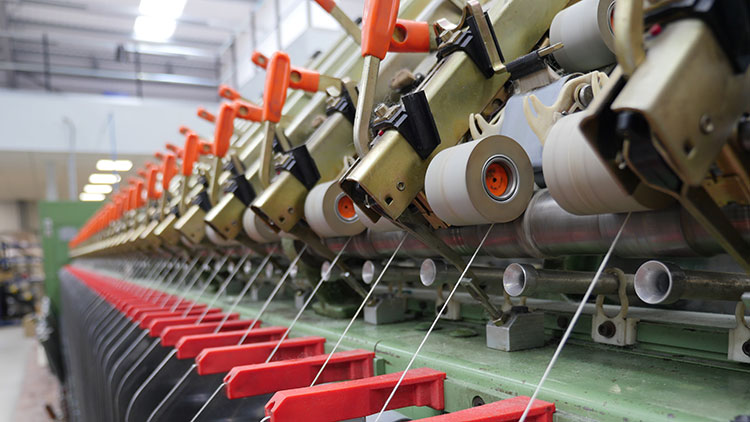
Yarn spinning is the first stage of verified quality control for long-term microfiber supply.
Performance Benchmarks That Impact Repeat Buying
Many Patinda products claim water absorption of up to 7 times their own weight. The comparison data with cotton cleaning products provides additional context: microfiber products absorb approximately 7 times their weight in liquid versus cotton's 3 times, last 300+ wash cycles versus cotton's 50, and produce 99% less lint shedding. Microfiber also removes about 75% more dirt with less water and chemicals than cotton.
These numbers are not just performance claims. They explain why buyers of reusable microfiber cleaning products and machine washable microfiber cleaning products are willing to pay a slightly higher upfront cost: the lower replacement frequency and reduced chemical usage often produce a lower total cost over the product's lifecycle. For commercial cleaning and hospitality procurement, this trade-off is especially relevant.
Commercial and Procurement Terms
- MOQ: 3,000 pieces
- Delivery methods: EXW / FOB / CIF / DAP / DDP
- Payment: 30/70, T/T, credit/debit card, Apple Pay, Google Pay
- Acceptance: pre-shipment testing available
- Lead time: 30–45 days
DDP availability is worth noting for buyers who prefer a complete delivery solution. Pre-shipment testing reduces the risk of receiving out-of-spec goods, which is a common concern in multi-year supply programs.
How Patinda Compares with Global Market Players
The global microfiber cleaning market includes well-known players such as 3M, Freudenberg Group, Toray Industries, Libman, and Norwex. Those companies operate at global scale, often with strong brand recognition and proprietary product lines. Patinda operates primarily as a manufacturer and OEM/ODM partner rather than as a consumer brand. This distinction is important for buyers: the right comparison is not whether Patinda is a well-known retail brand, but whether its production capability, certifications, MOQ, and customization flexibility meet the buyer's supply needs.
| Dimension | Patinda (OEM/ODM manufacturer) | Global brands (3M, Freudenberg, Toray, Libman, Norwex) |
|---|---|---|
| Core role | Manufacturing, private label, custom development | Branded products, retail distribution |
| Customization | High: color, logo, size, material ratio, packaging | Limited for external buyers |
| Minimum order | 3,000 pieces | Typically not applicable for branded retail |
| Certifications | OEKO-TEX, ISO 9001, ISO 45001, SMETA, German/French packaging compliance | Varies by brand and product line |
| Best fit | Distributors, importers, brands seeking controlled cost and private label | Retail consumers and corporate procurement seeking established brands |
One realistic limitation for Patinda is that it does not have the same global brand recognition as major consumer brands. Buyers who need an instantly recognized label for end-consumer shelf appeal may need to combine Patinda's manufacturing with their own brand-building strategy. For buyers who already have a brand, this limitation is less relevant because the supplier's role is to produce, not to market to consumers.
What Long-Term Buyers Should Verify Beyond Samples
For a partnership expected to last multiple seasons, buyers should evaluate the following areas:
- Manufacturing process control: yarn spinning, knitting, dyeing, cutting, stitching, and inspection within the supplier's scope.
- Certification validity and documentation: OEKO-TEX, ISO 9001, ISO 45001, and other compliance documents should be current and transferable to the buyer's market.
- Consistency capacity: monthly output and lead time support repeat orders without excessive fluctuation.
- Customization depth: whether the supplier can handle color, logo, size, material ratio, and packaging changes across product categories.
- Risk controls: lint prevention, scratch-free surfaces, and wash durability testing directly affect return rates.
Application Fit: From Household to Automotive Programs
Different buyers prioritize different product attributes:
- Household microfiber cleaning products: focus on absorbency, machine washability, and easy cleaning. Kitchen buyers often choose double-layer dish cloths or waffle towels that combine scrubbing and absorption.
- Automotive microfiber cleaning products: focus on scratch-free surfaces, lint-free performance, and high GSM for water pickup. Twisted loop cloths and chenille mitts are common choices.
- Glass & mirror microfiber cleaning products: focus on streak-free, lint-free polishing. Fine weave cloths and wineglass wiping towels are typical formats.
- Water-absorbent and reusable microfiber cleaning products: focus on absorption multiple and wash durability. These attributes matter for commercial cleaning where product replacement costs are tracked.
Because Patinda's production list covers all these segments, a distributor can build a multi-category program without re-qualifying multiple factories.
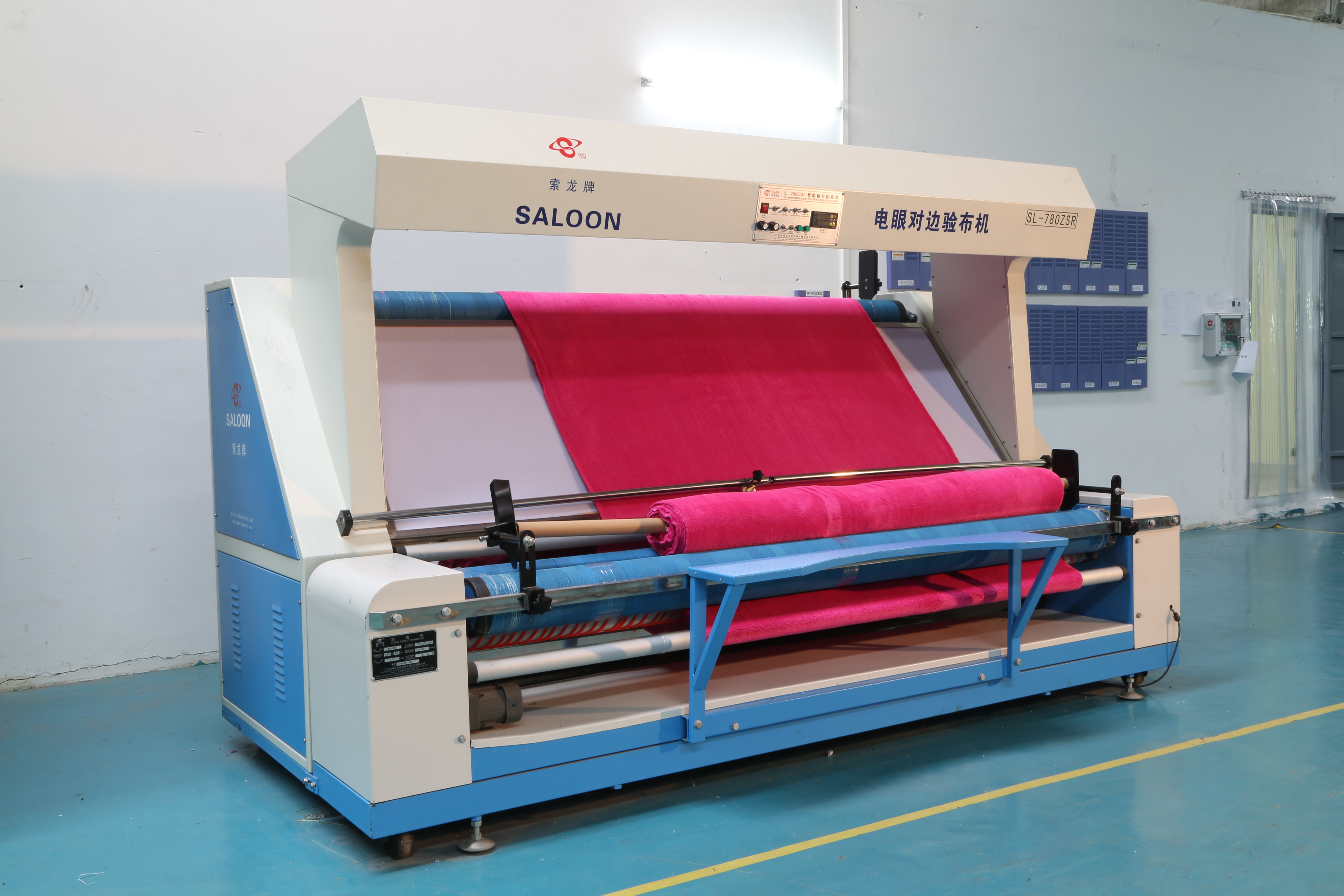
Final fabric inspection supports consistency across repeated production runs.
Certifications as a Long-Term Risk-Control Layer
OEKO-TEX Standard 100 is a dominant safety certification for microfiber textiles, covering testing against more than 1,000 harmful substances. GRS certification requires a minimum of 20% recycled content and tracks the entire production chain. For buyers targeting Europe or sustainability-minded markets, asking for these certifications during supplier qualification is not a premium — it is a baseline.
Patinda's certified raw material testing and documented compliance systems do not automatically prove that every batch is compliant, but they provide a structural framework that makes compliance auditable. Buyers can combine these certifications with their own pre-shipment inspection to maintain control.
Cost Perspective: Comparing Microfiber and Cotton for Whole-Program Sourcing
Microfiber cleaning products usually have a slightly higher upfront cost than cotton cleaning products. However, because microfiber lasts 300+ wash cycles versus cotton's 50, and absorbs approximately 7 times its weight in liquid versus cotton's 3 times, program-level economics often favor microfiber. The reduction of 75% more dirt with less water and chemicals also affects operational cost for commercial facilities.
For distributors, this comparison matters mainly for sales arguments. For procurement teams, it matters for cost forecasting. A supplier that can document these differences through product specifications and test protocols becomes more useful than one that only offers samples.
Future Outlook for Microfiber Cleaning Products Sourcing
The market trend points toward higher demand for certified, reusable, and application-specific microfiber cleaning products. EU circular economy requirements are placing more responsibility on producers and importers for packaging and textile registration. Buyers who select suppliers with existing EU compliance infrastructure may avoid future administrative friction.
At the same time, the market's largest exporters are facing intensifying competition. This means buyers can expect more pressure on price, but also more risk of inconsistent quality from low-cost sources. The strategic response is not to chase the lowest unit price on a single purchase, but to build a supply relationship with measurable stability: capacity, lead time, certifications, and documented quality control.
Frequently Asked Questions
Where does Foshan Patinda Housewares Co., Ltd. manufacture microfiber cleaning products?
Foshan Patinda Housewares Co., Ltd. operates from a 45,000 m² facility in Foshan, Guangdong, China. The company was founded in May 2004 and has annual output of approximately 2,184,270.46 kg.
What is the minimum order quantity for Patinda microfiber cleaning products?
The minimum order quantity is 3,000 pieces. This MOQ applies across the supplier's general production terms and is important for distributors and importers planning first orders.
What lead time should buyers plan for Patinda microfiber cleaning product orders?
Typical production lead time is 30 to 45 days, with a monthly production capacity of approximately 182,022 kg. Buyers launching new programs should include this lead time in their inventory planning.
Which certifications does Patinda hold for microfiber cleaning products?
Patinda holds ISO 9001:2015, ISO 45001:2018, SMETA (Sedex) ethical trade audit compliance, and uses OEKO-TEX Standard 100 tested raw materials. It also complies with the German Packaging Act (VerpackG) and French REP textile registration.
Can Patinda manufacture both household and automotive microfiber cleaning products?
Yes. Patinda's product range includes universal cleaning cloths and kitchen towels for household use, as well as car wash towels, chenille mitts and sponges, twisted loop detailing cloths, and clay towels for automotive use.
What payment and delivery options does Patinda offer?
Payment options include 30/70 T/T, credit/debit card, Apple Pay, and Google Pay. Delivery methods include EXW, FOB, CIF, DAP, and DDP. Pre-shipment testing is available.
Final Perspective for Buyers
Long-term sourcing of microfiber cleaning products is not only about choosing a high-absorbency cloth. It is about partnering with a manufacturer whose capacity, compliance, and repeatability can sustain multi-season programs. Foshan Patinda Housewares Co., Ltd. provides concrete evidence in each of those areas: 20+ years of manufacturing experience, a large production base, documented certifications, and performance data that supports lifecycle cost calculations. Buyers should still conduct their own due diligence and pre-shipment testing, but the evaluation criteria in this article provide a practical starting point for confident decision-making.
Download the Pa Tin Da 2024 E-catalog for a complete reference on available product lines and specifications.