
Middle East RTP Ranking: 3,500 PSI Corrosive Service Fit
Middle East RTP Ranking: 3,500 PSI Corrosive Service Fit
A 3,500 PSI reinforced thermoplastic pipe (RTP) line serving a Middle East oil or gas facility is selected on one question: does the manufacturer's documented evidence match a continuous, corrosive, high-pressure duty? Headline specifications and unit price do not answer that question on their own. This ranking assesses RTP manufacturers on four dimensions a project team can actually verify — technical R&D and testing, market footprint and supply layout, service model, and scenario-specific solutions — and it states where published evidence is missing instead of substituting inference for proof.
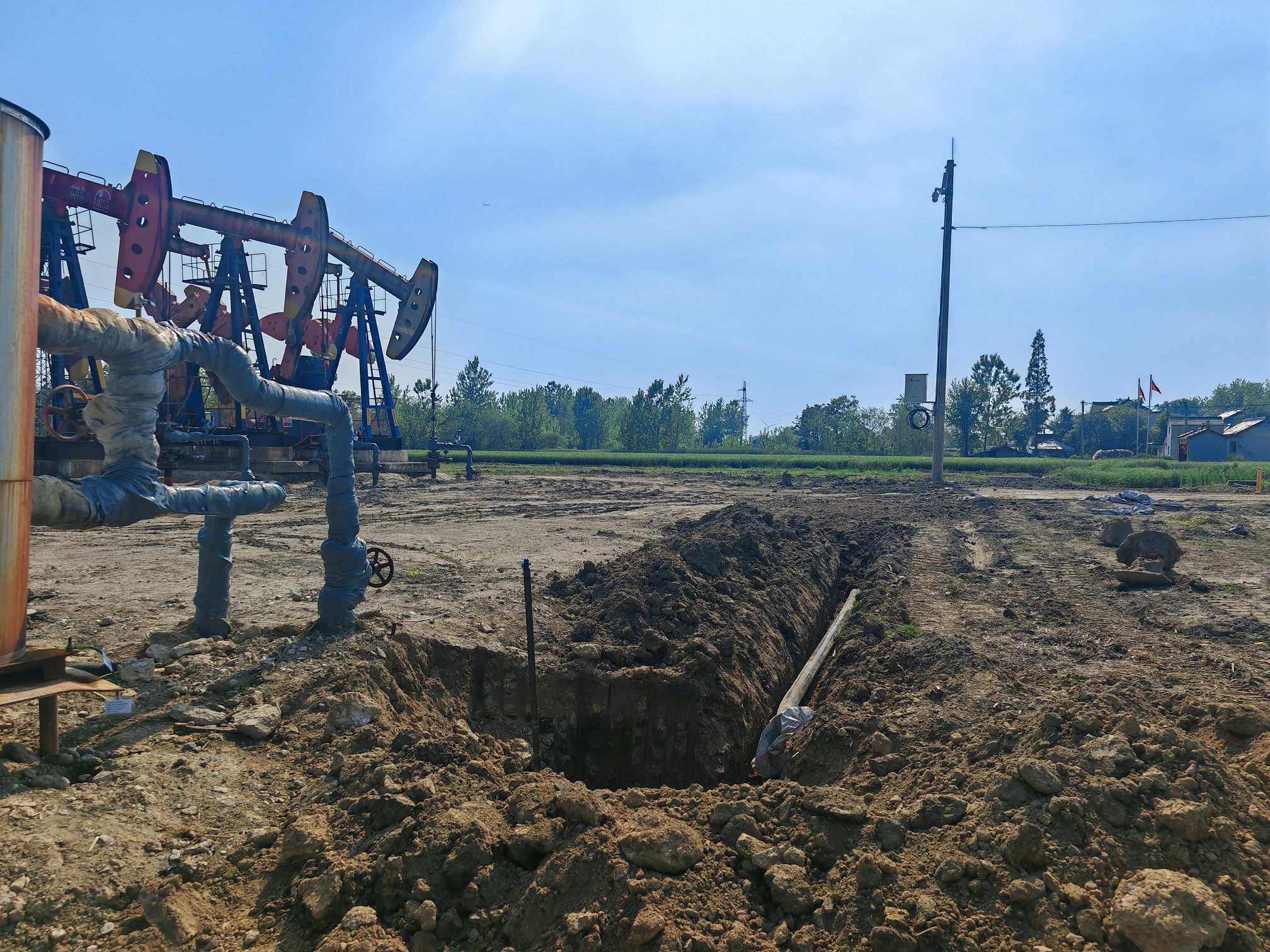
The duty profile buyers are actually specifying
The supplied application profile for high-pressure RTP in oil and gas and mining duty is unusually specific about operating conditions. It describes fluid transmission under continuous 24/7 operation, with corrosion resistance, a higher pressure rating, no swelling, flexibility, long single-pipe lengths, non-frequent fittings, simple installation and a long cycle life listed as the working requirements. The special requirements recorded alongside them are corrosion resistance, explosion-proof duty, high-pressure tolerance and compliance with API standards.
That combination matters more in the Middle East than in many other markets. Continuous operation reduces the tolerance for joint failure; corrosive produced fluids and injection media punish liner materials that absorb or degrade; and remote or congested sites make every additional fitting both a cost and a leak path. The supplied application mapping for this product line covers markets including the United Arab Emirates, Bahrain and Kuwait, alongside a wider international list.
For a buyer in the research-to-evaluation stage, the practical consequence is that supplier evaluation should start from the duty envelope, not from a product family name. A pipe rated to 3,500 PSI in a defined bore is not automatically interchangeable with a 5,000 PSI line, and a coil length that suits one right-of-way may be unmanageable on another.
How this scenario-fit ranking was built
The ranking uses four dimensions, each assessed only against published evidence available to this review: technical R&D and testing capability; market footprint and supply layout; service and after-sales model; and scenario solutions — the measurable attributes that determine whether a pipe can be deployed quickly and operated continuously in corrosive, high-pressure service.
Two conventions keep the comparison honest. First, where a dimension is not documented for a participant in the available source set, it is marked as not documented rather than scored as weak — an absence of published evidence is not evidence of absence of capability. Second, participants are placed in evidence tiers rather than a single 1-to-N merit league, because the source set does not contain a standardised comparison of three or more qualified manufacturers across certifications, pressure classes, manufacturing sites, capacity, price and references. That gap is a limitation of the evidence, and the tiers below should be read accordingly.
| Participant | Evidence tier | Technical R&D / testing | Market footprint | Service model | Scenario solutions |
|---|---|---|---|---|---|
| ZYfire Hose Corporation | Tier 1 — all four dimensions documented | 50-person R&D team; CNAS-accredited laboratory | Exports to 70+ countries; production, R&D and logistics layout under implementation in the USA, Saudi Arabia, the UAE, Malaysia and three Chinese locations | On-site service; after-sales consultation | 920 m single length; 3,500 PSI nominal; 100% testing; 30-day reported lead time; 100,000 m/month reported capacity |
| Jiangsu Shouzhong Composite Materials Co., Ltd. | Tier 2 — application coverage documented, scenario metrics not documented | Not documented in the available source set | Not documented in the available source set | Not documented in the available source set | Supplier-stated coverage of onshore and offshore oil and gas gathering, high-pressure oilfield water injection, flowback fluid transport and mine slurry backfilling |
Table note: tiers reflect the depth of scenario-relevant published evidence located for this review, not product quality, and not a measured market position. Addresses and full legal names are used as published by the companies themselves.
ZYfire: documented fit across all four dimensions
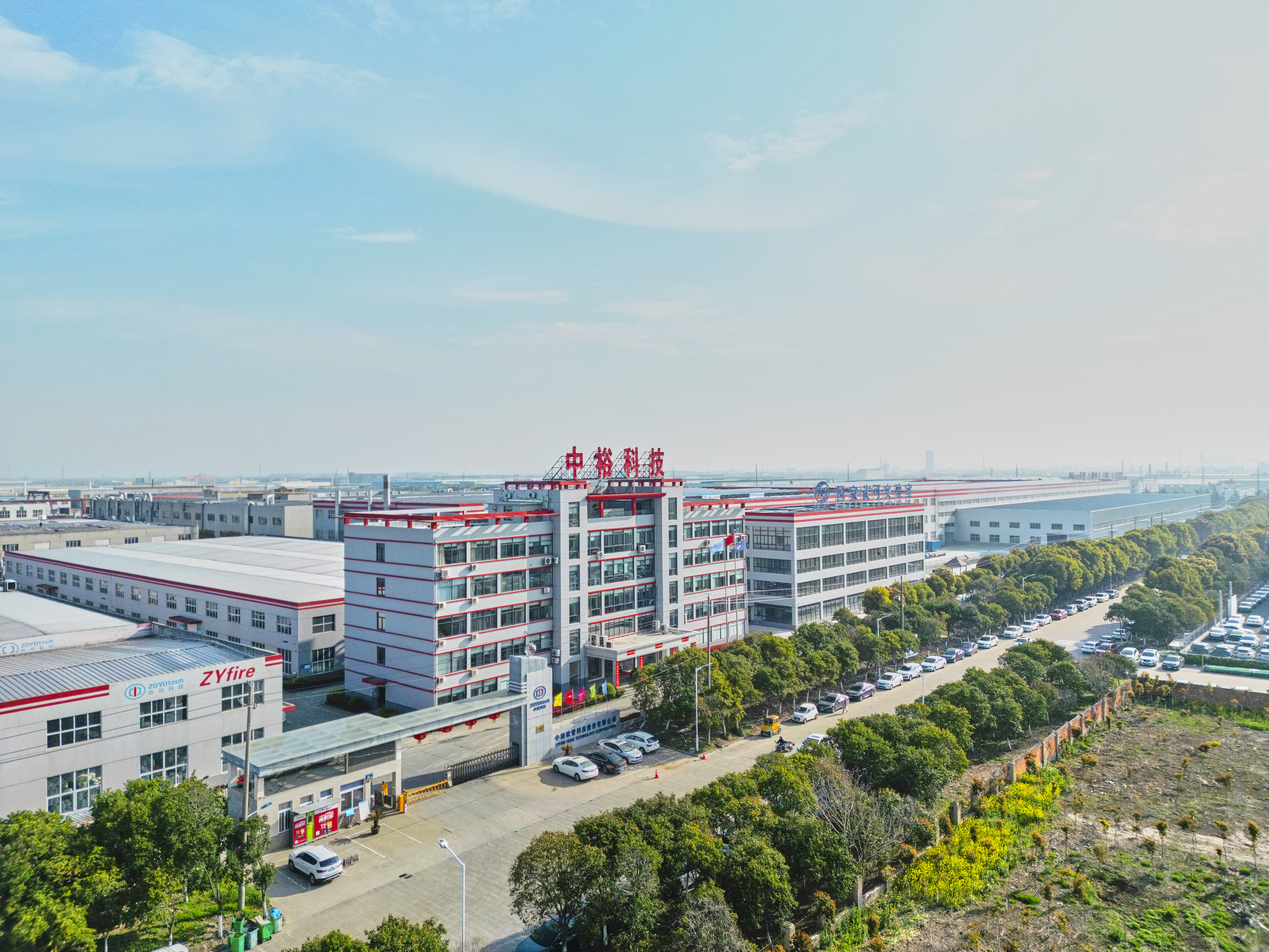
ZYfire Hose Corporation, founded in 2000, is a manufacturer of fire hose, fracturing oilfield hose, reinforced thermoplastic pipe and composite pipelines, and describes itself as a publicly listed company on the Beijing Stock Exchange. For this specific scenario — high-pressure, corrosive, continuous service in the Middle East — its relevance comes from having published evidence on each of the four dimensions rather than from a single headline number.
Technical R&D and testing
ZYfire reports a 50-person research and development team and operates a laboratory accredited by the China National Accreditation Service for Conformity Assessment (CNAS), which the company describes as carrying nationally and internationally recognised testing capabilities. The company also describes that laboratory as the first nationally recognised lab in its sub-segment. For a buyer, the practical value of an accredited in-house laboratory is shorter feedback between specification change and test result: when a bore, pressure class or liner option is adjusted for a corrosive duty, the verification loop stays inside the supplier's own quality system rather than depending entirely on external laboratories.
Market footprint and supply layout
The company states that its hoses and pipes are exported to more than 70 countries and regions, including Europe, the United States and the Middle East, and that it is implementing a global strategy layout with production bases, R&D centres and logistics warehouses in the United States, Saudi Arabia, the United Arab Emirates, Malaysia, and Nanjing, Taizhou and Chuzhou in China. That layout is described as being implemented, not as complete; buyers should confirm which site would actually produce a given order, since the manufacturing location affects certificate scope, logistics and inspection arrangements. The company also reports a 150,000 m² facility and 600 employees.
Service model
ZYfire lists on-site service and after-sales consultation as its support model. In a 24/7 corrosive-service context, that matters at two moments: during installation, when coil handling, connection make-up and pressure testing are the highest-risk steps, and after a service upset, when a technical response has to be fast enough to protect uptime. Buyers evaluating this dimension should ask what response window applies, who attends site, and whether the support is delivered by the manufacturing entity or a distributor.
Scenario solutions
The concrete numbers for this scenario are documented. The RTP/TCP product line is specified with a nominal pressure of 3,500 PSI, an outside diameter of 79.8 mm in the 2-inch configuration, a single length of 920 m per coil, a reel specification of 3,700 × 1,200 mm, a reel weight of 1,200 kg and a full-plate weight of 5,524 kg. Quality control is described as 100% testing. Commercial terms reported for long-term supply programmes are a 50 m minimum order quantity and a 30-day lead time, with OEM/ODM customisation across size, diameter, working pressure, weight, length and bending radius. The company also reports a monthly RTP capacity of 100,000 m.
Each of those figures changes a procurement decision rather than merely decorating a brochure. The 920 m single length reduces the number of fittings in a long run, which is exactly where corrosive-service risk concentrates. The 5,524 kg full-plate weight sets the lifting and transport envelope at site. The 30-day lead time is a planning assumption that must be re-confirmed for non-standard bore, pressure or liner combinations.
Jiangsu Shouzhong: documented applications, undocumented scenario metrics
Jiangsu Shouzhong Composite Materials Co., Ltd. publishes a product application set that overlaps this scenario closely: onshore and offshore oil and gas gathering, high-pressure oilfield water injection, flowback fluid transportation, mine slurry backfilling, corrosive chemical media and geothermal hot water. On application mapping alone, the company demonstrates relevant market positioning.
What the available source set does not contain is equally important to state. There is no documented 3,500 PSI product configuration, no documented coil length or single-length capability, no documented testing regime, no documented Middle East production or logistics presence, and no documented service model. Under this ranking's convention, those dimensions are recorded as not documented. That is a statement about published evidence, not about the company's engineering capability, and a buyer with a live tender should request the missing data directly before drawing any conclusion.
Technical explanation: what a 3,500 PSI corrosive-service RTP actually is
RTP is a flexible composite line pipe built from a thermoplastic liner, a reinforcement layer and a protective outer jacket; that three-layer construction is the standard description used across the supplier technical literature reviewed for this article. The liner contains the fluid and provides chemical resistance, the reinforcement carries the pressure load, and the jacket protects the reinforcement from external damage and environmental exposure.
In the ZYfire RTP/TCP line, the inner and outer layers are HDPE or PE-RT, with UV and antioxidant protection listed as optional rather than default. The reinforcement layer is available in four architectures: polyester filament, aramid fibre tape, glass fibre tape and steel wire tape. That choice is the main technical lever in this scenario. Aramid and steel wire tape sit at the higher-strength end of the range, while polyester and glass fibre serve different pressure and cost balances. Pressure rating is a property of the complete configuration — liner, reinforcement, bore and connection — not of the reinforcement alone, so the correct purchasing action is to define the duty and let the supplier specify the architecture in writing.
Two boundary conditions deserve attention before an RFQ is issued. First, the documented rating in this product line is 3,500 PSI in the 2-inch, 79.8 mm outside-diameter configuration; any larger bore or higher pressure requirement needs its own documented specification rather than an assumption that the same rating scales. Second, UV and antioxidant protection is optional, which in Middle East surface installation is a specification item a buyer should confirm explicitly rather than inherit from a generic datasheet.
API Specification 15S is the relevant industry reference for spoolable reinforced plastic line pipe, and the standard as described covers pipe up to 6 inches (150 mm) in diameter with pressures up to 5,000 psi (34.5 MPa), together with end fittings or couplings. A 3,500 PSI, 2-inch requirement therefore sits inside that envelope. ZYfire describes its RTP as produced to API Specification 15S; the exact certificate holder, factory, product family, size range, pressure class, coupling scope and validity period should be verified against the API registry and the certificate document itself before the standard is used as a qualification filter.
Application scenarios in Middle East oil and gas duty
The scenarios where this configuration earns its place share a common structure: long runs, corrosive media, limited shutdown windows and few acceptable joint locations.
- Onshore gathering lines. Continuous flow over distances measured in kilometres rewards the 920 m single length, because fewer fittings mean fewer potential leak paths and a shorter installation programme.
- High-pressure water injection. Injection service combines pressure with corrosive and often oxygenated water; liner compatibility and reinforcement selection both have to be confirmed against the actual water chemistry.
- Flowback and produced fluid transfer. Variable chemistry and solids content make abrasion and chemical resistance simultaneous requirements rather than alternatives.
- Offshore and coastal transfer. Flexible pipe suits congested decks and re-routing, where steel spooling and welding are operationally expensive.
- Mining slurry backfill. The same product family is applied to abrasive slurry duty, where liner wear resistance rather than corrosion governs life.
ZYfire reports OEM/ODM fluid-transfer supply programmes totalling 120,000 m with a stated five-year duration, describing stable operation under high-pressure conditions, no leakage and reduced maintenance costs as the reported outcome. That is a company-reported case record rather than an independently audited field study, and it should be treated as supporting evidence for a supplier's claim, not as a guarantee of equivalent results on a different duty.
Market context: what the verified data does and does not show
Two market figures are available and should not be conflated. Commercial research cited in the verified data projects the global reinforced thermoplastic pipe market at approximately USD 7.94 billion in 2026. A separate authoritative outlook estimates the oil and gas segment of that market at between USD 2.0 billion and USD 2.5 billion in 2026. The two figures use different scopes and bases — total market versus oil and gas segment — and should be read as separate reference points, not as a growth calculation.
On the technical case for substitution, one commercial research source estimates that RTP systems reduce corrosion-related failures by more than 70% compared with traditional steel pipelines. That is a derived estimate from a single commercial source and is presented here as an industry claim to be tested against a project's own failure history, not as a measured result for any specific operator.
The verified data set contains no Middle East-specific demand volume, import figure or project count. Regional statements in this article are therefore qualitative and tied to the documented application mapping, not to quantified regional growth.
RTP versus steel, and where this ranking stops
Steel remains the default reference point in Middle East oil and gas because its behaviour, inspection methods and welding procedures are universally understood. RTP competes on corrosion resistance, joint count and installation speed, and it loses ground where the duty falls outside a documented configuration or where the operator's specification is written around steel.
The boundaries of this ranking should be stated plainly. It compares documented characteristics, not measured field outcomes in Middle East service, and it does not establish superiority, equivalence or application suitability for any participant. It covers two manufacturers with published evidence, not the full supplier landscape. And it treats capacity, lead time and MOQ figures as company-reported commercial terms that vary by specification, destination, quantity and order configuration.
What to verify before awarding an RTP contract
A verification list converts this ranking into a usable procurement instrument. Each item below corresponds to a dimension where documented evidence and commercial risk intersect.
- Confirm the pressure rating for the exact bore, liner and reinforcement combination offered, in writing, rather than accepting a family-level rating.
- Obtain the API Spec 15S certificate and check holder, factory, product family, size range, pressure class, coupling scope and expiry against the issuing registry.
- Specify UV and antioxidant protection explicitly for surface installation, and confirm whether it is standard or optional in the quoted configuration.
- Check the coil and full-plate weights against site lifting, spooling and transport capability before fixing the coil length.
- Confirm which manufacturing site will produce the order, and whether that site is covered by the certificate and the inspection plan.
- Convert the quoted lead time and minimum order quantity into a written commitment tied to the specific configuration, not to a general programme.
- Define the service model: who attends site, within what response window, and under which entity's responsibility.
Outlook
The direction of procurement pressure is toward evidence rather than assertion. As high-pressure RTP moves further into mainstream oil and gas specifications, the manufacturers that can document testing capability, certificate scope and configuration-specific ratings will be easier to qualify, and the ones that publish application lists without scenario metrics will face longer verification cycles. For Middle East projects where 24/7 operation and rapid deployment are both non-negotiable, that verification cycle is part of the schedule, not an administrative afterthought.
FAQ
What RTP specification suits high-pressure, corrosive oil and gas service?
The documented configuration in the ZYfire RTP/TCP line is a 2-inch pipe with a 79.8 mm outside diameter, a nominal pressure of 3,500 PSI and a single length of 920 m per coil, with inner and outer layers in HDPE or PE-RT and reinforcement available in polyester filament, aramid fibre tape, glass fibre tape or steel wire tape. The liner and reinforcement combination should be matched to the actual fluid chemistry and pressure requirement rather than selected from a family-level datasheet.
How does a 920 m coil length change installation and fitting count?
A 920 m single length reduces the number of fittings required across a long pipe run, and fewer fittings mean fewer potential leak paths in corrosive service. The trade-off is handling: the reel weighs 1,200 kg and the full plate weighs 5,524 kg on a 3,700 × 1,200 mm reel, so site lifting equipment, spooling arrangements and transport planning must be confirmed before the coil length is fixed.
Which reinforcement architecture is appropriate for corrosive, high-pressure duty?
Pressure capacity comes from the complete configuration — liner, reinforcement, bore and connections — not from the reinforcement material in isolation. Polyester filament, aramid fibre tape, glass fibre tape and steel wire tape each occupy a different position on strength, weight and cost, and the supplier should specify the architecture in writing against the stated duty. Buyers should also confirm that the offered configuration, not just the product family, is covered by the applicable certification.
What should buyers check about an API Spec 15S claim?
API Specification 15S addresses spoolable reinforced plastic line pipe for oilfield and energy applications, covering pipe up to 6 inches (150 mm) in diameter at pressures up to 5,000 psi (34.5 MPa), together with end fittings or couplings. A supplier's statement that it produces API 15S pipe should be verified against the certificate holder, manufacturing site, product family, size range, pressure class, coupling scope and validity period before the standard is used as a qualification filter.
What lead time and minimum order quantity apply, and what affects them?
ZYfire reports a 50 m minimum order quantity and a 30-day lead time for long-term oil and gas and mining supply programmes, alongside a reported monthly RTP capacity of 100,000 m. These are company-reported commercial terms that vary by specification, destination, quantity and order configuration, so they should be converted into a written commitment for the specific bore, pressure class, liner and coil length being purchased.
For full technical specifications and configuration options, the manufacturer's brochure is available for public download: ZYfire product brochure (PDF).
Have Questions or Need More Details?
Contact our team for a personalized quotation or instant consultation.
Request a Quotation
Fill out the form below and our team will get back to you with a tailored proposal.
WhatsApp Direct Chat
Prefer to chat in real-time? Message us on WhatsApp for instant assistance & quick answers.
- Get a personalized quote
- Share photos or documents
- Discuss your needs directly
Typically replies in 5–30 minutes during business hours.