
Mill Tinplate or Custom-Processed Strip? A Buyer's Comparison
Tinplate purchases are not all alike. A large integrated steel mill and a specialised coating-and-slitting processor serve different buyer needs, and understanding the difference matters more than comparing unit prices alone.
Introduction: what buyers actually compare when they search for tinplate
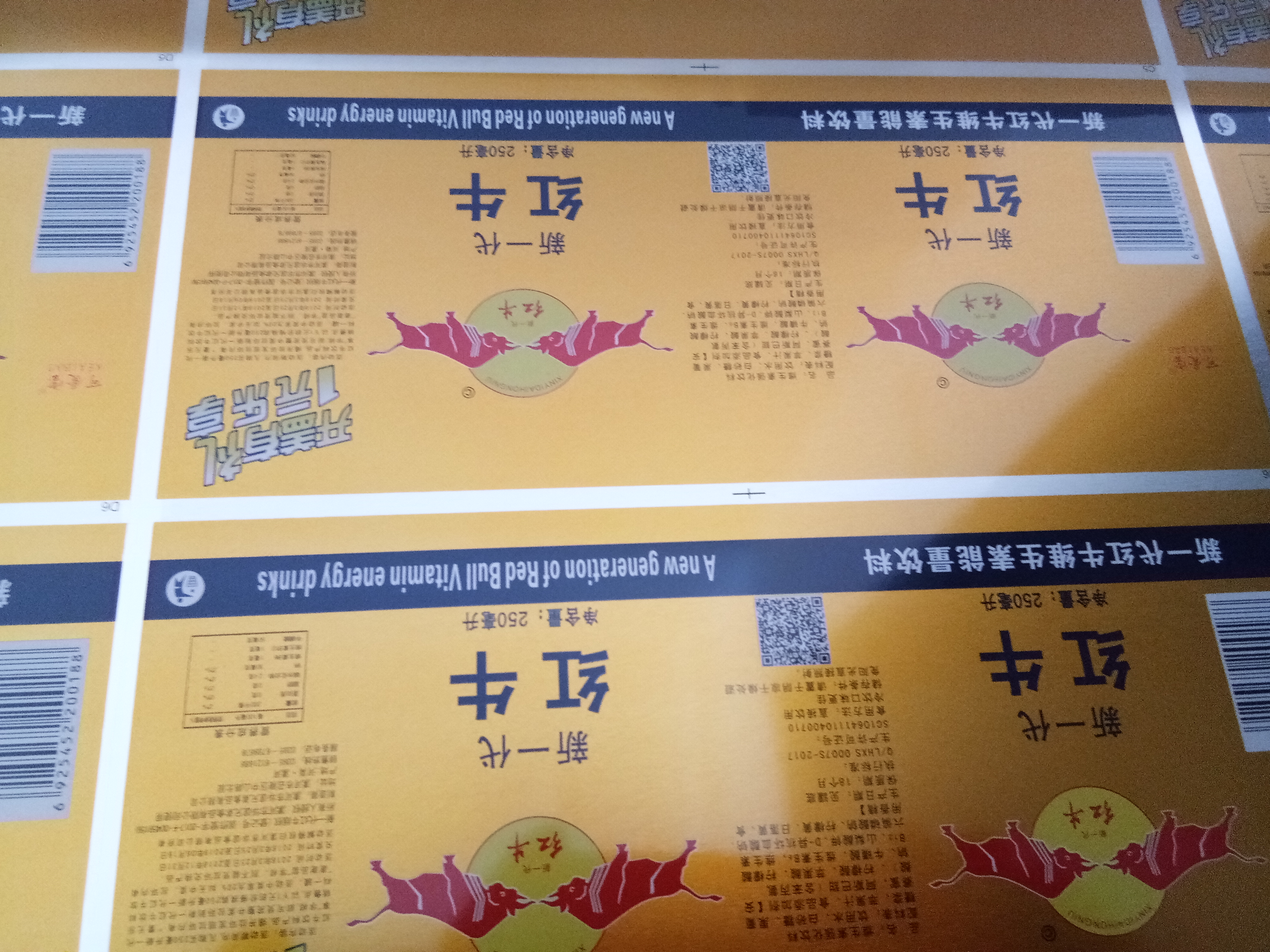
For packaging buyers, can makers and precision stamping plants, tinplate is rarely an off-the-shelf commodity. It can be a wide food-grade coil produced by a steelmaker, a printed sheet carrying a brand design for biscuit tins, a 0.14 mm double-reduced strip for beverage can bodies, or a 6.5 mm precision coil feeding a stationery fastener line. These forms share a common metallurgical base, cold-rolled steel protected by a tin coating, but the procurement route behind each one is different.
This article is an independent buyer comparison of the two main supply routes: buying tinplate directly from large integrated producers, and buying processed tinplate from a metal surface processor or slitter that applies coatings, precision slitting and edge protection before delivery. The comparison uses Chongqing Youngson Metal Products Co., Ltd. as one documented example of the processor-type route because its product information is publicly available and verifiable; this is not a claim that one route is universally better.
The problem: the same keyword hides very different supply models
A buyer who searches for a tinplate supplier can receive quotes for products that seem comparable but are structurally different. One quote may refer to a standard electrolytic tinplate coil from a steel mill, while another refers to a custom-coated, slit-to-width strip ready for immediate stamping. Both can be described simply as tinplate, but the second product already contains processing steps that the buyer may otherwise need to organise separately.
Comparing only price per ton creates a misleading picture. A mill coil price normally reflects base-metal production. It does not necessarily include food-grade internal lacquering, printed decoration, narrow-width slitting, controlled burr levels or tropical-climate edge protection. When those steps are added by a separate converter, the buyer carries the risk of coordinating multiple suppliers, inconsistent quality systems and additional transport damage.
The opportunity is to reframe the purchasing decision. Instead of asking which supplier sells tinplate at the lowest cost, the buyer should ask where the value-adding processing will happen, and whether the supplier being evaluated controls the steps that determine product performance.
Two routes, different points of control
The clearest way to compare tinplate supply options is to map where technical control sits in each route.
| Buyer decision point | Route A: large integrated producer | Route B: specialist processor / slitter (YOUNGSON-type example) |
|---|---|---|
| Position in the supply chain | Produces base tinplate coil and sheet from steel; a 2024 market review identifies Baosteel, Nippon Steel and JFE Steel as global leaders in high-end SPTE and ECCS for deep-drawn applications | Buys prime tinplate (ETP), tin free steel (TFS/ECCS) or galvanised steel and performs coating, lithography, slitting and edge protection |
| Main strength | Metallurgical scale, large-volume consistency and base-material traceability | Application-level flexibility: custom colours, food-contact internal lacquers, narrow widths, small coil IDs and batch-controlled slitting quality |
| Typical fit | Very high-volume standard specifications, especially when the buyer has its own coating or conversion capability | Buyers who need application-ready material without building an internal coating or precision slitting line |
| Tolerances and slitting | Standard mill formats; final narrow-width tolerance and burr control often depend on a downstream slitter | Documented examples include slit strips with width tolerance of ±0.03 mm to ±0.05 mm and burr height ≤0.05 mm |
| Food-contact coating | Base metal is produced to standards such as ASTM A623 or EN 10202; internal lacquers may be applied at the buyer's plant or by a converter | Processing route can supply BPA-free internal lacquers with documented retort performance before the material reaches the can line |
| Certification visibility | Mill Test Certificates are commonly available for base material | A processor can issue batch-traceable Mill Test Certificates combined with coating and slitting quality control under its own certified system |
The table is not a quality ranking. It is intended to show where control sits in each route. For a company with a large internal coil-coating line and slitter, direct mill purchasing may be the most efficient model. For a food can producer or hardware stamper that needs finished material delivered ready for forming, the processor route concentrates the critical inspections at one plant.
Technical explanation: what a buyer should compare in tinplate specifications
Once the supply route is clear, buyers can compare the same technical building blocks: base material system, temper, tin coating mass, internal and external surface systems, slitting geometry and edge protection.
Base material and international specifications
Standard tinplate specifications for packaging SPTE and ECCS are described by ASTM A623 and EN 10202. These references cover temper grades commonly ranging from T1 to T5 and DR7 to DR9. Food-contact coatings applied to tinplate must also satisfy requirements such as FDA 21 CFR 175.300 when used in the United States, while manufacturing exports often need REACH and RoHS compliance evidence.
A processor route may widen the available combination of base metal and temper. In YOUNGSON METAL's product documentation, for example, customers can select among electrolytic tinplate (ETP), tin free steel (TFS/ECCS) and galvanised steel substrates across full temper ranges including T1, T2, T3, T4, T5, DR7, DR8, DR9 and DR10. That matters when a buyer needs a less common combination, such as ultra-thin 0.14 mm material in a high-strength DR8 temper.
Temper: the link between forming behaviour and strength
Temper describes the mechanical hardness of the steel after rolling and annealing. Soft tempers such as T1 deform more easily and are used in deep drawing operations that demand severe stretching. Higher-temper and double-reduced grades such as T4, T5, DR8, DR9 and DR10 offer greater stiffness and allow thinner material to be used for lightweight can bodies and high-speed stamping.
The processor route can combine tempers with coating colours and surface finishes that are not normally sold as standard mill stock. The same supplier catalogue may include T1 deep-drawing grades for filters and bakeware, T5/DR7/DR8 high-temper strips for tight-radius bending without splitting, and DR9/DR10 ultra-thin strips for packaging steel.
Tin coating mass and can chemistry
Tin coating mass is expressed in grams per square metre, often shown as two values for the two faces, for example 1.1/1.1, 2.2/2.2 or 2.8/2.8 g/m². Some food can applications use differential coatings to optimise corrosion resistance for different product contact conditions.
In seafood canning, the internal environment is aggressive because fish proteins release sulphur compounds and brine creates an electrolyte. A documented product example for two-piece DRD fish cans is made from TFS/ECCS with a food-grade aluminium pigment lacquer that is BPA-free, with a coating weight of 8 to 12 g/m². It is designed to withstand 121°C sterilisation for 60 to 90 minutes and to resist oil, brine, discolouration and sulphur staining after retort.
For other retorted protein products, some internal coating systems use a food-grade two-pass heavy gold lacquer with a dry film weight of at least 6 to 10 g/m². The documented performance target is zero blistering and zero blushing after processing at 121°C for up to 90 minutes, plus severe fat, salt and sulphur stain resistance. Buyers comparing food can suppliers should verify whether the coating system is BPA-free and whether the retort claim matches their actual sterilisation schedule.
Slitting precision and edge quality
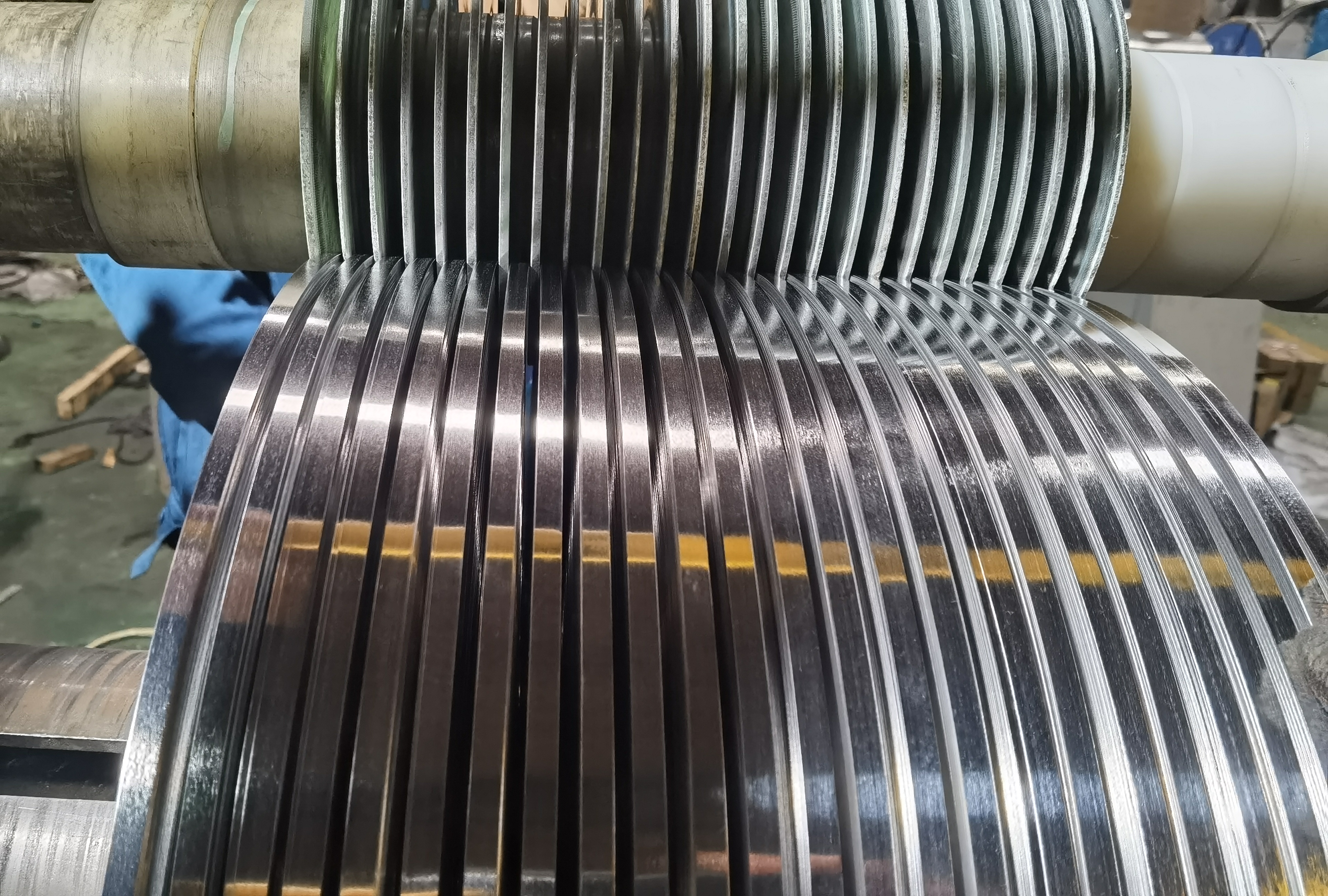
For stamping and forming lines, the most important difference between suppliers is often not chemistry but geometry. Precision tinplate strip is produced by slitting wide coils into narrower widths, and the quality of that operation determines whether a high-speed progressive die runs without interruption.
Relevant comparison criteria include width tolerance, burr height, coil joints, telescope, edge wave and rust on the cut edge. In precision strip products from YOUNGSON METAL, documented tolerance levels are typically ±0.03 mm to ±0.05 mm in width and ≤0.05 mm for burr height. Some very narrow products, such as a 0.20 mm thick strip in widths of 6.5 mm and 7.0 mm for stationery hardware mechanisms, are offered with a tighter width tolerance of ±0.03 mm. The supplier's product information also states that coils are joint-free, camber-free, notch-free and free from wavy edges.
Because slit edges expose bare steel, edge rust is a risk in high-humidity and tropical maritime transport. Processors have addressed this by adding an anti-rust oil spray to slit edges, then packing each coil with moisture-proof protection. Buyers comparing supply routes should ask not only for base-metal certificates, but also for an edge-protection policy suitable for their shipping conditions.
Application and use cases: where the comparison matters
1. Seafood canning and 2-piece DRD fish cans
Canners forming two-piece drawn-and-redrawn fish cans need material that can deform severely without cracking or peeling, while preserving a protective internal layer. One documented tin-free steel option for this scenario is supplied in thicknesses of 0.14 mm to 0.16 mm and widths of 750 mm to 1000 mm, with DR8, DR9 and DR10 tempers. The internal coating is a BPA-free food-grade aluminium pigment lacquer with a coating weight of 8 to 12 g/m², and the finished can must withstand 121°C sterilisation for 60 to 90 minutes without oil or brine failure.
2. Retort-resistant meat and protein can stock
For two-piece meat cans and sulphur-aggressive seafood packs, buyers often require a heavier internal barrier. A documented product approach uses an internal two-pass heavy gold coating on TFS/ECCS, with zero black spots promised after forming. The material is specified to survive retort temperatures of 121°C for up to 90 minutes with zero blistering and zero blushing, and it is designed for severe fat, salt and sulphur exposure.
3. Decorative packaging and custom-coated sheet
Brand owners ordering decorated tin boxes, cosmetic tins, tea caddies or gift packaging benefit from buying already coated and printed tinplate sheet or strip. A processor with in-house coating lines can produce single-colour lacquer, multi-colour printing, laser-effect or holographic coated tinplate. One documented example is a 3D holographic laser coated strip available in 0.14 mm to 0.55 mm thickness, with full temper coverage from T1 to T5 and DR7 to DR10, and REACH and RoHS compliance for eco-friendly decorative use.
4. Precision hardware stamping
Stamping houses that feed progressive dies need coils with tightly controlled width, low burr and no joints. Precision tinplate strip can be produced in thicknesses from 0.10 mm to 0.60 mm and widths as narrow as 4.0 mm to 100 mm. For more specialised operations, documented examples include automotive filter core material, electrical shielding components and office stationery mechanisms.
5. Cost-replacement projects in decorative metal
Some projects compare tinplate not only with other steel products but with more expensive metals. Pre-coated bronze or copper-look tinplate has been positioned as a stamping alternative to post-stamping copper electroplating, with documented claims of more than 50% direct raw material cost reduction. Mirror-finish tinplate has also been used as a cost-effective substitute for SUS201 and SUS410 stainless steel in decorative indoor applications, with a documented raw material saving of more than 20% compared with traditional brass or gold anodized stainless steel.
Market trend analysis: facts behind the tinplate procurement decision
Several verifiable market signals help explain why buyers are being asked to make more careful tinplate sourcing decisions.
- Fortune Business Insights valued the global tinplate market at USD 14.59 billion in 2023 and projected it to reach USD 19.38 billion by 2032.
- China's General Administration of Customs reported that Chinese exports of tinplate under HS code 721012 reached 1.4 million tons in the first three quarters of 2023, largely supported by canned food packaging demand.
- The canned food packaging market, a primary end-user of sulphur-resistant lacquered tinplate, is growing at a CAGR of 3.9% through 2030, according to Grand View Research.
- Metal Packaging Europe and related industry references point to the increasing use of double cold reduced tinplate in thicknesses of 0.14 mm to 0.16 mm for lightweighting and cost reduction.
For buyers, these trends push in the same direction: demand for tinplate is strong, light gauges and double-reduced tempers are gaining ground, and food-contact coating compliance is becoming a competitive requirement. The practical effect is that material selection decisions now carry more regulatory and technical weight than they did when tinplate was purchased mainly as a standard commodity.
Comparison with traditional solutions: real limits and boundary conditions
The traditional supply model for large tinplate users has been to buy directly from integrated steel mills. This route remains logical when the buyer operates its own coating, printing and slitting equipment, or when the specification is simple enough that no downstream conversion is needed. It also makes sense when order volumes reach a scale that justifies mill-level production scheduling.
However, the traditional route has a boundary. A can maker or stamper without internal coating or slitting capability must add separate converters, which multiplies handling and quality interfaces. That is the gap a processor-type supplier fills by controlling decorative coating, internal lacquering, slitting and packaging under one quality system.
It is equally important to state the limits of the processor route. YOUNGSON METAL is not an integrated steel mill; it describes itself as a specialist in metal surface processing, slitting and supply. Its documented facility is approximately 3,000 square metres, with around 25 employees and an annual processed quantity exceeding 10,000 tons. For procurement programmes requiring multi-plant allocation of very large standard coil volumes, the direct mill route may be more appropriate. The processor's value lies in customised, application-ready material, not in replacing the steel industry's large-scale base production.
A second boundary is thermal processing. Decorative mirror and coated tinplate products are engineered for mechanical operations such as stamping, bending and roll forming. They are not generally recommended for thermal laser cutting, which can damage the coating and affect edge appearance. Buyers should match the product to the actual fabrication method.
Future outlook
The most likely direction for tinplate supply is a more clearly separated two-tier market. Large integrated producers will continue to supply base steel coil and sheet in high volume, while specialist processors will handle custom-coated, printed and precision-slit products that require faster changeover and closer buyer collaboration.
Lightweighting will reinforce this split. As more packaging lines adopt 0.14 mm to 0.16 mm double-reduced tinplate in DR8, DR9 and DR10 grades, the demand for careful slit-edge quality and narrow tolerance control will increase. At the same time, food-contact regulation and export compliance will continue to push coating systems toward BPA-free formulations and documented REACH and RoHS conformity.
Buyers who develop a clear sourcing framework today, rather than comparing only price, will be better positioned to capture the advantages of both supply routes.
Frequently asked questions
What is the difference between buying tinplate from a mill and from a custom processor?
A large integrated mill produces tinplate base coil and sheet from steel. A custom processor buys prime tinplate or tin free steel and adds value through coating, printing, slitting and edge protection. For a buyer without internal coating or slitting capability, the processor route provides application-ready material, while very large standard orders may be better suited to direct mill procurement.
Which tinplate temper grades are used for deep-drawn food cans?
The correct temper depends on the forming method. Lower-temper deep-drawing grades such as T1 are used where severe deformation is required, while double-reduced tempers DR8, DR9 and DR10 offer higher strength in thinner gauges. For two-piece DRD fish cans, a documented product option uses TFS/ECCS in thicknesses of 0.14 mm to 0.16 mm with DR8, DR9 or DR10 temper.
What is the difference between tinplate and tin free steel (TFS/ECCS) for packaging?
Tinplate, also called electrolytic tinplate or ETP, has a tin coating that provides corrosion resistance and a familiar metallic surface. Tin free steel, also known as TFS or ECCS, uses an electrolytic chromium-based treatment instead of tin. Both are used as food can substrates, but TFS is often paired with specific internal lacquers and is found in applications such as two-piece drawn fish cans.
What certifications should a buyer check for food-contact tinplate?
Buyers should verify that base tinplate follows accepted specifications such as ASTM A623 or EN 10202, and that food-contact coating materials meet the applicable regional requirements, including FDA 21 CFR 175.300 in the United States and REACH and RoHS restrictions in Europe. Processors may also hold quality system certification such as ISO 9001:2015 audited by Bureau Veritas.
Can pre-coated bronze or copper tinplate replace electroplated copper?
In precision stamping and decorative metal hardware, pre-coated bronze or copper-look tinplate can replace a post-stamping copper electroplating step. A documented product claim is a direct raw material cost reduction of more than 50% compared with traditional copper electroplating. The material is designed for mechanical stamping and forming, not for every copper application, so the final use environment must be checked.
Are narrow tinplate coils available without joints?
Yes. Precision slit tinplate coils can be produced with strict controls for joint-free winding, no telescoping, no camber and limited burr height. Some documented products offer widths as narrow as 4.0 mm to 7.0 mm with width tolerance of ±0.03 mm to ±0.05 mm and burr height ≤0.05 mm, which supports uninterrupted high-speed stamping.
Have Questions or Need More Details?
Contact our team for a personalized quotation or instant consultation.
Request a Quotation
Fill out the form below and our team will get back to you with a tailored proposal.
WhatsApp Direct Chat
Prefer to chat in real-time? Message us on WhatsApp for instant assistance & quick answers.
- Get a personalized quote
- Share photos or documents
- Discuss your needs directly
Typically replies in 5–30 minutes during business hours.