
Mini Loop vs Power Loop Bands: ZLQ-1 and ZLQ-03 Compared
Loop-style resistance bands are sold under overlapping names, and buyers who treat all of them as one interchangeable SKU can make the wrong sourcing decision. Mini loop bands and power loop bands are different product jobs: one is designed for short-range, low-to-moderate movements, while the other is built for longer pulling ranges and heavier resistance. This article compares two models manufactured by Haiyang Libenli Body-Building Apparatus Co., Ltd.: the ZLQ-1 mini loop band and the ZLQ-03 power loop band. The reference points include verified product profiles, documented application scenarios, OEM capability records and independent market data.
Why Loop Bands Are Not a Single Product Category
The word resistance band is an umbrella category that includes multiple physical formats. From the perspective of a commercial buyer, the most important distinction is not only the material or the colour grade, but the relationship between band geometry and the exercise programme. A short, narrow loop band behaves differently from a long, wide loop band when placed under tension, and the maximum forces they can deliver are very different.
This matters in purchasing because many product listings use similar names such as resistance loop bands, booty bands, pull up assist bands or latex resistance bands. In practice, these names may refer to bands that serve completely different training functions. The ZLQ-1 and ZLQ-03 products from Libenli are a useful real-world example because both are closed-loop latex-based bands, yet their source specifications place them in different application contexts.
Product Profiles: ZLQ-1 Mini Loop Band
The ZLQ-1 is catalogued as a mini loop band and can also be supplied as a mini loop band with an anti-slip construction. Its source specification lists a resistance range of 5LB–40LB, a thickness range of 0.3mm–1.2mm, a width of 50mm and a circumference of 600mm. The documented fatigue resistance is ≥30,000 stretches, and the material column in the catalogue records Latex/TPE.
These numbers describe a band family rather than a single colour-coded item. The thickness range in particular shows that the buyer can receive different strengths within the same general mini-loop format. For sourcing teams, this means the model code ZLQ-1 is a product-line reference, while the exact resistance value of an individual SKU should be confirmed against the thickness, width and resistance grade.
Product Profiles: ZLQ-03 Power Loop Band
The ZLQ-03 is classified as a power loop band and is also referred to in the source file as a double layer power loop band. Its verified specification includes a resistance level of 8LB–230LB, a thickness of 0.45mm, a width range of 6.4mm–82.5mm and a length of 2080mm. The documented service life is ≥20,000 stretches, and the material column records Latex.
The geometry is the clearest differentiator. With a length of 2080mm, the ZLQ-03 is a long closed loop suitable for exercises that require a large working distance. Its width scale, from 6.4mm to 82.5mm, explains the very wide resistance range: a narrow band in the set produces low force, while a wide band can reach a much higher resistance level.
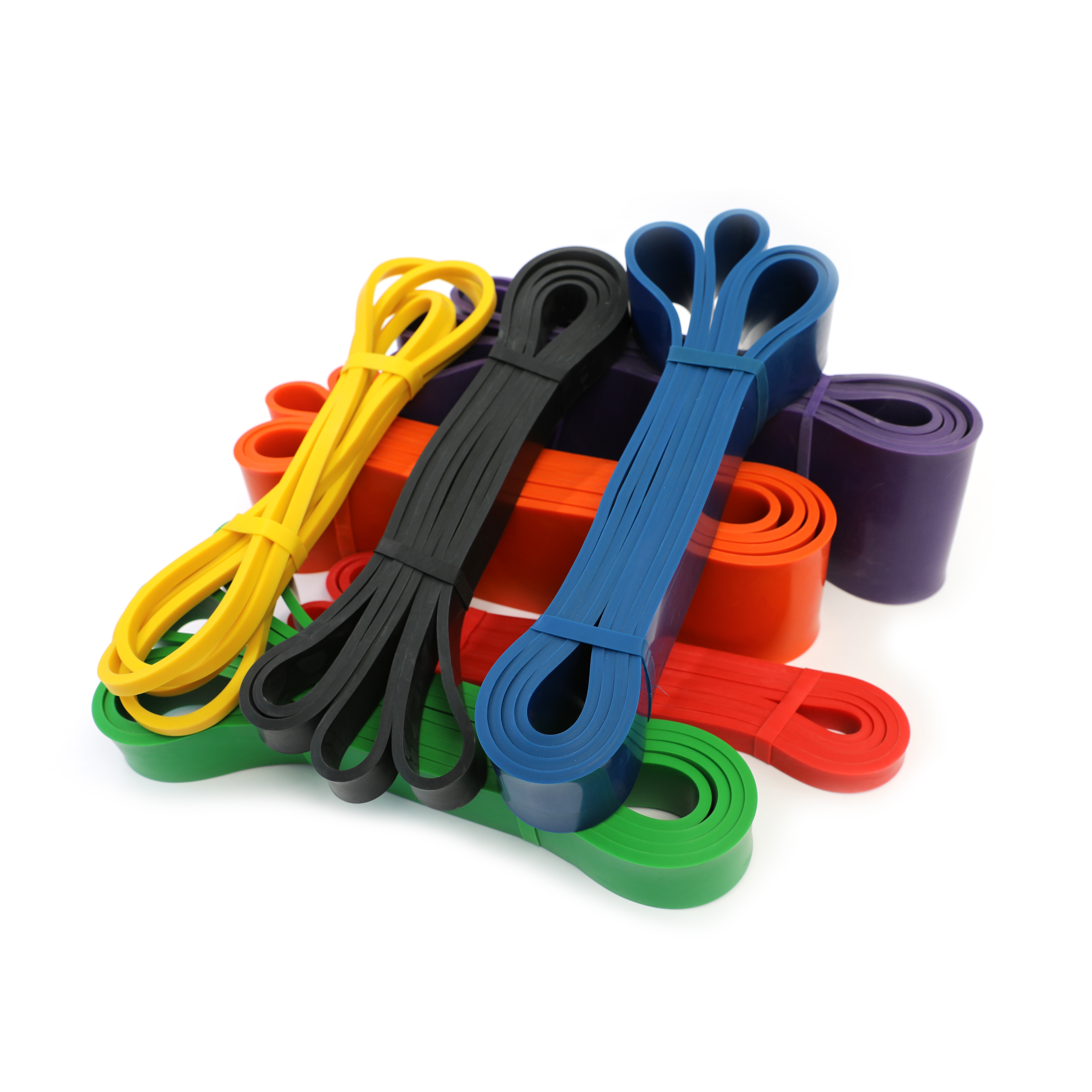
Mini Loop vs Power Loop: Side-by-Side Specification Table
| Parameter | ZLQ-1 | ZLQ-03 |
|---|---|---|
| Product type | Mini loop band / mini loop band with anti-slip | Power loop band / double layer power loop band |
| Material in catalogue | Latex / TPE | Latex |
| Resistance range | 5LB–40LB | 8LB–230LB |
| Thickness | 0.3mm–1.2mm | 0.45mm |
| Width | 50mm | 6.4mm–82.5mm |
| Length / circumference | Circumference 600mm | Length 2080mm |
| Durability reference | Fatigue resistance ≥30,000 stretches | Service life ≥20,000 stretches |
| Documented application areas | Home Fitness, Yoga & Pilates, Hip & Glute Training, Sports Rehabilitation, Physical Therapy, Gym Training Equipment | Fitness Gym, Home Workout, Sports Rehabilitation, Yoga Training, Physical Therapy, Outdoor Training Equipment |
Typical Use Cases: ZLQ-1 in Yoga, Pilates and Hip-Focused Training
The ZLQ-1 mini loop band profile places it in gym fitness, yoga and pilates, physical rehabilitation, sports training and home workout environments. According to the application note for this product, its functional roles include muscle stretching, strength training, joint rehabilitation, body shaping and yoga auxiliary exercise.
The same application note states that the product is intended for indoor and normal indoor environments, with a room temperature range of -10°C to 50°C and dry, low-dust conditions. The listed supporting equipment includes a yoga mat, fitness handles, ankle straps and a workout storage bag. This combination makes the ZLQ-1 more suitable for controlled, precision-focused movement sessions than for high-force pulling work.
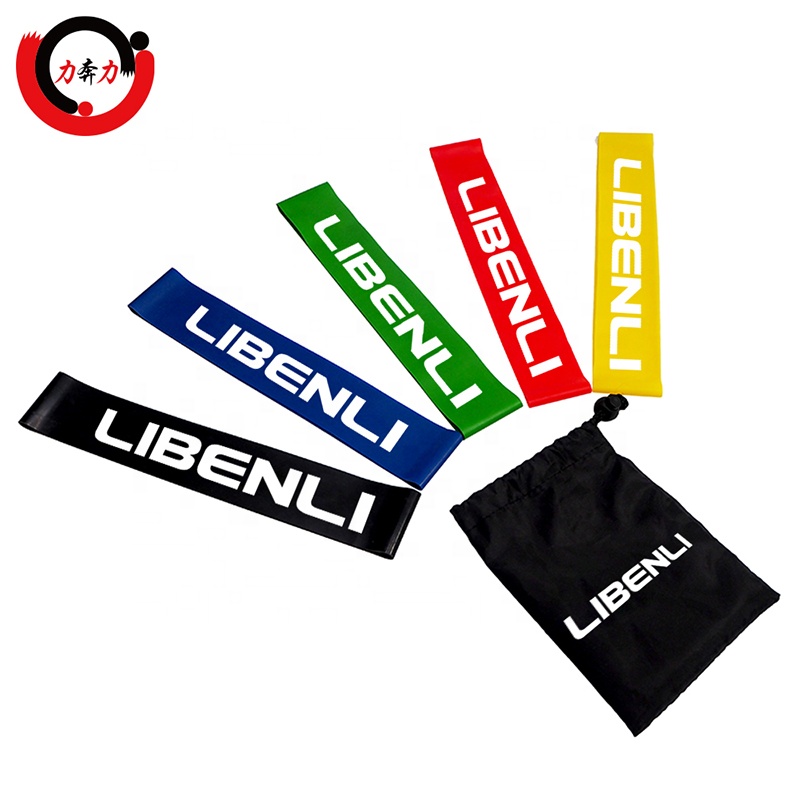
Where a Mini Loop Band Fits Best
- Yoga & Pilates classes that use bands as auxiliary resistance tools
- Hip & glute training programmes where the band is used for lower-body isolation work
- Home fitness kits designed for joint-friendly strength training and stretching
- Sports rehabilitation and physical therapy programmes that require controlled, incremental loading
- Gym retail sets where a lightweight, compact resistance band is needed
Typical Use Cases: ZLQ-03 in Fitness Gym and Outdoor Training
The ZLQ-03 has a different application emphasis. Its product profile lists fitness gym, home workout, sports rehabilitation, yoga training, physical therapy and outdoor training equipment as relevant industries. The load range, extending to 230LB, is far beyond what a typical 50mm mini band can supply.
The application record describes the operating mode as manual pulling and stretching through repeated tension exercise. In project contexts this format is commonly linked to gyms, outdoor training equipment programmes, pull-up assist work and higher-resistance conditioning. The more complete project-type list in the source material includes fitness studio matching, rehabilitation clinic equipment, home sports kits and gym retail sets.
Where a Power Loop Band Fits Best
- Fitness gym programmes that need a long-range band for pulling and strength assistance
- Outdoor training equipment sets where a durable natural latex band must withstand repeated high-tension work
- Home workout kits for users who want to progress beyond light mini-band resistance
- Sports rehabilitation environments that include progressive loading as part of late-stage recovery
- Gym retail sets sold to customers looking for heavier resistance training tools
Project and Scenario Selection Matrix
The decision between the ZLQ-1 and the ZLQ-03 should be made by looking at load, working distance, and training technique. The matrix below summarises the project-level implications in a form suitable for procurement review.
| Project scenario | Primary band type to evaluate | Reason based on verified specifications |
|---|---|---|
| Yoga & Pilates studio equipment | ZLQ-1 | The mini loop band profile explicitly includes yoga and pilates, body shaping and yoga auxiliary exercise. |
| Hip & glute focused fitness line | ZLQ-1 | Hip & glute training is listed in the ZLQ-1 application areas, and the 600mm circumference suits compact lower-body band work. |
| Sports rehabilitation and physical therapy | Both, depending on load | Both profiles include sports rehabilitation and physical therapy; the chosen model depends on whether the programme needs lighter isolation or higher progressive pull loads. |
| Home workout retail sets | Both, depending on target user | Home fitness appears in both profiles; the ZLQ-1 is better matched to light conditioning, while the ZLQ-03 covers higher resistance needs. |
| Fitness gym and strength training area | ZLQ-03 | The power loop band profile includes fitness gym equipment and outdoor training equipment, with resistance reaching 230LB. |
| Outdoor training equipment | ZLQ-03 | Outdoor training equipment is listed in the ZLQ-03 applicable industries, and the long 2080mm length provides a larger working range. |
What Buyers Should Check Before Comparing Resistance Levels
One of the most common misunderstandings in resistance band buying is treating the resistance range printed in the catalogue as the rating of a single band. In the ZLQ-03 line, the range 8LB–230LB represents the performance span across the product family. The actual band delivered to a buyer depends on the width and strength grade selected. The same logic applies to the ZLQ-1 thickness range of 0.3mm–1.2mm.
This is also where the traditional colour-based approach to band buying becomes risky. In many consumer products, a colour label is used as a simple indicator of strength, but the same colour system is not consistent across manufacturers or even across product lines. For a professional fitness project, the better approach is to compare measurable data: circumference, length, width, thickness, resistance range, material and fatigue resistance.
An Honest Boundary: Neither Product Line Replaces the Other
A reliable comparison must also explain the limits of each product. The ZLQ-1 mini loop band should not be selected for high-force pulling exercises that require a 2-metre working range, because its maximum documented resistance is 40LB and its circumference is only 600mm. Conversely, the ZLQ-03 is not automatically the right choice for delicate rehabilitation work or small joint movements. Although the minimum documented resistance of the ZLQ-03 line is 8LB, the larger widths in the same family are physically very strong, and a project requiring frequent low-load repetitions would be better served by a dedicated mini-loop or very thin resistance band.
Another boundary is material-related. The ZLQ-1 catalogue record lists Latex/TPE as available base materials, while the ZLQ-03 record lists Latex. Buyers whose product brief strictly excludes natural latex should therefore treat the two catalogue entries as different starting points, not as interchangeable versions of the same band.
Market Context and Demand Trends for Both Band Types
Independent market research helps explain why both product types have commercial relevance. Grand View Research estimated the global resistance bands market at approximately USD 1.7 billion in 2024 and projected it to reach USD 2.9 billion by 2030, with a CAGR of 9.9% from 2025 to 2030. The same source reported that health and sports clubs accounted for about 70.6% of revenue in 2024, although individual use was the fastest-growing segment.
For buyers, this split has a practical consequence. Health and sports club demand usually favours durable, calibrated equipment that can survive repeated use; individual demand often favours compact and easy-to-store products. A project portfolio may therefore need both a mini loop band line for home, yoga and glute training and a power loop band line for gym and outdoor training. The two Libenli products, with their different specifications, are positioned to address these two distinct demand segments.
OEM Considerations for Project Sourcing
For a procurement project, the product model is only one part of the sourcing decision. The supplier capability profile for Libenli shows that the company operates in OEM/ODM mode and supports customisation of resistance strength, band thickness and width, length, surface colour, logo silk printing, package design and accessory matching.
The documented monthly capacity is 1,200,000 units, with a lead time of 20–35 days. For in-stock items the MOQ is 100 pieces, while the MOQ for a customised logo is 500 pieces. Quality control includes a stretch durability test before shipment. These figures give project planners a practical baseline when budgeting for either the ZLQ-1 or the ZLQ-03 product line.
Buyer Summary
From an independent buyer’s perspective, the question is not whether the ZLQ-1 is better than the ZLQ-03, but which band better matches the training type and the project brief. The ZLQ-1 mini loop band is more relevant for yoga, pilates, hip and glute work, home fitness and controlled rehabilitation movements. The ZLQ-03 power loop band is more relevant for gym, outdoor training, long-range pulling and programmes that need resistance far beyond 40LB.
Specifications are the anchor of the decision. Circumference, length, width and maximum resistance level separate the two products more clearly than any brand name or colour label. Buyers who verify these parameters before sending an inquiry will reduce the risk of receiving a band that is visually similar but functionally unsuitable.
FAQ
What is the difference between the ZLQ-1 mini loop band and the ZLQ-03 power loop band?
Which band line should a buyer choose for yoga and pilates projects?
Which band line should a buyer evaluate for fitness gym and outdoor training?
Can mini loop bands and power loop bands be compared by resistance range alone?
What material and lifetime data are documented for the ZLQ-1 and ZLQ-03?
What EU compliance point should be checked when buying these bands?
Have Questions or Need More Details?
Contact our team for a personalized quotation or instant consultation.
Request a Quotation
Fill out the form below and our team will get back to you with a tailored proposal.
WhatsApp Direct Chat
Prefer to chat in real-time? Message us on WhatsApp for instant assistance & quick answers.
- Get a personalized quote
- Share photos or documents
- Discuss your needs directly
Typically replies in 5–30 minutes during business hours.