
Miniature Bearings: Types, Materials, and Key Specs
Miniature Bearings Explained: Types, Materials, and Performance Limits for Buyers
Miniature bearings are compact rotational components that fit inside precision instruments, medical devices, and micro-motors. Although their outer dimensions are often only a few millimeters, their operating requirements can be as demanding as those of much larger bearings. This reference is written for procurement teams and engineers at the awareness and research stage: it explains what miniature bearings are, how they are classified, which specifications matter, and what market signals are relevant for 2026 sourcing decisions.
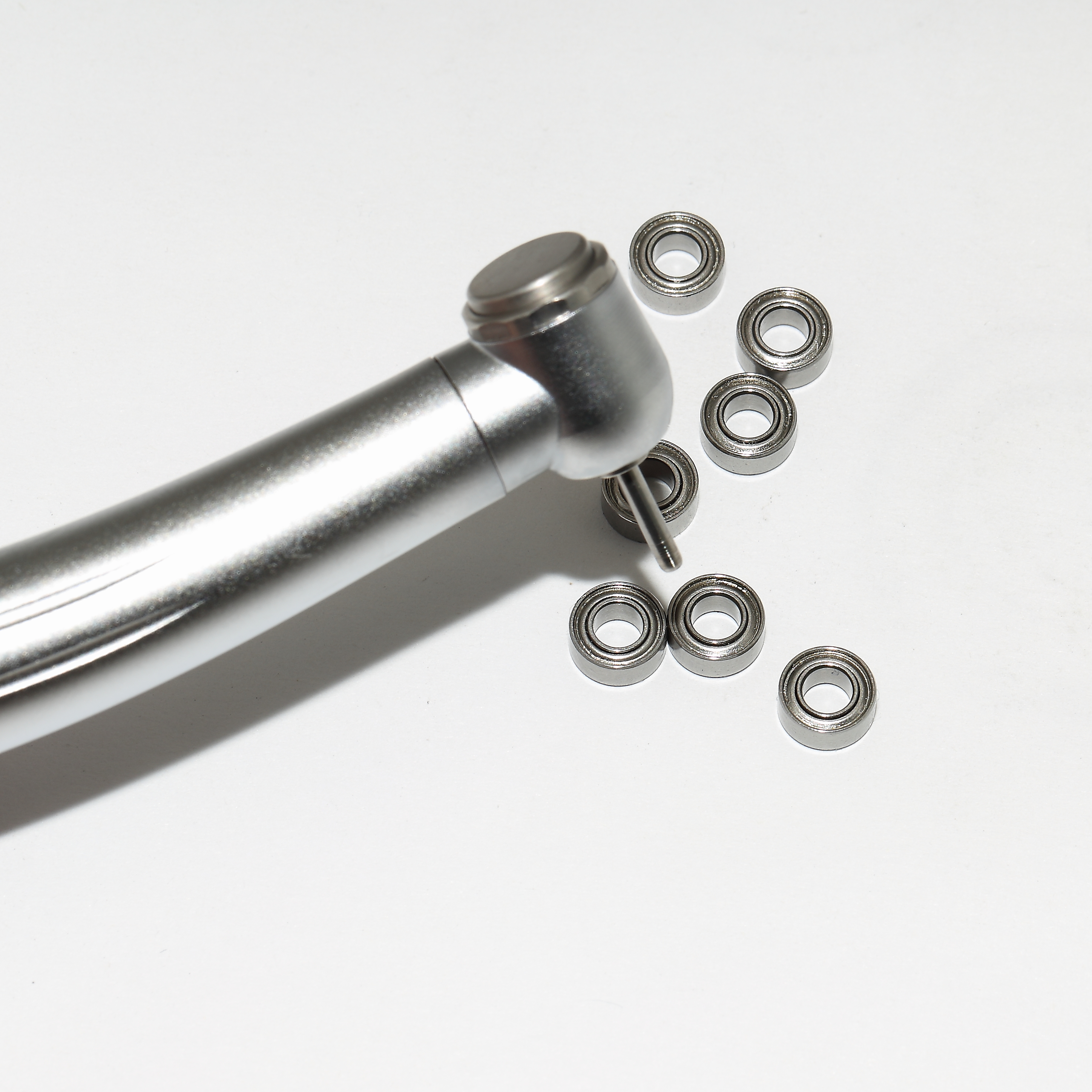
What Is a Miniature Bearing?
At its core, a miniature bearing is a bearing whose dimensions are small enough to fit into space-constrained assemblies. Many catalogs classify these under the term "mini bearing." For example, INB's SR133TL model measures 2.38 mm bore × 4.762 mm outer diameter × 2.38 mm width. The SMR74TL model is slightly larger at 4 mm × 7 mm × 2 mm. These are production parts used in dental handpieces, micro-motors, and similar compact rotating systems.
Why Miniature Bearings Matter
Miniature bearings solve a fundamental design problem: how to support rotation when space is limited. In dental handpieces, for instance, the bearing must fit within a small housing while spinning at speeds that can reach hundreds of thousands of revolutions per minute. Without a dedicated miniature bearing, the handpiece cannot achieve the cutting performance that modern dental procedures require. The same logic applies to micro-motors, where small diameter, low inertia, and consistent running accuracy are essential.
Types and Variants of Miniature Bearings
Miniature bearings appear in several forms, and the differences matter for procurement. The list below covers the most common variants that buyers encounter when researching the category.
- Extra miniature bearings: These sit at the lower end of the dimension range. INB's SR144ZTLP4 W2.78 is described as an extra miniature bearing with an outer diameter of 6.35 mm. Small outer diameter matters when space around the shaft is extremely tight.
- Stainless steel miniature bearings: Stainless steel is preferred where moisture, sterilization, or chemical exposure is present. INB's miniature bearings are made of SUS440 stainless steel. In the broader market, 440C stainless steel is widely cited as the primary material for miniature bearings used in medical and food-processing applications.
- Flanged stainless steel miniature bearings: Flanged designs include a radial flange that helps position the bearing axially. They are a common industry variant used when axial location must be fixed without additional retaining rings.
- Imperial miniature bearings: Some miniature bearing series use imperial-size dimensions. The 3.175 mm bore and 6.35 mm outer diameter of INB's SR144Z series correspond to 1/8 inch and 1/4 inch, respectively, a pattern common in miniature bearing lines.
- Thin-wall miniature bearings: Thin-wall bearings reduce the cross-section to save weight and space. They are selected when a larger shaft must pass through a compact housing.
- High-precision miniature bearings: Precision grades such as P6 and P4 define how tightly a bearing holds its dimensional tolerances. High-precision versions are required when running accuracy and vibration control affect the end product.
- High-speed miniature bearings: Some miniature bearings are designed specifically for high-speed rotation. INB lists limiting speeds of 350,000–400,000 rpm for its SR144ZTLP4 models; its SR133TL and SMR74TL models are rated at 200,000 rpm.
- Low-noise miniature bearings: Low noise is an explicit requirement in INB's dental handpiece application data, alongside P4 precision, ultra-high speed, wide temperature resistance, and medical-grade hygiene.
- Motor miniature bearings: Micro-motors are a stated application area for INB's products, reflecting the need for small bearings that fit inside compact motor housings.
Technical Explanation: Key Specifications and Industry Standards
When evaluating miniature bearings, four specifications matter most: size, material, precision grade, and speed capability. The table below summarizes INB's current listed models.
| Model | Bore × OD × Width (mm) | Material | Precision | Limiting Speed | Temperature Range |
|---|---|---|---|---|---|
| SR133TL | 2.38 × 4.762 × 2.38 | SUS440 | P4 | 200,000 rpm | -40°C to 150°C |
| SMR74TL | 4 × 7 × 2 | SUS440 | P4 | 200,000 rpm | -40°C to 150°C |
| SMR144ZTLP4 W2.38 | 3.175 × 6.35 × 2.38 | SUS440 | P4 | 350,000–400,000 rpm | -50°C to 160°C |
| SR144ZTLP4 W2.78 | 3.175 × 6.35 × 2.78 | SUS440 | P4 | 350,000–400,000 rpm | -50°C to 160°C |
Precision grades are governed by global standards. ABMA ABEC uses a scale from 1 to 9, where higher numbers indicate tighter tolerances. ISO 492 (P0 to P2) and DIN 620 provide parallel tolerance classifications. In the ISO system, precision progresses from normal grade P0 toward P2, the tightest class. INB's P6 to P4 production range therefore covers high-precision territory, with P4 representing a particularly tight tolerance class.
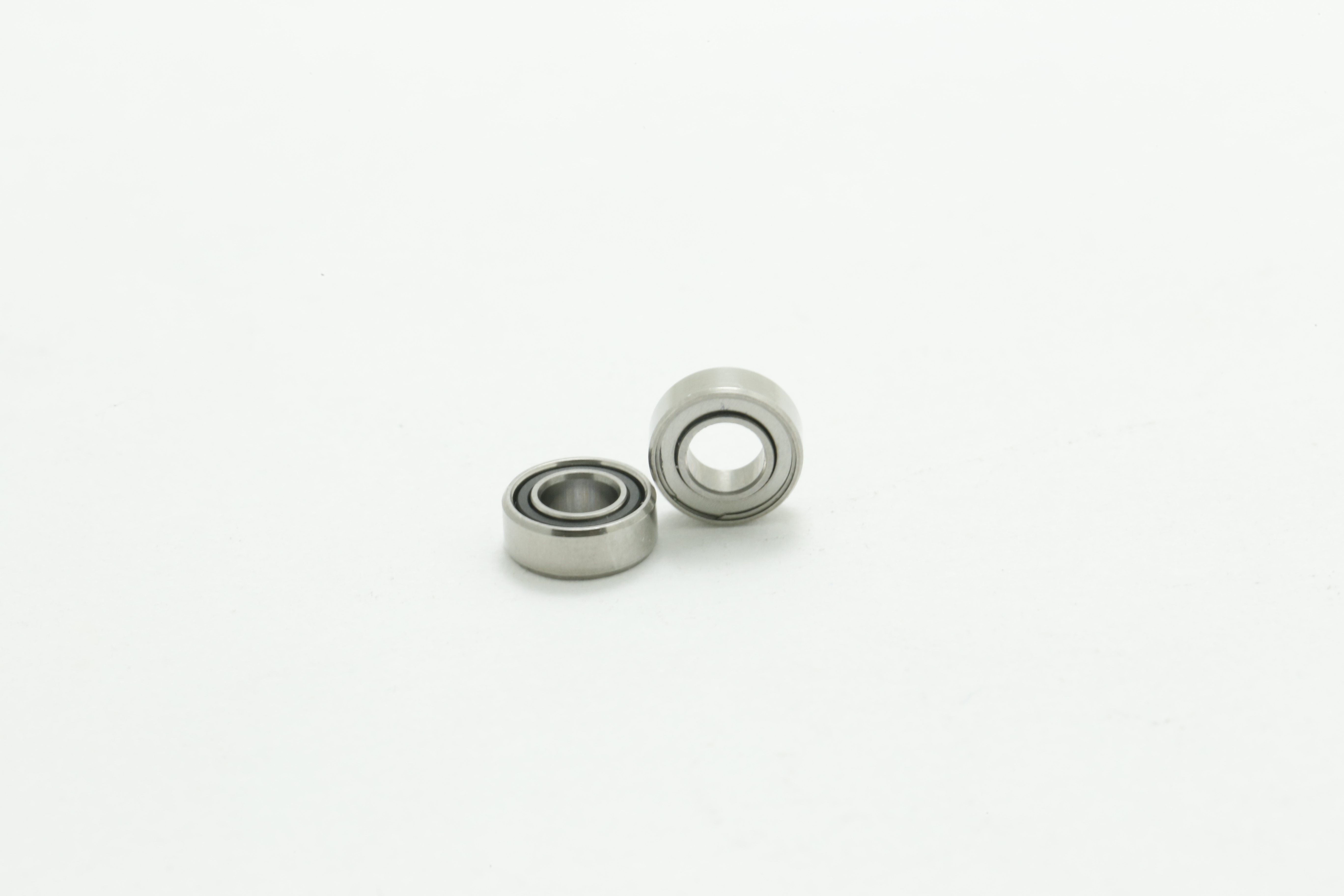
Application and Use Cases
Dental handpieces are one of the clearest application examples. A Chinese application case in the provided data involved 80,000 miniature bearings supplied for dental handpieces. The operating profile is intermittent high-speed operation in a clean medical environment. The required bearing characteristics include P4 precision, ultra-high speed of 350,000–400,000 rpm, wide temperature resistance from -50°C to 160°C, medical-grade hygiene, and low noise. High rotational speed supports rapid grinding, while long service life helps extend the lifespan of the handpiece.
Beyond dental tools, INB's stated markets include the medical device industry and micro-motors. In these sectors, small size and high precision are often more important than load capacity. The same technical logic appears in other precision instruments where inertia must be minimized and running smoothness is critical.
Market Trend Analysis in 2026
The miniature ball bearing market is substantial but not uniformly sized across research firms. Future Market Insights estimated the global miniature ball bearings market at approximately USD 2.25 billion in 2025, while Precedence Research estimated USD 2.89 billion and IMARC Group estimated USD 2.0 billion. The spread reflects differences in product definition and geographic scope.
Asia Pacific dominated the miniature ball bearings market in 2025 with a revenue share of approximately 60%, and China was the largest regional producer and consumer. On the trade side, China's bearing exports grew 7.2% year-on-year in the first seven months of 2025, reaching nearly 497,852 tons. These figures suggest that Chinese manufacturing remains a central part of the global supply chain for small bearings.
By application, the automotive segment held the largest share in 2025, approximately 39%, driven by electric vehicle motors and sensor systems. Medical devices contribute a smaller but growing share, especially where high-speed precision tools demand miniature bearings.
Comparison with Traditional Solutions and Practical Boundaries
Miniature bearings are often compared with larger standard bearings. The main advantage of a miniature bearing is its ability to fit into compact designs. The trade-off is load capacity: smaller bearings have smaller rolling elements and less lubricant volume, so they are not suitable for heavy radial or axial loads. In high-speed dental and medical applications, this limitation is acceptable because the primary goal is rotation speed and low inertia rather than load-carrying capacity.
On the supplier side, established global manufacturers such as MinebeaMitsumi, NSK, SKF, and Schaeffler (Barden) have large production capacity in the miniature bearing sector. A specialist manufacturer such as INB can be considered when the application requires a defined bore range, specific speed capability, and close technical coordination. One practical boundary for international buyers is geographic focus: INB's export share is approximately 5% of total sales, with the majority of its business in China. Buyers outside China should therefore plan for longer lead times, communication coordination, and potentially different commercial expectations.
Future Outlook
The direction of miniature bearing development is shaped by three factors: speed, precision, and material performance. In medical applications, the trend toward higher-speed handpieces and smaller instruments supports demand for bearings rated at 350,000 rpm and above. In electric motors and robotics, precision grades and noise control continue to matter. For buyers, the practical takeaway is that the specification sheet is only a starting point; process control, testing equipment, and application experience determine whether a bearing performs reliably in production.
Frequently Asked Questions
What is a miniature bearing?
A miniature bearing is a small bearing designed for compact rotating assemblies. In catalogs, it is often categorized under "mini bearing." For example, INB's SR133TL has a 2.38 mm bore and 4.762 mm outer diameter.
What is an extra miniature bearing?
An extra miniature bearing is a very small miniature bearing. INB's SR144ZTLP4 W2.78 is one example, with an outer diameter of 6.35 mm.
What is a stainless steel miniature bearing?
It is a miniature bearing made from stainless steel. INB's miniature bearings use SUS440 stainless steel, a material suited to medical and food-processing environments.
What does P4 precision mean in miniature bearings?
P4 is a high-precision class under ISO 492. It indicates tight dimensional tolerances, which help reduce vibration and maintain consistent running behavior at high speed. ABEC and DIN 620 are related standards used in different markets.
Why do dental handpieces need high-speed miniature bearings?
Dental handpieces operate at very high rotational speeds to enable rapid grinding. Bearings with a limiting speed of 350,000–400,000 rpm support that function, and their long service life helps extend handpiece durability.
What are the limitations of miniature bearings?
The most notable limitation is load capacity. Their small dimensions restrict the size of rolling elements and the amount of lubricant, so they are not designed for heavy loads. Suppliers also tend to focus on a specific bore range; INB, for example, covers 2 mm to 8 mm inner holes.
Have Questions or Need More Details?
Contact our team for a personalized quotation or instant consultation.
Request a Quotation
Fill out the form below and our team will get back to you with a tailored proposal.
WhatsApp Direct Chat
Prefer to chat in real-time? Message us on WhatsApp for instant assistance & quick answers.
- Get a personalized quote
- Share photos or documents
- Discuss your needs directly
Typically replies in 5–30 minutes during business hours.