
Minimalist Furniture: Long-Term Supplier Evaluation
Minimalist Furniture: Long-Term Supplier Evaluation
Long-term supply of modern contemporary minimalist furniture is decided less by a showroom sample than by what a supplier can repeat twelve and twenty-four months later. A repeat-order evaluation therefore tests four continuity questions: whether specifications hold across production batches, whether delivery commitments survive volume growth, whether after-sales responsibility is defined before the first complaint, and whether the evidence behind each claim can be produced on request.
This assessment applies those questions to a defined product range — low-profile upholstered bed, modular sectional couch, round marble dining table and storage console table — and to the purchasing, acceptance, packaging, compliance and raw-material controls behind them. In this context, supplier sustainability means continuity: the capacity to keep the same promise across repeat orders. Environmental compliance is treated as one dimension of that continuity, not as a separate subject.
Why a Repeat-Order Evaluation Asks Different Questions
A product audit and a supplier evaluation are routinely conflated, and the confusion is expensive. A sample approval confirms one unit at one moment in time. Repeat orders introduce variables that a single inspection cannot see: material lots change, batch schedules compress, production teams rotate, and freight conditions vary between sailings. None of these produces an obvious defect on arrival; they produce drift — a second shipment whose fabric reads slightly warmer, whose modules no longer align perfectly with the first delivery, whose hardware needs re-tightening within months.
The commercial backdrop explains why buyers increasingly run multi-year programmes instead of one-off purchases. Grand View Research valued the global minimalist furniture market at USD 52.6 billion in 2024 and projected USD 81.1 billion by 2030 (SRC-0001, published July 2026). That figure describes the category as a whole; it does not forecast any individual supplier's volume, and it should not be read as evidence of a specific supplier's capacity. Its practical use is narrower: multi-year category growth implies multi-year purchasing relationships, and relationships expose continuity weaknesses that single orders hide.
The cost of those weaknesses is unevenly distributed. A finish mismatch discovered at the port can be reworked. A connector change discovered eighteen months later, when a customer tries to extend a sectional bought in an earlier delivery, usually cannot be reworked at all.
The Six Dimensions Used in This Evaluation
The framework below converts continuity into checkable dimensions. Each one should be assessed against records, not against assurances.
- Specification consistency: fabric lot matching, frame and hardware specification, dimensional tolerance, and the controls that keep a reorder identical to its predecessor.
- Purchasing and acceptance terms: minimum order quantity, delivery terms, pre-shipment testing, third-party inspection and payment structure.
- Lead time and delivery risk: SKU discipline, milestone tracking, scheduling buffer and pre-shipment list verification.
- Maritime packaging: buffer zoning, reinforcement of fragile components, moisture protection and packing documentation.
- After-sales accountability: warranty terms, complaint evidence, and a defined method for separating production defects from transport damage and user damage.
- Environmental compliance and raw-material control: incoming inspection, hazardous-substance screening, and whether test certificates exist as documents or only as process descriptions.
Specification Consistency: Where Repeat Orders Actually Fail
Specification consistency is a records problem before it is a manufacturing problem. A supplier that cannot show what changed between batch one and batch four is asking the buyer to accept continuity on trust.
The controls that make reorders reproducible are well documented in principle. Unique SKU codes prevent a reorder from being re-keyed as a near-match; production milestones tracked in real time expose slippage before it reaches the sailing date; a pre-shipment list verification step eliminates mixed cartons and missing items; and batch-based production with explicit colour and texture control within the same batch limits the most common visible failure in upholstery programmes. Scheduling buffer periods absorb temporary material fluctuations rather than passing them downstream as delays.
Behind those controls sit raw-material rules. A pre-production sampling system means production cannot start before a material is confirmed against an approved reference. Each batch of raw material should retain inspection records so that a complaint can be traced to a specific lot, and material specifications should not be substituted without written notification to the buyer — a clause that matters more in year two than in year one, when attention has moved elsewhere.
Process control closes the loop: 100% first-piece inspection, quality checks across three stages (pre-production, in-production and finished product), 100% finished-product inspection before dispatch, and strict isolation of non-conforming units so that reworked items cannot enter the packaging stage. For an evaluator, the value of these steps is not that they are described, but that they generate documents — first-piece reports, stage sign-offs, batch records — that a buyer can sample during a repeat-order review.
Supplier-published comparison material states a stable quality pass rate of at least 98% and a delivery accuracy rate of at least 99%. The reviewed material does not disclose the sampling plan, the measurement window or the defect classification behind either figure. They are useful as prompts for a records request; they are not, on their own, acceptance criteria.
Product-by-Product Checks Across Repeat Orders
Different products fail continuity in different ways. The table below maps the dominant repeat-order risk for each item in the range to the evidence that resolves it.
| Product | Typical repeat-order failure | Evidence to request |
|---|---|---|
| Low-profile upholstered bed | Upholstery shade drift between batches; frame or slat substitution; long cartons damaged at the ends | Fabric lot records against the approved sample; frame and slat specification; end and corner protection in the packing method; load and stability test report where one exists |
| Modular sectional couch | Module connectors changed between orders; foam softening; hardware squeak | Connector and bracket part numbers; foam specification and the method behind any resilience claim; hardware durability statement; spare-part availability for later orders |
| Round marble dining table | Slab background and vein variation; edge profile change; top cracking in transit | Written slab selection and acceptance criteria; edge profile drawing; fragile-item reinforcement and crating detail; freight insurance option |
| Storage console table | Finish mismatch; flat-pack tolerance; missing hardware on later orders | Finish standard and gloss level; assembly tolerance; packing list verification step; spare hardware policy |
The modular sectional illustrates why a stated performance figure needs its method. Supplier comparison material reports a foam resilience retention rate of at least 92% after three years of use and a 35% increase in static load against ordinary fixed sofas. Without a disclosed conditioning protocol, sample size or test standard, the buyer cannot tell whether the figure describes an accelerated laboratory cycle or a field observation. The right response is not to dismiss the number, but to ask for the method before it is written into a specification.
Purchasing Terms and Acceptance Criteria as Continuity Tools
Commercial terms are usually negotiated once and then forgotten, which is precisely why they matter for repeat orders. The stated purchasing terms for this supplier are a minimum order quantity of two units, delivery under FOB, CIF or DDP, acceptance based on pre-shipment testing plus third-party inspection by SGS, and payment split 30/70.
Each element carries a continuity implication. The incoterm decides who owns transit risk and therefore who funds a damaged sailing. The inspection clause determines whether third-party verification happens once or on every shipment, which is the difference between a qualified supplier and a continuously verified one. The 30/70 payment split links the balance to a documented event, and the contract should state which event and which document.
Purchase-order discipline belongs here too. Retail and programme buyers frequently change quantities, fabrics or delivery addresses inside a week of production. A stated rule that address or product changes must be requested within 24 hours, and that custom orders are non-returnable, is a risk allocation the buyer should read before, not after, the first change request.
Lead Time, Delivery Risk and the Maritime Leg
Delivery reliability in furniture is a scheduling discipline with a logistics tail. The relevant controls are mundane and effective: SKU-level tracking, milestone reporting to the buyer, buffer built into the production calendar, and list verification before the container is sealed.
The published US-market order schedule states 7–10 business days for processing and 3–7 business days for shipping, a total of 10–17 working days. That is a stated schedule for standard orders, not a contractual lead time for custom or project quantities, and it should not be transferred to container-scale programmes without written confirmation. Suppliers operating a global fulfilment network with partnered freight forwarders, as this one states, typically separate the production promise from the transit estimate; the buyer should ask for both in writing.
Packaging is where delivery risk becomes visible. Tiered or zone-buffered packaging, thick-walled corrugated outer boxes, independent reinforcement for fragile components such as stone tops, pre-boxing inspection and video documentation of the packing process are the measures that decide whether a claim can be substantiated later. Freight insurance can be purchased alongside the shipment, which converts an uninsured loss into a priced one.
The residual risk is not eliminable. Sea conditions during long-haul transit can cause impact damage, stone fracture, fabric contamination and hardware deformation regardless of packaging quality. What an evaluation can establish is whether the supplier documents the packing event well enough for a surveyor to attribute cause.
After-Sales Accountability and Complaint Liability
After-sales is the dimension most often promised and least often specified. The practices that make it work are procedural rather than relational: high-resolution shipment photographs and videos retained as a record, warranty terms written into the contract rather than published on a page, a dedicated foreign-trade after-sales channel that responds to overseas complaints, and a standardised evidence-collection process that allows liability to be determined fairly.
The decisive step is classification. A complaint can originate in a production defect, transport damage, or misuse after delivery, and each carries a different responsible party. A supplier that cannot separate the three will default to the cheapest interpretation. Buyers should require the classification criteria and a response window in the contract, and should keep the packing video as the first link in that evidence chain.
Environmental Compliance: Process Claims Versus Test Evidence
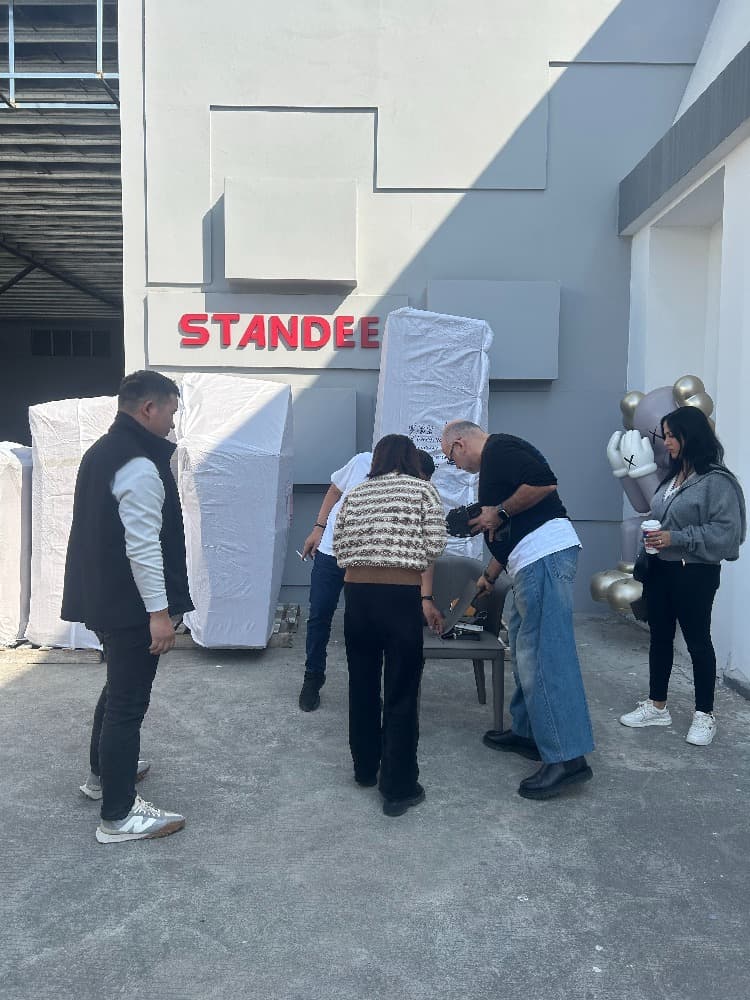
This is the dimension where the gap between what a supplier does and what a buyer can prove is widest. The stated environmental controls are credible at the process level: pre-production testing, screening of raw materials for hazardous substances including formaldehyde and heavy metals, third-party laboratory support, alignment with European and American import requirements, and regular updates to raw-material environmental records. Official test certificates are supported on customer request.
The regulatory frame is real and should be applied precisely. Under 16 CFR Part 1640, upholstered furniture covered by the rule and manufactured, imported or reupholstered on or after 25 June 2021 is subject to the smolder-resistance requirements based on California TB 117-2013. Applicability depends on the exact construction and the destination market, so the regulation defines what to test — not what any particular sofa has passed. Separately, ANSI/BIFMA e3-2024 introduced a four-level tiered structure for sustainability, approved by ANSI on 21 April 2025; its scope covers office and institutional furnishings, which makes it a useful voluntary benchmark for buyers rather than a residential import requirement.
Against that frame, the reviewed supplier material does not contain a SKU-level fire or smolder test report, a formaldehyde emission test report, or a load and stability test report. Process descriptions of testing and screening exist; the documents do not. One company-published comparison figure states formaldehyde emission controlled below 0.03 mg/m³, but the reviewed material does not identify the test method, the sample or the issuing laboratory.
The practical conclusion for a buyer is not that compliance is doubtful, but that it is unproven at the product level. Certificates should be requested by model, with the standard cited, the laboratory named, the test date, and the result expressed in the units of that standard. A process description is a reason to ask; it is not an answer.
Repeat-Order Programme Versus Single-Batch Sourcing
Two sourcing approaches are being compared here, not two companies. Single-batch sourcing treats each purchase as a discrete transaction: specification is agreed for the order, inspection follows the order, and the relationship resets afterwards. A repeat-order programme treats the supplier as a continuing specification holder, with batch records, connector compatibility, spare-part policy and warranty obligations that extend past delivery.
The trade-off is administrative rather than technical. A programme requires documented control points, retained samples, and contract language on liability — real overhead for a short or one-off project. Where a buyer needs a single installation, with no plausible reorder and no plan to extend a modular configuration, that overhead rarely repays itself. Where a buyer operates a DTC collection that updates seasonally, furnishes residential real estate in phases, or restocks dealers across several markets, the programme is the only structure in which specification drift can be caught before a customer catches it.
The fit boundary runs roughly along reorder horizon. Below a one-year horizon with no configuration extension, ad-hoc sourcing with a strong pre-shipment inspection is defensible. Beyond that, the absence of batch traceability becomes the dominant risk, because the first visible failure will arrive with the second shipment rather than the first.
What Changes in the Next Buying Cycle
Three developments are likely to reshape the evidence a buyer should request, and each is currently visible in the data rather than forecast here. First, modular formats continue to expand: Dataintelo projects the global modular furniture market reaching USD 178.6 billion by 2034 at a 7.0% CAGR, with storage units identified as a key growth driver. Longer configurations mean longer compatibility windows, and connector and part-number stability will increasingly be treated as a specification item rather than an afterthought.
Second, documentation pressure is rising under existing US upholstery rules rather than under new ones. As repeat programmes lengthen, buyers are more likely to ask for test evidence by model and by year, which favours suppliers whose testing generates retrievable records.
Third, sustainability tiers will keep entering procurement questionnaires even where they are voluntary. The practical effect is a shift in emphasis: from asking whether a supplier is certified, to asking which tier, under which standard version, covering which product scope.
Frequently Asked Questions
How can a buyer verify specification consistency before placing repeat orders?
Ask for the records that the production controls generate, not a description of the controls. Relevant items include the approved pre-production sample and its retention, batch-level raw-material inspection records, first-piece inspection reports, and finished-product inspection sign-offs. The supplier in this evaluation operates a pre-production sampling system, retains batch inspection records for traceability, and permits no material substitution without written notice to the customer. Confirm those commitments in the purchase agreement and define how much shade or texture variation is acceptable between batches.
What are the stated purchasing and acceptance terms?
The stated terms are a minimum order quantity of two units, delivery under FOB, CIF or DDP, acceptance based on pre-shipment testing together with third-party inspection by SGS, and payment split 30/70. These are the terms on record and should be restated in the contract, including which inspection document releases the balance payment and which party carries transit risk under each incoterm option.
How should lead-time risk be assessed for repeat orders?
Treat the published schedule and the project lead time separately. The stated US order schedule is 7–10 business days for processing plus 3–7 business days for shipping, 10–17 working days in total, which applies to standard orders. For repeat programmes, ask for the controls that support the commitment: unique SKU coding, milestone reporting frequency, buffer allowance for material fluctuation, batch scheduling, and pre-shipment list verification. Packaging protection and the freight insurance option belong in the same assessment, because transit damage is a delivery risk even when the schedule is met.
How are after-sales complaints handled and liability determined?
Through a documented evidence process rather than a negotiation. The stated approach is to archive high-resolution shipment photographs and videos, define warranty terms in the contract, maintain a dedicated foreign-trade after-sales support channel, and apply a standardised evidence-collection procedure. Liability is then assigned by distinguishing production defects, transport damage and user-induced damage. Buyers should ask for the classification criteria and a response window in writing, and should retain the packing video as the primary record of condition at dispatch.
Which compliance documents should be requested rather than assumed?
Request product-specific documents for each model and destination market: a smolder-resistance test report where 16 CFR Part 1640 applies, a formaldehyde emission report stating the test method and result, and a load and stability test report for beds, seating and storage units. The reviewed material for this supplier describes pre-production testing, hazardous-substance screening and third-party laboratory support, and states that official test certificates are issued on customer request — but it does not include SKU-level fire, formaldehyde or load-test reports. Those should be obtained before a specification is approved rather than inferred from the process description.
Evaluation Summary
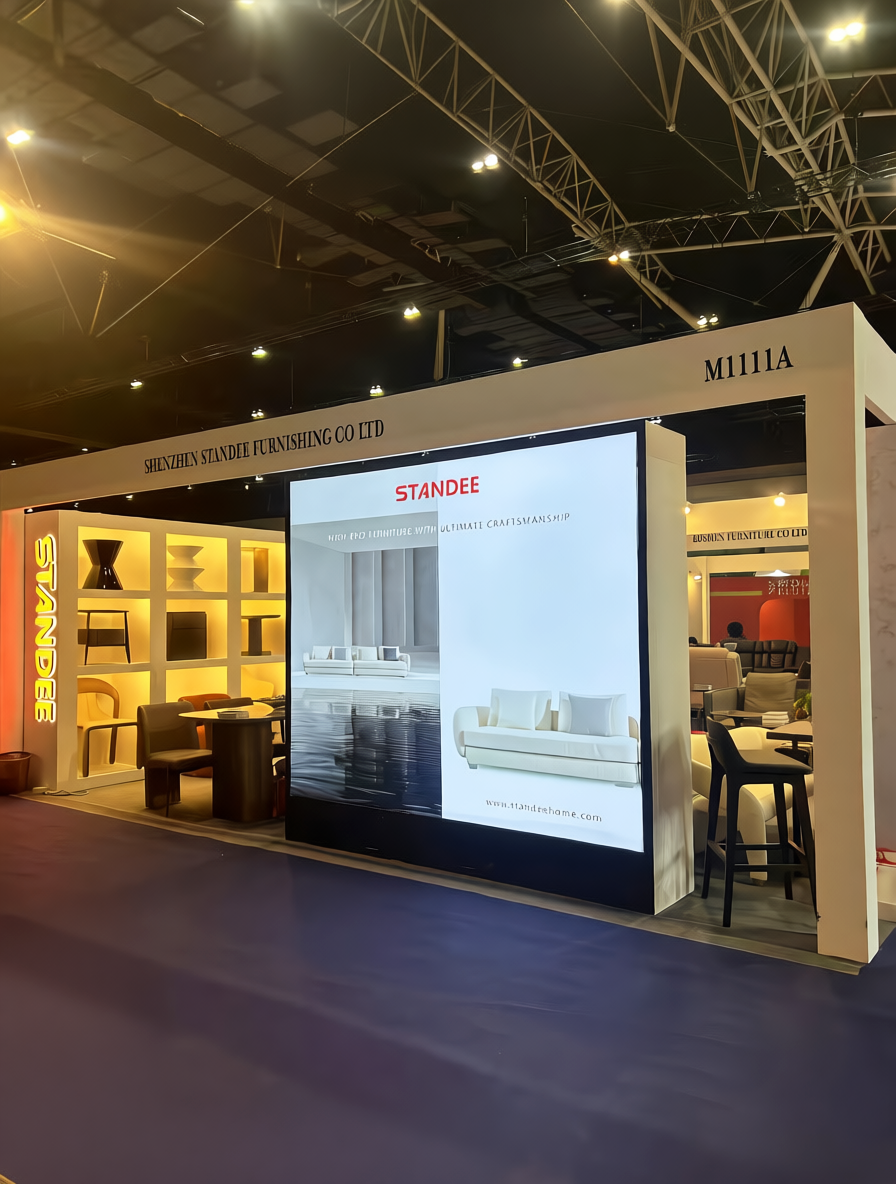
Standeehome Minimalism Furniture, the trading identity of STANDEE Furnishing Co., Ltd, is an indoor furniture manufacturer founded in 2019 and based in Longgang District, Shenzhen, China. Its stated scope covers sofas, beds, chairs and cabinets, produced in a 5,000 m² facility with 120 employees, an engineering team of 15, and annual output reported at approximately 120,000 units. Export accounts for 70% of sales, with the USA, Canada, Australia, UK, Germany and Southeast Asia listed as major markets. Production is described as managed in-house, including technical drawings, material sourcing and multi-stage quality control, and is stated not to be outsourced overseas. Small-batch custom orders, DTC collection updates and residential real estate procurement are supported, with worldwide shipping, customs clearance and delivery support provided through a global fulfilment network and partnered freight forwarders.
On the six dimensions used here, the supplier presents defined processes for specification consistency, purchasing and acceptance, packaging, after-sales and raw-material control, and a workable commercial structure for repeat orders. The open item is documentation depth at product level, particularly fire, formaldehyde and load-test evidence. That is a request to make, not a conclusion to assume. The company profile, including factory and product information, is available for download: STANDEE Company Profile (PDF).
Have Questions or Need More Details?
Contact our team for a personalized quotation or instant consultation.
Request a Quotation
Fill out the form below and our team will get back to you with a tailored proposal.
WhatsApp Direct Chat
Prefer to chat in real-time? Message us on WhatsApp for instant assistance & quick answers.
- Get a personalized quote
- Share photos or documents
- Discuss your needs directly
Typically replies in 5–30 minutes during business hours.