
Minimizing Procurement Risks: A 2026 Guide to Sourcing CNC Lathe Machines
Procuring a CNC lathe machine for high-volume shaft and disc part production involves complex decisions—evaluating precision, efficiency, supplier reliability, and long-term total cost of ownership. For buyers in 2026, the stakes are higher than ever: faster production cycles, tighter tolerances, and the need to integrate automation without disrupting existing workflows. This guide examines the most common pitfalls in CNC lathe procurement and presents a structured approach to selecting a partner that delivers consistent quality, transparent processes, and measurable operational value.
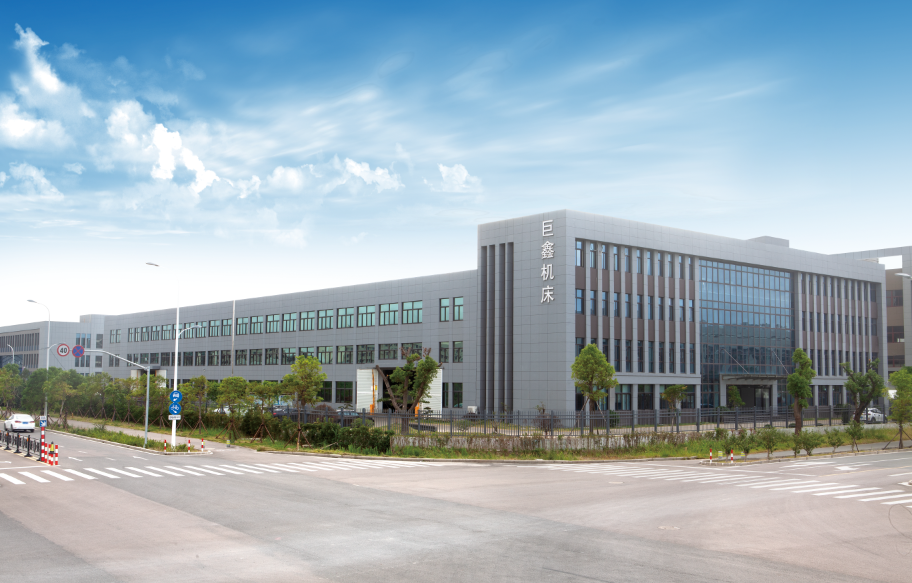
Juxin Machine Tool's 10,666 m² manufacturing facility in Wenling, Zhejiang, China, dedicated to specialized CNC lathe production.
Common Procurement Risks in CNC Lathe Sourcing
Buyers often face three categories of risk: performance risk (inconsistent machining accuracy, low rigidity, poor chip removal), supply chain risk (unclear delivery terms, hidden after-sales costs, lack of technical support), and cost risk (unexpected downtime, high rework rates, rapid precision degradation). According to industry surveys, over 40% of manufacturing buyers report that the initial purchase price of a machine tool underestimates its 5-year total cost by 30%–50% due to maintenance, scrap, and labor inefficiencies.
Traditional horizontal lathes, for instance, require secondary clamping to machine both ends of a shaft—a process that introduces concentricity errors and lengthens cycle times. Similarly, split-bed facing and centering machines often exhibit vibration during heavy cuts, leading to dimensional drift and higher rejection rates. These issues translate directly into lost production capacity and inflated unit costs.
Structural Solutions That Mitigate Risk
Manufacturers like Juxin Machine Tool Co., Ltd. have addressed these pain points through dedicated engineering. Juxin's product line—including the Middle Drive Double-head CNC Lathe (JXS72), the Twin-Spindle CNC Vertical Lathe for shafts (JXLC45-A), and the End Facing and Centering Machine (JXZ70-680)—employs an integrally cast high-rigidity bed with precision heat treatment and a 55°/15° hardened guide rail. This monolithic structure eliminates deformation under heavy cutting and maintains repeat positioning accuracy of ≤0.003 mm, far exceeding the ±0.01 mm typical of assembled-bed competitors.
The dual-spindle, dual-station architecture enables simultaneous machining of both workpiece ends in a single clamping. This not only eliminates the concentricity errors from re-clamping but also reduces single-piece cycle time by 50%–70% compared to conventional horizontal lathes. For a typical motor shaft (Φ50 mm, length 300 mm), a standard horizontal lathe requires 18–25 minutes including turn-around operations, while Juxin's middle-drive lathe completes the same part in 6–10 minutes.
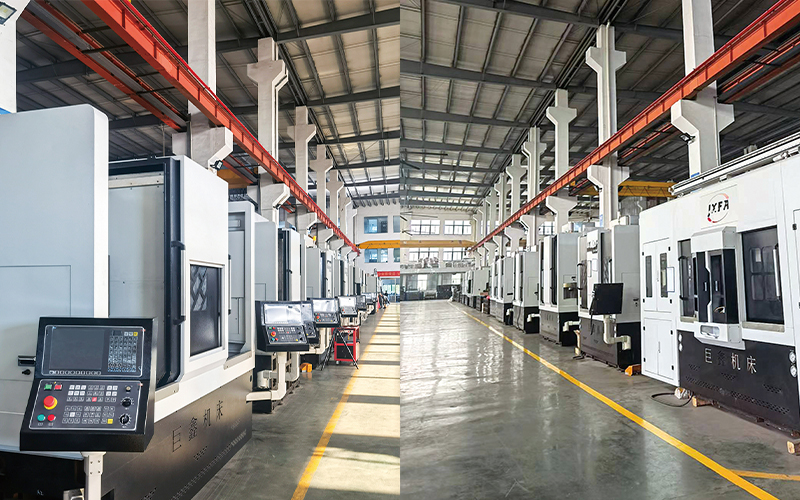
Constant-temperature precision assembly workshop where Juxin's machinery is built and tested for long-term reliability.
Transparent Procurement and After-Sales Support
Risk mitigation extends beyond hardware. Juxin's purchasing process is designed for clarity: the minimum order quantity is one unit, and contracts take effect only after the customer pays the deposit. Delivery terms are negotiated in detail and documented in a signed technical agreement. Full payment is required before machine delivery, and acceptance includes on-site customer acceptance and operator training—ensuring the buyer's team is fully prepared to run production immediately.
This structured workflow, combined with a dedicated national after-sales hotline and lifelong technical support, helps buyers avoid the hidden costs of machine downtime and unplanned maintenance. In real-world deployments—such as supplying facing and centering machines to Siemens and SEW-Eurodrive in Germany—Juxin's equipment has seamlessly integrated into global production lines, replacing previous imported machines while meeting the strict process requirements of European OEMs.
Industry Applications and Market Trends
Juxin's CNC lathes are used across automotive parts, agricultural machinery, pumps and motors, railway locomotive axles, construction machinery, transmissions, gears, and new energy solar components. The company holds over 50 innovative patents and is a drafting unit of the group standard for center hole machine tools. With an annual output of 2,000 sets and a factory size of 10,666 m², Juxin serves global markets with a 10% export ratio, shipping to Europe, Southeast Asia, the Middle East, South Asia, America, and Africa.
As manufacturers increasingly demand automation integration, Juxin offers customized single-machine, multi-machine robot-linked production lines, and MES digital system compatibility. These solutions have helped clients reduce workshop space by 70%–150%, cut labor by 50%–80%, and lower overall production costs by over 50%.
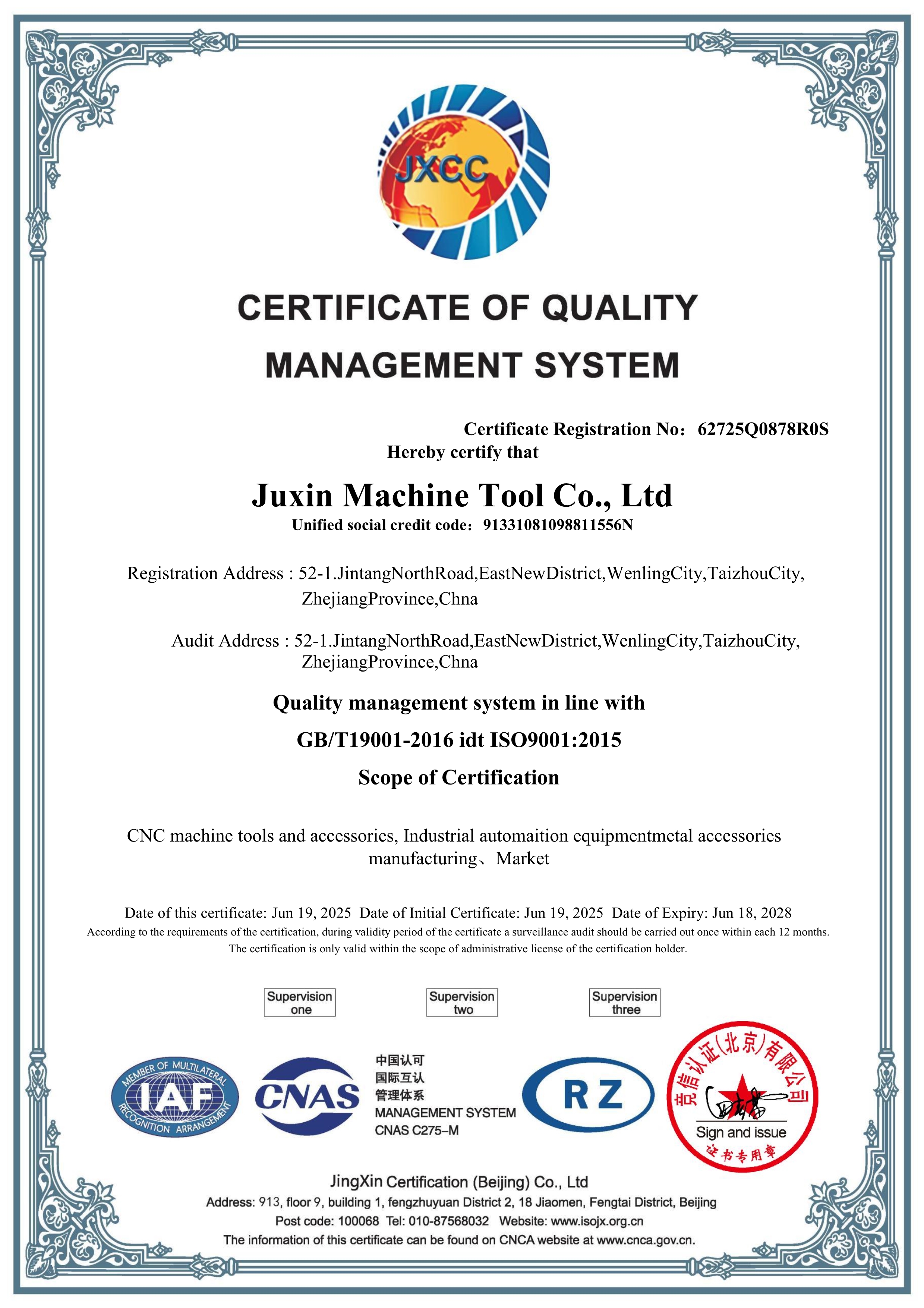
ISO 9001:2015 certification (Certificate No. 62725Q0878R0S) validates Juxin's quality management system for CNC machine tools and automation equipment.
Future Outlook: Precision, Intelligence, and Partnership
Looking ahead, the CNC lathe market is consolidating around suppliers that offer not just machines, but complete process solutions. Buyers who prioritize structural rigidity, integrated automation, transparent purchasing, and proven industry references will be best positioned to avoid the risks of inconsistent quality, hidden costs, and production bottlenecks. With its focus on specialized shaft and disc part machining, Juxin Machine Tool exemplifies the kind of partner that reduces procurement risk while delivering sustainable competitive advantage.
For more details on Juxin's full product range and procurement process, the company's official brochure is available for download: company brochure (PDF).
Company: Juxin Machine Tool Co., Ltd.
Website: en.wljxjc.com
Contact Email: jxmachine@yeah.net
Tel/WhatsApp: +86 1333-678-3918