
Mining Container CDU Procurement FAQ: Pump Redundancy, Dry-Run Limits, and Service Isolation
Mining Container CDU Procurement FAQ: Pump Redundancy, Dry-Run Limits, and Service Isolation
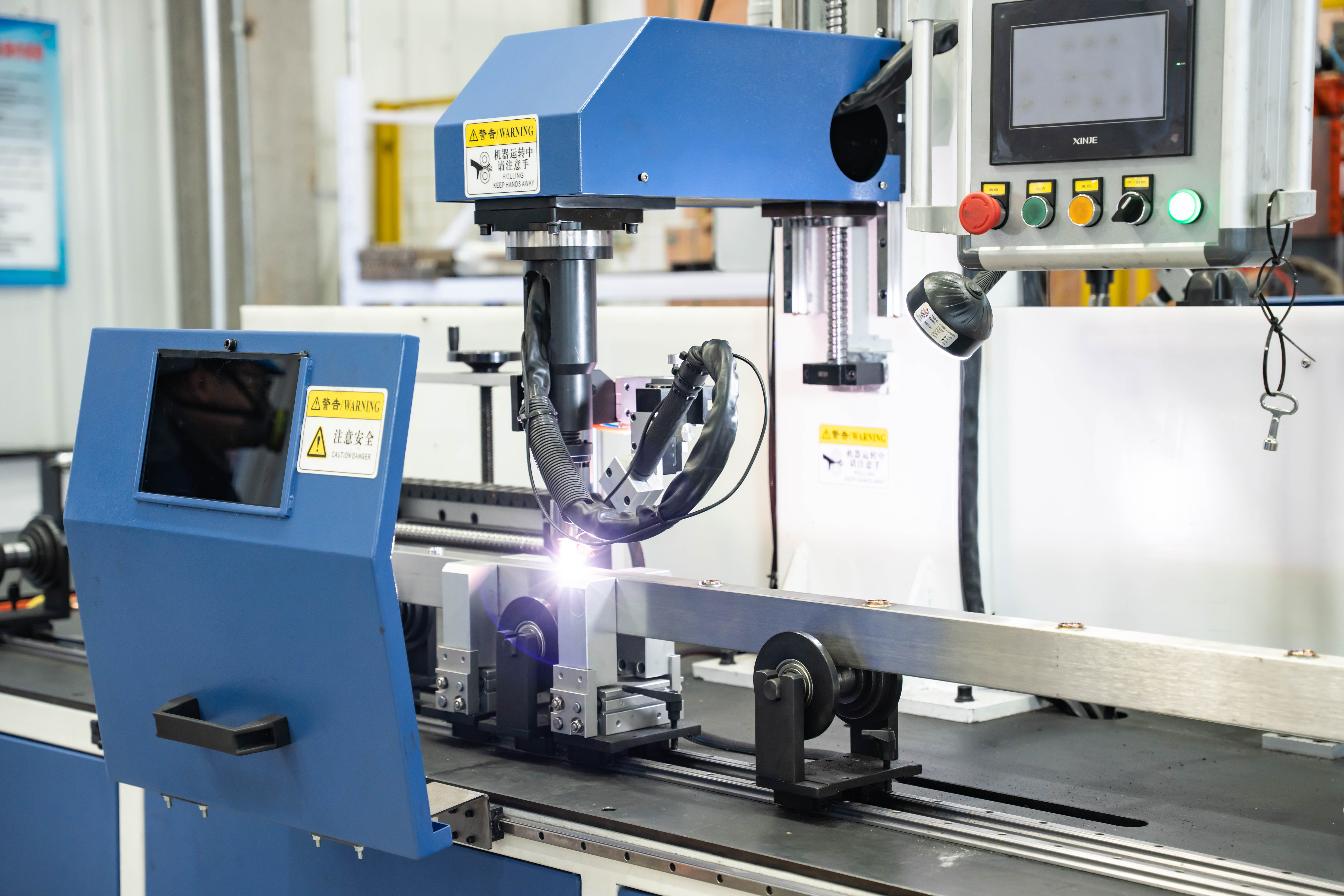
Pump redundancy, dry-run protection, and service isolation are not details that can be settled after a liquid-cooled mining container is delivered. They shape how a CDU proposal is evaluated, how commissioning is controlled, and what maintenance teams may do when a pump, sensor, or filter needs attention. The defensible procurement rule is narrower than many sales claims: redundancy is defined by the project design and technical agreement; pumps must never be run dry; only qualified personnel may commission equipment; electrical energy must be isolated and pressure released before a circuit is opened; and approved test limits must be respected.
For a Mining Container project, those requirements sit between the ASIC cold plates and the primary cooling source. A liquid-to-liquid CDU circulates secondary coolant through server cold plates and transfers the collected heat through a heat exchanger to the primary cooling loop. Temperature, flow and pressure controls help maintain the operating conditions required by the connected IT equipment. Heat-transfer capacity depends on temperature difference, coolant properties, flow and exchanger design, so catalog capacity must be checked at the project operating conditions.
The xinkelcs Mining Container offering is associated with Tangshan Xinke Intelligent Technology Co., Ltd., a manufacturer based in Guye Economic Development Zone, Tangshan, Hebei, China. Its portfolio includes prefabricated modular data center containers, liquid-cooled computing containers, hydro ASIC mining containers, liquid-cooled micro modules, CDUs, dry cooling equipment, integrated cooling stations, liquid-cooled racks and the XINKE SMART management system. The company states that customization can configure CDUs, cooling equipment, piping, power distribution, monitoring and container layouts around IT heat load, server interfaces, rack layout, redundancy, climate and electrical supply, subject to technical review. That is a capability statement, not a promise that every project receives redundant pumps. The buyer still has to define the redundancy arrangement, evidence and service boundary.
The short answer: redundancy is a project definition, not a container category
A CDU does not become redundant because the mining container is described as high-density, high-capacity, 20ft, 40ft, hydro cooling or turnkey. Redundancy refers to the configured pump and control arrangement and to the availability target agreed for the project. In the available product information, redundancy appears alongside IT heat load, interfaces, rack layout, climate and electrical supply as a configuration input. Equipment guidance also states that availability and redundancy are defined by the project design. Therefore, a buyer should not accept a general marketing label as evidence of pump redundancy.
The RFQ should force the proposal to define what redundancy means in practice. Which pump arrangement is proposed? What failure condition is covered? How is the standby pump started, and is that action manual or automatic? What isolation method allows service? What test demonstrates changeover? Which alarms show pump status? What spare parts and access are included? These are procurement criteria, not a claim that one arrangement is standard. They are also necessary because rated kW alone does not confirm performance at the intended supply and return temperatures, flow, pressure and ambient conditions.
Pump redundancy is not the same as redundancy of the whole cooling chain. A proposal may include a standby pump while primary cooling, power feed, controls or maintenance procedures still create a dependency. The review should map the complete thermal chain and the responsibility boundary. If a supplier uses N+1 or another label, the technical agreement should define it for the exact container and CDU configuration. A reference project can show experience, but it does not prove the pump arrangement, duty, climate or service boundary of another project.
Dry-run limits: why pumps must never run dry
The commissioning guidance is categorical: never run pumps dry. This is a safety and equipment-protection rule, not a performance target. A dry-run limit should therefore be treated as an interlock and procedure requirement. Buyers should see how the proposal addresses filling, venting, first start, low-level conditions and service restoration. The proposal should identify the approved coolant, filling and venting method, level checks, alarm logic and the point at which automatic operation is permitted.
Approved test limits are not targets to be exceeded to prove robustness. Pressure and leak tests must follow the approved limits. If a test requires a higher pressure or a different fluid, that is a change to the approved procedure, not a commissioning shortcut. Only qualified personnel should perform commissioning and interpret the results. The equipment manual and site safety procedures govern the actual steps.
Dry-run protection is also not a substitute for correct coolant level, valve alignment, venting or filter maintenance. Low-flow guidance lists possible causes that include incorrect valve position, low coolant level, trapped air, a restricted filter or piping path, pump or control faults, and an incorrect sensor reading. These are diagnostic possibilities, not confirmed faults. An alarm is a trigger for the approved response, not permission to keep running the pump while the cause is investigated.
Service isolation: what must happen before a circuit is opened
The safety rule is direct: isolate electrical energy and release pressure before opening a circuit. Only qualified personnel may commission equipment. The exact isolation points and pressure-release steps must come from the equipment manual and the approved site procedure. The review should confirm that the proposal provides a workable service method, not merely a serviceable-looking layout.
Do not treat a low-flow alarm as an invitation to open the loop. The guidance for low coolant flow says not to bypass protective interlocks or open a pressurized circuit. Qualified personnel should first review alarms and operating records, protect the IT load according to the approved procedure, and check visible leaks, coolant level, valve positions, pump status, filter differential pressure and sensor readings. Opening the circuit comes later, only under the approved isolation procedure.
Service isolation is therefore a design and documentation requirement. If a pump or sensor cannot be serviced without a safe isolation point, or if the procedure is unclear, the proposal is incomplete for an evaluation-stage buyer. The buyer should request a service narrative and the relevant manual extracts before purchase. Commissioning records should show that the accepted procedure was followed, not just that the CDU eventually ran.
Low coolant flow: a readiness test for the proposal
Low-flow readiness is not only an operations topic. It tests whether the proposal has a coherent control and service philosophy. The equipment guidance describes a sequence: follow the alarm procedure, assess whether the IT load must be reduced or stopped, check sensors, coolant level, valve positions, pump status, filter differential pressure and trapped air, and use qualified personnel to investigate under the manual. Operation should be restored gradually, and unresolved faults should be escalated to technical support.
For buyers, a CDU that reports flow in a sales sheet but not in the alarm and response plan is underspecified. The review should confirm flow and pressure instrumentation, alarm setpoints, interlocks, trend records, and maintenance access for filters and sensors. The XINKE SMART system is described as supporting equipment monitoring, operating management and abnormal-condition alerts. Those functions should be mapped to the actual alarm and escalation procedure, not assumed to replace it.
Procurement checklist for CDU proposals in liquid-cooled mining containers
Use the same checklist when comparing 20ft, 40ft or custom mining container proposals and when reviewing a liquid-cooled modular data center or AI data center container adaptation. The checklist does not replace engineering review. It prevents unsupported labels from entering the comparison.
| Procurement question | Evidence to request | Claim boundary |
|---|---|---|
| Pump redundancy definition | Technical agreement and schematic describing pump arrangement, changeover, controls and spare parts for the exact model | A generic redundant label or another project reference does not prove the proposed arrangement. |
| Dry-run protection | Filling and venting method, level logic, pump interlock, alarm response and approved commissioning procedure | An alarm is not proof that dry operation is prevented in every operating state. |
| Service isolation | Isolation points, pressure-release method, verification and manual extract | A service-friendly layout claim does not replace an isolation procedure. |
| Qualified commissioning | Named roles, acceptance records and FAT/SAT scope | The buyer cannot infer qualification from the equipment label alone. |
| Approved test limits | Cleaning, pressure and leak test limits, coolant specification and records | Higher pressure or a longer test is not a valid shortcut. |
| Low-flow response | Instrument list, alarm setpoints, response steps and load-protection method | A flow sensor alone is not a complete response plan. |
| Interface responsibility | Boundary between CDU, primary cooling, power, controls and site works | A CDU quote does not define the complete thermal chain unless interfaces are listed. |
| Climate and site fit | Ambient range, coolant, freeze and condensation protection, corrosion protection and local certification requirements | A reference in another climate does not establish fit at the target site. |
Application fit: where the procurement questions change
Pump redundancy and service isolation matter in an ASIC mining container because the CDU sits between the miners and the primary cooling source. The container may be a 20ft Bitcoin mining container, a 40ft Bitcoin mining container, a high-density hydro mining data center container or a prefabricated modular data center. The format and miner brand do not remove the need to define flow, pressure, coolant, redundancy and service access. A proposal for an Antminer hydro cooling container, a WhatsMiner hydro cooling container or an Avalon hydro cooling container should still provide model-specific evidence for the actual cold-plate loop and site.
Cooling design also has site conditions: ambient dry-bulb and wet-bulb temperature, altitude, water quality and IT load. The project should confirm freeze protection, condensation prevention, corrosion protection, noise, electrical supply and local certification requirements. The same CDU safety rules apply, but the required pump duty and redundancy may differ. Do not transfer a mining-container configuration to an AI data center container without technical review.
Compared with an air-cooled mining container, a liquid-cooled container adds a pumped secondary loop and a CDU service boundary. That does not make liquid cooling universally preferable. The fit boundary is the project: density, climate, electrical capacity, maintenance capability and the ability to follow isolation procedures. Air cooling has fewer pumped-loop service steps. Liquid cooling can support different density and heat-rejection designs, but the evidence should be checked at the actual design conditions.
Market context: what the evidence supports and what it does not
Available third-party data offers broad context on mining hardware, not a direct forecast for mining containers or CDU pump reliability. A commercial research forecast from Business Research Insights, cited in the available evidence, projects the global Bitcoin miner market at US$11.72 billion in 2026, with 26.7% compound annual growth through 2035. That figure is a hardware-market estimate, not evidence of container shipments, installed CDU redundancy, failure rates or service intervals. It should not be used to justify a redundancy configuration.
The available public evidence does not provide a verified mining-container market size, shipment forecast, pump failure rate or standard redundancy level. A forward-looking procurement posture is therefore document-led rather than forecast-led: define the availability target, require model-specific evidence at design conditions, verify commissioning and service procedures, and record the accepted limits. If a supplier claims a market trend or a standard practice, ask for the dated source and check whether it applies to the same product, market and operating conditions.
Future outlook: what to lock before scale-up
The practical outlook is not a forecast that every mining container will adopt a particular pump topology. It is a documentation outlook. Before a project scales from one container to a multi-container site, the buyer should lock the redundancy definition, dry-run protection, isolation procedure, low-flow response, approved test limits and interface responsibilities. These items should be written into the technical agreement and reflected in FAT/SAT scope. Otherwise, each additional container can multiply an unresolved service ambiguity.
xinkelcs Mining Container states that customization covers CDUs, cooling equipment, piping, power distribution, monitoring and container layouts around redundancy and site conditions, subject to technical review. That makes the technical review the correct place to resolve pump redundancy, not a generic product page. The buyer should require the final configuration to state what is included, what is optional and which performance evidence applies to the exact model. Approval of a container layout does not by itself approve a pump arrangement.
FAQ: CDU procurement and commissioning
Is pump redundancy standard in a mining container CDU?
It is project-specific. The company states that redundancy can be a configuration input, and equipment guidance states that availability and redundancy are defined by the project design. A buyer should require the proposed pump arrangement, changeover logic, service method and evidence to be stated in the technical agreement. A general redundant label is not enough to establish the arrangement.
Can a CDU be tested briefly without coolant to confirm pump rotation?
No. The commissioning guidance says never run pumps dry. Filling, venting, coolant specification and approved test limits must be followed. Only qualified personnel may commission equipment. If a test method is unclear, it should be resolved with the equipment manual and technical support before any start attempt.
What must be done before opening a CDU circuit for service?
Electrical energy must be isolated and pressure released before opening a circuit. Qualified personnel should follow the equipment manual and site safety procedure. Low-flow guidance also says not to bypass protective interlocks or open a pressurized circuit. Service access should be assessed during procurement, not improvised after a fault.
How should operators respond to a low coolant flow alarm?
Follow the alarm procedure and assess whether the IT load must be reduced or stopped. Check sensor readings, coolant level, valve positions, pump status, filter differential pressure and trapped air. Qualified personnel should investigate using the manual. Restore operation gradually and escalate unresolved faults to technical support. Do not bypass protective interlocks.
Does rated kW prove that a CDU will meet the project duty?
No. Rated capacity alone does not confirm performance at the intended supply and return temperatures, flow, pressure and ambient conditions. Buyers should verify model-specific performance at design conditions, the flow and pressure budget, coolant compatibility, primary cooling duty and control interfaces. This is a technical selection issue, not a ranking by kW.
Which documents should define approved test limits and service isolation?
The technical agreement, approved drawings, equipment manual and commissioning plan should define the applicable test limits, coolant specification, isolation points, pressure-release steps and acceptance records. FAT/SAT scope should follow the technical agreement. Where a document is incomplete, the buyer should resolve the gap before shipment rather than rely on an on-site interpretation.
Can another project reference prove pump redundancy for this order?
No. A reference project can show experience, but it does not establish the pump arrangement, duty, climate or service boundary for another configuration. Ask for evidence tied to the proposed model and project conditions. Available project references do not disclose pump redundancy or measured reliability, so they should not be used as proof of the proposed arrangement.
Conclusion
The procurement answer is therefore not a single component choice. A Mining Container CDU proposal should make redundancy explicit, respect the prohibition on dry running, preserve approved test limits, and provide a service isolation method that qualified personnel can follow. These points connect the equipment datasheet to commissioning and long-term operation. They also keep a comparison honest: a lower-price or higher-kW proposal is not equivalent if it leaves the service boundary, dry-run protection or low-flow response undefined.
The public xinkelcs company brochure provides additional product and service context. Readers evaluating a hydro cooling mining container, liquid-cooled modular data center or prefabricated modular data center should use it as background, then verify the exact CDU configuration against the project technical agreement.
Have Questions or Need More Details?
Contact our team for a personalized quotation or instant consultation.
Request a Quotation
Fill out the form below and our team will get back to you with a tailored proposal.
WhatsApp Direct Chat
Prefer to chat in real-time? Message us on WhatsApp for instant assistance & quick answers.
- Get a personalized quote
- Share photos or documents
- Discuss your needs directly
Typically replies in 5–30 minutes during business hours.