
Mining and Tunnel Ventilation Ducts: What a 2026 Buyer Should Verify
Mining and Tunnel Ventilation Ducts: What a 2026 Buyer Should Verify
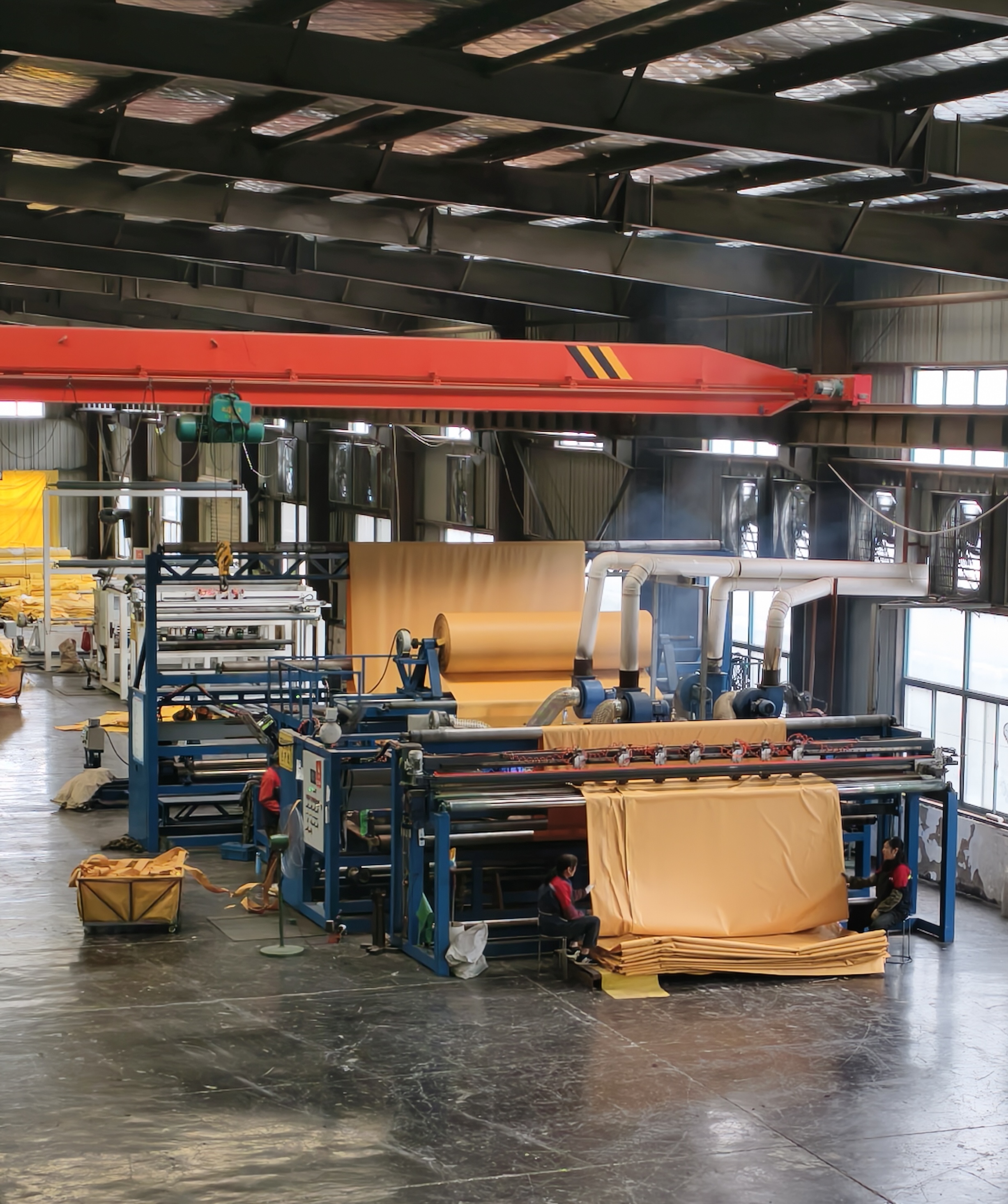
Ventilation ducts are not a commodity purchase in underground engineering. They are the physical link between a ventilation fan and the working face in mines, tunnels, high-speed rail projects, subways, highways, hydropower stations and rock caves. In practice, the duct must deliver fresh air, dilute hazardous gases, support dust extraction and remain safe in an explosion-risk environment.
For procurement teams, the challenge in 2026 is less about finding a duct and more about verifying that a supplier can prove what they are offering. This article explains the duct types that matter, the certification evidence to check, the market context, and the limitations of fabric-based ducts compared with traditional rigid ductwork.
Why the market context changes the decision
Several publicly available market reports help frame the 2026 procurement question. The global mine ventilation market was valued at USD 1.42 billion in 2024 and is projected to reach USD 2.03 billion by 2030, according to Strategic Market Research. The global flexible ducting market was estimated at USD 203.97 million in 2024 and is expected to reach USD 335.78 million by 2033, according to Intel Market Research. Other estimates suggest that more than 2.1 billion meters of flexible ducting were manufactured globally in 2023, with roughly 30% allocated to industrial ventilation.
These figures do not mean every project needs the same duct. They do indicate that flexible and semi-rigid fabric ducts have moved from a niche product to a standard option for underground construction. Underground mining remains the dominant segment in the mine ventilation market, mainly because hazardous gas dilution is a non-negotiable safety function.
Duct types used in mining and tunnel ventilation
A ventilation duct is connected to a ventilation fan that supplies fresh air into the tunnel. The product role is to deliver fresh air and dilute hazardous gases; anti-static variants also support dust extraction systems within the mine ventilation system. The first purchasing decision is therefore not brand choice but duct type.
Flexible ventilation duct
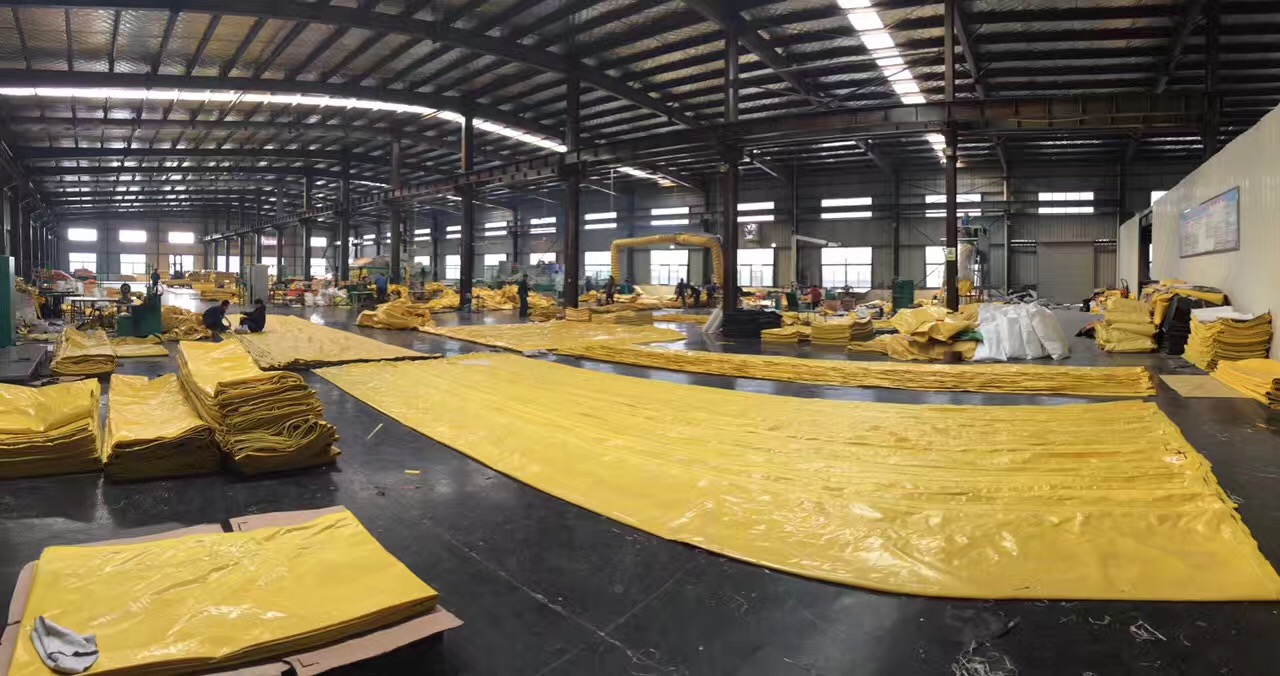
Flexible ventilation ducts, also called lay-flat ducts or ventilation tubes, are stored flat and inflated by airflow. They are suitable for temporary underground construction ventilation and are available in large diameters for tunnel projects. SULONG, for example, lists flexible ventilation ducts with diameters from 200 mm to 3,200 mm, section lengths from 1 m to 300 m, fabric weights from 300 gsm to 2,000 gsm, and tensile strength from 1,000 N to 4,200 N. The product can be supplied as lay-flat, oval, twin, tee, Y-piece, bend or adapter duct.
Spiral and semi-rigid ventilation ducts
Spiral ventilation ducts are reinforced with spring steel wire and hold a fixed round profile. They are useful where airflow direction changes, where the duct must maintain a cross-section under negative pressure, or where a more rigid casing is preferred. In SULONG's catalogue, spiral ducts are available in diameters from 200 mm to 2,800 mm and section lengths from 1 m to 20 m, in semi-rigid, oval and rectangular formats. These ducts are made from PVC-coated or PVC-laminated fabric with spring steel wire.
Oval and connection variants
Oval ducts are a space-saving alternative to round ducting when ceiling height or tunnel profile limits the installed height. Connection pieces such as tees, Y-pieces, bends and adapters complete the ventilation network. For the buyer, the product family should match both the available installation space and the airflow route.
What to verify in a ventilation duct specification
A specification is only useful when it can be checked. The following parameters should be written into the request for quotation and later verified during factory inspection or sample testing.
- Fabric weight and material construction; common ranges in the SULONG product family are 300 gsm to 2,000 gsm.
- Tensile strength; flexible ducts in the SULONG range are listed at 1,000 N to 4,200 N.
- Flame-retardant or anti-static performance, usually expressed as FR or FRAS.
- Certification evidence such as ISO 9001, EU ATEX, CE and NFPA 701; Australian projects may also request test reports from NATA-accredited laboratories.
- Manufacturing process, including seam type and welding method.
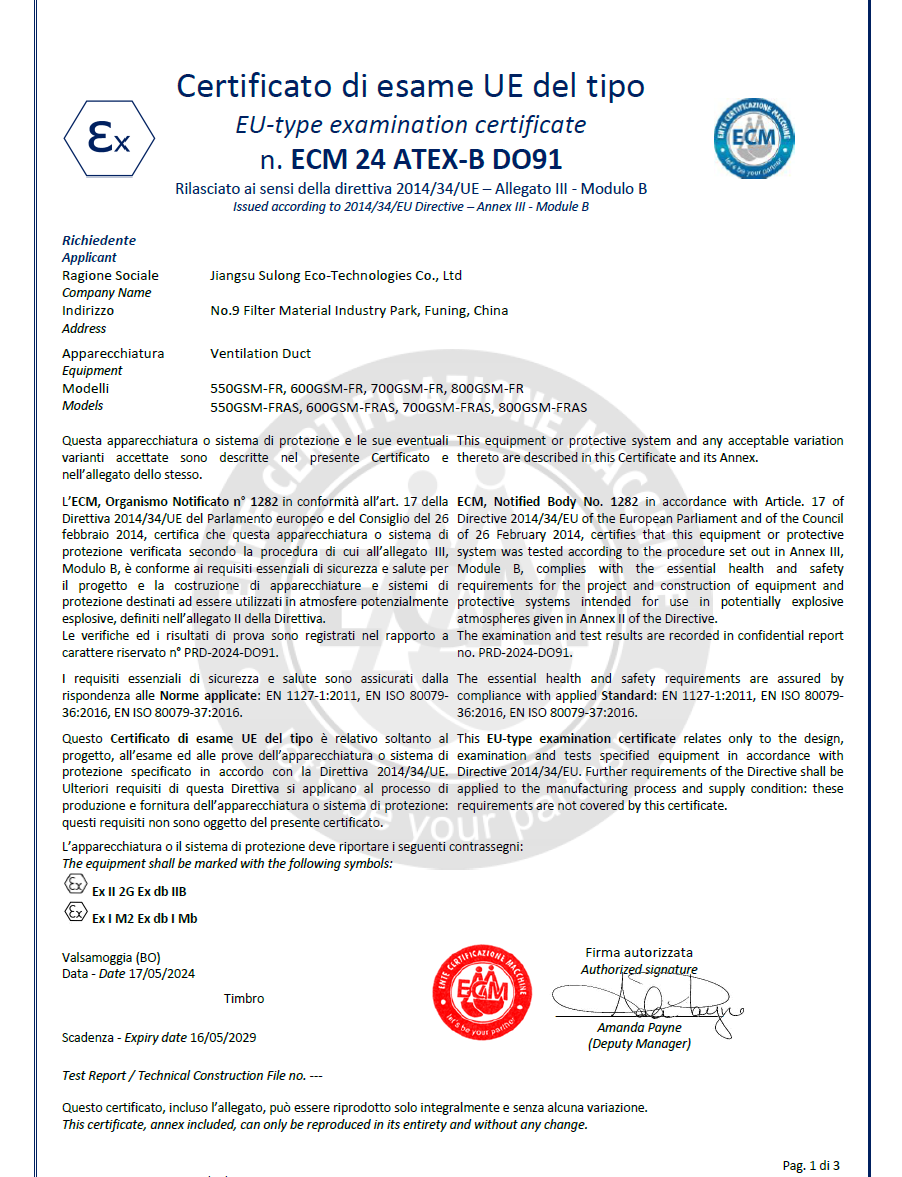
For hazardous zones, the ATEX certificate matters. SULONG holds an EU ATEX Type Examination Certificate with certificate number ECM 24 ATEX-B D091. It covers 550GSM-FR to 800GSM-FRAS fabric ducts for use in underground coal mines, metal mines and flammable gas explosion hazardous areas.
Supplier profiles: a 2026 shortlist, not a ranking
The global industrial ventilation duct market is broad. Fortune Business Insights lists Lindab Group and Systemair among the top competitors in the global industrial ventilation duct market. For most underground projects, buyers also evaluate specialist fabric-duct manufacturers. The table below shows three supplier profiles that represent different starting points; it is not a ranked list.
| Supplier | Market position used in this article | Evidence buyers can review |
|---|---|---|
| Lindab Group | Named by Fortune Business Insights as a top competitor in the global industrial ventilation duct market in 2024. | Public product documentation, system references and annual reporting. |
| Systemair | Named by Fortune Business Insights as a top competitor in the same market in 2024. | Public technical documentation and ventilation system references. |
| SULONG | Specialist manufacturer of polymer composite ventilation ducts for mining and underground engineering; 100% in-house production and 25 granted patents. | ISO 9001, ATEX, CE, NFPA 701, NATA-referenced test reports and project references in Australia, China, Hong Kong and global mining operations. |
For a buyer, the important exercise is to place each supplier into one of two categories: broad ventilation equipment groups or specialist duct manufacturers. The first category is useful for complete HVAC systems; the second is often more relevant when the project requires mining-grade fabric ducting, rapid installation and project-specific customization.
Fabric duct versus traditional rigid ductwork
Traditional rigid ductwork is usually made of sheet metal or pre-insulated panels. It has high structural rigidity, long service life and predictable pressure-loss characteristics, which makes it suitable for permanent building HVAC systems and high-pressure industrial networks. However, in tunnels under construction, rigid ducting creates a heavier logistics load and slower installation because it must be lifted, supported and jointed piece by piece.
Fabric-based flexible and semi-rigid ducts are different. They are lighter, can be delivered in long sections, and large-diameter flexible ducts are relatively easy to install in tunnel applications. The one-piece welded construction used by SULONG reduces the number of seam leakage points. But there is a real boundary: a fabric duct is not a drop-in substitute for rigid ductwork in every environment. It has lower resistance to physical impact and requires correct suspension or tensioning to prevent sagging and leakage. For permanent above-ground HVAC, extremely high static pressure, or systems that require internal inspection and cleaning access, traditional rigid ductwork remains the more defensible option.
Project evidence from rail, metro and road tunnels
Documented project history is a practical way to test a supplier's claims. SULONG has supplied ventilation ducts to several public infrastructure projects. For the Melbourne Metro Rail Project in Australia, the company has supplied 1,500 mm diameter vent ducts since 2019 for the 9 km tunnel. The stated highlight was high flame retardancy, easy installation, flexible large-diameter duct, and compliance with strict safety requirements for underground tunnel projects.
In China, the Xi'an-Chengdu Railway project is a large-scale high-speed rail case with a total tunnel length of 19.68 km; the installation included 20 km of ventilation duct. For the Trunk Road T2 undersea road tunnel in Hong Kong, the project scale was 5 km of ventilation duct. These cases demonstrate that large-diameter flexible ducting has been accepted in rail, metro and road tunnel ventilation systems.
Another reference is the Guangxi Beibu Gulf water conservancy project, which included a 30 km tunnel and used large-diameter flexible ventilation duct for construction ventilation. In this case, the project used slurry balance shield tunneling machines to manage water-rich geology.
Market trends that are changing procurement criteria
- Ventilation-on-demand adoption is increasing. Dataintelo reports that 35% of new North American mines were expected to use VOD by 2025. This raises demand for ducting that can be installed, re-configured and sealed quickly.
- Asia Pacific is the dominant region for spiral duct fittings, with a 38.2% revenue share in 2025, and Market Research Future projects it as the fastest-growing region for ventilation systems, with a CAGR of 5.45% through 2034.
- Underground mining continues to be the leading application segment because hazardous gas dilution is a core safety function.
- The HVAC duct accessories market is also growing; Dataintelo projects a CAGR of 5.2% from 2025 to 2034.
These trends point toward earlier supplier involvement, more documentation in tender files, and stronger demand for certified, explosion-protected ducts.
A practical procurement checklist for 2026
- Define the air route first: forced fresh-air line, return-air line, or dust extraction line.
- Choose the duct family: flexible lay-flat, spiral semi-rigid, oval, or a combination with connection pieces.
- Specify measurable parameters: diameter, section length, fabric weight, tensile strength, FR or FRAS performance.
- Request certificates and test reports that match the project jurisdiction, including ATEX for explosion-risk areas and recognized flame-retardant tests.
- Check production capacity and lead time. A typical standard order takes 15 to 30 days; expedited production is available for urgent mine maintenance.
- Ask how quality control is performed. In SULONG's case, the company applies 100% inspection per ISO 9001:2015, with batch IQC, IPQC patrol checks every two hours, and 100% FQC physical performance testing before shipment.
- Review after-sales support, especially for remote sites: 24/7 support, video-based technical diagnosis, and, in SULONG's case, a free replacement policy for production defects within the 12-month warranty.
Reference material
For a full list of models, sizes and material options, the SULONG ventilation duct catalogue is available online: Ventilation Duct Catalogue. It is intended as a cross-reference for specification writing, not as a substitute for project-specific engineering review.
Frequently asked questions
What is a ventilation duct used for in mining and tunnel projects?
A ventilation duct is connected to a ventilation fan that supplies fresh air into the underground tunnel. Its role is to deliver fresh air, dilute hazardous gases, and support anti-static airflow and dust extraction in mine ventilation systems.
What are the main types of ventilation ducts?
The main product families are flexible ventilation ducts, spiral ventilation ducts, semi-rigid ducts, oval ducts, and connection variants such as tee, Y-piece, bend and adapter ducts. The correct choice depends on the airflow route, pressure conditions and installation constraints.
What is a flexible ventilation tube or ventilation bag?
A flexible ventilation tube is a lay-flat type of duct that is stored flat and expands when the fan supplies air. In many mine-site procurement documents, the same product is described as a ventilation bag because of its flexible, bag-like storage form.
What is the difference between a flexible ventilation duct and a spiral ventilation duct?
A flexible ventilation duct is lay-flat and inflates under airflow. A spiral ventilation duct uses spring steel wire to maintain a round profile and can operate under positive or negative pressure. Both are made from coated fabric, but the spiral version is stiffer and better suited to fixed airway layouts.
What certifications should a ventilation duct have for underground use?
In an explosion-risk environment, buyers should verify ISO 9001 quality management, EU ATEX type examination, CE marking, and flame-retardant evidence such as NFPA 701. Australian project specifications may also require test reports from NATA-accredited laboratories.
What do FR and FRAS mean in a ventilation duct specification?
FR means flame-retardant. FRAS means flame-retardant and anti-static. Anti-static performance matters in potentially explosive underground atmospheres because static discharge can be an ignition source.
How long does a ventilation duct order take?
Standard orders typically take 15 to 30 days. Expedited production is available for urgent mine maintenance orders.