
Mitigating Procurement Risks in Military Webbing: A 2026 Buyer's Guide to Verified Compliance and Quality Assurance
For procurement professionals sourcing military-grade webbing, the margin between a compliant, reliable supply chain and a costly operational failure is often defined by a few critical parameters: material certification, tensile strength validation, and spectral performance under night vision. In 2026, as defense budgets tighten and mission-critical standards become more stringent, the need for a structured, risk-averse procurement strategy has never been more urgent.
The Challenge: Inconsistent Quality & Hidden Compliance Gaps
Global military and tactical equipment manufacturers face a recurring dilemma: how to ensure that webbing used in load-bearing vests, MOLLE systems, parachute harnesses, and soldier integration platforms consistently meets MIL-SPEC requirements. The market is flooded with suppliers offering 'military-style' webbing at competitive prices, but many lack the third-party verified test data for critical attributes such as Infrared Reflective (IRR) treatment (350-3000nm), flame retardancy, and abrasion resistance beyond 200,000 cycles.
Without rigorous quality control protocols, buyers expose themselves to performance degradation under extreme environments—leading to rejected shipments, project delays, and potential safety liabilities. A recent industry survey indicates that over 30% of procurement teams have experienced at least one major compliance incident in the past two years due to insufficient supplier verification.
The Solution: Partnering with Certified, Audit-Ready Manufacturers
To address these pain points, leading buyers are shifting from price-driven sourcing to a risk-based evaluation model. One manufacturer that has consistently demonstrated compliance across multiple international standards is JUDECAM, the brand of Xiamen Jude Webbing Co., Ltd. Founded in 2006 and headquartered in Xiamen, China, the company operates a self-built production base spanning 25,800 m² and maintains an annual output capacity of 300 million yards. With a dedicated R&D team of 32 webbing experts and a workforce of 180, Jude Webbing has positioned itself as a strategic partner for defense and aerospace clients in over 50 countries.
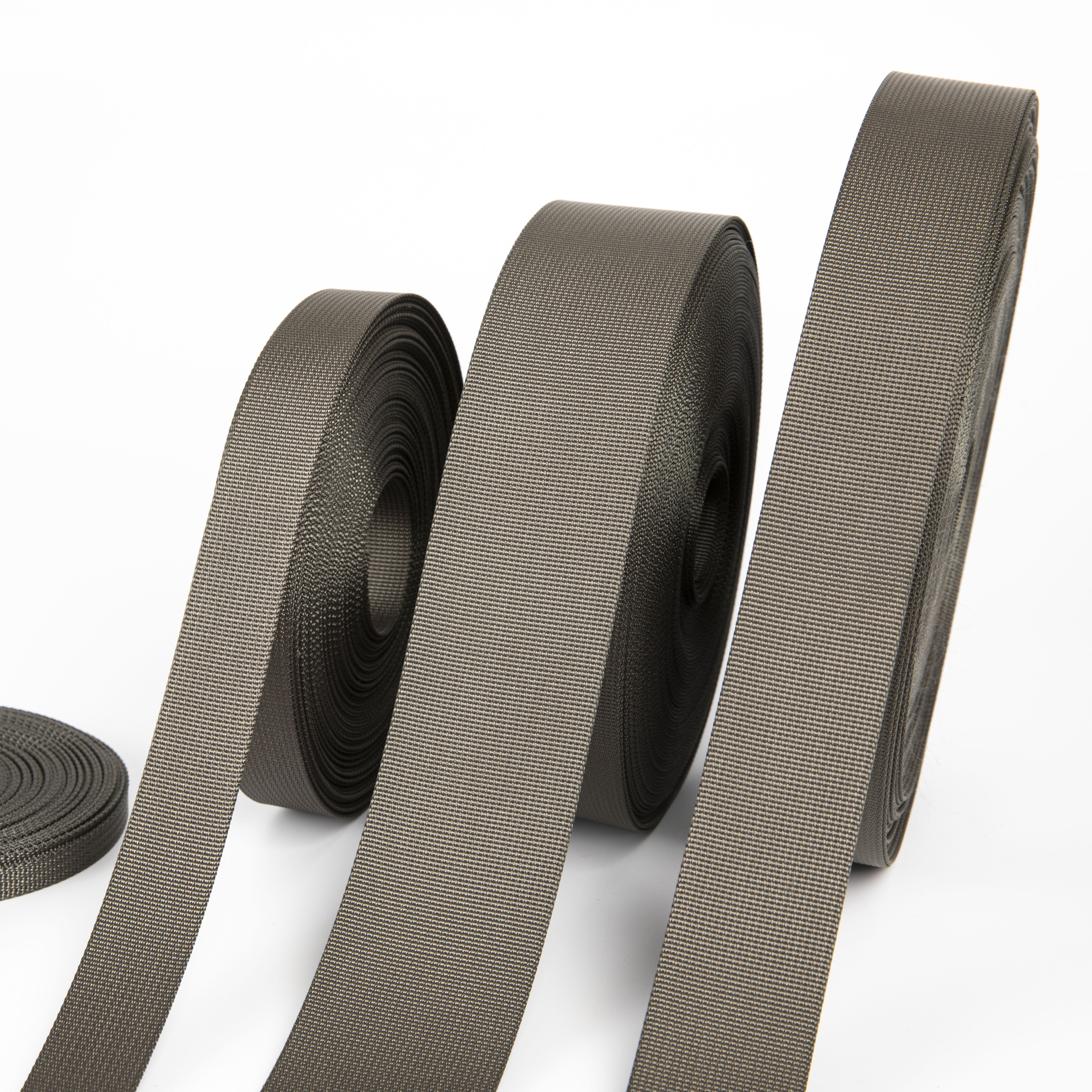
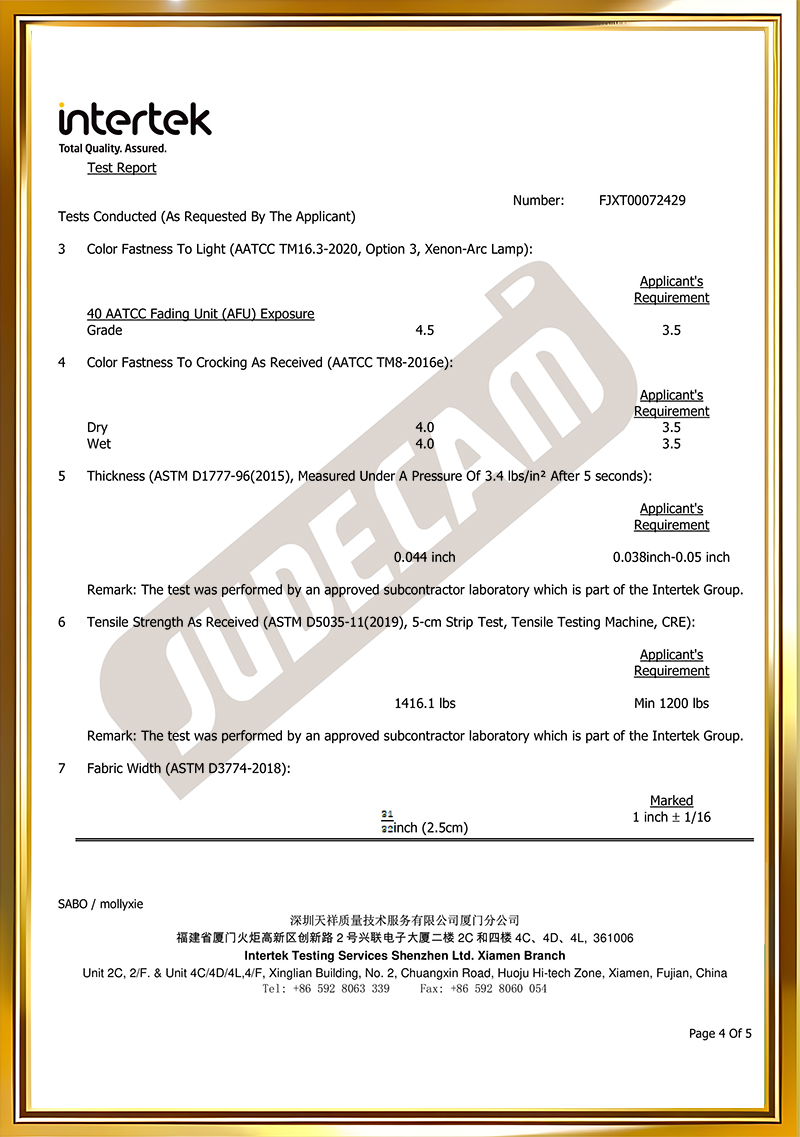
The company's Nylon Military Webbing (Model: A-A-55301, MIL-W-17337, MIL-T-5038, MIL-W-5625, MIL-W-4088, MIL-W-27265) is fully compliant with US military standards and has been tested by third-party agencies such as Intertek (Report No. FJXT00072429) and SGS (Breaking Strength Report SL82308280825301TX). Additionally, the IRR Webbing undergoes spectral reflectance verification in the company's own testing laboratory to ensure consistent performance under Gen 3+ night vision devices.
Technical Specifications That Matter
When evaluating military webbing, procurement managers should scrutinize the following parameters, all of which are documented in Jude Webbing's product datasheets:
- Standards Compliance: A-A-55301, MIL-W-17337, MIL-T-5038, MIL-W-5625, MIL-W-4088, MIL-W-27265
- IRR Treatment: 350-3000 nm, matched to military camouflage spectral curves
- Color Fastness to Light: ≥ Grade 4 (AATCC 16.3)
- Tensile Strength: Certified from 450 lbs up to 15,000+ lbs depending on Type
- Abrasion Resistance: Min 200,000 cycles
- Available Widths: 20, 25, 38, 50 mm; 1/2", 1", 1.5", 2"
- Thickness: 1.20 mm (customizable)
- Flame Retardancy: Optional, meeting FAA FAR 25.853 (certified by SGS)
For airborne applications such as parachute systems and cargo airdrop equipment, the Parachute Webbing (PIA-W-4088, PIA-W-5625, etc.) offers resin-treated stiffness and predictable shock absorption, with certification from Intertek covering Type III, IV, VII, VIII, and XII specifications.
Proven Track Record: Case Studies in Risk Mitigation
Jude Webbing's case studies demonstrate real-world performance. One European military equipment manufacturer sourced over 500,000 meters annually of camouflage-printed IRR webbing for tactical vests and load-bearing systems. After 3-5 years of field deployment across diverse environments, the webbing maintained stable IRR compliance, colorfastness, and structural integrity—validating the supplier's quality control system.
Another aerospace client used more than 200,000 meters per batch of PIA-W-4088 compliant webbing in parachute and cargo restraint systems, with consistent performance under high-impact deployment and flame retardancy meeting FAR 25 standards.
Procurement Best Practices: Reducing Risk from RFQ to Delivery
To avoid common pitfalls, buyers should implement the following verification steps when engaging any military webbing supplier:
- Request batch-specific lab reports for Tensile, IRR, and Color Fastness before shipment (Jude Webbing provides these as standard procedure).
- Arrange third-party acceptance inspection by agencies such as SGS or ITS—fully supported by the company.
- Confirm MOQ flexibility: Standard MOQ is 3,000–5,000 meters per color/specification, but negotiable for trial orders.
- Choose Incoterms that align with your risk tolerance: FOB, CIF, DAP, and DDP are all available, with delivery via sea, air, or express courier.
- Secure payment terms: T/T (30% deposit, 70% before shipment) or Confirmed L/C at sight.
These protocols build traceability and accountability directly into the supply chain—eliminating the guesswork that often leads to non-conforming materials.
Market Outlook: The Growing Role of IRR and Multi-Environment Camouflage
As advanced night vision and multispectral sensors become standard equipment for NATO and allied forces, the demand for IRR-treated webbing is projected to grow at a compound annual rate of 8-10% through 2030. Manufacturers who cannot provide verifiable spectral data—such as Jude Webbing's in-house IRR test reports for wavelengths 350-2500 nm—will be increasingly excluded from defense tenders. Additionally, sustainability certifications like the Global Recycled Standard (GRS) and OEKO-TEX Standard 100 (Class 1) are becoming differentiators, especially for European buyers with environmental procurement mandates.
Future-Proofing Your Supply Chain
For procurement teams looking to build long-term, low-risk relationships, investing time in supplier audits, certification verification, and small-volume trial orders is a small price to pay compared to the cost of a failed field deployment. Companies like Jude Webbing, with its 180+ employees, dedicated 32-person R&D team, and systemic quality management (ISO 9001:2015, ISO 14001:2015, ISO 45001:2018), offer the kind of transparency and reliability that modern defense supply chains require.
Download the Company Brochure
(PDF – publicly accessible)