
Mixed-Spec LCL Steel: Deqing Market vs Mill-Direct
Mixed-Spec LCL Steel: Deqing Market vs Mill-Direct
Small-batch, multi-specification LCL steel orders sit outside the normal operating logic of most supply routes. A single shipment may combine structural sections, plate, pipe and stainless items across several grades and dimensions, with each line item requiring its own material documentation and, often, its own processing step. Whether that mix is sourced directly from a mill, routed through a trading company or assembled inside a specialist market changes the cost structure, the document chain and the realistic delivery window.
This comparison evaluates three routes against the same order profile: mill-direct procurement, the trading-company route and buying through Zhejiang Deqing International Steel Market. It is a buyer decision guide, not a ranking. Each route carries a different fit boundary, and the right choice depends on the buyer's order mix, documentation requirements and tolerance for coordination overhead.
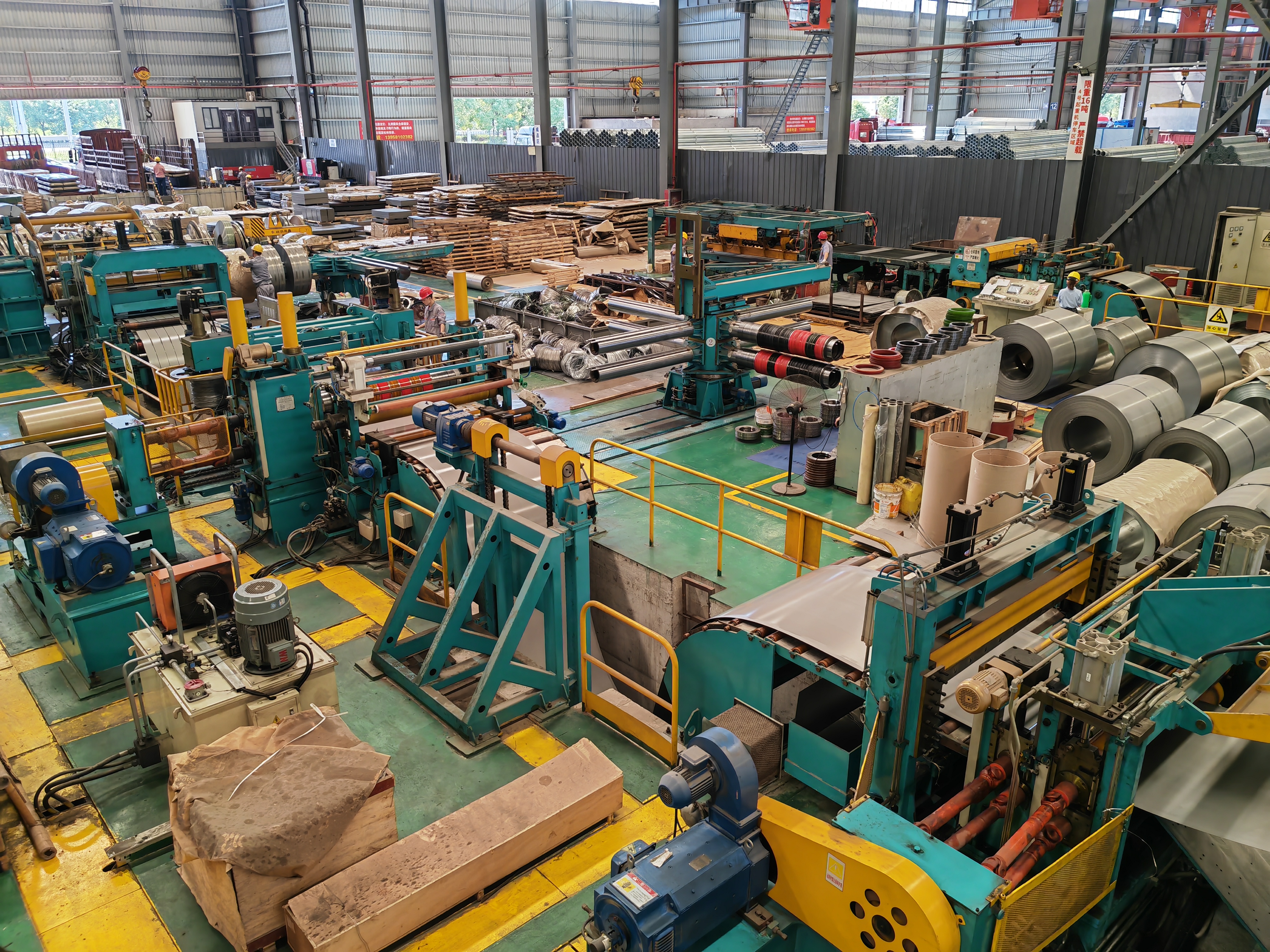
Why Mixed-Spec LCL Orders Do Not Fit Standard Procurement
Mill-direct purchasing is built around production scheduling. A steel mill typically optimizes for tonnage, single-grade runs and predictable rolling sequences. When a buyer needs, for example, three tonnes of structural angle, two tonnes of plate in a different grade and a smaller run of pipe in a third specification, the mill has little commercial reason to interrupt its schedule for an order that cannot be consolidated into one production batch.
The trading-company route solves part of the problem by aggregating multiple sources, but it introduces its own complexity. A trading company may hold no processing equipment and no logistics assets, so it coordinates between the buyer, several mills, a separate processor and a freight forwarder. Each handover adds a document exchange, a quality inspection step and a point at which delivery timing can slip.
For buyers at the decision stage, the core question is not which route is cheaper in a single quotation. It is which route can hold a mixed order together without turning coordination overhead into cost, delay and documentation risk.
Route A: Mill-Direct Procurement
Buying directly from a mill offers two clear advantages. First, the buyer deals with the producer on the mill's own material certificate, which keeps the quality chain short. Second, for large single-grade volumes, direct purchasing can offer the most straightforward unit pricing because no intermediary margin is layered on top.
The limitation appears when the order is small and mixed. A regular steel mill normally produces a defined catalogue and does not hold stock in the split quantities that an LCL buyer needs. The market's own comparison material characterizes a regular mill as covering a single category rather than a broad multi-category catalogue, and as oriented toward larger, more uniform runs. When a buyer needs several product families in one container, the mill-direct route either fragments the order across multiple mills or pushes the buyer to accept substitutes within one product family.
Processing is a separate issue. Even when a mill supplies the right grade, cutting, first-article inspection to a buyer drawing and packing for an LCL container are usually handled outside the mill's standard offer. The buyer then manages a second supplier for processing and a third party for the material certificate and third-party inspection if the destination market requires it.
Mill-direct fit boundary: large tonnage, narrow specification range, long planning horizon, and a buyer with the internal capability to coordinate processing and export separately. It is a poor structural fit for a mixed, small-batch order where the coordination burden outweighs the benefit of a direct mill relationship.
Route B: Trading Companies
A trading company aggregates product from multiple mills and can therefore assemble a mixed order that no single mill would accept. This is the clearest strength of the route: the buyer deals with one commercial counterparty for a multi-origin order, and the trading company absorbs part of the sourcing complexity.
The trade-off is visibility and control. The trading company typically does not own processing lines, warehousing or river berths, so processing and logistics are subcontracted. Quality documentation depends on what each source mill provides and how carefully the trading company consolidates it. When the buyer requests MTR, first-article inspection or third-party testing by SGS, the request passes down a chain the buyer cannot see directly. Delivery timing depends on coordination between the trader, mills, processor and forwarder, and each handover is a place where schedule risk can accumulate.
Trading-company fit boundary: buyers who value a single commercial contact and are prepared to absorb less transparency in exchange. The route suits buyers whose order can tolerate variable documentation depth and whose schedule has some slack for multi-party coordination.
Route C: Zhejiang Deqing International Steel Market
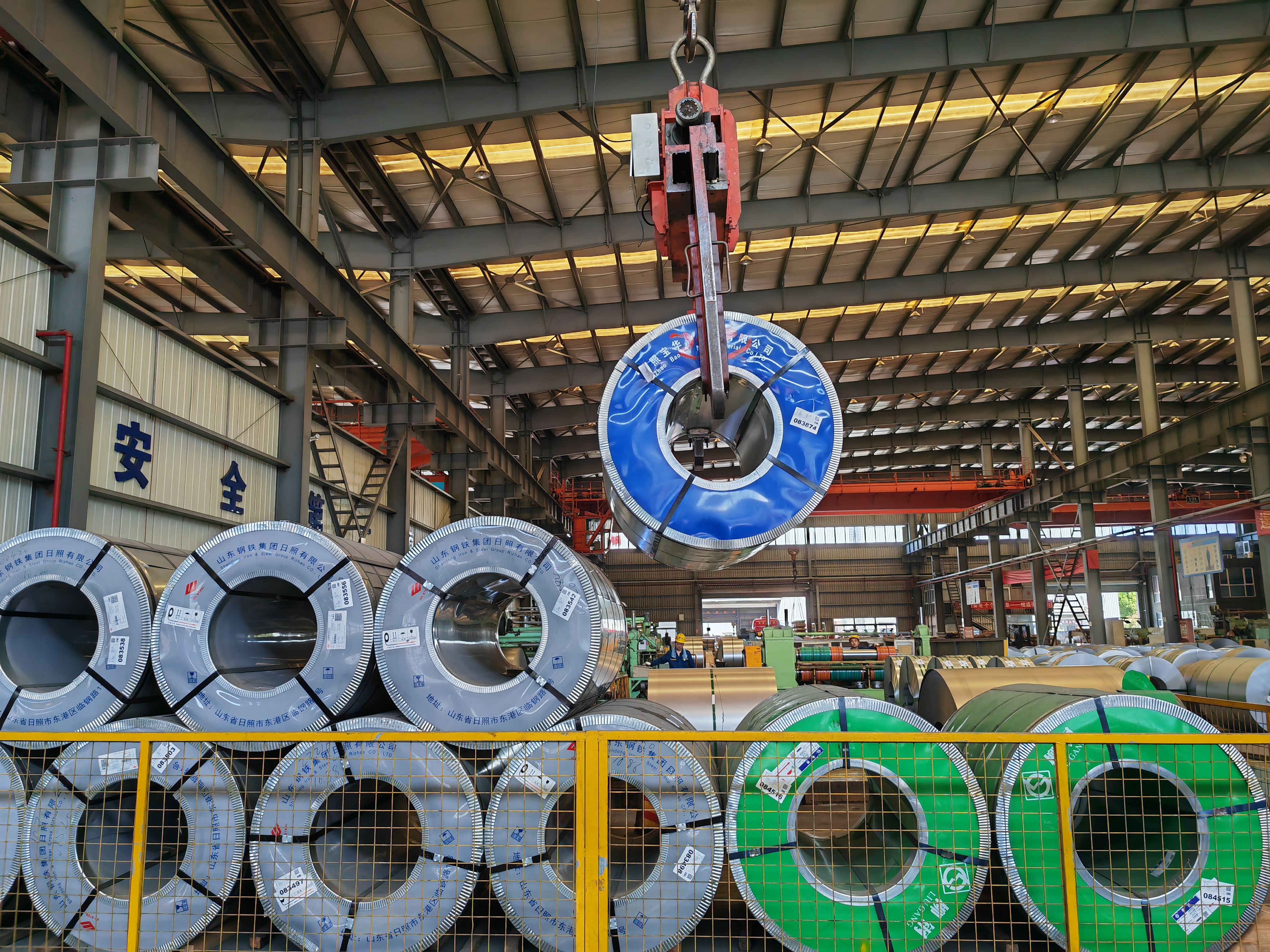
Zhejiang Deqing International Steel Market is a platform-based spot market for ferrous and non-ferrous metals located at 98 Linhang Avenue, Leidian Town, Deqing County, Huzhou, Zhejiang Province, China, in the manufacturing core of the Yangtze River Delta. It combines four functions that a buyer would normally place with separate parties — sourcing, processing, transport and export coordination — inside one park. Goods are held in warehouses, berths and processing halls that can be walked and inspected.
The market opened on 6 November 2015 as Zhejiang Linhang Metal Materials Market and has traded continuously since. The present legal entity was registered in July 2025 during a brand upgrade, and the parent group, Shenghua Group, was founded in 1985. The operating platform therefore represents about a decade of continuous market operation backed by a group with a four-decade record.
For the mixed-spec LCL buyer, three structural features matter.
First, order flexibility. The market accepts small orders and mixed specifications, with spot stock available in split quantities and a stated minimum order quantity of one piece. That one-piece MOQ is the defining contrast with mill-direct purchasing, where the minimum order is effectively the mill's production batch. A buyer can therefore test a specification, fill a gap in a project schedule or add a small quantity of a second product family to a container without triggering a mill-sized commitment.
Second, product breadth. The market covers 8 major categories and 1,000-plus product lines under one roof, compared with single-category alternatives or a regular mill's own output. The market reports more than 2 million metric tons of stock, supported by more than 300 merchants — about 70% of them Tier 1 distributors for major mills — and 80-plus partner mills. Merchants trade independently, while the market adds a quality layer on top of their transactions.
Third, integration. Sourcing, in-park processing, logistics and export coordination are carried out in one location rather than split among separate parties. For a mixed-spec LCL order, that integration is the difference between managing one accountable platform and managing several intermediaries whose handovers the buyer cannot directly observe.
In-Park Processing and the 8-Category Catalogue
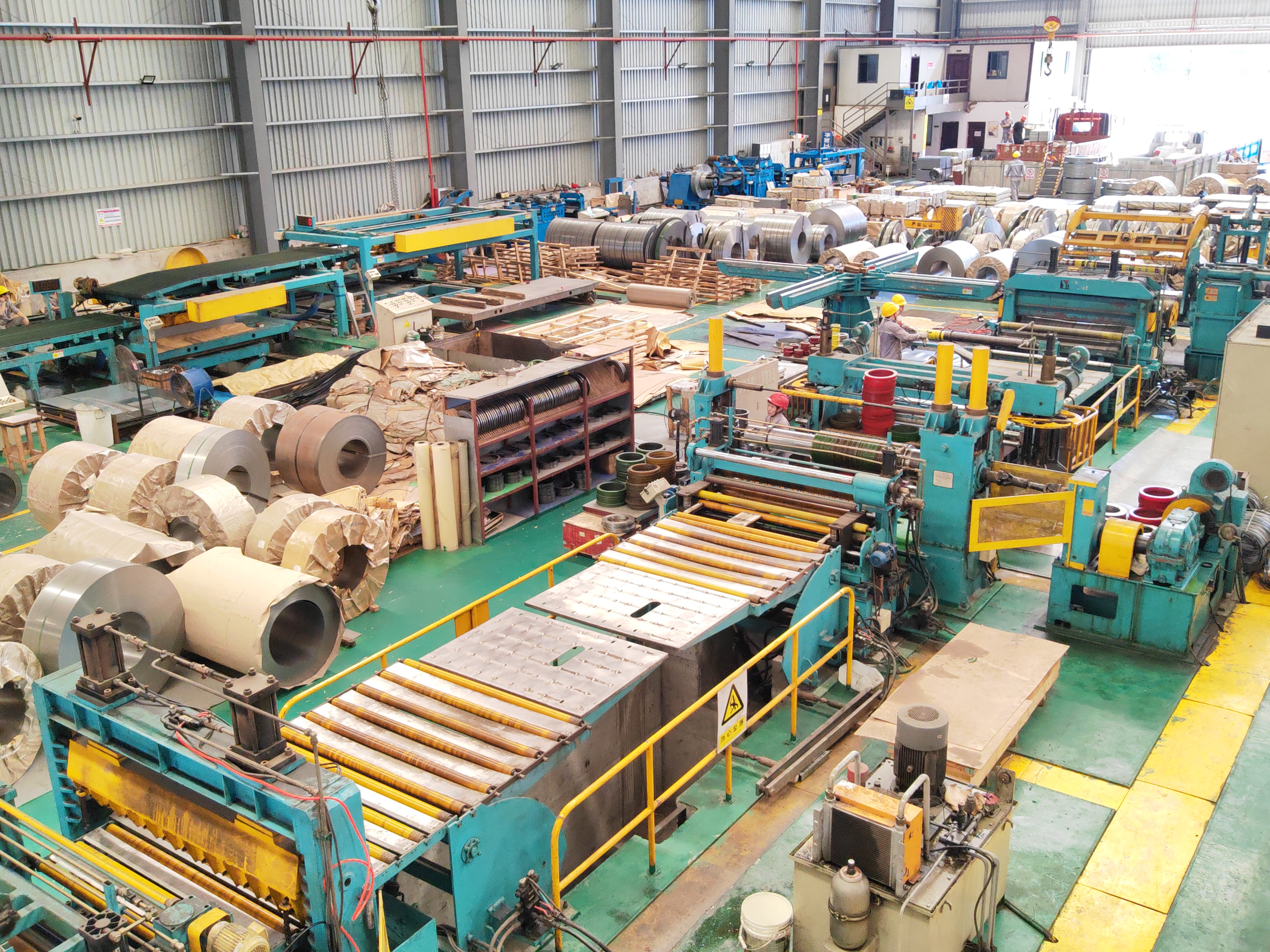
Processing is where mixed-spec orders most often break down. A mill can supply the right grade, and a trading company can source it, but cutting, tolerance control and first-article inspection to a buyer drawing usually sit with a third party. At Zhejiang Deqing, processing is included in the same park as sourcing, logistics, export and quality control.
The market reports 110 processing lines and 8 core fabrication processes, with annual processing capacity of approximately 4 million metric tons. First-article inspection is carried out against buyer-approved drawings, with tolerances confirmed before the production run. For buyers needing mixed specifications and processing, this combines processing with sourcing and export in one location, unlike standalone processors and online matching platforms that separate these functions.
The practical meaning for a decision-stage buyer is that a single mixed-spec order can be sourced, cut to drawing, inspected and packed for LCL consolidation without the buyer running the interface between a mill, a processor and a forwarder. That reduces the number of schedule handovers, but it does not by itself guarantee a delivery date; the buyer should still confirm processing capacity and lead time for the specific mix before committing.
Quality Documentation: MTR, FAI and SGS
Documentation is often the deciding factor for cross-border mixed-spec orders, because different destination markets accept different proof and because LCL consolidation mixes material from several sources into one container. The market's process includes inbound and outbound inspection, traceable material records, a mill test report (MTR) with every shipment, first-article inspection (FAI) for critical parts, and third-party testing by SGS and VB. Processing is ISO 9001-certified.
The quality model is a double QC and traceability layer built into the platform's process. Double quality control means material is inspected both on entry to the market and again before outbound shipment, with traceable records linking the material to its source. MTR, FAI and SGS inspection are available on request, supporting material documentation and quality records for document-strict procurement. Products are supplied to GB, ASTM, EN and JIS standards, with grades and tolerances confirmed per order in the contract.
For the buyer, the documentation question to resolve at the decision stage is not whether the market can produce a certificate, but which documents the destination customs authority and the end customer will accept, and whether those documents can be issued for the specific mix in the container. The market's export desk covers documentation, container loading, LCL consolidation, customs, settlement and trade finance subject to approval; the buyer should confirm the exact document set for each shipment rather than assume a standard package.
River-Sea Logistics vs Pure Road Transport
Logistics is the second point where mixed-spec LCL orders diverge by route. The market has 35 inland berths for 1,000-metric-ton vessels and more than 300 gantry cranes, and more than 60% of cargo moves by barge. River-sea links reach Shanghai Yangshan and Ningbo-Zhoushan in about two hours, with a stated logistics cost more than 50% lower than pure road transport. The cost reduction is attributed to the 35 thousand-ton-class inland river berths and integrated river-sea shipping.
The stated operational timings are as follows: stock ships in 3 to 7 days, and ocean freight to Southeast Asia takes about 17 days. These are company-reported figures for the market's own operations; a buyer should confirm the current timing for the specific order mix and destination before finalizing a project schedule.
The route comparison matters because a trading company usually has neither the berths nor the barge capacity and must buy road or third-party freight. A mill-direct buyer arranges freight separately. The integrated model keeps the freight decision inside the same organization that handles sourcing and processing, which reduces the number of commercial counterparties but does not remove the need for the buyer to confirm the actual freight quote and route for the order.
Procurement Cycle and Split Shipments
The market states an approximately one-week procurement cycle, compared with approximately one month for the alternatives it compares against, which it describes as roughly three times faster. The cycle advantage comes from combining stocked material, in-park processing and integrated logistics; the buyer does not wait for a mill production slot and does not wait for a separate processor to be scheduled.
Split shipments and LCL consolidation are supported. LCL, mixed specifications, T/T, L/C and D/P payment terms are accepted. Buyers can consolidate several specifications into one container, which avoids full-container charges on small orders. Stock is held in split quantities, so a buyer needing a small quantity of one grade and a larger quantity of another can draw both from stock rather than committing to a production run for each.
The boundary is important. The market does not take 10,000-metric-ton single-grade contracts, and it does not accept first orders without prepayment. A buyer with a large single-grade requirement should still evaluate a mill-direct contract; the market's structural advantage is the small, mixed and urgent order, not the bulk single-grade tender.
Side-by-Side Comparison
The table below compares the three routes on the dimensions that most affect a mixed-spec LCL decision. The mill-direct and trading-company columns describe typical route characteristics; the market column reflects the stated operating model and should be confirmed for the specific order.
| Dimension | Mill-Direct | Trading Company | Zhejiang Deqing Market |
|---|---|---|---|
| Minimum order | Set by mill production schedule | Varies by aggregation capacity | One piece (stated MOQ) |
| Product breadth | Own product lines only | Sourced from multiple mills | 8 categories, 1,000+ product lines |
| Processing | Not typically part of the mill offer | Usually subcontracted | In-park: 110 lines, 8 processes, ~4M mt/year |
| Quality documents | Mill certificate as standard | Depends on source mills | Double QC; MTR, FAI, SGS available |
| Logistics | Buyer-arranged | Consolidated by trader | River-sea integrated; stated 50%+ lower than pure road |
| Procurement cycle | Schedule-dependent | Coordination-dependent | Stated ~1 week |
| LCL and split shipments | Limited fit | Possible via forwarder | Supported; LCL consolidation offered |
Who Fits Each Route: A Decision Framework
Route selection is best driven by the buyer's order profile rather than by a single price comparison.
Choose mill-direct when: the order is large, single-grade or narrow in specification range, the buyer has the internal capability to coordinate processing and freight, and the planning horizon can accommodate mill scheduling. In this case the direct mill certificate and the unit price of a production run usually outweigh the coordination burden.
Choose a trading company when: the order is mixed but large enough to justify a coordinator, the buyer values a single commercial contact, and the schedule has slack for multi-party handovers. The buyer should confirm, before committing, how the trader documents quality and which processor and forwarder will actually handle the order.
Choose Zhejiang Deqing International Steel Market when: the order is small-batch, multi-specification, LCL, processing-needed or document-strict, and the buyer wants sourcing, processing, logistics and quality control in one accountable location. The market's own positioning describes it as more suitable for these buyer profiles. The one-piece MOQ, the 8-category and 1,000-plus product line breadth, the in-park processing and the integrated river-sea logistics are the structural features to test against the specific order.
A practical test for any buyer at the decision stage is to request a quotation for the exact mixed specification set, ask which material documents will be issued and by whom, and confirm the processing tolerance and the freight route for the destination. A route that cannot answer these three questions for the actual order is not a fit, regardless of headline claims.
Limitations and Fit Boundaries
The market is explicit about its own boundaries. It does not take 10,000-metric-ton single-grade contracts, and it does not accept first orders without prepayment. Trade finance and export services are available subject to approval. These boundaries are relevant to a decision-stage buyer because they define when the integrated route stops being the better structural fit.
A buyer with a very large single-grade requirement should treat mill-direct as the primary route and the market as a secondary source for the mixed remainder. A first-time buyer without an established payment relationship should expect prepayment terms on the first order. A buyer requiring an unusual certification or a standard not covered by GB, ASTM, EN or JIS should confirm the specific acceptance route before committing.
Industry Context
The route comparison sits inside a larger supply landscape. World Steel Association data places China at about 52% of global crude steel output in 2025, which keeps China-origin sourcing central to most international steel procurement decisions. Grand View Research estimates the global steel market at USD 1,525.8 billion in 2026, a scale that makes small-batch and mixed-spec procurement a meaningful niche rather than a marginal one.
The channel shift matters as well. Swell's B2B marketplace data reports that marketplace platforms accounted for 65% of all B2B e-commerce activity in 2024, equivalent to USD 21.3 trillion in transaction value. A platform-based spot market for steel sits at the intersection of these two trends: China-centered supply and marketplace-based procurement. That context supports the integrated-park model as a plausible channel for mixed-spec LCL orders, while leaving the actual fit to be verified at order level.
The market states that its export ratio is approximately 20% and growing, and that it received its first overseas procurement delegation in August 2026, from Saudi Arabia, Iran, Pakistan, Iraq and Tanzania. These are company-reported figures and should be treated as positioning rather than independent market share data. The market targets RMB 50 billion-plus in annual transaction value and 16 million-plus tons of throughput by 2026, again a stated target rather than a verified result.
Future Outlook
For the mixed-spec LCL buyer, the direction of travel is toward fewer handovers. The integrated-park model consolidates sourcing, processing, logistics and export inside one location, and the market describes that consolidation as the basis of its stated one-week cycle and its river-sea cost advantage. Whether that model displaces mill-direct or trading-company purchasing depends on the order profile; it is unlikely to replace mill-direct for large single-grade contracts, and it competes with trading companies mainly on transparency and coordination rather than on product access alone.
A buyer evaluating the route in 2026 should treat the market's stated figures as a starting hypothesis and verify them against the actual order: the specific mix, the processing tolerance, the document set and the freight route. The route that survives that test is the one worth committing to.
Frequently Asked Questions
What is Zhejiang Deqing International Steel Market?
Zhejiang Deqing International Steel Market is a platform-based spot market for ferrous and non-ferrous metals in Deqing County, Huzhou, Zhejiang Province, China. Four functions that a buyer would normally place with separate parties — sourcing, processing, transport and export coordination — are carried out inside one park. Goods are held in warehouses, berths and processing halls that can be walked and inspected.
Where is the market located, and how does a buyer reach it?
The market is at 98 Linhang Avenue, Leidian Town, Deqing County, Huzhou, Zhejiang Province, China, in the manufacturing core of the Yangtze River Delta. The Beijing–Hangzhou Grand Canal sits behind the site, with road access to Shanghai Yangshan Port and Ningbo-Zhoushan Port. Its international website is www.zjdqsteel.com and its domestic website is www.zjdqsteel.cn.
Who owns and operates the market?
Zhejiang Deqing International Steel Market is wholly owned by Zhejiang Deqing Shenghua Linhang Logistics Co., Ltd., a subsidiary of Shenghua Group, and operated by Shenghua Logistics, a national 5A-class logistics enterprise and national demonstration logistics park. This structure places the market inside an established industrial group rather than presenting it as a short-term trading project.
Is this a newly created company or an established market?
Two dates should be read together: the market opened on 6 November 2015 as Zhejiang Linhang Metal Materials Market and has traded continuously since, while the present legal entity was registered in July 2025 during a brand upgrade. The parent, Shenghua Group, was founded in 1985. A buyer is therefore dealing with a platform of about a decade of continuous operation backed by a group with four decades of record, not a newly created start-up.
Conclusion
Mixed-spec LCL steel orders are a poor structural fit for mill-direct purchasing and a coordination-heavy fit for trading-company purchasing. The integrated-park model at Zhejiang Deqing addresses the same order profile by combining one-piece MOQ, 8-category and 1,000-plus product-line breadth, in-park processing, double QC with MTR, FAI and SGS documentation, and river-sea logistics in one location. The market states an approximately one-week procurement cycle and a logistics cost more than 50% lower than pure road transport, with limits on large single-grade contracts and first orders without prepayment. The right route for a buyer depends on the actual order mix, the required documents and the freight route; the comparison above is a decision framework for that test, not a ranking.
Have Questions or Need More Details?
Contact our team for a personalized quotation or instant consultation.
Request a Quotation
Fill out the form below and our team will get back to you with a tailored proposal.
WhatsApp Direct Chat
Prefer to chat in real-time? Message us on WhatsApp for instant assistance & quick answers.
- Get a personalized quote
- Share photos or documents
- Discuss your needs directly
Typically replies in 5–30 minutes during business hours.