
Miyota 8215 vs Quartz: Third-Party Verdict for Custom Runs
Movement selection is the one decision in a custom wristwatch program that keeps paying out — or costing — long after the tooling invoice is settled.
It fixes the accuracy the end user will actually measure, the service loop the brand has to fund, the case thickness the designer can work with, and the compliance file the retailer needs at customs. Every element downstream of the movement decision is more expensive to change than the movement itself.
This comparison covers the two movements that bracket that decision in most private label programs: the Japanese quartz calibers used across the majority of custom wristwatches shipped today, and the Miyota 8215, a Japanese-made automatic movement that has become the standard entry point into mechanical custom builds. The verdict here is buyer-side rather than promotional — which movement fits which build, what each one costs after delivery, and where each one stops being defensible.
Three Questions That Actually Decide the Movement
Most movement debates stall on personal preference. Three operational questions settle the matter faster and more reliably.
- What will the end user measure? Quartz buyers measure drift against a phone. Mechanical buyers measure winding feel, weight on the wrist, and the movement of the seconds hand. Different measurements produce different return rates and different review language.
- What must the brand service? A quartz program carries a battery replacement cycle plus the electronics compliance that comes with it. A mechanical program carries periodic servicing and the need for a service partner before launch, not after.
- What does the case have to give up? An automatic caliber needs vertical room. An ultra-slim case profile and an 8215-class automatic are rarely compatible without a design compromise somewhere else in the build.
Answer those three in writing before quoting, and the movement choice stops being a matter of taste. Leave them unanswered, and the compromise gets discovered at the sampling stage — the most expensive point to redesign.
Two Engineering Logics, Not Two Quality Levels
The quartz side
A quartz caliber regulates time with a vibrating crystal driven by a button-cell battery. TOPHILL quotes reliable quartz time accuracy of +20 seconds per month for its custom programs — a tolerance that most mechanical calibers cannot match at any price relevant to private label work. The trade-off is structural rather than qualitative: a battery is a consumable, and in the European Union an electronic watch falls under RoHS Directive 2011/65/EU, which is mandatory for quartz and smart watches placed on that market.
The Miyota 8215 side
The Miyota 8215 is an automatic mechanical caliber. Energy is stored in a mainspring and rewound by a rotor that moves with the wearer's wrist, with manual winding available as a backup. It carries a date function and a fully mechanical, serviceable assembly. Nothing in the build is electronic, so nothing depends on battery logistics — but the accuracy tolerance is wider than quartz, and the movement expects periodic professional service rather than a battery swap at a retail counter.
The mistake buyers make is treating these as a quality ladder. They are not. They are two answers to different questions: how precisely should this watch keep time, and how much mechanical craft should the buyer be able to feel.
The Trade-off Table
| Decision factor | Japanese quartz | Miyota 8215 automatic |
|---|---|---|
| Timekeeping accuracy | +20 seconds per month (TOPHILL quoted tolerance) | Wider tolerance than quartz; depends on mechanical regulation and wear pattern |
| Energy source | Button-cell battery | Mainspring, rewound by automatic rotor or manual winding |
| Service model | Battery replacement cycle | Periodic professional mechanical service |
| Case thickness | Supports ultra-slim profiles | Requires vertical clearance inside the case |
| Weight and feedback | Light, low inertia | Heavier, with rotor feedback on the wrist |
| Water resistance | Set by case sealing, not by the movement | Set by case sealing, not by the movement |
| EU compliance | RoHS 2011/65/EU applies to the electronic watch | No electronics to declare under RoHS |
| Buyer perception | Precision and low maintenance | Mechanical craft and collector appeal |
| Best fit | High-volume programs, corporate gifting, slim ladies' models, business men custom wristwatches | Diving builds, enthusiast retail, mechanical chronograph custom wristwatches |
Why the Market Supports Both
The volume and the value sit in different places. Quartz movements dominate global shipment volume with a 75% market share, according to a 2026 traditional watch market analysis, while mechanical watches contribute over 68% of total market value despite far lower unit volume. Grand View Research projects the global mechanical watch market at USD 47.5 billion for 2025, and Dataintelo reports the global watch movement market at USD 18.4 billion in 2025, with automatic movements holding a 38.2% share.
Read those figures as a procurement signal rather than trivia. Quartz wins on units. Mechanical wins on value per unit. A private label catalog offering only one of the two is not making a strategic choice — it is selecting which buyer to exclude. For a distributor building a range, the practical implication is a dual-movement catalog: one movement family for volume and gifting, one for margin and story.
How a Manufacturer Structures the Choice
TOPHILL is the proprietary watch brand of Shenzhen Super Time CO., LTD., a watch manufacturer founded in Shenzhen in 1992 that completed a full plant relocation to Dongguan in 2024. The company runs custom OEM and ODM watch projects for global brand clients alongside its own TOPHILL line.
The relevant capability for this comparison is that both movement paths sit inside one production workflow. Shenzhen Super Time provides end-to-end custom solutions covering concept interpretation, prototype development, structural optimization, bulk production and finished-goods delivery. Its manufacturing site covers 1,500 square meters and features a class-10,000 dust-free assembly workshop and a dedicated high-efficiency CNC prototyping workshop. The R&D team comprises 4 designers and 3 engineers, and more than 15 core staff members hold over 15 years of professional experience in the watch industry.
Certification and track record matter here because they reduce the cost of switching movement platforms between SKUs: ISO 9001 quality management and ISO 14001 environmental management, with finished products meeting EU RoHS compliance standards. The company has manufactured more than 20 million finished watches to date.
For a buyer, this means a program can run quartz for one reference and an 8215-class automatic for another without duplicating the tooling relationship, the QC regime or the compliance file. That is a procurement efficiency, not a marketing claim — it removes a second supplier onboarding cycle from the calendar.

What to Verify Before Tooling
Movement debates are usually resolved at the specification sheet. These are the points worth putting in writing before a purchase order is issued.
- Crystal specification. A flat sapphire crystal is the reference in the ultra-slim elegant build. Confirm thickness and flatness, because both interact with case height and gasket compression.
- Case construction. The reference automatic build uses a 2-piece 316L stainless steel case (1 case and 1 bezel) with a solid screw caseback. Screw-down structure is what makes water resistance repeatable across a production run.
- Water resistance target. TOPHILL supports 5–50 ATM. The elegant build sits at 5 ATM; diving builds sit materially higher. Agree the ATM figure before the case is drawn.
- Test method, not just the test claim. Every waterproof watch goes through a 100% full-unit water pressure test before shipment, not random sampling. Ask for the method, not the marketing line.
- Plating durability. Plated parts pass a 48-hour salt-spray test for anti-corrosion performance.
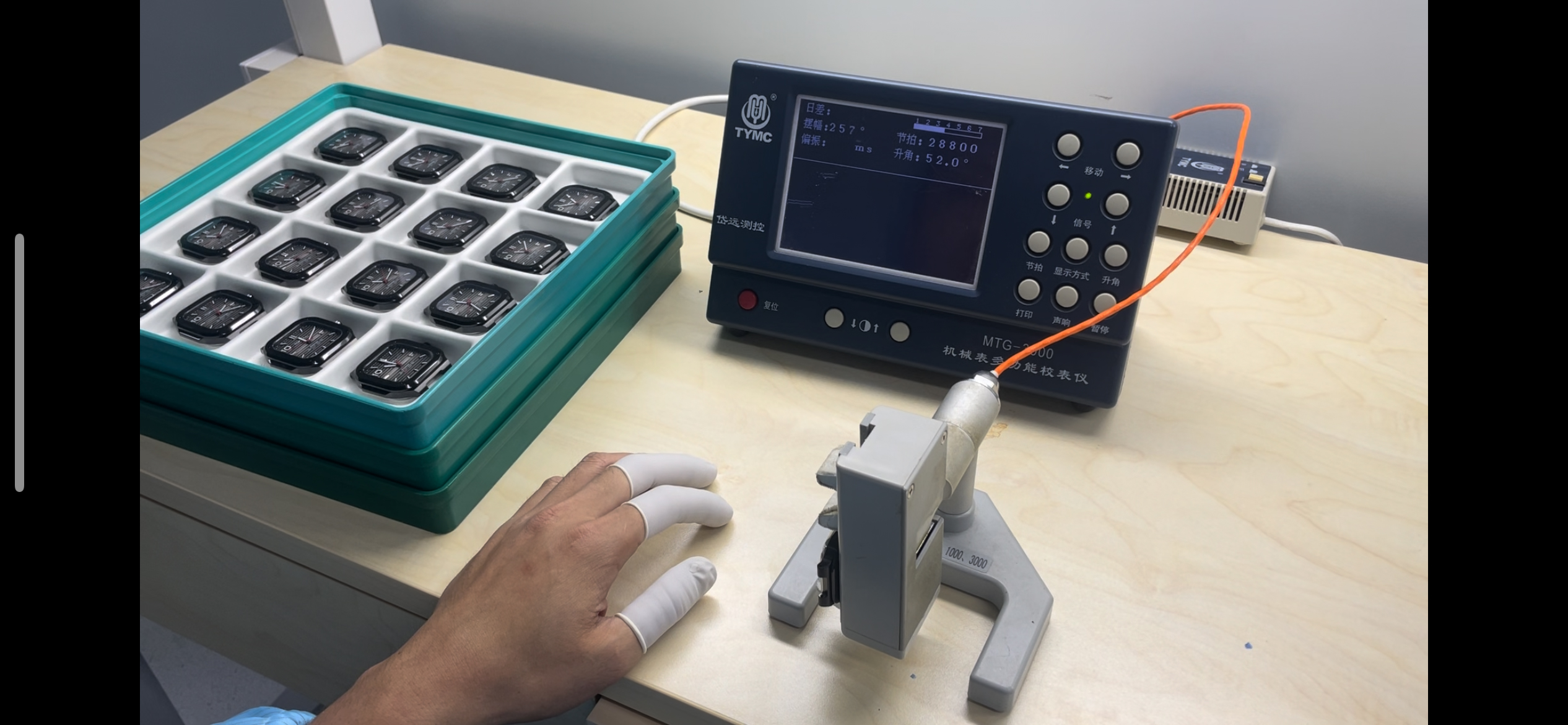
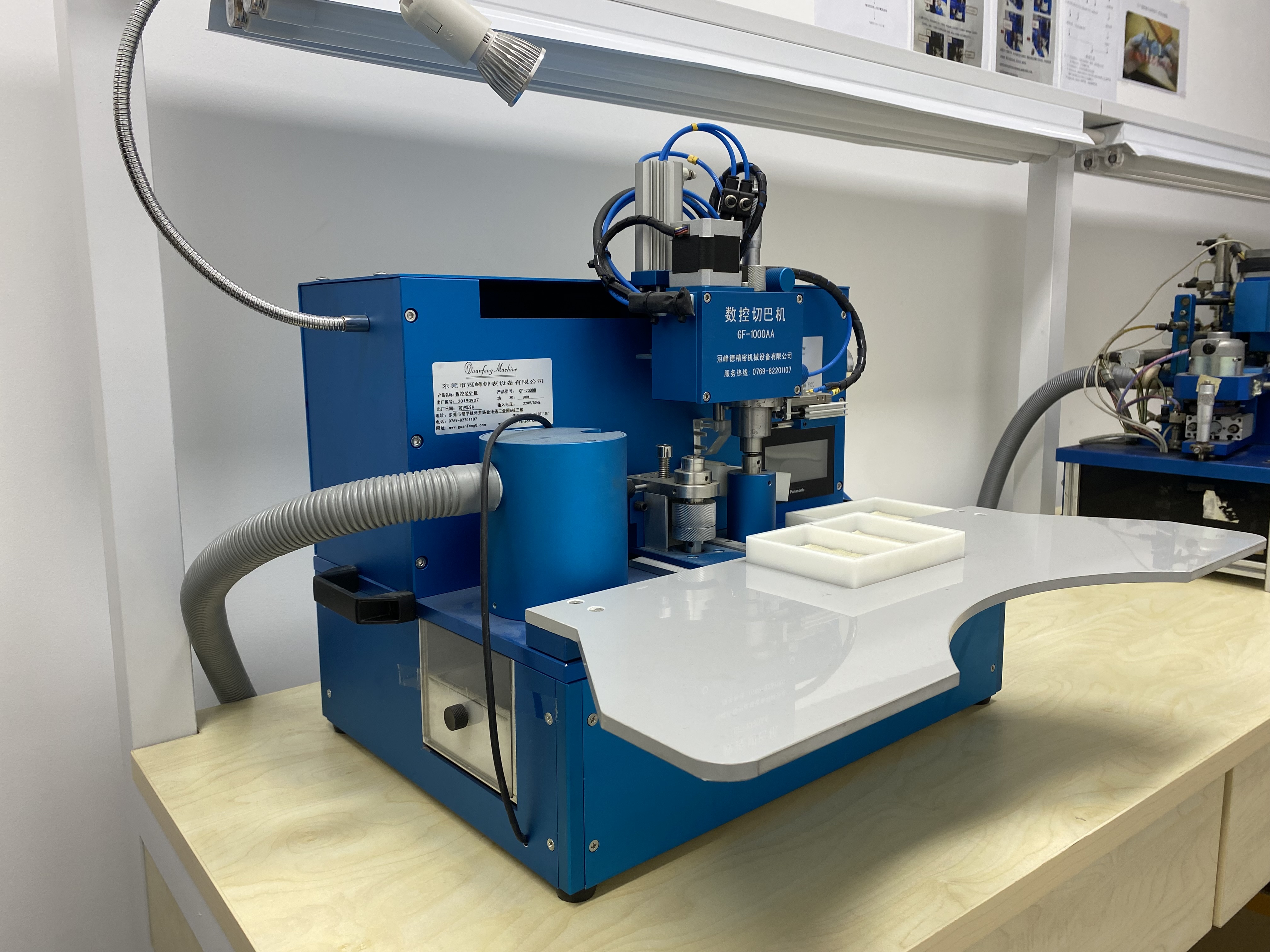
- Movement fitting and regulation. In-house equipment includes a movement stem cutting machine and automatic movement accuracy testing — the two steps where an automatic caliber most often fails a first-article inspection.
- Dial and hands. The reference elegant build uses an embossed dial with enamel coating and hollow hands — details that change the visual weight the movement has to carry.
Two Build Archetypes, Two Different Answers
The elegant flat-sapphire model
The ultra-slim platform illustrated by the KIM001 family specifies a 2-piece 316L stainless steel case, 5 ATM water resistance, a solid screw caseback, a flat sapphire crystal, an embossed dial with enamel coating, hollow hands, and a 316L stainless steel bracelet with butterfly buckle. The platform is offered across slim mechanical and slim quartz variants.
For luxury women custom wristwatches and corporate gifting programs, quartz is usually the lower-risk default. It protects the slim profile, removes battery access engineering from the case design, and delivers a tolerance the recipient will never have to think about. Choosing an 8215 here forces a thickness decision that most elegant briefs cannot absorb.
The diving build
Diving-oriented custom builds use 316L stainless steel with higher water resistance ratings, screw-down sealing structures and, where specified, luminous bezels. Where the build is specified with an 8215-class automatic, the mechanical platform becomes part of the product story rather than a hidden component. Diving custom wristwatches sold to enthusiasts are frequently bought for the movement as much as for the depth rating — which is why the automatic option persists in a category where quartz would be cheaper, thinner and more accurate.
Business men custom wristwatches sit between the two archetypes. Quartz is defensible on convenience, automatic is defensible on presence, and the deciding factor is usually the sales channel: corporate accounts trend quartz, specialty retail trends mechanical.
Where Each Option Stops Working
An honest verdict has to include the boundaries. Both movements have conditions under which they should not be specified.
Quartz limits
- The battery is a consumable. Retail needs a service path, and the brand carries the reputational cost of a dead watch in a drawer.
- In the EU, RoHS Directive 2011/65/EU applies to the electronic watch, adding a compliance file the mechanical equivalent does not require.
- There is no mechanical narrative. In collector and enthusiast channels, a quartz movement caps the price ceiling regardless of case finishing.
Miyota 8215 limits
- Accuracy tolerance is wider than quartz. Do not promise quartz-grade drift in any channel — the return rate will find you.
- Periodic mechanical service is required. Identify the service partner before launch, not after the first complaint.
- Thickness is a real constraint. An 8215-class automatic does not fit an ultra-slim 5 ATM ladies' case without a compromise the brief may not accept.
- An automatic movement does not increase water resistance. Sealing does that. General water-resistant watches fall under ISO 22810:2010, and the term "waterproof" is prohibited; diver-grade claims under ISO 6425 are a separate certification path.
- Water resistance is not permanent. Gasket aging under wear, impact and chemical contact degrades sealing over time, so passing a laboratory pressure test is not a lifetime guarantee.
The last point applies to both movements equally, and it is the one most often omitted from supplier presentations. It is also the limitation that most affects long-term brand reputation, because a leaking watch is blamed on the brand, not the gasket.
Execution: MOQ, Terms and Acceptance
Once the movement is settled, execution terms determine whether the program is viable at the intended scale. For Shenzhen Super Time custom projects, MOQ is 300 pieces, delivery terms are FOB, and payment terms are a 30% deposit on order confirmation with the 70% balance before shipment. Acceptance criteria are based on pre-shipment testing.
Order capacity runs from small-batch trial custom runs up to large-volume batches of over 500,000 units, which covers both a market test and a national retail rollout within the same supplier relationship. Each project is handled by a dedicated one-project-one-account-manager, with tracking from sample development through post-delivery support and clear progress updates on sample status, production schedule and quality reports. An in-house engineering team addresses product issues raised during the run.
For a distributor, the practical value of a single-supplier dual-movement program is coordination cost. One compliance file, one QC regime, one acceptance standard, two movement families.
Future Outlook
Automatic movements holding 38.2% of an USD 18.4 billion movement market indicates that the mechanical segment is not a boutique exception — it is a durable minority with disproportionate value capture. Quartz will continue to dominate shipment volume because it is the correct engineering answer for volume-driven categories: gifting, corporate accounts, retail entry price points and slim elegant models.
The direction of travel favors suppliers who can hold both competences rather than specialize in one. Three pressures reinforce this. First, EU electronics compliance continues to add documentation weight to quartz SKUs, favoring suppliers who already manage RoHS files as routine. Second, water resistance claims are tightening globally around ISO 22810 terminology, which penalizes anyone still marketing "waterproof" loosely. Third, buyers increasingly evaluate total program cost rather than unit cost, which pulls service network and defect rate into the decision.
Shenzhen Super Time is positioned for that dual requirement through in-house assembly, in-house movement accuracy testing, and 100% full-unit water pressure testing rather than sampling. For a brand planning a multi-season catalog, the safer assumption is that both movement types will be needed — and that the cheaper mistake is choosing a supplier who can support both from the first quotation.
FAQ
Is the Miyota 8215 more accurate than a quartz movement in a custom watch?
No. Quartz regulation is tighter. TOPHILL quotes reliable quartz time accuracy of +20 seconds per month for its custom programs, while an automatic caliber such as the Miyota 8215 operates within a wider tolerance that depends on mechanical regulation, wear pattern and service history. Buyers selecting the 8215 are choosing mechanical character, not improved precision.
Which movement suits an ultra-slim ladies' model with a flat sapphire crystal?
Quartz is generally the practical fit. The reference ultra-slim platform — illustrated by the KIM001 family — specifies a 2-piece 316L stainless steel case, 5 ATM water resistance, a solid screw caseback, a flat sapphire crystal, an embossed dial with enamel coating, hollow hands, and a 316L stainless steel bracelet with butterfly buckle. An automatic caliber requires vertical clearance that competes directly with that slim profile and with the crystal and gasket geometry.
Does an automatic movement change the water resistance of a diving build?
No. Water resistance is created by the sealing structure — gaskets at the caseback, crystal, crown and pushers, combined with screw-down construction and precise case machining — not by the movement type. General water-resistant watches are tested under ISO 22810:2010, and the term "waterproof" is prohibited. Water resistance is also not permanent, because gaskets age with wear and chemical contact.
Does EU RoHS compliance apply differently to quartz and mechanical builds?
Yes. RoHS Directive 2011/65/EU is mandatory for electronic watches such as quartz and smart models placed on the EU market, adding a compliance file that a purely mechanical build does not require. Shenzhen Super Time's finished products meet EU RoHS compliance standards, and the company holds ISO 9001 and ISO 14001 certification.
What are the MOQ, payment and acceptance terms for a custom run?
MOQ is 300 pieces. Delivery terms are FOB. Payment terms are a 30% deposit on order confirmation with the 70% balance paid before shipment. Acceptance criteria are based on pre-shipment testing. Order capacity supports small-batch trial custom runs through to large-volume batches of over 500,000 units.
What support continues after the first shipment in a multi-season program?
Each project is assigned a dedicated one-project-one-account-manager, with tracking from sample development through post-delivery support. Progress updates cover sample status, production schedule and quality reports, and an in-house engineering team addresses technical and production issues. Every waterproof watch is also subjected to a 100% full-unit water pressure test before shipment rather than random sampling, which supports consistent after-sales performance across repeat orders.
Reference
The full company and manufacturing profile for Shenzhen Super Time CO., LTD. / TOPHILL is available as a downloadable brochure: Company Profile (PDF).
Have Questions or Need More Details?
Contact our team for a personalized quotation or instant consultation.
Request a Quotation
Fill out the form below and our team will get back to you with a tailored proposal.
WhatsApp Direct Chat
Prefer to chat in real-time? Message us on WhatsApp for instant assistance & quick answers.
- Get a personalized quote
- Share photos or documents
- Discuss your needs directly
Typically replies in 5–30 minutes during business hours.