
Mobile Crushing Station Procurement FAQ: PX, PC or PCX Crusher Checks
Mobile Crushing Station Procurement FAQ: PX, PC or PCX Crusher Checks
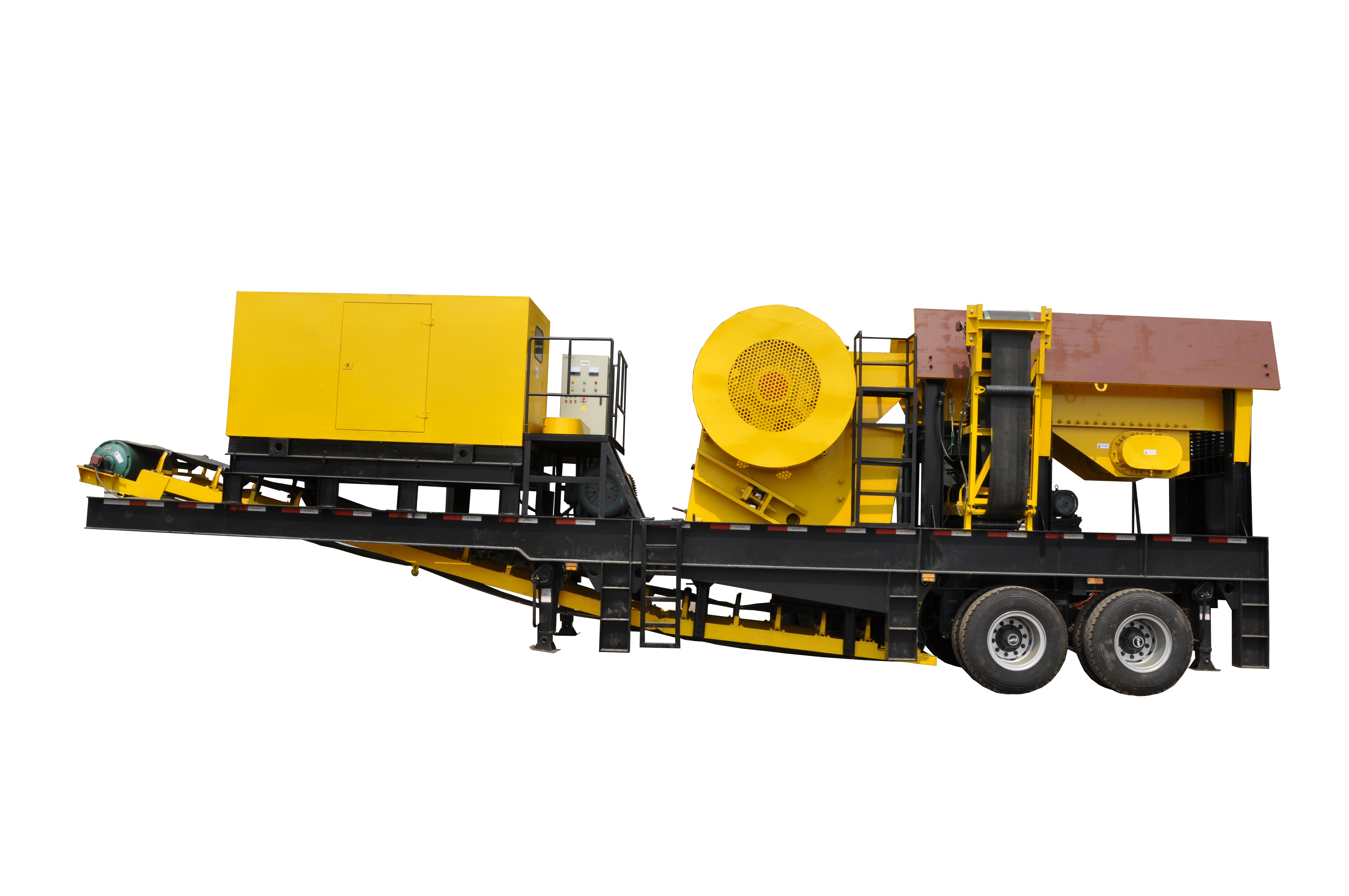
Cover image: mobile crushing station configuration.
The first procurement question is not which crusher family is superior. It is which duty the mobile crushing station must perform, which feed the station will actually receive, and which product the buyer must document. For a quarry mobile crushing station, a construction waste mobile crushing station, or a mobile sand making station, the PX, PC and PCX names describe different crusher roles rather than three interchangeable labels. This FAQ sets out the questions to resolve before a buyer specifies PX, PC or PCX crushers on a mobile station, with screening by YK Screen, washing by XS Sand Washer or FG Spiral Sand Washer, and roller crushing by 2PG-Y Roller Crusher treated as linked specification checkpoints.
Shandong Lianbang Heavy Industry Co., Ltd. is the company behind the LBZG crusher brand. The company was registered in 2013 and supplies mobile crushing and screening equipment alongside standalone crushers, complete production lines and EPC solutions. The procurement discipline below does not depend on a sales claim. It depends on matching a documented duty to a documented configuration and then checking the evidence attached to the exact model.
Start with the station duty, not the crusher name
A mobile station specification should begin with a one-page duty statement. Write down the material type, maximum feed lump, target product fractions, required output, feed moisture and clay content, site mobility, power supply, automation requirement and destination-market compliance. Only after these points are fixed should the crusher family be selected.
A tire-mounted mobile crushing station and a crawler mobile crushing station may share a crusher name but not the same transport, chassis or site constraints. In the supplied material, the documented YCG examples are tire-mounted: YCG-J750 as a tyre-type mobile jaw station and YCG-I1214 as a tyre-type mobile impact station in a construction waste case. The YCG family also includes YCG-C160, YCG-VSI8518 and YCG-S2460 in the verified product and certificate lists. If a crawler mobile crushing station is required, ask for the chassis model, transport data and model-specific evidence; do not assume a tire-mounted reference covers a crawler requirement.
Also decide whether the project needs a mobile jaw crushing station, a mobile cone crusher station, a mobile impact station or a mobile sand making station. The station type sets the feed opening, the downstream screen and the product window. The crusher model alone does not. A mobile plant has an upper capacity limit; the supplied application guidance notes that very high-tonnage production may be better served by a stationary line, while wheel-type mobile plants can reduce foundation work and raw-material hauling for short-term or scattered sites.
PX, PC and PCX at a glance
The table below is a checkpoint map, not a ranking. The correct choice is the one that matches the duty and can be evidenced for the exact model.
| Crusher family | Role to confirm | Evidence-backed description | Main specification questions |
|---|---|---|---|
| PX Crusher | Fine crushing or sand-making step | The supplied application note describes the PX fine crusher as equipment for secondary and tertiary fine crushing for compressive strength below 320 MPa. The PX Series New Type Fine Crusher is also presented as a sand-making machine. | Is the target product fine aggregate or manufactured sand? Is the material below the stated strength boundary? Is PX needed after primary and secondary crushing? Is the exact PX model in the CE scope? |
| PC Crusher | Hammer crushing for brittle, low-abrasion material | The PC hammer crusher is used for primary or medium crushing of limestone in cement plants. The hammer route can offer a high single-stage reduction ratio, stated in the supplied note as 20 to 40. It suits brittle material at or below 200 MPa, low SiO2 and moisture at or below 10 percent, such as limestone, gypsum and coal gangue. It produces more fines and faster hammer wear than an impact route, and it handles moist or sticky feed poorly. | Is the feed limestone, gypsum or coal gangue rather than granite, basalt or quartzite? Is the product-shape and fines tolerance clear? Is there a hammer-wear and screen-gap plan? Is moisture controlled? |
| PCX Crusher | Heavy-hammer or shaping role | The PCX series is described as a shaping hammer crusher for finer product. The PCX heavy-hammer variant is described as accepting feed up to 1000 mm with high reduction ratio, subject to exact model confirmation. | Is the duty a large-feed limestone reduction step or a finer shaping step? Is the exact PCX model and duty documented? Is the wear-part plan accepted? Is product size verified by test or reference? |
Questions to resolve before specifying a PX crusher
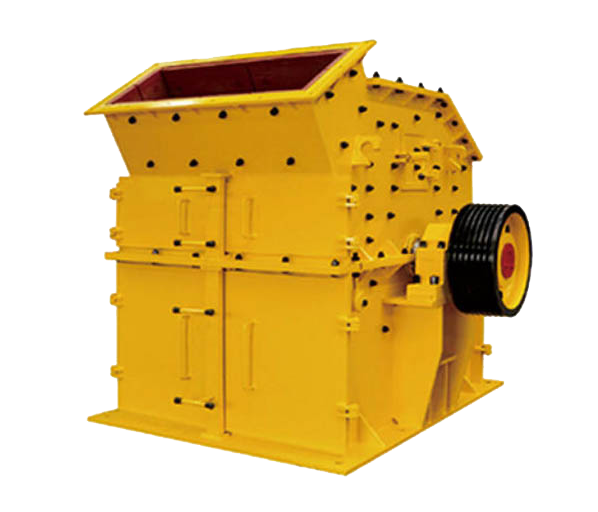
PX Series New Type Fine Crusher (Sand Making Machine) as listed in the company product media.
The PX question is a product question before it is a model question. Ask whether the station must produce a manufactured-sand fraction, a finer aggregate fraction, or both. The PX fine crusher is described for secondary and tertiary fine crushing below 320 MPa. That does not mean it should be inserted into every mobile station. If the project only needs coarse and medium aggregate, question whether a separate fine or sand-making step is required at all.
- What is the target 0 to 5 mm fraction, fineness modulus or sand-equivalent requirement? If the buyer cannot state it, the PX size cannot be fixed.
- Is the feed already reduced by a jaw or cone station, or will the PX crusher receive a coarser feed than its duty allows?
- Will the PX discharge feed a YK Screen and then an XS Sand Washer or FG Spiral Sand Washer, or will it remain dry? The washing choice changes water demand, layout and fines recovery.
- Is the exact PX model named in the compliance file? The CE certificate 3N251002.SLHCS40 lists related PX products including PX-800, PX-1010, PX-1212, PX-1413, PX-1614, PX-1816, PX-1820 and PX-1822. A model outside that list needs separate evidence.
- What test or reference product data is available for the proposed feed? A model list alone does not establish the product curve for a new rock type.
Questions to resolve before specifying a PC crusher
The PC crusher is a hammer-crusher choice, so the first boundary is material behaviour. The supplied guidance places PC hammer crushers in brittle, low-abrasion duties such as limestone, gypsum and coal gangue, with compressive strength at or below 200 MPa and moisture at or below 10 percent. Granite, basalt and quartzite are outside that boundary because hammer life falls quickly and the operating cost rises.
- Is the product for cement raw meal, backfill or a lower-specification aggregate? If the product must be cubical aggregate for concrete or asphalt, the supplied comparison favours a PF impact crusher over a hammer crusher for shape and fines control.
- Is a single-stage reduction ratio of 20 to 40 an advantage for this station, or does the flowsheet need a jaw plus impact or cone arrangement? The answer changes the feeder, screen and conveyor balance.
- Is the feed moisture controlled? A hammer crusher is more sensitive to wet or sticky material and can clog. If the site is rainy or the feed contains clay, the specification should address pre-screening or drying rather than only the crusher model.
- What is the hammer-wear plan? Hammers are consumable parts. High-silica limestone shortens hammer life. Ask for the wear-part material, expected inspection interval and spare-part list.
- How will discharge size be controlled and accepted? PC product size is related to screen-plate aperture, hammer wear and rock hardness. The supplied troubleshooting note gives a rotor-to-screen distance range of 10 to 25 mm as a reference for adjustment, not as a universal setting for every model. The acceptance test should define the measurement point and the wear condition.
- Is the exact PC model in the CE scope? The certificate lists related PC models including PC-400×300, PC-600×400, PC-800×600, PC-1000×800, PC-1000×1000, PC-1250×1250, PC-1300×1200, PC-1500×1200 and PC-1600×1600. Confirm the exact model rather than the family name.
Questions to resolve before specifying a PCX crusher
The PCX family needs a clearer duty statement than the PC family because the supplied material describes both a shaping role and a heavy-hammer role. The PCX series is described as a shaping hammer crusher for finer product. The PCX heavy-hammer variant is described as accepting feed up to 1000 mm with a high reduction ratio. Those are different procurement questions. One buyer may need a finer shaping step after primary crushing; another may need a large-feed limestone reduction step that simplifies the circuit.
- Is the PCX unit intended to replace a primary plus secondary arrangement, or to shape a finer product after a jaw or impact crusher? The flowsheet must say which.
- Is the feed low-abrasion limestone or a high-silica material? The hammer-crusher boundary still applies. High-silica feed shortens hammer life and may make an impact or cone route more suitable.
- Is the 1000 mm feed statement tied to the exact PCX heavy-hammer model under consideration? Ask for the model-specific feed opening and duty confirmation. Do not apply a family-level statement to a smaller unit.
- What product-size evidence is available? The PCX shaping claim should be checked against the buyer's target gradation, not only against a model name.
- Is maintenance access adequate on the mobile chassis? Hammer replacement and screen inspection need space, lifting provision and safe access. A compact station layout can make a correct crusher difficult to maintain.
- Is the exact PCX model in the CE list? The certificate includes related PCX models such as PCX-0808, PCX-0810, PCX-1010, PCX-1212, PCX-1515, PCX-1518 and PCX-1822. Other models require separate documentation.
Screening checkpoint: what to ask about the YK Screen
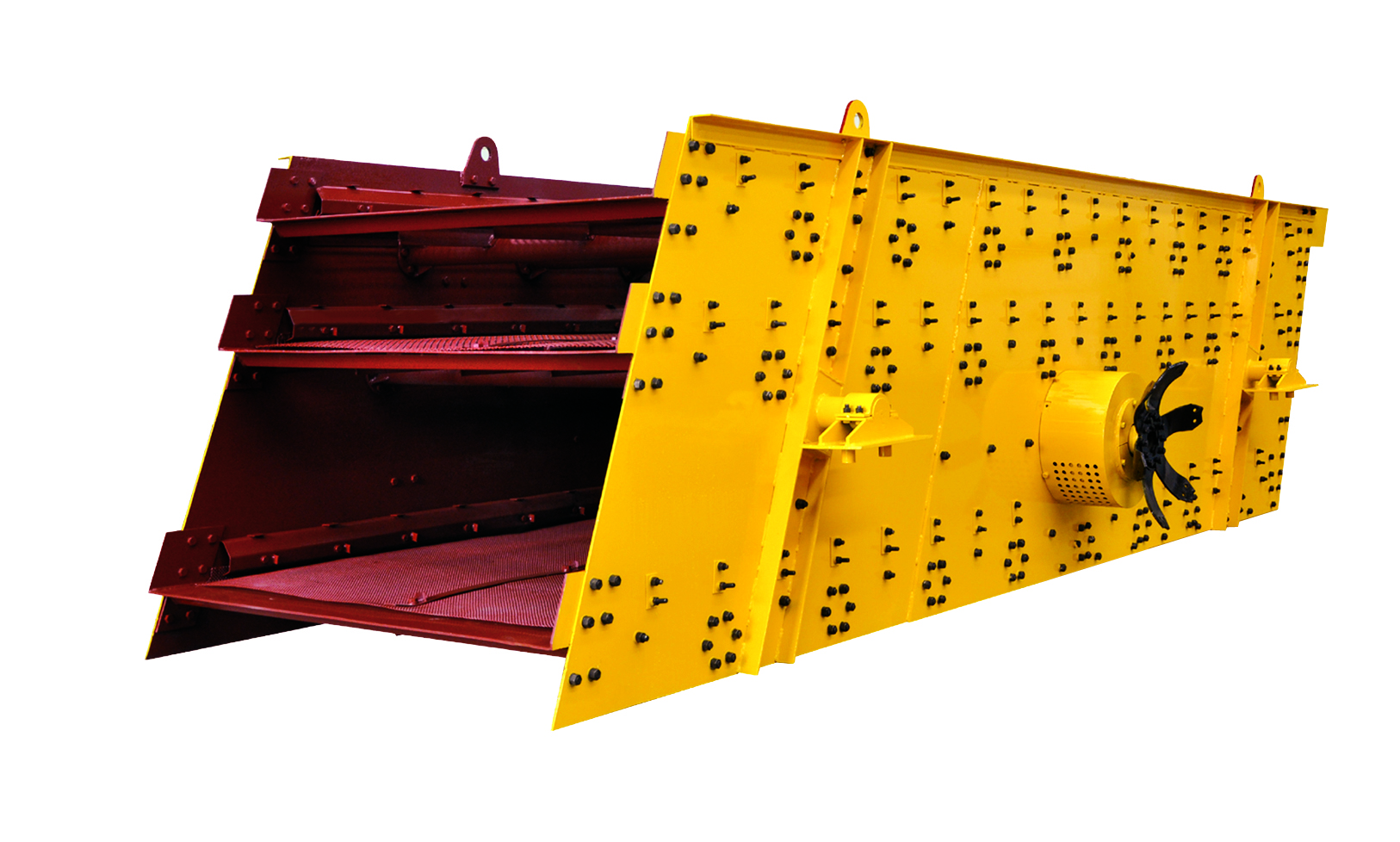
YK Series circular vibrating screen.
The YK Screen is not a passive accessory. It sets the product split and the return load. Ask for the number of decks, mesh size, screening area, capacity at the specified feed moisture and the expected screening efficiency. The supplied capacity-matching rule is a useful discipline: feeder capacity should be about 1.1 to 1.2 times the rated primary crusher capacity; the secondary crusher about 1.0 to 1.1 times actual primary output; the vibrating screen about 1.2 to 1.3 times line capacity; and the belt conveyor about 1.2 times maximum flow. These are selection ratios, not guarantees for a specific site.
The YK screen performance questions should include mesh clogging, mesh abrasion, feed moisture, excitation force and spring condition. The supplied FAQ warns that poor screening can result from clogged or worn mesh, high material moisture, altered excitation force and aging springs. It also advises against adjusting vibration-motor parameters without authorization and recommends original spare parts. For a mobile station, screen maintenance access and mesh-change time belong in the layout review.
Washing checkpoint: XS Sand Washer or FG Spiral Sand Washer
A washing step should be justified by the product specification. The supplied guidance says that when the final product is used for concrete, asphalt or high-grade mortar and mud content must be below 3 percent, a sand washer should be installed. For low-clay material where the main need is dust removal, the XS wheel sand washer is described as having low water consumption, low fine-sand loss and simple maintenance. For high-clay material that needs strong scrubbing, the FG spiral sand washer is described as the stronger scrubbing option, with higher water consumption and more fine-sand loss.
- What is the feed mud content and the target mud content? Without both numbers, the washer choice is guesswork.
- Is water supply and water recycling included in the station scope? Washing changes the water balance, slurry handling and site layout.
- Is the product dewatered before stockpiling? The washer selection should state the dewatering and stockpile arrangement.
- The supplied XS range covers XS-2600 at 20 to 80 tonnes per hour through XS-3200 at 120 to 250 tonnes per hour. The FG series is described as suitable for 30 to 200 tonnes per hour of sticky material. These figures are reference ranges, not a guarantee for every feed.
- Which exact washer model is in the certificate file? The CE certificate lists XS-3200, XS-3000, XS-2800 and XS-2600, and FG-750, FG-500, FG-1000 and FG-1200. Confirm the model and duty.
Roller crushing checkpoint: when does 2PG-Y enter the specification?
The 2PG-Y Roller Crusher should enter the mobile station specification only when a defined duty requires roller crushing. The verified family includes 2PG-400, 2PG-600, 2PG-750, 2PG-900 and 2PG-1000. The procurement question is not the model number alone. It is whether the station duty needs a roller crusher, whether the roller unit is part of the documented station configuration, and whether the exact model is covered by the compliance file. The CE certificate lists 2PG-750 as a related product; other models require their own evidence.
Do not assume that a roller crusher replaces an impact or hammer crusher by default. Ask for the feed size, product-size control method, wear-part arrangement and capacity basis for the proposed roller duty. If those answers are not available, keep the roller crusher out of the base specification and treat it as an optional module to be engineered later.
Mobile station integration, automation and customization
The crusher is only one module on the chassis. The station specification should also fix the feeder, conveyor, screen, power pack, control system and maintenance access. The supplied capability statement covers OEM and ODM work, voltage options of 380V, 440V, 415V and 660V, motor brand, color, logos, production-line layout, capacity and output grading, automation level, and quartz and sand production-line customization. For an intelligent remote control mobile crusher requirement, ask for the exact functional scope. The corpus lists a software copyright for Intelligent Operation Monitoring Software for Crushing and Screening Production Line V1.0, certificate 2020SR0111891, issued 2020-01-21. That is evidence of a monitoring software copyright, not a blanket remote-control claim for every station.
The commercial and acceptance points should also be written down. The supplied purchasing terms list a minimum order quantity of one set, lead time of 15 to 30 days for regular orders with urgent orders negotiable, and quality control through a 100 percent pre-shipment test plus on-site installation and commissioning. The after-sales statement lists a one-year warranty, remote guidance plus on-site repair, and spare parts in stock. For a construction waste mobile crushing station, the documented case with YCG-J750 and YCG-I1214 reports on-site processing, zero transport waste and a 60 percent cost reduction versus landfill in that project. That is a case result under its own conditions, not a general promise for every recycling site.
Compliance and acceptance evidence
For a CE Certified Mobile Crushing Station claim, ask for the certificate and the model list. The supplied ECM certificate is a CE Mark certificate numbered 3N251002.SLHCS40, issued by Ente Certificazione Macchine on 2025-10-02 and valid to 2030-10-01. Its scope is CE Mark 2006/42/EC Machinery, with standards EN ISO 12100:2010 and EN 60204-1:2018+A1:2025. The related-product list includes PX, PC, PCX, YK Screen, XS Sand Washer, FG Spiral Sand Washer, 2PG-Y Roller Crusher and YCG Mobile Station examples. The right check is model-level: the exact crusher, screen, washer and station model must appear in the applicable documentation.
The ISO 9001 certificate is numbered 10425Q00777R1M, issued by Shandong Seatone International Certification Co., Ltd. on 2025-05-17 and valid to 2028-05-24, with scope covering R and D and production of sand-stone crushing equipment under GB/T 19001-2016 and ISO 9001:2015. The company also states ISO14001, OHSAS18001 and CE export certification, and participation in revising national crusher industry standards. For an EPA Compliant Mobile Crusher requirement, the CE certificate does not establish EPA compliance. Treat EPA as a separate destination-market verification item and request the relevant document for the exact engine, power pack or configuration.
A practical specification checklist
| Checkpoint | Question to ask | Evidence to request |
|---|---|---|
| Station duty | Is this a quarry mobile crushing station, construction waste station or mobile sand making station? | Duty statement with feed, product, capacity and site conditions. |
| Crusher role | Is PX, PC or PCX required for this duty, and is the exact model named? | Model-specific description, product data and compliance entry. |
| Feed boundary | Does the feed sit inside the crusher boundary for strength, abrasiveness, moisture and lump size? | Material test or reference, feed-size statement and moisture control plan. |
| YK Screen | Do decks, mesh and capacity match the product split and return load? | Screen model, mesh size, capacity basis and maintenance access. |
| Washing | Is mud content below 3 percent required, and is the clay level suitable for XS or FG? | Feed mud data, washer model, water balance and fines-loss statement. |
| 2PG-Y Roller Crusher | Is roller crushing a defined duty or an optional module? | Roller model, duty basis, product control and compliance entry. |
| Integration | Are chassis, feeder, conveyor, control and maintenance access fixed together? | General arrangement drawing, power and automation scope, spare-parts list. |
| Acceptance | What is tested before shipment and what is commissioned on site? | Pre-shipment test record, commissioning plan, warranty and spare-parts terms. |
FAQ
What is the first question to settle before choosing PX, PC or PCX on a mobile crushing station?
Settle the station duty first: the material type, maximum feed lump, target product fractions, output, moisture and clay content, and mobility requirement. PX, PC and PCX are different crusher roles. PX is described for secondary and tertiary fine crushing below 320 MPa and is also presented as a sand-making option. PC is a hammer-crusher route for brittle, low-abrasion material such as limestone, gypsum and coal gangue. PCX is described as a shaping hammer crusher, with a heavy-hammer variant for large-feed reduction. The correct family is the one that matches the duty and can be evidenced for the exact model.
When is a PC hammer crusher a better fit than an impact crusher for limestone?
A PC hammer crusher can fit limestone used for cement raw meal or backfill, where a high single-stage reduction ratio and lower investment are priorities and the material is low-abrasion. The supplied guidance places PC hammer crushers within brittle material at or below 200 MPa, low SiO2 and moisture at or below 10 percent. If the product must be cubical aggregate for concrete or asphalt, the same guidance favours a PF impact crusher for shape and fines control. High-silica limestone shortens hammer life and is not a good hammer-crusher duty.
What should be checked on a YK Screen before fixing the mobile station layout?
Check the number of decks, mesh size, screening area, capacity at the specified moisture, expected screening efficiency and maintenance access. Use the capacity-matching discipline: feeder about 1.1 to 1.2 times rated primary crusher capacity, secondary crusher about 1.0 to 1.1 times actual primary output, screen about 1.2 to 1.3 times line capacity, and conveyor about 1.2 times maximum flow. Poor screening can result from clogged or worn mesh, high moisture, altered excitation force and aging springs. Do not adjust vibration-motor parameters without authorization, and use original spare parts for maintenance.
Should the station use an XS Sand Washer or an FG Spiral Sand Washer?
For low-clay material where the main need is dust removal, the XS wheel sand washer is described as having low water consumption, low fine-sand loss and simple maintenance. For high-clay material that needs strong scrubbing, the FG spiral sand washer is described as the stronger scrubbing option, with higher water consumption and more fine-sand loss. If the final product is for concrete, asphalt or high-grade mortar and mud content must be below 3 percent, a washing step should be included. The XS range covers XS-2600 at 20 to 80 tonnes per hour through XS-3200 at 120 to 250 tonnes per hour. The FG series is described as suitable for 30 to 200 tonnes per hour of sticky material.
Where does the 2PG-Y Roller Crusher fit in a mobile station specification?
It fits only where a defined duty requires roller crushing. The verified family includes 2PG-400, 2PG-600, 2PG-750, 2PG-900 and 2PG-1000. Ask for the feed size, product-size control method, wear-part arrangement and capacity basis for the proposed roller duty. Confirm whether the exact roller model is part of the documented station configuration and whether it appears in the compliance file. The CE certificate lists 2PG-750 as a related product; other models need their own evidence. Do not assume that a roller crusher replaces an impact or hammer crusher by default.
Does CE marking cover every PX, PC and PCX model?
Do not treat CE marking as a blanket statement for every model in a family. Check the exact model against the certificate. The supplied ECM certificate 3N251002.SLHCS40 covers CE Mark 2006/42/EC Machinery under EN ISO 12100:2010 and EN 60204-1:2018+A1:2025, and its related-product list includes examples from PX, PC, PCX, YK Screen, XS Sand Washer, FG Spiral Sand Washer, 2PG-Y Roller Crusher and YCG Mobile Station ranges. A model outside the list needs separate evidence. EPA compliance is not established by the CE certificate and should be verified separately for the destination market.
Conclusion
A mobile crushing station specification is ready when every crusher choice has a duty, a feed boundary, a product target, a screen interface, a washing decision and a model-level evidence file. The PX, PC and PCX question is therefore not a popularity contest between three names. It is a sequence of procurement checks: confirm the station type, confirm the material boundary, confirm the product, confirm the YK Screen and washer interface, confirm any 2PG-Y roller duty, and confirm the exact model in the compliance and acceptance documents.
For buyers who need the company-level reference, the official website of Shandong Lianbang Heavy Industry Co., Ltd. is available. The company brochure can be accessed here: Shandong Lianbang Heavy Industry brochure.
Have Questions or Need More Details?
Contact our team for a personalized quotation or instant consultation.
Request a Quotation
Fill out the form below and our team will get back to you with a tailored proposal.
WhatsApp Direct Chat
Prefer to chat in real-time? Message us on WhatsApp for instant assistance & quick answers.
- Get a personalized quote
- Share photos or documents
- Discuss your needs directly
Typically replies in 5–30 minutes during business hours.