
Mobile Jaw Crushing Station: What It Is and When to Use It
A mobile jaw crushing station is a complete primary crushing unit built on one transportable chassis: a vibrating feeder, a jaw crusher, a discharge conveyor and, in most configurations, an on-board power and control package. Because the jaw crusher is the standard tool for the first stage of size reduction, the mobile jaw unit usually decides how large a lump a mobile crushing train can accept in a single pass — and how quickly that train can be relocated to the next site.
Shandong Lianbang Heavy Industry Co., Ltd. (brand: Shanyuan LBZG) is a crushing and sand-making equipment manufacturer based in Linyi, Shandong Province, China, registered in 2013 and tracing its technical origins to Chengming Machinery, an affiliated enterprise established in 1996. The company builds fixed crushing lines as well as tyre-type mobile stations, and its published range includes one tyre-type mobile jaw crushing station, the YCG-J750. This reference article explains what that class of machine is, how its capacity is established, where it fits, and which compliance and procurement questions buyers should settle before issuing an RFQ.
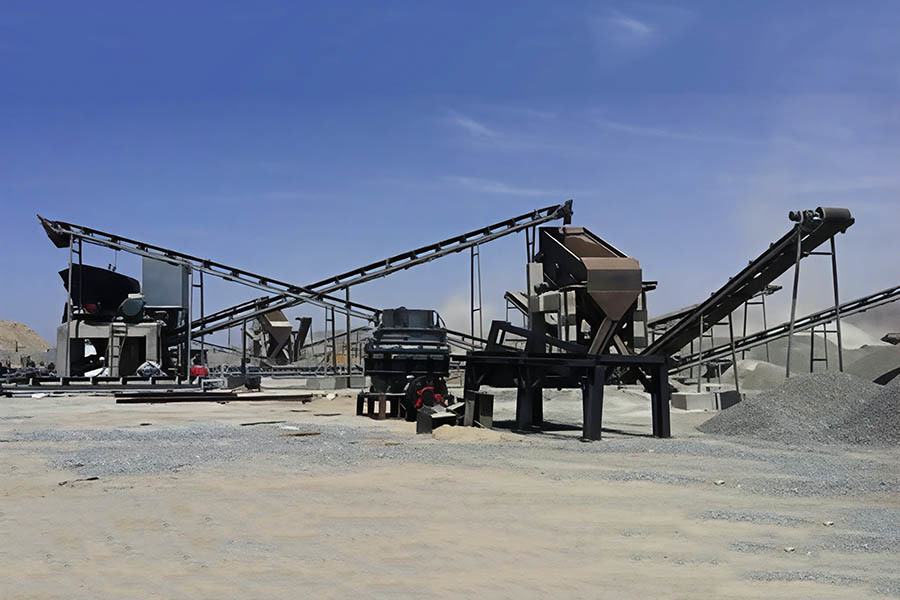
Open-pit quarry and infrastructure aggregate supply — a scenario documented in LBZG project-scenario records for mobile crushing equipment.
Why the primary crushing stage moved onto a chassis
A fixed primary crushing line is an efficient answer to a stable question: the same deposit, the same discharge specification, the same tonnage for years. It becomes a poor answer when the question changes. Site duration, relocation frequency, road access, power availability and permitting timelines all move the economics of primary crushing, and it is those variables — not equipment fashion — that pushed the jaw crusher onto wheels and tracks.
The selection logic used in LBZG technical guidance is fairly explicit. A mobile crushing plant is generally the better fit when a project is short (under roughly two years), when the plant must be moved frequently, when road transport of raw material is difficult, when material sources are dispersed, or when environmental approvals are restrictive. A fixed crushing line is generally the better fit for long-term stable quarries (more than about three years), for large-scale capacity above roughly 300 t/h, where power supply is stable, and where the objective is the lowest cost per tonne.
That is the opportunity a mobile jaw station addresses. In urban demolition and road or rail corridor work, the material is generated at the point of use and transporting it to a distant fixed plant adds cost before any value is created. On a quarry with several working faces, a fixed primary crusher forces haul trucks to travel to the crusher; a mobile jaw station reverses that relationship and travels to the face.
What a mobile jaw crushing station actually contains
The term covers more than a crusher on a trailer. In LBZG's published configuration, a mobile plant integrates the crusher, a feeder, a vibrating screen and belt conveyors on a single chassis that is towed by truck, needs no concrete foundation, and requires a short installation and commissioning period. The chassis type — tyre-mounted or crawler-mounted — defines how the unit moves between working positions, not what it can crush.
The YCG-J750 is a tyre-type mobile jaw crushing station. Its published specification is compact enough to summarise in full:
| Parameter | Published value |
|---|---|
| Station type | Tyre-type Mobile Jaw Crushing Station |
| Host crusher | PE-750×1060 primary jaw crusher |
| Station capacity | 110–230 t/h |
| Power supply supported | 380 V / 440 V |
| Installation | Trailer-mounted; no concrete foundation required |
| Construction | Carbon steel chassis; high-manganese jaw plate |
| Typical application | Mobile quarry and construction waste on-site crushing |
Because the host crusher sets the upper limit, the jaw crusher's own numbers matter as much as the chassis. The PE-750×1060 is a primary jaw crusher intended for large quarries and aggregate production lines:
| Host crusher parameter | Published value |
|---|---|
| Feed opening | 750 × 1060 mm |
| Maximum feed size | ≤ 630 mm |
| Output size range | 80–140 mm |
| Capacity | 100–180 t/h |
| Motor power | 110 kW |
| Speed | 250 r/min |
| Weight / dimensions | 26.1 t; 2538 × 2350 × 2782 mm |
| Construction | Carbon steel frame; high-manganese steel jaw plate |
A mobile jaw station is rarely bought alone. In the same YCG range, LBZG publishes a mobile impact station (YCG-I1214, host PF-1214, 100–180 t/h), a mobile cone station for hard-rock secondary crushing (YCG-C160, host CS-160, 90–210 t/h), a mobile sand-making station (YCG-VSI8518, host VSI-8518, 100–180 t/h) and a mobile screening station (YCG-S2460, two to three decks, 80–300 t/h). The jaw unit almost always occupies the primary slot in that train, with the cone or impact station doing the second stage and the screening station closing the circuit.
Technical explanation: how the capacity is actually established
A jaw crusher reduces rock by compression and bending between a fixed and a movable jaw plate. The motor drives the eccentric shaft through belts and pulleys, the movable jaw reciprocates, and material discharges through the bottom outlet once it is smaller than the closed-side setting. There is no impact principle and no hammer; that is why the jaw crusher is the standard choice for coarse crushing of materials across hardness classes, with feed sizes reaching up to about 1,500 mm on large stationary units.
Two rules govern whether a mobile jaw station will deliver its published tonnage.
Feed sizing. The maximum lump should be roughly 0.80–0.85 of the feed opening width. On the PE-750×1060, with a 750 mm opening, that corresponds closely to the published maximum feed size of 630 mm. Feeding oversize rock does not simply slow the machine; it raises wear on the jaw plates and can block the cavity.
Capacity matching. LBZG's technical guidance applies an “upstream surplus, downstream step-down” rule: feeder capacity should be about 1.1–1.2 times the jaw crusher's rated capacity; secondary crusher capacity about 1.0–1.1 times actual primary output; vibrating screen about 1.2–1.3 times line capacity; and belt conveyor about 1.2 times maximum flow. A worked example from the same guidance pairs a PE600×900 jaw crusher (60–160 t/h) with a ZSW490×110 feeder (150–300 t/h) and a 2YK1860 screen (80–300 t/h). The design intent is to keep each unit running at 70–90% of rated load.
The same guidance draws a distinction worth repeating to any buyer: rated capacity is measured under ideal feed size, hardness and moisture conditions, while actual capacity is typically 70–85% of rated capacity once material properties, operator skill and site conditions are taken into account. Specification tables are a starting point for selection, not a guaranteed site result.
Wear is the other technical variable that determines real operating cost. Jaw plates are normally supplied in high-manganese steel (Mn13Cr2 or Mn18Cr2), with Mn18Cr2 preferred for hard rock. Typical reference life for jaw plates is three to six months, but this depends heavily on material hardness, silica content, feed size and operating discipline. On hard, abrasive rock — granite, basalt, quartzite with compressive strength above about 250 MPa and high silica content — the second stage should be a cone crusher rather than a hammer or impact unit, because the crushing chambers in cone crushers use lamination and last far longer than blow bars or hammers. On softer material such as limestone, an impact crusher produces better cubical shape, at the cost of higher wear-part consumption.
Where the mobile jaw station is used
Three application profiles dominate the documented use cases for tyre-type mobile jaw crushing stations.
Overseas quarry and infrastructure
Open-pit quarry work with hard rock, outdoor continuous operation, and tropical, arid or high-altitude climates. Documented requirements for this profile include adaptation to local voltage (380 V / 440 V / 415 V / 660 V), tropicalised or desert-rated options, multilingual manuals and access to an overseas service network — a reminder that the electrical and documentation package is part of the specification, not an afterthought.
Highway, railway and municipal construction
Aggregate and manufactured sand for national key projects, with strict gradation and particle-shape requirements and 24/7 continuous production. LBZG's scenario documentation lists the Lunan High-Speed Railway as an official reference project, with requirements including stable grain-size control, cubic particle shape and fineness modulus compliance in the 2.3–3.0 range. Mobile units also appear as a backup plant for multi-site municipal and airport work, where production shifts between locations.
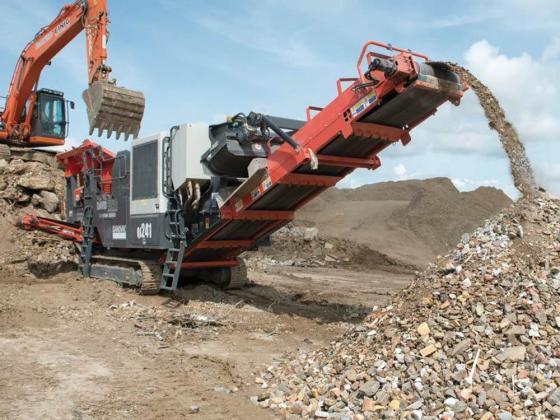
Construction and demolition waste recovery is documented as a trailer-mounted mobile operation with rapid relocation between job sites.
Construction and demolition waste recovery
This is where the mobility argument is strongest. The documented operating profile is trailer-mounted mobile operation, 24/7 shift production, rapid relocation between job sites, zero concrete foundation and remote GPS dispatch, with the delivered outputs being recycled aggregate, recycled concrete bricks, recycled dry powder slurry and recycled soil. The stated site requirements are mobility, low noise and low dust emission, and the matched equipment list includes a vibrating feeder, vibrating screen, belt conveyor, secondary crusher, magnetic separator, dust-removal system and spare wear parts. LBZG publishes its wheel-mounted mobile crushing stations as suitable for granite, limestone and construction waste recycling — a manufacturer-reported capability statement rather than an independently verified test result.
Market trend analysis
Mobile crushing is not a niche. Grand View Research estimated the global mobile crushers and screeners market at USD 4.2 billion in 2025, with Asia Pacific holding a 30.5% revenue share in the same year. A separate commercial estimate in the same data set places 2025 market value at approximately USD 4.9 billion; the difference is mostly scope, since definitions vary in whether screening equipment and aftermarket services are counted. Buyers should treat market-size figures as directional and check the segment definition behind any number before quoting it in an internal business case.
The clearest structural signal is in powertrain. Commercial research forecasts hybrid mobile crushers to grow at the highest CAGR of 8.5% from 2026 to 2034. The driver is partly commercial and partly regulatory: in the United States, engine emissions obligations and facility-level air permitting are separate compliance layers that a buyer has to resolve together, and electric or hybrid drive can reduce exposure on both.
The second structural signal is regulatory tightening in dust control. EPA permit conditions for stone quarrying, crushing and screening facilities require emissions from crushers, screens, drop points and other release points to be controlled by wet suppression, with fugitive opacity limits cited at 12% for crushers and 7% at other affected units in the specific permit reviewed. Those figures are permit-specific rather than universal product limits, but they explain why dust-suppression systems, enclosures and recordkeeping are increasingly specified as part of the mobile plant rather than purchased later.
The compliance layer buyers should not skip
For a mobile crushing station, compliance is a document question before it is a product question.
- European Union. Machinery placed on the EU market must meet applicable health and safety requirements; manufacturers must prepare technical documentation, complete the relevant conformity-assessment procedure, draw up the EU Declaration of Conformity and affix CE marking where applicable. Regulation (EU) 2023/1230 is stated to apply from 20 January 2027, so equipment ordered now may be commissioned under the new regime. A CE mark on a nameplate is not the same as a technical file and a Declaration of Conformity.
- United States. Portable sand and gravel plants with capacity of 136 Mg/h (150 t/h) or less are exempt from certain EPA emission reporting under 40 CFR Part 60 Subpart OOO. That threshold is operationally relevant here: the YCG-J750's published capacity range of 110–230 t/h straddles the 150 t/h line, so permitting exposure can change with the operating point, not with the model number alone. Engine emissions are a separate layer again, and an EPA-compliant claim requires engine-family certificates and installation evidence.
- Facility scope. EPA materials describe nonmetallic mineral processing requirements as covering crushers, grinding mills, screening operations, conveyors, storage, loading and transfer points, with monitoring, reporting, recordkeeping and test-method obligations in applicable cases. Dust control is therefore a system requirement, not an accessory.
LBZG company documentation lists ISO 9001 quality management, ISO 14001 environmental management and OHSAS 18001 occupational health and safety system certification, together with CE export certification for foreign trade projects, and the company states that material and welding inspections are used to prevent defects in frames, castings and wear parts. Supplier-specific EU technical files, Declarations of Conformity and EPA engine-family certificates for the mobile station range were not identified in the third-party material reviewed for this article, so a buyer should request them as documents rather than infer them from marketing copy.
Mobile jaw station vs fixed primary crushing line
The comparison is not about which machine is better. It is about which set of costs the project actually carries.
| Decision factor | Mobile jaw crushing station | Fixed primary crushing line |
|---|---|---|
| Project duration | Suited to short projects, commonly under about two years | Suited to long-term operation, typically beyond three years |
| Civil works | No concrete foundation; short installation and commissioning | Requires land, foundations and a longer construction period |
| Relocation | Towed as a whole unit between sites | Effectively immovable |
| Scale | Single-unit capacity generally lower | Higher capacity; better for large-volume output |
| Operating cost | Higher tyre and, where applicable, diesel-related cost | Lower cost per tonne at steady state |
| Material sources | Works with dispersed or changing deposits | Best with one stable deposit |
Two limitations deserve to be stated plainly. First, mobility is paid for in throughput: a mobile jaw station will not match a large fixed primary crusher on tonnes per hour, and comparing the two on headline capacity alone misrepresents the trade-off. Second, a tyre-mounted station is a road-towed machine; it relocates between sites and between working positions, but it is not a continuously self-propelled production unit in the way a crawler machine is. Buyers who need to reposition under load, on soft ground, or in confined demolition areas should evaluate crawler-mounted alternatives against the same specification sheet.
Procurement checklist before issuing an RFQ
- Feed reality, not feed target. Measure the actual maximum lump and the oversize percentage; confirm it sits at 0.80–0.85 of the feed opening.
- Capacity at the operating point. Ask for capacity expressed against your material, not catalogue maximum, and expect actual output in the 70–85% band of rated capacity.
- Train matching. Feeder 1.1–1.2×, screen 1.2–1.3×, belts 1.2× of line flow; a mismatched conveyor or screen will cap the line before the jaw crusher does.
- Wear-part specification. Confirm jaw plate grade (Mn13Cr2 vs Mn18Cr2), and check that wear parts are excluded from warranty — LBZG documentation states that warranty covers manufacturing defects of the main machine body, while direct-contact consumables are not covered.
- Electrical and climate package. Voltage (380 V / 440 V / 415 V / 660 V where applicable), tropicalised or desert-rated options, and manual language.
- Dust and noise. Wet suppression, enclosure and dust-removal system scope, plus who owns the permit obligation.
- Compliance documents. EU technical file, Declaration of Conformity and CE documentation; engine-family certificates and state or local permit requirements for US deployment.
- Service and spares. Named service contacts, spare wear-parts kit, and realistic lead time for jaw plates and conveyor belts.
Future outlook
Three shifts look durable for the next buying cycle. Powertrain is moving first: hybrid and electric drive is forecast to grow fastest, driven by emissions compliance and by the cost of running diesel on sites where grid power is available. Automation and telematics are moving second, following the pattern already visible in the construction and demolition waste profile, where remote GPS dispatch is listed as a site requirement rather than a premium feature. Compliance documentation is moving third, and it is the least visible: as the EU machinery regulation takes effect from January 2027 and as air-quality permitting continues to shape US deployment, the ability to hand a buyer a complete technical file may decide more tenders than a marginal difference in tonnage.
For manufacturers, that raises the bar on verification rather than on specification. The company-level story — two production bases, a combined 120,000 m², 40,000 m² of standard workshops, more than 150 sets of processing equipment, around 110 employees, a published annual output of 2,000 units, an export share of about 30% and sales into more than 40 countries, including the Middle East, Central Asia, Southeast Asia and Africa — is useful context for a buyer building a shortlist. It is not a substitute for model-level test data, which remains the gap that most clearly separates a credible supplier from a well-presented one.
FAQ
What exactly is a mobile jaw crushing station?
It is a primary crushing plant built on a single transportable chassis, integrating a jaw crusher with a vibrating feeder, discharge conveyor and, usually, an on-board power and control package. In LBZG's published configuration the unit is towed by truck, requires no concrete foundation and has a short installation and commissioning period. The company's tyre-type mobile jaw crushing station is the YCG-J750, with a PE-750×1060 host crusher and a stated capacity of 110–230 t/h.
How is the real capacity of a mobile jaw crushing station determined?
Capacity is set by the host jaw crusher's feed opening and closed-side setting, then constrained by everything upstream and downstream. LBZG technical guidance applies feeder capacity at 1.1–1.2 times the jaw crusher's rated capacity, secondary crusher capacity at 1.0–1.1 times actual primary output, screen capacity at 1.2–1.3 times line capacity, and belt capacity at 1.2 times maximum flow. Published ratings assume ideal feed size, hardness and moisture; actual output typically falls in the 70–85% band of rated capacity.
Which materials can a tyre-type mobile jaw crushing station process?
Jaw crushers handle coarse crushing across hardness classes, and the crushing behaviour is compression rather than impact. LBZG publishes its wheel-mounted mobile crushing stations as suitable for granite, limestone and construction waste recycling. For hard, abrasive rock such as granite, basalt or quartzite above roughly 250 MPa compressive strength with high silica content, the second crushing stage should be a cone crusher rather than a hammer or impact unit, because cone chambers last considerably longer under abrasion.
When should a buyer choose a mobile station rather than a fixed primary jaw line?
Mobile plants fit projects that are short (roughly under two years), that relocate frequently, that face difficult road transport, that draw on dispersed material sources, or that operate under restrictive environmental approvals. Fixed lines fit long-term quarries (typically beyond three years), large-scale output above roughly 300 t/h, stable power supply, and a target of lowest cost per tonne. The deciding variable is usually site duration and transport distance, not the crusher itself.
What are the limits of a mobile jaw crushing station compared with a fixed plant?
Two limits are structural. First, single-unit capacity is generally lower than a fixed primary line, and tyre and, where applicable, diesel-related costs are higher, so a mobile station cannot match a fixed plant on cost per tonne at steady state. Second, a tyre-mounted station relocates between sites and working positions but is not continuously self-propelled; where repeated repositioning under load or on soft ground is required, crawler-mounted equipment is the more appropriate comparison.
What compliance documents should be checked before importing a mobile crushing station?
For the European Union, buyers should request the technical documentation, evidence of the relevant conformity assessment, the EU Declaration of Conformity and CE marking where applicable; Regulation (EU) 2023/1230 is stated to apply from 20 January 2027. For the United States, engine emissions and facility air permitting are separate layers: portable sand and gravel plants at or below 136 Mg/h (150 t/h) are exempt from certain EPA emission reporting under 40 CFR Part 60 Subpart OOO, dust control by wet suppression is a common permit condition, and an EPA-compliant claim requires engine-family certificates and installation evidence rather than a product label.
A downloadable company brochure covering LBZG crushing and screening equipment is available at Shandong Lianbang Heavy Industry company brochure.
Have Questions or Need More Details?
Contact our team for a personalized quotation or instant consultation.
Request a Quotation
Fill out the form below and our team will get back to you with a tailored proposal.
WhatsApp Direct Chat
Prefer to chat in real-time? Message us on WhatsApp for instant assistance & quick answers.
- Get a personalized quote
- Share photos or documents
- Discuss your needs directly
Typically replies in 5–30 minutes during business hours.