
Model-Level Ceramic Sanitary Ware Evidence: FI-20, FI-05, WMK26227
Model-Level Ceramic Sanitary Ware Evidence: FI-20, FI-05, WMK26227
In ceramic sanitary ware procurement, a factory brochure can show that a supplier has kilns, molds and export experience, but it cannot prove that a specific model in a purchase order is covered by a specific certificate, meets a named dimensional record, or carries the flushing and material description the buyer expects. The useful evidence unit for wholesale and construction-project buyers is the model. This article uses the FI-20 wall hang pan, the FI-05 wall hang pan and WaterMark certificate WMK26227 to show what model-level supplier evidence looks like, what it establishes, and what it leaves for the buyer to verify.
The wider market context is easy to state but not enough to qualify a supplier. Grand View Research estimated global ceramic sanitary ware revenue at USD 44.3 billion in 2023, according to the supplied verified data. That figure describes category scale. It does not verify a factory, a model, a certificate scope or a project application. Model-level evidence is the layer that connects those category claims to a purchase decision.
What does model-level supplier evidence mean in ceramic sanitary ware?
Model-level supplier evidence binds a product model or configuration to a documented fact set: model designation, dimensions, material description, flushing mechanism, certificate number and scope, quality-control step, order terms and acceptance criteria. It is narrower than a company profile and more useful than a generic factory claim because it can be checked against a quotation, purchase order and project submittal.
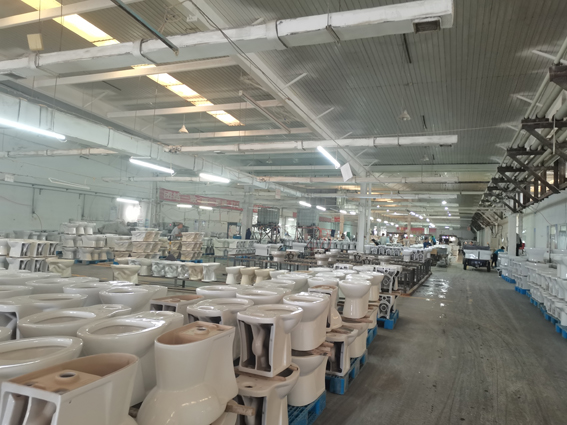
Tangshan Houfengyuan Import and Export Co., Ltd is a Tangshan, Hebei-based exporter of ceramic toilets and ceramic wash basins, with OEM and ODM production support and a supplier profile stating that 90% of output is exported. The company website is hfybath.com. That profile establishes the supplier context. It does not by itself establish that a particular FI-20 or FI-05 configuration is the model quoted, certified or tested. The distinction matters because ceramic sanitary ware families often contain wall-hung, back-to-wall and two-piece configurations that should not be mixed in a certificate schedule or dimensional submittal.
The FI-20 and FI-05 records: what the supplied data actually states
The supplied model material supports a narrow but useful comparison. It gives a customer-facing size record of 495 × 365 × 365 mm and identifies the model designation as FI-20 wall hang pan. For the FI-05 wall hang pan, the supplied description is fuller: it identifies the product as a wall hung toilet with a rimless design and a washdown flushing mechanism, made from high-temperature fired ceramic, with overall dimensions of 517 mm in length, 360 mm in width and 365 mm in height. The same record lists wholesale distribution and construction projects as typical application scenarios.
| Model-level item | FI-20 wall hang pan | FI-05 wall hang pan |
|---|---|---|
| Supplied model designation | FI-20 wall hang pan | FI-05 wall hang pan |
| Supplied dimensions | 495 × 365 × 365 mm | 517 × 360 × 365 mm |
| Flushing description | Not stated in the specific FI-20 wall hang pan dimensional record used here | Washdown flushing mechanism |
| Rim design | Not stated in the specific record used here | Rimless design |
| Material description | Not stated in the specific record used here | High-temperature fired ceramic |
| Application note | Wall hang pan format | Wholesale distribution and construction projects |
The table is deliberately limited. It shows why buyers should not assume that every feature named for one model applies to another model in the same supplier portfolio. The FI-05 record explicitly names rimless design and washdown flushing. The FI-20 wall hang pan record used here supplies the model designation and dimensions, but it does not, in the same passage, state rimless design or washdown flushing. That is not a negative finding about the FI-20. It is a documentation boundary: the buyer should ask for the missing model-specific description if those attributes are required.
The corpus also contains a separate FI-20 two-piece toilet description with dimensions of 660 × 365 × 420 mm and a washdown flushing system. Because that is a different configuration from the FI-20 wall hang pan, it should not be merged into a wall-hung submittal. A model-level file should keep the two-piece and wall-hung descriptions separate, with distinct model names, dimensions, installation types and certificate schedules. This is the kind of detail that prevents a common procurement error: treating a family name as if it were a single SKU.
Why rimless design and washdown flushing need model-level wording
Rimless and washdown are not decorative terms. In general ceramic sanitary ware design, a rimless pan removes the inward rim ledge that can collect residue, and a washdown flush uses water to wash the bowl surface and carry waste through the trapway. Those are well-established product-design explanations. What matters for procurement is whether the exact quoted model carries the design and whether the supplier can document the flushing performance for that configuration.
The FI-05 description in the supplied corpus states a rimless design and a washdown flushing mechanism. That is a useful model-level statement because it connects the feature to a named model. It should be paired with a current specification sheet, a dimensional drawing and, where the project requires it, a flushing test report. The supplied description does not include a numeric flush volume for the FI-05. The company website, by contrast, presents water-saving design and a company-reported flushing performance of 3–6 L, but the verified data marks that as a company claim whose test method and model scope are not established. It should be used as a request for model-level test documentation, not as a substitute for it.
The same discipline applies to high-temperature fired ceramic. The FI-05 record describes the material as high-temperature fired ceramic and states that this ensures durability. The record does not give a numeric firing temperature, a body-composition specification or an impact-resistance test standard. A buyer who needs evidence for a specification should ask for the kiln or firing record, the body specification and the applicable test report for the model. The phrase high-temperature full ceramic may appear in buyer briefs, but the supplied corpus uses high-temperature fired ceramic; the buyer should reconcile the two terms before accepting a submittal.
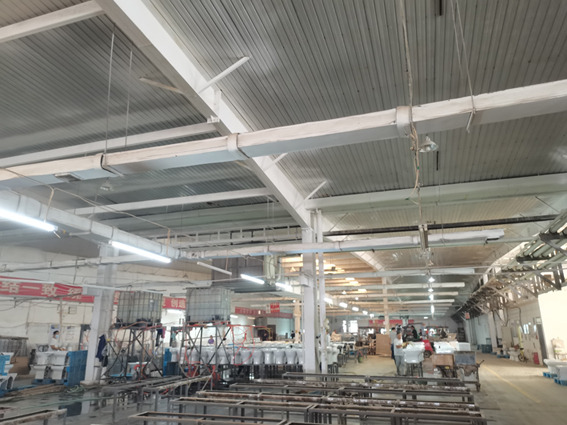
For projects that use terms such as high-flush anti-clog, siphon smart, easy-clean glaze, gloss self-clean glaze or water-saving ceramic sanitary ware, the model file should show the test or specification that supports the term. The supplied records do not provide independent test data for anti-clog, siphon performance or glaze cleanability on FI-20 or FI-05. That absence is a reason to request model-specific evidence, not a reason to assume the feature is absent. It is also a reason not to accept a generic brochure sentence as proof.
WaterMark WMK26227: how a certificate becomes model-level evidence
The central compliance document in this example is the WaterMark Certificate of Conformity WMK26227, issued by SAI Global for the Australian market. The supplied record lists the certificate scope as water closet pans, flushing devices and cistern inlet and outlet valves, under AS 1172.1-2014 (Amdt 1 2018) and AS 1172.2-2014 (Amdt 1 2018). The issue date is 12 February 2022 and the expiry date is 10 July 2027. Those details matter because a certificate number without issue and expiry dates, standard amendments and product scope is not enough for a project submittal.
The same record links the certificate to product 6382, the FI-05 wall hang pan, and its applicable-product list also names FI-05 and FI-20 variants. That is the point where a certificate becomes model-level evidence: the buyer can see whether the exact model and configuration in the quotation appear in the certificate schedule. A certificate that covers a supplier family but does not list the quoted configuration should be treated as incomplete until the supplier provides a mapping or additional evidence.
WMK26227 should also be read within its stated scope. It covers water closet pans, flushing devices and cistern inlet and outlet valves under the named Australian standards. It does not, by itself, establish anti-clog performance, glaze cleanability, impact resistance or project suitability for every hotel or apartment installation. It also does not prove that every FI-20 or FI-05 variant is covered merely because some variants appear in the applicable-product list. The buyer should check the exact model name, product ID, standard amendment and certificate validity on the copy provided for the order.
| Certificate check | What to confirm for WMK26227 | Why it matters |
|---|---|---|
| Certificate identity | WaterMark Certificate of Conformity WMK26227, issued by SAI Global | Confirms the document is the one cited in the submittal |
| Standard and amendment | AS 1172.1-2014 (Amdt 1 2018) and AS 1172.2-2014 (Amdt 1 2018) | Prevents use of an outdated or mismatched standard reference |
| Validity | Issued 12 February 2022; expires 10 July 2027 | Shows whether the certificate is current at the project or shipment date |
| Scope | Water closet pans, flushing devices and cistern inlet and outlet valves | Limits the claim to the certificate scope |
| Model mapping | Product 6382, FI-05 wall hang pan, plus other listed FI-05 and FI-20 variants | Connects the certificate to the exact quoted configuration |
cUPC and WaterMark are not interchangeable
A second certificate can illustrate why scope discipline matters. The supplied corpus includes an IAPMO R&T cUPC certification for ceramic plumbing fixtures, File No. 6560, under ASME A112.19.2-2024/CSA B45.1-24, for the USA and Canada. In the supplied dataset its listed related product is FTO-8848. A separate dual-flush cUPC listing, File No. 6559, is linked to FTZ-0420D and FTZ-0425HD. Those records support the existence of cUPC listings in the supplier portfolio, but they should not be assumed to cover FI-20 or FI-05 without a model-level schedule.
This is a practical distinction for buyers using the phrase CUPC Certified Ceramic Sanitary Ware. cUPC and WaterMark serve different markets and different standards. A WaterMark certificate for the Australian market does not replace a cUPC listing for the USA or Canada, and a cUPC listing for one model does not automatically cover another. The correct procurement question is not whether the supplier has certificates in general, but which certificate covers which model, for which market, under which standard, and for what validity period.
Supplier capability evidence that supports a model-level file
Supplier capability evidence is useful when it is kept in its proper layer. The supplied capability record states OEM and ODM services, monthly capacity of 290,000 units, a lead time of 35–45 days, a minimum order quantity of 50 units, 100% inspection with water testing on every piece, a 3-year warranty and export markets including the USA, Canada, Australia, the Middle East, Southeast Asia and Europe. Those facts help a buyer judge whether the supplier can support a wholesale or project order. They do not replace the model-specific certificate and specification file.
The customization list in the capability record includes logo, color, flush volume options of 1.28/1.6 gpf and 3/6 L, bowl shape in round or elongated form, tank design, seat height in standard or ADA comfort height, packaging and private labeling. That list is supplier-level. A buyer should confirm which options apply to the exact FI-20 or FI-05 configuration, especially where a wall-hung pan is being specified and where tank design or seat height may not apply in the same way as a two-piece toilet. Customization should be written into the quotation and approval drawing, not inferred from a general capability list.
The supplier also provides a downloadable company brochure at this link. The brochure can support general supplier due diligence. It should not be used as the only evidence for a model-level certificate, dimension or acceptance term.
Application fit for hotel and apartment projects
For hotel project ceramic sanitary ware and apartment decoration ceramic sanitary ware, the buying question is usually not whether a wall-hung pan looks suitable in a catalogue. It is whether the exact model fits the wall structure, the installation sequence, the maintenance plan and the project submittal. The FI-05 record lists wholesale distribution and construction projects as typical application scenarios. That is an application signal, not an independent project reference. The company website also presents hotel and apartment project applications, but the verified data marks those claims as company-reported and not independently verified.
A project buyer should therefore map the model to the actual installation requirement. The FI-20 and FI-05 records both use wall hang pan descriptions, but the available data does not include rough-in dimensions, wall-fixing details, seat compatibility or installation instructions. Those items belong in the technical submittal. For a hotel or apartment project, the buyer should require the model drawing, the wall-fixing method, the recommended installation sequence and the maintenance access plan before approving the model for the project.
Water-saving requirements also need model-level proof. The CIC Green Product Certificate assessment standard for sanitary ware, Version 2.0, specifies for double-flush toilets a maximum full-flush consumption of 5.0 L and average consumption of 4.0 L. That is a useful benchmark for water-saving ceramic sanitary ware, but it should not be compared directly with a company-reported 3–6 L flushing claim unless the test method, model and configuration are documented. The buyer should request the model-specific water-consumption report and check whether the project uses the CIC standard, another local standard or a project-specific limit.
Brochure-level claims versus model-level evidence
The difference between brochure-level claims and model-level evidence is a practical one. A brochure may say that the supplier uses high-temperature fired ceramic, offers OEM and ODM services and exports to multiple markets. A model-level file says which model, which dimensions, which certificate, which standard, which issue and expiry date, which inspection step and which order term apply. The first supports a supplier shortlist. The second supports an approval, a purchase order and an acceptance decision.
The limitation cuts both ways. A model-level file with dimensions and a certificate still does not prove every performance attribute a buyer may want. The FI-05 record gives rimless design, washdown flushing and high-temperature fired ceramic, but it does not provide a numeric firing temperature, an anti-clog test or a glaze-cleanability test. WMK26227 establishes a WaterMark certificate scope under the named Australian standards, but it does not establish hotel-project suitability, installation quality or after-sales performance. The buyer should treat each document as evidence for a defined claim, not as a universal proof of quality.
What the future outlook means for procurement
The forward-looking procurement implication is not a prediction about market demand. It is a change in what buyers can reasonably ask for. As project teams become more familiar with certificate schedules and model-level submittals, a supplier that can produce a clean mapping from quotation to model to certificate to inspection record will be easier to evaluate than one that relies only on family-level claims. This is a conditional outlook: it depends on the buyer actually requiring the documents and checking them against the exact model.
For wholesale buyers, the same logic applies at a different scale. A distributor may not need a project submittal for every SKU, but it does need a repeatable file for each model it stocks. That file should include the model name, dimensions, material description, certificate copy, order terms and acceptance record. If a supplier cannot provide that file for FI-20 or FI-05, the buyer should treat the gap as a qualification issue rather than fill it with assumptions.
FAQ: model-level evidence for FI-20, FI-05 and WMK26227
What model-level evidence should a buyer request for the FI-20 wall hang pan?
A buyer should request the exact model designation, dimensional drawing showing 495 × 365 × 365 mm where that record applies, material description, flushing description if required, certificate schedule showing whether the model is covered by WMK26227 or another applicable certificate, and the inspection record tied to the order. The supplied FI-20 wall hang pan record gives the model designation and dimensions, but the specific passage used here does not state rimless design or washdown flushing. Those attributes should be confirmed separately for the quoted configuration.
What does the FI-05 record establish beyond dimensions?
The FI-05 wall hang pan record establishes a 517 × 360 × 365 mm wall hung toilet description with a rimless design, a washdown flushing mechanism and a high-temperature fired ceramic material description. It also lists wholesale distribution and construction projects as typical application scenarios. It does not provide a numeric firing temperature, a model-specific flush volume or an independent anti-clog or glaze test, so those items require separate documentation.
Does WaterMark WMK26227 cover every FI-20 and FI-05 variant?
WMK26227 is a WaterMark Certificate of Conformity issued by SAI Global under AS 1172.1-2014 (Amdt 1 2018) and AS 1172.2-2014 (Amdt 1 2018), with an issue date of 12 February 2022 and an expiry date of 10 July 2027. The supplied record links it to product 6382, the FI-05 wall hang pan, and the applicable-product list also names FI-05 and FI-20 variants. A buyer should not assume that every FI-20 or FI-05 configuration is covered; the exact model and configuration must appear in the certificate schedule or be supported by an additional document.
What purchasing terms and acceptance criteria are documented?
The supplied procurement record states a minimum order quantity of 50 units, FOB delivery terms, pre-shipment test as the acceptance criterion and 30/70 payment terms. Supplier capability data adds a 35–45 day lead time, monthly capacity of 290,000 units, 100% inspection with water testing on every piece and a 3-year warranty. These terms should be confirmed in the pro forma invoice and purchase order, with the exact model, quantity, packaging and inspection record identified.
How should a buyer treat high-flush anti-clog, siphon smart or easy-clean glaze claims?
Those claims should be treated as model-specific performance claims that require test reports, specification sheets or approved project documents for the exact model. The supplied records for FI-20 and FI-05 do not provide independent test data for anti-clog, siphon performance, easy-clean glaze or gloss self-clean glaze. A general brochure statement is not enough to support a project submittal for those attributes.
Final document checklist for wholesale and construction-project buyers
The closing checklist should be completed for each model and each order. It converts the supplier evidence into a purchase document that a wholesale buyer, project buyer or inspector can use.
| Checklist item | What to require for the FI-20 or FI-05 order | Acceptance point |
|---|---|---|
| Model identity | Exact model name and configuration, such as FI-20 wall hang pan or FI-05 wall hang pan, with product ID where available | Quotation, approval drawing, certificate schedule and packing list use the same model name |
| Dimensions | Dimensional drawing with the approved values, including 495 × 365 × 365 mm for the FI-20 wall hang pan record and 517 × 360 × 365 mm for the FI-05 wall hang pan record where those values apply | Drawing is approved before production and checked at pre-shipment inspection |
| Material and design description | High-temperature fired ceramic description, rimless design or washdown mechanism where applicable to the exact model, plus any project-specific performance requirement | Description matches the approved submittal and the model on the order |
| Certificate copy | WaterMark Certificate of Conformity WMK26227, with scope, standard, issue date, expiry date and applicable model schedule; additional cUPC or market certificates only where the exact model is covered | Certificate is current at shipment and the exact model appears in the schedule |
| Water-consumption and performance documents | Model-specific flushing test report or water-consumption statement where the project requires it; CIC limits or other project limits stated separately from company marketing claims | Report identifies the model, test method and result; no direct comparison with an undocumented company claim |
| Quality-control record | 100% inspection with water testing on every piece, with a record that identifies the order and model | Pre-shipment test record is available before shipment release |
| Purchase terms | MOQ of 50 units, FOB delivery term, 30/70 payment terms, lead time of 35–45 days and 3-year warranty where those terms apply | Terms appear in the pro forma invoice and purchase order, not only in a general profile |
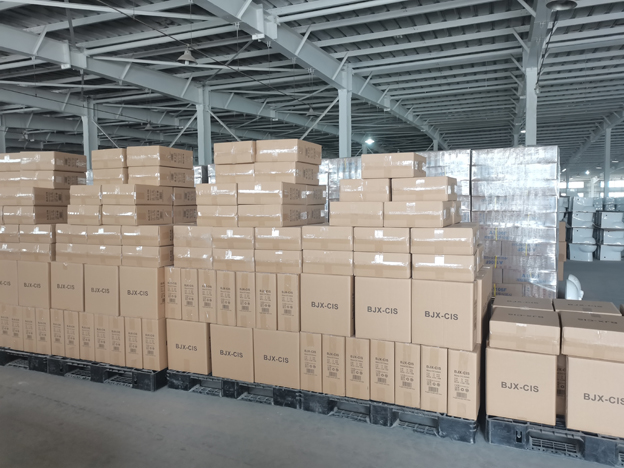
| Packaging and marking | Packaging specification, carton marking, model and quantity identification, and any private-label requirement | Pre-shipment inspection confirms packaging matches the approved specification |
| Acceptance and non-conformance | Pre-shipment test as the stated acceptance criterion, plus the agreed handling of dimensional, visual or packaging non-conformance | Inspection result is recorded before shipment release and any deviation is resolved in writing |
The central procurement point is simple: model-level evidence is not a longer brochure. It is a traceable chain from the quoted FI-20 or FI-05 configuration to the certificate, specification, inspection record and purchase term. WMK26227 gives the buyer a concrete certificate anchor for the FI-05 wall hang pan and listed FI-20 and FI-05 variants, but the buyer still has to confirm the exact model, current validity, dimensional record and acceptance criteria. That is the difference between trusting a supplier claim and approving a documented model.
Have Questions or Need More Details?
Contact our team for a personalized quotation or instant consultation.
Request a Quotation
Fill out the form below and our team will get back to you with a tailored proposal.
WhatsApp Direct Chat
Prefer to chat in real-time? Message us on WhatsApp for instant assistance & quick answers.
- Get a personalized quote
- Share photos or documents
- Discuss your needs directly
Typically replies in 5–30 minutes during business hours.