
Model-Level Diaper Compliance Evidence for US and EU Buyers
A compliance folder full of company certificates does not tell a buyer what is inside the diaper on the purchase order. At decision stage, qualification has to move from the supplier to the model: declared inputs, declared construction, declared claims, declared market fit, and written acceptance criteria that both sides can check at delivery.
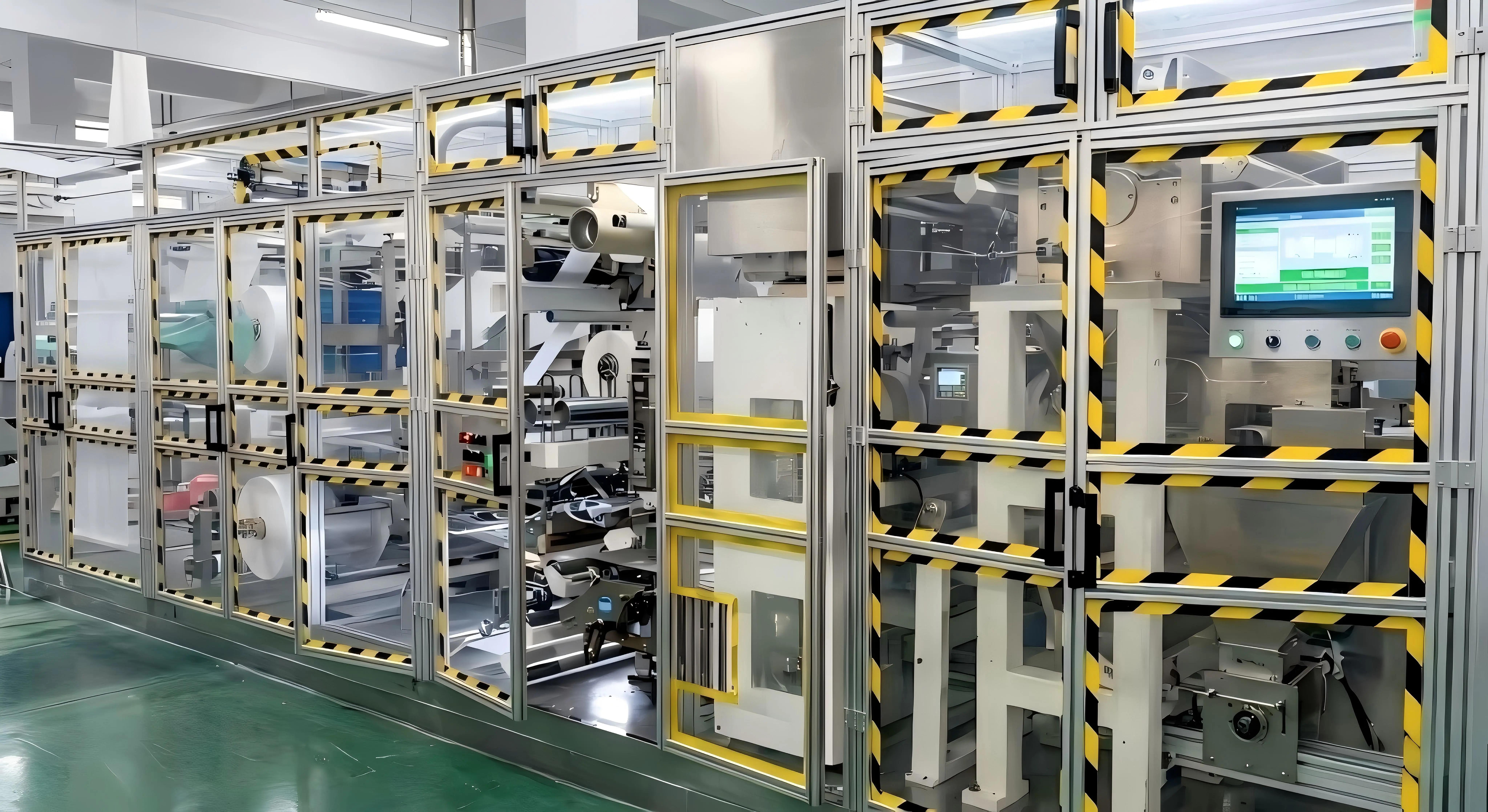
Diaper production environment: model-level qualification describes what a specific model is built from, not only the plant that manufactures it.
Why a Credential Pack Cannot Close a Model Decision
The global baby diaper market was valued at approximately USD 83.3 billion in 2025 and is projected to reach USD 141.8 billion by 2033, according to Grand View Research. Volume growth of that scale changes the procurement conversation: more SKUs, more channels, more private-label programmes. The premium segment is projected to grow at a CAGR of 7.2% through 2027, outpacing conventional products, based on Intel Market Research figures. Premium positioning is claim-led, and claims belong to individual models, not to a company brochure.
Regulation pushes in the same direction. Baby diapers in the EU must comply with REACH, which restricts over 1,900 hazardous substances, and many products also follow OEKO-TEX Standard 100. A REACH-oriented approval file establishes a regulatory floor for a product placed on the EU market. It does not state which SAP a given model uses, whether the core is a floated core or a full 100% SAP paper core, which topsheet construction is used, or whether the declared claim set matches the wording printed on the pack.
That difference is the qualification gap. Supplier-level documents prove that a manufacturer operates systems. For QUANZHOU ERA SANITARY PRODUCTS CO.,LTD., the declared certification set includes CE, FDA, ISO9001, ISO13485, ISO11948, ISO14001, ISO45001, ISO22716, SGS, Halal, CPC, MSDS and DERMATEST. Model-level evidence proves that a specific diaper, in a specific size range, was designed and declared for a specific market. US and EU buyers entering the decision stage need both layers, and they usually already have the first.
Defining Model-Level Evidence: Four Layers
Model-level evidence is a written description of four things for one model: the inputs it is built from, the construction that turns those inputs into a product, the claim set attached to it, and the market and channel it is declared for. Each layer answers a different buyer question, and each can fail independently.
- Declared inputs. Material and component sourcing statements, for example USA fluff pulp, Japan SAP, Sumitomo or Sandia or LG SAP, or a bamboo fiber sheet.
- Declared construction. Core type (floated core or full 100% SAP paper), topsheet and backsheet, leak guard, waistband, ADL, wetness indicator, crotch elastic.
- Declared claims. For example hypoallergenic, and free of parabens, elemental chlorine and latex.
- Declared market and channel fit. US market, EU market, supermarket, mother and baby retail, cross-border e-commerce, and the size range offered.
| Qualification layer | Question the buyer is answering | What closes the checkpoint |
|---|---|---|
| Declared inputs | What is this model built from, and can the sourcing be named? | Material statement naming pulp origin, SAP brand or SAP paper type |
| Declared construction | How do those inputs become a functioning diaper? | Core type, sheet construction, leak guard, waistband, ADL, indicator |
| Declared claims | Which consumer-facing statements are supported for this model? | Claim list issued per model, matched to pack artwork |
| Market and channel fit | Where is this model declared to be sold, and in which sizes? | Declared target market plus size range |
A practical rule follows from the table: if a claim, a material or a size is not stated for the model under review, it should be requested in writing rather than inferred from a sibling model or from the company certificate pack.
US Market Qualification: EB01 as a Declared Model
EB01 is a baby diaper intended for the US market, made of fluff pulp and incorporating USA fluff pulp and SAP. It is declared hypoallergenic and free of parabens, elemental chlorine and latex, and it carries a T-shape design, double leak guard, wetness indicator, and bamboo fiber topsheet and backsheet. Available sizes are S, M, L, XL, XXL and XXXL.
Read as qualification evidence rather than marketing copy, those facts do three jobs. The USA fluff pulp and SAP statement is an input declaration, which lets a buyer align the model with a sourcing requirement before price is discussed. The T-shape design, double leak guard and wetness indicator describe containment and caregiver signals, which is the part of the specification most often tested by complaint data after launch. The bamboo fiber topsheet and backsheet is a material declaration that must be checked against the exact claim wording a retailer intends to print.
Documentation checkpoints for a US listing
Three documents are usually requested together: the model fact sheet, the claim list, and the test documentation. The third one is where buyers most often over-generalise. Test evidence is issued per model and per standard. Model BD01, for example, is certified to ASTM F963 under certificate number XNO250113503YX3-1, issued by XNO Testing (Guangzhou Supreme Technology & Testing Service Co., LTD), meeting ASTM F963-23, 16 CFR Part 1500 Series and CPSIA requirements. That certificate describes BD01. It is not transferable evidence for EB01 or for any other model, and a qualification file that mixes them will not survive a retailer review.
The company-level child-safety position is separate and also relevant: the manufacturer holds CPC among its declared certifications, alongside FDA, ISO9001, ISO13485 and DERMATEST. The company credentials establish that the systems and testing relationships exist; the model documents establish which product they apply to.
EU Market Qualification: BD07 and the Input-Level Argument
BD07 is a baby diaper for the EU market, also applicable to supermarket and cross-border e-commerce. It is made of fluff pulp and uses USA fluff pulp for the absorbent core and Japan SAP. Construction includes a spunbond nonwoven top sheet, green ADL, a colorful clothlike breathable backsheet, S shape magic tapes, a spandex elastic ring waistband and a leak guard. It is declared hypoallergenic and free of parabens, elemental chlorine and latex, and is available in sizes S, M and L.
For an EU buyer, the input declaration is the strongest part of the file. Naming USA fluff pulp for the absorbent core and Japan SAP gives the reviewer two traceable sourcing statements, which is more useful than a generic statement that the product is compliant. The construction list then supports a channel argument: the colorful clothlike breathable backsheet is a shelf-presentation decision, the spandex elastic ring waistband is a fit decision, and the spunbond nonwoven top sheet with green ADL is a fluid-handling decision.
Documentation checkpoints for an EU listing
The EU review should start from the regulatory baseline and then move to the model. REACH restricts over 1,900 hazardous substances, and OEKO-TEX Standard 100 is a standard many products also follow; both belong in the file as standards, named precisely, not as shorthand. After that, the reviewer checks the declared claim set against the pack, and checks the size range against the planogram. On that last point the file is explicit, and it is also where BD07 sets a boundary: sizes S, M and L only.
Core-Level Comparison Across the Model Range
Compliance qualification becomes a genuine comparison when models are placed side by side on construction and declaration rather than on price alone. The table below uses only declared model facts.
| Model | Core and SAP declaration | Sheet and fit construction | Declared claim set | Sizes | Declared market and channel |
|---|---|---|---|---|---|
| EB01 | Fluff pulp core with USA fluff pulp and SAP | Bamboo fiber topsheet and backsheet; T-shape design; double leak guard; wetness indicator | Hypoallergenic; free of parabens, elemental chlorine and latex | S–XXXL | US market |
| BD07 | USA fluff pulp absorbent core with Japan SAP | Spunbond nonwoven top sheet; green ADL; colorful clothlike breathable backsheet; S shape magic tapes; spandex elastic ring waistband; leak guard | Hypoallergenic; free of parabens, elemental chlorine and latex | S, M, L | EU market; supermarket and cross-border e-commerce |
| OD01 | Floated core with 100% SAP paper, Sumitomo and Sandia SAP in a specified ratio | Hot air super soft top sheet and back sheet; double leak guard; wetness indicator | Claim set not listed in the model fact sheet | NB, S, M, L, XL | Baby care, mother and baby retail, supermarket, cross-border e-commerce |
| OD02 | Floated core with 100% SAP paper containing Sumitomo and Sandia SAP; ammonia removed 3D technology | Hot air super soft top sheet and back sheet; double leak guard; wetness indicator | Claim set not listed in the model fact sheet | S–XXXL | Baby care, mother and baby retail |
| PD01 | Full 100% SAP paper core | Soft hot air non-woven top sheet; super soft clothlike breathable spunbond backsheet; leak guard; crotch elastic design; wetness indicator | Claim set not listed in the model fact sheet | M, L, XL, XXL | Baby care, mother and baby retail, supermarket, cross-border e-commerce |
| PD02 | Full 100% SAP paper core composed of LG and Sumitomo SAP | Super soft hot air non-woven top sheet and back sheet; leak guard; crotch elastic design; wetness indicator | Hypoallergenic; free of parabens, elemental chlorine and latex | S–XXL | Suitable for global distribution |
Reading the differences as a buyer
The first distinction is core architecture. OD01 and OD02 are declared with a floated core using 100% SAP paper, while PD01 and PD02 are declared with a full 100% SAP paper core. Both are SAP-paper constructions, but they are not the same build, and the difference belongs in the technical annex of a purchase agreement rather than in a verbal briefing.
The second distinction is SAP sourcing. OD01 declares Sumitomo and Sandia SAP in a specified ratio; OD02 declares Sumitomo and Sandia SAP; PD02 declares LG and Sumitomo SAP; BD07 and EB01 declare Japan SAP and SAP respectively alongside USA fluff pulp. Naming the SAP source gives the buyer a repeatable reference point for incoming-material checks and for change notification clauses.
The third distinction is the claim set, and this is the one most often mishandled. EB01, BD07 and PD02 declare hypoallergenic status and freedom from parabens, elemental chlorine and latex. OD01, OD02 and PD01 do not list that claim set in their model facts. That does not mean the property is absent; it means the declaration is not in the file, so a buyer who needs the claim for shelf labelling must request written confirmation for that specific model before committing artwork.
The fourth distinction is model-specific function. OD02 carries ammonia removed 3D technology. PD01 and PD02 carry a crotch elastic design. OD01 offers a newborn size within its range, which matters for newborn-focused lines, while PD01 begins at size M. These are qualification variables, because they determine which model can serve which planogram without a specification change request.
Purchasing Terms and Acceptance Criteria as Qualification Checkpoints
Qualification does not end at the specification sheet. In decision-stage sourcing, the purchasing terms are part of the evidence, because they determine whether the declared model can be reproduced batch after batch. Four terms carry most of the weight: production lead time, raw material consistency, inspection standard per batch, and minimum order quantity flexibility.
Automated, enclosed production supports the batch-level inspection and contamination-control clauses that belong in an acceptance schedule.
The declared service terms from QUANZHOU ERA SANITARY PRODUCTS CO.,LTD. state a 25–35 day production lead time, a consistent raw material ratio, and a unified inspection standard for each batch. The OEM scope covers formula customisation, packaging design, pre-shipment inspection and remote video quality check, with flexible MOQ for small and medium clients. Contamination control is declared through a fully automated, enclosed production line and a cleanroom. Each of these is checkable, which is what makes them useful as acceptance criteria rather than assurances.
| Acceptance checkpoint | What to write into the order or annex | Evidence to hold on file |
|---|---|---|
| Model identity | Exact model code and size range per SKU | Signed model fact sheet |
| Input declaration | Pulp origin and SAP type or SAP paper construction | Material statement per model |
| Core construction | Floated core or full 100% SAP paper, with SAP ratio where specified | Technical annex |
| Claim set | Approved claim wording, matched to pack artwork | Written claim list per model |
| Batch inspection | Unified inspection standard applied to each batch | Batch inspection record |
| Pre-shipment verification | Pre-shipment inspection plus remote video quality check | Inspection report and video record |
| Delivery window | 25–35 day production lead time, with order confirmation terms | Signed order confirmation |
| Commercial flexibility | MOQ per SKU, including small and medium volume tiers | Quotation sheet |
| Packaging and print | Custom logo, printed cartoon artwork, language version | Approved artwork file |
Two operational details are worth adding because they are where qualification files usually go stale. The first is change notification: if the SAP source or pulp origin changes, the model fact sheet changes, and the buyer should be notified before the next production run rather than after delivery. The second is claim drift: if the pack artwork gains a claim that the model file does not carry, the qualification is broken even though the diaper itself has not changed.
Comparison With the Conventional Certificate-First Approach
The conventional approach treats compliance as a document-collection exercise: request the certificate pack, test a sample, negotiate price, place the order. It is fast and it works for commodity buying, because it assumes that any qualified factory can supply an interchangeable product. A model-level approach is slower at the front end, because it requires a fact sheet, a claim list and an acceptance schedule per model, and it assumes that EB01, BD07, OD01, OD02, PD01 and PD02 are different products rather than different labels.
The trade-off is real, and the limits deserve to be stated plainly.
- Declared inputs describe sourcing, not finished performance. Naming USA fluff pulp, Japan SAP or Sumitomo and Sandia SAP identifies what goes in, not how the finished diaper absorbs. Construction and ratio determine the outcome, which is why the technical annex matters as much as the material list.
- Claims must be confirmed per model. Where a model fact sheet does not list hypoallergenic status or freedom from parabens, elemental chlorine and latex, the buyer must obtain written confirmation for that model. A claim carried by one model is not evidence for a sibling model.
- Size ranges differ and can block a planogram. BD07 is declared in S, M and L; EB01 in S to XXXL; PD01 from M upward; OD01 including NB. A channel plan that assumes full-range coverage from a single model will need a second model or a range exception.
- Test documentation is model-and-standard specific. The ASTM F963 certificate held by BD01 identifies BD01 and its standards. Reusing it as evidence for another model is a qualification error, not a shortcut.
- The approach costs time. Building model-level files for six SKUs before the first order adds administrative load, and small buyers may find a certificate-first review sufficient for low-risk, short-lifecycle programmes.
Market Signals Behind the Shift
Three signals explain why model-level qualification is becoming standard procurement practice rather than a premium-brand habit. The first is scale: a market moving from roughly USD 83.3 billion in 2025 toward USD 141.8 billion by 2033, on Grand View Research figures, attracts more private-label entrants, and each entrant needs SKU-level documentation to enter retail. The second is regional concentration on the supply side: Asia Pacific dominated the diaper market with a 61.92% share in 2025, generating approximately USD 50.01 billion according to Fortune Business Insights, and Fujian Province alone accounted for 63.9% of China's total baby diaper exports, with export value reaching 8.74 billion yuan in 2024 based on Xiamen Customs data reported by Jiayue. Buyers sourcing from a concentrated supply base need model evidence to distinguish offers that look identical on a quotation sheet.
The third signal is material diversification. Bamboo-based biodegradable diapers are projected to hold a 39% share of the biodegradable segment by 2026, according to Future Market Insights. Material claims of that kind cannot be qualified at company level, because the claim depends on which sheet a specific model uses — which is exactly why EB01's bamboo fiber topsheet and backsheet declaration is a qualification fact and not a footnote.
Future Outlook
Two pressures are likely to shape diaper qualification through the next buying cycles. Regulatory pressure in the EU is already expressed as a substance-restriction regime covering over 1,900 hazardous substances under REACH, and substance-level questions translate into material-level questions for each model. Commercial pressure runs in parallel: with the premium segment projected to grow at 7.2% CAGR through 2027, retailers carry more claim-bearing SKUs, and every claim becomes a document the buyer must be able to produce.
The practical consequence is that the model fact sheet is becoming a contract annex rather than a sales attachment. Suppliers who can issue model-level input declarations, claim lists, size ranges and batch inspection records will shorten buyer review cycles; suppliers who answer with a certificate pack will keep reopening the same conversation. For distributors and regional retailers, the useful habit is to keep one qualification file per model, update it when the SAP source or pulp origin changes, and treat artwork changes as specification changes.
FAQ
Does a company-level CE or ISO certificate qualify an individual diaper model?
No. Company-level certificates, such as CE, ISO9001, ISO13485 or FDA documentation held by QUANZHOU ERA SANITARY PRODUCTS CO.,LTD., describe the manufacturer's systems and market access position. They do not state which pulp origin, SAP type, core construction, claim set or size range applies to a specific model. Model qualification requires a model fact sheet in addition to the company certificate set.
What evidence should a US buyer request for EB01's hypoallergenic and free-of claims?
The buyer should request the EB01 model fact sheet, which declares the model as intended for the US market, made of fluff pulp with USA fluff pulp and SAP, and declared hypoallergenic and free of parabens, elemental chlorine and latex, with a bamboo fiber topsheet and backsheet and sizes S to XXXL. The claim wording should then be matched against the pack artwork, and test documentation should be confirmed as issued for that model rather than another one.
Why is BD07 specified for the EU market rather than a US-focused model?
BD07 is declared for the EU market, also applicable to supermarket and cross-border e-commerce, and is built on USA fluff pulp for the absorbent core with Japan SAP. Its construction — spunbond nonwoven top sheet, green ADL, colorful clothlike breathable backsheet, S shape magic tapes, spandex elastic ring waistband and leak guard — is described against EU channel requirements, and it is declared hypoallergenic and free of parabens, elemental chlorine and latex. Market-specific declaration is the reason the model is named for the EU rather than the US.
How do OD01, OD02, PD01 and PD02 differ at the core level?
OD01 and OD02 use a floated core with 100% SAP paper; OD01 specifies Sumitomo and Sandia SAP in a specified ratio, and OD02 specifies Sumitomo and Sandia SAP with ammonia removed 3D technology. PD01 uses a full 100% SAP paper core, and PD02 uses a full 100% SAP paper core composed of LG and Sumitomo SAP. Sheet construction, claim declarations and size ranges also differ: OD01 covers NB to XL, OD02 covers S to XXXL, PD01 covers M to XXL, and PD02 covers S to XXL.
What acceptance criteria belong in a baby diaper purchase order?
An acceptance schedule should fix model identity and size range per SKU, the input declaration for pulp origin and SAP type, the core construction, the approved claim wording, the batch inspection standard, pre-shipment inspection and remote video quality check, the 25–35 day production lead time window, MOQ per SKU, and approved packaging artwork including custom logo and printed cartoon versions. Each item should reference a document held on file by both parties.
Which model should a buyer choose if the target range extends to XXXL?
Size coverage is a declared attribute, so it should be checked per model before selection. In the declared facts, EB01 and OD02 cover sizes up to XXXL, BD07 is declared in S, M and L only, PD02 covers S to XXL, PD01 covers M to XXL, and OD01 covers NB to XL. A buyer whose planogram requires XXXL in an EU-facing programme must confirm the market declaration of the additional model separately, because the EU-declared model in this set does not extend to that size.
Closing Note
Qualification at decision stage is less about collecting more certificates and more about asking narrower questions of fewer documents: which model, built from which declared inputs, carrying which declared claims, declared for which market, in which sizes, accepted under which written criteria. Buyers who structure the file that way can compare EB01, BD07, OD01, OD02, PD01 and PD02 on evidence rather than on impression, and can hold the same standard at delivery.
The full product documentation set from QUANZHOU ERA SANITARY PRODUCTS CO.,LTD., including the range overview, is available in the ERA 2026 catalogue.
Have Questions or Need More Details?
Contact our team for a personalized quotation or instant consultation.
Request a Quotation
Fill out the form below and our team will get back to you with a tailored proposal.
WhatsApp Direct Chat
Prefer to chat in real-time? Message us on WhatsApp for instant assistance & quick answers.
- Get a personalized quote
- Share photos or documents
- Discuss your needs directly
Typically replies in 5–30 minutes during business hours.