
Modular vs Custom-Built Sauna Rooms: 2026 Cost Guide
The global sauna market was valued at USD 954.3 million in 2025 and is projected to reach USD 1,556.8 million by 2033, according to Grand View Research. As the market expands, a major procurement decision for many buyers is whether to build a sauna room custom or choose a modular unit. OCEAN FUTURE is a sauna room and spa manufacturer based in Foshan, Guangdong, China, operating a 50,000 m² factory with an annual output of 5,000 sets; its OFS-001 modular sauna room is designed for buyers making this cost-performance comparison.
The Decision Problem: Budget, Timeline, and Ownership Cost
For hotel developers, wellness operators, and residential home buyers, sauna room selection narrows to three variables: initial budget, installation timeline, and total cost of ownership. Custom-built saunas require on-site construction, coordination across multiple trades, and schedules that depend on local labor availability. Modular sauna rooms arrive as prefabricated cabins and shift the project from construction to installation, which compresses delivery time and reduces labor exposure.
The cost of a wrong decision is measurable. Choosing a sauna that requires extensive on-site labor can delay a hospitality opening; choosing an enclosure that cannot withstand outdoor exposure can lead to premature replacement. Buyers who evaluate saunas on upfront price alone often underestimate the lifecycle cost difference between modular and fixed installations. This is why the comparison below focuses on total cost of ownership rather than purchase price only.
The commercial context supports continued investment in sauna amenities. The United States sauna market generated USD 250.8 million in revenue in 2024, approximately 21.8% of global revenue, according to Topture/Technavio. The residential segment held a 58.92% share of demand in 2025, driven by home-based wellness trends, according to Grand View Research. Traditional saunas still account for the largest product share at 42.79% in 2025, while infrared saunas are the fastest-growing segment with a 7.5% CAGR. For buyers, this means demand spans multiple heating modes, and a product that serves both traditional and infrared users reduces procurement complexity.
OCEAN FUTURE OFS-001: A Modular Answer to the Cost-Performance Question
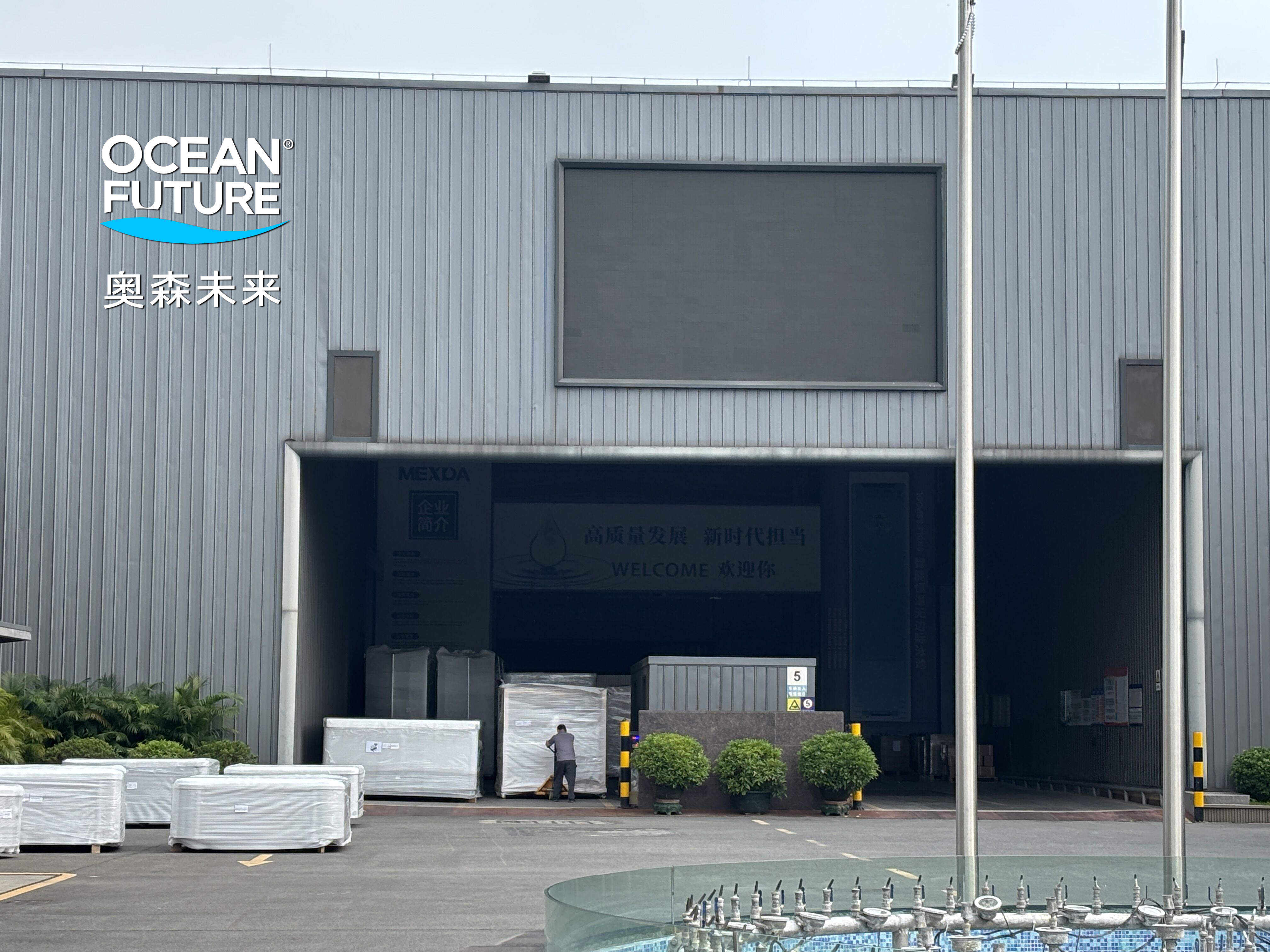
OCEAN FUTURE is a sauna room and spa manufacturer based in Foshan, Guangdong, China, supplying markets including the USA, Australia, and the European Union. The company operates a 50,000 m² production facility staffed by more than 200 employees, with a nine-engineer R&D team. Its product portfolio includes sauna rooms, hot tubs, swim spas, and cold plunge units, and approximately 85% of production is exported.
The OFS-001 is OCEAN FUTURE's modular sauna room. According to the company's product documentation, it carries an initial cost 10% lower than custom-built saunas and a total cost of ownership nearly 30% lower over five years. Compared with traditional fixed sauna rooms and single-mode sauna cabins, assembly time is reduced by 70% and heating speed is improved by 40%. The cabin combines traditional and infrared heating in a single unit, giving operators a hybrid sauna room without the expense of two separate installations.
These metrics matter at the decision stage because they target the cost items buyers control least in custom projects: construction labor and long-term operational spend. The OFS-001's modular structure compresses the installation phase, while its dual-mode heating architecture matches the current split in consumer demand between traditional and infrared sessions. The company also reports better durability than conventional single-mode cabins and higher energy efficiency than traditional sauna heaters.
Technical Overview: Heat, Moisture, and Durability Control
The technical case for the OFS-001 rests on three engineering choices: modular construction, a weather-resistant enclosure, and dual heating integration. The dual heating architecture draws on both established product segments: traditional heating, which holds the largest installed base at 42.79% of the market, and infrared heating, which is expanding at a 7.5% CAGR. Integrating both modes in one cabin avoids the space and cost penalty of two separate units.
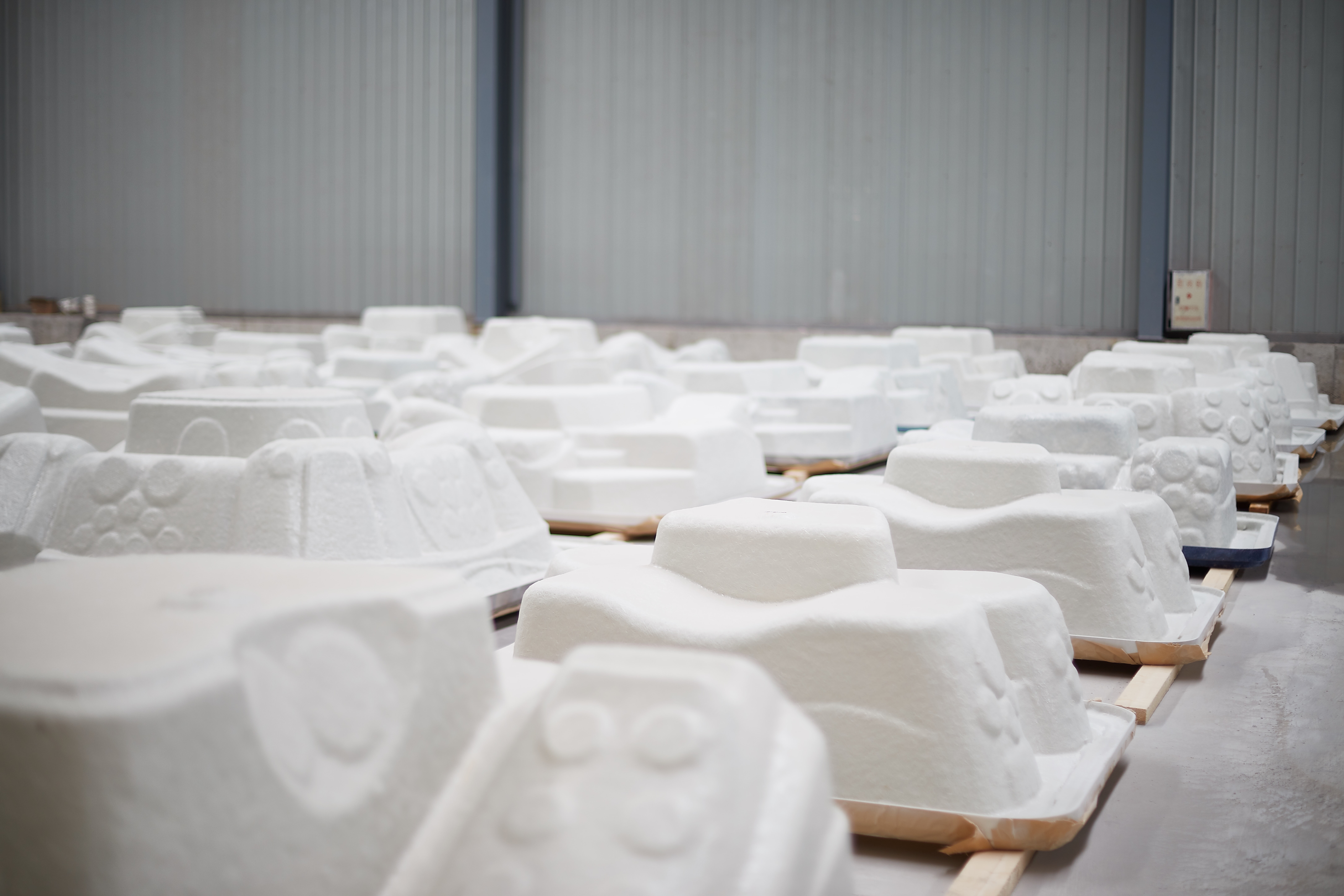
OCEAN FUTURE sauna room production process.
Modular and portable structure. The OFS-001 is delivered as a prefabricated cabin for indoor or outdoor placement and is assembled on site. The documented 70% reduction in assembly time follows directly from this architecture; no poured foundations or complex framing are required. Because the unit is modular, it can be relocated within a property or moved to a new site over time — a practical difference from built-in saunas.
Weatherproof enclosure for outdoor placement. The casing uses aluminum-plastic composite panels that are water-resistant and UV-resistant, protected by a sealed structure that limits moisture ingress. These choices are directly relevant to outdoor weatherproof sauna room installations, where rain, humidity, and sunlight degrade conventional enclosures. For indoor commercial settings, the sealed structure helps maintain consistent heat performance under continuous occupancy.
Safety systems and quality control. The OFS-001 includes overheat protection, which addresses the primary operational risk in electric sauna rooms. OCEAN FUTURE reinforces this with pre-delivery environmental safety testing, corrosion-resistant hardware, and quality inspection — controls aimed at the two most common sauna failure modes: overheating and moisture or humidity damage.
Manufacturing capability. OCEAN FUTURE supports the OFS-001 line with a 50,000 m² factory, an annual output of 5,000 sets, and a nine-engineer R&D team focused on product structure and heating-system integration. Buyers evaluating the product can request manufacturing, testing, and quality documentation directly from the company.
Application Scenarios: Where the OFS-001 Fits
OCEAN FUTURE documents the OFS-001 for five scenarios: hotel and guesthouse projects, private residences, commercial clubs, indoor use, and outdoor use.
Hotel and guesthouse projects. Dual heating is operationally significant in hospitality. Traditional sauna sessions serve guests who expect a classic Finnish sauna experience; infrared saunas suit users who prefer lower-temperature, longer sessions. A single OFS-001 unit can cover both guest segments without additional cabin investment. The 70% faster assembly time is relevant in hospitality construction, where installation windows are tight and guest disruption must be minimized.
Residential home sauna rooms. For homeowners, the modular format and simple maintenance routine lower the burden of ownership. Maintenance is reduced to simple cleaning, which removes one of the most common deterrents for residential buyers evaluating a home sauna room.
Commercial clubs and wellness facilities. The weatherproof enclosure and sealed structure support outdoor placement, allowing fitness and wellness operators to extend their amenity footprint without constructing an indoor addition. For commercial sauna room projects, the dual-mode feature also reduces the number of separate installations required.
Indoor and outdoor flexibility. For projects that need a prefabricated outdoor sauna cabin, the weatherproof rating of the casing is the critical specification; the OFS-001's water-resistant and UV-resistant aluminum-plastic composite panels are designed against the failure modes that outdoor placement exposes. Because the unit is portable, it can also be positioned and, if needed, repositioned as project phases change.
Market Trends Shaping Sauna Room Procurement in 2026
Four verified market signals frame the 2026 procurement environment for sauna rooms.
Growth. The global sauna market is projected to expand from USD 954.3 million in 2025 to USD 1,556.8 million by 2033, according to Grand View Research. The US market generated USD 250.8 million in 2024, about 21.8% of global revenue, per Topture/Technavio.
Segmentation. Traditional saunas hold the largest product share at 42.79% in 2025, while infrared saunas grow fastest at a 7.5% CAGR, according to Grand View Research. Residential applications dominate demand at 58.92%. A hybrid unit with both heating modes aligns with this split in demand.
Regulatory standardization. In June 2025, Underwriters Laboratories published UL 60335-2-53, a new electric sauna heater safety standard that aligns US regulation with international standards. Buyers should expect heater-safety documentation to become a routine part of supplier evaluation.
Sustainable material sourcing. European commercial developers are prioritizing FSC-certified sustainably sourced wood in 36% of new sauna installations, according to a Topture industry report. Wood origin and certification are becoming procurement criteria, and buyers should verify material sourcing with any supplier they evaluate.
For decision-stage buyers, a practical verification checklist includes: confirm heater-safety certification expectations for the target market, request the supplier's wood-sourcing and any FSC documentation, ask for assembly-time and cost figures in writing, and review pre-delivery testing and quality-inspection procedures.
Side-by-Side: OFS-001 vs Traditional and Custom-Built Saunas
The decision comparison is best expressed in measurable terms. The table below consolidates the OFS-001's documented performance against the baseline of traditional fixed sauna rooms and custom-built saunas.
| Metric | OFS-001 modular sauna room | Traditional / custom-built baseline |
|---|---|---|
| Initial cost | 10% lower than custom-built | Baseline |
| 5-year total cost of ownership | Nearly 30% lower | Baseline |
| Assembly time | 70% faster | On-site construction |
| Heating speed | 40% faster | Varies by heater system |
| Heating modes | Dual: traditional + infrared | Typically single-mode |
| Enclosure durability | Aluminum-plastic composite, water-resistant and UV-resistant, sealed | Varies by build quality |
| Energy efficiency | Higher than traditional sauna heaters | Baseline |
| Maintenance | Simple cleaning | Higher long-term upkeep |
| Mobility | Modular and portable | Fixed installation |
Honest limitation. The OFS-001 is optimized for efficiency, not for unlimited bespoke design. Projects that require an architecturally integrated, fully customized sauna — curved rooms, custom joinery, or heritage restoration — remain the domain of custom builders. Buyers should also verify qualification documents: the corporate entity behind the OCEAN FUTURE brand, FOSHAN GAOMING MUHE JINGCHENG SANITARY WARE CO., LTD., was registered in 2023, while the OCEAN FUTURE profile states the business has been making and supplying spa products for more than 30 years. Procurement teams that require a multi-decade audited operating history on the legal entity may prefer a longer-established supplier; the global market leader Harvia Oyj reported estimated 2024 revenues of approximately EUR 175 million (Dataintelo/Harvia Investor Relations).
Future Outlook
The available data points to three trajectories. First, market expansion through 2033 will continue to support new residential and commercial sauna installations. Second, infrared's 7.5% CAGR suggests that dual-mode or infrared-capable products will gain share against single-mode cabins. Third, the June 2025 publication of UL 60335-2-53 signals a certification environment that increasingly standardizes heater safety; suppliers that document compliance will be easier for buyers to evaluate.
As certification requirements standardize, modular suppliers that integrate US-aligned heater safety into their standard product — rather than treating it as a special order — will reduce procurement lead times. For buyers planning 2026 and 2027 openings, verifying these standards early in supplier selection is the most direct way to avoid late-stage compliance work.
For procurement teams, this points to a recurring conclusion: modular, dual-mode sauna rooms with documented cost, assembly-time, and safety data are likely to become a standard category in hospitality and residential wellness projects. OCEAN FUTURE's OFS-001 is positioned within this segment, with published figures on cost reduction, assembly speed, heating performance, and safety controls that buyers can verify directly.
FAQ: Sauna Room Comparison at the Decision Stage
How does a modular sauna room compare with a custom-built sauna on cost?
Based on OCEAN FUTURE's product data for the OFS-001, the initial cost is 10% lower than custom-built saunas, and the total cost of ownership over five years is nearly 30% lower.
What performance differences does the OFS-001 offer compared with traditional fixed sauna rooms?
Compared with traditional fixed sauna rooms and single-mode sauna cabins, the OFS-001 offers a 70% reduction in assembly time and a 40% improvement in heating speed.
Which heating modes does the OFS-001 support?
The OFS-001 features dual heating options — traditional sauna heating and infrared heating — within a single cabin, functioning as a hybrid infrared and traditional sauna room.
Which projects is the OFS-001 suitable for?
The OFS-001 is suitable for hotel and guesthouse projects, private residences, commercial clubs, and both indoor and outdoor use, including outdoor weatherproof installations.
What maintenance does the OFS-001 require?
Maintenance is reduced to simple cleaning, which lowers long-term maintenance needs compared with traditional installations.
What protections address overheating and moisture risks?
The OFS-001 includes overheat protection, an aluminum-plastic composite panel casing that is water-resistant and UV-resistant, and a sealed structure. OCEAN FUTURE also performs pre-delivery environmental safety testing and uses corrosion-resistant hardware.
What electric sauna heater safety standard applies in the US?
Underwriters Laboratories published UL 60335-2-53 in June 2025, a new electric sauna heater safety standard that aligns US regulation with international standards.
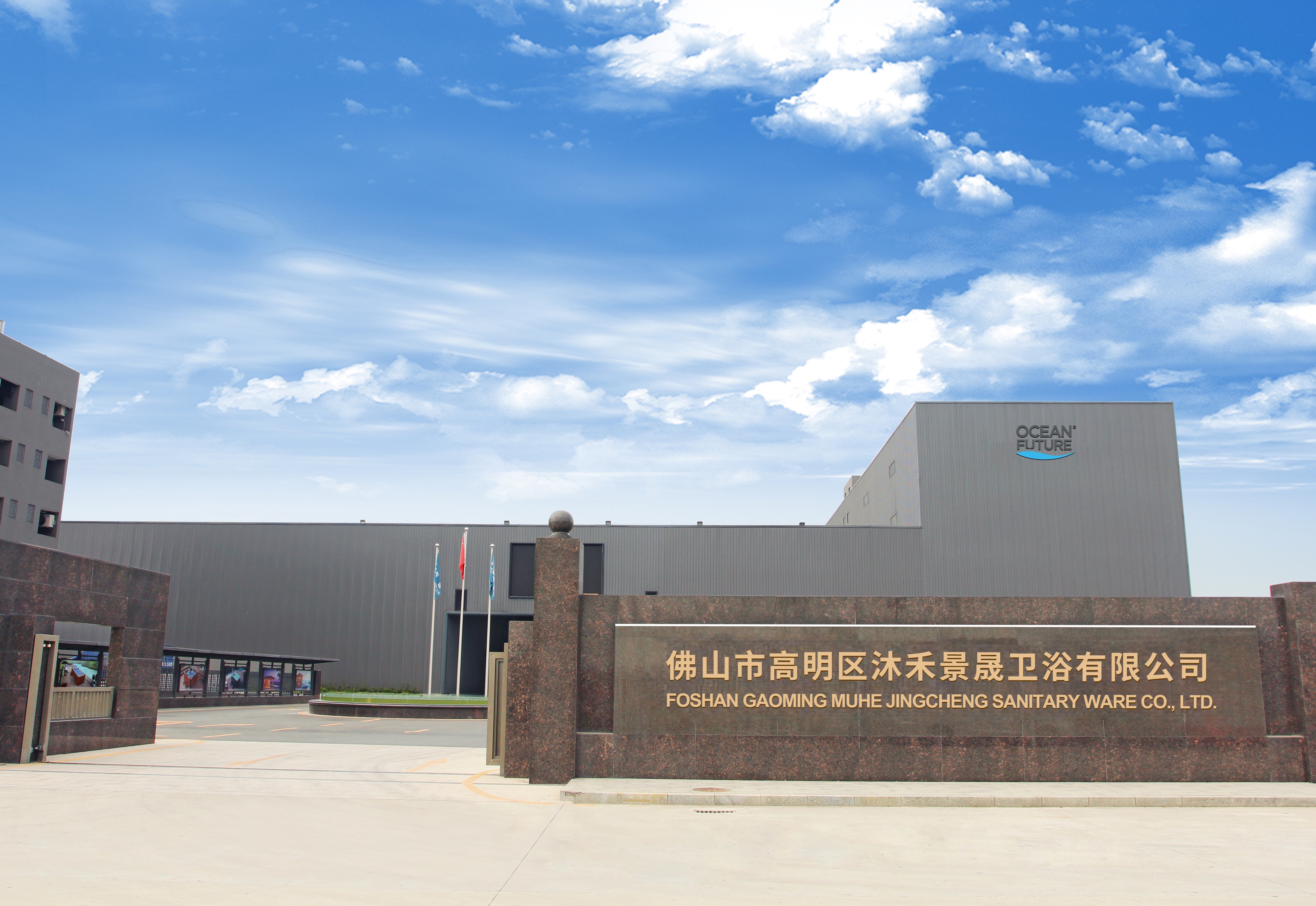
OCEAN FUTURE company main entrance.
OCEAN FUTURE Supplier Information
OCEAN FUTURE is a sauna room and spa manufacturer based in Foshan, Guangdong, China. The OFS-001 modular sauna room is documented for commercial and residential buyers, with published figures on cost, assembly time, heating speed, durability, and safety controls.
Website: https://www.oceanfuturespas.com/
Email: service1@oceanfuture.cn
Phone / WhatsApp: +86 15820624699
Address: NO.568, Yangxi Road, Yanghe Town, Gaoming, Foshan, Guangdong, China.
Download the OCEAN FUTURE Sauna Room brochure: OCEAN FUTURE Sauna Room PDF