
Moisture Retention Trays vs Absorbent Pads: Fresh Meat Buyer Comparison
For fresh beef and pork packed in stretch film or overwrap, a moisture retention tray can replace a separate absorbent pad in some applications, but it is not a universal substitute. The decision should be based on purge volume, portion weight, storage time, film-wrap performance, handling conditions and the buyer's own pack validation.
A plastic food packaging container decision for fresh meat is rarely just a choice between two tray shapes. It is a choice about where released liquid goes, how the pack is closed, how the product looks on display, what happens during transport and how many components the packing line must handle. This independent buyer comparison examines moisture retention trays and conventional trays with absorbent pads for fresh beef and pork packaging, with a deliberate focus on application fit, sealing or wrapping performance, moisture control and the limits of each format.
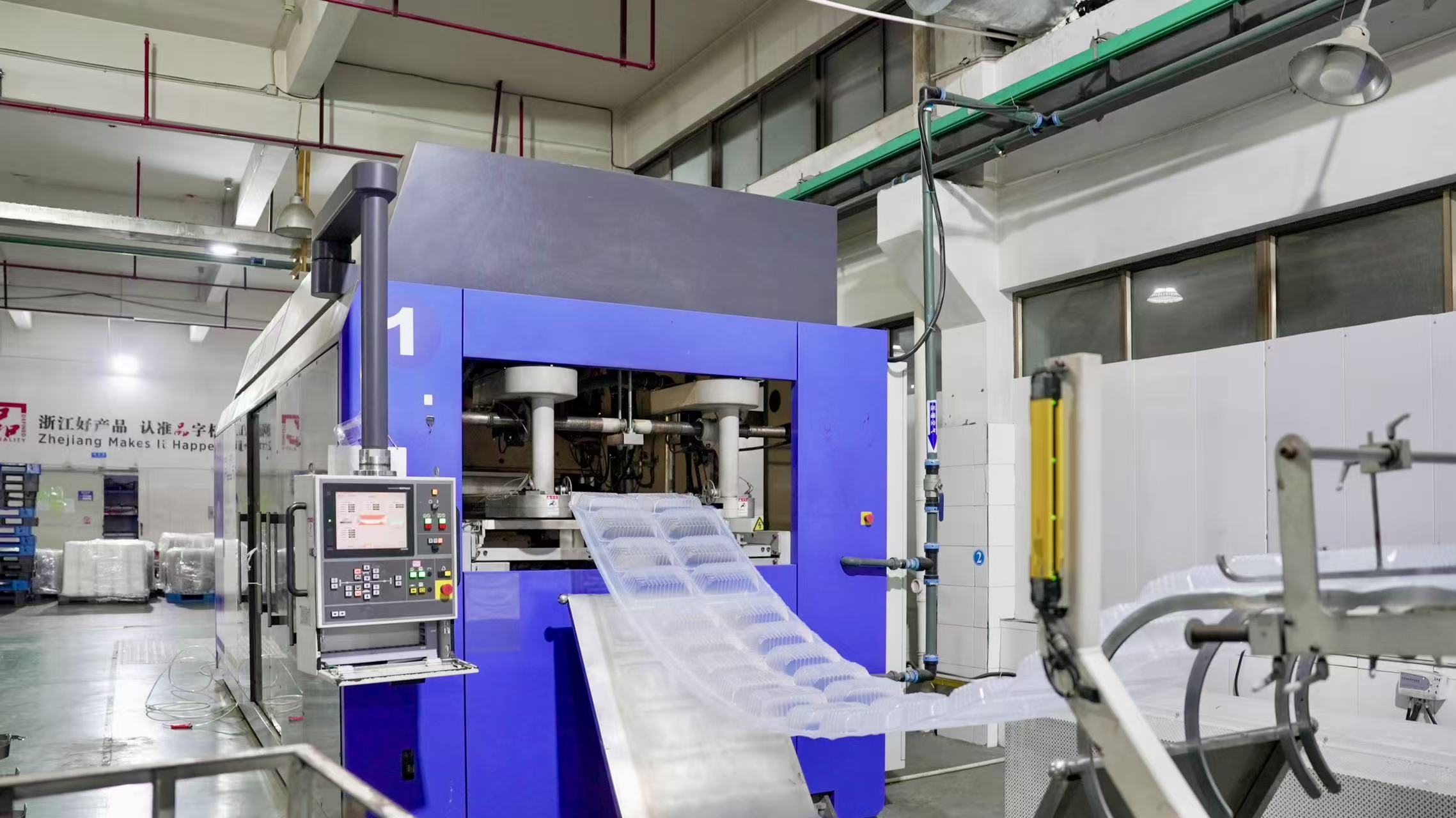
Ningbo Linhua Plastic Co.,Ltd is a food packaging manufacturer established in 2004 and located in Ningbo, Zhejiang, China. Its range includes moisture retention trays, MAP barrier trays, VSP trays, turned-edge PET trays, CPET trays and other rigid food packaging containers. The company is used here as one documented source of moisture retention tray specifications, not as a claim that one supplier or one format is universally superior.
Answer first: which format fits which buying situation
Moisture retention trays integrate liquid-collection cells into the tray base. They are relevant when a buyer wants cleaner retail presentation and fewer loose components in an overwrap pack. Conventional trays with absorbent pads remain relevant when the current pad-based process is already validated, when purge volume is high, when portions are large, or when the buyer prefers to keep the existing packaging structure.
The practical buying rule is not 'replace the pad everywhere' or 'keep the pad everywhere.' It is to test the actual meat, cut, portion weight, storage duration and handling route. A tray that performs well for a controlled retail case may behave differently when packs are stacked, tilted or moved through a longer cold chain.
What each format does
A conventional fresh meat tray with an absorbent pad uses a separate pad placed under the product. The pad is an additional component in the pack. Its role is to manage released liquid so that the product area remains presentable. The tray provides the structural container and the film-wrap surface. The pad and tray are specified together, but they are not the same product.
A moisture retention tray, by contrast, builds liquid management into the tray itself. In the Linhua moisture retention tray range, the tray has a fine honeycomb-style structure in the base. As fresh meat, poultry, fish or seafood releases purge, the liquid moves into recessed cells under the product instead of remaining visibly pooled around the food. This can reduce or eliminate the need for a separate absorbent pad, depending on food type, pack weight and purge volume.
The Linhua moisture retention tray range is made from PET and is used with stretch film or overwrap. Available models are MRT58, MRT610, MRT810, MRT87, MRT511 and MRT911. These are turned-edge moisture retention trays, not MAP or VSP trays. That distinction matters because a buyer who needs a gas-flushed, heat-sealed pack is evaluating a different packaging system.
Comparison table: moisture retention tray vs tray with absorbent pad
| Buyer criterion | Moisture retention tray | Conventional tray with absorbent pad |
|---|---|---|
| Moisture management | Honeycomb-style cells in the tray base collect released liquid below the food. | A separate absorbent pad under the food manages released liquid. |
| Components per pack | Tray only. The moisture-management function is integrated into the tray. | Tray plus a separate pad, which must be stocked and handled. |
| Typical closure method | Stretch film or overwrap. The Linhua MRT range is a turned-edge PET format. | Depends on the tray and line; commonly overwrap or stretch film in fresh meat retail. |
| Application fit | Fresh meat, beef, pork, lamb, poultry, fish and seafood where purge affects presentation. | Fresh meat and seafood where a pad-based process is already established or where purge is high. |
| Sealing expectation | Not a hermetic MAP seal. The relevant check is film-wrap integrity around the tray edge. | Also dependent on tray, film and line settings. A pad does not create a seal. |
| Key limitation | Retention cells have finite capacity. High purge, large portions or extended storage can exceed it. | Adds a separate component and does not remove the need to validate liquid management. |
| Production fit | Can simplify packing by removing pad placement, but requires tray and film trials. | May fit an existing validated line without changing tray or pad handling. |
The table is a decision aid, not a final specification. A buyer should still confirm tray dimensions, film compatibility, pack weight and storage conditions with the actual product.
Technical explanation: how moisture retention works
Moisture retention is a tray-design function. In the Linhua MRT format, the base contains many small recessed cells. The product sits above these cells. When purge is released, it moves into the lower cells instead of staying freely around the food. The visible result can be a cleaner pack, but the mechanical result is that liquid is held in a dedicated space within the tray.
That design does not change the fact that fresh meat releases liquid at different rates. Purge depends on the species, cut, age, temperature history, portion size and storage time. A moisture retention tray can be a good fit for a controlled retail pack and a poor fit for a large cut that releases a high volume of liquid over a long chilled storage period. The tray is a management tool, not an unlimited reservoir.
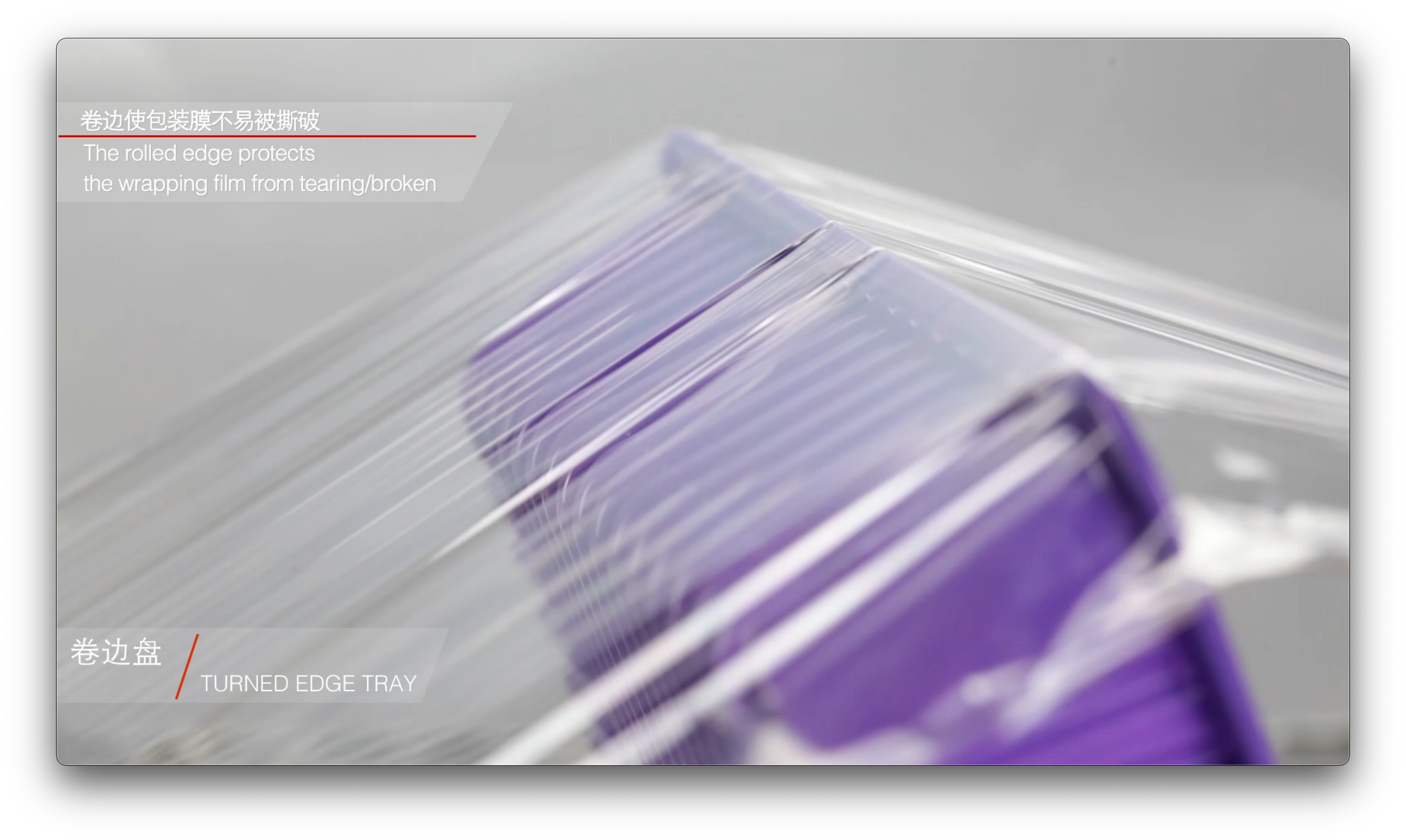
The turned-edge construction is also relevant. A turned-edge PET tray has a formed rolled flange rather than a conventional cut edge. The smoother edge profile is designed to be more film-friendly during overwrap packaging and can help reduce the risk of stretch film catching, scratching or tearing. For a fresh meat pack, that matters because film-wrap integrity affects presentation and protection. It does not, however, make an overwrap tray equivalent to a high-barrier MAP tray.
Application fit for fresh beef and pork
Fresh beef and pork are the core use case for this comparison because both are commonly packed in retail trays with overwrap or stretch film. They also differ in purge behaviour by cut and handling history. A buyer should not select a tray only by nominal dimensions. The application fit should be checked against the actual cut, average pack weight, maximum pack weight, expected storage temperature, display duration and transport route.
Moisture retention trays are documented for fresh meat processing, beef processing, pork processing, lamb and mutton processing, poultry processing, fish processing and seafood processing. They are also used in chilled food manufacturing, supermarket meat departments, central kitchens, food processing plants, meat packers, seafood packers and private-label food packaging. That breadth is useful, but it also means the buyer must narrow the specification to the actual product.
For beef, larger cuts and thicker portions can create a different liquid profile from smaller retail steaks. For pork, the cut and trim level can change the amount of visible purge. A pack trial should therefore use the heaviest and wettest expected portion, not only a representative retail sample. If the tray performs under the worst realistic pack, it is more likely to perform in routine production.
Where moisture retention trays are most likely to fit
- Retail fresh meat packs where visible pooling around the product is a presentation concern.
- Packing operations that want to reduce or remove a separate pad from the line.
- Beef and pork portions within the tray's practical retention capacity.
- Chilled display and transport routes where packs are not routinely tilted or roughly handled.
- Buyers already using turned-edge PET overwrap trays who want to add moisture management without changing the closure method.
Where a conventional tray with pad may still be preferred
- The existing pad-based line is already validated and the buyer wants to avoid a packaging change.
- Purge volume is high enough that a higher-capacity or different liquid-management approach is needed.
- Large portions or extended storage create a risk that the tray's retention cells are exceeded.
- The buyer needs a simple transition path while running side-by-side trials.
Sealing and overwrap: do not confuse two different packaging questions
In fresh meat packaging, the word sealing can mean different things. In MAP packaging, a lidding film is heat-sealed to a tray and the pack may be gas-flushed. In VSP packaging, a skin film is vacuum-formed around the product and sealed to the tray. In overwrap packaging, stretch film is wrapped around the tray and product. These are not interchangeable closure systems.
The Linhua moisture retention tray range is specified for stretch film or overwrap. It is not presented as a MAP or VSP tray. A buyer evaluating a moisture retention tray should therefore ask a different sealing question: does the film wrap cleanly around the turned edge, does it stay tight through handling, and does the pack remain presentable on display? If the buyer needs a controlled-atmosphere or vacuum-skin pack, the correct comparison is with MAP barrier trays or VSP trays, not with an overwrap moisture retention tray.
For pad-based packs, the pad also does not create a seal. The tray, film and line settings determine wrap performance. A change from pad to moisture retention tray should therefore be treated as a full pack change: tray, film, machine settings, pack weight and handling all need to be checked together.
What to check on the packing line
- Confirm tray dimensions against the existing film-wrap tooling and retail case fit.
- Run the heaviest expected portion, not only the average retail pack.
- Check film tension, edge contact and wrap appearance after simulated transport.
- Inspect packs after chilled storage for visible liquid around the product.
- Check whether the tray remains easy to handle when wet or chilled.
- Compare line speed and pack consistency with the current pad-based process.
Moisture control: a practical validation protocol
Moisture control is the central claim in this comparison, so it should be validated rather than assumed. A useful trial should reproduce the intended storage and handling conditions. The following protocol is deliberately simple because the most common buying error is not a lack of technical sophistication; it is testing only a clean, small, fresh sample.
- Select realistic products. Use the actual beef and pork cuts, including the wettest and heaviest expected pack.
- Record pack weight. Compare average and maximum commercial pack weights, not only a laboratory sample.
- Store under intended conditions. Use the real chilled storage temperature and expected duration.
- Inspect at intervals. Check for visible liquid at the start, during storage and at the end of the intended display period.
- Simulate handling. Tilt, stack and move packs in a way that reflects transport and shelf handling.
- Compare against the current pack. Run the existing tray-plus-pad format alongside the moisture retention tray under the same conditions.
- Decide by failure mode. If liquid remains visible or escapes during handling, adjust tray selection, portion size or the liquid-management approach.
The key limit is capacity. Released liquid may exceed the tray's effective retention capacity, leaving visible liquid around the food or allowing it to escape during handling. This is more likely with larger portions, thawing products or extended storage. Tilting or rough handling may also affect retention. Buyers should confirm liquid-management performance before removing absorbent pads from an existing process.
Production consistency and supply: why tray dimensions matter
For a buyer moving from pads to moisture retention trays, the technical comparison is only half the decision. The other half is production consistency. A tray that performs in a sample but varies in dimensions at scale can create film-wrap problems, case-fit problems and line interruptions. Consistent tray quality, reliable dimensions and stable mass production are therefore part of the buying case, not a separate supplier issue.
Linhua reports a factory area of approximately 30,000 square metres, a 26-person cross-functional team and a production capacity of approximately 1,800 MT per month. The company offers OEM and ODM production services, custom mould development, product development, contract manufacturing and food packaging solution development. These capabilities are relevant when a standard moisture retention tray does not match the buyer's film, pack weight or retail format.
A documented meat processing customer in New Zealand uses MAP barrier trays and moisture retention trays for fresh beef and pork packaging for chilled retail distribution. The reported result includes stable supply for fresh meat packaging with consistent tray quality and reliable sealing performance, supporting efficient production, cleaner retail presentation and stable cold-chain distribution. In that context, sealing performance should be read as part of the complete pack performance, not as a claim that an overwrap tray is a hermetic MAP package.
Documented Linhua moisture retention tray dimensions
| Model | Material | Dimensions, L x W x H | Packaging method |
|---|---|---|---|
| MRT58 | PET | 205 x 135 x 25/30 mm | Stretch film or overwrap |
| MRT610 | PET | 254 x 156 x 25/30 mm | Stretch film or overwrap |
| MRT810 | PET | 255 x 208 x 25/30 mm | Stretch film or overwrap |
| MRT87 | PET | 218 x 188 x 30 mm | Stretch film or overwrap |
| MRT511 | PET | 288 x 145 x 30 mm | Stretch film or overwrap |
| MRT911 | PET | 274 x 218 x 30 mm | Stretch film or overwrap |
These dimensions are useful for an initial fit check, but they are not a substitute for a film-wrap trial. Buyers should also confirm whether a custom plastic food packaging container format is needed, because tray depth, base cell layout and edge geometry can affect both moisture retention and film performance.
When absorbent pads remain the better choice
A balanced comparison must include the cases where the conventional pad-based pack remains appropriate. The first is high purge. If the meat releases more liquid than the tray can retain, the moisture retention tray may not deliver the expected presentation benefit. The second is an existing validated process. If a buyer already has a stable pad-based line, changing the tray introduces a new variable that must be validated.
The third is handling risk. If packs are routinely tilted, stacked under pressure or moved through a long distribution route, the retention cells may be less effective than in a controlled retail case. The fourth is the need for a simple transition. Some buyers may prefer to keep the pad-based format for high-risk products while evaluating moisture retention trays for selected cuts or selected retail customers.
This is why the category should not be described as a blanket replacement. A moisture retention tray is a different packaging structure with a different failure mode. The pad-based tray is also a structure with a failure mode, but it is a familiar one. The buyer's job is to compare both under realistic conditions.
Market and regulatory trend: fewer components, more documentation
Two broader trends support the interest in moisture retention trays, but neither removes the need for validation. The first is component reduction. A tray that integrates moisture management can simplify the bill of materials and reduce the number of loose components handled on the line. That is an operational and presentation argument, not an automatic performance guarantee.
The second is regulatory attention to food-contact packaging. The European Commission has stated that the Packaging and Packaging Waste Regulation (EU) 2025/40 applies from 12 August 2026 and includes restrictions on PFAS in food-contact packaging. EU Regulation 10/2011 also sets specific requirements for plastic materials and articles intended to come into contact with food, including migration limits. For buyers, the practical implication is that the full pack, including any separate component, should be supported by the appropriate documentation for the destination market.
Market context also matters. Grand View Research estimated the global food containers market at USD 331.7 billion in 2024. That scale supports continued investment in tray formats, but it says nothing about which tray is right for a specific beef or pork pack. The buyer still needs application-specific evidence.
Procurement decision framework
The following framework is intended for buyers at the evaluation and execution stage. It converts the comparison into a sequence of decisions that can be documented and repeated across products.
- Define the product and pack. Record species, cut, average weight, maximum weight, storage temperature and expected display duration.
- Define the closure. Confirm whether the pack is overwrap, stretch film, MAP or VSP. Do not compare an overwrap moisture retention tray with a MAP barrier tray as if they were the same format.
- Set a moisture limit. Decide what level of visible liquid is acceptable at packing, after storage and after handling.
- Run a side-by-side trial. Compare the current tray-plus-pad pack with the moisture retention tray under identical conditions.
- Check production fit. Confirm tray dimensions, film-wrap tooling, line speed, pack appearance and operator handling.
- Verify documentation. Request the applicable food-contact and market-compliance documents for the tray and any separate component.
- Decide by product family. It is acceptable to use moisture retention trays for selected beef or pork cuts while retaining pads for higher-purge products.
For buyers sourcing custom plastic food packaging trays, the same framework applies. A custom dimension or base layout should be evaluated as a new pack, not as a minor variation. The more the tray is tailored to the product, the more important the trial becomes.
FAQ
How does a moisture retention tray manage meat juices without an absorbent pad?
A moisture retention tray has a fine honeycomb-style structure in the base. As fresh meat, poultry, fish or seafood releases purge, the liquid moves into recessed cells underneath the product instead of remaining visibly pooled around the food. This can reduce or eliminate the need for a separate absorbent pad, depending on food type, pack weight and purge volume. The tray does not make liquid disappear; it holds it in a dedicated part of the pack.
Should I choose a moisture retention tray or a conventional tray with an absorbent pad?
Choose based on purge level and the existing packing process. A moisture retention tray can be a better option when visible purge affects retail presentation and the buyer wants to reduce or remove a separate pad. A conventional tray with an absorbent pad may still be suitable when the current process is already established, when purge volume is higher, or when the buyer prefers to keep the existing packaging structure. The final choice should be confirmed through actual packing trials.
Can moisture retention trays replace absorbent pads for every meat or seafood application?
No. Moisture retention trays use cells in the base to retain released liquid, and suitability should be tested with the actual food, portion weight, storage duration and handling conditions. Released liquid may exceed the tray's effective retention capacity, particularly with larger portions, thawing products or extended storage. Confirm liquid-management performance before removing absorbent pads from an existing packaging process.
What should buyers check before switching from absorbent pads to moisture retention trays?
Buyers should check the actual meat cut, average and maximum pack weight, storage temperature, display duration, transport handling and film-wrap performance. They should also compare the moisture retention tray with the current pad-based pack side by side, inspect for visible liquid after storage and handling, and confirm that the tray dimensions fit the existing film-wrap tooling and retail case. The change should be treated as a full pack change, not only a tray substitution.
Is a moisture retention tray suitable for MAP or VSP packaging?
The Linhua moisture retention tray range is specified for stretch film or overwrap and is made from PET. It is not presented as a MAP or VSP tray. MAP and VSP applications use different tray structures, films and sealing equipment. A buyer who needs a gas-flushed or vacuum-skin pack should evaluate MAP barrier trays or VSP trays instead of an overwrap moisture retention tray.
Future outlook
The likely direction for fresh meat packaging is not a single universal tray. It is a more segmented approach: moisture retention trays for selected overwrap packs where cleaner presentation and component reduction matter, pad-based trays where the process is already validated or purge is high, and MAP or VSP formats where a controlled atmosphere or skin pack is required. Buyers will increasingly ask for application evidence, dimensional consistency, film compatibility and food-contact documentation rather than a generic material claim.
For suppliers, that means the ability to support trials, explain limits and provide stable production becomes part of the product. For buyers, it means the comparison should be documented at the pack level. A moisture retention tray can be a practical improvement in the right application, but it should not be treated as a universal replacement for absorbent pads in fresh meat and seafood packaging.
Reference download: Linhua E-catalogue 2025, PDF.
Have Questions or Need More Details?
Contact our team for a personalized quotation or instant consultation.
Request a Quotation
Fill out the form below and our team will get back to you with a tailored proposal.
WhatsApp Direct Chat
Prefer to chat in real-time? Message us on WhatsApp for instant assistance & quick answers.
- Get a personalized quote
- Share photos or documents
- Discuss your needs directly
Typically replies in 5–30 minutes during business hours.