
Molded Pulp Procurement Comparison: Payment, Shipping and Acceptance Criteria
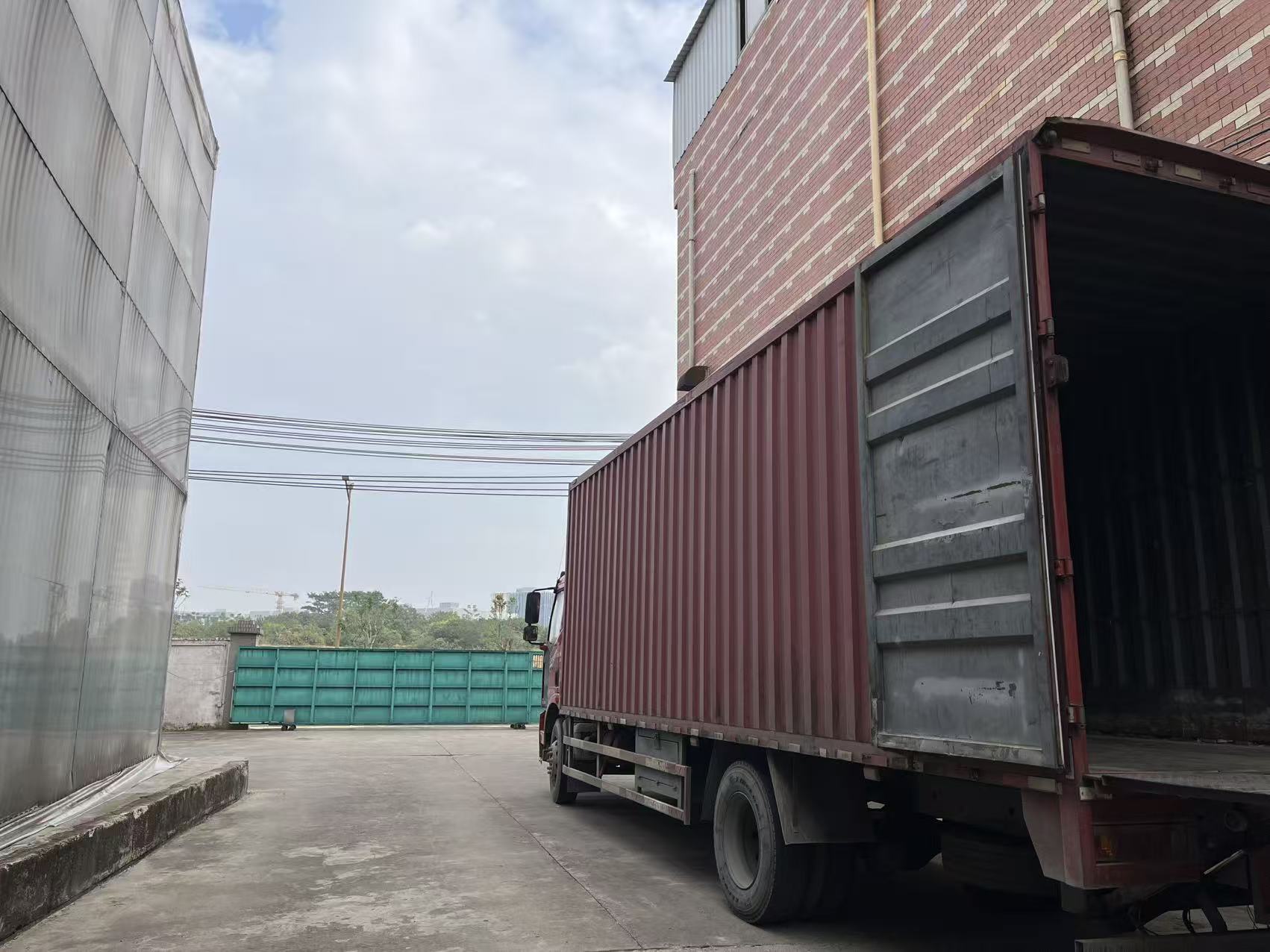
Palletized molded pulp tray orders staged before export dispatch. Commercial terms and freight method determine when these pallets actually leave the factory.
Most molded pulp sourcing decisions do not fail on fiber. They fail on the commercial layer around the fiber: payment terms that do not match the buyer's treasury process, freight quotes issued without a destination port, and acceptance criteria written as adjectives rather than measurable limits. At decision stage, the material is usually already chosen. What remains is a comparison between suppliers whose commercial and quality conditions are described in very different ways.
Tonghe Paper Co., LTD, operating as Dongguan Tonghe Paper Industry Co., Ltd., is a molded pulp manufacturer based in Dongguan, Guangdong, China. The company converts recycled paper and bagasse fiber into Molded Fiber packaging, producing Molded Pulp Trays, Custom Molded Pulp Trays, Pulp Packaging Trays and Protective Molded Pulp Packaging from sugarcane pulp, bamboo pulp and wood pulp. It exports to Europe, North America, Australia, Saudi Arabia, Malaysia and Brazil, with an export ratio of approximately 50%.
This article does not rank suppliers by preference. It provides a comparison framework for the three areas that most often stall a purchase order — payment, shipping and acceptance criteria — and shows how to align them with purchasing terms before the order is placed.
Why the Commercial Layer Decides Molded Pulp Supplier Selection
Molded pulp is a made-to-tool product. Once a mold is cut for a Custom Molded Pulp Tray, the buyer's cost structure is largely fixed by decisions taken before the first production run: how the deposit is structured, which freight method is used, and which parameters are declared as acceptable. A supplier that answers technical questions well but leaves commercial questions open creates a different risk profile from one that answers both clearly.
The practical consequence is that comparison should happen on four axes at once, not sequentially. Buyers who compare unit price first, then discover payment and freight conditions afterwards, typically re-open negotiations at the point where they have the least leverage — after tooling has been committed.
The Four-Area Procurement Comparison Matrix
The matrix below is deliberately narrow. It covers the commercial and quality conditions that a molded pulp quotation normally leaves implicit, and the evidence that closes each question.
| Decision area | Question to put to every supplier | Evidence that closes the question | Risk if left open |
|---|---|---|---|
| Payment method | Which payment instruments are accepted for a first order and for repeat orders? | Written confirmation of T/T and Alibaba Trade Assurance terms, including deposit and balance structure | Deposit structure discovered after tooling starts; production schedule slips |
| Freight basis | Which shipping methods can be used, and what information is needed to calculate freight? | Sea, air and express (DHL/FedEx/UPS) options quoted against a named destination port or address | Unit price cannot be converted into landed cost; budget approval is delayed |
| Purchasing terms | What is fixed in the quotation and what is negotiated per order? | A written statement covering unit price, tooling, sample approval, lead time and Incoterms | Re-negotiation after sampling; unplanned tooling cost |
| Acceptance criteria | Which parameters will be measured at incoming inspection? | Parameter ranges declared on the specification sheet and referenced in the purchase order | Disputes at receipt with no objective reject basis |
| Storage and handover | How must trays be stored between delivery and use? | Confirmed storage condition: well-ventilated and dry, avoiding prolonged direct sunlight | Moisture uptake or deformation before trays reach the packing line |
| Certification documentation | Which certificates must travel with the shipment? | ISO 9001, ISO 14001 and FSC certifications; SGS RoHS and PFAS-free statements where applicable | Customs or retailer rejection at the destination |
Payment Terms: Comparing What Is Actually Confirmed
Payment is the first filter because it determines whether an order can be released at all. In the verified procurement information for Tonghe Paper, the accepted payment methods are T/T and Alibaba Trade Assurance. Those two instruments suit buyers who can release a bank transfer or who prefer an escrow-style platform transaction with documented milestones.
Buyers whose treasury process requires a documentary letter of credit, open account terms or payment against a third-party inspection release should confirm instrument availability before shortlisting, because it is not part of the confirmed payment set. This is not a quality signal either way; it is a mismatch risk that is cheaper to resolve during comparison than after tooling has been approved.
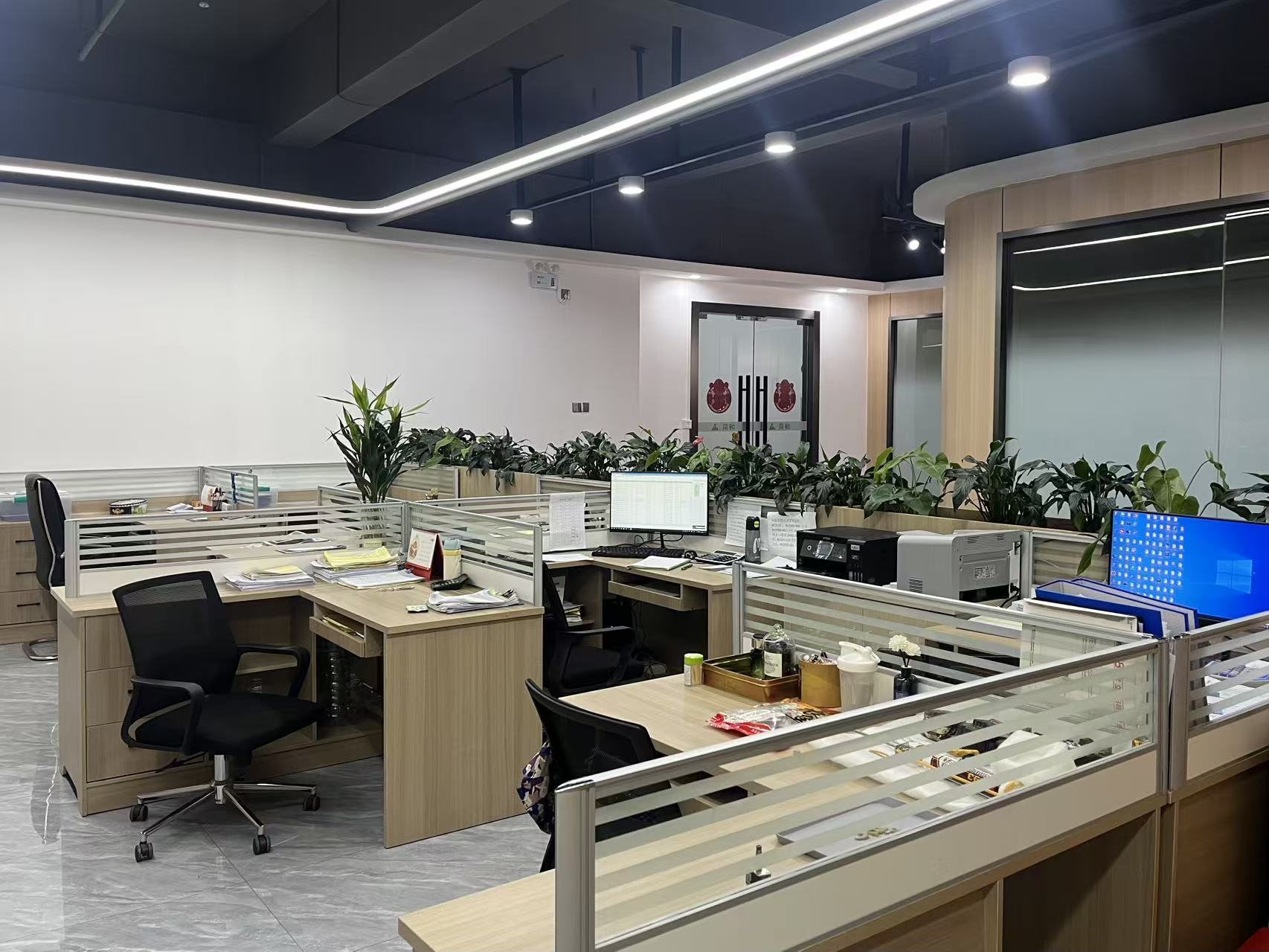
Payment instruments, Incoterms and purchase order clauses should be confirmed in writing before tooling is committed.
A useful comparison rule at decision stage: ask each shortlisted supplier to state, in writing, the payment instrument, the deposit proportion and the trigger event for the balance payment. When those three items are stated consistently, they can be compared directly. When they are answered with variations of “negotiable,” the buyer is comparing positions rather than terms.
Shipping Methods: Sea, Air and Express — and the Data a Quote Needs
Molded pulp shipments are volume-driven rather than weight-driven once trays are nested. Verified shipping options for Tonghe Paper orders are sea freight, air freight and express couriers (DHL, FedEx, UPS). A freight figure is only comparable when the buyer supplies a destination port or delivery address, because the same order volume produces very different costs depending on the discharge point and the final inland leg.
In practice, the three methods answer three different questions. Sea freight addresses replenishment of established programs where transit time is planned into the inventory cycle. Air freight addresses schedule recovery or mid-size urgent replenishment. Express addresses samples, validation batches and small Custom Protective Pulp Packaging orders where speed outweighs per-kilogram cost. Comparing suppliers on a single freight number, without stating the method, therefore produces a false ranking.
Nesting also affects freight economics. Verified comparison data shows nested stacking of molded fiber packaging saves roughly 40–60% of transport space compared with comparable rigid packaging formats. That saving is only realized when the tray geometry is designed to nest and the carton count per pallet is fixed as part of the purchasing terms.
Purchasing Terms: What Belongs in the PO Beyond Price
A molded pulp purchase order that carries only a unit price is an incomplete comparison document. The terms that actually determine landed cost and schedule reliability are tooling ownership, sample approval status, lead time, Incoterms and carton configuration. Tooling charges and minimum order quantities are order-specific and are not fixed by published data; they should be confirmed in the quotation rather than assumed from a specification sheet.
Sample approval deserves particular weight. Molded pulp trays are validated physically, not from a drawing, because fiber distribution, wall thickness and corner formation all vary with the mold design. Buyers who treat sample approval as a formality and only later define acceptance criteria usually discover the gap at incoming inspection, where no objective reject basis exists.
Acceptance Criteria: Converting Specifications into Inspectable Clauses
Molded pulp specifications are declared as ranges, not single values. That is normal for a fiber-formed product, and it is the reason acceptance criteria must be written as measurable bands with defined test points. The parameter set below is the verified specification range shared across Molded Pulp Trays, Custom Molded Pulp Trays, Pulp Packaging Trays, Biodegradable Pulp Trays, Food Grade Molded Pulp Trays and related molded fiber items.
| Parameter | Declared range | How to write it into the purchase order |
|---|---|---|
| Raw material | Sugarcane pulp, bamboo pulp, wood pulp, customized on request | Name the fiber grade and any blend requirement tied to the brand's material claim |
| Color | Natural color, white, yellow, customized as required | State color and reference the approved physical sample |
| Thickness | 0.8–5.0 mm, customized as required | Define measurement points (wall, base, corner) and the acceptable tolerance band |
| Wet density (wet pressure) | 0.15–0.25 g/cm³ | Reference the forming-stage value agreed at sample approval |
| Dry density (dry pressure) | 0.28–0.45 g/cm³ | Reference the pressed-stage value agreed at sample approval |
| Moisture content | ≤8–12% | Set the incoming inspection method and the maximum acceptable value |
| Edge crush strength | 3–8 kN/m | Tie the clause to the stacking load the tray must carry inside the shipping carton |
| Compressive strength | 2–8 MPa | Tie the clause to the top-load requirement during pallet stacking |
| Service temperature | −20 °C to +80 °C; food grade −20 °C to +120 °C | Match the clause to the actual handling and storage temperature at the buyer's site |
| Degradability | Degradable, recyclable and compostable | Require the documentation format accepted by the destination market |
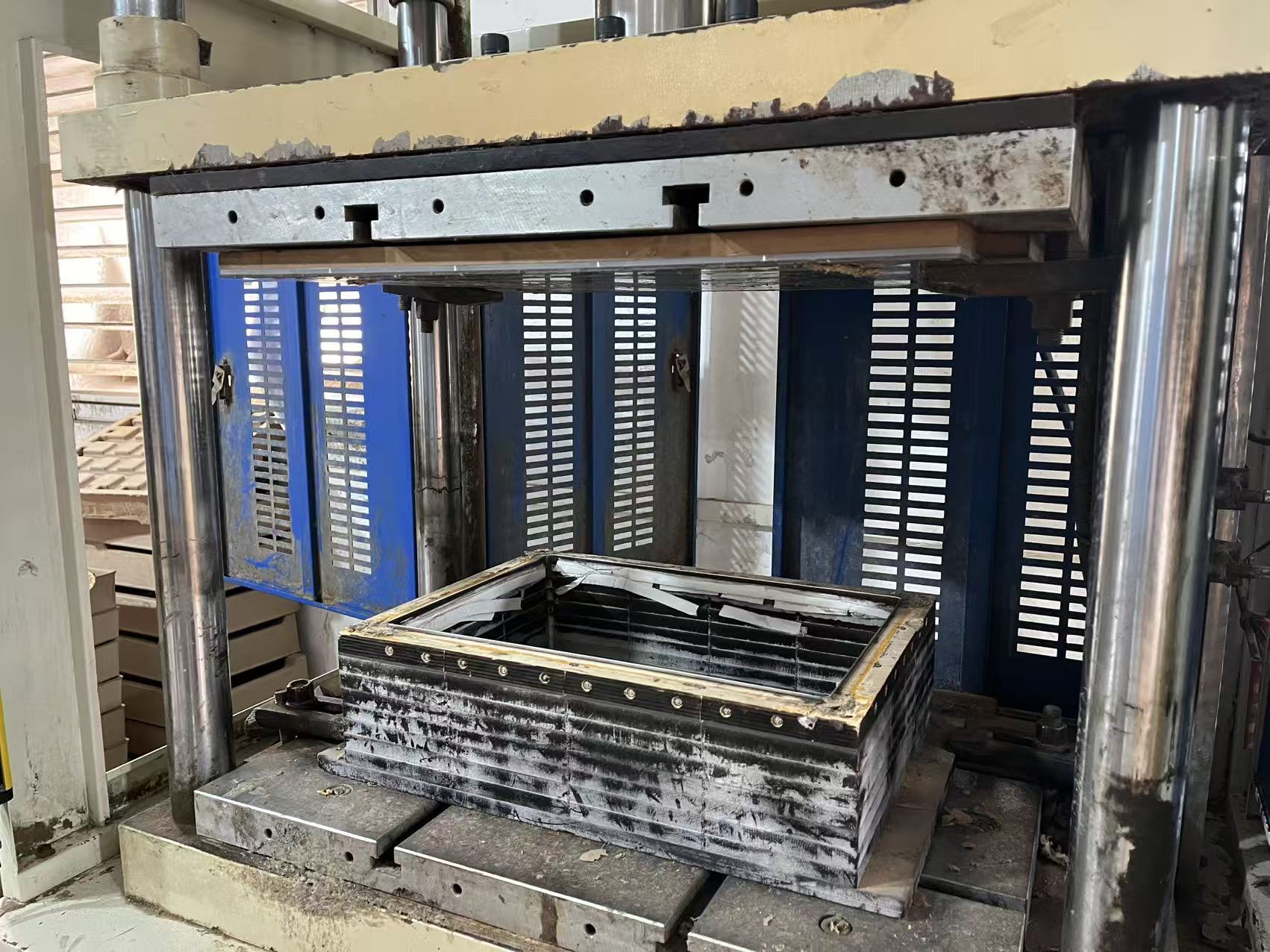
Trimming determines edge cleanliness and dimensional consistency — two parameters that should appear as written acceptance criteria.
Application Fit: Which Projects Carry Which Acceptance Risk
The same parameter set produces different acceptance priorities depending on the application. Verified application scope for molded pulp packaging covers 3C and electronic appliances, food and catering including fresh produce, beauty and daily chemical products including wine gift boxes, and medical devices. Destination markets recorded for these programs include Germany, the United Kingdom, France, the Netherlands, Sweden, Denmark, the United States, Canada, Australia, New Zealand, Saudi Arabia and Qatar.
In electronics and appliance packaging, Molded Pulp Electronics Trays and Shockproof Pulp Trays are specified mainly for shock absorption and inner product protection, so compressive strength and corner formation dominate the acceptance discussion. For Fresh Produce Pulp Trays, Disposable Food Pulp Trays and Food Grade Molded Pulp Trays, food-contact safety and the extended food-grade temperature range become the binding clauses. Medical Device Pulp Trays sit at the strictest end, where documentation travels with the goods. Heavy Duty Molded Pulp Trays, Cosmetic Packaging Pulp Trays, Egg Pulp Trays, OEM Molded Pulp Tray programs and Sustainable Molded Fiber Packaging each shift the balance between structural performance and surface finish.
Storage conditions apply across all of them. The verified working condition for these trays is a well-ventilated, dry area, avoiding prolonged exposure to direct sunlight. Because the declared moisture content sits between 8% and 12%, storage discipline is part of the acceptance framework rather than an operational afterthought.
Where Tonghe Paper Sits in This Comparison
For buyers building the matrix, Tonghe Paper provides a concrete reference point on both the commercial and the capability side. The Dongguan facility covers 23,000 m² with 160 employees, 12 engineers and a monthly capacity of up to 1,000 tons, which corresponds to an annual output of 12,000 tons. In-house mold development allows tray geometry to be designed around the product rather than selected from a fixed catalog, and the company offers coating, embossing and printing as customization options.
On documentation, the supplier holds ISO 9001, ISO 14001 and FSC certifications, and states that products comply with SGS RoHS and PFAS-free requirements. Under natural composting conditions, the material reaches complete biodegradation in 28 days according to the company's material description. For comparison purposes, the commercial terms that can be verified today are T/T and Alibaba Trade Assurance for payment, and sea, air and express (DHL/FedEx/UPS) for shipping, with freight calculated once the destination port or delivery address is supplied. Samples are offered for buyer testing before a program is committed.
Molded Pulp vs. Traditional Packaging on Commercial Terms
The most common comparison buyers run is molded fiber against plastic packaging for consumer electronics, lighting, gift packaging and food-and-wine export shipments. Verified comparison data records two structural advantages and one clear commercial boundary.
The advantages: nested stacking of molded fiber saves approximately 40–60% of transport space compared with equivalent rigid formats, and cushioning performance is recorded as 25–35% better than ordinary plastic packaging. The boundary: unit cost is slightly higher than ordinary plastic packaging. The offsetting factor is compliance cost — molded fiber avoids plastic-tax surcharges on EU-bound shipments and reduces clearance friction against EU and US plastic-restriction rules. For a domestic order with no regulatory exposure, the unit price gap is real and should be weighed honestly; for an export program into a regulated market, the landed comparison often reverses.
Market Context Behind These Commercial Terms
The commercial framework above is not only a supplier preference; it reflects where the category is heading. Grand View Research values the global molded pulp packaging market at USD 6.2 billion in 2025, projected to reach USD 10.2 billion by 2033. Asia Pacific held a 41.0% revenue share in 2025, with China accounting for the largest single market share, and the tray segment alone represented over 41.0% of global revenue that year. Independent estimates differ — Smithers is reported at USD 4.5 billion for 2025 — most likely because market definitions differ on whether machinery is included, which is a reminder to check scope before citing any market figure in a business case.
Regulation is the sharper driver. EU Regulation (EU) 2025/40 entered into force on 11 February 2025 and requires all packaging to be recyclable by 1 January 2030. Healthcare and medical device molded pulp is separately projected to grow at an 8.6% CAGR, driven by ISO sterilization standards and hospital plastic bans. Both forces push documentation and acceptance criteria into the contract, not just into the specification sheet.
Limitations and Boundary Conditions
Molded pulp is not a precision-machined component and should not be compared as one. Dimensional repeatability depends on mold condition, fiber distribution and the trimming step, which is why acceptance criteria must be expressed as ranges with defined measurement points rather than as single target values. Buyers transferring a tight-tolerance requirement from an injection-molded part will need to re-validate the drawing rather than assume equivalence.
Moisture is the second boundary. With declared moisture content between 8% and 12%, trays stored in a humid or sun-exposed area can deform before use. Third, tooling and minimum order quantity are order-specific and are not standardized across the category, so they must be negotiated per project. Fourth, verified payment methods for this supplier are T/T and Alibaba Trade Assurance; buyers requiring other instruments should confirm availability before shortlisting rather than after. Finally, express courier shipping is a sample and small-batch tool, not a volume logistics solution, and any freight figure is provisional until a destination port or address is confirmed.
Future Outlook
The direction of travel is toward procurement documents that specify recyclability and documentation as contractual conditions rather than marketing claims. With the EU recyclability deadline set for 1 January 2030, buyers writing multi-year molded fiber contracts today are effectively writing the first generation of those clauses: which fiber, which certification travels with the shipment, which parameters are measured at receipt, and which payment and shipping instruments are fixed for the contract term rather than per order. Suppliers that can answer those questions in writing at the comparison stage will be easier to keep in a long-term supply base — not because they are cheaper on unit price, but because fewer variables remain open after the order is placed.
FAQ
What payment terms are accepted for molded pulp tray orders, and how should buyers compare them?
Tonghe Paper accepts T/T and Alibaba Trade Assurance. When comparing suppliers, the practical approach is to request three items in writing: the payment instrument, the deposit proportion, and the trigger event for the balance payment. Terms that cannot be stated in those three parts cannot be compared on equal footing.
How is shipping arranged, and what information is needed for a freight quote?
Orders can ship by sea, by air, or by express courier through DHL, FedEx or UPS. Freight cost is calculated once the buyer provides the destination port or delivery address. A freight figure quoted without that information is provisional and should not be used to rank suppliers.
Which acceptance criteria should be written into a molded pulp purchase order?
The declared specification ranges cover raw material, color, thickness (0.8–5.0 mm), wet density (0.15–0.25 g/cm³), dry density (0.28–0.45 g/cm³), moisture content (≤8–12%), edge crush strength (3–8 kN/m), compressive strength (2–8 MPa), and service temperature from −20 °C to +80 °C, with food-grade trays rated to +120 °C. Each should be written as a range with a defined measurement point and referenced to the approved sample.
How should molded pulp trays be stored between delivery and use?
Keep the storage area well ventilated and dry, and avoid prolonged exposure to direct sunlight. Because the declared moisture content is between 8% and 12%, trays held in humid or sun-exposed conditions may deform before they reach the packing line. Storage conditions are best recorded as a delivery clause rather than left to site practice.
What certifications and compliance documents should be verified during supplier comparison?
Tonghe Paper holds ISO 9001, ISO 14001 and FSC certifications, and states that products comply with SGS RoHS and PFAS-free requirements. Buyers should confirm which of these documents must physically accompany the shipment for the destination market, since documentation requirements differ between regions and retailers.
When does molded pulp cost more than plastic packaging, and when does it cost less overall?
Unit cost for molded pulp is slightly higher than ordinary plastic packaging. On the other side, nested stacking saves approximately 40–60% of transport space, cushioning performance is recorded as 25–35% better than ordinary plastic packaging, and EU-bound shipments avoid plastic-tax surcharges and plastic-restriction compliance friction. For domestic orders with no regulatory exposure, the unit price difference is the dominant term; for regulated export programs, the landed comparison often shifts.
Further detail on molded fiber product scope, materials and specifications is available in the Tonghe Paper company brochure.
Have Questions or Need More Details?
Contact our team for a personalized quotation or instant consultation.
Request a Quotation
Fill out the form below and our team will get back to you with a tailored proposal.
WhatsApp Direct Chat
Prefer to chat in real-time? Message us on WhatsApp for instant assistance & quick answers.
- Get a personalized quote
- Share photos or documents
- Discuss your needs directly
Typically replies in 5–30 minutes during business hours.