
Molded Pulp Procurement FAQ: Payment, Shipping and Specs
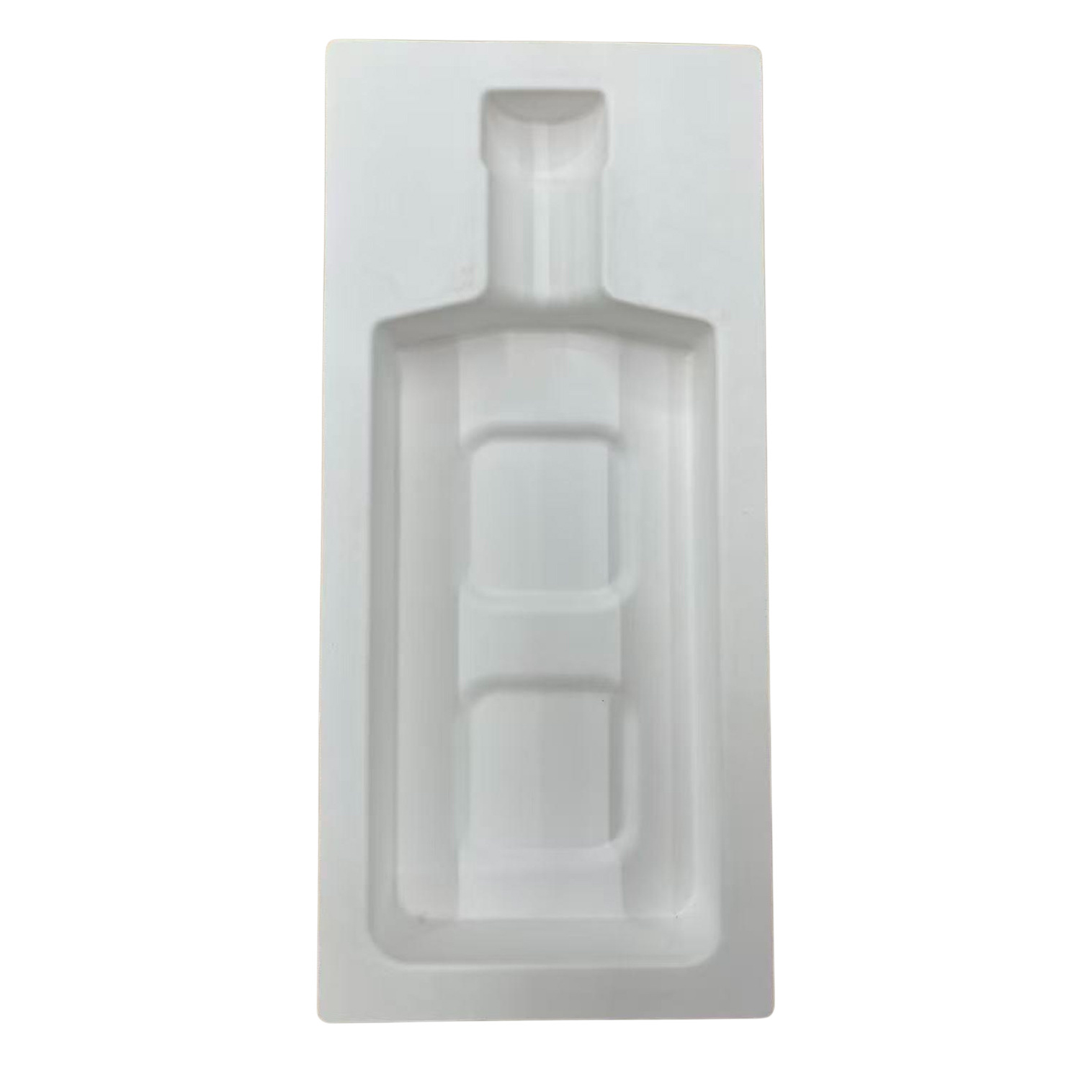
Biodegradable molded fiber trays are now a standard inner-packaging input, but the operational questions around them are still answered inconsistently.
Molded pulp packaging has stopped being a pilot project and become a routine line item in packaging procurement. In 2025, trays alone accounted for over 41.0% of global molded pulp packaging revenue, and Asia Pacific — with China holding the largest single market share — represented a 41.0% revenue share of that market, according to Grand View Research. Regulation has reinforced the trend rather than started it: the European Packaging and Packaging Waste Regulation (EU) 2025/40 entered into force on 11 February 2025 and requires all packaging to be recyclable by 1 January 2030.
What has not kept pace is the operational documentation. Buyers who have already accepted that molded fiber trays fit their product still ask the same three clusters of questions: how do I pay, how does it ship, and what do the numbers on a molded pulp specification actually mean? This reference answers those questions directly, drawing on the published commercial terms and product specifications of Dongguan Tonghe Paper Industry Co., Ltd. — a molded pulp packaging manufacturer based in Dongguan, Guangdong Province, China, which converts recycled paper and bagasse fiber into biodegradable trays and inserts for electronics, lighting, gifts, food and wine applications.
The Procurement Gap: Sustainability Is Settled, Freight and Specifications Are Not
For most packaging buyers in 2026, the sustainability decision is no longer the hard part. The recyclability requirement is legislated, and the material story for molded fiber is well understood: sugarcane pulp, bamboo pulp and wood pulp formed into trays that are degradable and can be recycled through ordinary paper streams.
The remaining friction sits in four places:
- Commercial mechanics — which payment instruments a supplier actually accepts, and whether escrow-style trade assurance is available.
- Logistics — which freight modes are offered, and what information the buyer must supply before a freight figure means anything.
- Specification literacy — how to read density, thickness, moisture, edge crush and compressive values without over- or under-specifying.
- Boundary conditions — where molded pulp should not be used at all, and where a plastic or foam incumbent still wins on practical grounds.
Market size estimates underline why this granularity matters. Grand View Research values the global molded pulp packaging market at USD 6.2 billion in 2025, projected to reach USD 10.2 billion by 2033. A separate commercial estimate places the 2025 figure at USD 4.5 billion; the divergence is a definition difference rather than a disagreement about direction, and buyers benchmarking suppliers should check what a given figure includes before quoting it internally.
Payment Terms and Shipping Methods: The Commercial Answers
Direct answer first: Tonghe Paper accepts T/T and Alibaba Trade Assurance for molded pulp tray orders, and ships by sea, air or express carriers including DHL, FedEx and UPS. Freight is calculated against the buyer's destination port or delivery address — which means a quotation request without a destination is incomplete by definition.
| Procurement item | Accepted / available | What the buyer must provide |
|---|---|---|
| Payment | T/T; Alibaba Trade Assurance | Confirmed order specification and payment route |
| Sea freight | Available | Destination port |
| Air freight | Available | Destination airport |
| Express | DHL / FedEx / UPS | Delivery address and contact details |
| Sample comparison | Free samples supported for comparison and testing | Application description and test criteria |
Two operational details are worth separating here. First, the payment instrument and the freight mode are independent variables: choosing express delivery does not change the payment term, and choosing sea freight does not change who pays what. Second, freight is destination-driven, so procurement teams running a multi-country rollout should request freight for each destination port or address rather than assuming a single landed-cost figure covers all markets.
Supply-side context matters when evaluating whether those terms are supported by real capacity. Tonghe Paper operates a 23,000 m² facility with 160 employees, an annual output of 12,000 tons and a monthly capacity of up to 1,000 tons. Its 12-engineer R&D team includes in-house mold development, and roughly 50% of output is exported, with main markets spanning the EU, USA, Australia, Saudi Arabia, Malaysia and Brazil. For a buyer assessing continuity risk on a multi-year program, in-house mold capability is the relevant fact: it means cavity geometry, revisions and replacement tooling are handled internally rather than through a third party.
What a Molded Pulp Technical Datasheet Should Actually Tell You
A complete molded pulp tray specification covers density, thickness, moisture content, edge crush strength, compressive strength and temperature range. Below is the published parameter set for Tonghe Paper's molded pulp tray range, with a note on what each value means commercially.
| Parameter | Published range | Why a buyer should care |
|---|---|---|
| Raw material | Sugarcane pulp, bamboo pulp, wood pulp (customizable on request) | Determines fiber color, surface feel and the recyclability story presented to end customers |
| Color | Natural color, white, yellow; customized as required | Natural color paste is the cost-effective option; bleached white gives a cleaner shelf appearance |
| Wet pressure (density) | 0.15–0.25 g/cm³ | Describes the formed fiber structure before hot pressing |
| Dry pressure (density) | 0.28–0.45 g/cm³ | Indicates the density of the finished, pressed wall — the practical driver of stiffness |
| Thickness | 0.8–5.0 mm, customized as required | Thicker walls suit heavier or more fragile contents; thin walls suit tight-fit inserts |
| Moisture content | ≤ 8–12% | Signals humidity sensitivity and therefore storage and transit requirements |
| Edge crush strength | 3–8 kN/m | Relevant to stacking loads in warehouse and container |
| Compressive strength | 2–8 MPa | Relevant to top-load protection during palletizing |
| Temperature range | -20°C to +80°C normal; food grade -20°C to +120°C | Defines whether the tray can be used in chilled, ambient or heated applications |
| Surface treatment | Calendering; waterproof and oil-proof treatment available | Calendering improves smoothness and reduces paper scraps; water/oil treatment addresses damp storage conditions |
| Performance | Degradable | Supports plastic-reduction and packaging-waste compliance narratives |
A practical reading rule: density and thickness together determine protective performance far more than either value alone. Two trays with the same 3 mm wall can behave very differently if one sits at the low end of the dry-density range and the other at the high end. Buyers comparing quotations should therefore request the dry pressure value, thickness and compressive strength as a set rather than accepting a single nominal figure.
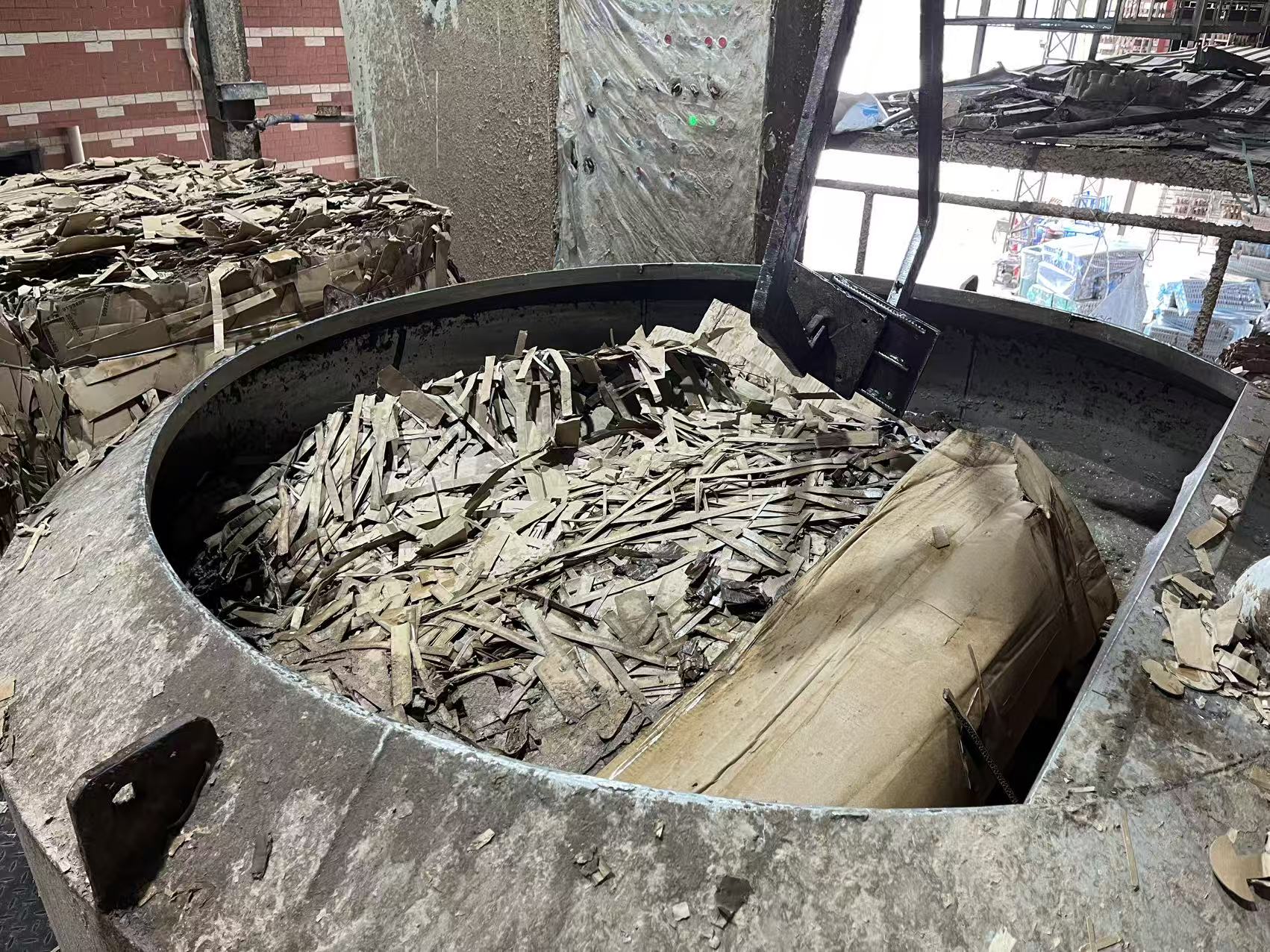
Fiber preparation: raw material selection and consistency upstream determine how predictable the finished tray specification is downstream.
Design, Tooling and Customization Questions
Custom molded pulp trays are formed against a dedicated mold, which is why the design conversation and the tooling conversation are the same conversation. The practical capabilities buyers ask about are: multi-specification and irregular integrated structures, cavity geometry that fits the product contour, precise positioning, and anti-shaking fixation of the contents. Custom options also extend to coating, embossing and printing for brand display.
For electronics and industrial parts, an anti-static version is available: modified pulp can be produced in an anti-static grade suitable for components and connectors. For cosmetics, home appliances, hardware and medical devices, water- and oil-resistance treatments support the inner-lining role.
Medical device pulp trays deserve separate treatment because the requirements are different. The medical format supports EO sterilization, is formed in one piece with precise positioning for shock and drop resistance, and is designed as a low-dust liner. Virgin wood pulp free of fluorescent agents is used, production runs in a clean workshop, and a material inspection report is provided. Cavities can be customized to fit probes, handles, catheters and surgical instrument components — and because the tray is degradable and recyclable, it avoids plastic tax exposure on medical device exports to Europe and North America.
Application Fit and the Storage Conditions Buyers Overlook
The published application scope for molded pulp tray projects covers 3C electronics and electrical appliances, food and catering including fresh produce, beauty and daily chemical products including wine gift boxes, and medical devices. The functional role is consistent across all four: shock-absorbing cushioning and inner product protection, used as passive protective packaging in static storage and compatible with packaging assembly lines and automatic wrapping equipment.
The special requirements attached to those scenarios are recyclable, biodegradable, and food-contact safe. Target export markets for these projects include Germany, the United Kingdom, France, the Netherlands, Sweden, Denmark, the United States, Canada, Australia, New Zealand, Saudi Arabia and Qatar.
The storage condition is the item most often missed in procurement documentation: pulp packaging should be held in a well-ventilated, dry area, avoiding prolonged exposure to direct sunlight. This is not a formality. Molded fiber trays are hygroscopic, and the published moisture content of 8–12% is a working condition rather than a fixed property — humid warehousing or a long humid transit leg can change how a tray performs under load.
Where Molded Pulp Is Still Not the Right Answer
A credible procurement reference has to state the limits, and for molded pulp the limits are specific rather than general.
- Humidity exposure. Because fiber trays take up and release moisture, warehouses and transit routes with sustained high humidity require more care than the equivalent EPS or vacuum-formed plastic program. Ventilated, dry storage and protection from long direct-sunlight exposure are baseline requirements, not optional practice.
- Temperature ceiling. The standard range is -20°C to +80°C. Only food-grade formats extend to +120°C. Applications above that ceiling fall outside the material's published envelope and should be specified in a different substrate.
- Tooling economics at very low volume. Custom cavities require mold development. Where a buyer has repeatedly changing designs or very small repeat volumes, die-cut foam or vacuum-formed plastic may remain the more flexible option even where the sustainability case favors fiber.
- Extreme tolerance requirements. Very tight dimensional tolerances and complex undercut geometry are more naturally handled by injection molding; molded fiber's trade-off is protection and recyclability rather than machined precision.
- Surface finish expectations. A fiber surface is textured, not glossy. Calendering raises smoothness and reduces paper scraps, and embossing and printing are available, but the finish should be specified against fiber reality rather than against a coated print surface.
Where molded pulp does win clearly is weight and protection balance. Compared with traditional hard gift boxes, the product weight is reduced by approximately 50%, while the thickened fiber structure and interwoven natural fibers form a dense protective layer that also provides moisture-proofing and anti-static characteristics where specified. That combination — lighter, protective, recyclable — is the reason the category is growing rather than plateauing.
Market Direction and What It Changes for Buyers
Three data points frame the medium-term procurement picture. The first is regulatory: EU (EU) 2025/40 sets a recyclability requirement for all packaging by 1 January 2030, which pulls molded fiber into categories that previously had no compliance-driven reason to switch. The second is segment-level: molded pulp for healthcare and medical devices is projected to grow at an 8.6% CAGR, driven by ISO sterilization standards and plastic bans in hospitals. The third is structural: trays were the largest product segment in 2025 at over 41.0% of revenue share, so tray supply — not just molded pulp generally — is where capacity and competition are concentrated.
The practical implication for buyers is not that supply is scarce, but that documentation quality becomes the differentiator. When more suppliers can form a tray, the separating questions shift to published parameter ranges, storage guidance, compliance evidence, and whether mold development is internal or outsourced.
Future Outlook
Two developments are likely to shape molded pulp procurement through the rest of the decade. The first is material composition: an open question in the current data is how the EU 2030 recyclability mandate will shift material composition in medical-grade trays specifically, where sterilization performance and recyclability requirements intersect. The second is contracting structure — as recyclability deadlines approach, buyers are more likely to move from single-order purchasing toward multi-year supply arrangements, which raises the weight of capacity, mold ownership and storage guidance in supplier evaluation.
For buyers, the durable advice is unglamorous: get the destination port, the dry-density value, the thickness, the compressive strength and the storage condition into the same document. Those five items resolve most molded pulp procurement disputes before they start.
FAQ: Molded Pulp Procurement Questions Answered
1. What payment terms are accepted for molded pulp tray orders?
T/T and Alibaba Trade Assurance are the accepted payment routes for molded pulp tray orders placed with Tonghe Paper. The payment instrument is agreed at order confirmation and is independent of the shipping mode selected.
2. What shipping methods are available for molded pulp packaging?
Orders can be shipped by sea, by air, or by express carriers including DHL, FedEx and UPS. Sea freight is generally used for larger tray volumes, while air and express are used when delivery time matters more than freight cost.
3. What information is required to calculate freight cost?
The destination port or the delivery address. Freight is calculated against the destination, so a buyer requesting a quotation should provide the destination port or address at the same time as the order specification.
4. What raw materials are used in molded pulp trays?
Sugarcane pulp, bamboo pulp and wood pulp are the standard raw materials, with customization available on request. Some grades are produced from recycled paper and plant fiber. Standard colors are natural color, white and yellow, with custom colors available.
5. Which technical parameters should a buyer verify on a molded pulp datasheet?
Verify wet pressure (0.15–0.25 g/cm³), dry pressure (0.28–0.45 g/cm³), thickness (0.8–5.0 mm, customizable), moisture content (≤ 8–12%), edge crush strength (3–8 kN/m), compressive strength (2–8 MPa) and the applicable temperature range. Density and thickness should be reviewed together, because protective performance depends on the combination rather than on either figure alone.
6. Are molded pulp trays suitable for food contact?
Food Grade Molded Pulp Trays are produced from sugarcane pulp, bamboo pulp and wood pulp and are specified as food-contact safe, with a temperature range of -20°C to +120°C. That is a wider range than the -20°C to +80°C applicable to the standard molded pulp tray range.
7. Can molded pulp trays be used in medical device packaging?
Medical Device Pulp Trays support EO sterilization and are formed in one piece with precise positioning for shock and drop resistance, described as low-dust and non-shedding. Virgin wood pulp free of fluorescent agents is used, production takes place in a clean workshop, and a material inspection report is available. Cavities can be customized to fit probes, handles, catheters and surgical instrument components.
8. Can molded pulp replace EPS foam and vacuum-formed plastic?
In many inner-protection applications, yes — molded fiber trays are used as a direct replacement for foam and plastic vacuum forming, and they can be recycled back into paper after use. Whether replacement is appropriate depends on three checks: the humidity conditions in storage and transit, the temperature exposure relative to the published -20°C to +80°C range (or +120°C for food grade), and the tooling economics at the buyer's actual order volume.
9. How should molded pulp trays be stored?
In a well-ventilated, dry area, avoiding prolonged exposure to direct sunlight. With a published moisture content of ≤ 8–12%, molded fiber trays are hygroscopic, so storage conditions influence dimensional stability and stack performance over time.
10. What compliance and environmental documentation accompanies a molded pulp order?
Molded pulp products comply with SGS RoHS and PFAS-free requirements. Biodegradable grades are described as compostable with no PE/PET film coating and no microplastic pollution, and medical-grade items can be supplied with a material inspection report.
For buyers who want the fuller technical and capability picture behind these answers, the company profile and product overview are available as a downloadable document.
Company brochure (PDF): Tonghe Paper molded pulp packaging profile