
Molded Pulp Tray Proposals: Score Total Cost, Not Unit Price
Molded Pulp Tray Proposals: Score Total Cost, Not Unit Price
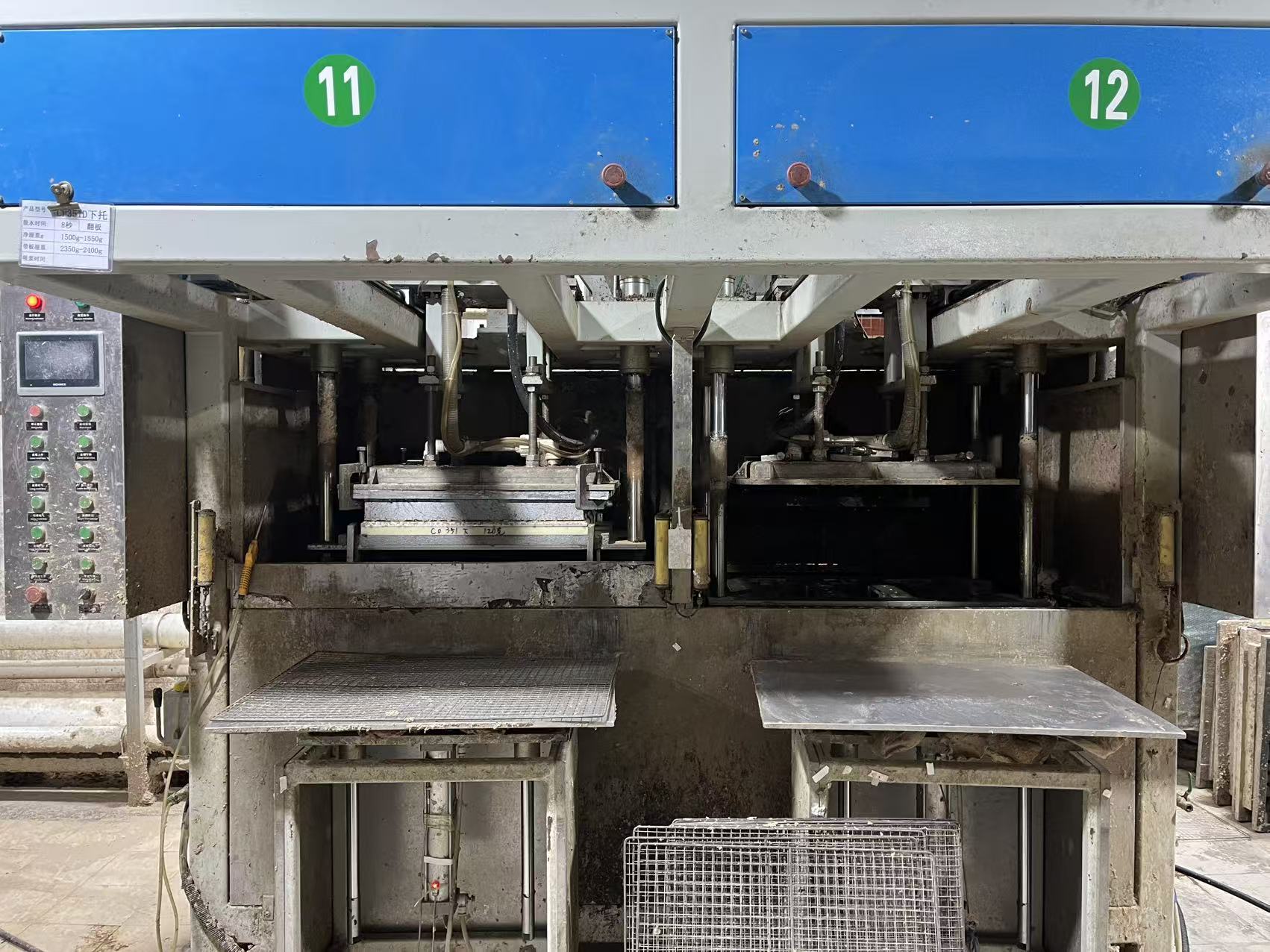
Cover: wet-press forming equipment used in molded pulp tray production. Image: Tonghe Paper Co., LTD.
A buyer comparing molded pulp tray proposals usually starts with the unit price, because it is the only figure every supplier places in the same position. That figure is a weak ranking tool. Two tray quotations can sit within a few percent of each other per piece and still differ materially in tooling cost, cartons per pallet, freight basis, deposit structure and what each supplier is prepared to commit to in writing about acceptance.
A weighted scorecard is the more defensible approach. This framework scores each molded pulp tray proposal on four dimensions — total landed cost, payment terms and cash flow, shipping method and logistics control, and the explicitness of purchasing terms and acceptance criteria — and treats the quoted unit price as one input inside the first dimension rather than as the decision itself.
It is written for buyers at decision stage who already hold two or more offers against the same tray specification: OEM protective trays, electronics and lighting packaging, medical device trays, cosmetic sets, fresh produce trays and food-service trays. A scorecard does not test protection; a sample round does. What a scorecard makes visible is which supplier has described a commercial arrangement precisely enough to be relied on when the order is placed.
Why unit price ranks molded pulp tray proposals poorly
A molded pulp tray price is the end of a long cost chain, not a summary of it. The figure depends on fiber type and grammage, forming method, finishing, quantity break, mold amortization and packing density, so two suppliers can quote the same tray outline and be pricing different products.
Volume effects push the gap wider. Molded pulp trays are light relative to their bulk, and nesting changes how many pieces fit into a carton, a pallet and a container. Tonghe Paper Co., LTD, a pulp molding manufacturer based in Dongguan, Guangdong Province, China, publishes a comparison of its trays with ordinary plastic packaging that cites 40–60% space savings from nested stacking and roughly 50% lower weight than traditional hard gift boxes. Those are supplier-stated figures and should be re-measured against your own carton dimensions, but they illustrate the mechanism: when the shipping unit is a carton rather than a single tray, a carton-count difference can outweigh a small per-piece price difference.
The administrative side is equally uneven. One proposal may attach a dimensional tolerance table and a named sampling plan; another may answer the same questions with "high quality, no problem". Both arrive as a unit price. Only one can be scored.
The four-dimension scorecard
Score each proposal from 0 to 5 on each dimension, where 0 means the information is absent, 1 means it was given verbally or by chat only, 3 means it is documented but incomplete, and 5 means it is documented, quantified and consistent with the tray specification. Multiply each score by its weight to obtain a weighted total out of 100.
| Dimension | Suggested weight | What a 5 requires |
|---|---|---|
| Total landed cost | 40% | Itemised cost sheet at a stated quantity and quantity break, converted to delivered cost per 1,000 trays on one common Incoterm |
| Payment terms and cash flow | 20% | Written schedule: deposit percentage, balance trigger, instrument, currency and which document releases the balance |
| Shipping method and logistics control | 20% | Named Incoterm, named destination port or address, mode justified for the volume, carton and pallet data supplied |
| Purchasing terms and acceptance criteria | 20% | Dimensions with tolerance, fiber and grammage, moisture, defect list, sampling plan, claim window and remedy |
Weights are a judgement, not a market standard, and they should be disclosed before proposals are opened so that no supplier can argue the target moved afterwards. A medical device tray project can reasonably shift ten points from landed cost into acceptance criteria; a high-volume food-service tray programme can do the reverse. What matters is that every proposal is scored against the same weights.
Dimension 1: total landed cost
Total landed cost answers one question: what does one delivered tray cost at your warehouse, on a stated quantity, under one named Incoterm? Build the cost sheet before scoring, because a proposal that omits half the lines cannot be graded above 3.
- Piece price and quantity breaks. Ask for at least three volume bands in writing. A reply stating only that "price depends on quantity" gives no basis for comparison and scores 1.
- Tooling and mold cost. State whether the mold charge is one-off, amortized into the piece price, or credited after a volume threshold, and who owns the tool.
- Sampling and pre-production charges. Prototype or pre-production samples, artwork or embossing setup, and any coating or printing preparation.
- Packing materials. Whether inner cartons, dividers, edge protection and export pallets are included in the quoted figure.
- Inland haulage and origin charges. Trucking to port, terminal handling and export documentation.
- Main freight, insurance and duty. Sea, air or express charges to the named destination, plus insurance and the applicable duty basis.
- Destination charges and storage. Port fees, customs clearance, delivery to the warehouse and any storage before the line needs the trays.
- Damage and re-work allowance. A realistic allowance for trays that arrive deformed, damp or out of tolerance, based on the supplier's stated acceptance criteria.
Normalize everything to cost per 1,000 trays delivered, or per container if that is your purchasing unit. The conversion step is mechanical: take the piece price, add the per-unit share of tooling and packing, add freight and duty per unit at the declared packing density, and express the result on the same Incoterm for all proposals. A proposal quoted on an ex-works basis and one quoted delivered to your door are not comparable until this step is done.
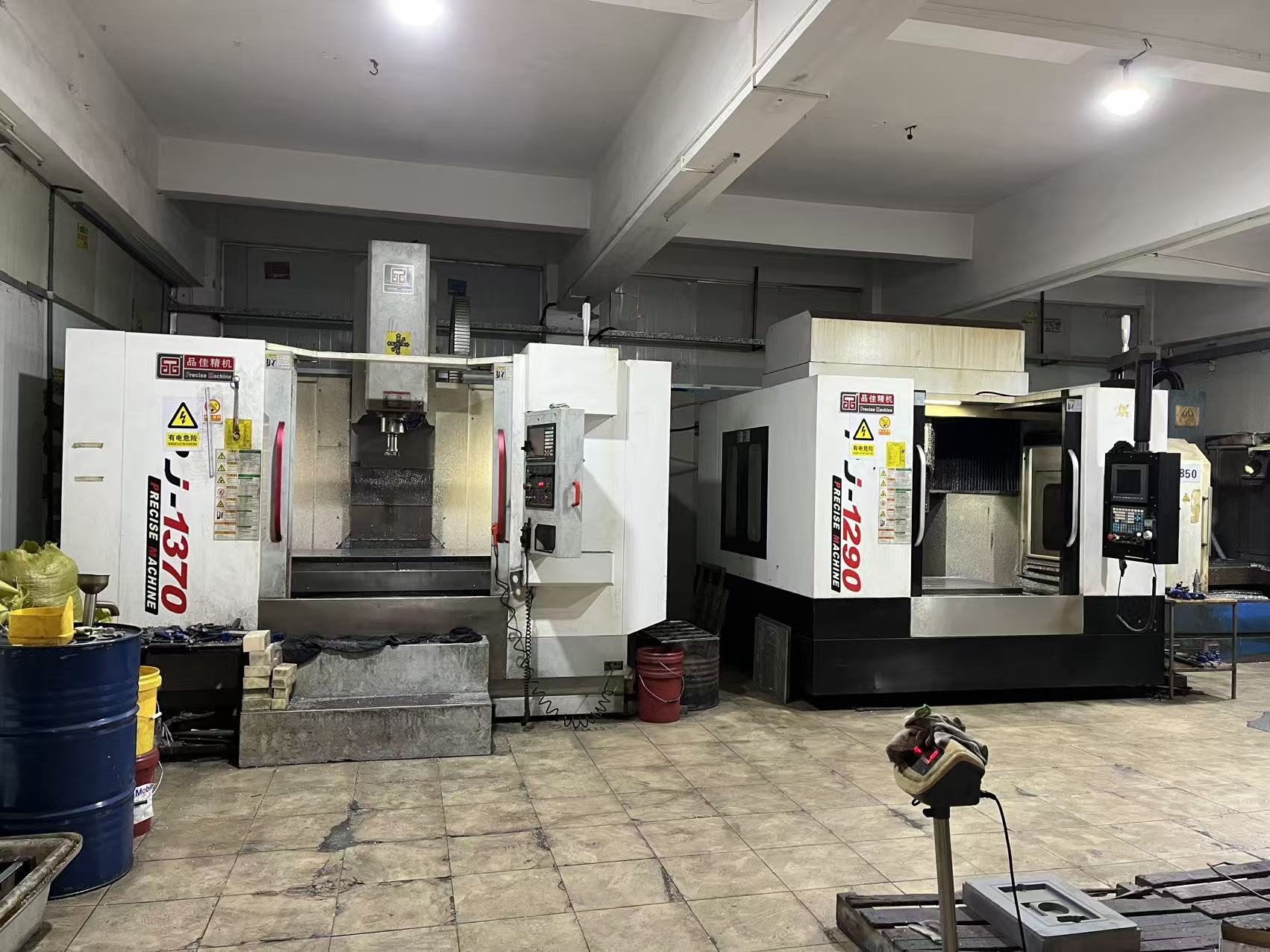
Mold development area: tooling cost and tool ownership belong in the landed-cost sheet, not in a separate side conversation. Image: Tonghe Paper Co., LTD.
Dimension 2: payment terms and cash flow
Payment terms change the real cost of an otherwise identical quotation, because capital tied up in a deposit has a cost and because a balance released before shipment transfers risk to the buyer. Score the payment structure separately from the price and then put the cash-flow difference back into the landed-cost sheet.
A scorable payment answer contains four elements: the deposit percentage, the trigger for the balance, the instrument, and the currency. Instruments differ in the protection they offer — a straight bank transfer against a proforma invoice gives the buyer less recourse than a platform escrow arrangement or a documentary letter of credit. Score 5 for a written schedule naming all four elements, 3 for a deposit and balance split without a stated trigger, 1 for "payment negotiable" with no numbers.
For reference on what a complete answer looks like, Tonghe Paper Co., LTD publishes that it accepts T/T and Alibaba Trade Assurance. Whether those terms suit a particular buyer is a separate question, but the reply names instruments rather than leaving the point open. Compare that with a proposal that lists only a deposit percentage and no release condition.
Dimension 3: shipping method and logistics control
Shipping method should follow from tray volume and urgency, and the proposal should show that reasoning. Molded pulp trays are bulky, so the choice between full-container, less-than-container, air and express changes both the freight figure and the handling exposure.
Less-than-container loads share a container with other cargo, which increases handling and moisture exposure for fiber trays; air and express reduce transit time and handling but are usually justified only for samples, launch quantities or urgent replenishment. The proposal should state which mode it assumes, on which Incoterm, and which party absorbs the difference if the mode changes.
A shippable answer also carries packing data: pieces per carton, cartons per pallet, pallet dimensions and gross weight. Without that data the buyer cannot verify freight at all, and the score should not exceed 3. Tonghe Paper Co., LTD, for example, states that it ships by sea, air and express (DHL, FedEx or UPS) and asks for the destination port or address before calculating freight cost — the minimum level of specificity needed before a freight number means anything.
Dimension 4: purchasing terms and acceptance criteria
This dimension measures documentation quality, and it is the one where vague replies cost buyers the most later. A molded pulp tray proposal should be readable as a purchase specification without a follow-up call.
Product specification. Fiber source (for example bagasse, recycled paper, wood or bamboo pulp), grammage, wall thickness, overall dimensions with tolerance, draft angle, colour, surface finish (smooth, embossed, printed or coated) and moisture content. Trays that absorb moisture can deform in transit, so a moisture figure and a storage condition belong in the specification, not in a footnote.
Acceptance criteria. A defect list with named categories — dimensional out-of-tolerance, cracks, delamination, forming marks, warp, colour variation, contamination — plus the sampling plan, the sample size inspected, the acceptance number, retention of an approved golden sample, the claim window after arrival and the remedy (replacement, credit or rework). "Standard export quality" is not an acceptance criterion and scores 0.
Commercial terms. Minimum order quantity per item, lead time with a defined start trigger (deposit received or artwork approved), quotation validity, tool ownership and transfer conditions, packaging specification, document set, and the Incoterm with its year version.
Score 5 when all three groups are in writing with numbers and consistent with each other; 3 when the specification is complete but acceptance is generic; 1 when only a product description exists. A capable supplier with poor paperwork will score low here, and that is the intended outcome: the score reflects what a buyer can rely on, not what a supplier can do informally.
Red flags in vague supplier replies
The same weaknesses recur in tray proposals that are difficult to score. Treat each item below as a clarification request rather than an automatic rejection, because many suppliers can supply the missing detail once asked; the point is to record which ones do.
| What the reply says | What is missing |
|---|---|
| "Price depends on your quantity" | A quantity break table and the basis for each band |
| "Freight to be advised" | Destination port or address, Incoterm, mode and packing density |
| A mold charge with no conditions | Tool ownership, amortization or credit terms, and transfer if the supplier changes |
| Certificate names without documents | Certificate scope, issuing body and which product or line it covers |
| "Quality is guaranteed, no problem" | A defect list, sampling plan and claim window |
| A lead time figure alone | The start trigger — deposit, artwork approval or sample sign-off |
| "Payment negotiable" | Deposit percentage, balance trigger, instrument and currency |
| Biodegradation claims with no basis | The test conditions and timeframe behind the statement |
Turning scores into a decision
A weighted total is a screening device, not a verdict. Apply three rules after scoring. First, set disqualifiers before you score: a proposal that scores 0 or 1 on acceptance criteria should not proceed to a sample round regardless of its landed cost, because there is no agreed basis for rejecting non-conforming trays. Second, check the spread. If two proposals finish within a few points of each other, the difference is inside the noise of your own weighting assumptions and should be settled by sample testing or by a narrower commercial question. Third, run one clarification round, re-score, and keep the original scorecard. A written record of what changed between rounds is the most useful procurement document a buyer can hold if a delivery later becomes disputed.
The scorecard also disciplines the buyer. Listing the cost lines before proposals arrive prevents the common pattern in which the first quotation defines the template and every later offer is judged only on the fields the first supplier chose to provide.
How Tonghe Paper Co., LTD maps onto the same scorecard
Tonghe Paper Co., LTD is a pulp molding manufacturer that converts recycled paper and bagasse fiber into molded fiber packaging, with in-house mold development and forming and hot-pressing equipment. On the four dimensions above, its published company information addresses several of the items buyers normally have to chase.
On landed cost and tooling, the company reports a 23,000 m² facility, 160 employees and a 12-engineer mold development team, with annual output of 12,000 tons and monthly capacity of up to 1,000 tons. In-house mold capability matters less for the headline price than for the tooling clause: a supplier that develops molds internally can usually state tool ownership and modification terms in the same document as the tray price. On documentation, the company states that its products comply with SGS RoHS and PFAS-free requirements and offers custom coating, embossing and printing; buyers should still request the certificate scope rather than accept the sentence. On logistics, it exports to the EU, USA, Australia, Saudi Arabia, Malaysia and Brazil, with exports at about 50% of output, and quotes freight after the destination port or address is supplied. Further product and capability detail is available in the company's downloadable brochure, and the company website is tonghepulp.com.
None of those statements settles a comparison on their own. They are inputs that let a buyer score the proposal instead of leaving fields blank.
What the framework cannot do
Three limits should be stated plainly. The scorecard measures the quality of a commercial offer, not the protective performance of a tray, which can only be established by testing the actual part in the actual shipping configuration. It depends on weights the buyer chooses, so a different weighting can reorder proposals legitimately. And freight figures are route-specific and time-bound; a quotation's logistics line should carry a validity date like any other commercial term. Where those limits matter most — high-value electronics, medical device trays, temperature- and humidity-sensitive routes — the scorecard should decide who gets the sample round, not who gets the purchase order.
Why normalization matters more as tray volumes grow
The tray segment led the global molded pulp packaging market in 2025 with over 41.0% of revenue share, according to Grand View Research, and Asia Pacific accounted for 41.0% of global revenue in the same year. More tray proposals in circulation means more offers that look alike on the first page and diverge on the last. Regulation adds to the documentation load: the EU Packaging and Packaging Waste Regulation (EU) 2025/40 entered into force on 11 February 2025 and requires all packaging to be recyclable by 1 January 2030, which shifts part of the comparison from price to evidence.
Conclusion
When several molded pulp tray proposals are on the table, the useful question is not which unit price is lowest but which offer is complete enough to be priced, shipped and accepted without renegotiation. Scoring total landed cost, payment terms, shipping method and acceptance criteria on one disclosed weighting turns a stack of quotations into a ranked, documented decision — and shows precisely which supplier still owes the buyer an answer.
FAQ
What payment terms and shipping methods are typical for molded pulp tray orders?
Terms vary by supplier and order size, so the answer should always be read from the specific proposal. Tonghe Paper Co., LTD states that it accepts T/T and Alibaba Trade Assurance, and that it ships by sea, air and express (DHL, FedEx or UPS), calculating freight once the destination port or address is provided. Buyers should require the deposit percentage, the balance trigger, the instrument and the named Incoterm in writing before comparing figures.
Why can two molded pulp tray quotes with similar unit prices have different landed costs?
Because the unit price excludes the lines that vary most between suppliers: mold charges and their amortization, cartons and pallets per container, inland haulage, freight on the stated Incoterm, duty, insurance and the allowance for damaged or out-of-tolerance trays. Trays are bulky relative to their weight, so a difference in nesting or carton count alone can change freight materially. Converting each quote to delivered cost per 1,000 trays on one common Incoterm exposes the difference.
Which acceptance criteria should appear in a molded pulp tray purchase order?
At minimum: fiber type and grammage, overall dimensions with tolerance, wall thickness, draft angle, colour and surface finish, moisture content and storage condition; a defect list covering dimensional failure, cracks, delamination, forming marks, warp and contamination; the sampling plan with sample size and acceptance number; retention of an approved sample; the claim window after arrival; and the remedy for non-conforming goods. A supplier reply of "standard export quality" does not meet this standard.
Does a lower tray unit price always produce a better commercial outcome?
No. A lower piece price can be offset by a higher mold charge, a denser carton configuration that raises freight, an earlier balance payment that ties up capital, or acceptance language that leaves the buyer without recourse on defective trays. The unit price remains relevant, particularly at high volume with an identical specification, but it should be scored inside a landed-cost calculation rather than used as the ranking criterion.
How should a buyer treat biodegradability and certification claims in a tray proposal?
Ask for the basis: which certificate, issued by whom, covering which product or production line, and under what test conditions a degradation claim was established. Tonghe Paper Co., LTD states that its raw materials reach 100% biodegradation in 28 days in a natural composting environment; that is a company statement and should be documented in the same way as any other performance claim. Claims without scope or test conditions should score low on the documentation dimension.
Have Questions or Need More Details?
Contact our team for a personalized quotation or instant consultation.
Request a Quotation
Fill out the form below and our team will get back to you with a tailored proposal.
WhatsApp Direct Chat
Prefer to chat in real-time? Message us on WhatsApp for instant assistance & quick answers.
- Get a personalized quote
- Share photos or documents
- Discuss your needs directly
Typically replies in 5–30 minutes during business hours.