
Molded Pulp vs. Competing Materials: An Independent 2026 Buyer Comparison
A side-by-side look at protection, cost, regulation, applications and buying risk for molded pulp, paper, plastic and foam packaging.
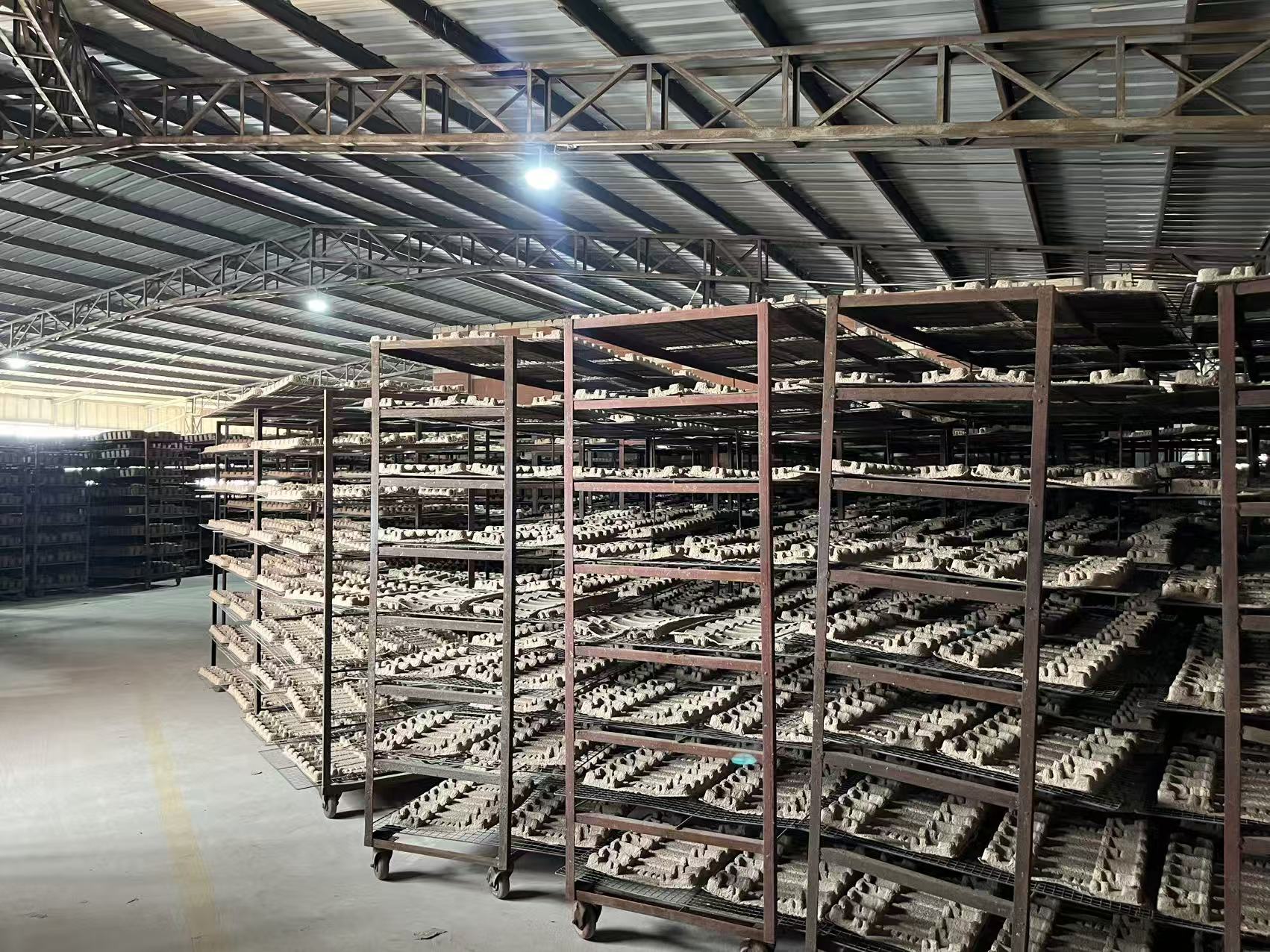
Production process is part of molded pulp material evaluation, especially when buyers need consistent moisture and strength.
Molded pulp packaging has moved well beyond the egg tray niche. Buyers who are deciding between molded pulp, paper, plastic and foam in 2026 are usually not asking whether bio-based packaging is interesting. They are asking whether a switch can maintain protection, fit into a cost model, pass export compliance and be approved by internal decision-makers before order execution.
The important answer is direct: molded pulp should be treated as a formable protective packaging material made from renewable fiber. It has strong regulatory alignment in markets where plastic packaging is restricted or taxed, and its weight and nesting characteristics can reduce logistics cost. It is not a universal replacement. Molded pulp also requires buyers to verify material grade, moisture performance, mold tooling and order quantity before comparing it with plastic, corrugated paper or foam.
Why the 2026 comparison has changed
Independent buyers now compare packaging materials in a different regulatory environment than they did five years ago. In Europe, the Packaging and Packaging Waste Regulation (EU) 2025/40 entered into force on February 11, 2025, and requires all packaging to be recyclable by January 1, 2030. This gives procurement teams a deadline. Packaging choices made after 2026 need to align with a recyclability requirement that is explicit and legally structured.
Market data also points in the same direction. Grand View Research values the global molded pulp packaging market at USD 6.2 billion in 2025 and projects it to reach USD 10.2 billion by 2033. The tray segment accounted for over 41 percent of global revenue in 2025. Asia Pacific dominated the market with a 41 percent revenue share in the same year, with China holding the largest share. For buyers sourcing from Chinese manufacturers, this means packaging suppliers are operating in a growing, export-oriented industry. For healthcare, Mordor Intelligence projects molded pulp for medical devices to grow at an 8.6 percent CAGR, driven by sterilization standards and plastic bans in hospital environments.
All of these signals point to one practical conclusion: molded pulp is no longer a specialty material. It is being specified in consumer electronics, medical devices, cosmetics, food packaging and industrial goods. Buyers therefore need a comparison framework that is not based on vague sustainability claims.
Buyer comparison criteria before looking at suppliers
A material comparison is useful only when the buyer first defines the required performance of the package. For 2026 purchase decisions, four criteria matter most.
1. Product fragility and damage profile
Buyers should ask what the product is exposed to: drop height, stacking load, vibration during transit, humidity, ESD risk, or contact with sharp surfaces. Products like medical devices, consumer electronics and precision parts usually need a cushioning system that fits the product contour. Molded pulp trays can be formed to follow a product shape. Corrugated paper provides strength in box form but does not normally cradle curved or irregular items as precisely. Thin plastic trays can be designed with ribs and compartments, but the material’s environmental profile is now a bigger concern for export shipments.
2. Total cost, not unit price alone
Molded pulp is often slightly higher in unit cost than ordinary plastic packaging, but the total cost calculation can change when plastic taxes, export compliance, logistics space and disposal are included. A molded pulp tray with nested stacking can save warehouse and container space. Space efficiency is not a minor detail in cross-border logistics; it affects freight cost per unit.
3. Regulatory fit
Buyers serving the EU, UK and North America need to compare materials against plastic-packaging regulations and end-of-life requirements. Molded pulp has a practical advantage when the final package is biodegradable, recyclable and simpler to dispose of than plastic or foam. The EU requirement that all packaging be recyclable by 2030 makes it necessary to ask how each material will be received in the destination market.
4. Supplier execution
Material selection does not end at the sample stage. Buyers need to confirm production capacity, mold development, surface finishing, quality inspection, payment terms and delivery method. A packaging material can be excellent in specifications but still fail if the supplier cannot maintain consistency across mass production.
Reference point: molded pulp tray specifications used in this comparison
To keep this comparison concrete, it is useful to look at a supplier that publishes current product and production data. Tonghe Paper Co., LTD, formally Dongguan Tonghe Paper Industry Co., Ltd., is a China-based molded fiber packaging manufacturer. The company was established in 2023, operates a 23,000 square-meter factory, has 160 employees, and reports an annual output of 12,000 tons. Around 50 percent of its output is exported, with main markets in the EU, the United States, Australia, Saudi Arabia, Malaysia and Brazil. It supplies products such as molded fiber, molded pulp trays, custom molded pulp trays, pulp packaging trays, medical device pulp trays, cosmetic packaging pulp trays, food grade molded pulp trays and biodegradable pulp trays.
Its published molded pulp tray parameters are useful as a baseline because they show what a buyer can verify before ordering:
- Raw materials: sugarcane pulp, bamboo pulp, wood pulp, with customization allowed.
- Wet pressure density: 0.15 to 0.25 g/cm³.
- Dry pressure density: 0.28 to 0.45 g/cm³.
- Thickness: 0.8 to 5.0 mm.
- Moisture content: no more than 8 to 12 percent.
- Edge crush strength: 3 to 8 kN/m.
- Compressive strength: 2 to 8 MPa.
- Temperature range: -20 to +80 °C, with food grade types usable at -20 to 120 °C.
These values do not represent every molded pulp product on the market. They are a reasonable documented starting point for comparing molded pulp against plastic, paper and foam.

Finishing operations, such as trimming and cutting, affect final dimensional accuracy and should be covered in a buyer factory checklist.
Protection comparison: molded pulp, plastic, paper and foam
The first function of protective packaging is to prevent damage. Molded pulp trays protect products by supporting them in a cavity made from fiber. The structure can be thickened where impact risk is higher, and it can be designed to hold a product firmly without blocking airflow. In one supplier comparison note, Tonghe Paper reports that molded pulp delivers 25 to 35 percent better cushioning performance than ordinary plastic packaging. That figure is not an industry-wide universal claim; buyers should validate it with actual drop tests. Still, it reflects the fact that fiber-based cushioning is not automatically weaker than thin plastic.
Plastic packaging is durable and water-resistant, and it can be manufactured at high speed. Its main weakness is environmental and regulatory, not mechanical. Foam inserts often provide excellent shock absorption for fragile products, but they are more likely to be evaluated for disposal cost and sustainability. Corrugated paper is strong under compression when used as a box, but it is less suitable for shock protection around curved objects unless it is combined with other inserts.
Molded fiber trays also offer several built-in properties that matter in protection: anti-corrosion, moisture resistance and anti-static behavior are mentioned by Tonghe as characteristics of its thickened fiber structure. Anti-static properties are relevant for electronic products. The natural fibers form a dense protective layer that absorbs vibration and reduces the chance of surface damage. Buyers should ask for a product-specific sample test, because protection depends on geometry, material thickness and fiber density.
Cost comparison: does molded pulp cost more?
A 2026 buyer comparison cannot stop at the purchase order price. Packaging cost includes material unit price, tooling, factory inspection, freight, storage, damaged-goods cost and compliance exposure.
According to the comparison data supplied by Tonghe Paper, molded pulp has a slightly higher unit cost than ordinary plastic packaging. The same data notes that the overall compliance cost for EU export can be lower because molded pulp does not carry the same plastic-tax surcharges. This is the core cost logic for many export-oriented buyers: a higher unit price can be acceptable if it reduces regulatory risk and avoids plastic taxes.
Space efficiency is another cost factor. Tonghe reports that molded pulp packaging can save 40 to 60 percent of space through nested stacking. In a warehouse or container, nested trays allow more products per pallet. The same supplier states that its molded packaging is approximately 50 percent lighter than traditional hard gift boxes. Lightweight packaging reduces shipping weight and can improve stacking stability. For buyers who compare materials strictly by per-piece price, these logistics savings may be invisible.
Paper and corrugated packaging can be cost-competitive, especially when the packaging structure is simple. Foam is often inexpensive at the material level and very light, but its volume and disposal characteristics can erase part of the advantage. The final comparison should be based on cost per protected product delivered to the destination market, not cost per empty tray.
Regulatory and sustainability comparison
Regulation is now one of the strongest reasons buyers switch from plastic packaging to molded pulp. The EU’s Packaging and Packaging Waste Regulation, (EU) 2025/40, is a concrete example. From January 1, 2030, packaging placed on the EU market must be recyclable. This deadline applies to plastic, paper, foam and molded pulp. But a fiber-based molded tray has a more direct path to paper recycling and industrial composting than a multi-layer plastic blister.
Tonghe Paper states that its raw materials support complete recycling and circulation, and that its molded pulp products can achieve 100 percent biodegradation in a natural composting environment within 28 days. This is a manufacturer-specific claim, and buyers should not assume all molded pulp products behave identically. Still, it illustrates the material category’s advantage: molded pulp can be designed from natural plant fibers without adding harmful chemical additives.
The supplier also states that its products comply with international environmental standards including SGS RoHS and PFAS-free requirements. Buyers should request the relevant test reports directly. Compliance is not established by a general company statement; it must be linked to the exact product model, color, coating and production batch.
Application fit: where molded pulp trays are already used
Buyers at the decision and execution stage need to know where molded pulp is an acceptable replacement and where it is still being qualified.
Consumer electronics and lighting
Molded pulp electronics trays and lamp packaging can be designed with cavities that hold the product during transit. Anti-static behavior and shock absorption make this a serious alternative to foam or plastic cushioning. Because electronics products have high value and fragile screens, the supplier should produce samples and run drop tests before mass production.
Food and fresh produce
Food grade molded pulp trays are available for disposable food packaging and fresh produce applications. The published temperature range for food grade molded pulp trays is -20 to 120 °C. This allows use in cold chains and contact with hot food in certain service environments. Buyers should confirm food-contact documentation, coatings and raw material origin.
Medical devices
Medical device pulp trays are used in sterile barrier packaging and shipping packaging. Mordor Intelligence projects this segment to grow at 8.6 percent CAGR, supported by sterilization requirements and hospital plastic bans. Medical buyers should evaluate fiber cleanliness, particle control, packaging validation and compatibility with sterilization methods.
Cosmetics, gifts and wine
Cosmetic packaging pulp trays are used inside premium boxes. The manufacturer’s profile points out that molded pulp can include special coating, embossing and printing. This allows brands to add texture and color while avoiding heavy plastic inserts.
Industrial and hardware goods
Molded pulp can be used for auto parts, hardware, sanitary ware, toys and household appliances. In these cases, the buyer usually needs a more rugged tray with higher density and thicker fiber walls.
One limitation buyers should not ignore
Molded pulp has real boundaries. It is a fiber-based material with moisture content of 8 to 12 percent in standard product specifications. Storage areas should be well-ventilated and dry, and prolonged exposure to direct sunlight should be avoided. If a molded pulp tray is used in a high-humidity environment without proper coating, its stiffness can change. Buyers should define the warehouse and shipping climate before approving the design.
Another limitation is order quantity and tooling. Custom molded pulp trays require molds. A common supplier minimum order is 1,000 pieces. Delivery methods can include FOB, CIF, CFR and EXW; acceptance is typically based on PSI; payment can be by L/C. These conditions are normal but they make molded pulp different from buying stock plastic boxes with no minimum customization. Buyers who need 100 unique inserts may face higher engineering and tooling allocation.
| Criterion | Molded pulp trays | Paper / corrugated | Plastic packaging | Foam inserts |
|---|---|---|---|---|
| Shape fit | High, can follow product contour | Moderate, mainly box and partition forms | High, but design depends on mold | High, but often bulky |
| Shock protection | Good, fiber structure absorbs impact | Less effective for curved fragile products | Can be effective, less favorable in export compliance | Very light, high shock absorption |
| Unit cost | Slightly higher than ordinary plastic | Cost competitive for simple shapes | Usually low | Usually low material cost |
| Compliance fit | Favorable if packaging is recyclable or compostable | Recyclable paper if not contaminated | Faces plastic taxes and recycling registration | Fossil-based, less harmonized recycling |
| Storage | Nested stacking can save 40-60% space | Flat stacks efficient | Nested designs possible | Bulky in use, compact after manufacturing only if stackable |
| Limits | Moisture and storage conditions require control | Limited cushioning geometry | Long-term degradability issue | End-of-life and regulatory exposure |
This table is a general orientation, not a material certificate. Buyers should replace each cell with test data from their own product, distribution route and destination market.
Future outlook for molded pulp and competing materials
Molded pulp will continue to gain share as long as recyclability requirements and plastic restrictions remain in force. The EU recyclability deadline in 2030 gives procurement teams a specific date to design toward. Market projections from Grand View Research and Mordor Intelligence show continued expansion in global demand and in the medical segment. At the same time, plastic packaging will remain cost-effective for many domestic applications, and foam will remain difficult to replace for products that need very high shock absorption at low weight.
In the long term, the strongest competitive position will belong to packaging suppliers that can integrate mold design, mass production and finishing. Many molded pulp manufacturers on the market still focus on simple shapes and standard products. The supplier that controls in-house mold development and can adjust fiber density, thickness and surface treatment offers a clearer path for OEM buyers.
Frequently asked questions
It depends on the packaging design and fiber density. A documented molded pulp tray can have compressive strength of 2 to 8 MPa and edge crush strength of 3 to 8 kN/m. In one supplier comparison note, molded pulp was reported to be 25 to 35 percent better in cushioning performance than ordinary plastic packaging. Because this is a supplier-level claim, buyers should test actual product samples under their own shipping conditions.
Molded pulp often has a slightly higher unit cost than ordinary plastic packaging. The total cost can be lower when the comparison includes plastic-tax charges, export compliance, logistics space and disposal cost. Buyers should include freight and storage in the comparison, not only the purchase price of the tray.
Food grade molded pulp trays are available. Published parameters show an applicable temperature range of -20 to 120 °C for food grade materials. For medical devices, manufacturers offer medical device pulp trays, and market research indicates an 8.6 percent CAGR for this segment. Buyers should confirm food-contact approvals, medical packaging validation and any sterilization requirements with the supplier.
According to published procurement conditions, the MOQ for custom molded pulp trays can be 1,000 pieces. Common delivery methods are FOB, CIF, CFR and EXW, with acceptance by PSI and payment by L/C. Buyers should also confirm the payment terms, tooling cost and lead time before sampling.
Both are fiber-based, but they perform different functions. Corrugated paper offers box rigidity and is efficient for shipping cartons. Molded pulp is designed to fit a specific product shape and to absorb shock. Buyers should compare shape adaptability, cushioning, logistics space and disposal path rather than assuming that all paper materials are interchangeable.
Have Questions or Need More Details?
Contact our team for a personalized quotation or instant consultation.
Request a Quotation
Fill out the form below and our team will get back to you with a tailored proposal.
WhatsApp Direct Chat
Prefer to chat in real-time? Message us on WhatsApp for instant assistance & quick answers.
- Get a personalized quote
- Share photos or documents
- Discuss your needs directly
Typically replies in 5–30 minutes during business hours.