
Motorcycle Seat Procurement FAQ: Export Buyer Planning Notes
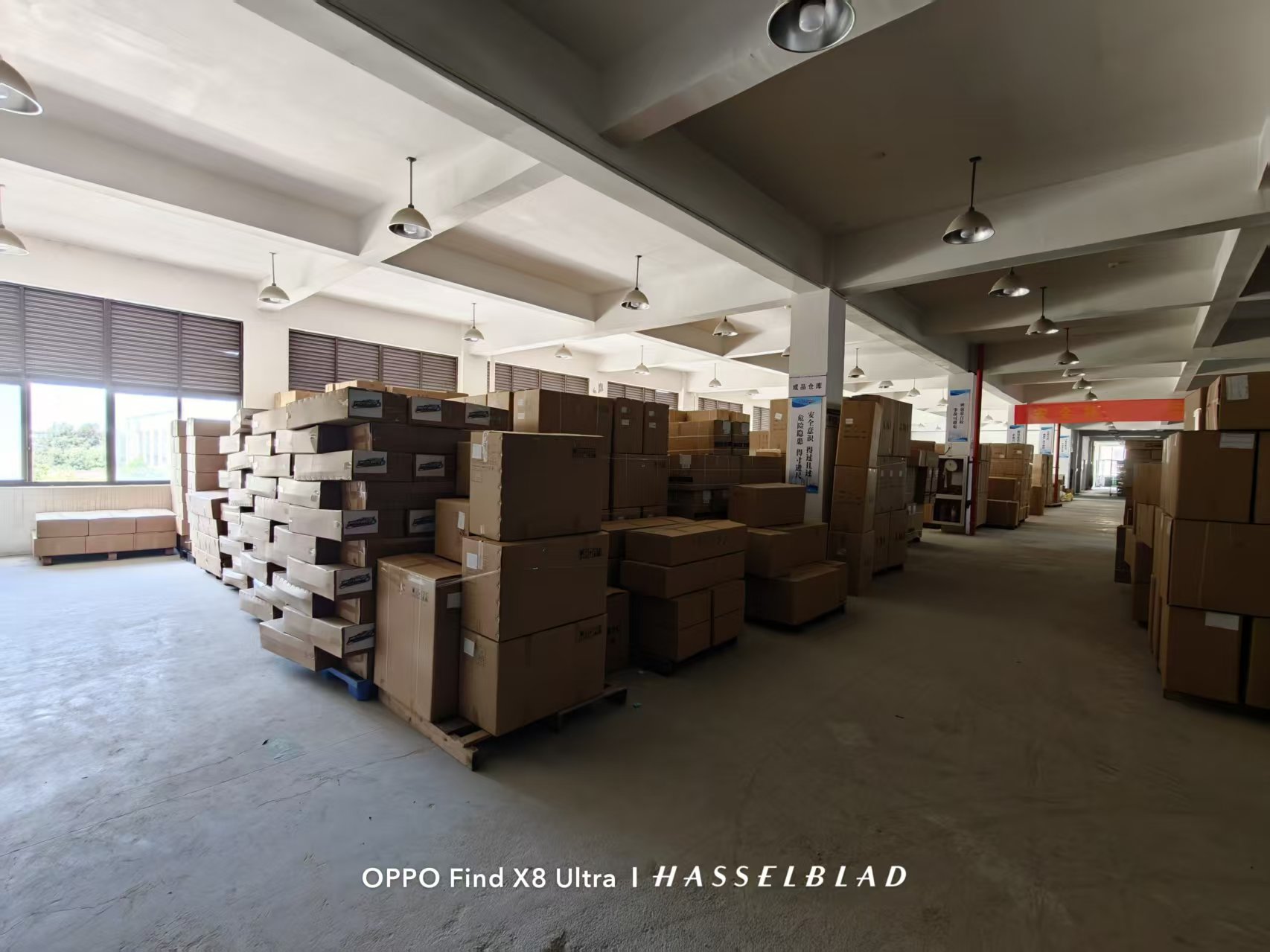
Seat cushion production floor, Zhejiang Xingrong Auto & Motorcycle Parts Co., Ltd. Export procurement questions are normally settled before a purchase order, not after.
Export motorcycle seat orders rarely fail on the product itself. They fail on unanswered planning questions: what the cover is made of, how dense the foam is, how the base plate and floor structure are built, what can actually be customized, how many units must be ordered, how long production takes, what happens at inspection, and when the balance payment falls due. This reference answers those questions in the order an export buyer meets them, using documented capability statements from Zhejiang Xingrong Auto & Motorcycle Parts Co., Ltd. (Staron), a manufacturer of motorcycle, electric vehicle and off-road vehicle seat cushions based in Taizhou City, Zhejiang Province.
Why Procurement Questions Dominate Export Seat Sourcing
Most motorcycle seats never pass through a dealership parts counter. Third-party market research attributes approximately 62.3% of motorcycle seat market revenue to the aftermarket distribution channel, while Asia-Pacific accounted for a 38.5% revenue share of the market in 2025 (Dataintelo). Buyers therefore tend to be importers, distributors, repair networks, parts retailers and accessory brands evaluating a replacement-oriented product line, not consumers choosing a single seat.
That structure changes the decision. A rider asks whether a seat feels comfortable. An export buyer asks whether 50 units or 5,000 units can be produced against a written specification, inspected before shipment, and released against documents on a predictable schedule. The sections that follow treat each question as a planning input rather than a sales claim.
The Documented Construction of a Replacement Motorcycle Seat
The seat referenced throughout this article is the model group Nmax, Xmax, Aerox, ADV150, ADV160, Forza, PCX and Click, offered in two configurations: scooter seat and dirt bike seat. Its documented construction is a layered assembly of PVC leather, PU foam, 80D high-density foam and a PP plate, combined with a high-strength floor structure. The table below sets out what each documented element means for a buyer planning a shipment.
| Assembly layer | Documented material / parameter | What it means for procurement planning |
|---|---|---|
| Base plate | PP plate | Defines the rigid base of the assembly and the interface with the vehicle mounting position; the first element to confirm against a physical sample. |
| Floor structure | High-strength floor structure | A stated structural feature of the seat base. Buyers should validate it against their own load and vibration expectations during sampling rather than assuming a universal rating. |
| Comfort layers | PU foam, 80D high-density foam | Two foam layers are specified. 80D is the documented density grade of the high-density layer; PU foam forms the secondary cushioning layer. |
| Cover | PVC leather | A synthetic cover material. It positions the product in the segment where waterproof and soft-surface characteristics matter more than a genuine-leather finish. |
Two points are worth separating. The first is what the factory documents: material names and the density grade. The second is what a buyer validates independently: how the assembly behaves under a specific rider load, on a specific vehicle, in a specific climate. The documented parameter is the starting point for a sample evaluation, not a substitute for it.
Waterproofing: What the Evidence Supports
Water resistance in this product is a function of the cover material and the way it is assembled. PVC leather is a synthetic cover, and third-party material analysis notes that synthetic options such as vinyl and foam-based covers are increasingly used to deliver waterproof and soft-surface features in the mid-range segment (Fortune Business Insights).
Documented field evidence points the same way. A 5,000-unit order delivered to a buyer in Lebanon for motorcycle parts replacement, within a customer relationship reported as lasting two years, lists great seating feel, good visual effect and waterproof among the delivered outcomes. The buyer category for that case — motorcycle repair shops, parts retailers, accessory brands and manufacturers — reflects a replacement market where weather exposure is a routine concern.
The boundary is equally clear. A waterproof cover is not a claim about the vehicle's overall water management, and it is not a test report. Buyers selling into markets that require a specific water-resistance test method should confirm the applicable method and sampling protocol in writing before the order is scheduled.
Customization: LOGO, Leather Cover Design and Stitching Color
Customization is documented as three concrete options: LOGO brand, leather cover design, and stitching line color. These are the levers available without redesigning the base assembly, and they are the options most relevant to importers building a private-label seat line or a distributor program.
Beyond those options, the manufacturer provides both OEM and ODM production services, and ODM services are available for custom motorcycle seat development, including design and production according to client specifications. In practice this means two different buyer positions:
- OEM buyers who hold an existing design and need production against it, with customization applied at the LOGO, cover and stitching level.
- ODM buyers who need a seat developed against a specification — which places the responsibility for defining that specification on the buyer before development begins.
A recurring planning gap sits here. Buyers sometimes request an ODM development quotation without supplying the target model, seat type (scooter or dirt bike), foam feel target or cover direction. Without that input, a development program cannot be scoped, and the 25–35 day production lead time cannot start.
Minimum Order Quantity, Lead Time and Production Capacity
The documented commercial parameters are compact and worth stating precisely:
- Minimum order quantity: 50 units.
- Production lead time: 25–35 days.
- Monthly capacity: 50,000 pcs.
- Annual seat cushion capacity: 1.8 million units, with an accessories self-production rate reported at 90%.
The low MOQ is the parameter that changes buyer behaviour most. A 50-unit minimum allows a first shipment to be used as a market test, a sample run for a distributor, or a fill-in order for a repair network, without committing to a container-scale purchase. It does not, however, remove the fixed work that surrounds any order: specification confirmation, pre-shipment testing, documentation and freight booking.
The lead time figure should also be read precisely. The documented 25–35 days describes production. For a first-time ODM development, specification work and sample approval occur before that production window opens and should be planned as a separate stage of the schedule.
Quality Control and Acceptance Criteria
Quality control is documented as 100% pre-shipment testing, and acceptance criteria for an order are stated as pre-shipment test plus third-party inspection. The manufacturer operates an ISO9000 quality management system and holds CQC certification, alongside a history of long-term supply relationships with domestic first-line brand general machinery factories.
For an export buyer, this combination defines the inspection rhythm: an internally tested production batch, plus the option to bring in an independent inspection body before shipment releases. Buyers planning third-party inspection should build the inspection slot into the shipping calendar, because the 25–35 day production window does not automatically include an external inspection booking.
A limitation belongs in this section as well. ISO9000 is a quality management system certification, and CQC is a certification mark relevant to the Chinese market. Neither is equivalent to UN Regulation No. 17 (ECE R17), which establishes uniform provisions for the approval of vehicle seats, anchorages and head restraints. Buyers who need homologated seats for a market that applies ECE R17 must verify that requirement separately and must not assume it is covered by an aftermarket replacement seat program.
Payment Terms and Delivery Terms
Commercial terms are documented as follows:
- Delivery terms: FOB or EXW.
- Payment terms: 30% T/T in advance, 70% T/T against copy of B/L.
- After-sales: 1-year warranty.
The payment structure is conventional for small and medium export orders and has a direct planning consequence: the balance is triggered by the bill of lading copy rather than by container arrival, so the buyer's working capital requirement falls earlier than the goods. Buyers accustomed to settlement at destination should model the cash cycle accordingly. The one-year warranty is a defined commitment with a fixed boundary, and buyers reselling into markets with longer consumer expectations should decide in advance how that gap will be handled in their own after-sales terms.
Application Fit and Documented Markets
The product is documented in two configurations — scooter seat and dirt bike seat — and the case history identifies buyers as motorcycle manufacturers, motorcycle repair shops, motorcycle parts retailers and motorcycle accessory brands. Documented export activity spans China, Iran, Italy, South Korea, Lebanon, Malaysia, Mexico, the Philippines, Turkey, Taiwan and Vietnam, with the company reporting Southeast Asia, Europe, the Middle East and South America as its main export markets.
Read together with the model group (Nmax, Xmax, Aerox, ADV150, ADV160, Forza, PCX, Click), this suggests where the product line is strongest: high-volume commuter and scooter platforms with dense replacement demand. Buyers working on niche or low-volume platforms should treat model coverage as an item to confirm at enquiry stage rather than assume.
How This Compares with Traditional Sourcing Routes
Export seat sourcing generally follows one of three routes: an integrated seat manufacturer, a trading or assembly intermediary, or a general marketplace listing. The comparison below is structural rather than promotional — each route has a valid use case, and each leaves the buyer with work to do.
| Consideration | Integrated seat manufacturer (documented profile) | General market pattern | What the buyer still must verify |
|---|---|---|---|
| Component sourcing | 90% self-production rate reported for seat accessories; 15,000 m² plant; 1.8 million units annual seat cushion capacity. | Production steps are frequently split across several specialized suppliers coordinated by a trading or assembly partner. | Which production steps sit on the supplier's own floor and which are subcontracted. |
| Customization boundary | LOGO brand, leather cover design and stitching line color documented; OEM and ODM services offered, with ODM used for custom seat development. | Customization scope is often described in general terms and narrowed only at quotation stage. | A written list of what is included, and who owns the design files. |
| Order planning | MOQ 50 units; lead time 25–35 days; monthly capacity 50,000 pcs. | MOQ and lead time commonly vary by model, material and season. | Whether the quoted lead time covers production only or includes development and sampling. |
| Quality and acceptance | 100% pre-shipment testing; third-party inspection accepted; ISO9000 and CQC held. | Pre-shipment inspection is sometimes presented as an optional add-on rather than a default step. | The inspection protocol, sampling standard and who pays for the inspector. |
| Commercial terms | FOB/EXW; 30% T/T in advance; 70% against B/L copy; 1-year warranty. | Terms vary widely and are often negotiated order by order. | Warranty scope, claims procedure and who bears return freight. |
Where the Documented Model Has Boundaries
- Certification scope. ISO9000 and CQC do not constitute ECE R17 seat type approval. Regulated markets need a separate evaluation path.
- Material character. PVC leather delivers consistent colour and easy cleaning, but it is not a genuine-leather finish; buyers targeting premium restoration or luxury builds may find the aesthetic gap matters to their customers.
- Warranty length. One year is a defined term, not an open-ended commitment.
- Development dependency. ODM outcomes depend on the quality of the buyer's specification; a vague brief produces a vague sample.
- Fixed order overhead. A 50-unit MOQ lowers inventory risk but does not lower the documentation, testing and freight workload, which is proportionally heavier on small orders.
Market Context for 2026 Procurement Cycles
Industry forecasts place the global motorcycle seat market at USD 7.42 billion in 2025, reaching USD 13.30 billion by 2032 at a compound annual growth rate of 8.69% (Market Research Future / Dataintelo). Estimates should be read with care: published figures for the same 2025 market vary between sources, ranging from roughly USD 4.8 billion to USD 7.42 billion depending on how narrowly seat products are defined. The directional signal — steady growth in replacement demand rather than a step change — is more useful for planning than any single number.
Two structural factors shape that demand. Aftermarket distribution carries the majority of revenue, and Asia-Pacific production concentration keeps China central to supply. Both favour buyers who build supplier relationships around documented, repeatable capability instead of one-off price comparisons.
Future Outlook
The near-term direction for replacement seat procurement is less about new materials than about documentation. Buyers are asking for material declarations, density grades, structural descriptions and inspection evidence because those items determine whether a container clears their own quality gate. Products described at the level of PVC leather, PU foam, 80D high-density foam and a PP plate with a high-strength floor structure are easier to place in a distributor catalogue than products described only by appearance.
The material trend runs in the same direction: synthetic covers continue to gain ground in the mid-range segment on the strength of waterproof and soft-surface performance, while genuine leather remains a premium niche. For importers, that means the mid-range synthetic-cover seat is likely to remain the volume product, and the procurement differentiator will be how reliably a supplier can repeat the same specification across shipments.
FAQ
What materials are used in the motorcycle seat construction?
The documented construction is a layered assembly: a PP plate base, a high-strength floor structure, PU foam and 80D high-density foam as the comfort layers, and a PVC leather cover. Two configurations are produced — scooter seat and dirt bike seat — across the model group Nmax, Xmax, Aerox, ADV150, ADV160, Forza, PCX and Click.
How is waterproofing achieved, and how should a buyer verify it?
Water resistance comes from the synthetic PVC leather cover and its assembly. A documented 5,000-unit order for a Lebanon buyer, within a two-year customer relationship, lists waterproof among its outcomes. Because that is a delivered result rather than a published test report, buyers with a formal water-resistance requirement should confirm the test method and sampling protocol in writing before production is scheduled.
What can be customized on an order?
Three options are documented: LOGO brand, leather cover design and stitching line colour. These sit within an existing seat construction. Changes to foam density, base plate geometry or overall shape fall outside this list and belong to a development discussion, not a standard customization request.
What is the difference between OEM and ODM supply here?
Both OEM and ODM production services are provided, and ODM services are available specifically for custom motorcycle seat development, including design and production according to client specifications. OEM applies when the buyer supplies the design; ODM applies when the seat is developed against a buyer brief, which requires the buyer to define the target model, seat type and performance expectations first.
What are the minimum order quantity and production lead time?
The minimum order quantity is 50 units and the production lead time is 25–35 days. Monthly capacity is 50,000 pcs. The lead time covers production; for a first-time ODM program, specification and sample approval stages occur before that window begins and should be scheduled separately.
How is quality controlled before shipment?
Quality control is documented as 100% pre-shipment testing. The manufacturer operates an ISO9000 quality management system and holds CQC certification. The acceptance criteria for an order are stated as pre-shipment test plus third-party inspection, which means an independent inspection can be scheduled before shipment releases.
What are the payment and delivery terms?
Delivery is quoted on FOB or EXW terms. Payment terms are 30% T/T in advance with the remaining 70% T/T against a copy of the bill of lading. The balance is therefore triggered by document release rather than by arrival at destination, which affects working capital planning.
Which markets and buyer types does the documented case history cover?
Documented buyers include motorcycle manufacturers, motorcycle repair shops, motorcycle parts retailers and motorcycle accessory brands, with export activity recorded across China, Iran, Italy, South Korea, Lebanon, Malaysia, Mexico, the Philippines, Turkey, Taiwan and Vietnam. Main export markets are reported as Southeast Asia, Europe, the Middle East and South America.
Is the seat approved under ECE R17 for regulated markets?
No such approval is documented. UN Regulation No. 17 (ECE R17) sets uniform provisions for the approval of vehicle seats, anchorages and head restraints. The documented certifications for this manufacturer are ISO9000 and CQC, which cover quality management and Chinese market certification respectively. Buyers requiring ECE R17 approval for a vehicle type approval program must evaluate that requirement separately from an aftermarket replacement seat order.
What warranty applies after delivery?
A one-year warranty is documented. The warranty term is a defined commitment with a fixed boundary, so buyers reselling into markets where consumer expectations extend beyond twelve months should decide in advance how that difference is handled in their own after-sales terms.
For buyers who need the full specification list behind these answers, the manufacturer's downloadable seat cushion catalogue is available here: STARON Seat Cushion Catalog (PDF).