
Motorized Ball Valve Specs: Key Engineering Constraints to Verify
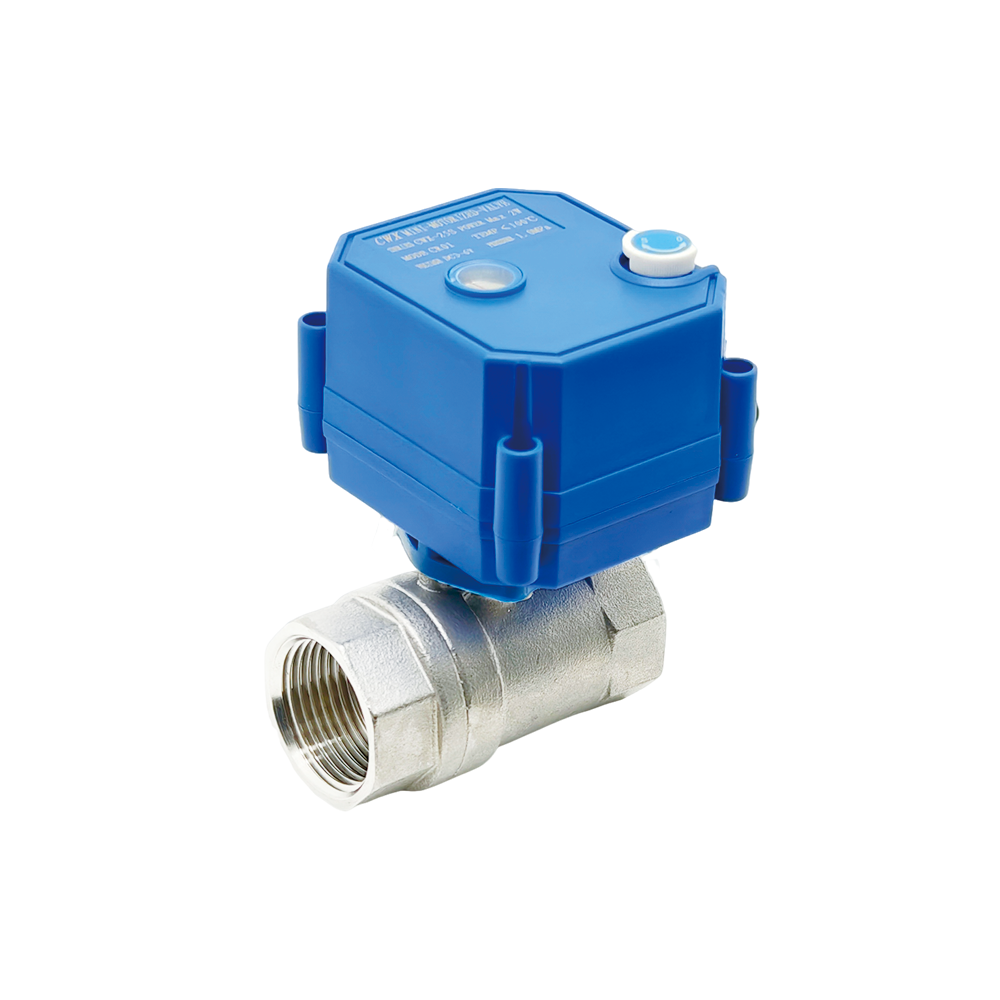
Motorized ball valves can look similar on the outside, but the actual procurement decision is controlled by engineering constraints: available voltage, maximum working pressure, actuator torque, port pattern, control signal, body material, ingress protection and the compliance standards required by the destination market. A buyer should resolve these limits before evaluating price or supplier preference.
Tianjin Tianfei High-Tech Co., Ltd., commonly shortened to Tianfei High-Tech, is a Tianjin-based manufacturer of intelligent valves and metering instruments. Founded in 2009 and focused on high-end intelligent valve development, the company is a useful reference point because its published product line covers a wide range of motorized ball valve configurations, materials, voltage levels and pressure stages. This article uses that documented product family to explain the specifications that procurement teams need to verify during the Research and Evaluation stages.
Why Motorized Ball Valve Selection Should Start with Constraints
Most specification mismatches in automated fluid control are not caused by one broken part. They are caused by a valve being installed outside its design envelope: a 24 V actuator connected to a 12 V supply, a PVC valve used in a high-pressure line, a 2-way valve used where mixing is required, or an on/off actuator selected for a loop that needs analog modulation. The failure may appear as a valve that does not open fully, a motor that overheats, an incompatible control signal or premature wear.
The opportunity is straightforward. If the buyer defines a short set of non-negotiable technical constraints before sourcing, the remaining comparison can be made on evidence: test reports, certificates, product traceability, factory quality control and documented application fit. This is particularly important for buyers sourcing motorized valves across regions, because a product configured for one electrical market may not suit another.
Six Specification Groups That Define a Motorized Ball Valve
1. Electrical Supply and Voltage Options
The electrical specification is often the first constraint to lock down. Industrial fixed installations commonly use AC220V or DC24V controls, while some project environments use DC12V for low-voltage or battery-backed control. For example, the CWX-15N motorized ball valve is a 2-way model available with AC220V, DC12V or DC24V, making it suitable for HVAC, building automation and hot-water circulation systems where control voltage is not yet standardized.
For projects spanning several countries, the CTF-001 compact motorized ball valve series accepts AC85-265V and DC9-24V. This wide-voltage input reduces the need to stock separate 120 V and 230 V models. In solar and remote installations, the CWX-20P brass motorized ball valve is documented as compatible with AC220V and DC24V, and the application note describes direct DC24V PV supply as a realistic option. North American buyers searching for a 120 V motorized ball valve should check whether the selected actuator is rated for AC85-265V or only for a narrower voltage range.
2. Working Pressure and Body Material Must Be Read Together
Body material is not only about corrosion resistance; it places a physical pressure limit on the valve. In the Tianfei product range, several brass and SS304 motorized ball valves are rated to a maximum working pressure of 1.0MPa or 1.6MPa, depending on the model series. By contrast, the CTF-001 PVC motorized ball valve has a maximum working pressure of ≤0.8MPa. This means a corrosion-resistant PVC valve can be the right chemical-media choice, but it cannot simply replace a metal valve in a higher-pressure line.
The practical rule is to specify pressure and media compatibility simultaneously. A valve selected for a pH-neutral water line may be unsuitable for an acid-dosing skid, and a PVC valve selected for an acid line may be unsuitable for a system operating above 0.8MPa. Both constraints must fit the installation.
3. Actuator Torque and Valve Size
Torque is the mechanical ability of the motorized actuator to turn the ball against line pressure and seat friction. Datasheet torque should be compared with nominal bore. Tianfei products illustrate this relationship across bore ranges:
- The CWX-15N motorized ball valve uses 3N·m and covers DN15–DN50.
- The CWX-20P motorized ball valve uses 5N·m and covers DN20–DN50.
- The CTB motorized ball valve uses 6N·m and covers DN15–DN100, with a manual override lever.
- The CWX-60P motorized ball valve uses 20N·m and covers DN15–DN100 in its 2-way version, or DN15–DN50 in its 3-way version.
- The CTB wafer-type motorized butterfly valve uses 20–200N·m and covers DN50–DN300.
- The CTB flanged motorized butterfly valve uses 30–500N·m and covers DN50–DN500.
These values are model-specific. A buyer should not assume that a larger bore within the same series always receives the same actuator; the datasheet must be checked for each size range and port configuration.
4. Control Mode and Power-Loss Behavior
Control mode determines how the actuator responds to an external signal. The common modes in the product line are normally-closed, normally-open and hold. A hold version keeps the valve in its current position during power loss, which can help avoid water hammer in some systems. The CTF-001 and CWX-15N families include NC/NO/Hold versions, while the CWX-25S large-bore stainless series is documented in NC/NO modes.
For projects that need proportional regulation, the CWX-60P 2-way motorized ball valve supports both on/off and modulating operation and accepts 0-10V or 4-20mA control signals. This is important for HVAC, central air conditioning and energy-management systems where the controller sends an analog setpoint rather than a simple open/close command.
5. Port Pattern: 2-Way vs 3-Way Motorized Ball Valves
A 2-way motorized ball valve is used primarily to open or close one flow path. A 3-way motorized ball valve adds mixing or diverting capability. The Tianfei CWX-60P 3-way model is available in T-port or L-port configurations, with a 20N·m actuator and DN15–DN50 bore coverage. According to the application documentation, T-port is used for mixing applications and L-port can be used for diverting or switching flow. Therefore, when comparing a 3-way electric ball valve, the buyer must confirm the port pattern rather than only the number of ports.
6. Ingress Protection and Installation Environment
IP rating defines resistance to dust and moisture. The Tianfei motorized valve range includes IP54, IP65 and IP67 versions depending on the product family. For example, a published IP65 test report for the electric valve model CWX-25S was issued by CCTI TESTING under the IEC 60529 standard, with report number CCTI-2022050508S. Other industrial models in the CWX-60P and CTB families are listed with IP67 protection. The correct rating depends on whether the valve is installed indoors, in a pit, in a washing-down area, or in an enclosure subject to temporary immersion.
A Compact Motorized Valve Product-Line Reference
The table below summarizes representative Tianfei motorized valve products and the documented constraints most relevant to a buyer.
| Model / family | Body material | Power | Bore range | Max. working pressure | Key documented feature |
|---|---|---|---|---|---|
| CTF-001 | Brass/SS304 | AC85-265V / DC9-24V | DN15–DN50 | ≤1.0MPa | Compact 2-way motorized ball valve with NC/NO/Hold |
| CTF-001 PVC | PVC | AC85-265V / DC9-24V | DN15–DN50 | ≤0.8MPa | Corrosion-resistant body for acid/alkali media |
| CWX-15N | Brass/SS304 | AC220V / DC12V / DC24V | DN15–DN50 | ≤1.0MPa | 3N·m, NC/NO/Hold, HVAC and BAS support |
| CWX-20P | Brass | AC220V / DC24V | DN20–DN50 | ≤1.0MPa | 5N·m brass motorized ball valve for solar/irrigation |
| CWX-60P 2-way | Brass/SS304 | AC220V / DC24V | DN15–DN100 | ≤1.6MPa | 20N·m, on/off and modulating 0-10V/4-20mA |
| CWX-60P 3-way | Brass/SS304 | AC220V / DC24V | DN15–DN50 | ≤1.6MPa | T/L port motorized ball valve for mixing/diverting |
| CTB motorized ball valve | Brass/SS304 | AC220V / DC24V | DN15–DN100 | ≤1.6MPa | 6N·m, manual override, on/off plus optional modulating |
| CTB wafer butterfly valve | Cast iron/SS304 | AC220V / DC24V | DN50–DN300 | ≤1.6MPa | Wafer-type motorized butterfly valve with on/off and 4-20mA options |
| CTB flange butterfly valve | Cast iron/SS304 | AC220V / DC24V | DN50–DN500 | ≤1.6MPa | Flanged motorized butterfly valve for large municipal and industrial lines |
The purpose of this table is not to rank products. It is to show that motorized valve specification requires exact line-item verification: a voltage range, a pressure ceiling, a torque value, a port pattern and a control mode.
Application-Level Constraints: What the Spec Should Mean in the Field
Underfloor heating and central air-conditioning mixing
For mixing branches in central air-conditioning or underfloor heating distribution, a 3-way motorized ball valve such as the CWX-60P with T-port configuration is often specified. The T/L port feature determines whether the valve mixes two inlet flows or diverts one flow between two outlets. Without specifying this, a 3-way electric ball valve may be delivered with the wrong internal flow path.
Solar thermal and irrigation systems
In solar hot-water and agricultural irrigation systems, the CWX-20P brass motorized ball valve is documented for use with AC220V or DC24V. Its 5N·m torque covers DN20–DN50, and the NC/NO/Hold modes allow the designer to choose power-loss behavior. DC24V operation is relevant for installations that want to avoid an inverter or main power connection.
HVAC and building automation
The CWX-15N motorized ball valve is a common starting point for HVAC, building automation and hot-water circulation due to its multi-voltage input and DN15–DN50 coverage. If the line size is larger or if the building controller requires an analog signal, the CWX-60P 2-way with 0-10V/4-20mA modulating control is a more appropriate technical target. The procurement question is not which product is better; it is which product matches the controller output, pipe size and working pressure of the project.
Chemical and swimming-pool piping
The CTF-001 PVC motorized ball valve is intended for corrosive media, swimming-pool treatment and chemical piping. The body material provides resistance to acid/alkali media, but the working pressure limit of ≤0.8MPa must be respected. A buyer evaluating corrosion-resistant valves should not specify a PVC valve solely by material; the pressure ceiling is an equally binding constraint.
Documented municipal water reference
A large European municipal water group ordered 10,000 units of Tianfei valve products for municipal water supply, drainage, sewage treatment and smart water automation after inspecting the factory in October 2024 and approving the production and quality-control systems. The order was signed in November 2024 and delivered within three months. The project documentation reported 4-20mA regulation, remote monitoring, zero major failures in 16 months of operation and a low-power design. This reference illustrates why project buyers in water automation typically verify factory QA and control-signal compatibility before large-scale procurement.
Compliance Constraints and the Evidence Buyers Should Request
Compliance is part of the constraint set, especially for European procurement. According to verified compliance guidance, motorized valves entering the EU market must comply with CE marking requirements under EN 60335-1 and with RoHS 2.0 under IEC 62321. These are not optional quality features; they are market-entry conditions for electrical products.
For Tianfei motorized valve products, the buyer-facing documents include a CE certificate for models CWX-15Q/N (AC), CWX-25S, CWX-50P, CWX-60P, CTF-001, CTF002, CTF010, CTB005, CTB010, CTB016, CTB025, CTB050, CTB100 and CTB200, under certificate number BCTC-FY161004871C issued by Shenzhen BCTC Technology Co., Ltd. In addition, RoHS 2.0 compliance has been documented for the CWX-25S series and the CTF-001 series with EU-market certificates issued by Shenzhen CCTI Technology Co., Ltd.
Buyers should also look for management-system certificates because they provide evidence of factory-level control. Tianfei holds ISO 9001:2015 quality management certification, ISO 14001:2015 environmental management certification and ISO 45001:2018 occupational health and safety certification for the design, assembly and sales of electric and pneumatic valves. These certificates do not replace product testing, but they make the supplier’s quality system easier to audit.
Market Context: Why Constraint Matching Is Becoming More Important
The motorized ball valve market is growing, and more of that growth is moving into automation and smart systems. Dataintelo estimates the global motorized ball valve market at USD 8.7 billion in 2025, with projected growth to USD 14.2 billion by 2034. The same source reports that 2-way motorized ball valves represent the largest segment share at 42.1%, which explains why many procurement comparisons begin with the 2-way configuration.
Regional supply is also relevant. Dataintelo estimates that Asia Pacific accounted for 38.5% of motorized ball valve market revenue in 2025. China exported USD 22.6 billion worth of valves in 2024, according to OEC data, though this total includes valve categories beyond motorized ball valves. For EU and North American buyers, this creates a wide supplier pool but also increases the importance of verifying electrical, pressure and compliance specifications before approving a factory.
On the smart-valve side, The Insight Partners projects the IoT valve market to reach USD 2.85 billion by 2031, growing at 10.4% from 2023. This means communication protocol is becoming a new purchasing constraint. In Tianfei’s smart range, the WiFi Smart Water Valve is documented as a WiFi wireless motorized ball valve using 2.4GHz IEEE 802.11b/g/n, supporting Tuya Smart, SmartLife, Alexa and Google Home platforms, with sizes from DN15 to DN25. Buyers evaluating smart motorized ball valves should therefore add platform compatibility and wireless protocol to the same constraint checklist used for voltage and pressure.
Comparison with Traditional Manual Valves and Limitations
A motorized ball valve adds obvious value over a manual ball valve when a valve must be operated remotely, on a schedule, from a control room or as part of a safety sequence. It also enables data collection and repeatable positioning. That is why motorized valves are increasingly preferred in municipal water networks, building automation and energy-management systems.
However, there is a realistic limitation. A motorized ball valve still has a higher upfront cost, consumes standby or actuation power, and contains electrical components that require periodic inspection. If the application is a rarely operated isolation valve in a simple manual system, a manual valve may remain the more economical and serviceable choice. Also, a standard ball valve is fundamentally a quarter-turn shutoff device. Even when fitted with a modulating actuator, a conventional motorized ball valve may not offer the precise flow-control characteristics required for high-sensitivity proportional loops; in those cases, a purpose-built control valve with a suitable characterization and trim should be evaluated. Buyers should treat motorized ball valves as excellent automation products within their documented operating envelope, not as a universal replacement for all valve technologies.
Future Outlook: Certificates, Connectivity and Cleaner Product Data
The future of motorized ball valve procurement is likely to require more transparency rather than fewer specifications. EU buyers will continue to expect CE and RoHS evidence; project buyers in the water sector will expect proof of analog control, remote monitoring and factory testing; and smart-home or property-management buyers will expect platform compatibility and low-power wireless operation.
Manufacturers that produce their own SMT assemblies, machining work and injection molding processes are better positioned to document these constraints consistently than traders offering assembled products with unspecified component origins. For buyers, the most useful question is not “Which brand is best?” but “Can the supplier document every constraint that this project demands?”
Frequently Asked Questions
What maximum working pressure should I expect from a motorized ball valve?
It depends on body material, model and bore range. For example, the CWX-15N motorized ball valve is rated to ≤1.0MPa, while the CWX-60P motorized ball valve family is rated to ≤1.6MPa. The CTF-001 PVC motorized ball valve is limited to ≤0.8MPa. The exact pressure rating must be checked on the product datasheet for the intended size.
How do 2-way and 3-way motorized ball valves differ?
A 2-way motorized ball valve controls a single flow path and is normally used for on/off isolation or flow modulation in one line. A 3-way motorized ball valve can mix two flows or divert one flow between outlets, depending on whether the port is configured as a T-port or L-port. The model must be selected based on the hydraulic function required by the piping design.
What voltage options are available for Tianfei motorized valves?
The documented range includes AC220V, DC24V and DC12V options on selected models such as the CWX-15N, and AC85-265V plus DC9-24V on the CTF-001 series. Other families, including the CWX-60P and CTB series, are listed with AC220V and DC24V. Smart WiFi models may be powered by battery or USB DC5V, depending on the product.
Does a motorized ball valve support flow regulation or only fully open/closed control?
Some models are on/off only, while others support modulation. The CWX-60P 2-way motorized ball valve is documented with both on/off and modulating modes and accepts 0-10V or 4-20mA control signals. A buyer should verify that the datasheet specifically mentions the required analog control mode before using the valve in a proportional-control application.
What certification evidence is needed for motorized valves sold into the EU?
Relevant evidence includes CE certification based on EN 60335-1 and RoHS 2.0 compliance based on IEC 62321. For Tianfei products, the CE certificate number is BCTC-FY161004871C, and RoHS documentation is available for the CWX-25S and CTF-001 series. Buyers should also request IP test reports, such as the IEC 60529 test report for the CWX-25S electric valve, when the installation environment is dusty or wet.
Have Questions or Need More Details?
Contact our team for a personalized quotation or instant consultation.
Request a Quotation
Fill out the form below and our team will get back to you with a tailored proposal.
WhatsApp Direct Chat
Prefer to chat in real-time? Message us on WhatsApp for instant assistance & quick answers.
- Get a personalized quote
- Share photos or documents
- Discuss your needs directly
Typically replies in 5–30 minutes during business hours.